Bill· HJRESH.J.Res. 433 (102nd)referred
Designating October 1992 as "National Domestic Violence Awareness Month".
United States · United States Congress · 5 March 1992
Designates October 1992 as National Domestic Violence Awareness Month.
The world's political record
Person
United States · Official source
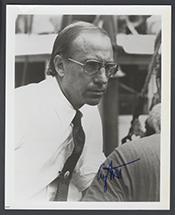
3,666 records where Rep. Studds, Gerry E. [D-MA-10] is listed as a sponsor, author, or other actor. Search with topics and years
United States · United States Congress · 5 March 1992
Designates October 1992 as National Domestic Violence Awareness Month.
United States · United States Congress · 27 February 1992
Amends the National School Lunch Act to suspend specified compliance and accountability rules issued by the Secretary of Agriculture.
United States · United States Congress · 27 February 1992
National Beverage Container Reuse and Recycling Act of 1992 - Amends the Solid Waste Disposal Act to prohibit the sale of beer, mineral water, soda water, wine coolers, or carbonated soft drinks in beverage containers by retailers and distributors unless such containers carry a refund value of ten cents. Requires distributors to collect from retailers the refund value for each beverage sold to such retailers. Directs retailers to collect from consumers the refund value for each beverage sold to such consumers. Requires retailers and distributors to pay the refund on returned containers of brands (in the same kind and size of container) sold by such retailers or distributors. Directs distributors to pay annually to a State unclaimed refund amounts (the amount by which the total refund value of all containers sold by such distributors exceeds the amount paid by distributors to persons in that State). Makes unclaimed refunds available to a State for carrying out pollution prevention and recycling programs. Prohibits distributors and retailers from: (1) selling beverages in metal beverage containers with detachable openings; and (2) disposing of containers subject to this Act or any metal, glass, or plastic from such containers (other than the top or seal) in landfills or solid waste disposal facilities. Makes this Act inapplicable to States that have adopted requirements identical to those under this Act or that have demonstrated achievement of a recycling or reuse rate for beverage containers of at least 70 percent. Makes States that fail to maintain such rate for a consecutive 12-month period subject to this Act's requirements. Prohibits States or political subdivisions that impose taxes on the sale of beverage containers from imposing any tax on the amount attributable to the refund value of such containers. Requires the Administrator of the Environmental Protection Agency to promulgate regulations to provide for the adjustment for inflation of the ten-cent refund amount at ten-year intervals. Prescribes civil penalties for violations of this Act.
United States · United States Congress · 27 February 1992
Boston Harbor Cleanup Funding Act - Amends the Federal Water Pollution Control Act to direct the Administrator of the Environmental Protection Agency to make grants to the State of Massachusetts for use by the Massachusetts Water Resources Authority for constructing wastewater treatment works for areas served by the Authority. Limits the Federal share of such grants to 75 percent of construction costs. Authorizes appropriations.
United States · United States Congress · 27 February 1992
Designates March 17, 1992, as Irish Brigade Day.
United States · United States Congress · 26 February 1992
Felon Gun Prohibition Act - Amends the Federal criminal code to: (1) deny convicted individuals the opportunity to seek administrative relief from prohibitions against possessing, shipping, transporting, or receiving firearms or ammunition; (2) eliminate provisions permitting persons to appeal for judicial review of denials of relief; (3) eliminate the authority of the Federal courts to admit additional evidence in reviewing denials of such relief; and (4) require publication of additional information about administrative relief granted to any person.
United States · United States Congress · 26 February 1992
Designates May 10, 1992, as Infant Mortality Awareness Day.
United States · United States Congress · 25 February 1992
Designates May 1992 as Neurofibromatosis Awareness Month.
United States · United States Congress · 19 February 1992
Amends the Immigration and Nationality Act to establish a nonimmigrant (but not permanent resident) status for the spouse and minor children of a lawful permanent resident alien. Prohibits such spouse from working in the United States. Terminates such status upon termination of the marriage.
United States · United States Congress · 19 February 1992
Brain Injury Rehabilitation Quality Act of 1992 - Amends title XIX (Medicaid) of the Social Security Act to provide for optional Medicaid coverage of services provided through a case management program that meets specified requirements to Medicaid-eligible individuals who suffer traumatic brain injuries. Describes the services provided under such a program, which include: (1) rehabilitation services; (2) transitional and independent living services; (3) home care; (4) behavior disorder treatment services; and (5) respite or recreation services to aid the individual and members of the individual's family in adapting to residual deficits resulting from brain injury. Authorizes such program to: (1) obtain for participating individuals other benefits and services for which such individuals are eligible under other Federal, State, or local programs, including employment services, education benefits, old age services, and disability insurance; and (2) waive restrictions on the amount, duration, and scope of services otherwise applicable under State plans. Declares that an individual must reside in a State that has designated a State coordinator for traumatic brain injuries in order to receive services under this Act. Requires such coordinator to establish policies and standards for providing services, make necessary reports to the Secretary of Health and Human Services, supervise and coordinate services for persons with traumatic brain injuries, and perform the duties set out below. Makes such coordinator responsible for a program of activities related to preventing and reducing the rate of traumatic brain injuries in the State. Requires such coordinator to: (1) establish and maintain a central registry of persons who sustain traumatic brain injury in order to collect information necessary to facilitate such programs and ensure the provision to such persons of information on rehabilitative service providers; (2) notify the State employment agency of individuals reported to have suffered a traumatic brain or spinal cord injury; (3) establish standards for marketing of services to traumatic brain injury patients or family members, in consultation with the advisory committee established below; (4) collect and analyze injury incidence information for coordinator studies concerning traumatic brain injury; (5) provide summary registry data to entities to conduct studies; (6) establish an advisory committee to provide recommendations regarding the needs of persons with traumatic brain injuries; (7) adopt such rules as are necessary to carry out this Act; and (8) establish a reporting system that notifies the coordinator of the identity of any person treated for a traumatic brain injury in the State. Requires the Secretary of Health and Human Services to establish standards for the reporting of data on traumatic brain injuries and the operation of registries on traumatic brain injuries for coordinator use. Requires the Administrator for Health Care Policy and Research to conduct a study on the effectiveness of traumatic brain injury interventions.
United States · United States Congress · 19 February 1992
Expresses the sense of the Congress that: (1) consideration of the Low Income Home Energy Assistance Program (LIHEAP) should be a high priority; (2) LIHEAP funding for FY 1993 should be increased to a level greater than or equal to funding for FY 1992; and (3) the President should accept the LIHEAP funding level for FY 1993 as recommended by the Congress.
United States · United States Congress · 11 February 1992
Amends title XVIII (Medicare) of the Social Security Act to limit aggregate payment reductions to urban hospitals in FY 1993 that are attributable to geographical reclassifications in an effort to maintain budget neutrality. Requires the Secretary of Health and Human Services, in a report to the Congress, to make recommendations for: (1) modifications to the methodology used to determine the initial geographic areas in which hospitals are located for purposes of adjusting payments to hospitals under part A (Hospital Insurance) of Medicare for differences in area wage levels; (2) appropriate bases for determining the geographic classification of hospitals under Medicare that recognize the unique labor market conditions affecting hospitals; and (3) modifications to the payment adjustments required under Medicare to offset increases in aggregate payments resulting from changes in geographic classification. Requires the Prospective Payment Commission to submit comments to the Congress on such report. Amends the Balanced Budget and Emergency Deficit Control Act of 1985 (Gramm-Rudman-Hollings Act) to provide that, to the extent that budget neutrality is not achieved under such limitation above, payment of any increase in aggregate hospital payments attributable to such reclassifications will be made through reductions in discretionary defense spending. Amends title XIX (Medicaid) of the Social Security Act to provide that disproportionate share payment adjustments to hospitals that are geographically reclassified shall be computed as if such hospitals had not been so reclassified.
United States · United States Congress · 7 February 1992
Cancer Registries Amendment Act - Amends the Public Health Service Act to authorize grants or contracts to operate population-based, statewide cancer registries in order to collect certain data for each form of in-situ and invasive cancer except basal cell and squamous cell carcinoma of the skin. Authorizes grants for planning the registries. Mandates a study on factors contributing to elevated rates of breast cancer mortality in Connecticut, Delaware, Maryland, Massachusetts, New Hampshire, New Jersey, New York, Rhode Island, Vermont, and the District of Columbia. Authorizes the Secretary of Health and Human Services, directly or through grants and contracts, or both, to provide technical assistance to the States in the establishment and operation of statewide registries. Authorizes appropriations.
United States · United States Congress · 7 February 1992
Amends the Internal Revenue Code to exempt passenger vessels of 100 gross tons or less from the tax on transportation of persons by water.
United States · United States Congress · 7 February 1992
Unemployment Benefits Assurance Act of 1992 - Amends the Emergency Unemployment Compensation Act of 1991 (Public Law 102-164) to establish special rules for computing the weekly benefit amount and for determining an individual's account, in order to assure that all eligible individuals will receive their full benefits under the emergency unemployment compensation program (on the basis of the former full-time employment for which they are eligible to receive such benefits, without being disqualified by State laws which would determine such amount and account on the basis of some intervening temporary period of part-time earnings).
United States · United States Congress · 7 February 1992
Declares that it is the sense of the House of Representatives that: (1) breast cancer should be declared a public health emergency under specified provisions of the Public Health Service Act to accelerate investigation into the cause, treatment, and prevention of the cause; and (2) activities initiated under the emergency should not supplant major research projects on breast cancer.
United States · United States Congress · 5 February 1992
DES Education and Research Amendments of 1992 - Amends the Public Health Service Act to establish a program for the conduct and support of research and training, the dissemination of health information, and other measures with respect to the diagnosis and treatment of conditions associated with exposure to the drug diethylstilbestrol (DES). Mandates: (1) programs to educate health professionals and the public; and (2) longitudinal studies. Authorizes appropriations.
United States · United States Congress · 5 February 1992
Designates the Department of Veterans Affairs Medical Center in Northampton, Massachusetts, as the Edward P. Boland Department of Veterans Affairs Medical Center.
United States · United States Congress · 5 February 1992
Designates May 1992 as National Huntington's Disease Awareness Month.
United States · United States Congress · 5 February 1992
Expresses the sense of the House of Representatives that: (1) the Administrator of the Environmental Protection Agency should accelerate the interim phaseout schedules and the final phaseout date of chlorofluorocarbons, carbon tetrachloride, methyl chloroform, and halons (and shall provide for complete phaseout as early as possible), accelerate the interim phaseout schedule and the final phaseout date of the hydrochlorofluorocarbons that have relatively long atmospheric lifetimes or high ozone depletion potentials, and prioritize efforts to issue regulations providing for the recapture and recycling of ozone-destroying substances used in appliances and motor vehicle air-conditioners and for the elimination of such substances used in nonessential consumer products; and (2) the President should urge the Contracting Parties to the Montreal Protocol to accelerate the interim phaseout schedules and the final phaseout date of the ozone-destroying chemicals currently covered by the Protocol, to include hydrochlorofluorocarbons within the terms of the Protocol and provide for the most rapid phaseout of those hydrochlorofluorocarbons with relatively long atmospheric lifetimes or high ozone depletion potentials, to amend the Protocol to include recapture and recycling provisions and prohibit the venting or release of ozone-destroying chemicals from refrigeration and air-conditioning units into the atmosphere by a set date, and to accelerate the compliance of developing countries with the terms of the Protocol.
United States · United States Congress · 30 January 1992
Designates October 1992 as National Breast Cancer Awareness Month.
United States · United States Congress · 30 January 1992
Designates April 15, 1992, as National Recycling Day.
United States · United States Congress · 30 January 1992
Designates February 6, 1992, as National Women and Girls in Sports Day.
United States · United States Congress · 24 January 1992
Small Business Credit Crunch Relief Act of 1992 - Amends the Small Business Act to authorize deferred participation loans and other financings in FY 1992 through 1994, including general business loans, pollution control loan guarantees, and development company loans and debenture guarantees. Authorizes appropriations to the Small Business Administration for FY 1992 through 1994 for salaries and expenses to implement the debenture and loan guarantee programs authorized by this Act.
United States · United States Congress · 22 January 1992
Amends the Emergency Unemployment Compensation Act of 1991 (Public Law 102-164) to add 13 weeks to the number of weeks of benefits payable under the emergency unemployment compensation program. Provides for a total number of weeks of such emergency benefits as follows: (1) 33 weeks (currently 20) in higher unemployment States (with a total unemployment rate of nine percent or higher or an adjusted insured unemployment rate of five percent or higher, for specified periods); and (2) 26 weeks (currently 13) for all other States. Extends to October 3, 1992, the expiration date of the emergency unemployment program (currently June 13, 1992). (Makes a conforming amendment extending provisions for unemployment insurance benefits for certain railroad workers during periods of high national unemployment.) Requires that the provisions of (and amendments made by) this Act be treated as emergency requirements designated by the President and the Congress under the Balanced Budget and Emergency Deficit Control Act of 1985 (Gramm-Rudman-Hollings Act). Requires that any amount of new budget authority, outlays, or receipts resulting from the provisions of (and amendments made by) this Act not be considered for any purpose under the Balanced Budget and Emergency Deficit Control Act of 1985.
United States · United States Congress · 22 January 1992
Amends Federal law to prohibit a Member of the House of Representatives from sending any franked mass mailing outside the Member's congressional district. Authorizes a Member of Congress to mail franked mail with a simplified form of address for delivery within his or her congressional district only. (Current law permits such mailings throughout the Member's State.) Prohibits the Committee on House Administration from approving any payment for, and a Member from making any expenditure from, any allowance of the House or any other official funds if any portion is for any cost related to a mass mailing by a Member of the House outside his or her congressional district.
United States · United States Congress · 22 January 1992
Designates March 25, 1992, as Greek Independence Day: A National Day of Celebration of Greek and American Democracy.
United States · United States Congress · 3 January 1992
Amends the Cape Cod National Seashore Act to waive provisions of the Federal Advisory Committee Act that require the Cape Cod National Seashore Advisory Commission to file a charter upon its renewal. Permits any member of the Commission to serve after the expiration of his or her term until a successor is appointed.
United States · United States Congress · 26 November 1991
Directs the Secretary of the Interior to make such minor and technical corrections to maps referred to in provisions of the Coastal Barrier Resources Act as are necessary to ensure the accurate depiction of certain areas as those areas existed on the date of enactment of the Coastal Barrier Improvement Act of 1990.
United States · United States Congress · 26 November 1991
Endangered Species Act Amendments of 1992 - Title I: Recovery Plans - Amends the Endangered Species Act of 1973 to require the Secretary (either the Secretary of the Interior or the Secretary of Commerce, as program responsibilities are vested) to: (1) develop and implement recovery plans by December 31, 1996, for listed endangered and threatened species for which such plans have not been developed as of December 31, 1992; and (2) do the same for such non-listed species as of December 31, 1992, within two years after the species is listed. Title II: Penalties and Enforcement - Waives the 60-day notice requirement with respect to the filing of a civil suit by an individual in the case of an action against any person respecting an emergency posing a significant risk to the well-being of any listed species of fish or wildlife. Authorizes the Secretary, the Secretary of the Treasury, and the Secretary of the Department in which the Coast Guard is operating to promulgate regulations to carry out the Convention on International Trade in Endangered Species of Wild Fauna and Flora and the resolutions of its parties as well as to enforce this Act. Title III: Habitat Conservation Plans - Authorizes the Secretary to enter into a cooperative agreement with any State, municipality, county, or local government to assist in the development of a plan for the conservation of any threatened or endangered species. Authorizes the Secretary to make grants and loans, under specified conditions, to any such entities: (1) in the development of such plans; (2) to carry out biological and other studies in connection with it; and (3) related tasks. Establishes the Habitat Conservation Planning Fund for the deposit of all appropriated sums to assist in the development of conservation plans. Title IV: Authorization of Appropriations - Authorizes appropriations.
United States · United States Congress · 26 November 1991
Oil Recycling and Safe Handling Act of 1991 - Amends the Solid Waste Disposal Act to revise provisions concerning the management of used oil. Directs the Administrator of the Environmental Protection Agency to list as a hazardous waste any used oil and any product derived from such oil that fails to meet certain specifications for flashpoint, lead, arsenic, chromium, cadmium, halogens, and polychlorinated biphenyls. Prohibits compliance with such specifications by blending used oil with virgin oil or other materials. Permits fuel containing used oil that meets specifications without treatment to be marketed as containing ingredients that are not hazardous wastes if the oil and fuel are analyzed to demonstrate compliance. Exempts used oil generated by petroleum refining or production facilities which is to be refined along with normal process streams from requirements for hazardous waste under the Solid Waste Disposal Act if it is inserted into the refining process or production pipeline. Directs the Administrator to promulgate regulations for the management of used oil classified as a hazardous waste. Exempts from such regulation generators of used oil which is household waste or State or local government curbside collection programs collecting such oil. Exempts certain used oil generators and collectors from hazardous waste regulations under the Solid Waste Disposal Act (other than those under this Act) if they have: (1) recycled or burned used oil at a permitted hazardous waste management facility or have arranged for the periodic transport of such oil by a licensed transporter to a permitted facility; (2) not disposed of such oil except as provided under this Act or mixed the oil with other hazardous wastes; and (3) maintained specified records with respect to the volume of such oil. Applies standards for hazardous waste transporters and facilities to hazardous used oil transporters and facilities. Permits the modification of transporter requirements for used oil that contains less than a specified concentration of halogens. Requires hazardous used oil facilities to obtain hazardous waste management permits. Directs the Administrator to require producers and importers of lubricating base stock to guarantee the reuse of an annually increasing percentage of used lubricating oil. Requires States to encourage used oil collection by providing incentives to retailers and others who accept and collect used oil. Imposes fees on lubricating base stock sold at retail and provides for the use of such fees for State and local used oil collection efforts. Requires agencies procuring recycled goods to report on the effectiveness of the re-refined oil procurement program. Amends the Comprehensive Environmental Response, Compensation, and Liability Act to prohibit any person from bringing an action against (currently, recovering response costs or damages from) service station dealers for response costs or damages resulting from releases of used (currently, recycled) oil, subject to certain conditions.
United States · United States Congress · 26 November 1991
Equal Remedies Act of 1991 - Amends Federal law relating to damages in cases of intentional employment discrimination to remove provisions limiting the dollar amount of damages awarded for pecuniary and nonpecuniary losses and punitive damages.
United States · United States Congress · 26 November 1991
Expresses the sense of the Congress that the changes made to the Federal single family housing mortgage insurance program should be reexamined to determine their effects upon housing affordability, the Mutual Mortgage Insurance Fund, and the Federal Housing Administration loan portfolio.
United States · United States Congress · 25 November 1991
Amends provisions of the Federal Food, Drug, and Cosmetic Act (FDCA) relating to drugs for rare diseases or conditions (commonly referred to as orphan drugs) to require the approval of an application under FDCA new drug provisions, a certification under FDCA antibiotic drug provisions, or a license under provisions of the Public Health Service Act regulating biologic products when the current holder of such an application, certification, or license has had: (1) cumulative dollar sales of the drug exceeding specified amounts; and (2) cumulative research and development costs for the drug not exceeding certain amounts.
United States · United States Congress · 22 November 1991
Requires publication in the Federal Register of a notice of designation of the Flower Garden Banks National Marine Sanctuary.
United States · United States Congress · 22 November 1991
Designates 1993 as the Year of American Craft: A Celebration of the Creative Work of the Hand.
United States · United States Congress · 21 November 1991
Territorial Sea and Contiguous Zone Extension and Enforcement Act of 1991 - Declares that territorial sea of the United States is subject to U.S. sovereignty and exclusive jurisdiction. Establishes the contiguous zone of the United States, consisting of a belt of sea contiguous to the outer limits of the U.S. territorial sea and extending a certain distance seaward from the U.S. baselines determined in accordance with international law. Declares that contiguous zone subject to exclusive U.S. jurisdiction. Amends specified Acts to define, for purposes of those Acts: (1) "import" to include bringing into any place subject to U.S. jurisdiction, including the U.S. territorial sea, whether or not the bringing constitutes importation within the meaning of customs laws; and (2) "territorial sea of the United States" to mean the U.S. territorial sea as described in a specified Presidential Proclamation. Amends other Acts to add references to the same Proclamation. Amends the Marine Protection, Research, and Sanctuaries Act of 1972 to: (1) refer to that proclamation in the definition of "territorial sea of the United States;" (2) extend the distance constituting the contiguous zone to conform to the definition of that zone under this Act; and (3) include the U.S. territorial sea in the definition of "marine environment." Amends the Ocean Thermal Energy Conversion Act of 1980 to: (1) refer to that proclamation in the definition of "territorial sea of the United States;" and (2) specify which law shall control between three and 12 nautical miles from the baselines. Amends the Oil Pollution Act of 1990 to extend to twelve miles from the line of ordinary low water the distance constituting the territorial seas. Amends specified Federal laws to substitute for references to operating on the high seas: (1) reference to operating beyond three nautical miles from the baselines; or (2) references to operating beyond the U.S. territorial sea. Authorizes a competitive grant for a study of the adequacy of existing Federal and State laws for the management of living and nonliving resources within the U.S. territorial sea between three and 12 nautical miles.
United States · United States Congress · 21 November 1991
Calls upon the President, as part of the Uruguay Round General Agreement on Tariffs and Trade (GATT) talks, to initiate negotiations to make GATT compatible with the Marine Mammal Protection Act and other U.S. health, safety, labor, and environmental laws, including laws to protect the environment outside of the United States. Declares that the Congress will not approve legislation to implement any trade agreement (including the Uruguay Round of the GATT and the U.S.-Mexico Free Trade Agreement) that jeopardizes such laws, including the Federal Food, Drug, and Cosmetic Act and the Clean Air Act.
United States · United States Congress · 20 November 1991
Pacific Yew Act of 1991 - Directs the Secretaries of Agriculture and of the Interior (Secretaries) to pursue a policy to provide for: (1) the long-term conservation of the pacific yew on lands under their jurisdiction; and (2) a sustainable supply of it for medicinal purposes. Requires the Secretary concerned to ensure that timber sales awarded after the enactment of this Act and such sales completed prior to such enactment but still unharvested be conducted in a specified manner. Directs the Secretaries to establish a special task force in each of their respective Departments to ensure that the purposes of this Act are achieved through the: (1) implementation of the policy required by it; and (2) guidelines and plan developed by the Interagency Pacific Yew Committee (established later on in this Act). Requires the Secretaries to inventory pacific yew on lands under their jurisdiction. Directs the Secretaries to jointly establish an interdisciplinary Interagency Pacific Yew Committee to submit interim guidelines for the harvest, management, and conservation of the pacific yew until the Committee develops a proposed conservation and management plan for it. Requires the Secretaries to submit such plan to specified congressional committees. Sets forth requirements for the interim guidelines and the management and conservation plan. Establishes procedures for implementation of them. Directs the Secretaries to encourage and assist in research regarding the: (1) ecology of the Pacific Yew; (2) development of alternative methods of procuring taxol (a cancer-treating drug made from the pacific yew), including use of other yew parts in addition to bark, the sustainable harvest of yew needles, and the use of other yew species; and (3) propagation of Pacific Yew and other yew species in agricultural or commercial settings. Directs the Secretary concerned to ensure: (1) development, implementation, and enforcement of processes for the collection and sale of Pacific Yew resources to minimize the illegal harvest and sale of them; and (2) timely access to Pacific Yew resources so that collection of Pacific Yew parts can occur before the taxol properties of such parts are degraded. States that nothing in this Act shall be interpreted as modifying the provisions of the Endangered Species Act. Directs the Secretaries concerned to report with recommendations to specified congressional committees on ways to increase the harvest of Pacific Yew if sufficient amounts of it cannot be harvested in compliance with this Act and other Federal law to supply the necessary amounts of taxol required for medicinal purposes.
United States · United States Congress · 19 November 1991
Designates December 1, 1991, as World AIDS Day.
United States · United States Congress · 18 November 1991
Children of Substance Abusers Amendments Act - Title I: Services for Children of Substance Abusers - Amends the Public Health Service Act to direct the Secretary of Health and Human Services, through the Administrator of the Health Resources and Services Administration, to make grants for the Federal share of the cost of community outreach services and services for children of substance abusers. Sets forth program requirements, including providing comprehensive services for the entire family. Sets forth requirements regarding: (1) the distribution of grants among specified types of entities; and (2) information and assurances which must be included in grant applications. Sets the Federal share at 90 percent. Authorizes appropriations. Provides for grants for the training of professionals and other staff who provide services to, or come in contact with, children and families of substance abusers. Requires the Administrator to identify the training needs of such professionals and other staff and develop a strategy for satisfying the needs. Prescribes the uses of the grant funds. Authorizes appropriations. Title II: Home-Visiting Services for At-Risk Families - Directs the Secretary to make competitive three- to five-year grants for the Federal share of the costs of home visiting services, including help in obtaining health and social services. Sets forth priorities in awarding grants and information and assurances which must be included in grant applications. Sets the Federal share at 90 percent. Authorizes appropriations.
United States · United States Congress · 14 November 1991
Amends the Marine Protection, Research, and Sanctuaries Act of 1972 to set forth the Ocean Dumping Liability Act. Makes persons involved in ocean dumping jointly, severally, and strictly liable for removal costs and damages that result from such dumping. Lists covered damages as damages resulting from injury to or loss of natural resources or real or personal property or losses of revenues, profits, or earning capacities. Establishes defenses to liability and places monetary limits with respect to total liability for ocean dumping. Makes limits inapplicable in cases where the dumping is caused by gross negligence or willful misconduct or the violation of a Federal regulation. Provides that in the case of injury to natural resources, liability shall be to the Federal Government, a State, or an Indian tribe for resources controlled by such entities. Requires the designation of Federal, State, and Indian tribe trustees for such resources. Requires trustees to assess damages to, and implement plans for the restoration of, such resources. Prohibits double recovery for natural resource damages. Requires recovered sums to be used only for costs incurred with respect to such damages. Prohibits the transfer of liability through any indemnification, hold harmless, or similar agreement. Bars an action for: (1) damages unless the action is brought within three years after the date on which the loss in connection with the dumping is reasonably discoverable; (2) recovery of removal costs unless the action is commenced within three years after the date of completion of the removal; and (3) contribution unless the action is brought within three years after the date of issuance of a judgment in any action for recovery of removal costs or damages for which contribution is sought or the date of entry of a judicially approved settlement with respect to such costs or damages. Prohibits actions based on the subrogation of rights by reason of payment of a claim unless commenced within three years after the date of payment of the claim. Preserves State and local authority to impose liability and penalties with respect to ocean dumping. Makes the Limitation of Liability Act inapplicable to removal costs and damages that directly result from ocean dumping.
United States · United States Congress · 14 November 1991
Boating Safety Program Amendments of 1991 - Amends shipping law to revise the treatment of unobligated allocations for State recreational boating safety programs. Amends the Internal Revenue Code to increase the limits on transfers to and amounts in the Boat Safety Account. Changes the determination of the availability of amounts in such Account for the use of recreational safety programs and for Coast Guard services.
United States · United States Congress · 14 November 1991
Sets forth U.S. policy on assistance to El Salvador. Permits funds made available for military assistance for El Salvador for FY 1992 in excess of $21,000,000 to be obligated only with the prior notification of specified congressional committees. Authorizes the transfer of such funds to the Demobilization and Transition Fund for El Salvador established under the Foreign Operations, Export Financing, and Related Programs Appropriations Act, 1991. Makes such funds available only for costs of the demobilization, retraining, relocation, and reemployment in civilian pursuits of former combatants in the conflict in El Salvador. Permits the obligation of amounts in the Fund only if the President, prior to obligation of funds, notifies: (1) specified congressional committees; and (2) the Congress that the El Salvadoran Government and representatives of the Farabundo Marti National Liberation Front (FMLN) have reached a permanent settlement of the conflict. Prohibits any U.S. assistance to El Salvador if the head of the El Salvadoran Government is deposed by military coup or decree. Resumes such assistance only pursuant to a law enacted by the Congress. Permits the delivery of military assistance to the armed forces of El Salvador only with the prior approval of the elected president of El Salvador.
United States · United States Congress · 12 November 1991
House of Representatives Campaign Spending Limit and Election Reform Act of 1991 - Title I: Expenditure Limitations, Contribution Limitations, Matching Funds, and Reduced Third-Class Mail Rate for Eligible House of Representatives Candidates - Amends the Federal Election Campaign Act of 1971 to set forth limitations regarding House of Representatives election expenditures, contributions, and matching funds. Limits aggregate contributions received and expenditures made by an eligible House of Representatives candidate in an election cycle to $600,000, with specified additional limitations in general, special, and runoff elections. Establishes the Make Democracy Work Fund (the Fund) for payment of funds and initial expenditures incurred by the Federal Election Commission (FEC) in the administration of this Act. Outlines FEC examination, audit, and repayment procedures to determine candidate compliance with this Act. Subjects FEC actions to judicial review. Directs the FEC to report to the House of Representatives regarding: (1) candidate expenditures made and balances remaining in the Fund after each election; and (2) a detailed explanation and justification of rules, regulations, and forms it has issued under this Act. Precludes a House of Representatives candidate from receiving funds from the Make Democracy Work Fund without prior certification that any television commercial was prepared or distributed by the candidate in a manner that readily permits closed captioning of the commercial's oral content by way of specified broadcast technology. Amends Federal Postal Service law to provide reduced third-class mailing rates to eligible House of Representatives candidates during a general election period. Title II: Limitations on Political Committee and Large Donor Contributions That May Be Accepted By House of Representatives Candidates; Miscellaneous Provisions Relating To Contributions Under The Federal Election Campaign Act of 1971 - Sets forth limitations on political committee and large donor contributions (and contributions by dependents not of voting age) that may be accepted by House of Representatives candidates. Mandates that contributions to candidates from State and local political party committees be aggregated. Increases the amount that multicandidate political committees may contribute to national political party committees. Deems corporate or labor union expenditures for candidate appearances, debates, or voter guides to be contributions if the corporate or labor organization expressly advocates the election or defeat of a candidate or favors one candidate over another. Title III: Requirement of Budget Neutrality - Provides that the net costs of providing certain benefits under this Act must be fully offset by specified measures that either raise revenues or reduce spending by a specified deadline (thus achieving budget neutrality). Title IV: Independent Expenditures - Modifies definitions relating to independent expenditures. Sets forth reporting requirements for certain independent expenditures. Title V: Bundling and Soft Money - Prohibits any person from acting as conduit or intermediary for any contribution to any candidate, except in specified circumstances. States that such persons are likewise prohibited from conducting or participating in joint fundraising activities with or on behalf of any candidate. Sets forth limitations upon the combined political activities of political committees of political parties. Prohibits incumbents and candidates for Federal office from soliciting contributions to certain organizations substantially engaged in voter registration or get-out-the-vote campaigns. Mandates that political committees established and maintained by a national political party shall report all receipts and disbursements during the reporting period, whether or not in connection with an election for Federal office. Title VI: Prohibitions Relating to Political Committees and Foreign Nationals - Prohibits a candidate for Federal office from establishing, maintaining, or controlling any political committee other than a principal campaign committee, or certain authorized committees (thereby prohibiting the use of leadership committees). Allows such leadership committees to continue making contributions until one year after January 1, 1993, after which time all funds must be disbursed in one or more specified manners. Prohibits an unauthorized political committee from using the name of any candidate in any fundraising activity on its behalf in a context which suggests that the committee is the candidate's authorized committee. Prohibits a foreign national from controlling, influencing, or participating in election-related activities, including making contributions or expenditures relating to any political election or the administration of a political committee. Title VII: Campaign Surplus - Mandates that the funds exceeding $600,000 of incumbents who are House of Representatives candidates be deposited in a separate account subject to the Federal Election Campaign Act of 1971. Title VIII: Campaign Advertising - Prescribes guidelines for campaign advertising related to: (1) printed communication; and (2) broadcast or cablecast communication. Amends the Communications Act of 1934 to entitle House of Representatives candidates to the lowest unit rate charged by a licensee for the same amount of time (currently, the same class and amount of time for the same period on the same date, during the 30 (currently 45) days prior to the primary election and the 45 (currently 60) days prior to the general election). Prohibits the licensee from pre-empting such a candidate's use of the station except in an emergency. Title IX: Contribution Solicitation - Proscribes the solicitation of contributions by false representation by any person as a candidate or as a representative of a candidate or of a political party or committee. Title X: Reporting Requirements - Requires certain reports to identify any person (other than a committee) who contributes more than $50 (currently, more than $200). Directs the FEC to: (1) require with respect to specified reports that operating expenditures be reported on an election cycle basis, by category, as specified by the FEC; and (2) maintain computerized indices of contributions of $50.00 or more. Title XI: Effective Date - Sets forth the effective date of this Act.
United States · United States Congress · 12 November 1991
Justice for Wards Cove Workers Act - Amends the Civil Rights Act of 1991 to remove a provision excluding from application of the Act any disparate impact case filed before March 1, 1975, and decided after October 30, 1983. (Wards Cove Packing Co. Inc. v. Atonio, 1989, held that, in cases brought under Title VII of the Civil Rights Act, the burden is on the plaintiff to prove an employer had no business necessity for a practice with discriminatory effects.)
United States · United States Congress · 7 November 1991
Designates December 21, 1991, as Basketball Centennial Day.
United States · United States Congress · 6 November 1991
Urges the President to rescind a Department of Defense directive which bans gays, lesbians, and bisexual Americans from military service.
United States · United States Congress · 5 November 1991
Designates December 4, 1991, as Federal Civilian Employee Remembrance Day to recognize contributions provided by Federal civilian employees during the attack on Pearl Harbor and during World War II.
United States · United States Congress · 1 November 1991
Authorizes, under specified conditions, the inclusion of Portugal in the visa waiver program.