Law· HJRESH.J.Res. 174 (101st)enacted
To designate the decade beginning January 1, 1990, as the "Decade of the Brain".
United States · United States Congress · 8 March 1989
Designates the decade beginning January 1, 1990, as the Decade of the Brain.
The world's political record
Person
United States · Official source
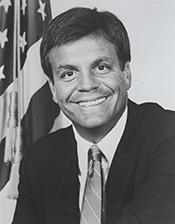
1,963 records where Rep. Synar, Mike [D-OK-2] is listed as a sponsor, author, or other actor. Search with topics and years
United States · United States Congress · 8 March 1989
Designates the decade beginning January 1, 1990, as the Decade of the Brain.
United States · United States Congress · 7 March 1989
Immigration Exclusion and Deportation Amendments of 1989 - Amends the Immigration and Nationality Act to make only the following classes of aliens ineligible to receive visas for admission into the United States: (1) any alien with a communicable disease of public health significance; (2) any alien with a record of recent physical or mental disorder that poses a threat to property or safety; (3) any alien with a drug addiction; (4) any alien convicted of a crime involving moral turpitude, with specified exceptions; (5) any alien convicted of specified drug violations or involved in drug trafficking; (6) any alien who has engaged in prostitution, or procurement of prostitutes, within ten years of the date of application for U.S. entry; (7) any alien likely to be a security risk; (8) any alien who has engaged in terrorist activity or likely to engage in such activity; (9) any alien whose entry would endanger the lives or property of U.S. citizens living abroad; (10) any alien whose entry would convey the impression of U.S. support for a government or group that the United States does not recognize or support, or whose entry would have a serious negative effect on U.S. diplomatic relations; (11) any alien who participated in Nazi persecutions; (12) any alien who is likely to become a public charge, with admission on bond at the discretion of the Attorney General; (13) any alien seeking to enter the United States for the purpose of performing skilled or unskilled labor, with specified exceptions (teaching, postgraduate research, and science or arts), or in situations of insufficient U.S. workers; (14) any alien who is a graduate of a medical school not accredited by a body approved for such purpose by the Secretary of Education, with certain exceptions; (15) any excluded or deported alien who seeks readmission within five years of the event, unless such readmission is consented to by the Attorney General; (16) any alien seeking to enter the United States by fraud or the willful misrepresentation of a material fact; (17) any stowaway alien; (18) any alien who aids any other alien in illegal entry; (19) any immigrant not in possession of a valid immigrant visa and passport at the time of admission; (20) any nonimmigrant without a valid passport authorizing the alien to return to the country from which he or she came or without a valid nonimmigrant visa or border crossing card (provides for a Guam visa waiver for up to 15-day pleasure or business entries); and (21) any alien ineligible for U.S. citizenship, including a person who left or remained outside the United States to avoid U.S. military service in time of war or national emergency. Repeals the ideological grounds for exclusion. Directs the Attorney General and the Secretary of State to jointly develop guidelines for the review of exclusion lists and other mechanisms used to screen alien visa applicants. Requires the Attorney General and the Secretary to report jointly to the appropriate committees regarding the development of such guidelines (within one year) and the results of the review of such alien lists (within two years). Makes deportable by the Attorney General only those aliens within one of the following classes: (1) any alien who at the time of entry was within one or more of the classes of aliens excludable by then existing law; (2) any alien entering the United States without inspection or at a time and place other than as designated by the Attorney General; (3) any alien admitted as a nonimmigrant who has failed to maintain such status; (4) any alien admitted as a temporary agricultural worker (H-2A visa) whose status has been terminated (with family hardship exceptions); (5) any alien who within five years of entry knowingly and for gain has aided another alien to illegally enter the United States; (6) any alien admitted as an additional special agricultural worker who fails to show the necessary number of seasonal work days; (7) any alien who gained U.S. entry through marriage fraud; (8) any alien convicted of a crime involving moral turpitude committed within five years from the date of entry and who is either sentenced or confined for a term of one year or longer; (9) any alien who at any time after entry is convicted of two or more crimes involving moral turpitude; (10) any alien who at any time after entry is convicted of a violation of certain drug laws; (11) any alien who is a drug abuser or addict; (12) any alien who at any time after entry is convicted under weapons-possession laws; (13) any alien who at any time is convicted on any of various specified loyalty laws (e.g. sabotage, treason and sedition, selective service, etc.); (14) any alien who fails to comply with alien registration laws or foreign agent registration laws; (15) any alien convicted of fraud or misuse of visas or other entry documents; (16) any alien engaging in activity which endangers the public safety or national security, including terrorist activity; (17) any alien who within five years after entry has become a public charge; (18) any alien who participated in Nazi persecutions; (19) any alien whose presence could endanger the lives or property of U.S. citizens living abroad; or (20) any alien whose presence could convey the impression of U.S. support for a government or group that the United States does not recognize or support, or whose presence could have a serious negative effect on U.S. diplomatic relations.
United States · United States Congress · 2 March 1989
Price Fixing Prevention Act of 1989 - Provides that in any civil action alleging a contract, combination, or conspiracy to set, change, or maintain prices (other than a maximum price) under the Sherman Antitrust Act: (1) evidence that a person who sells a good or service to the claimant for resale received from a competitor a communication regarding price competition by the claimant and in response terminated the claimant as a buyer (or refused to supply such goods or services) shall be sufficient to raise the inference that such person and such competitor engaged in concerted action to set, change, or maintain prices in violation of such Act (in such case, a termination or refusal to supply is in response to a communication if such communication is a substantial contributing cause of such termination or refusal to supply); (2) the fact that the seller and the purchaser of a good or service entered into an agreement shall be sufficient to constitute a violation of such Act; and (3) an agreement between the seller and the purchaser to terminate another purchaser as a dealer or to refuse to supply such other purchaser because of that purchaser's pricing policies shall constitute a violation of such Act, whether or not a specific price level is agreed upon.
United States · United States Congress · 2 March 1989
Protect Our Children from Cigarettes Act of 1989 - Prohibits consumer sales promotion of any tobacco product if it is or may be seen or heard by any person under age 18. Excepts from this prohibition certain text-only advertisements which: (1) are placed in newspapers, magazines, and other publications and on signs or billboards not located in a sports stadium or other sports facility; and (2) are limited to specified information, including levels of tar, nicotine, and carbon monoxide. Sets forth the relationship of this Act to: (1) Federal Trade Commission (FTC) authority; and (2) State and local regulations. Prohibits vending machine sales of tobacco products in any place in which a person under 18 may lawfully enter. Requires conspicuous signs stating that cigarette sales to minors are strictly prohibited in any such places which have over-the-counter sales. Deems violations of the advertising and vending machine prohibitions violations of specified provisions of the Federal Trade Commission Act. Allows civil actions for damages and other legal and equitable relief from such violations in appropriate State courts and Federal district courts. Requires awarding of legal fees to prevailing plaintiffs. Amends the Federal Trade Commission Act to require the FTC to arrange for a continuous independent study of the constituents of tobacco smoke, and to report annually to the Congress on its results.
United States · United States Congress · 2 March 1989
Subjects exports of cigarettes and advertising of cigarettes abroad to the same restrictions on labeling and advertising of cigarettes as apply to the sale, distribution, and advertising of cigarettes in the United States. Provides for fines and for injunctions of violations. Repeals the exemption of cigarettes for export from coverage under the Federal Cigarette Labeling and Advertising Act. Prohibits the executive branch from seeking through any means the removal or reduction of foreign restrictions on cigarettes or similar tobacco products, whether or not those restrictions constitute an unfair trade practice. Directs the President to issue necessary regulations within 90 days.
United States · United States Congress · 2 March 1989
Prohibits the Federal Communications Commission from adopting revisions of the rules and policies in the proceeding "Policy and Rules Concerning Rates for Dominant Carrier," CC Docket 87-313, unless the changes expressly provide for: (1) the proper functioning of the long-term support mechanisms for the carrier common line rates administered by the National Exchange Carrier Association; (2) the maintenance of uniform nationwide long distance telephone rates by dominant interexchange carriers; and (3) the use of an industry-wide rate of return to determine costs for access tariffs and to calculate the Universal Service Fund. Requires the FCC to report to the Congress the compliance of revisions with these conditions. Postpones the effectiveness of any rule or policy revisions until 60 days have elapsed during which both Houses of the Congress are in session.
United States · United States Congress · 1 March 1989
Renewable Energy and Energy Efficiency Technology Competitiveness Act of 1989 - Sets forth specified national goals for the wind, photovoltaics, and solar thermal energy programs. Requires the President's budget requests for FY 1991 to contain the recommendations of the Secretary of Energy for specified Department of Energy research and development programs for 1993, including biofuels energy systems, solar buildings energy systems, ocean energy systems, and geothermal energy. Authorizes appropriations for FY 1991 through 1993 for: (1) the wind energy research program; (2) the photovoltaic energy systems program; (3) the solar thermal energy systems program; (4) the biofuels energy systems program; (5) the solar buildings energy systems program; (6) the ocean energy systems program; and (7) the geothermal energy program. Requires the Secretary to submit an options analysis to the Congress regarding the accelerated commercialization of specified renewable energy technologies. Requires the President's budget requests for FY 1991 and 1992 to include the Secretary's recommendations of amounts to be set aside for energy efficiency research and development and demonstration initiatives. Authorizes appropriations for specified energy efficiency research and development programs for FY 1991 through 1993. Directs the Secretary to establish joint research and development ventures in specified energy technologies and to report to the Congress on the implementation of such plans. Directs the Secretary to establish the following advisory bodies: (1) Advisory Committee on Renewable Energy and Energy Efficiency Technology; (2) Advisory Subcommittee on Photovoltaic Energy Technology; (3) Advisory Subcommittee on Wind Energy Technology; (4) Advisory Subcommittee on Solar Thermal Energy Technology; (5) Advisory Subcommittee on Energy Performance in Factory-Made Housing; (6) Advisory Subcommittee on Advanced District Cooling Technology; and (7) Advisory Subcommittee on Renewable Energy and Energy Efficiency Technology Exports. Authorizes appropriations for FY 1991 through 1993 for such joint ventures. Requires the Committee on Renewable Energy, Commerce and Trade to report annually to the Congress regarding renewable energy technology exports. Authorizes appropriations for such Committee activities for FY 1991 through 1993. Amends the National Energy Conservation Policy Act to direct the Secretary to establish an information dissemination program for Federal procurement and loan officers on the benefits of solar heating and cooling technology, including site visits and technical briefings. Requires the Secretary to make annual reports to the Congress regarding the research programs and ventures under this Act. Requires each annual submission of the National Energy Policy Plan to be accompanied by a three-year strategic plan for energy technology research, development, and demonstration, including energy conservation and renewable energy technologies.
United States · United States Congress · 1 March 1989
Amends the Internal Revenue Code to extend through 1992 the period during which qualified mortgage bonds and mortgage credit certificates may be issued. (Under current law, authority for these programs is due to expire as of 1990.)
United States · United States Congress · 28 February 1989
Amends title XVIII (Medicare) of the Social Security Act to cover services performed by a physician assistant regardless of the setting or geographical location in which such services are rendered.
United States · United States Congress · 28 February 1989
Amends title XVIII (Medicare) of the Social Security Act to cover social worker services furnished to outpatients of rural health clinics.
United States · United States Congress · 28 February 1989
Amends the Federal Cigarette Labeling and Advertising Act to require that cigarettes and cigarette advertising bear a label stating the addictive quality of nicotine.
United States · United States Congress · 23 February 1989
Makes the legal defense of discretionary function provided under specified Federal law inapplicable to any legal or administrative proceeding for damages arising out of U.S. violation of occupational safety or health standards or U.S. negligence at any workplace owned or operated by or under contract with the United States.
United States · United States Congress · 23 February 1989
Price-Anderson Financial Accountability Amendments of 1989 - Amends the Atomic Energy Act of 1954 to authorize the Attorney General to initiate legal suit to recover indemnification payments made by the Federal Government to a contractor for public liability resulting from the contractor's (or subcontractor's or supplier's) gross negligence or willful misconduct. Precludes the Department of Energy from reimbursing such contractor. Denies such contractor eligibility to receive any Federal contract for a five-year period beginning on the date the recovery is awarded. Requires the Secretary of Energy to: (1) define by rule the term "total contract price"; and (2) renegotiate indemnification agreements upon contractor request during a specified period.
United States · United States Congress · 22 February 1989
Hate Crime Statistics Act - Directs the Attorney General to include within the Uniform Crime Reports for calendar years 1991 through 1995 the incidence of criminal acts that manifest prejudice based on race, religion, homosexuality or heterosexuality, or ethnicity. States that nothing in this Act creates a right for an individual to bring an action complaining of discrimination based on homosexuality. Requires the Attorney General to publish an annual summary of the data acquired under this Act. Authorizes appropriations.
United States · United States Congress · 22 February 1989
Scenic Byways Study Act of 1989 - Declares it to be the policy of the United States to identify, protect, and enhance scenic and historic roads. Directs the Secretary of Transportation to: (1) transmit to the Congress a nationwide, long-term plan for promoting, designating, protecting, and enhancing scenic and historic roads, including an analysis of available studies on a national scenic byways program, guidelines for administration of such a program, and forecasts of significant changes in traffic volumes, safety consequences, and environmental and economic impacts; (2) assemble for the Congress available information on economic activity associated with scenic and recreational travel; (3) conduct a study and make recommendations regarding economic impacts of promoting scenic byways as tourist attractions, techniques for incorporating scenic byways into tourism development and marketing programs, and alternative means to inform the public about scenic byways; and (4) conduct case studies of, and report on, States with existing scenic byway programs. Requires the Secretary to consult with the States on studies under this Act. Authorizes the Secretary to conduct national and regional conferences to ensure public involvement. Authorizes appropriations.
United States · United States Congress · 22 February 1989
Amends the Solid Waste Disposal Act to authorize the Administrator of the Environmental Protection Agency to commence an administrative enforcement action under such Act against any Federal entity or employee responsible for the disposal or management of solid waste.
United States · United States Congress · 22 February 1989
Grants a Federal charter to the National Academies of Practice, the purpose of which is to honor persons of the health care professions.
United States · United States Congress · 22 February 1989
Amends Federal law to extend the immediate retirement provisions applicable to Federal law enforcement officers to: (1) revenue officers for the Internal Revenue Service; (2) customs inspectors for the U.S. Customs Service; (3) customs canine enforcement officers for the U.S. Customs Service; and (4) inspectors for the Immigration and Naturalization Service.
United States · United States Congress · 22 February 1989
Designates February 16, 1990, as Lithuanian Independence Day.
United States · United States Congress · 9 February 1989
Tongass Timber Reform Act - Title I: Alaska National Interest Lands Conservation Act Amendments - Repeals specified provisions of the Alaska National Interest Lands Conservation Act (the Act) relating to: (1) the authorization of appropriations for the maintenance of the timber supply from the Tongass National Forest in Alaska to dependent industry; (2) the identification of Forest lands unsuitable for timber production; and (3) a specified report to certain congressional committees by the Secretary of Agriculture on the timber supply and demand in southeastern Alaska. Amends the Act to include in a specified report to the Congress the impact of timber management on subsistence resources, wildlife, and fisheries habitats in the Forest. Requires the Secretary to terminate, not later than 90 days after enactment of this Act, specified timber sale contracts between the United States and the Alaska Pulp Corporation and the Ketchikan Pulp Company, respectively. Title II: Wilderness - Amends the Act to designate the following lands within the Tongass National Forest as components of the National Wilderness Preservation System: (1) Anan Creek Wilderness; (2) Berners Bay Wilderness; (3) Calder-Holbrook Wilderness; (4) Chichagof Wilderness; (5) Chuck River Wilderness; (6) Kadashan Wilderness; (7) Karta River Wilderness; (8) Kegan Lake Wilderness; (9) Naha River Wilderness; (10) Nutkwa Wilderness; (11) Outside Islands Wilderness; (12) Pleasant Island-Lemesurier Islands Wilderness; (13) Pt. Adolphus-Mud Bay Wilderness; (14) Pt. Houghton-Sandborn Canal Wilderness; (15) Rocky Pass Wilderness; (16) Sarkar Lakes Wilderness; (17) South Etolin Island Wilderness; (18) South Kuiu Wilderness; (19) Sullivan Island Wilderness; (20) Trap Bay Wilderness; (21) West Duncan Canal Wilderness; (22) Yakutat Forelands Wilderness; and (23) Young Lake Wilderness.
United States · United States Congress · 9 February 1989
Family Planning Reauthorization Act of 1989 - Amends the Public Health Service Act to authorize appropriations for FY 1990 through 1993 for projects, training, and information and materials related to family planning.
United States · United States Congress · 9 February 1989
Postal Reorganization Act Amendments of 1989 - Declares that the receipts and disbursements of the Postal Service Fund: (1) shall not be included in the totals of the Federal budget or the congressional budget; (2) shall be exempt from Federal budget limitations on expenditures and net lending; and (3) shall be exempt from any sequestration order under the Balanced Budget and Emergency Deficit Control Act of 1985 (Gramm-Rudman-Hollings Act) and shall not be counted for purposes of calculating the Federal deficit.
United States · United States Congress · 9 February 1989
Depositor Protection Act of 1989 - Prohibits a bankruptcy trustee from avoiding as a preferential transfer certain withdrawal transactions made by depositors or investors from accounts with certain financial institutions which issue savings obligations or accept deposits in the ordinary course of business. Applies such prohibition to bankruptcy cases filed on or after March 9, 1983.
United States · United States Congress · 9 February 1989
Amends title IV (National Research Institutes) of the Public Health Service Act to require the Director of the National Center for Nursing Research to acquire, construct, improve, or repair laboratories and other research facilities to increase the capacity of institutions of higher education to conduct nursing research. Authorizes the Secretary of Health and Human Services to make grants and enter into contracts for such purposes. Requires the Director, from amounts appropriated under this Act, to reserve 15 percent to carry out such purposes through grants to, and contracts with, institutions that received less than an aggregate of a specified amount in Federal financial assistance for research and development in the preceding two fiscal years. Requires matching funds, in cash or in kind, from non-Federal sources. Directs the Secretary to require technical and scientific peer review of applications for grants and contracts. Authorizes appropriations for FY 1990 through 1992.
United States · United States Congress · 9 February 1989
Directs the President to impose certain sanctions against persons who export, transfer, or otherwise engage in the trade of any Missile Technology Control Regime item in violation of the U.S. export control laws. Declares such sanctions to include the: (1) denial of an export license; (2) prohibiting of all contracting with, or procurement of any products and services from, such violator; and (3) prohibiting of imports from such violator. Requires the President to report to the Congress: (1) within ten days before imposing or waiving any such sanction; and (2) annually about the status of any sanctions or sanction waivers.
United States · United States Congress · 9 February 1989
Women in Development Act of 1989 - Requires the Administrator of the Agency for International Development (AID) to take specific steps to strengthen the Agency's women in development policy, including: (1) incorporating the active participation of local women and local women's organizations in its development activities; (2) instructing Agency staff and contractors to collect sex-disaggregated data and to insure that country strategies, projects, and programs are designed so that the percentage of women receiving assistance in proportion to the higher of their traditional participation in the targeted activities or their proportion of the population; (3) insuring that project and program evaluations include an assessment of the extent to which the project integrates women in the development process and of the project's impact on women; (4) increasing the number and responsibility of women in professional positions within AID; and (5) establishing within AID a task force on women in development. Amends the Foreign Assistance Act of 1961 to require that a minimum (currently, maximum) of $10,000,000 in funds made available for foreign assistance programs be used for programs to promote the participation and integration of women in the development process in developing countries. Specifies that a certain amount of such funds shall be made available as matching funds to support activities designed to better integrate women into AID programs. Requires the Administrator to report to the Congress annually on the implementation of this Act. Authorizes appropriations to be made available for the United Nations Development Fund for Women and the United Nations International Research and Training Institute for the Advancement of Women.
United States · United States Congress · 9 February 1989
Designates the week of November 12 through November 18, 1989, as Geography Awareness Week.
United States · United States Congress · 9 February 1989
Designates the week beginning July 23, 1989, as Lyme Disease Awareness Week.
United States · United States Congress · 9 February 1989
Designates the week of October 1 through October 7, 1989, as National Health Care Food Service Week.
United States · United States Congress · 7 February 1989
Social Security Transitional Benefit Computation Act of 1989 - Amends title II (Old Age, Survivors and Disability Insurance) of the Social Security Act to alter the formula for computing the primary insurance amount of individuals who attain age 65 in or after 1982 and would otherwise be subject to the benefit computation rules of the Social Security Amendments of 1977. Extends the application of such transitional benefit computation rules to those who become eligible for benefits before 1989. (Currently those who become eligible after 1983 are subject to the benefit computation rules of the Social Security Amendments of 1977.)
United States · United States Congress · 7 February 1989
Designates May 25, 1989, as National Tap Dance Day.
United States · United States Congress · 7 February 1989
Expresses the sense of the Congress that the U.S. Government should reassess current policy and pursue a negotiated settlement to the civil war in El Salvador.
United States · United States Congress · 6 February 1989
American Heritage Trust Act of 1989 - Title I: American Heritage Trust - Establishes the American Heritage Trust, comprised of the Land and Water Conservation Fund and the Historic Preservation Fund, to provide funding for the preservation of America's natural, historical, cultural, and outdoor recreational areas. Title II: Land and Water Conservation Fund - Amends the Land and Water Conservation Fund Act to require the Secretary of the Treasury to invest a portion of the Land and Water Conservation Fund in public debt securities. Requires that the interest from such investments be used for the preservation of the Nation's recreational areas. Requires any excess interest to be credited to the Treasury. Sets forth a formula for the allocation of such interest income to the Federal Government and the States. Sets forth specified requirements with respect to the apportionment of such income to local and State governments, Indian tribes, and Alaska Native Village Corporations. Title III: Historic Preservation Fund - Amends the National Historic Preservation Act to extend the Historic Preservation Fund through 2015. Requires the Secretary of the Treasury to invest a portion of such Fund in public debt securities. Requires that the interest from such investments be used for the preservation of historic sites. Provides for allocation of a percentage of annual appropriations for State historic preservation trust funds. Title IV: Miscellaneous Provisions - Requires the owner of any site that benefits from moneys derived from the American Heritage Trust to install a sign indicating that fact. Requires the Secretary of the Interior, within 18 months after enactment of this Act, to provide for a contest for elementary or secondary school children for the design of a symbol to represent such Trust and for use in such signs.
United States · United States Congress · 6 February 1989
Provides that no adjournment of either House of Congress, other than an adjournment sine die to end a Congress, prevents the return of a bill by the President.
United States · United States Congress · 2 February 1989
Medicaid Child Health Amendments of 1989 - Amends title XIX (Medicaid) of the Social Security Act to require States to cover children born after September 30, 1983, whose family income is below the Federal poverty level. Authorizes States to continue such coverage for one year after the family's income rises above the Federal poverty level. Requires States to receive the Medicaid applications of pregnant women, infants, and children at locations which include locations other than those used under part A (Aid to Families with Dependent Children) (AFDC) of title IV of the Act. Permits States to provide Medicaid coverage to all children whose family income is below the Federal poverty level. Allows States to offer an additional nine-, 12-, 15-, or 18-month period of Medicaid eligibility, rather than the additional six-month period, to families who lose AFDC eligibility because of increased earnings or employment hours, or a loss of earning exclusions and receive the initial six months of extended Medicaid coverage. Requires that States submit information to the Secretary of Health and Human Services by April 1 of each year, pertaining to the supply of and demand for pediatric services and proposed Medicaid payment rates for such services so that the Secretary may determine whether such rates are sufficient to ensure that pediatric services will be at least as available to Medicaid beneficiaries as they are to the general population. Requires States to immediately revise rates determined to be insufficient. Increases, by 25 percent, the Federal share of Medicaid costs attributable to State demonstration projects to reduce childhood mortality and morbidity by improving the access of Medicaid-eligible children to pediatricians. Limits FY 1990 expenditures for such projects. Directs States to adjust Medicaid payments to disproportionate share hospitals to take into account exceptionally costly and lengthy inpatient hospital services for children under 18 years of age.
United States · United States Congress · 2 February 1989
Public Rangelands Fee Act of 1989 - Sets forth a formula, beginning with grazing year 1989, for determining fees for domestic livestock grazing on public rangelands.
United States · United States Congress · 2 February 1989
Medicaid Infant Mortality Amendments of 1989 - Amends title XIX (Medicaid) of the Social Security Act to phase-in mandatory State coverage of pregnant women and infants whose family income is below 185 percent of the Federal poverty level. Deducts child and medical care costs from the income eligibility test. Requires the continuation of such coverage for women through the month in which the 60-day post-partum period expires, and for infants throughout their first year of life. Directs the Secretary of Health and Human Services to report to the Congress by July 1, 1990, on State error rates in determining the Medicaid eligibility of pregnant women and infants. Suspends error rate penalties attributable to such eligibility determinations made from July 1, 1989, until one year after the Secretary's report. Requires that States make ambulatory prenatal care available to a pregnant woman during a presumptive eligibility period which ends when she is determined to be ineligible for Medicaid benefits or 14 days after she is determined to be eligible, but fails to apply. Amends title V (Maternal and Child Health Services) of the Act to require States to provide outreach services for Medicaid-eligible pregnant women and infants under such title. Amends the Medicaid program to reimburse States, at the Federal Medicaid assistance percentage, for outreach services identifying Medicaid-eligible pregnant women and infants and assisting them in applying for Medicaid coverage. Requires that States submit information to the Secretary, by April 1 of each year, pertaining to the supply of and demand for obstetrical and pediatric services and proposed Medicaid payment rates for such services so that the Secretary may determine whether such rates are sufficient to ensure that obstetrical and pediatric services will be at least as available to Medicaid beneficiaries as they are to the general population. Requires States to immediately revise rates determined to be insufficient. Increases, by 25 percent, the Federal share of Medicaid costs attributable to State demonstration projects to reduce infant mortality and childhood morbidity by improving the access of Medicaid-eligible pregnant women and infants to obstetricians and pediatricians. Limits FY 1990 expenditures for such projects. Excepts Medicaid-eligible pregnant women from required cooperation with States in establishing the paternity of children born out of wedlock. Requires States to: (1) coordinate Medicaid services with the special supplemental food program for women, infants, and children (WIC) under the Child Nutrition Act of 1966; and (2) notify Medicaid-eligible pregnant, breastfeeding, or postpartum women and children under age five of WIC program benefits.
United States · United States Congress · 2 February 1989
Amends title XVIII (Medicare) of the Social Security Act to cover, on a reasonable charge basis, the services of a clinical psychologist which would otherwise be covered if furnished by a physician or as incident to a physician's service.
United States · United States Congress · 2 February 1989
Establishes the Medicare Geographical Classification Review Board to decide on a rural hospital's application for classification as an urban hospital for Medicare payment purposes. Amends the Omnibus Budget Reconciliation Act of 1987 to alter the Rural Health Care Transition Grant Program to extend and increase authorized appropriations for such program through FY 1992, and permit the Secretary to waive the hospital grant limit. Expands, from four to ten hospitals, a Medicare demonstration program covering additional costs incurred by teaching hospitals in sending their residents to rural hospitals for training. Requires the Secretary to establish five-year Medicare demonstration programs covering costs incurred by five hospitals in providing clinical training to undergraduate nurses. Extends the regional referral center classification of hospitals so classified as of September 30, 1989, and the payment rates applicable to such hospitals under the Medicare program, through FY 1994.
United States · United States Congress · 2 February 1989
Fastener Quality Assurance Act of 1989 - Prohibits the offering for sale or sale in interstate commerce of any fastener (screw, nut, bolt, stud, similar threaded device, or washer) unless it is part of a lot which: (1) conforms to standards and specifications represented by the manufacturer or ordered by the purchaser; and (2) has been inspected, tested, and certified according to this Act. Requires manufacturers to have a fastener lot sample inspected by a laboratory accredited under an approved system (including one owned or affiliated with the manufacturer if it is so accredited). Authorizes the laboratory, upon determination of conformance with the appropriate standards and specifications, to provide the manufacturer certificates with respect to such lot. Directs the Secretary of Commerce to issue regulations to implement this Act. Prohibits any manufacturer from selling any primary container or lesser quantity of fasteners manufactured in the United States unless delivery to the first purchaser is accompanied by an original certificate from an accredited laboratory. Prohibits any person from selling any primary container or lesser quantity of fasteners manufactured outside the United States to any importer or end user unless delivery is accompanied by a certificate. Allows delivery to an importer or private label distributor without the required certificate if: (1) the manufacturer discloses in writing the appropriate standards and specifications; and (2) the importer or private label distributor assumes responsibility in further sale or offer of sale unless delivery to the first subsequent purchaser is accompanied by an original certificate from an accredited laboratory. Requires that a copy of the original certificate be provided to subsequent wholesale purchasers. Requires persons who make material physical alterations to a fastener subsequent to manufacture to have the altered fastener inspected and tested before offering it for sale or selling it unless delivery is accompanied by a disclosure of the alteration and a warning. Requires subsequent disclosures of the alteration in resales. Prohibits commingling of fasteners from different lots in the same primary container or other package. Requires fastener manufacturers or private label distributors to comply with requirements of a program for recordation of insignias. Directs the Secretary to establish such a program, including regulations to ensure traceability. Sets forth civil remedies, including declaratory and injunctive relief, and criminal penalties, including fines and imprisonment, for violations of this Act. Provides that nothing in this Act shall be construed to: (1) preempt any rights or causes of action that any buyer may have respect to any seller of fasteners under the law of any State, except insofar as such State law conflicts with this Act; and (2) limit or otherwise affect the authority of the National Institute of Standards and Technology or any voluntary consensus standards organizations to establish, modify, or withdraw any standards and specifications under any other law or authority in effect on the date of enactment of this Act.
United States · United States Congress · 2 February 1989
Social Security Administrative Reform Act of 1989 - Title I: Establishment of the Social Security Administration - Amends title VII (Administration) of the Social Security Act to establish as an independent executive agency a Social Security Administration, headed by a Social Security Board. Provides that it shall be the duty of the Administration to administer the programs established by titles II (Old Age, Survivors and Disability Insurance) (OASDI) and XVI (Supplemental Security Income) (SSI) of the Social Security Act. Requires the Board to study and make recommendations as to the most effective methods of providing economic security through social insurance and supplemental security income, and as to legislation and matters of administrative policy. Establishes in the Administration: (1) an Executive Director; (2) a Deputy Director of Social Security; (3) a General Counsel; (4) an Inspector General; and (5) an Office of the Beneficiary Ombudsman, to be headed by a Beneficiary Ombudsman who shall represent the interests of beneficiaries under the OASDI and SSI programs within the Administration. Requires the annual report of the Board to include a description of the activities of the Beneficiary Ombudsman. Requires the Board to make annual budgetary recommendations relating to the Administration. Requires that appropriations requests by the Administration for staffing and personnel be based upon a comprehensive workforce plan as established by the Board. Provides for the apportionment of administrative costs. Requires the annual report of the Board to include a section reflecting the use of budget authority provided to the Administration. Requires that authority for automated data processing procurement and facilities construction be provided in the form of contract authority covering the total cost of such acquisitions. Makes amounts needed for the liquidation of contract authority so provided available from the Federal Old-Age and Survivors Insurance Trust Fund and the Federal Disability Insurance Trust Fund to the extent that such amounts are not needed to meet current obligations for benefit payments. Requires the Board to cause a seal of office to be made and judicial notice taken thereof. Requires the establishment of demonstration projects involving the delegation of authority from the Office of Personnel Management and the General Services Administration to the Board. Provides for the transfer to the Administration of all functions carried out by the Secretary of Health and Human Services with respect to the programs and activities to be carried out by the Administration under this Act. Abolishes the position of Commissioner of Social Security in the Department of Health and Human Services. Title II: Conforming Amendments and Rules of Construction - Requires the Secretary and the Board to report to the Congress within 120 days after the beginning of each regular session on their administration under this Act. Requires the Secretary to study and make recommendations on the most effective methods of providing economic security and on the administrative policy for the programs. Directs the Board to appoint, quadrennially, an Advisory Council on the Old-Age, Survivors, and Disability Insurance Program and an Advisory Council on Health and Supplementary Medical Insurance to review the relation of the trust funds supporting the OASDI and Medicare programs and the long-term commitments of those programs. Requires each council to submit a report to the Board for transmittal to the Congress and the Board of Trustees of each Trust Fund.
United States · United States Congress · 2 February 1989
Medicaid Technology-Dependent Children Amendments of 1989 - Amends title XIX (Medicaid) of the Social Security Act to require States to provide Medicaid coverage to technology-dependent children (children needing both a medical device to compensate for loss of a vital body function and ongoing nursing care). Revises Medicaid eligibility requirements for disabled children.
United States · United States Congress · 2 February 1989
Designates the week beginning November 26, 1989, as National Home Care Week.
United States · United States Congress · 31 January 1989
Truth in Savings Act - Requires each advertisement, announcement, or solicitation by a depository institution which refers to a specific interest rate, yield, or rate of earnings on amounts deposited in a demand or interest-bearing account to state the following information clearly and conspicuously: (1) the annual percentage yield and the period such yield is in effect; (2) all minimum initial deposit, minimum balance, and time requirements for earning such yield; (3) the annual rates of simple interest; (4) fees or other conditions that could reduce the yield; (5) any interest penalty for early withdrawal; and (6) the effective percentage yield on the maturity date of any account maturing in less than one year. Authorizes the Board of Governors of the Federal Reserve System to exempt advertisements, announcements, or solicitations made by any broadcast or electronic medium or outdoor advertising displays not on the premises of a depository institution from the disclosure requirements relating to initial deposit requirements, rates of simple interest, or fees if such disclosure would be unnecessarily burdensome. Prohibits any depository institution from advertising an account as a free or no-cost account if: (1) there are minimum balance or limited transaction requirements to avoid fees; or (2) there is any service fee, transaction fee, or similar charge imposed for such account. Prohibits any institution from making any advertisement, announcement, or solicitation that is inaccurate or misleading or that misrepresents its deposit contracts. Requires each depository institution to maintain a schedule, written in clear and plain language, of fees, charges, interest rates, and terms and conditions such as minimum balance and time requirements applicable to each class of accounts offered. Requires that such schedule be disclosed to potential customers and requesting individuals and mailed to account holders. Requires that account holders receive 30 days' advance notice of any change to be made in any term or condition required to be disclosed in the schedule if the change might reduce the yield or adversely affect any account holder. Directs the Board to require modified disclosure requirements concerning the annual yield on variable rate accounts, multiple rate accounts, guaranteed-rate accounts that mature in less than one year, and accounts for which the interest rate is not guaranteed. Directs the Board to provide for public notice and comment on, and to publish, model forms and clauses for common disclosures required by this Act. Provides for the enforcement of this Act and the civil liability of a depository institution that fails to comply with requirements of this Act. Sets forth limitations on such liability and factors to be considered by the court in determining class action awards. Provides that an institution may not be held liable for a violation if the institution demonstrates that the violation was not intentional and resulted from a bona fide error. Establishes U.S. district court jurisdiction and a one-year statute of limitations for actions brought under this Act. Directs the National Credit Union Administration to provide for the similar regulation of credit unions.
United States · United States Congress · 31 January 1989
National Observance Advisory Act - Establishes the President's Advisory Commission on National Observances to: (1) establish criteria for recommending to the President that a proposed national observance be approved or disapproved; (2) review proposals for national observances submitted in accordance with procedures published by the Commission; and (3) issue recommendations to the President concerning each proposal reviewed.
United States · United States Congress · 31 January 1989
Smoking Cost Recovery and Education Tax Act of 1989 - Amends the Internal Revenue Code to increase all existing Federal excise taxes on tobacco products. Imposes a new tax of $1.17 per pound on cigarette tobacco manufactured in or imported into the United States. Establishes in the Treasury the Smoking Cost Recovery and Education Trust Fund, to be available to finance educational programs (including paid advertising) concerning the hazards of cigarette smoking, with emphasis on discouraging smoking by youth. Appropriates to the Fund ten percent of the increase in tobacco tax revenue generated as a result of this Act. Directs the Secretary of the Treasury to conduct an ongoing study and to report biennially to specified congressional committees on: (1) the effects of smoking on health care costs; and (2) the incidence of cigarette smoking by youth, including the relationship between cigarette tax rates and youth smoking.
United States · United States Congress · 31 January 1989
Authorizes and requests the President to designate April 23 through April 30, 1989, as National Organ and Tissue Donor Awareness Week.
United States · United States Congress · 27 January 1989
State Energy Conservation Programs Improvement Act of 1989 - Amends the Energy Policy and Conservation Act to mandate that each State energy conservation plan which receives Federal assistance under the Act contain a specified reduction in energy consumption as one of its goals. Adds to Federal assistance eligibility prerequisites for proposed State energy conservation plans, including an emergency planning program for energy supply disruption. Cites optional State energy conservation programs. Repeals the mandate for supplemental State energy conservation plans. Authorizes appropriations for energy conservation programs for FY 1990 through 1992. Establishes within the Department of Energy a State Energy Advisory Board to report annually to the Congress regarding recommended energy efficiency objectives, the technology transfer aspect of Federal research and development with respect to energy efficiency and renewable resources, and recommended changes with respect to State and Federal energy policies. Authorizes the use of loan programs and performance contracting for the non-Federal share of energy conservation project costs under the grant program. Cites conditions under which the Secretary is authorized to approve a State application for a waiver of: (1) the requirement that at least 40 percent of Federal weatherization assistance for low-income persons be used for weatherization materials; and (2) the limitations placed upon expenditures per dwelling unit for weatherization measures. Terminates the Performance Fund used for State weatherization assistance.
United States · United States Congress · 27 January 1989
Extends the regional referral center classification of hospitals so classified as of September 30, 1989, and the payment rates applicable to such hospitals under title XVIII (Medicare) of the Social Security Act through FY 1994.
United States · United States Congress · 27 January 1989
Designates April 9, 1989, as National Former Prisoner of War Recognition Day.