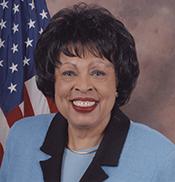
United States · United States Congress · 2 April 2004
Servitude and Emancipation Archival Research ClearingHouse Act of 2004 or the SEARCH Act of 2004 - Directs the Archivist of the United States to establish, as part of the National Archives, a national database consisting of historic records of servitude and emancipation in the United States to assist African Americans in researching their genealogy. Requires the National Historical Publications and Records Commission to maintain the database.
United States · United States Congress · 2 April 2004
States that Congress: (1) remembers the victims of the 1994 Rwanda genocide and pledges to work to ensure that such an atrocity does not take place again; (2) acknowledges that the international community, including the United States, failed the people of Rwanda and watched with indifference while hundreds of thousands of innocent civilians were being killed; (3) supports assistance to the survivors of the Rwandan genocide; (4) urges political and financial support for the Gacaca courts; (5) acknowledges the heroic work of many individuals and human rights organizations for their campaign to help stop the genocide; (6) expresses deep appreciation to General Romeo Dallaire for his efforts to stop the genocide and for helping many Rwandese civilians; (7) accepts the fact that General Dallaire warned the United Nations on a number of occasions of an impending genocide and was ordered by his superiors not to take action; (8) calls for an investigation of the role played by the United States prior to and during the Rwandan genocide, noting that the parliaments of Belgium and France both created commissions of inquiry to investigate the roles played by their respective governments; and (9) urges the creation of a bi-partisan Commission of Inquiry for Rwanda to investigate all aspects of the role played by the United States prior to and during the Rwandan genocide.
United States · United States Congress · 1 April 2004
Afghan Women Security and Freedom Act of 2004 - Expresses the sense of Congress that: (1) the international community should commit substantial resources, including peacekeeping forces, for protecting the rights of women, reestablishing democracy, and eliminating terrorism in Afghanistan; (2) the United States should strongly support the Afghan Ministry of Women's Affairs and the Afghan Independent Human Rights Commission; (3) international peacekeeping forces and reconstruction teams should be authorized to stop violations of human rights and women's rights; (4) U.S. foreign policy should ensure restoration of the rights of women and girls in Afghanistan, assist in their recovery from the repression of the Taliban and prolonged warfare, and strengthen Afghan institutions led by women; and (5) assistance to Afghanistan should be conditioned on the Afghan Government's adherence to international standards for women's rights and human rights. Authorizes the President to provide assistance for women and children in Afghanistan for the purpose of promoting women's rights and human rights and providing health care, education, training, security, and shelter.
United States · United States Congress · 31 March 2004
Cesar E. Chavez Congressional Gold Medal Act - Directs the Speaker of the House of Representatives and the President Pro Tempore of the Senate to arrange for the presentation, on behalf of Congress, of a gold medal to the next of kin or other personal representative of Cesar E. Chavez in recognition of his service to the Nation. (Chavez organized farm workers to campaign for safe and fair working conditions, founded the National Farm Workers Association-- predecessor of the United Farm Workers of America-- and was a recipient of the Martin Luther King Jr. Peace Prize and the Presidential Medal of Freedom.)
United States · United States Congress · 30 March 2004
Assistance for Orphans and Other Vulnerable Children in Developing Countries Act of 2004 - Amends the Foreign Assistance Act of 1961 to replace the program of assistance to disadvantaged children in Asia with a program of assistance for orphans and vulnerable children in developing countries. Authorizes the President to provide assistance (grants, international organization contributions, or governmental assistance) for orphans and other vulnerable children in developing countries for: (1) basic care; (2) HIV/AIDS treatment, including mental health services; (3) school food programs; (4) education and employment training assistance; and (5) protection of inheritance rights. Establishes within the United States Agency for International Development (USAID) an Office for Orphans and Other Vulnerable Children. Provides assistance priority for countries with specified HIV levels among women and high-risk groups.
United States · United States Congress · 30 March 2004
Climate Stewardship Act of 2004 - Expands Federal climate change research initiatives by: (1) establishing a graduate fellowship program; (2) creating a grant program for research in identified priority areas; and (3) instituting research programs on potential abrupt climate change and greenhouse gas (GHG) related standards, measurement technologies, and processes. Amends the Coastal Zone Management Act of 1972 to require the Secretary of Commerce to: (1) report to Congress on the oceanic and coastal impacts of climate change; and (2) assist certain coastal States in preparing persons to adapt to climate change. Requires the Administrator of the Environmental Protection Agency (Administrator) to establish a National Greenhouse Gas Database consisting of: (1) an inventory of GHG emissions by covered entities (specified entities that emit more than 10,000 metric tons of GHGs per year); and (2) a registry of GHG emission reductions and increased sequestration, applicable to both covered and noncovered entities. Establishes a program for the market-driven reduction of GHGs by covered entities through the use of tradeable emissions allowances. Requires covered entities, beginning in 2010, to submit to the Administrator one tradeable allowance for every metric ton of GHGs emitted. Allows tradeable allowances to be sold, exchanged, purchased, retired, or otherwise used as authorized by this Act. Establishes the Climate Change Credit Corporation (CCCC) to receive, manage, buy, and sell tradeable allowances. Directs the Administrator to make allocations of allowances to covered sectors and entities, and to the CCCC, providing initial allocations for early action and accelerated participation. Imposes civil penalties on covered entities that fail to submit allowances.
United States · United States Congress · 30 March 2004
Media Ownership Reform Act of 2004 - Amends the Communications Act of 1934 to require a broadcast licensee to afford reasonable opportunity for the discussion of conflicting views on issues of public importance, consistent with the rules and policies of the Federal Communications Commission (FCC) in effect on January 1, 1987. Prohibits the FCC from permitting any license for a commercial television broadcast station to be granted, transferred, or assigned to any party if such action would result in that party owning, operating, or controlling, or having a cognizable interest in: (1) stations which have an aggregate national audience reach exceeding 35 percent; or (2) such station and a cable television system whose service area overlaps with such commercial station's predicted Grade B contour. Requires any party currently having a license in excess of such limits to divest as necessary to comply with such limits within one year. Directs the FCC to modify its regulations concerning ownership of national and local radio broadcast stations to place limitations on such ownership (such limitations varying depending on the number of stations in the local market area). Declares invalid and without legal effect the final rules adopted by the FCC pursuant to its media ownership proceeding, and announced on June 2, 2003 (such rules providing specified media ownership deregulation). Reinstates the rules in effect prior to such rules. Requires the FCC to: (1) conduct, every five years, a review process concerning media ownership; and (2) prescribe rules to prevent persons controlling the distribution of video programming over network distribution systems from acquiring unreasonable proportions of such programming from subsidiaries or affiliates. Requires each broadcast licensee, at least every two years, to submit to the FCC, and publish, a report on how the station is meeting the requirement to serve the public interest.
United States · United States Congress · 24 March 2004
Commends the Government of the People's Republic of China (China) for its steps to improve its legal framework for intellectual property (IP) rights protection and efforts toward compliance with international standards for IP rights established by the World Trade Organization. Recognizes, despite such steps, the continued existence of widespread IP rights violations in China. Urges the Chinese Government to undertake a coordinated nationwide IP rights enforcement campaign and related actions. Recommends that China implement: (1) more effective customs and border measures to prevent massive exportation of pirated goods into the United States and other countries; and (2) a legal framework and effective enforcement mechanisms that would protect the IP rights not only of the United States and other foreign business enterprises, but also of Chinese IP rights holders. Urges the Chinese Government to give greater market access to the foreign producers of legitimate products such as film and other audiovisual products in order to reduce demand for and prevalence of pirated and counterfeit goods. Calls upon the Chinese Government to promptly accede to the 1996 World Intellectual Property Organization Internet-related treaties and harmonize its regulations and implementing rules. Encourages China's efforts to bring its framework of laws, regulations, and implementing rules into compliance with the Agreement on Trade-Related Aspects of Intellectual Property Rights (TRIPS Agreement).
United States · United States Congress · 18 March 2004
Foster Opportunities for Success Through Higher Education Reform - FOSTER Act - Amends the Higher Education Act of 1965 (HEA) to establish a program of foster care youth outreach and housing services. Directs the Secretary of Education to make grants to institutions of higher education to provide: (1) technical assistance and supportive services to foster care youth who are prospective students to prepare for, enter, and remain in such institutions; and (2) basic housing during the regular academic school year, including interim housing during regular periods of dormitory closing other than summer break, for those foster care youth living in college dormitories. Requires program coordination with: (1) the John H. Chafee foster care independence program under the Social Security Act; and (2) TRIO and GEAR UP programs under HEA. Revises HEA financial need analysis to provide fair treatment for foster care youth.
United States · United States Congress · 17 March 2004
GEAR UP & GO Act - Amends the Higher Education Act of 1965 to revise specified requirements for Gaining Early Awareness and Readiness for Undergraduate Programs (GEAR UP) to facilitate the transition of low-income high school students into postsecondary education. Authorizes the Secretary of Education to carry out a GEAR UP & GO grants program to provide low-income high school students participating in GEAR UP partnerships or State programs opportunities for dual/concurrent enrollment in college courses while still enrolled in high school. Provides that students in such program: (1) shall not be required to apply for admission to the institution of higher education; and (2) may receive college credit. Requires up to 25 percent of GEAR UP & GO program funds to be reserved for grants to early/middle college high schools designed to provide 9th through 12th grade low-income and first-generation college students with a coherent course of study enabling them to earn simultaneously a high school diploma and college credit toward a postsecondary degree.
United States · United States Congress · 17 March 2004
Helping the People of Haiti Act - Directs the Secretary of the Treasury to direct the United States Executive Director at the Inter-American Development Bank to use the voice and vote of the United States to urge the Bank to release the four social sector and development loans for health, education, water and sanitation, and transportation, that have been approved by the Board of Executive Directors of the Bank and ratified by the Parliament of Haiti. Directs the Secretary and the Secretary of State, respectively, to: (1) appeal to international financial institutions and foreign governments to strengthen their assistance efforts to Haiti; and (2) urge such institutions and governments to take immediate steps to provide Haiti with the full range of loans and other financial assistance.
United States · United States Congress · 16 March 2004
Protecting Our Children from Violence Act of 2004 - Directs the Attorney General, upon request of the chief executive of a State, to ensure that a covered State social services officer has the authority for online access to the Federal Bureau of Investigation's National Crime Information Center (NCIC) databases and the Interstate Identification Index to carry out criminal history records checks. Limits such authority to a check of an individual who: (1) resided with a minor at the time of an actual or alleged incident of abuse or neglect of that minor, or at the time during which such an incident may have occurred; or (2) is the subject of an investigation relating to an incident of abuse or neglect of a minor. Requires the Attorney General to ensure that such an officer has the authority for "read only" electronic access to the NCIC databases for the purpose of carrying out checks of records relating to missing persons or warrants. Directs such officer to use access only for an investigation relating to a missing child and to share any information obtained with appropriate Federal, State, and local law enforcement agencies. Directs the Attorney General to ensure that the Case Analysis Division, the Missing Children's Division, and the Exploited Child Unit of the National Center for Missing and Exploited Children each have access to the Index, subject to specified limitations. Limits the release of information. Sets criminal penalties for knowingly releasing information in violation of this Act.
United States · United States Congress · 11 March 2004
Amends part C (Medicare+Choice) of title XVIII (Medicare) of the Social Security Act, as amended by the Medicare Prescription Drug, Improvement, and Modernization Act of 2003, to prohibit the operation of the Medicare comparative cost adjustment program in California.
United States · United States Congress · 11 March 2004
Family Abduction Prevention Act of 2004 - Directs the Attorney General to make grants to States for projects involving: (1) the extradition of individuals suspected of committing a family abduction back to the State from which the child was taken; (2)investigation by law enforcement agencies of family abduction cases; (3) training for law enforcement agencies in responding to family abductions and recovering abducted children; (4) outreach and media campaigns to educate parents on the dangers of family abductions; and (5) notifying law enforcement authorities of the name and address of anyone requesting the school records of an abducted child. Requires that not less than 50 percent of the cost of a project for which a grant is made be provided by non-Federal sources.
United States · United States Congress · 10 March 2004
Declares the sense of the Congress that music education grounded in rigorous instruction is an important component of a well-rounded academic curriculum and should be available to every student in every school. Recognizes the International Music Products Association for its efforts to designate a Music Education Month in order to highlight the important role that school music programs play in the academic and social development of children.
United States · United States Congress · 9 March 2004
Establishes in the legislative branch the Independent Commission on the 2004 Coup d'Etat in the Republic of Haiti. Directs the Commission to examine the United States' role in the February 2004 coup d'etat in the Republic of Haiti, including: (1) the extent to which the United States impeded the democratic process in Haiti, including the extent to which U.S. actions and policies contributed to the overthrow of the democratically-elected Government of Haiti; (2) the circumstances of Haitian President Jean-Bertrand Aristide's resignation and exile; (3) the extent to which the United States fulfilled its obligations under the Organization of American States (OAS) Inter-American Democratic Charter requiring that each OAS member country come to the aid of another OAS government under attack; (4) the extent to which the United States impeded international efforts, particularly efforts by Caribbean Community (CARICOM) countries, to prevent the overthrow of the Government of Haiti; (5) the United States' role in influencing United Nations Security Council decisions regarding Haiti and in discussions between Haiti and other countries that were willing to send security forces to assist the Government of Haiti; (6) the extent to which U.S. assistance or personnel, including the Central Intelligence Agency, was used to support the opposition forces; (7) the impact of the International Republican Institute, the National Democratic Institute for International Affairs, and other organizations funded by the United States Agency for International Development on the political process in Haiti; (8) the impact on Haiti of the U.S. decision to discontinue bilateral assistance and U.S. efforts to block international financial assistance; and (9) the broader implications for Haiti and the Caribbean region of the events culminating in the coup d'etat. Terminates the Commission 60 days after submission of its final report.
United States · United States Congress · 4 March 2004
States that Congress: (1) condemns the detention of Father Thaddeus Nguyen Van Ly by the Government of the Socialist Republic of Vietnam and calls for his immediate and unconditional release; (2) condemns the violations of freedom of speech, religion, movement, association, and the lack of due process afforded to individuals in Vietnam; and (3) urges the Government of Vietnam to consider the implications of its actions for the broader relationship with the United States, including the United States-Vietnam Bilateral Trade Agreement. Expresses the sense of Congress that the United States should: (1) make the immediate release of Father Ly a top concern; (2) reiterate its deep concern regarding the violation of Father Ly's and other prisoners' human rights, and continue to urge the Government of Vietnam to comply with international standards for freedom and human rights; and (3) make it clear to the Government of Vietnam that the detention and human rights violations of Father Ly and other persons create obstacles to improved bilateral relations with the United States.
United States · United States Congress · 2 March 2004
Child Nutrition Improvement and Integrity Act - Amends the Richard B. Russell National School Lunch Act (NSLA) and the Child Nutrition Act of 1966 (CNA) to reauthorize various programs, including the national school lunch and breakfast, child and adult care food, after-school snack, summer food service, and special supplemental nutrition program for women, infants, and children (WIC). Revises requirements relating to eligibility for and access to such programs. Reauthorizes, without any termination date, the exclusion of military housing allowances from consideration as income in determining eligibility for free or reduced price lunches. Includes as automatically eligible for free lunches and breakfasts: (1) children or youth defined as homeless under the McKinney-Vento Homeless Assistance Act; and (2) youth served under the Runaway and Homeless Youth Act. Makes eligible also for such special payments any new schools which draw attendance from schools receiving severe need assistance. Extends through FY 2009 the summer food pilot projects and the summer food service program for children. Allows nonprofit organizations to participate in such programs. Revises the child and adult care food program. Extends indefinitely the period during which private day care providers with at least 25 percent of served children eligible for free and reduced price lunch are eligible to participate. Extends, from three years to five years, the period of a tier classification of a family or group day care home. Directs the Secretary of Agriculture (the Secretary) to issue regulations requiring States to develop and use a standard form of agreement between each family or group home day care sponsoring organization and their homes participating in the program. Extends through FY 2006 the period during which the Secretary is required to reserve funds for providing training and technical assistance to States to improve program management and oversight. Authorizes the Secretary or a State agency to disregard any overpayment to an institution if the total overpayment does not exceed a collection cost amount consistent with other disregards, except where there is evidence of a violation of criminal law or civil fraud law. Allows children up to age 18 (currently 12) to be served program meals while residing at homeless or domestic violence shelters. Directs the Secretary, in conjunction with States and participating institutions, to examine the feasibility of reducing paperwork under the program. Revises eligibility and certification requirements for free and reduced price lunches. Directs the Secretary to base income eligibility guidelines on nonfarm income poverty guidelines issued by the Secretary of Health and Human Services (HHS). Requires applications and related descriptive materials for free and reduced price lunches to be distributed at least annually to parents and guardians in clear and understandable format and language. Requires descriptive material to contain: (1) only the income levels for reduced price lunches, and an explanation that lower income levels may mean eligibility for free lunches; and (2) notice that WIC participants in the program are eligible for free or reduced price lunches. Allows applications to be submitted by an adult of the household: (1) as a single application for all children in the household; and (2) electronically if the filing system meets confidentiality standards. Directs local education agencies (LEAs) to verify information in a sample of approved applications, with variations in such samples according to specified formulae based non-response rates. Provides for direct certification of children as eligible for free meals, without further application, based on their being in households receiving assistance under the food stamp program or the Temporary Assistance for Needy Families (TANF) program under title IV part A of the Social Security Act. Sets forth privacy protections. Prohibits requiring LEAs to submit free and reduced price meal policy statements to State agencies after the initial submission unless there is a substantive change in such policy. Requires, with certain exceptions, a child's eligibility for free and reduced price lunches to remain in effect from the date of approval for the current school year until the beginning of school in a subsequent school year, or as otherwise specified by the Secretary. Transfers responsibility for local administration of school lunch and breakfast programs from local school food authorities (LSFAs) to LEAs (including appropriate entities determined by the Secretary in cases of private nonprofit school food authorities). Makes LEAs, as well as LSFAs, responsible for program compliance and accountability. Directs the Secretary to give priority consideration to States that will use reallocated funds for technology and information management improvements. Requires States to describe how they will use technology and information management systems to improve program integrity in certain ways. Raises the amount of the minimum State administrative expense grant, and guarantees that such a grant shall not be less than the one received in a previous fiscal year. Permits eligibility for special assistance to be determined district-wide, as an alternative to determining it on an individual school basis. Directs the Secretary to develop and distribute training and technical assistance materials relating to administration of school meals programs. Authorizes the Secretary to: (1) provide training and technical assistance related to administrative practices to improve program integrity and administrative accuracy to State educational agencies (SEAs), LSFAs, and LEAs; and (2) assist SEAs in reviewing administrative practices of LSFAs. Establishes additional administrative and performance review requirements for selected LSFAs and LEAs that have demonstrated high levels of or high risks for administrative errors. Directs SEAs, where such a selected LSFA or LEA fails to meet performance criteria established by the Secretary, to: (1) require such entity to develop and carry out a plan of corrective action; (2) provide technical assistance; and (3) conduct a follow-up review. Authorizes the Secretary require the SEA to recover funds that were expended in error and use them to improve program integrity and administrative accuracy. Requires States to provide annual training and technical in administrative practices, emphasizing requirements established under this Act. Requires the Secretary to assist the State or provide such training and technical assistance or directly. Authorizes the Secretary or the State to contract with a third party conducting such activities. Requires each LSFA or LEA to insure that an individual conducting or overseeing such administrative procedures receives such training at least annually. Authorizes the Secretary to assist States in carrying out State training and administrative reviews of selected LSFAs and LEAs with excessive error rates. Requires LEAs participating in school meals programs to establish local school wellness policies with: (1) goals for nutrition education, physical activity, and other school-based activities; (2) nutrition guidelines for all foods sold on school campus during the school day in order to promote health and reduce obesity; (3) a plan to ensure policy implementation, including designating persons with operational responsibility; and (4) involvement of parents, students, and representatives of the LSFA, school board, school administrators, and the public. Revises the system of nutrition education grants to SEAs to provide assistance to State agencies, schools, and nonprofit entities for the Team Nutrition Network (TNN) program and other nutrition education projects that improve student understanding of healthful eating patterns, the quality of school meals, and access to local foods in schools and institutions operating programs under NSLA and CNA. Establishes TNN to: (1) promote the Nation's schoolchildren's health through nutrition education, physical fitness, and other activities supporting healthy lifestyles; (2) provide grants to States to develop Statewide, comprehensive, and integrated nutrition education and physical fitness programs; and (3) provide training and technical assistance to States, school and community nutrition programs, and child nutrition food service professionals. Requires State TNN Coordinators to: (1) administer and coordinate a comprehensive integrated statewide nutrition education program; and (2) coordinate efforts with the Food and Nutrition Service and State agencies responsible for children's health programs. Directs the Secretary to provide assistance for the following types of three-year pilot projects: (1) to States on a competitive basis for State TNN Coordinators to create model nutrition education and physical fitness programs for school students; and (2) to not more than 100 LEAs, at least one per State, to promote healthy eating habits and increase physical fitness among school students. Authorizes the Secretary to provide: (1) technical assistance to SEAs to improve school meal quality; and (2) technical assistance and competitive matching grants to schools and nonprofit entities to improve access to local foods in schools and institutions. Includes fruits and vegetables among the foods to be emphasized in commodity distribution. Revises fruit and vegetable pilot program requirements to direct the Secretary to make available fresh and dried fruits and fresh vegetables to 25 schools in each of four additional States and one Indian reservation, with an emphasis on low-income schools. Requires schools to serve milk in a variety of fat contents. Permits substitute nutritionally-equivalent nondairy beverages to be reimbursable, if a note is provided from a medical authority or the child's parent or guardian. Extends the period during which weighted averages are not required to be used in nutrient analysis of foods under the school lunch program, if school food authority has an equivalent nutrient analysis system. Directs the Secretary to: (1) promulgate rules, based on Federal nutrition guidelines, to increase the presence of whole grains in foods offered in school nutrition programs; and (2) enter into an agreement with a science-based organization to study, determine, and report on appropriate nutritional standards for foods available to students in school, considering total daily dietary intake of students participating in the school foods program. Revises WIC program (under CNA) definitions of: (1) nutrition education to include child development and physical activity; and (2) supplemental foods to provide for consideration of the most recent Dietary Guidelines for Americans. Revises certification requirements for WIC program participation to allow: (1) a State to certify breastfeeding women for up to one year or until they stop breastfeeding, whichever is earlier; (2) a local agency to waive the physical presence requirement for infants under eight weeks of age; and (3) applicants or participants to reschedule appointments to apply or be recertified. Directs the Secretary to: (1) promulgate a rule updating the prescribed supplemental foods available through the WIC program, within six months of receiving the review of the WIC food package undertaken by the National Academy of Sciences, Institute of Medicine in September 2003; and (2) beginning in 2013, and at least every ten years thereafter, conduct scientific reviews of supplemental foods available in the WIC program and recommend changes to reflect nutrition science, current public health concerns, and cultural eating patterns. Requires State agencies to notify vendors in writing of violations, unless the notification would compromise an investigation. Authorizes State agencies to round up to the next whole can of infant formula to ensure all infants receive the full-authorized nutritional benefit. Revises WIC program competitive bidding provisions to require infant formula: (1) rebate invoices to provide reasonable estimates or actual counts of numbers of units sold to program participants; and (2) bid solicitations amounts to be adjusted on a cent-by-cent basis according to changes in the lowest national wholesale truckload price. Authorizes demonstration projects, in up to ten local sites, to evaluate inclusion of fresh, frozen, or canned fruits and vegetables, to be made available through private funds, as an addition to supplemental food provided under the WIC program. Revises WIC program provisions for management information systems to require: (1) States to comply with certain standards for electronic benefit systems; and (2) the Secretary to implement a national Universal Product Code Database for use by all State agencies. Requires participating vendors in the WIC program to purchase infant formula from a State-maintained list of approved manufacturers, wholesalers, distributors, and retailers. Prohibits State alliances from exceeding 200,000 infant participants (except alliances with such numbers as of October 2003). Allows any State agency serving under 5,000 participants, or any Indian Tribal Organization, to request to join any State alliance. Increases from one to three percent the maximum portion of nutrition services and administration funds a State may expend during the subsequent fiscal year for allowable expenses incurred during a fiscal year. Extends through FY 2009 the authorization of appropriations for: (1) the WIC program; (2) WIC nutrition services and administrative funds; and (3) WIC farmers' market nutrition program. Revises requirements relating to training and technical assistance under NSLA, CNA, and other federally-assisted feeding programs. Directs the Secretary to develop policy and establish procedures regarding the purchase, distribution, notice of consumption, and provision of information regarding irradiated foods in Federal school meals programs. Extends through FY 2009 the authorization of appropriations for: (1) State administrative expenses (CNA); (2) the commodity distribution program (NSLA and the Commodity Distribution Reform Act and WIC Amendments of 1987); (3) purchases of locally produced foods (NSLA); (4) training, technical assistance, and food service management institute (NSLA); and (5) compliance and accountability (NSLA).
United States · United States Congress · 26 February 2004
End Racial Profiling Act of 2004 - Prohibits any law enforcement agent or agency from engaging in racial profiling. Authorizes the United States or an individual injured by racial profiling to bring a civil action for declaratory or injunctive relief in State court or U.S. district court. Makes proof that the routine or spontaneous investigatory activities of law enforcement agents in a jurisdiction have had a disparate impact on racial, ethnic, or religious minorities prima facie evidence of a violation. Authorizes the court to allow a prevailing plaintiff attorney's fees under specified circumstances. Directs Federal law enforcement agencies to: (1) cease practices that encourage racial profiling; and (2) maintain policies and procedures to eliminate racial profiling, including the collection of data on routine investigatory activities, procedures for responding meaningfully to complaints alleging racial profiling, and procedures to discipline agents who engage in racial profiling. Requires that an application by a State, local , or Indian tribal government for funding under the Byrne, Cops on the Beat, or Local Law Enforcement Block Grant program include a certification that such government: (1) maintains adequate policies and procedures designed to eliminate racial profiling; and (2) has ceased any practices that encourage racial profiling. Authorizes the Attorney General to make grants to States and specified entities to develop and implement best practice devices and systems to ensure the racially neutral administration of justice.
United States · United States Congress · 26 February 2004
Early Treatment for HIV Act of 2004 - Amends title XIX (Medicaid) of the Social Security Act to give States the option of providing Medicaid coverage for certain low-income HIV-infected individuals. Provides States taking advantage of this option with an enhanced Federal Medicaid match.
United States · United States Congress · 26 February 2004
Expresses the sense of the House of Representatives that the Secretary of Homeland Security should: (1) designate Haiti as a country the return to which would jeopardize the safety of nationals thereof; and (2) grant temporary protected status to Haitian nationals in the United States.
United States · United States Congress · 26 February 2004
Urges that: (1) a commemorative postage stamp be issued in honor of the centennial anniversary of Rotary International and its effort to eradicate polio; (2) the Citizens' Stamp Advisory Committee of the U.S. Postal Service recommend to the Postmaster General that such a stamp be issued; and (3) the Rotary Clubs of the United States be commended for 100 years of volunteer service.
United States · United States Congress · 25 February 2004
Expresses the sense of Congress that the United States: (1) should support the principles of democracy and constitutional rule in the Republic of Haiti and oppose attempts to remove President Aristide from office; (2) should condemn the violent activities of groups of thugs, former members of Haiti's disbanded army, and paramilitary organizations; and (3) working with the United Nations, the Organization of American States, and other countries, should immediately provide assistance to strengthen and professionalize the Haitian police force in order to enable it to restore law and order and preserve democracy in Haiti.
United States · United States Congress · 24 February 2004
States that Congress recognizes: (1) as an historic achievement of friendship more than five decades of strategic partnership between the United States and the people of the Marshall Islands in pursuit of international peace and security; and (2) the importance of the nuclear weapon test code-named Bravo at Bikini Atoll in the Marshall Islands on March 1, 1954.
United States · United States Congress · 24 February 2004
Expresses the sense of Congress that negotiations on access to critical segments of the U.S. automobile market should not take place on a piecemeal basis, but only as part of: (1) negotiations that include all major automobile producing nations; and (2) comprehensive negotiations that address both tariff and nontariff barriers specific to the automobile industry, with progress on eliminating tariff barriers explicitly linked to concrete progress on eliminating nontariff barriers.
United States · United States Congress · 11 February 2004
Fairness and Individual Rights Necessary to Ensure a Stronger Society: Civil Rights Act of 2004 - Amends the Civil Rights Act of 1964, the Education Amendments of 1972, and the Age Discrimination Act of 1975 to set forth requirements for: (1) establishing discrimination based on disparate impact; and (2) rights of action and recovery for unlawful discrimination (intentional or based on disparate impact) and harassment. Amends the Uniformed Services Employment and Reemployment Rights Act of 1994, the Age Discrimination in Employment Act of 1967, and the Fair Labor Standards Act of 1938 (FLSA) to provide that a State's receipt or use of Federal financial assistance for a State program or activity shall constitute a waiver of sovereign immunity to a suit under such Acts by a program employee. Amends the Air Carrier Access Act of 1986 to authorize civil actions in Federal court for discrimination based on disability. Settlement Encouragement and Fairness Act - Modifies the definition of "prevailing party" for purposes of provisions governing the recovery of attorney's fees to include a party whose pursuit of a non-frivolous claim or defense was a catalyst for a voluntary or unilateral change in position by the opposing party that provides any significant part of the relief sought. Preservation of Civil Rights Protections Act of 2004 - Makes arbitration clauses in employment contracts unenforceable, with exceptions. Authorizes recovery of expert fees by prevailing parties in civil rights actions. Equal Remedies Act of 2004 - Repeals provisions limiting the amount of compensatory and punitive damages that may be awarded in cases of intentional discrimination in employment. Paycheck Fairness in Employment - Amends FLSA to revise provisions governing discrimination in the payment of wages, including equal pay requirements. Establishes the Secretary of Labor's National Award for Pay Equity in the Workplace. Amends the Immigration and Nationality Act to prohibit denying back-pay or other monetary relief for unlawful employment practices against undocumented immigrant workers.
United States · United States Congress · 11 February 2004
Mandatory IDEA Full-Funding Act - Amends the Individuals with Disabilities Education Act (IDEA) to revise and reauthorize part B programs of education of all children with disabilities. Authorizes appropriations in specified amounts for part B for FY 2005 through 2011 and thereafter. (Provides phased-in increases of funding designed to reach a promised 40 percent Federal share of funding by FY 2011.) Makes appropriations in specified amounts for part B for FY 2005 through 2011 and thereafter. Provides an exception to local educational agency (LEA) maintenance of effort requirements under part B. Repeals certain provisions relating to LEA treatment of Federal funds as local funds under part B.
United States · United States Congress · 10 February 2004
Declares the sense of the House of Representatives that there is a critical need to increase awareness and education about heart disease and the risk factors for heart disease among women. Commends First Lady Laura Bush and the National Heart, Lung, and Blood Institute in their vital campaign to raise public awareness that heart disease is the number one killer of American women. Recognizes that the more women become cognizant of the scourge of heart disease and how to prevent it, the more likely they can make sound lifestyle changes to help reduce their chances of getting heart disease.
United States · United States Congress · 4 February 2004
Family and Workplace Balancing Act of 2004 - Balancing Act of 2004 - Provides assistance for working families through: (1) family and medical care leave; (2) expanded child care for young children and incentives for child care providers; (3) preschool, in-school, and afterschool nutrition and education; (4) temporary and part-time workers pension and health plan benefits; and (5) encouragement of business use of employee telecommuting. Family Income to Respond to Significant Transitions Act - Directs the Secretary of Labor to make five-year grants to a State or local government to pay for the Federal share of the cost of carrying out projects that assist families by providing wage replacement for eligible individuals responding to caregiving needs resulting from the birth or adoption of a son or daughter or other family caregiving needs. Family and Medical Leave Enhancement Act of 2003 - Amends the Family and Medical Leave Act of 1993 (FMLA) to allow employees covered by FMLA to take up to four hours during any 30-day period, and up to 24 hours during any 12-month period, of parental involvement leave to participate in or attend their children's or grandchildren's educational and extracurricular activities. Amends Federal civil service law to apply the same parental involvement leave allowance to Federal employees. Amends the Child Care and Development Block Grant Act of 1990 to authorize additional funds for expanding child care activities for young children less than three years of age. Establishes: (1) the Child Care Provider Development and Retention Grant Program; and (2) the Child Care Provider Scholarship Program. Authorizes the Secretary of Health and Human Services (HHS) to allot funds to eligible States (and Indian tribes and tribal organizations) for distribution directly, or at State option through local governments, to pay the Federal share of the cost of making grants to eligible child care providers under both such programs. Healthy Early Education Workforce Grant Program Act - Authorizes the Secretary of HHS to allot funds to eligible States (and Indian tribes and tribal organizations) to pay for the Federal share of the cost of providing access to affordable health benefits coverage for: (1) eligible child care providers; and (2) at State option, the spouses, domestic partners, and dependents of such providers. Directs the Secretary to conduct an evaluation of several such funded State programs representing various approaches to increasing the rate of coverage for child care providers. Child Care Construction and Renovation Incentive Grants Act - Amends the Housing and Community Development Act of 1974 to provide for use of community development block grants to establish child care facilities. Amends the National Housing Act to provide for insurance for mortgages: (1) on new and rehabilitated child care facilities; and (2) for acquisition of or the refinancing of debt on existing child care facilities. Authorizes the Secretary of Housing and Urban Development to make technical and financial assistance grants to acquire or improve child care facilities or equipment. Directs the Secretary of HHS to establish a business child care incentive grant program. Universal Prekindergarten Act - Directs the Secretary of HHS to make grants to State agencies to develop full-day, full-year universal prekindergarten programs for all children three, four, and five years old. Amends the Child Nutrition Act of 1966 (CNA) to direct the Secretary of Agriculture to carry out a universal free school breakfast program without regard to family incomes. Provides that appropriations and expenditures for CNA shall be considered HHS, not Department of Agriculture, functions for budget purposes. Amends the Richard B. Russell National School Lunch Act (NSLA) to direct the Secretary of Agriculture to establish a program of healthy school nutrition environment incentive grants. Revises CNA and NSLA requirements for regulation of competitive foods. Revises NSLA child and adult care food program provisions relating to reimbursements for afterschool dinners and eligibility of private child care centers. Afterschool Education Enhancement Act - Amends the Elementary and Secondary Education Act of 1965 (ESEA) to require State educational agencies to give priority to 21st century community learning centers program applications submitted jointly by eligible entities consisting of at least one local educational agency receiving funds under ESEA provisions for disadvantaged students and at least one community-based organization or other public or private entity. Amends the Employee Retirement Income Security Act of 1974 (ERISA) to provide for treatment of employees working at less than full-time under participation, vesting, and accrual rules governing pension plans and under group health plans. Expands the definition of employee to include certain individuals whose services are leased or contracted for. United States Business Telework Act - Directs the Secretary of Labor to conduct, in not more than five States, a pilot program to raise awareness about telework among employers and to encourage them to offer telework options to employees.
United States · United States Congress · 4 February 2004
Pathways Advancing Career Training Act - Authorizes the Secretary of Education to make formula matching grants to States with approved plans for programs of vocational education, training, employment counseling, and related services, including tuition assistance, for: (1) single parents and displaced homemakers; and (2) secondary and postsecondary students pursuing nontraditional training and employment. Provides that State boards designated or created as State agencies responsible for vocational and technical education vocational education agency shall administer such programs and make competitive subgrants to eligible entities.
United States · United States Congress · 3 February 2004
Recognizes and congratulates the University of Southern California's football team (which won its 21st Rose Bowl victory), women's volleyball team (which won its sixth national championship), and men's water polo team (which won its second NCAA title) for their achievements.
United States · United States Congress · 3 February 2004
Expresses the sense of Congress that rates of compensation for U.S. civilian employees should be adjusted at the same time, and in the same proportion, as are such rates for members of the uniformed services.
United States · United States Congress · 28 January 2004
Honors the life and legacy of President Franklin Delano Roosevelt. Recognizes his contributions on the anniversary of the date of his birth (January 30, 1882).
United States · United States Congress · 28 January 2004
Honors the contributions of people of Indian origin to the United States. Declares that Congress is committed to working together with India to promote peace, prosperity, and freedom among all countries.
United States · United States Congress · 27 January 2004
Belated Thank You to the Merchant Mariners of World War II Act of 2004 - Directs the Secretary of Veterans Affairs to pay a monthly benefit of $1,000 to certain honorably-discharged veterans of the U.S. Merchant Marine who served between December 7, 1941, and December 31, 1946 (or to their survivors). Includes service in the Army Transport Service and the Naval Transport Service. Exempts benefits paid under this Act from taxation.
United States · United States Congress · 21 January 2004
Requests the President to transmit to the House of Representatives (House), within 14 days of the adoption of this resolution, all documents in the possession of the President relating to the disclosure of the identity of Ms. Valerie Plame as an employee of the Central Intelligence Agency during the period beginning on May 6, 2003, and ending on July 31, 2003. Directs the Secretary of State, Secretary of Defense, and Attorney General to each transmit to the House, within such 14 days, all documents in possession of such officials relating to such disclosure during such period.
United States · United States Congress · 20 January 2004
Medicare's Equitable Drugs for Seniors Act of 2004 - Amends title XVIII (Medicare) of the Social Security Act, as amended by the Medicare Prescription Drug, Improvement, and Modernization Act of 2003, to repeal provisions prohibiting the Secretary of Health and Human Services from: (1) interfering with the negotiations between drug manufacturers and pharmacies and prescription drug plan sponsors; and (2) requiring a particular formulary to institute a price structure for the reimbursement of covered Medicare part D (Voluntary Prescription Drug Benefit Program) drugs. Grants the Secretary instead, in order to ensure that beneficiaries enrolled under prescription drug plans and Medicare Advantage prescription drug plans pay the lowest possible price, authority similar to that of the Secretary of Veterans Affairs, Secretary of Defense, and the heads of other Federal agencies and departments that purchase prescription drugs in bulk to negotiate contracts with manufacturers of covered Medicare part D drugs, consistent with the requirements and in furtherance of the goals of providing quality care and containing costs under such part.
United States · United States Congress · 8 December 2003
Bullying Prevention for School Safety and Crime Reduction Act of 2003 - Amends: (1) the Safe and Drug-Free Schools and Communities Act to cover bullying (as well as drug and violence) prevention; and (2) the Omnibus Crime Control and Safe Streets Act of 1968 to authorize (with respect to juvenile accountability block grants) establishing and maintaining accountability-based programs that are designed to enhance school safety, which may include research-based bullying prevention programs.
United States · United States Congress · 8 December 2003
Cameron Gulbransen Kids and Cars Safety Act of 2003 - Directs the Secretary of Transportation to: (1) evaluate devices and technologies to reduce child injuries and deaths occurring outside of parked motor vehicles in non-traffic, non-crash events or inside of parked vehicles when children are left unattended; (2) establish a database of, and collect data on, the number and types of injuries and deaths in such events; (3) evaluate technologies for detecting and preventing collisions with individuals and objects behind motor vehicles; (4) prescribe safety standards to require devices for detecting individuals and objects behind motor vehicles; and (5) prescribe safety standards for power windows and power sunroofs, including requirements for child-safe switches and auto reverse technology.
United States · United States Congress · 8 December 2003
National Security Language Act - Amends the Higher Education Act of 1965 (HEA) to establish programs to encourage early foreign language instruction, including grants to: (1) partnerships of institutions of higher education (IHEs) and local educational agencies (LEAs) for activities relating to foreign language instruction at elementary or secondary schools, with priorities for high-need LEAs and less-commonly taught foreign languages; and (2) IHEs that develop innovative programs for the teaching of foreign languages, with priorities for combining foreign languages with science and technology and for less-commonly taught foreign languages. Provides undergraduate student loan forgiveness of up to $10,000 for students who major in a critical need foreign language and are employed as teachers of such language in elementary or secondary schools or as using such language regularly in a Federal agency. Directs the Secretary of Education to: (1) establish a foreign language education marketing campaign to encourage students at secondary schools and IHEs to study foreign languages, particularly ones less commonly taught and critical to national security; and (2) conduct a study to identify foreign language heritage communities and recruit speakers of such critical languages. Amends the David L. Boren National Security Education Act of 1991 to establish an International Flagship Language Initiative with grants to IHEs.
United States · United States Congress · 21 November 2003
Employee Free Choice Act - Amends the National Labor Relations Act to require the National Labor Relations Board to certify a bargaining representative without directing an election if a majority of the bargaining unit employees have authorized designation of the representative and there is no other individual or labor organization currently certified or recognized as the exclusive representative of any of the employees in the unit. Sets forth special procedural requirements for reaching an initial collective bargaining agreement following certification or recognition. Revises enforcement requirements with respect to unfair labor practices during union organizing drives. Provides, under injunction provisions, for priority to be given to preliminary investigation of charges of violations by employers or other entities. Adds to remedies for such violations: (1) back pay plus liquidated damages; and (2) additional civil penalties.
United States · United States Congress · 21 November 2003
Health Empowerment Zone Act of 2003 - Authorizes the Secretary of Health and Human Services to designate a community as a health empowerment zone if a participating community partnership: (1) requests such designation; and (2) demonstrates that the community is a community of color experiencing disproportionate disparities in health status and health care. Directs the Secretary to make: (1) grants to community partnerships of private and public entities to establish health empowerment zone programs to assist individuals, businesses, schools, minority health associations, nonprofit organizations, community-based organizations, hospitals, health care clinics, and foundations in a health empowerment zone that are seeking to improve the health or environment of minority individuals and eliminate racial and ethnic disparities in health status and health care; (2) at least one grant in a health empowerment zone in a U.S. territory or possession; and (3) establish a health empowerment zone coordinating committee for each zone. Directs the Secretary, the Administrator of the Small Business Administration, the Secretary of Agriculture, the Secretary of Education, the Secretary of Labor, and the Secretary of Housing and Urban Development to provide assistance for such programs.
United States · United States Congress · 21 November 2003
At-Home Infant Care Act of 2004 - Amends the Child Care and Development Block Grant Act of 1990 to authorize appropriations for the Secretary of Health and Human Services to make grants to eligible States to provide financial assistance for up to 24 months (in the aggregate) to enable an eligible parent to become the caregiver for an eligible infant at home.
United States · United States Congress · 21 November 2003
Federal Prison Bureau Nonviolent Offender Relief Act of 2003 - Amends the Federal criminal code to direct the Bureau of Prisons, pursuant to a good time policy, to release a prisoner who has served one half or more of his or her term of imprisonment if that prisoner: (1) has attained age 45; (2) has never been convicted of a crime of violence; and (3) has not engaged in any violation, involving violent conduct, of institutional disciplinary regulations.
United States · United States Congress · 21 November 2003
Medicare Chronic Kidney Disease Management Act of 2003 - Entitles qualified chronic kidney disease patients to benefits under part A (Hospital Insurance) of title XVIII (Medicare) of the Social Security Act. Prohibits enrollment of chronic kidney disease patients in part C (Medicare+Choice) of the Social Security Act. Provides for pre-end stage renal disease (pre-ESRD) professional nutritional and other counseling and related services and items for individuals diagnosed with chronic kidney disease. Directs the Secretary of Health and Human Services to establish demonstration projects to evaluate methods through which kidney patient peer education may: (1) slow down or prevent the progress of kidney disease to end-stage renal disease in Medicare beneficiaries; (2) improve the management of co-morbid conditions associated with kidney disease; (3) improve choice in selection of renal replacement therapies (including home dialysis); and (4) improve other outcomes (such as employment).
United States · United States Congress · 21 November 2003
Expresses: (1) condolences and deepest sympathy to the families of the young women killed in the State of Chihuahua, Mexico, since 1993, many of whom appear to be victims of one or more serial murders; and (2) the solidarity of the people of the United States with the people of Mexico in the face of these tragic and senseless acts. Recognizes the courageous struggle of the victims' families in seeking justice for them. Condemns: (1) the abductions and murders of such young women in Ciudad Juarez and the city of Chihuahua; (2) the use of torture as a means of investigation into these crimes; and (3) all senseless acts of violence in all parts of the world and violence against women in particular. Urges the President and Secretary of State to express: (1) concern over these abductions and murders to the Government of Mexico and to request that the investigative and preventative efforts of such Government become part of the bilateral agenda between the Governments of Mexico and the United States; and (2) support for the efforts of the victims' families to seek justice for the victims, to express concern relating to the continued harassment of these families and the human rights defenders with which they work, and to express concern with respect to impediments in the ability of the families to receive prompt and accurate information in their cases. Supports multilateral efforts to create a DNA database that would allow families to positively identify the remains of the victims and encourages the Secretary to facilitate U.S. participation in such database. Encourages the Secretary to: (1) include in the Department of State's annual Country Report on Human Rights all instances of improper investigatory methods, threats against human rights activists, and the use of torture with respect to cases involving the murder and abduction of young women in the State of Chihuahua; and (2) urge the Government of Mexico to ensure fair and proper judicial proceedings for the individuals accused of these abductions and murders and to impose appropriate punishment for those individuals subsequently determined to be guilty of such crimes. Recommends that the U.S. Ambassador to Mexico visit Ciudad Juarez and the city of Chihuahua to meet with the victims' families, women's rights organizations, and Mexican Federal and State officials responsible for investigating these crimes and preventing future such crimes.