Bill· HRH.R. 3342 (119th)referred
BOP Direct-Hire Authority Act
United States · United States Congress · 13 May 2025
The world's political record
Person
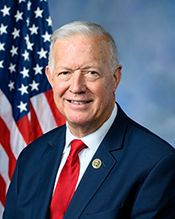
United States · Official source
3,235 records where Rep. Weber, Randy K. Sr. [R-TX-14] is listed as a sponsor, author, or other actor. Search with topics and years
United States · United States Congress · 13 May 2025
United States · United States Congress · 13 May 2025
United States · United States Congress · 8 May 2025
United States · United States Congress · 8 May 2025
United States · United States Congress · 8 May 2025
United States · United States Congress · 7 May 2025
United States · United States Congress · 7 May 2025
More Opportunities for Moms to Succeed Act or the MOMS Act This bill establishes requirements to enable the collection of certain child support during pregnancy, establishes grants for supportive services for women that promote alternatives to abortions, and requires the Department of Health and Human Services (HHS) to establish a website with pregnancy resources other than those about abortions. Specifically, the bill requires states to apply child support obligations to the time period during pregnancy under the Child Support Enforcement program. (The program enables states to receive federal matching funds for expenses related to child support enforcement activities and related services.) Such child support applies at the request of the mother and may be applied retroactively. Also, HHS must award grants to nonprofits to provide pregnant and postpartum women, and women parenting young children, with services or information on topics including health care (excluding abortions), child care, and employment assistance. It also requires HHS to provide grants to health care providers in rural or medically underserved areas, as well as tribal areas, to purchase equipment enabling telehealth visits for prenatal and postnatal care (e.g., monitoring devices). Additionally, the bill requires HHS to establish a public website to inform pregnant and postpartum women, and women parenting young children, of nearby services and resources on topics including health care, material or legal support, and alternatives to abortion. States must, as a condition of receiving certain federal funds, provide lists of nonprofit child placement agencies for potential inclusion on the site.
United States · United States Congress · 6 May 2025
United States · United States Congress · 6 May 2025
United States · United States Congress · 6 May 2025
United States · United States Congress · 5 May 2025
United States · United States Congress · 5 May 2025
This bill renames the Anahuac National Wildlife Refuge located in Anahuac, Texas, as the Jocelyn Nungaray National Wildlife Refuge.
United States · United States Congress · 1 May 2025
United States · United States Congress · 1 May 2025
This resolution honors the veterans who gave their lives in service to the country and recognizes the families and loved ones of such veterans. Additionally, the resolution requests that the President issue an annual proclamation designating Fallen Heroes Memorial Month.
United States · United States Congress · 1 May 2025
Ensuring Community Access to Pharmacist Services Act This bill provides for permanent coverage under Medicare of certain pharmacist services. Specifically, the bill provides for permanent coverage of testing and treatment services provided by pharmacists relating to (1) COVID-19, influenza, respiratory syncytial virus (RSV), and streptococcal pharyngitis (strep throat); and (2) other public health needs in relation to a declared public health emergency. (Similar authorities were temporarily granted during the COVID-19 public health emergency.) Such services must be provided in accordance with the applicable state laws governing pharmacists' scope of practice.
United States · United States Congress · 30 April 2025
Electrodiagnostic Medicine Patient Protection and Fraud Elimination Act of 2025 This bill requires, as a condition for Medicare payment, specified electrodiagnostic services to be furnished by qualified facilities that comply with accreditation, training, and other quality control requirements, as established under the bill. Specifically, the bill requires nerve conduction studies and needle electromyography tests to be furnished by facilities that are accredited by an organization that is approved by the Centers for Medicare & Medicaid Services (CMS). The accrediting organization must certify that the facility meets certain standards, including having a quality control program and requiring those who administer needle electromyography tests to have at least three months of specialized training. The bill also establishes an advisory committee to support the CMS in developing appropriate facility standards.
United States · United States Congress · 30 April 2025
Police Officers Protecting Children Act This bill specifies that certain active and retired law enforcement officers who are authorized to carry concealed firearms are not subject to the federal prohibition on possessing (or discharging) a firearm in a school zone.
United States · United States Congress · 29 April 2025
United States · United States Congress · 28 April 2025
United States · United States Congress · 28 April 2025
United States · United States Congress · 21 April 2025
United States · United States Congress · 17 April 2025
United States · United States Congress · 17 April 2025
United States · United States Congress · 10 April 2025
FDA Modernization Act 3.0 This bill requires the Food and Drug Administration (FDA) to publish an interim final rule implementing a provision of the Consolidated Appropriations Act of 2023 that authorized the use of certain alternatives to animal testing to support investigational use of a new drug. The rule must replace references to animal tests, data, studies, models, and research with references to nonclinical tests, data, studies, models, and research throughout the FDA’s regulations governing investigational new drug applications. The rule must be published within one year of the bill’s enactment, and must take immediate effect as an interim final rule.
United States · United States Congress · 10 April 2025
United States · United States Congress · 10 April 2025
United States · United States Congress · 10 April 2025
United States · United States Congress · 10 April 2025
Combating Organized Retail Crime Act of 2025 This bill expands federal enforcement of criminal offenses related to organized retail and supply chain crime. The term organized retail and supply chain crime includes criminal offenses involving the interstate transportation of stolen property, the sale or receipt of stolen goods, or theft from an interstate or foreign shipment that is committed by, in coordination with, or at the instruction of an organization. First, with respect to criminal offenses involving the interstate transportation of stolen property or the sale or receipt of stolen goods, the bill broadens the scope of conduct that qualifies as offenses by allowing prosecutions to be based on the aggregate value of stolen items over a 12-month period. Additionally, the bill makes the offenses predicate offenses (i.e., underlying offenses) for prosecutions under the federal money laundering statute and authorizes the criminal forfeiture of any property obtained from the proceeds of an offense. Second, with respect to criminal offenses involving theft from an interstate or foreign shipment, the bill also makes an offense an underlying offense for prosecution under the federal money laundering statute and authorizes the criminal forfeiture of any associated property. Third, the bill expands the federal money laundering statute to include offenses involving general-use prepaid cards, gift certificates, or store gift cards. Finally, the bill temporarily establishes a center within the Department of Homeland Security to coordinate federal law enforcement activities related to organized retail and supply chain crime.
United States · United States Congress · 10 April 2025
Transportation Freedom Act This bill reduces taxes on auto companies and repeals specified environmental regulations on cars and trucks. The bill establishes a new tax deduction equal to 200% of eligible wages paid or incurred by domestic producers of automobiles or automobile components, subject to limitations. It also allows an entity to reduce (and adjust) its financial statement income (for purposes of calculating liability for the alternative minimum tax) by the amount of eligible wages it elects to deduct. The bill nullifies the 2024 rules of the Environmental Protection Agency (EPA) regarding (1) the finalization of specified greenhouse gas (GHG) programs and the reduction of emissions from certain light-duty and medium-duty vehicles (e.g., cars and trucks that are under a certain weight) starting with model year 2027, and (2) phase three of GHG emission standards for heavy-duty vehicles (e.g., school buses and tractor-trailer trucks). It also repeals the 2024 rules of the National Highway Traffic Safety Administration (NHTSA) regarding corporate average fuel economy (CAFE) standards for certain cars, trucks, and vans. Additionally, the bill eliminates (1) the option given to California to set standards for car emissions that are more stringent than those set under the Clean Air Act, and (2) the option for other states to adopt California's standards. NHTSA and the EPA must establish new CAFE and GHG standards, respectively, for vehicles that are economically practicable and technologically feasible. The GHG standards may not require the production or sale of electric vehicles.
United States · United States Congress · 10 April 2025
Ending Intermittent Energy Subsidies Act of 2025 This bill phases out and eliminates the ability to transfer federal tax credits for solar and wind investments and energy production. Specifically, the bill phases out over five years the (1) clean electricity investment tax credit for investments in a facility that generates electricity using solar or wind energy, and (2) clean electricity production tax credit for electricity produced from solar or wind energy. Further, the bill eliminates the ability of a taxpayer to transfer to a third party in exchange for cash any portion of the clean electricity investment tax credit and clean electricity production tax credit attributable to solar or wind energy.
United States · United States Congress · 9 April 2025
United States · United States Congress · 9 April 2025
United States · United States Congress · 9 April 2025
United States · United States Congress · 8 April 2025
Destruction of Hazardous Imports Act This bill expands the Food and Drug Administration’s (FDA’s) authority to require the destruction of certain items that are refused import into the United States and pose a risk to public health. Under current law, imported food, drugs, medical devices, tobacco products, and cosmetics are subject to FDA review. If an imported item is deficient in a specified manner (e.g., counterfeit, misbranded, or manufactured under insanitary conditions), the item is generally refused admission to the United States. An item refused admission may generally be exported, except that the FDA may destroy a drug, medical device, or tobacco product that is valued under $2,500 without the opportunity for export. Under the bill, the FDA may order the destruction, without the opportunity for export, of any food, drug, medical device, tobacco product, or cosmetic that is refused admission if the item presents a significant public health concern. If such an order is issued, the item’s owner or consignee must destroy it within 90 days at their own cost. The bill also prohibits the unauthorized movement (e.g., export) of an item subject to a destruction order. A violator is subject to a fine, a prison term of up to one year, or both. The FDA must promulgate regulations to carry out these provisions. These regulations must provide for due process for the owner or consignee of an item subject to a destruction order, including notice and an opportunity to appear before the item is destroyed.
United States · United States Congress · 8 April 2025
United States · United States Congress · 7 April 2025
Religious Workforce Protection Act This bill allows the Department of Homeland Security (DHS) to extend the nonimmigrant visa status of certain religious workers. Under current law, if specified conditions are met, nonimmigrant religious workers may receive a visa for a period not to exceed five years. The bill allows DHS to grant an extension until the individual’s application for adjustment of status to permanent resident or an immigrant visa has been processed and a decision has been made. To be eligible for the extension, the individual must be (1) the beneficiary of a certain type of immigrant petition, and (2) eligible for such immigrant status absent the application of certain numerical limitations. Such individuals who have pending adjustment of status applications are also granted certain job flexibilities, such as the ability to change employers. Individuals who have previously departed the U.S. due to the expiration of their visa are exempt from the one-year foreign residence requirement to renew their visa.
United States · United States Congress · 2 April 2025
This joint resolution nullifies the Environmental Protection Agency notice titled California State Motor Vehicle and Engine Pollution Control Standards; Advanced Clean Cars II; Waiver of Preemption; Notice of Decision (90 Fed. Reg. 642) and published on January 6, 2025. Among other elements, the notice grants the California Air Resources Board request for a waiver for its Advanced Clean Cars II (ACC II) regulations. (Under the Clean Air Act, California may seek waivers of the preemption prohibiting states from enacting certain emission standards.)
United States · United States Congress · 2 April 2025
United States · United States Congress · 2 April 2025
United States · United States Congress · 2 April 2025
United States · United States Congress · 1 April 2025
United States · United States Congress · 31 March 2025
United States · United States Congress · 27 March 2025
United States · United States Congress · 27 March 2025
Portable Ultrasound Reimbursement Equity Act of 2025 This bill provides for Medicare coverage of ultrasound tests performed at a beneficiary's home. The Centers for Medicare & Medicaid Services must provide for separate payments for portable ultrasound services in the same manner and to the same extent as for portable X-ray services.
United States · United States Congress · 27 March 2025
United States · United States Congress · 27 March 2025
United States · United States Congress · 27 March 2025
Stop Antisemitism on College Campuses Act This bill prohibits an institution of higher education (IHE) that participates in federal student aid programs from authorizing, facilitating, providing funding for, or otherwise supporting any event that promotes anti-Semitism on the IHE's campus.
United States · United States Congress · 27 March 2025
United States · United States Congress · 26 March 2025
United States · United States Congress · 26 March 2025
Safer Skies Act of 2025 This bill directs the Transportation Security Administration (TSA) to require that certain small public charter air carrier operations comply with the Aircraft Operator Standard Security Program (AOSSP). As background, the TSA has different types of security programs based on the nature of the air carrier’s operations. Currently, the AOSSP requirements apply to all scheduled passenger service with a seating capacity of 61 or more seats that operate into or out of a TSA-controlled sterile area. The TSA also has other security programs that have less stringent security requirements than the AOSSP. These programs are designed for different types of aircraft operators, including operations under Part 135 (e.g., scheduled commuter flights in smaller aircraft) and Part 380 (e.g., public charter flights) of the Department of Transportation’s regulations. This bill applies the AOSSP requirements to air carriers operating under Part 135 and Part 380 that (1) operate scheduled public charter service, (2) operate airplanes configured with 10 or more passenger seats, and (3) do not enplane or deplane in a TSA-managed checkpoint.