Resolution· HRESH.Res. 258 (119th)referred
Censuring Representative Jasmine Crockett of Texas.
United States · United States Congress · 26 March 2025
The world's political record
Person
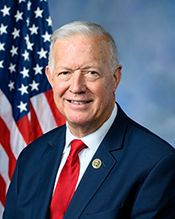
United States · Official source
3,235 records where Rep. Weber, Randy K. Sr. [R-TX-14] is listed as a sponsor, author, or other actor. Search with topics and years
United States · United States Congress · 26 March 2025
United States · United States Congress · 25 March 2025
John W. Walsh Alpha-1 Home Infusion Act of 2025 This bill provides for Medicare coverage of treatment for alpha-1 antitrypsin (AAT) deficiency (a protein deficiency that raises the risk of lung and other diseases). Specifically, the bill provides for coverage of at-home augmentation therapy for beneficiaries with emphysema as a result of severe hereditary AAT deficiency. Treatment must be provided through qualified home infusion therapy suppliers; beneficiaries must be under the care of a physician, nurse practitioner, or physician assistant.
United States · United States Congress · 24 March 2025
Proportional Reviews for Broadband Deployment Act This bill excludes certain requests to modify an existing wireless tower or base station from specified environmental and historic preservation review requirements. Specifically, the bill applies to certain requests to modify an existing wireless tower or base station by collocating, removing, or replacing transmission equipment. In particular, the bill specifies that such projects are not considered major federal actions under the National Environmental Policy Act of 1969 or undertakings under the National Historic Preservation Act. This excludes the projects from relevant reviews required under those acts.
United States · United States Congress · 24 March 2025
This bill reauthorizes and modifies the National Oceanic and Atmospheric Administration's Integrated Ocean Observation System (IOOS). (The IOOS is made up of radar, gliders, buoys, vessels, and different models and forecasts that collect data points to monitor and report on conditions along the nation's coasts and in marine waters.) Specifically, the bill reauthorizes the IOOS through FY2030. The bill also directs the Interagency Ocean Observation Committee (which coordinates interagency planning, budgeting, and assessments for the system) to develop requirements and processes for regional offices and federally funded projects of the agencies of the committee to collaborate with the regional coastal observing systems for data sharing at regional levels.
United States · United States Congress · 24 March 2025
Common Sense Air Regulations Act This bill nullifies the Environmental Protection Agency (EPA) final rule titled Reconsideration of the National Ambient Air Quality Standards for Particulate Matter (89 Fed. Reg. 16202) and published on March 6, 2024. Among other elements, the rule revised primary (health-based) National Ambient Air Quality Standards (NAAQS) for Particulate Matter under the Clean Air Act. NAAQS are air quality standards set and adjusted by the EPA to protect public health and the environment from certain pollutants.
United States · United States Congress · 24 March 2025
United States · United States Congress · 21 March 2025
Improving Law Enforcement Officer Safety and Wellness Through Data Act of 2025 This bill requires the Department of Justice to report on (1) targeted attacks on law enforcement officers, (2) the feasibility of incorporating such attacks into existing crime reporting systems, and (3) the mental health resources that are available to law enforcement officers.
United States · United States Congress · 21 March 2025
Protecting Individuals with Down Syndrome Act This bill creates new federal crimes related to the performance of an abortion on an unborn child who has Down syndrome. It subjects a violator to criminal penalties—a fine, a prison term of up to five years, or both. It also authorizes civil remedies, including damages and injunctive relief. A woman who undergoes such an abortion may not be prosecuted or held civilly liable.
United States · United States Congress · 18 March 2025
Physician Led and Rural Access to Quality Care Act This bill expands flexibilities for physicians and physician-owned hospitals under the Stark law (i.e., the Physician Self-Referral Law). The Stark law generally prohibits physicians from referring patients to receive services that are payable under Medicare or Medicaid from entities in which the physician or an immediate family member has a financial relationship. The bill allows physicians or their immediate family members to have financial interests in rural hospitals that are located more than 35 miles (or 15 miles in certain mountainous areas or areas with only secondary roads) from a hospital or critical access hospital. The Stark law also generally prohibits physician-owned hospitals from expanding the number of operating rooms, procedure rooms, or beds beyond the number in existence as of March 23, 2010, in order to be excepted under the Stark law. The bill removes this restriction.
United States · United States Congress · 18 March 2025
United States · United States Congress · 14 March 2025
Review Every Veterans Claim Act of 2025 This bill prohibits the Department of Veterans Affairs (VA) from denying a claim for benefits on the sole basis that a veteran failed to appear for a medical examination provided by the VA in conjunction with the claim for benefits.
United States · United States Congress · 14 March 2025
Veterans' Compensation Cost-of-Living Adjustment Act of 2025 This bill requires the Department of Veterans Affairs (VA) to increase the amounts payable for wartime disability compensation, additional compensation for dependents, the clothing allowance for certain disabled veterans, and dependency and indemnity compensation for surviving spouses and children. Specifically, the VA must increase the amounts by the same percentage as the cost-of-living increase in benefits for Social Security recipients that is effective on December 1, 2025. The bill requires the VA to publish the amounts payable, as increased, in the Federal Register. The VA is authorized to make a similar adjustment to the rates of disability compensation payable to persons who have not received compensation for service-connected disability or death.
United States · United States Congress · 14 March 2025
United States · United States Congress · 14 March 2025
Choice in Automobile Retail Sales Act of 2025 This bill limits the authority of the Environmental Protection Agency (EPA) with regard to regulating emissions standards for new motor vehicles. Specifically, the EPA is prohibited from prescribing a regulation related to new motor vehicle emissions standards that (1) mandates the use of any specific technology, or (2) results in limited availability of new motor vehicles based on the type of new motor vehicle engine.
United States · United States Congress · 11 March 2025
Save Our Shrimpers Act This bill prohibits federal funds from being made available to international financial institutions (e.g., the International Monetary Fund) for financing activities related to foreign shrimp farms. The bill also requires an annual report on compliance by U.S. leadership of international financial institutions with policies to oppose financing for certain commodities or minerals. Specifically, the bill requires the Department of the Treasury to condition any provision of federal funds to an international financial institution on the requirement that the funds not be used to finance any activity related to shrimp farming, shrimp processing, or the export of shrimp in any foreign country. Under current law, Treasury must instruct U.S. leadership of international financial institutions to oppose providing financial assistance for the production or extraction of any commodity or mineral for export if (1) the commodity or mineral is in surplus on world markets, and (2) the export of such commodity or mineral will cause substantial injury to U.S. producers of a competing commodity or mineral (or of the same or a similar commodity or mineral). This bill requires the Government Accountability Office to investigate and annually report to Congress on the extent to which U.S. leadership at these institutions have carried out Treasury's instructions.
United States · United States Congress · 11 March 2025
United States · United States Congress · 11 March 2025
United States · United States Congress · 11 March 2025
Protecting the Right to Keep and Bear Arms Act of 2025 This bill prohibits (1) the President or the Department of Health and Human Services from declaring emergencies or disasters for the purpose of imposing gun control; and (2) a federal officer or employee, or person operating under color of federal law or receiving federal funds, from banning the possession, manufacture, sale, or transfer of weapons to which the Second Amendment of the Constitution applies, ammunition, or firearm accessories while acting in support of relief from a major disaster or emergency.
United States · United States Congress · 10 March 2025
United States · United States Congress · 10 March 2025
Medicare Home Health Accessibility Act This bill allows individuals to receive occupational therapy as a home health service under Medicare without the need for other services. Currently, individuals may only receive occupational therapy as a home health service if they first qualify for home health services based on other needs (e.g., physical therapy).
United States · United States Congress · 10 March 2025
This bill designates the facility of the United States Postal Service located at 620 East Pecan Boulevard in McAllen, Texas, as the "Agent Raul H. Gonzalez Jr. Memorial Post Office Building".
United States · United States Congress · 6 March 2025
Unlocking our Domestic LNG Potential Act of 2025 This bill repeals certain restrictions on the import and export of natural gas under the Natural Gas Act, including requirements for Department of Energy (DOE) approval and related provisions that address free trade agreements. In addition, the bill grants the Federal Energy Regulatory Commission (FERC) the exclusive authority to approve or deny applications to authorize the siting, construction, expansion, or operation of facilities (e.g., liquefied natural gas terminals) to export natural gas to foreign countries or import natural gas from foreign countries. (Currently, DOE authorizes the export or import of natural gas, and FERC authorizes related facilities.) In determining whether to approve or deny an application, FERC must deem the exportation or importation of natural gas to be consistent with the public interest.
United States · United States Congress · 6 March 2025
Anti-CBDC Surveillance State Act This bill prohibits a Federal Reserve bank from offering products or services directly to an individual, maintaining an account on behalf of an individual, or issuing a central bank digital currency (i.e., a digital dollar). Further, the Board of Governors of the Federal Reserve System is prohibited from using a central bank digital currency to implement monetary policy or from testing, studying, creating, or implementing a central bank digital currency, with exceptions as provided by the bill.
United States · United States Congress · 6 March 2025
United States · United States Congress · 5 March 2025
Streamlining Program Efficiency and Expanding Deployment for BEAD Act or the SPEED for BEAD Act This bill makes certain changes to the Broadband, Equity, Access, and Deployment (BEAD) Program, including by expanding the broadband technologies that may qualify for funding and prohibiting states from regulating broadband rates in connection with the program. (The BEAD Program is administered by the National Telecommunications and Information Administration (NTIA) and provides funding to eligible entities for broadband deployment, connectivity, mapping, and adoption projects. Eligible entities include U.S. states, territories, and the District of Columbia.) Specifically, the bill establishes that projects using any broadband technology (e.g., satellite, fixed wireless, or fiber) may qualify for funding, provided the technology meets specified performance criteria. (Original BEAD rules established a preference for fiber projects.) The bill also explicitly prohibits eligible entities from regulating, setting, or otherwise mandating pursuant to the BEAD Program (1) rates charged for broadband service, or (2) methodologies used to calculate such rates. The prohibition includes rate regulation carried out in conjunction with the existing requirement that subgrantees offer at least one low-cost broadband service option to certain subscribers. Further, the bill prohibits the NTIA and eligible entities from establishing or enforcing conditions, preferences, or other requirements related to collective bargaining and labor agreements; climate change; diversity, equity, and inclusion; and other topics. The bill also modifies the purposes for which the funds may be used and the treatment of unused funds. Finally, the bill replaces the term Equity in the program’s name with Expansion .
United States · United States Congress · 5 March 2025
Continuing Robust and Uninhibited Drilling and Exporting Act or the CRUDE Act This bill limits the President's authority to restrict the export of crude oil from the United States. Currently, the President may restrict the export of oil for up to a year if the President declares a national emergency; the restrictions are sanctions or trade restrictions that apply to countries, persons, or organizations for national security reasons; or the Department of Commerce, in consultation with the Department of Energy (DOE), finds and reports to the President that the export of U.S. crude oil has caused sustained material oil supply shortages or sustained oil prices significantly above world market levels that have caused or are likely to cause sustained material adverse employment effects. However, this bill only allows the President to impose such restrictions if the President declares a national emergency based on findings that are jointly issued by Department of Defense, DOE, and Commerce and include the conclusions described above about oil supply shortages or increased oil prices; or the restrictions are sanctions or trade restrictions that apply to countries, persons, or organization for national security reasons.
United States · United States Congress · 5 March 2025
United States · United States Congress · 5 March 2025
This resolution censures Representative Al Green.
United States · United States Congress · 3 March 2025
United States · United States Congress · 3 March 2025
Harmful Algal Bloom Disaster Relief Act This bill explicitly authorizes the President to declare that a major disaster exists when algal blooms cause damage sufficient to warrant federal major disaster assistance.
United States · United States Congress · 27 February 2025
Second Amendment For Every Registrable Voter Act or the SAFER Voter Act This bill reduces the minimum age—from 21 years to 18 years—at which an individual may obtain a handgun from a federally licensed gun dealer, manufacturer, importer, or collector.
United States · United States Congress · 27 February 2025
United States · United States Congress · 27 February 2025
Maintaining Investments in New Innovation Act This bill requires drug products with genetically targeted technology to have had market approval for at least 11 years in order to qualify for the Medicare Drug Price Negotiation Program. (The program requires the Centers for Medicare & Medicaid Services to negotiate the prices of certain prescription drugs under Medicare beginning in 2026. Among other requirements, drugs must have had market approval for at least 7 years (for drug products) or 11 years (for biologics) to qualify for negotiation.)
United States · United States Congress · 27 February 2025
FEMA for America First Act of 2025 This bill restricts the eligibility of non-U.S. nationals ( aliens under federal law) for federal disaster assistance benefits by eliminating eligibility for individuals with certain immigration statuses. Under current law, a non-U.S. national must have one of several specific immigration statuses (e.g., lawful permanent resident, parolee, or refugee) to be eligible for federal disaster assistance provided to individuals (e.g., the Federal Emergency Management Agency's (FEMA's) Individuals and Households Program or disaster unemployment assistance). The bill narrows the immigration statuses eligible for disaster assistance to individuals by making non-U.S. nationals ineligible for such assistance if they are a parolee (i.e., paroled into the United States temporarily for urgent humanitarian reasons or significant public benefit), an asylee that has not sought adjustment to lawful permanent resident status, or a refugee that has not sought adjustment to lawful permanent resident status.
United States · United States Congress · 27 February 2025
Justice for Vaccine Injured Veterans Act of 2025 This bill establishes a presumption of service-connection for certain conditions that become manifest in a member of the Armed Forces who received a COVID-19 vaccine under orders any time from August 24, 2021, through January 10, 2023. Under a presumption of service-connection, specific conditions diagnosed in certain veterans are presumed to have been caused by the circumstances of their military service. Health care benefits and disability compensation may then be awarded. Specifically, the bill establishes a presumption of service-connection, regardless of whether there is a record of evidence of the condition during a servicemember's period of service, for myocarditis, pericarditis, thrombosis with thrombocytopenia syndrome, Guillain-Barre Syndrome, and any other condition the Department of Veterans Affairs (VA) determines is warranted based on a positive association with the COVID-19 vaccine. Under the bill, if the VA determines an additional condition should be specified, it must submit a notice of such determination to Congress. The VA must also report to Congress every 60 days for four years regarding claims for compensation related to a condition associated with the COVID-19 vaccine. Such reports must be made publicly available.
United States · United States Congress · 27 February 2025
United States · United States Congress · 27 February 2025
United States · United States Congress · 26 February 2025
United States · United States Congress · 26 February 2025
Shielding Children's Retinas from Egregious Exposure on the Net Act or the SCREEN Act This bill establishes age-verification requirements for commercial interactive computer services (e.g., websites) that make available content that is harmful to minors (e.g., content that appeals to the prurient interest in nudity or sex, is obscene, or is child pornography). Specifically, the bill requires such services to adopt and utilize technology verification measures to ensure that (1) users of the service are not minors, and (2) minors are prevented from accessing any content on the service that is harmful to minors. Additionally, such services must (1) use the technology to verify a user's age; (2) publish the verification process that the service uses; and (3) subject users' Internet Protocol (IP) addresses, including known virtual proxy network (VPN) IP addresses, to the technology verification measures, unless the service determines a user is not located within the United States. Covered services also must implement data security measures to protect information about individuals collected through the verification process. The Federal Trade Commission must conduct regular audits of such services, issue guidance, and otherwise enforce the requirements of this bill.
United States · United States Congress · 26 February 2025
United States · United States Congress · 26 February 2025
United States · United States Congress · 25 February 2025
United States · United States Congress · 25 February 2025
This joint resolution nullifies the Environmental Protection Agency rule titled National Emission Standards for Hazardous Air Pollutants: Rubber Tire Manufacturing (89 Fed. Reg. 94886) and published on November 29, 2024. The rule addresses the decision in Louisiana Environmental Action Network v. EPA (D.C. Cir. 2020) by implementing emissions standards for the rubber processing subcategory of the rubber tire manufacturing industry to ensure all emissions of hazardous air pollutants from sources in the source category are regulated.
United States · United States Congress · 25 February 2025
Protecting American Agriculture from Foreign Adversaries Act of 2025 This bill makes changes to the Committee on Foreign Investment in the United States (CFIUS), including by requiring CFIUS to determine whether a national security review is necessary for reportable agricultural land transactions that are referred by the Department of Agriculture (USDA). (CFIUS oversees the national security risks of certain foreign investment in the United States. CFIUS has the authority to review covered transactions, which include mergers, acquisitions, and takeovers that could result in foreign control of a U.S. business; certain investments in businesses involved in critical technologies, critical infrastructure, or sensitive personal data; and certain real estate transactions.) Specifically, the bill directs CFIUS to, after receiving notification from USDA, determine (1) whether a reportable agricultural land transaction is a covered transaction, and (2) whether CFIUS should initiate a national security review or take another action with respect to the transaction. Reportable agricultural land transaction means a transaction (1) that USDA has reason to believe is a covered transaction; (2) that involves the acquisition of an interest in agricultural land by a foreign person of China, North Korea, Russia, or Iran; and (3) with respect to which a foreign person is required to submit a report to USDA regarding their agricultural land transactions. The bill also expands the membership of CFIUS to include the Secretary of Agriculture for covered transactions that involve agricultural land, agricultural biotechnology, or the agriculture industry (e.g., agricultural transportation, storage, and processing).
United States · United States Congress · 25 February 2025
United States · United States Congress · 25 February 2025
Broadband Buildout Accountability Act This bill makes actions or decisions of the National Telecommunications and Information Administration concerning the Broadband Equity, Access, and Deployment Program subject to the Freedom of Information Act, which governs the release of federal documents.
United States · United States Congress · 24 February 2025
Falun Gong Protection Act This bill requires the President to impose visa- and property-blocking sanctions on foreign persons that have knowingly and directly engaged in or facilitated the involuntary harvesting of organs in China. Sanctions may not be imposed on the importation of goods or with respect to specified transactions related to humanitarian assistance. The authority to impose sanctions under this bill expires five years after enactment.
United States · United States Congress · 24 February 2025
No Rogue Rulings Act or NORRA This bill limits the authority of federal district courts to issue injunctions. Specifically, it prohibits a district court from issuing an injunction unless the injunction applies only to the parties of the particular case before the court.
United States · United States Congress · 24 February 2025
Leveling the Playing Field 2.0 Act This bill addresses unfair trade practices by making various changes to U.S. antidumping and countervailing duty laws. Antidumping laws provide relief to U.S industries and workers that are materially injured or threatened with injury due to imports of like products sold in the U.S. market at less than fair value, while countervailing duty laws provide such relief from imports of products subsidized by a foreign government or public entity. Specifically, the bill establishes a process for successive antidumping and countervailing duty investigations. Successive investigations may be concurrent (an ongoing investigation of the same product) or recently completed (not more than two years before the date of the initiation of the successive investigation). Further, the bill establishes a timeline for the Department of Commerce to issue determinations in successive investigations. Among other provisions, the bill authorizes Commerce to apply countervailing duty law to subsidies provided by a foreign government or public entity to a company operating in a different country, use another method for calculating the cost of production in specific circumstances, and require importers to certify that the imported merchandise is not subject to an antidumping or countervailing duty order. Additionally, the bill statutorily establishes procedures for Commerce to conduct circumvention inquiries, including by specifying the deadlines for preliminary and final determinations. The bill also provides statutory authority for Commerce to investigate currency undervaluation as a countervailable subsidy.
United States · United States Congress · 24 February 2025
Protecting Life from Chemical Abortions Act This bill nullifies certain changes made by the Food and Drug Administration (FDA) to dispensing requirements for mifepristone. (Mifepristone is a drug that is approved to end pregnancies through 10 weeks gestation when used in conjunction with the drug misoprostol. The procedure is often referred to as medication abortion or the abortion pill.) The FDA regulates mifepristone through the Mifepristone Risk Evaluation and Mitigation Strategy (REMS) program. The program requires health care providers to comply with certain requirements in order to prescribe or dispense mifepristone to end a pregnancy; the program previously included an in-person dispensing requirement that required mifepristone to be directly dispensed to patients in clinics, medical offices, or hospitals. During the COVID-19 public health emergency, the FDA stopped enforcing the in-person dispensing requirement, which allowed mail-order pharmacies to fill and dispense mifepristone prescriptions. In January 2023, the FDA modified program requirements so as to (1) remove the in-person dispensing requirement, and (2) require pharmacies to be program-certified in order to dispense mifepristone. The modifications allow certified retail pharmacies to dispense mifepristone pursuant to prescriptions that are written by certified prescribers. The bill nullifies the January 2023 changes and prohibits the FDA from (1) exercising any enforcement discretion with respect to program requirements, or (2) reducing program protections until every state submits certain data regarding abortions to the Centers for Disease Control and Prevention. The bill also generally prohibits the declaration of a public health emergency with respect to abortions.