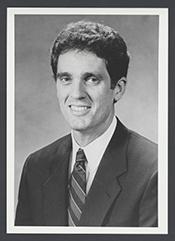
United States · United States Congress · 6 March 1997
Safe and Sober Streets Act of 1997 - Amends Federal transportation law to require the Secretary of Transportation to withhold five percent of the funds authorized for Federal aid highway programs for FY 2001, and ten percent of such amounts for subsequent fiscal years, from any State that has not enacted and is not enforcing a law that considers as intoxicated an individual who has an alcohol concentration level of 0.08 percent or greater while operating a motor vehicle in such State. Allows funds withheld from a State during FY 2001 to be available for up to three fiscal years after such date (to allow a State to meet such requirement within such period), but allows no grace period with respect to funds withheld during the subsequent fiscal years.
United States · United States Congress · 6 March 1997
Tax-Free Internet Act of 1997 - Amends the Internal Revenue Code to exempt from any excise tax amounts paid for any Internet access service, access-related service, or online service.
United States · United States Congress · 5 March 1997
Partial-Birth Abortion Ban Act of 1997 - Amends the Federal criminal code to prohibit performing a partial birth abortion in or affecting interstate or foreign commerce, unless it is necessary to save the life of the mother and no other medical procedure would suffice. Defines "partial-birth abortion" as an abortion in which the person performing the procedure partially vaginally delivers a living fetus before killing the infant and completing the delivery. Prescribes penalties. Authorizes the father and, if the mother is under 18 years of age, the maternal grandparents of the fetus to obtain specified relief in a civil action, even if the mother consented to the abortion, unless the pregnancy resulted from the plaintiff's criminal conduct or the plaintiff consented to the abortion. Prohibits the prosecution of a woman upon whom a partial-birth abortion is performed for conspiracy to violate this Act or under provisions regarding punishment as a principal or an accessory or for concealment of a felony.
United States · United States Congress · 5 March 1997
United Nations Erroneous Debt Act of 1997 - Prohibits the payment of U.S. contributions to the United Nations until the President certifies to the Congress that the United Nations has: (1) agreed to reimburse or credit to the United States a specified sum which reflects unreimbursed U.S. assistance to U.N. military peacekeeping efforts from 1992 through 1995; or (2) eliminated alleged U.S. arrearages to the United Nations and agreed to reimburse or credit a specified sum to the United States.
United States · United States Congress · 5 March 1997
Human Cloning Prohibition Act - Makes it unlawful for any person to use a human somatic cell for the process of producing a human clone. Sets forth a civil money penalty.
United States · United States Congress · 4 March 1997
Volunteer Protection Act of 1997 - Provides limited tort claim liability protection for nonprofit or governmental volunteers acting in good faith and within the scope of their duties. Sets forth discretionary State conditions and exceptions to such liability protection. Increases Social Services Block Grant Program allotments under title XX of the Social Security Act to a State that has adopted a similar measure within a specified time and conditions such increase upon an annual certification that the State law remains in effect.
United States · United States Congress · 3 March 1997
Expresses the sense of the Congress that: (1) the Ten Commandments are a declaration of fundamental principles that are the cornerstones of a fair and just society; and (2) the public display of the Ten Commandments, including in government offices and courthouses, should be permitted.
United States · United States Congress · 27 February 1997
American Land Sovereignty Protection Act - Amends the National Historic Preservation Act Amendments of 1980 to prohibit the Secretary of the Interior from nominating any Federal lands for inclusion on the World Heritage List pursuant to the Convention Concerning the Protection of the World Cultural and Natural Heritage unless: (1) the Secretary finds that commercially viable uses of nominated lands (including lands located within ten miles of them) will not be adversely affected by such inclusion, and publishes that finding; (2) the Secretary has reported to the Congress on the lands' natural resources and the impact that the inclusion would have on existing and future uses of such lands; and (3) such nomination is specifically authorized by a law. (Sec. 3) Authorizes the President to submit proposals for legislation authorizing such a nomination. Requires the Secretary to object to the inclusion of any property in the United States on the list of World Heritage in Danger (established under the Convention) unless the Secretary: (1) has reported to the Congress on the necessity for such inclusion, including the natural resources associated with the property, and the impact that such inclusion would have on existing and future uses of such property; and (2) is specifically authorized to assent to the inclusion by a joint resolution of the Congress enacted after the report is submitted. Directs the Secretary to report annually to specified congressional committees certain information on each World Heritage Site within the United States. (Sec. 4) Prohibits Federal officials from nominating lands in the United States for designation as a Biosphere Reserve under the Man and Biosphere Program of the United Nations Educational, Scientific, and Cultural Organization. Provides that any such designation shall not have, and shall not be given, any force or effect, unless the Biosphere Reserve: (1) is specifically authorized by a law enacted before December 31, 2000; (2) consists solely of federally-owned lands; and (3) is subject to a management plan that specifically ensures that the use of intermixed or adjacent non-Federal property is not limited or restricted as a result of that designation. Directs the Secretary of State to report annually to specified congressional committees information on each Biosphere Reserve within the United States. (Sec. 5) Prohibits, under any international agreement (with exceptions under certain wetlands agreements and conventions), the nomination, classification, or designation of: (1) federally-owned lands located within the United States for a special or restricted use unless specifically authorized by law; (2) State or local government lands unless specifically authorized by State or local law; or (3) privately owned lands without the owner's consent.
United States · United States Congress · 27 February 1997
Social Security Preservation Act of 1997 - Amends title II (Old Age, Survivors and Disability Insurance) (OASDI) of the Social Security Act to require the Managing Trustee of the Board of Trustees of the Federal Old-Age and Survivors Insurance Trust Fund and the Federal Disability Insurance Trust Fund (trust funds) to ensure that the annual surplus of the trust funds is invested in: (1) marketable interest-bearing obligations of the United States or obligations guaranteed by the United States; or (2) certificates of deposit in insured depository institutions. Outlines provisions for determining the annual surplus of the trust funds. Prohibits disinvestment of trust fund amounts from public debt obligations, any refraining from making such investments, or any delay in making normal deposits in such trust funds for public debt limit-related purposes. Authorizes the sale of trust fund public debt obligations for the payment of cash benefits and administrative expenses, with conditions, including notification to each House of Congress and the Comptroller General at least three days in advance of such sale.
United States · United States Congress · 27 February 1997
Biomaterials Access Assurance Act of 1997 - Provides that, in any civil action, a biomaterials supplier (one who supplies components or raw materials used to manufacture implants) may raise any defense provided under this Act. Exempts a biomaterials supplier from liability for harm to a claimant caused by an implant, with exceptions in the case of a supplier who: (1) is a registered manufacturer of the implant; (2) is a seller of the implant and who held title to the implant at the time of sale (or is related by common ownership or control to such a seller); or (3) furnishes raw materials or components that fail to meet applicable contractual requirements or specifications. States that a supplier may be considered a manufacturer of an implant, for purposes of such civil actions, only if the supplier has registered with the Secretary of Health and Human Services and included the implant on a list of devices filed pursuant to the Federal Food, Drug, and Cosmetic Act. Requires claimant payment of attorney's fees if the court finds the claim to be without merit and frivolous.
United States · United States Congress · 27 February 1997
Amends the Internal Revenue Code to increase the: (1) maximum deduction for individual retirement account contributions; and (2) income amount at which phase-out of that deduction begins. Exempts from the early distribution penalty: (1) distributions from certain types of retirement plans for first-time home buyer, education, or adoption expenses; and (2) for unemployed individuals (currently, for unemployed individuals for health insurance premiums). Modifies requirements regarding penalties for medical care early distributions.
United States · United States Congress · 25 February 1997
Access to Emergency Medical Services Act of 1997 - Amends the Internal Revenue Code, the Employee Retirement Income Security Act of 1974, and the Public Health Service Act to require any group health plan which provides emergency health services to cover emergency services furnished to a plan participant: (1) without need for any prior authorization; (2) subject to stated exceptions, whether or not the physician or provider is plan participant; and (3) subject to stated exceptions, without regard to any other term or condition of the plan. Defines "emergency medical services" and related terms. Amends titles XVIII (Medicare) and XIX (Medicaid) to provide for the provision of the same benefits to Medicare and Medicaid plan participants. Provides for the establishment of guidelines by the appropriate Secretaries in order carry out the provisions of this Act. Directs the Secretaries to jointly establish an advisory panel to assist in the development of such guidelines.
United States · United States Congress · 13 February 1997
Truth in Employment Act of 1997 - Amends the National Labor Relations Act to provide that nothing in specified prohibitions against unfair labor practices shall be construed as requiring an employer to employ any person who seeks or has sought employment with the employer in furtherance of other employment or agency status.
United States · United States Congress · 13 February 1997
Authorizes the Secretary of Defense to assign up to 10,000 Department of Defense personnel at any one time to assist: (1) the Immigration and Naturalization Service in preventing the entry into the United States of terrorists, drug traffickers, and illegal aliens; and (2) the U.S. Customs Service in the inspection of cargo, vehicles, and aircraft at points of entry into the United States.
United States · United States Congress · 12 February 1997
Security and Freedom Through Encryption (SAFE) Act - Amends the Federal criminal code to permit any person within any State, and any U.S. person in a foreign country, to use any encryption regardless of the encryption algorithm selected, encryption key length chosen, or implementation technique or medium used, with an exception for the unlawful use of encryption in furtherance of a criminal act. Allows any person within any State to sell in interstate commerce any encryption. Specifies that no person in lawful possession of a key to encrypted information may be required by Federal or State law to relinquish to another person control of that key, with an exception for access for law enforcement purposes. Sets penalties for the willful use of encryption in furtherance of the commission of a criminal offense. (Sec. 3) Amends the Export Administration Act of 1979 to grant the Secretary of Commerce exclusive authority to control exports of all hardware, software, and technology for information security (including encryption), except that which is specifically designed or modified for military use. Prohibits requiring any validated license (with limited exceptions pursuant to the Trading With The Enemy Act or the International Emergency Economic Powers Act) for the export or reexport of any: (1) software, including software with encryption capabilities that is generally available as is and that is designed for installation by the purchaser, or that is in the public domain for which copyright or other protection is not available or is available to the public because it is generally accessible to the public in any form; or (2) computing device solely because it incorporates or employs in any form software (including software with encryption capabilities) exempted from any requirement for a validated license under this section. Directs the Secretary to authorize the export or reexport of: (1) software with encryption capabilities for nonmilitary end-uses in any country to which exports of software of similar capability are permitted for use by financial institutions not controlled in fact by U.S. persons, unless there is substantial evidence that such software will be diverted to a military end-use or an end-use supporting international terrorism, modified for military or authorization that may be required under the Act; and (2) computer hardware with encryption capabilities if the Secretary determines that a product offering comparable security is commercially available outside the United States from a foreign supplier without effective restrictions.
United States · United States Congress · 12 February 1997
Freedom From Government Competition Act of 1997 - Requires Federal agencies to obtain all goods and services necessary for or beneficial to the accomplishment of their authorized functions by procurement from private sources, unless except as specified. (Sec. 4) Directs the Director of the Office of Management and Budget (OMB) to establish a Center for Commercial Activities and Privatization within OMB to: (1) be responsible for the implementation of and compliance with the policies, standards, and procedures that are set forth in this Act or are prescribed to carry out this Act; and (2) provide agencies and private sector entities with guidance, information, and other assistance appropriate for facilitating conversions to use of private sector entities for providing goods and services on behalf of the Federal Government. (Sec. 5) Amends Federal law to require that each agency shall include in its annual performance plan the identity of each program activity that is: (1) performed for the agency by a private sector entity in accordance with this Act; and (2) not subject to this Act by reason of an exception, together with a discussion specifying why the activity is determined to be covered by the exception. Revises requirements regarding program performance reports to require each agency, in its annual program performance report, in the case of an activity not performed by a private sector entity, to: (1) explain and describe whether an activity not performed by a private sector entity could be performed by a private sector entity in accordance with this Act; and (2) if the activity could be performed by a private sector entity, set forth a schedule for converting to performance of the activity by a private sector entity.
United States · United States Congress · 12 February 1997
Amends the Internal Revenue Code to exempt certain small businesses from the required use of the electronic fund transfer system for depository taxes. Revises specified deposit phase-in provisions.
United States · United States Congress · 12 February 1997
Constitutional Amendment - Requires the President to transmit to the Congress, before each fiscal year, a proposed statement of receipts and outlays for such fiscal year in which outlays (except those for repayment of debt principal) are not greater than receipts (except those derived from borrowing)(a proposed balanced budget). Requires the Congress to adopt, by law, a statement of receipts and outlays for such fiscal year in which outlays are not greater than receipts (a balanced budget). Authorizes the Congress to amend, by law, that balanced budget, provided revised outlays are not greater than revised receipts. Authorizes the Congress to provide in balanced budget for a specific excess of outlays over receipts by a vote directed solely to that subject in which two-thirds of the whole number of each House agree to such excess. Requires the Congress and the President to ensure that actual outlays do not exceed the outlays set forth in such balanced budget. Prohibits any increase in the limit on the debt of the United States, unless two-thirds roll call vote of each House provides by law for such an increase. Requires any bill that increases the internal revenue (except by a de minimis amount) to receive for final adoption the concurrence of two-thirds of each House. Permits the Congress to waive the requirements of this article when: (1) a declaration of war is in effect; or (2) the United States is engaged in military conflict which causes an imminent and serious threat to national security and is so declared by a joint resolution, adopted by a majority of each House, which becomes law. Makes any increase in the internal revenue enacted under such a waiver effective for only two years. Makes the internal revenue provisions of this Article effective upon ratification, and the remaining provisions effective on the later of FY 2002 or the second fiscal year beginning after ratification.
United States · United States Congress · 11 February 1997
TABLE OF CONTENTS: Title I: Commemorative Coins Title II: Circulating Coins Thomas Alva Edison Sesquicentennial Commemorative Coin Act - Title I: Commemorative Coins - Directs the Secretary of the Treasury to mint one-dollar silver coins emblematic of the inventions of Thomas Alva Edison in commemoration of the sesquicentennial of his birth. Directs the Secretary to conduct an open design competition for the design of the obverse and reverse of the coins. Terminates the authority to mint such coins after December 31, 1997. Requires that certain surcharges received from coin sales be distributed to specified entities. Title II: Circulating Coins - Amends Federal law to declare that half-dollar coins minted between specified dates shall have the same design as the commemorative coins minted under this Act.
United States · United States Congress · 5 February 1997
Patient Right to Know Act - Prohibits any contract or agreement, or the operation of any contract or agreement, between an entity operating a health plan (including any partnership, association, or other organization that enters into or administers such a contract or agreement) and a health care provider (or group of health care providers) from prohibiting or restricting the provider from engaging in medical communications with his or her patient. Requires that each State shall enforce this Act with respect to health insurance issuers that sell, renew, or offer health plans in the State. Provides for enforcement of this Act by the Secretary of Health and Human Services if the Secretary, after consultation with the chief executive officer of a State and the insurance commissioner or chief insurance regulatory official of the State, determines that the State has failed to substantially enforce the requirements. Mandates a civil money penalty. Allows State requirements equal to or more protective of medical communications than the requirements of this Act. Defines "medical communication" as a communication between a provider and a patient (or the patient's guardian or legal representative) regarding the patient's health status, medical care, or treatment options.
United States · United States Congress · 5 February 1997
Declaration of Official Language Act of 1997 - Declares English to be the official language of the U.S. Government. States that English is the preferred language of communication among U.S. citizens. Requires the U.S. Government to promote and support the use of English for communications among U.S. citizens. Requires communications by officers and employees of the U.S. Government with U.S. citizens to be in English. Directs the Immigration and Naturalization Service to: (1) enforce the established English language proficiency standard for all applicants for U.S. citizenship; and (2) conduct all naturalization ceremonies entirely in English. Allows anyone injured by a violation of such provisions to obtain appropriate relief in a civil action. Authorizes the court in any such action to allow a prevailing party, other than the U.S. Government, a reasonable attorney's fee as part of costs. Repeals the Bilingual Education Act (title VII of the Elementary and Secondary Education Act of 1965). Amends the Voting Rights Act of 1965 to repeal bilingual voting requirements.
United States · United States Congress · 4 February 1997
Safe Highways and Infrastructure Preservation Act of 1997 - Amends the Surface Transportation Assistance Act of 1982 to revise length limitations on federally-assisted highways to prohibit States from allowing the operation on highways of the Interstate System and the National Highway System of any trailer, semi-trailer, container, or other cargo-carrying unit that is longer than 53 feet, with specified exceptions. Amends Federal highway law to terminate all current State (grandfathered) exceptions to Interstate vehicle weight limits, unless the vehicle or combination involved is on a list of vehicles and combinations which could be lawfully operated in the State on July 1, 1956. Directs the Secretary of Transportation to issue regulations, in order to promote conformity with Interstate weight limits for the safety of all motorists, defining the term "vehicles and loads which cannot be easily dismantled or divided" (nondivisible loads), which shall apply to all loads operating on the National Highway System. Sets forth gross vehicle weight and axle loading limits on non-Interstate highways on the National Highway System.
United States · United States Congress · 4 February 1997
Expresses the sense of the Congress that cost-of-living adjustments for Federal retirees should be paid beginning in January of each year, as current law prescribes, and should not be delayed, whether as part of a budget agreement or otherwise.
United States · United States Congress · 21 January 1997
Illegal Alien Employment Disincentive Act of 1997 - Amends the Immigration and Nationality Act to not count work experience as an unauthorized alien for purposes of admission as an employment-based immigrant or an H-1B nonimmigrant.
United States · United States Congress · 21 January 1997
Senior Citizens' Access to Health Care Act of 1997 - Amends title XVIII (Medicare) of the Social Security Act to require health maintenance organizations participating in the Medicare program to offer coverage for out-of-network services to Medicare beneficiaries enrolled with such organizations.
United States · United States Congress · 9 January 1997
Marine Resources Revitalization Act of 1997 - Amends the National Sea Grant College Program Act to add or modify various definitions. Modifies the duties of the Program's Director. Sets forth the duties of sea grant institutions (defined as sea grant colleges, sea grant regional consortia, and certain types of entities conducting a sea grant program with amounts under the Act), including merit-reviewing grant and contract applications. Repeals provisions relating to the sea grant international program. Revises requirements for designating sea grant colleges and consortia. Repeals provisions mandating postdoctoral fellowships. Authorizes appropriations for grants, contracts, and fellowships. Removes the separate authorization of appropriations for administration, limiting administration expenditures to a percentage of funds appropriated for grants, contracts, and fellowships. Repeals provisions authorizing appropriations for priority oyster disease research. Modifies the maximum pay for the Program's Director and for voting members of the sea grant review panel.
United States · United States Congress · 9 January 1997
Uniformed Services Medicare Subvention Program Act - Directs the Secretaries of Defense and of Health and Human Services (HHS) to jointly establish a subvention program to provide the Department of Defense (DOD) with reimbursement from the Medicare program under title XVIII of the Social Security Act for health services provided to Medicare-eligible covered military beneficiaries who agree to receive such services through the managed care option of the TRICARE program (a DOD-managed health care program). Makes program enrollment voluntary. Requires the Secretary of Defense to waive the TRICARE enrollment fee for program participants for whom Medicare reimbursement may be made. Directs the HHS Secretary to make monthly payments to DOD from the Federal Hospital Insurance Trust Fund and the Federal Supplementary Medical Insurance Trust Fund representing appropriate reimbursement amounts. Provides for the determination of such amounts. Directs the Secretary of Defense to: (1) maintain DOD health care efforts for Medicare-eligible covered military beneficiaries; (2) estimate, for the first fiscal year of the subvention program, the amount expended by DOD for FY 1997 for providing health care items and services to such beneficiaries; and (3) establish monthly targets of the number of such beneficiaries for whom reimbursement will not be provided to DOD. Requires the Comptroller General, for each program year, to report to the Secretaries and the Congress on the extent to which costs under the TRICARE program and the Medicare program have increased as a result of the subvention program. Requires the Secretaries to take necessary steps to offset any excess costs and prevent future excess costs, including: (1) suspension or termination of the subvention program; (2) adjustment of the payment rate; or (3) adjustment of DOD maintenance of effort requirements.
United States · United States Congress · 9 January 1997
TABLE OF CONTENTS: Title I: Retirement Savings Incentives Subtitle A: Restoration of IRA Deduction Subtitle B: Nondeductible Tax-Free IRAs Title II: Penalty-Free Distributions Savings and Investment Incentive Act of 1997 - Title I: Retirement Savings Incentives - Subtitle A: Restoration of IRA Deduction - Amends the Internal Revenue Code, with respect to the deduction for individual retirement accounts (IRAs), to increase the income limits applicable to active participants. Removes limitations on a spouse's participation. (Sec. 102) Provides an inflation adjustment for the deductible amount. (Sec. 103) Revises provisions concerning the allowance of certain coins and bullion as IRA investments. Subtitle B: Nondeductible Tax-Free IRAs - Permits individuals to establish IRA Plus accounts which shall be treated similarly to an IRA plan. Prohibits deductions for contributions to such accounts. Sets forth distribution rules (including the exclusion of qualified distributions from gross income). Title II: Penalty-Free Distributions - Permits distributions without penalty for qualified: (1) first home purchases; (2) higher education expenses; and (3) unemployed individuals.
United States · United States Congress · 9 January 1997
Antitrust Health Care Advancement Act of 1997 - Provides that the following activities shall not be deemed illegal per se in any action under the Federal antitrust laws or similar State law, but shall be judged based on reasonableness: (1) the exchange among health care providers of information relating to costs, sales, profitability, marketing, prices, or fees of any health care service soley for, and reasonably required for, establishing a health care provider network (HCPN); (2) the conduct of an HCPN in negotiating, making, or performing a contract for providing health care services to individuals under the terms of a health benefit plan; and (3) the conduct of any HCPN member for the purpose of providing such services under such contract. Directs the Attorney General and the Federal Trade Commission to jointly issue guidelines specifying the enforcement policies and analytical principles that will be applied by the Department of Justice and the Commission with respect to the operation of this Act.
United States · United States Congress · 9 January 1997
Constitutional Amendment - States that no person born in the United States shall be a U.S. citizen unless a parent is a U.S. citizen, is lawfully in the United States, or has lawful immigration status at the time of the birth.
United States · United States Congress · 7 January 1997
Community Protection Act of 1997 - Amends the Federal criminal code to exempt qualified current and former law enforcement officers carrying appropriate written identification of such status from State and local laws prohibiting the carrying of a concealed handgun.
United States · United States Congress · 7 January 1997
Homeowners' Insurance Availability Act of 1997 - Directs the Secretary of the Treasury to carry out a program under this Act to make reinsurance coverage available to eligible State insurance programs. Requires that such program shall be designed to improve the availability of homeowners' insurance for the purpose of facilitating the pooling, and spreading the risk, of catastrophic financial losses from natural disasters and to improve the solvency of homeowners' insurance markets. Directs the Secretary to offer reinsurance coverage through contracts with eligible purchasers which shall: (1) provide coverage based solely on insurance industry losses within the State of the eligible purchaser purchasing the contract; (2) not interfere in private markets; and (3) minimize the administrative costs of the Federal Government. (Sec. 4) Makes the following entities qualified to purchase contracts for reinsurance coverage made available under this Act: (1) State insurance programs; and (2) State reinsurance programs. (Sec. 5) Sets forth: (1) qualified lines of coverage; (2) covered perils; and (3) terms and conditions of the reinsurance contracts. (Sec. 9) Establishes, within the Treasury, the Disaster Reinsurance Fund. Specifies: (1) the amounts with which the Fund shall be credited; and (2) the uses of the amounts in the Fund. (Sec. 10) Directs the Secretary to establish the National Commission on Catastrophe Risks and Insurance Loss Costs. Requires the Commission to meet for the sole purpose of advising the Secretary regarding the estimated loss costs associated with the reinsurance contracts. Authorizes appropriations. Provides for an offset amount to be obtained from purchasers of reinsurance coverage and deposited in the Fund. (Sec. 11) Mandates a specified report by the Secretary to the Congress.
United States · United States Congress · 7 January 1997
Military Survivors Equity Act of 1997 - Repeals the social security offset applicable to certain annuities paid to surviving spouses under the Survivor Benefit Plan (SBP) for retired members of the armed forces, to the extent that such offset is due to integration with social security benefits when the surviving spouse reaches 62 years of age. Repeals the required reduction in such annuity when such person reaches age 62. Directs the Secretary of Defense to recompute the existing annuities of certain individuals under the SBP to reflect the changes made by this Act.
United States · United States Congress · 7 January 1997
Provides that any amount remaining in an official allowance of a Member of the House of Representatives at the end of the session of Congress or other period for which the allowance is made available shall be returned to the Treasury to be used for deficit reduction. Directs the House Appropriations Committee to include a statement of the total deficit reduction under this Act for the preceding calendar year in its report on the annual legislative branch appropriations bill.
United States · United States Congress · 7 January 1997
TABLE OF CONTENTS: Title I: Natural Disaster Insurance Title II: Multihazard Mitigation Program Natural Disaster Protection and Insurance Act of 1997 - Title I: Natural Disaster Insurance - Directs the Secretary of the Treasury (the Secretary) to establish within the Department of the Treasury a National Commission on Catastrophe Risk and Insurance Loss Costs to estimate loss costs from catastrophic natural disasters. Instructs the Commission to: (1) make an initial estimate of catastrophe loss costs (updated at least every three years); (2) file catastrophe loss costs estimates at least every three years; (3) conduct special studies of catastrophe insurance issues in order to develop estimates of catastrophe loss costs, including the investigation of specified issues according to certain procedural guidelines. (Sec. 101) Permits a private insurer to elect to cite the Commission's final catastrophe loss cost estimates in its rate filings to a State department of insurance. Instructs the Secretary to consider catastrophe loss cost estimates when developing reserve prices for Federal excess-of-loss reinsurance contracts. Requires State insurance pools that provide direct insurance, in order to be eligible to purchase Federal excess-of-loss reinsurance contracts, to consider, when developing property coverage rates, such estimates as the minimum loss costs to be filed with State department of insurance. Prescribes guidelines under which the Commission may review and certify private commercial natural disaster hazard models intended to be used to make estimates of catastrophe loss costs. Authorizes appropriations. Expresses the intent of the Congress that: (1) this Act relates specifically to the business of insurance; and (2) specified activities prescribed by this Act and applicable to such business shall be regulated by State law. (Sec. 102) Directs the Secretary to implement a program to auction Federal excess-of-loss reinsurance contracts to eligible purchasers in order to increase the capacity of insurance coverage against specified catastrophic natural disasters. Establishes the Federal Excess-of-Loss Reinsurance Fund within the Treasury to make payments on claims and for: (1) the operation of the National Commission on Catastrophe Risk and Insurance Loss Costs; (2) the anticipated Federal contribution to the Natural Disaster Hazard Mitigation Fund (established by this Act); and (3) administrative expenses. (Sec. 103) Prescribes eligibility qualifications for a licensed private corporation providing excess reinsurance for catastrophic natural disasters, which shall not be subject to antitrust liability. (Sec. 104) Directs the Comptroller General to conduct a joint study with the Secretary of the Treasury and the Secretary of Commerce evaluating specified public policy issues associated with conferring favorable Federal tax treatment to insurance reserves set aside by private insurers for future catastrophic natural disasters. (Sec. 105) Requires the Director of the Federal Emergency Management Agency (FEMA) to enter into an arrangement with the National Academy of Sciences to study and report to the Congress on the national flood insurance program operated under the National Flood Insurance Act of 1968. (Sec. 106) Requires each State department of insurance to take into account natural disaster hazard mitigation measures in setting rates and deductibles for property insurance. (Sec. 107) Requires the FEMA Director and the Secretaries of Treasury and of Commerce to study jointly, evaluate, and report to the Congress on the availability and affordability of catastrophe insurance for natural hazards to private enterprises and State and local governments. Title II: Multihazard Mitigation Program - Prescribes guidelines and a deadline for the development of State-wide strategic mitigation plans to reduce the hazards of future natural disasters. Denies non-compliant States eligibility to receive funds from the Natural Disaster Hazard Mitigation Fund. (Sec. 202) Establishes the Natural Disaster Hazard Mitigation Fund. (Sec. 203) Directs the Comptroller General to identify all Federal programs providing assistance for public facilities and lifelines, and determine those which include or could include as an eligible use of Federal assistance the retrofitting or strengthening of public facilities and lifelines to minimize damage from future natural disasters. (Sec. 204) Directs the Secretaries of Agriculture and of the Interior to enter into an agreement with the interagency National Wildfire Coordinating Group to study and report to the Congress on the threat posed by wildfires. (Sec. 205) Authorizes appropriations.
United States · United States Congress · 7 January 1997
Prohibition on United Nations Taxation Act of 1997 - Prohibits the United States from paying any voluntary or assessed contributions to the United Nations (UN) or any of its agencies if the UN: (1) attempts to impose a tax on any U.S. person; or (2) borrows funds from the International Bank for Reconstruction and Development (World Bank), International Monetary Fund, or any other similar or regional international financial institution. Prohibits the United States from paying any voluntary or assessed contributions to the UN or any of its agencies, including the UN Development Program, unless the President certifies to the Congress 15 days in advance of such payment that the UN or such agency is not engaged in any effort to develop or promote any taxation proposals in order to raise revenue.
United States · United States Congress · 7 January 1997
Prohibits the Secretary of the Interior from permitting oil and gas development activities in specified parts of the Eastern Gulf of Mexico Planning Area, the Straits of Florida Planning Area, and the South Atlantic Planning Area, unless: (1) certain environmental studies and assessments have been completed; and (2) the Secretary has certified to the Congress that specified environmental information has been obtained which adequately enables the Secretary to implement Federal stewardship of the environment with a minimal level of uncertainty. Prohibits the Secretary from conducting any: (1) oil or gas development activity under the Outer Continental Shelf Lands Act in a specified part of the Eastern Gulf of Mexico Planning Area; or (2) preleasing activity or lease sale in such Planning Areas for a specified period. Mandates specified assessments and studies of the Areas addressed by this Act. Establishes the Joint Federal-State Outer Continental Shelf Task Force to request additional studies and surveys as needed to minimize the uncertainty about the effects of preleasing, leasing, and exploration activities. Subjects the first exploration plan submitted after the date of enactment of this Act to the requirements of detailed environmental impact statements. Authorizes appropriations.
United States · United States Congress · 7 January 1997
Uniformed Services Medicare Subvention Demonstration Project Act - Directs the Secretaries of Defense and Health and Human Services (HHS) to jointly establish a demonstration project to provide the Department of Defense (DOD) with reimbursement, under provisions of title XVIII (Medicare) of the Social Security Act, for health services provided to Medicare-eligible covered military beneficiaries who participate in the project and receive such services through the managed care option of the TRICARE program (a DOD managed health care program). Requires the project to be conducted during the three-year period beginning on January 1, 1998, in no more than five geographic regions designated by the Secretaries. Makes project enrollment voluntary. Requires the Secretary of Defense to waive the TRICARE enrollment fee for project participants for whom Medicare reimbursement may be made. Requires inclusion in the project of a provision for expansion to incorporate health care services provided to such beneficiaries under the fee-for-services options of the TRICARE program if the Secretaries determine that such expansion is feasible and advisable. Directs the HHS Secretary to make monthly payments to DOD from the Federal Hospital Insurance Trust Fund and the Federal Supplementary Medical Insurance Trust Fund representing appropriate reimbursement amounts. Provides for the determination of such amounts. Directs the Secretary of Defense to: (1) maintain the DOD health care efforts for Medicare-eligible covered military beneficiaries; (2) estimate the amount expended by DOD for FY 1997 for providing health care items and services to such beneficiaries; and (3) establish monthly targets for the number of such beneficiaries enrolled in the project necessary to meet DOD maintenance of health care efforts for such individuals. Limits to $65 million the annual payments to DOD for the project. Requires the Comptroller General, for each project year, to submit to the Secretaries and the Congress a report on the extent to which costs under the TRICARE program and the Medicare program have increased as a result of the project. Directs the Secretaries to modify the project at the end of each year to correct for any discrepancy between cost targets and actual spending under the project. Directs the Secretaries to submit to the Congress an interim and final report on various project aspects.
United States · United States Congress · 7 January 1997
Enumerated Powers Act - Requires each Act of Congress to contain a concise and definite statement of the constitutional authority relied upon for the enactment of each portion of that Act. Provides that failure to comply shall give rise to a point of order in either House of Congress.
United States · United States Congress · 7 January 1997
Permits certain veterans with service-connected disabilities who are retired members of the uniformed services to receive compensation concurrently with retired pay, without deduction from either.
United States · United States Congress · 7 January 1997
Directs the Secretary of the military department concerned to pay an annuity to the qualified surviving spouse of any member of the armed forces who: (1) died before March 21, 1974, and was entitled to retired or retainer pay on the date of death; or (2) was a member of the reserves, died during the period beginning on September 21, 1972, and ending on October 1, 1978, and at the time of death would have been entitled to retired or retainer pay but for the fact that the member was under 60 years of age. Defines a qualified surviving spouse as one who has not remarried and who is not eligible for an annuity under the Survivor Benefit Plan. Provides the annuity amount and reduces such amount by the amount of any dependency and indemnity compensation to which the survivor is entitled.
United States · United States Congress · 7 January 1997
Citizenship Reform Act of 1997 - Amends the Immigration and Nationality Act to deny citizenship at birth to children born in the United States to parents who are not U.S. citizens or permanent resident aliens.
United States · United States Congress · 7 January 1997
Amends the Internal Revenue Code to exempt from State unemployment tax law coverage any service performed in the employ of a tax-exempt elementary or secondary school that is operated primarily for religious purposes.