Law· HJRESH.J.Res. 131 (101st)enacted
To designate May 25, 1989, as "National Tap Dance Day".
United States · United States Congress · 7 February 1989
Designates May 25, 1989, as National Tap Dance Day.
The world's political record
Person
United States · Official source
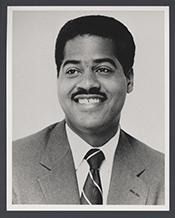
1,892 records where Rep. Wheat, Alan [D-MO-5] is listed as a sponsor, author, or other actor. Search with topics and years
United States · United States Congress · 7 February 1989
Designates May 25, 1989, as National Tap Dance Day.
United States · United States Congress · 7 February 1989
Designates July 27, 1989, as National Korean War Veterans Recognition Day and expresses the gratitude of the Congress and the Nation for the contributions made by the Korean War veterans.
United States · United States Congress · 7 February 1989
Expresses the sense of the Congress that the U.S. Government should reassess current policy and pursue a negotiated settlement to the civil war in El Salvador.
United States · United States Congress · 6 February 1989
Reproductive Health Equity Act - Amends title XIX (Medicaid) of the Social Security Act, the Indian Health Care Improvement Act, the Peace Corps Act, the District of Columbia Self-Government and Governmental Reorganization Act, and other Federal laws covering armed forces personnel and dependents, certain veterans, Federal employees' health benefits, and Federal penal and correctional institutions to provide that services related to abortion be made available in the same manner as are other pregnancy-related services under federally-funded programs. Repeals provisions of the Indian Health Care Improvement Act requiring submission of a resource allocation plan to the Congress by December 17, 1981.
United States · United States Congress · 6 February 1989
Amends title XVI (Supplemental Security Income) (SSI) of the Social Security Act to make the U.S. residency requirement for SSI eligibility inapplicable to a child accompanying a parent who is a member of the armed forces serving a tour of duty overseas.
United States · United States Congress · 6 February 1989
American Heritage Trust Act of 1989 - Title I: American Heritage Trust - Establishes the American Heritage Trust, comprised of the Land and Water Conservation Fund and the Historic Preservation Fund, to provide funding for the preservation of America's natural, historical, cultural, and outdoor recreational areas. Title II: Land and Water Conservation Fund - Amends the Land and Water Conservation Fund Act to require the Secretary of the Treasury to invest a portion of the Land and Water Conservation Fund in public debt securities. Requires that the interest from such investments be used for the preservation of the Nation's recreational areas. Requires any excess interest to be credited to the Treasury. Sets forth a formula for the allocation of such interest income to the Federal Government and the States. Sets forth specified requirements with respect to the apportionment of such income to local and State governments, Indian tribes, and Alaska Native Village Corporations. Title III: Historic Preservation Fund - Amends the National Historic Preservation Act to extend the Historic Preservation Fund through 2015. Requires the Secretary of the Treasury to invest a portion of such Fund in public debt securities. Requires that the interest from such investments be used for the preservation of historic sites. Provides for allocation of a percentage of annual appropriations for State historic preservation trust funds. Title IV: Miscellaneous Provisions - Requires the owner of any site that benefits from moneys derived from the American Heritage Trust to install a sign indicating that fact. Requires the Secretary of the Interior, within 18 months after enactment of this Act, to provide for a contest for elementary or secondary school children for the design of a symbol to represent such Trust and for use in such signs.
United States · United States Congress · 6 February 1989
Provides that no adjournment of either House of Congress, other than an adjournment sine die to end a Congress, prevents the return of a bill by the President.
United States · United States Congress · 6 February 1989
Authorizes and requests the President to designate the weeks beginning on November 19, 1989, and November 18, 1990, as National Family Week.
United States · United States Congress · 2 February 1989
Medicaid Child Health Amendments of 1989 - Amends title XIX (Medicaid) of the Social Security Act to require States to cover children born after September 30, 1983, whose family income is below the Federal poverty level. Authorizes States to continue such coverage for one year after the family's income rises above the Federal poverty level. Requires States to receive the Medicaid applications of pregnant women, infants, and children at locations which include locations other than those used under part A (Aid to Families with Dependent Children) (AFDC) of title IV of the Act. Permits States to provide Medicaid coverage to all children whose family income is below the Federal poverty level. Allows States to offer an additional nine-, 12-, 15-, or 18-month period of Medicaid eligibility, rather than the additional six-month period, to families who lose AFDC eligibility because of increased earnings or employment hours, or a loss of earning exclusions and receive the initial six months of extended Medicaid coverage. Requires that States submit information to the Secretary of Health and Human Services by April 1 of each year, pertaining to the supply of and demand for pediatric services and proposed Medicaid payment rates for such services so that the Secretary may determine whether such rates are sufficient to ensure that pediatric services will be at least as available to Medicaid beneficiaries as they are to the general population. Requires States to immediately revise rates determined to be insufficient. Increases, by 25 percent, the Federal share of Medicaid costs attributable to State demonstration projects to reduce childhood mortality and morbidity by improving the access of Medicaid-eligible children to pediatricians. Limits FY 1990 expenditures for such projects. Directs States to adjust Medicaid payments to disproportionate share hospitals to take into account exceptionally costly and lengthy inpatient hospital services for children under 18 years of age.
United States · United States Congress · 2 February 1989
Family and Medical Leave Act of 1989 - Title I: General Requirements for Family Leave and Medical Leave - Entitles employees to family leave for specified periods in cases involving the birth, adoption, foster care, or serious health condition of a child or the serious health condition of a parent. Entitles employees to temporary medical leave for specified periods in cases involving inability to work because of a serious health condition. Sets forth conditions for certification for such types of leave. Provides that such leave may be without pay. Allows employees to substitute other types of paid leave to cover part of such leave period. Sets forth employment and benefits protections relating to such leave. Provides for administrative enforcement of this title by the Secretary of Labor, as well as enforcement by civil action. Requires employers to post notice of the pertinent provisions of this title. Title II: Family Leave and Temporary Medical Leave for Civil Service Employees - Amends specified Federal law to entitle civil service employees to family and temporary medical leave for specified periods. Provides that such leave will be without pay. Allows employees to substitute other types of paid leave for part of such leave. Provides for protection for job position and health insurance benefits of employees using such leave. Directs the Office of Personnel Management to prescribe regulations for administration of this title which are consistent with the regulations prescribed by the Secretary of Labor under title I of this Act. Title III: Commission on Family and Medical Leave - Establishes the Commission on Family and Medical Leave. Requires the Commission to report on its study of family and medical leave (which may include legislative recommendations concerning coverage of small businesses) to the Congress within two years after the Commission first meets. Terminates the Commission within 30 days after its final report. Title IV: Miscellaneous Provisions - Sets forth the effect of this Act on existing laws and existing employment benefits. Provides that nothing in this Act shall be construed to discourage employers from adopting more generous leave policies. Directs the Secretary of Labor to prescribe regulations to carry out title I of this Act within 60 days.
United States · United States Congress · 2 February 1989
Medicaid Infant Mortality Amendments of 1989 - Amends title XIX (Medicaid) of the Social Security Act to phase-in mandatory State coverage of pregnant women and infants whose family income is below 185 percent of the Federal poverty level. Deducts child and medical care costs from the income eligibility test. Requires the continuation of such coverage for women through the month in which the 60-day post-partum period expires, and for infants throughout their first year of life. Directs the Secretary of Health and Human Services to report to the Congress by July 1, 1990, on State error rates in determining the Medicaid eligibility of pregnant women and infants. Suspends error rate penalties attributable to such eligibility determinations made from July 1, 1989, until one year after the Secretary's report. Requires that States make ambulatory prenatal care available to a pregnant woman during a presumptive eligibility period which ends when she is determined to be ineligible for Medicaid benefits or 14 days after she is determined to be eligible, but fails to apply. Amends title V (Maternal and Child Health Services) of the Act to require States to provide outreach services for Medicaid-eligible pregnant women and infants under such title. Amends the Medicaid program to reimburse States, at the Federal Medicaid assistance percentage, for outreach services identifying Medicaid-eligible pregnant women and infants and assisting them in applying for Medicaid coverage. Requires that States submit information to the Secretary, by April 1 of each year, pertaining to the supply of and demand for obstetrical and pediatric services and proposed Medicaid payment rates for such services so that the Secretary may determine whether such rates are sufficient to ensure that obstetrical and pediatric services will be at least as available to Medicaid beneficiaries as they are to the general population. Requires States to immediately revise rates determined to be insufficient. Increases, by 25 percent, the Federal share of Medicaid costs attributable to State demonstration projects to reduce infant mortality and childhood morbidity by improving the access of Medicaid-eligible pregnant women and infants to obstetricians and pediatricians. Limits FY 1990 expenditures for such projects. Excepts Medicaid-eligible pregnant women from required cooperation with States in establishing the paternity of children born out of wedlock. Requires States to: (1) coordinate Medicaid services with the special supplemental food program for women, infants, and children (WIC) under the Child Nutrition Act of 1966; and (2) notify Medicaid-eligible pregnant, breastfeeding, or postpartum women and children under age five of WIC program benefits.
United States · United States Congress · 2 February 1989
Establishes the Commission on Department of Energy Environmental Remediation Activities. Requires the Commission to: (1) compile existing information related to environmental contamination from releases of hazardous substances at Department of Energy (DOE) facilities; and (2) develop recommendations for a national approach to carry out environmental remediation activities at such facilities. Directs the Commission, no later than November 30, 1989, to report such recommendations to the President and the Congress. Authorizes the Commission to obtain from any U.S. agency any information necessary to carry out this Act. Requires DOE contractors to provide the Commission with timely access to facilities, personnel, and information.
United States · United States Congress · 2 February 1989
Amends the Motor Vehicle Information and Cost Savings Act to direct the Secretary of Transportation to amend a specified bumper standard to ensure that it is identical to the one in effect on January 1, 1982. Prohibits the Secretary from modifying the application of such standard in any respect which results in less impact protection than that afforded under the January 1, 1982, standard.
United States · United States Congress · 2 February 1989
Medicaid Technology-Dependent Children Amendments of 1989 - Amends title XIX (Medicaid) of the Social Security Act to require States to provide Medicaid coverage to technology-dependent children (children needing both a medical device to compensate for loss of a vital body function and ongoing nursing care). Revises Medicaid eligibility requirements for disabled children.
United States · United States Congress · 31 January 1989
National Observance Advisory Act - Establishes the President's Advisory Commission on National Observances to: (1) establish criteria for recommending to the President that a proposed national observance be approved or disapproved; (2) review proposals for national observances submitted in accordance with procedures published by the Commission; and (3) issue recommendations to the President concerning each proposal reviewed.
United States · United States Congress · 31 January 1989
Amends the Internal Revenue Code to allow an income tax deduction for interest on any indebtedness incurred to pay the educational expenses of the taxpayer, spouse, or dependent. (Under current law, such a loan must be secured by an interest in real property.)
United States · United States Congress · 31 January 1989
Provides that restrictions may be applied to information, counseling, or services provided by family planning entities abroad that receive U.S. assistance under the Foreign Assistance Act of 1961 only to the extent that the same restrictions apply to domestic family planning entities receiving funds under the Public Health Service Act.
United States · United States Congress · 31 January 1989
Designates June 23, 1989, as United States Coast Guard Auxiliary Day.
United States · United States Congress · 27 January 1989
Economic Conversion Act of 1989 - Title I: Economic Stabilization and Revitalization Pilot Program - Amends the Defense Production Act of 1950 to authorize the President to make grants for job retraining programs and planning for alternative production required by the cancellation of major defense contracts (or reductions of $10,000,000 or more in the value of such contracts) during FY 1990 through 1994. Permits one grant for each defense contract cancellation or reduction. Requires the administration of such grants at the local level by a capable unit of general local government or, through default, by the collective bargaining agents of affected employees. Directs the President to make weekly economic adjustment assistance payments to employees affected by such a cancellation or reduction of a contract during FY 1990 through 1994. Sets forth a formula for determining the amount of such assistance, making allowances for unemployment compensation or public assistance received and health insurance coverage needed. Sets forth assistance application procedures and notification requirements. Makes available for such grants and assistance payments the amount of previously-appropriated funds which the United States will save as a result of the cancellation or reduction of a defense contract. Title II: Prenotification of Base Closures and Defense-Related Contract Cancellations - Directs the Secretary of Defense, acting through the Economic Adjustment Committee, to notify State and local governments and regional organizations within a specified period of time of the proposed realignment or closure of a military installation, the cancellation or termination of a defense contract, or the failure to proceed with an approved major weapon system program.
United States · United States Congress · 27 January 1989
Designates October 6, 1989, as German-American Day.
United States · United States Congress · 27 January 1989
Designates the month of April 1989 as National Recycling Month.
United States · United States Congress · 27 January 1989
Designates April 9, 1989, as National Former Prisoner of War Recognition Day.
United States · United States Congress · 27 January 1989
Expresses the sense of the Congress opposing further restrictions on the mortgage interest income tax deduction.
United States · United States Congress · 24 January 1989
Flight Attendant Duty Time Act - Amends the Federal Aviation Act of 1958 to direct the Secretary of Transportation to initiate a rulemaking proceeding to establish limitations on duty time for flight attendants. Requires the Secretary to issue final regulations by a specified deadline. Prohibits any air carrier from operating an aircraft using a flight attendant who has been on duty in excess of specified hours or who has had less than a specified number of hours of rest if such regulations have not been promulgated by a certain time. Permits modification of the specified hours of duty if the Secretary determines such modification is in the public interest and submits a copy of the modifying regulations to certain congressional committees.
United States · United States Congress · 24 January 1989
Civil Rights Amendments Act of 1989 - Amends the Civil Rights Act of 1964 and the Civil Rights Act of 1968 to prohibit discrimination on the basis of affectional or sexual orientation. Provides that this Act shall not be construed to permit a finding of discrimination based on statistical differences or the fashioning of any remedy requiring a quota.
United States · United States Congress · 24 January 1989
Equal Opportunity for Medical Licensure and Reciprocity Act of 1989 - Prohibits discrimination against any person who graduated from a medical school outside the United States and who is a licensed physician in the United States: (1) in equal access to practice medicine within any U.S. jurisdiction; (2) by law, regulation, policy, or requirements; and (3) by conditions or requirements which differ from the conditions or requirements as applied to graduates of U.S. medical schools. Applies the prohibition to any medical specialty as well as to the general practice of medicine. Prohibits the Secretary of Health and Human Services from making a grant, loan guarantee, or interest subsidy to, or for the benefit of, any school of medicine, unless the application contains assurances that the school will not discriminate against a graduate of a non-U.S. medical school. Requires States to adopt medical licensure and medical reciprocity standards which provide equal opportunity to any graduate of a non-U.S. medical school, as compared to any graduate of a U.S. medical school, provided the non-U.S. medical school graduate has completed the U.S. postgraduate training and obtained a license to practice medicine in any U.S. State.
United States · United States Congress · 20 January 1989
Declares that civilian employees of the National Guard may not be required to wear military uniforms while performing civilian service.
United States · United States Congress · 20 January 1989
Aircraft Cabin Air Quality Protection Act of 1989 - Amends the Federal Aviation Act of 1958 to require air carriers to prohibit smoking on any aircraft during any flight involving the carriage of passengers in interstate or overseas air transportation. Directs the Administrator of the Federal Aviation Administration to promulgate regulations to implement this Act. Declares that it is unlawful to smoke during any flight involving the carriage of passengers in interstate or overseas air transportation.
United States · United States Congress · 20 January 1989
Beverage Container Reuse and Recycling Act - Prohibits the sale of beer, mineral water, soda water, or carbonated soft drinks in beverage containers by retailers and distributors unless such containers carry a refund value of not less than five cents. Requires that retailers and distributors pay the refund on returned containers of brands sold by such retailers or distributors. Prohibits distributors and retailers from selling beverages in metal beverage containers with detachable openings. Preempts inconsistent State or local laws. Prohibits State and local governments from imposing any tax on the collection or return of refund values. Imposes penalties of up to $1,000 for violations.
United States · United States Congress · 19 January 1989
Directs the Secretaries of the Army and the Air Force to prescribe regulations to ensure that National Guard technicians are protected from certain adverse employment actions (i.e. removal, suspension, grade reduction, or furlough) in the same manner as are Federal employees.
United States · United States Congress · 19 January 1989
Amends Federal provisions relating to the National Guard to include positions held by civilian technicians of the National Guard within the competitive service. Provides that service performed by such technicians prior to the effective date of this Act shall be considered competitive service for purposes of eligibility for certain Federal benefits.
United States · United States Congress · 19 January 1989
Amends Federal law to require the reverse side of the first coin redesigned to commemorate the bicentennial of the U.S. Constitution for a two-year period. Provides that the design on the obverse side of U.S. coins shall contain the likenesses of those displayed on current coins and shall be considered for redesign. Requires any such obverse redesigns to conform to the inscription requirements of current law. Requires U.S. coins to be redesigned, at the discretion of the Secretary of the Treasury, over the next six years. Requires the Secretary, in selecting new designs, to consider specified constitutional concepts. Requires the designs to be selected by the Secretary upon consultation with the United States Commission of Fine Arts. Requires that any profits from the sale of uncirculated and proof sets of U.S. coins be deposited in the Treasury and used solely to reduce the national debt.
United States · United States Congress · 19 January 1989
Decennial Census Improvement Act of 1989 - Requires the Secretary of Commerce to adjust the population data of the decennial census to correct for any undercounts or overcounts and to report to the appropriate congressional committees on the proposed plan for making such adjustments.
United States · United States Congress · 19 January 1989
Directs the Federal Trade Commission (FTC) to study deceptive mail practices in conjunction with the sale of products or services related to governmental functions, and the severity of consumer injury from such practices. Requires such study to include an examination of solicitations by non-governmental entities for the purchase of products or services which: (1) are provided either free of charge or at a lower price by the Federal Government; or (2) bear a seal, insignia, trade or brand name, or other term or symbol implying the connection, approval, or endorsement of the Federal Government. Directs the FTC to report on such study to the Congress within 18 months. Directs the FTC to: (1) initiate a trade regulation rule proceeding respecting the deceptive mail practices studied, promptly after completion of the study, if it finds that such a rulemaking is warranted; or (2) include in the report its reasons for determining that such a rulemaking is not warranted.
United States · United States Congress · 19 January 1989
Amends the Export Administration Act of 1979 to extend indefinitely the restrictions on the export of Alaskan North Slope oil.
United States · United States Congress · 19 January 1989
Designates the week of April 16 through April 22, 1989, as National Minority Cancer Awareness Week.
United States · United States Congress · 4 January 1989
Brady Handgun Violence Prevention Act - Makes it unlawful for any licensed importer, manufacturer, or dealer to sell, deliver, or transfer a handgun to an unlicensed individual unless: (1) the transferor has notified the chief law enforcement officer for the individual's place of residence about the proposed transfer and either has received a response indicating that such transfer is not prohibited by law or has not received a response indicating otherwise within seven days; (2) the individual has presented to the transferor a statement from the officer indicating that the individual requires a handgun because of a threat to him or his family; or (3) the individual has a State handgun permit that is less than a year old which satisfies the same requirements. Requires any transferor who subsequently receives a report from such officer that receipt or possession of the handgun by the individual violates the law to: (1) furnish information about the transfer and the individual to the chief law enforcement officer of the transferor's place of business and the individual's place of residence; and (2) keep confidential any information received which is not otherwise available to the public, with exceptions. Requires a transferor to retain a copy of the individual's sworn statement for at least a year. Requires the law enforcement officer to destroy any copy of the individual's sworn statement and any record containing information derived from such statement within 30 days, unless such officer determines that the transaction would violate Federal, State, or local law. Provides that this Act shall not apply in any State that requires: (1) a seven-day waiting period for the transfer of a handgun to an unlicensed individual; or (2) a State law enforcement officer to verify an unlicensed individual's eligibility to receive a handgun. Sets penalties for violations of this Act.
United States · United States Congress · 4 January 1989
Recyclable Materials Science and Technology Development Act of 1989 - Directs the Secretary of Commerce to study and report to the Congress concerning: (1) means to increase the use of degradable materials in manufactured goods; (2) technologies for recycling nondurable consumer products; and (3) ways to expand the marketing of recycled products. Directs the Secretary of Health and Human Services to study and report to the Congress on the feasibility of recycling nondegradable medical supplies and of substituting degradable for nondegradable materials in medical equipment and supplies. Directs the Secretary of Defense to study and report to the Congress on the national defense and security implications of requiring the use of degradable materials in defense items. Instructs the Secretary of Agriculture to initiate a pilot project to develop and demonstrate viable technology for composting municipal waste and sewage sludge. Requires the Secretary to report project results to the Congress. Directs the Secretary of Commerce to appoint a Director of Recycling Research and Information to make grants to support research into innovative recycling technology. Authorizes appropriations for such purposes for FY 1990. Prohibits, effective five years after this Act's enactment, the production, manufacture, distribution, sale, or delivery of nonrecycled consumer goods, fast food in nondegradable containers, and packaging for specified purposes that contains any material that is not naturally degradable. Establishes both civil and criminal penalties for violations. Directs the Administrator of the Environmental Protection Agency and the Secretary of Commerce jointly to issue regulations to govern the designation of goods and materials for noncompliance purposes. Directs the Secretary to publish and periodically update lists of items and materials affected by the prohibition on activities involving nonrecyclable items.
United States · United States Congress · 4 January 1989
Expresses that the sense of the Congress that the mail fraud charges brought against black leader Marcus Garvey in 1923 were not substantiated and that his conviction was unjust and unwarranted.
United States · United States Congress · 3 January 1989
Authorizes the Secretary of the Interior to acquire certain properties in Independence, Missouri, to add to the Harry S Truman National Historic Site. Authorizes the owners of such property to retain the right of use and occupancy of the property for up to 25 years or until death, whichever is later. Requires the Secretary to pay the owners the fair market value for such property. Authorizes appropriations.
United States · United States Congress · 3 January 1989
Deceptive Mailings Prevention Act of 1989 - Amends Federal law to declare as nonmailable any mail matter which is designed to resemble a bill, invoice, or statement of account due, but which in fact constitutes a solicitation of donations. Requires such mail matter to bear on its face in conspicuous type that it is a solicitation of donations and that the addressee is under no obligation to make any payment. Declares as nonmailable any mail matter which constitutes a solicitation by a non-governmental entity: (1) for the purchase of products or services which are provided free of charge or at a lower price by the Federal Government, or which are substantially the same as such products or services; (2) for the purchase of products or services and which contains a seal, insignia, trade or brand name, or any other term or symbol which reasonably could be interpreted or construed as implying Federal Government connection, approval, or endorsement; and (3) for the contribution of funds and which contains a seal, insignia, trade or brand name, or any other term which could reasonably be interpreted or construed as implying Federal Government connection, approval, or endorsement. Allows the mailing of such matter if it contains a conspicuous disclaimer that it is not a Government document. Establishes penalties for violations of this Act.
United States · United States Congress · 3 January 1989
Terminates the trade and other sanctions imposed on Nicaragua under the International Emergency Economic Powers Act pursuant to the national emergency declared by the President on May 1, 1985.
United States · United States Congress · 3 January 1989
Permits certain veterans with service-connected disabilities who are retired members of the uniformed services to receive compensation concurrently with retired pay, without deduction from either.
United States · United States Congress · 3 January 1989
Amends the Federal Aviation Act of 1958 to make permanent the prohibition against smoking on scheduled airline flights of two hours or less.
United States · United States Congress · 3 January 1989
Prohibits the expenditure of funds for the production of lethal binary chemical munitions after the enactment of this Act. Defines lethal binary chemical munitions. Expresses the sense of the Congress that the President should begin negotiations with the Soviet Union for a mutual, verifiable ban on chemical weapons.
United States · United States Congress · 3 January 1989
Defense Economic Adjustment Act - Title I: Defense Economic Adjustment Council - Establishes in the Executive Office of the President the Defense Economic Adjustment Council to be co-chaired by the Secretaries of Commerce and Labor. Establishes in the Executive Office an Office of Economic Adjustment, headed by a Director, to provide staff support to the Council. Directs the Council to disseminate information from the Secretary of Defense to Federal, State, and local agencies concerning proposed or pending changes in defense spending which would affect employment in the defense industry. Requires the Council to perform other duties, including: (1) encouraging the preparation of plans for non-defense-related public projects; (2) coordinating and developing information on priority, federally-funded projects and programs pertaining to defense economic adjustment; (3) monitoring job services information banks; and (4) determining criteria for eligibility for assistance under this Act. Directs the Secretary of Defense to provide the pertinent information to the Council a year in advance of any change and to furnish the Council with projected future defense spending levels. Directs the Council to prepare and distribute a Conversion Guidelines Handbook to outline requirements of programs for professional retraining of personnel. Title II: Community Economic Adjustment Planning - Makes eligible for Federal assistance for economic adjustment planning any community which is substantially affected by reduction or elimination of Government defense facilities or curtailment or conclusion of defense contracts. Directs the Council to make available to alternative use committees information on economic development programs of any Federal instrumentality which provides funds that may be used for planning. Requires the Council to report to the Congress at least annually on any such economic development program. Directs the Council to use data from other departments to develop criteria which ensures that assistance is directed to those communities that are most vulnerable economically to reductions in defense expenditures. Requires the Council to publish a semiannual list of eligible communities. Requires excess property resulting from a closing or reduction in a Government-owned facility to be appraised for purposes of resale to the community. Title III: Alternative Use Committees - Requires the establishment of alternative use committees at defense facilities to plan for economic conversion in the event of closure or reduction. Directs such committees to: (1) evaluate the assets of the facilities and the resources and requirements of the local community; (2) develop at least biennially a detailed plan for conversion of the facility to non-defense-related productive activity; and (3) provide retraining and reemployment counseling services. Requires conversion plans to maximize the pool of skills of available personnel and specify in detail the composition of the work force and plant, material, and financing requirements. Penalizes any contractor who fails to submit an alternative use plan or carry out one approved by the Council by making such contractor ineligible for future defense contracts for three years. Title IV: Economic Adjustment Assistance for Workers - Makes displaced workers certified by the local alternative use committees to the Council eligible for benefits for two years under this Act. Includes among such benefits: weekly compensation, vested pension credit, maintenance of health insurance, retraining for civilian work, job search allowance, and reimbursement for relocation expenses. Requires completion of a program of professional retraining before certain employees are eligible for assistance. Directs the Council to enter into agreements with a State or agency in the State administering the unemployment compensation law to disburse benefits under this Act. Requires displaced workers to accept any employment determined by the State agency or Secretary of Labor to be comparable to the former job, or benefits will terminate. Excludes these benefits from other determinations of eligibility for unemployment compensation under any Federal or State law. Title V: Economic Adjustment Fund - Establishes in the Treasury a Workers Economic Adjustment Reserve Trust Fund. Requires defense contractors to pay a specified percentage into the Fund. Directs the Secretary of the Treasury to deposit a percentage of the projected savings resulting from a cancellation or cutback in defense spending. Title VI: Use of Certain Research Funds - Requires the Council to define urgent national requirements for nondefense sectors of the economy in any determination of the Secretary of Defense as to how certain research and development funds are to be spent. Title VII: Authorization of Appropriations - Authorizes appropriations.
United States · United States Congress · 3 January 1989
Terminates the effectiveness of certain November 22, 1988, amendments to the foreign repair station rules of the Federal Aviation Administration.
United States · United States Congress · 3 January 1989
Amends title VII (Equal Employment Opportunity) of the Civil Rights Act of 1964 to make it an unlawful employment practice to discriminate against any individual who is physically or mentally handicapped.
United States · United States Congress · 3 January 1989
Equal Employment Opportunity Commission Amendments of 1987 - Amends the Civil Rights Act of 1964 to authorize the Equal Employment Opportunity Commission to request a head of a Federal agency, department, or unit to appear before the Commission and explain the reason for failing to submit an equal employment opportunity plan. Directs the Commission, after an opportunity for a hearing, to order submission of a plan. Requires the Commission to enforce compliance with such order. Authorizes the Commission to initiate disciplinary action, including the withholding of pay, against any officer or employee responsible for failure to comply with an order. States that equal employment opportunity plans shall include the numerical employment goals established by an agency in its minority recruitment program and that each agency should establish numerical employment goals for the purpose of complying with affirmative action plans.
United States · United States Congress · 3 January 1989
Prohibits an alien crewmember from being admitted to the United States for the purpose of performing service on board a vessel or aircraft in a bargaining unit of an employer when there is a strike or lockout in the course of a labor dispute.