Amendment· HAMDTHAMDT 48 (97th)passed
An amendment to prohibit any class action suit from being brought against federal, state, or local governments.
United States · United States Congress
The world's political record
Person
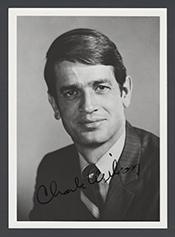
United States · Official source
No stored named vote for this person. House roll-calls come from Congress.gov; Senate member lists come from senate.gov LIS XML.
United States · United States Congress
United States · United States Congress
United States · United States Congress
United States · United States Congress
United States · United States Congress
United States · United States Congress
United States · United States Congress · 2 August 1996
Authorizes the President to award the Congressional Medal of Honor posthumously to Theodore Roosevelt for his actions in the attack of San Juan Heights, Cuba, during the Spanish-American War on July 1, 1898.
United States · United States Congress · 23 July 1996
Sequoia Ecosystem and Recreation Preserve Act of 1996 - Designates specified California lands within the Sequoia National Forest and the Inyo National Forest as wilderness areas to be administered as components of the National Wilderness Preservation System. (Sec. 5) Establishes the Giant Sequoia National Forest Preserve as a unit of the National Forest System for the: (1) protection and maintenance of giant sequoia groves, their supporting ecosystems, and associated forests; and (2) preservation of the natural state and processes that have created and maintained such forests. (Sec. 7) Directs the Secretary of Agriculture to appoint a Scientific Advisory Team for the Preserve. (Sec. 8) Directs the Secretary to publish a final management plan for the Preserve for the protection, restoration, and enhancement of natural, scientific, and recreational values. Provides for interim Preserve management by the Secretary. (Sec. 9) Directs the Secretary, as part of the management plan, to designate and map the ancient forest reserves within the Preserve. (Sec. 10) Requires the management plan to include a comprehensive transportation plan that protects natural Preserve features while ensuring visitor safety and that includes a trail plan identifying which trails will allow motorized access. (Sec. 11) Allows all current campgrounds within the Preserve to remain in place, subject to evaluation by the Secretary. Directs the Secretary to provide new camping opportunities. (Sec. 12) Authorizes the continued use of Preserve areas for hunting and fishing, firewood collection, and grazing, but prohibits new patents from being issued under the mining or geothermal laws. (Sec. 16) Directs the Secretary to establish a Community Assistance Task Force to oversee the provision of assistance to communities and workers in political subdivisions whose boundaries include Federal lands in the Preserve or contain facilities that milled timber from lands in the Preserve during any portion of the five-year period ending on the date of enactment of this Act. (Sec. 17) Prohibits the Secretary, in preparing the Preserve budget proposal for each fiscal year, from targeting any of the budget to any commodity production in the Preserve. (Sec. 18) Authorizes appropriations.
United States · United States Congress · 18 July 1996
Urges the national broadcast television networks to renew their commitment to voluntarily reserving the first hour of prime-time broadcasting for programming suitable for American family members of all ages.
United States · United States Congress · 12 July 1996
George Bush School of Government and Public Service Act - Authorizes the Secretary of Education to make a grant to assist in the establishment of the George Bush Fellowship Program, located at the George Bush School of Government and Public Service of the Texas A & M University. Authorizes appropriations.
United States · United States Congress · 26 June 1996
Directs the Commissioner of Social Security to improve the social security card for purposes of carrying out illegal alien employment provisions under the Immigration and Nationality Act. Amends Federal law to provide criminal penalties for fraud and related activities concerning work authorization documents.
United States · United States Congress · 25 June 1996
Designates the United States courthouse located at 611 North Florida Avenue in Tampa, Florida, as the Sam M. Gibbons United States Courthouse.
United States · United States Congress · 12 June 1996
TABLE OF CONTENTS: Title I: Recognition of the Millennium Society Title II: Commemorative Coins Title III: Commemorative Postage Stamps Millennium Society Act of 1996 - Title I: Recognition of the Millennium Society - Recognizes the Millennium Society (a nonprofit U.S. corporation chartered and organized under the laws of the State of Illinois on November 21, 1983) and any other organization that is organized and operated by the corporation exclusively for charitable and educational purposes. (Sec. 105) Sets forth the goals and purposes of the Society, which include: (1) establishing national goals for commemoration and celebration of the millennium in the United States and U.S. participation in such international events; (2) exercising exclusive jurisdiction over all matters pertaining to U.S. participation in commemorations or celebrations of the millennium; (3) coordinating activities and holding forums and symposiums to promote educational and cross-cultural exchange; and (4) establishing, endowing, and administering the Millennium Scholars Program. (Sec. 114) Grants the Society the sole and exclusive right to the use of specified symbols, emblems, trademarks, and names to carry out its functions. Authorizes the Society to allow contributors and suppliers of goods and services to use the Society's trade name, trademarks, symbols, insignia, emblems, seals, descriptive or designating marks, and slogans in advertising under specified conditions. Subjects to a civil action by the Society for the remedies provided in the Trademark Act of 1946 any person who, without the Society's consent, uses its trademark, symbol, insignia, emblem, seal, descriptive or designating mark, or slogan: (1) for the purposes of trade; (2) to induce the sale of any goods or services; (3) or to promote any theatrical exhibition, performance, or competition. Exempts persons who lawfully used such a symbol or slogan before the enactment of this Act. Allows the individuals to continue such lawful use for the same purpose and for the same goods or services. Title II: Commemorative Coins - Directs the Secretary of the Treasury to mint five-dollar gold coins and one-dollar silver coins emblematic of the events of the second millennium and the advent of the third. (Sec. 204) Provides for the issuance of such coins beginning on July 1, 1999, and ending on January 1, 2001. (Sec. 207) Requires all surcharges received from coin sales to be promptly paid to the Society, under specified conditions, to be used only for the purpose of supporting the Millennium Scholars Program. Title III: Commemorative Postage Stamps - Urges the U.S. Postal Service to cooperate with the Secretary and the Society in the: (1) issuance of appropriate first day of issuance postage stamps commemorating the end of the second millennium and the advent of the third; and (2) production of a philatelic numismatic combination as a unique item to be made available to the public for such commemoration.
United States · United States Congress · 23 May 1996
NAFTA Infrastructure Responsibility Act of 1996 - Authorizes the Secretary of Transportation to make grants to Mexican border States and local governments for certain transportation projects necessary to: (1) relieve congestion due to increased traffic resulting from implementation of the North American Free Trade Agreement (NAFTA); and (2) improve enforcement of motor carrier safety laws. Limits the Federal share of the costs of such projects to 80 percent. Authorizes appropriations. Amends the National Highway System Designation Act of 1995 to authorize appropriations to be used to enter agreements with Mexican border States that have established infrastructure banks to make available to them lines of credit for projects to construct Federal-aid highways which will support traffic resulting from NAFTA.
United States · United States Congress · 22 May 1996
TABLE OF CONTENTS: Title I: Congressional Campaign Spending Limits and Benefits Subtitle A: Election Campaign Spending Limits and Benefits Subtitle B: Limitations on Contributions to House of Representatives Candidates Subtitle C: Related Provisions Subtitle D: Tax on Excess Political Expenditures of Certain Congressional Campaign Funds Title II: Independent Expenditures Title III: Contributions and Expenditures by Political Party Committees Title IV: Contributions Title V: Reporting Requirements Title VI: Broadcast Rates and Campaign Advertising Title VII: Miscellaneous Title VIII: Effective Dates; Authorizations American Political Reform Act - Title I: Congressional Campaign Spending Limits and Benefits - Subtitle A: Election Campaign Spending Limits and Benefits - Amends the Federal Election Campaign Act of 1971 to limit the amount of aggregate expenditures an eligible House of Representatives candidate may make in an election cycle, runoff election, special election, and closely contested primary. Excludes from the limitation cases involving: (1) certain non-participating opponents; and (2) certain independent expenditures made during the election cycle against an eligible House candidate. Prohibits an eligible House candidate from making contributions or loans from personal funds to the candidate's own campaign totaling more than $50,000 and conditions that such contributions may not qualify for certification for voter benefits. Exempts an eligible House candidate from the preceding limitation if any other general election candidate for that office (1) makes personal contributions to the candidate's own campaign totaling more than $50,000; or (2) with respect to any contribution or loan used for certain exempted costs. Requires that any contribution or loan to a candidate's campaign by a member of the candidate's immediate family shall be treated as made by the candidate. Authorizes the Federal Election Commission to examine and audit the campaign accounts of five percent of the eligible House candidates after each general election. Provides for civil penalties for low, medium, and large amounts of excess expenditures with respect to an election cycle, runoff election, and special election. Authorizes the Commission to assess a specified civil penalty against a candidate determined to have misused benefits and limits the notification period to no more than three years after an election. Prohibits the receipt of benefits unless such candidate certifies to the Commission that any television commercials of the candidate contain closed captioning. Subtitle B: Limitations on Contributions to House of Representatives Candidates - Limits the aggregate amount of contributions a House candidate may accept from multicandidate political committees with respect to an election for Federal office or to an election cycle (not including a runoff election). Requires that any political committee which is established or financed or maintained or controlled by any candidate or Federal officeholder shall be deemed to be the candidate's or Federal officeholder's authorized committee. (Sec. 122) Places limitations on contributions from political committees (PACs) and individual large donors to candidates for the office of Representative in, or Delegate, or Resident Commissioner to the Congress with respect to an election cycle, contested primaries, and runoff elections. Subtitle C: Related Provisions - Revises certain requirements of reporting by a House candidate, or Delegate or Resident Commissioner with respect to certain excess contributions of personal funds and certain expenditures. Requires: (1) a candidate to report to the Commission that the threshold has been reached no later than 48 hours after reaching the threshold; and (2) the Commission to transmit a copy to each other candidate for election to the same office within 48 hours of receipt. (Sec. 132) Provides for registration as an eligible House candidate. Subtitle D: Tax on Excess Political Expenditures of Certain Congressional Campaign Funds - Amends the Internal Revenue Code to impose a tax on excess political expenditures of any applicable campaign fund for any election cycle. Title II: Independent Expenditures - Amends the Federal Election Campaign Act of 1971 to redefine the term "independent expenditures." (Sec. 202) Sets forth reporting requirements for certain independent expenditures, including for a reservation of broadcast time. Title III: Contributions and Expenditures by Political Party Committees - Revises certain contribution and expenditure exception definitions with respect to contributions and expenditures made by a political party committee in connection with activities conducted solely by volunteers. (Sec. 302) Limits the amount of contributions and expenditures made by an individual or a multicandidate political committee in any calendar year to a State Party Grassroots Fund or any other State political committee. Sets forth an overall limit on individual contributions made during any election cycle. Applies the limitation on expenditures to presidential committee transfers to the candidate's national political party for distribution to State Party Grassroots Funds. Authorizes the Commission to require reporting of the transfers, conduct an examination and audit of any such transfer, and require the return of the transferred amounts to the Presidential Election Campaign Fund if not used for the appropriate purpose. (Sec. 303) Increases the amount that multicandidate political committees may contribute to national political party committees. (Sec. 304) Sets forth provisions regarding amounts received by any political committee as a commission or royalty on: (1) the sale of goods or services; or (2) the issuance of credit cards from a corporation, including a State-chartered or national bank. (Sec. 305) Prohibits a national political party committee and the congressional campaign committees of a political party from soliciting or accepting soft money contributions or transfers. Limits disbursements a State political party committee may make from its State Party Grassroots Fund. Prohibits certain transfers of funds by a State political party committee from its State Grassroots Fund. Adds definitions respecting contributions and expenditure exceptions. Requires the applicable congressional campaign committee of a political party to make certain expenditures authorized by a State or national committee in connection with a general election campaign for candidates for Federal office unless the State or national committee allocates all or a portion of such expenditures to either or both of such committees. Allows a national or State committee to match independent expenditures made on the opponent's behalf during the campaign. (Sec. 306) Limits the fund raising activities of Federal candidates and office holders and certain political committees. Prohibits an individual who is a candidate for, or holds, Federal office during any period, from soliciting contributions to or on behalf of any tax-exempt organization under specified circumstances. (Sec. 307) Sets forth requirements of reporting by political committees. Provides that exclusion of any gift, subscription, loan, etc. shall not apply for the purposes of any requirement to report contributions and requires that exempt contributions aggregating in excess of $200 (and disbursements therefrom) be reported. Authorizes the Commission to allow a State political party committee to file with the Commission a report under State law if the Commission determines such reports contain substantially the same information. Title IV: Contributions - Sets forth restrictions on the bundling of contributions. (Sec. 403) Prohibits a candidate or the candidate's authorized committee from accepting a cash contribution from any one person aggregating more than $100. (Sec. 404) Prohibits a candidate for Federal office from accepting any contribution from a State or local committee of a political party, including any subordinate committee of such committee, if such contribution when aggregated exceeds the contribution limit. (Sec. 406) Revises the definition of "contribution" to provide for a limited exclusion of any advance voluntarily made by a campaign worker on behalf of the candidate's authorized committee. (Sec. 407) Makes amendments with respect to payments made by corporations or labor organizations for candidate debates, voter guides, or voting records directed to the general public. (Sec. 408) Prohibits a foreign national from directly or indirectly participating in any individual's election-related activities. Title V: Reporting Requirements - Changes certain reporting from a calendar year basis to an election cycle basis. (Sec. 502) Requires that a political committee report expenditures made by a candidate or the candidate's authorized committees for personal and consulting services by certain individuals other than employees and prescribes that such individuals maintain records of such services and report the information to the political committee. (Sec. 505) Revises the date for filing quarterly reports. Authorizes the treasurer of a political committee to file monthly reports. Requires filing of monthly reports if at any time during the election year a committee receives contributions or makes disbursements in excess of $100,000 ($10,000 in the case of a multicandidate political committee). Modifies requirements concerning best efforts by the treasurer of a political committee to obtain, maintain, and report contributor information. (Sec. 506) Permits the candidate's principal campaign committee to register on the date of its designation. (Sec. 507) Revises reporting requirements with respect to certain communications made by corporations and labor organizations. Title VI: Broadcast Rates and Campaign Advertising - Amends the Communications Act of 1934 to revise provisions relating to broadcast rates and preemption of the use of a broadcast station by a legally qualified candidate. Sets forth provisions regarding: (1) broadcast and cable independent expenditure communications made by any individual against an eligible House of Representatives candidate; (2) a licensee that endorses a candidate for Federal office in an editorial; and (3) revocation of a license for failure to permit access to a broadcasting station or cable system under the same terms, conditions, and business practices as apply to its most favored advertiser. (Sec. 603) Amends Federal law to extend eligibility for nonprofit third-class bulk rates of postage to a qualified campaign committee. Title VII: Miscellaneous - Amends the Federal Election Campaign Act of 1971 to revise requirements respecting the prohibition of political committees that supports or has supported more than one candidate from being designated as an authorized committee. Prohibits a candidate for Federal office or any individual holding Federal office from establishing leadership committees. (Sec. 702) Authorizes the Commission to appear on its own behalf in any action relating to the exercise of its statutory duties in any court as either a party or as amicus curiae. (Sec. 703) Prohibits solicitation or acceptance of campaign contributions by House Members in the Halls of the House of Representatives, rooms leading thereto, or the cloakrooms. Title VIII: Effective Dates; Authorizations - Sets forth provisions concerning: (1) effective date; (2) severability; and (3) Supreme Court review of constitutional issues.
United States · United States Congress · 14 May 1996
Temporary Emergency Livestock Drought Relief Act of 1996 - Amends the Agricultural Market Transition Act to provide temporary assistance for certain drought-affected livestock producers. Amends the Agricultural Act of 1949 to obligate specified funds for 1996 livestock feed emergencies. Requires a report on the use of certain commodity reserves for livestock assistance.
United States · United States Congress · 8 May 1996
Amends the Internal Revenue Code to suspend, between December 31, 1995, and January 1, 2001, the tax on any ozone-depleting chemical (or any product made using any ozone-depleting chemical) used as a propellant in any metered-dose inhaler.
United States · United States Congress · 23 April 1996
Working Children's Human Rights Act - Amends the Foreign Assistance Act of 1961 to include in the annual report to the Congress on the status of human rights in foreign countries slated to receive development assistance the U.S. policy to establish and encourage an international strategy to reduce worldwide violations of human rights of working children. Requires consultations with specified congressional committees as well as congressional hearings on the findings of such report. Requires any country that desires to receive U.S. assistance to certify to the Secretary of State that it has: (1) adopted and is enforcing laws that guarantee a prohibition on the use of forced child labor; and (2) taken steps to prevent and punish bribery of public officials which facilitate the abuse of child labor laws. Requires the withholding of 50 percent of U.S. assistance allocated for each country that has not been certified or for which a certification has been revoked. Requires the Secretary of the Treasury to instruct the U.S. Executive Director of each international financial institution to oppose any loan to any country that has not been certified or for which a certification has been revoked. Permits assistance to a non-certified country only if the President certifies to the Congress that it in the vital national interest to do so.
United States · United States Congress · 29 March 1996
Amateur Radio Volunteer Services Act of 1996 - Amends the Communications Act of 1934 to provide that an individual licensee in the amateur radio service who provides volunteer services to the Federal Communications Commission shall be deemed to be a Federal employee only for purposes of Federal tort claims procedure (the adjudication of claims against Federal employees for damages or injuries caused by the employee while acting within the scope of employment).
United States · United States Congress · 29 March 1996
Long Island Sound Preservation and Protection Act of 1996 - Amends the Marine Protection, Research, and Sanctuaries Act of 1972 to prohibit the dumping in Long Island Sound or Block Island Sound of dredged material from any Federal or non-Federal project that contains any of the constituents prohibited as other than trace contaminants (as defined by certain Federal ocean dumping criteria set forth in the Code of Federal Regulations), except where it is demonstrated to the Administrator of the Environmental Protection Agency that such dumping will not cause significant undesirable effects, including the threat associated with bioaccumulation of such constituents in marine organisms. Requires any dumping of dredged material in Long Island Sound from a Federal project (or pursuant to Federal authorization) by a non-Federal applicant exceeding 25,000 cubic yards to comply with specified criteria under the Act relating the effects of dumping.
United States · United States Congress · 28 March 1996
Revises specified provisions regarding minimum allocations of Federal aid highway funds and provisions of the Intermodal Surface Transportation Efficiency Act of 1991 (ISTEA) to direct the Secretary of Transportation, in FY 1998 and thereafter, to ensure that each State's percentage of the total apportionments in each such fiscal year and allocations for the prior fiscal year from funds made available out of the Highway Trust Fund (HTF) is not less than the percentage of estimated tax payments to the HTF by highway users in the State in the latest fiscal year for which data are available. Repeals ISTEA provisions specifying the percentage of total apportioned and allocated funds to be allocated to each State for the surface transportation program.
United States · United States Congress · 21 March 1996
Uniformed Services Medicare Subvention Demonstration Project Act - Directs the Secretaries of Defense and Health and Human Services (HHS) to jointly establish a demonstration project (project) to provide the Department of Defense (DOD) with reimbursement, under provisions of title XVIII (Medicare) of the Social Security Act, for health services provided through DOD to certain Medicare-eligible covered military beneficiaries. Requires the project to be conducted in one or more regions in which the TRICARE program (a DOD managed health care program) has been implemented. Allows such project to be conducted for up to two years. Requires such Secretaries to jointly submit to the Congress a first annual report and a final report containing specified information concerning project participants and such project's effects on military medical care access, readiness, and training. Directs the HHS Secretary to make monthly payments to DOD from the Federal Hospital Insurance Trust Fund and the Federal Supplementary Medical Insurance Trust Fund (HHS trust funds) representing appropriate reimbursement amounts. Provides for the determination of such amounts. Directs such Secretaries to jointly: (1) establish a base level of TRICARE coverage required in a geographic region for eligibility under the project; (2) determine baseline costs of such care and coverage; and (3) establish upper reimbursement limits. Directs the Secretary of Defense to waive the enrollment fee for individuals enrolled in a TRICARE program participating in the project. Establishes in the Treasury the Medicare Subvention Fund (Fund) for providing payments to the HHS Secretary for reimbursement of the HHS trust funds and for the payment of all expenses related to the participation of Medicare-eligible covered military beneficiaries in excess of the base level established under this Act, as well as administrative expenses. Authorizes appropriations for FY 1997 and 1998 for deposit into the Fund to carry out the purposes of this Act.
United States · United States Congress · 7 March 1996
Comstock Cleanup Act of 1996 - Amends the Comstock Act to repeal a ban on the importation, transportation, or mailing (including through use of a computer) of any material intended for producing abortion or for any indecent or immoral use.
United States · United States Congress · 7 March 1996
Medicare Mammography Enhancement Act of 1996 - Amends title XVIII (Medicare) of the Social Security Act relating to the authorized provision of annual screening mammographies for women to: (1) prohibit payment for any screening mammography performed for a woman over 49 years of age (currently, women over 49 but under 65) within 11 months after the previous mammography was performed; (2) allow women over 64 to receive such mammograms within 23 months after the last mammography was performed; and (3) waive any required deductible or coinsurance payments with respect to such mammographies.
Showing the 24 most recent records of 4,688. Browse the full list