Law· HJRESH.J.Res. 159 (103rd)enacted
To designate the month of November in 1993 and 1994 as "National Hospice Month".
United States · United States Congress · 18 March 1993
Designates November 1993 and 1994 as National Hospice Month.
The world's political record
Person
United States · Official source
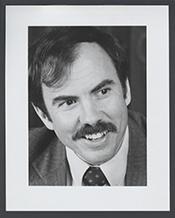
2,448 records where Rep. Wise, Robert E., Jr. [D-WV-2] is listed as a sponsor, author, or other actor. Search with topics and years
United States · United States Congress · 18 March 1993
Designates November 1993 and 1994 as National Hospice Month.
United States · United States Congress · 17 March 1993
Designates September 13, 1993, as Commodore John Barry Day.
United States · United States Congress · 16 March 1993
Postal Privacy Act of 1993 - Authorizes the Postal Service to permit its officers or employees to disclose the names and addresses of postal patrons if such disclosure: (1) consists of information relating to a change of address that was obtained on a Postal Service form which informed the patron of how the information would be disclosed and provided a means for the patron to deny disclosure; (2) has not been denied; and (3) would contribute to the efficiency of postal operations.
United States · United States Congress · 11 March 1993
United States One Dollar Coin Act of 1993 - Amends Federal currency law to prescribe the color and content of one-dollar coins. Mandates that the reverse side of the one-dollar coin have a design recognizing America's veterans. Directs the Secretary of the Treasury to cease regular production of one-dollar Federal Reserve notes by a specified date (except for such quantities as are required to meet collectors' needs).
United States · United States Congress · 10 March 1993
Designates October 3 through 9, 1993, as Mental Illness Awareness Week.
United States · United States Congress · 9 March 1993
Designates the week beginning April 12, 1993, as National Public Safety Telecommunicators Week.
United States · United States Congress · 4 March 1993
Deficit Reduction Account Act of 1993 - Establishes in the Treasury: (1) a Deficit Reduction Account and appropriates to the Account such sums determined by the Secretary of the Treasury to be equivalent to amounts specified by subsequent Acts of Congress; and (2) a Build America Account and appropriates to that Account the amount determined by the Secretary to be equal to the interest earned on obligations in the Deficit Reduction Account.
United States · United States Congress · 4 March 1993
Designates May 1993 and May 1994 as National Trauma Awareness Month.
United States · United States Congress · 4 March 1993
Designates April 25 through May 1, 1993, as National Crime Victims' Rights Week.
United States · United States Congress · 4 March 1993
Urges the President to: (1) recognize the important role of rural areas when planning and implementing the economic agenda of the United States; and (2) place considerable emphasis on rural economic development when considering infrastructure, small business assistance, and education and development initiatives.
United States · United States Congress · 4 March 1993
Limits the Official Mail Allowance for each Member of the House of Representatives for the second session of the 103d Congress to 80 percent of the allowance for the first session. Applies savings to deficit reduction.
United States · United States Congress · 3 March 1993
District of Columbia Retrocession Act of 1993 - Retrocedes the District of Columbia to Maryland after Maryland's acceptance of such retrocession. Maintains the exclusive legislative authority and control of the Congress over the National Capital Service Area in the District of Columbia.
United States · United States Congress · 3 March 1993
Food Stamp Quality Control System Amendments of 1993 - Amends the Food Stamp Act of 1977 to revise the formula (and related provisions) for determining a State's liability for excessive food stamp payment errors. Directs the Secretary of Agriculture and the State food stamp agencies to conduct a joint study and report to the appropriate congressional committees on measurement error and uniformity in the food stamp program quality control error-rate estimation system.
United States · United States Congress · 2 March 1993
Amends Federal law to increase the Federal payments in lieu of taxes to units of local government for entitlement land. Requires the Secretary of the Interior to adjust such payments by the rate of inflation according to the Consumer Price Index.
United States · United States Congress · 2 March 1993
Capital Budgeting Act of 1993 - Amends Federal law to require that the budget the President submits to the Congress be a unified budget comprising an operating budget and a capital budget, each presented separately for unified, general, trust, and enterprise funds. Restricts the capital budget to the major activities and programs supporting the acquisition, construction, alteration, and rehabilitation of capital assets and includes all other items in the operating budget. Requires the President to present certain additional information, including the capital investments by State and local governments not financed by the Federal Government. Requires the House Committee on the Budget to submit legislation to establish additional deficit targets under the Balanced Budget and Emergency Deficit Control Act of 1985 (Gramm-Rudman-Hollings Act) beginning in FY 1995 which would require the eventual elimination of deficits in the operating account. Requires the House Committee on Government Operations to report legislation directing the Comptroller General to evaluate the value and usefulness: (1) of capital investments in the capital account on an annual basis; and (2) of proposed capital investments submitted to the House after enactment of this Act. Requires the House Committee on Rules to report legislation establishing rules to facilitate the enforcement of amendments made by this Act. Amends the Public Works and Economic Development Act of 1965 to require reports to specified congressional committees on the actual, estimated, and proposed appropriations, receipts, and expenditures for capital and operating activities associated with certain transportation, water, and public buildings projects.
United States · United States Congress · 2 March 1993
Justice for Wards Cove Workers Act - Amends the Civil Rights Act of 1991 to remove a provision excluding from application of the Act any disparate impact case filed before March 1, 1975, and decided after October 30, 1983. (Wards Cove Packing Co. v. Atonio, 1989, held that, in cases brought under title VII of the Civil Rights Act, the burden is on the plaintiff to prove an employer had no business necessity for a practice with discriminatory effects.)
United States · United States Congress · 2 March 1993
Air Traffic Supervisor Retirement Reform Act of 1993 - Provides that service performed by certain civilian employees of the Departments of Transportation or Defense holding positions for which experience as an air traffic controller is a prerequisite (air traffic second-level supervisors and managers) shall be creditable for retirement under the Civil Service and Federal Employees' Retirement Systems.
United States · United States Congress · 2 March 1993
Authorizes the President to designate the last Friday of April 1993 as National Arbor Day.
United States · United States Congress · 2 March 1993
Designates the weeks of April 25 through May 2, 1993, and April 10 through 17, 1994, as Jewish Heritage Week.
United States · United States Congress · 1 March 1993
National Triad Program Act - Requires the Director of the National Institute of Justice to conduct a qualitative and quantitative national assessment of: (1) the nature and extent of crimes committed against senior citizens and the effect of such crimes on the victims; (2) the numbers, extent, and impact of violent and nonviolent crimes against senior citizens and the extent of unreported crime; (3) the collaborative needs of law enforcement, health, and social service organizations, focusing on prevention of crimes against senior citizens, to identify, investigate, and provide assistance to victims of such crimes; and (4) the development and growth of strategies to respond effectively] to such matters. Directs the Director to make grants to coalitions of local law enforcement agencies and senior citizens to assist in the development of programs and execute field tests of particularly promising strategies for crime prevention and related services, based on the concepts of the Triad model (which generally calls for the participation of the sheriff, at least one police chief, and a representative of at least one senior citizens' organization within a county) which can then be evaluated and serve as the basis for further demonstration and education programs. Requires the Director to make awards to: (1) organizations with demonstrated ability to provide training and technical assistance in establishing crime prevention programs based on the Triad model, for purposes of aiding in the establishment and expansion of pilot programs; (2) research organizations to evaluate the effectiveness of selected pilot programs, and to conduct research and development identified as being critical; and (3) public service advertising coalitions to increase public awareness of, and promote ideas or programs to prevent, crimes against senior citizens. Authorizes appropriations.
United States · United States Congress · 24 February 1993
TABLE OF CONTENTS: Title I: Satellite Carriers Title II: Secondary Transmissions by Cable Systems Title I: Satellite Carriers - Amends Federal copyright provisions to revise the formula for computing royalty fees for secondary transmissions for private home viewing by satellite carriers as follows: (1) 17.5 cents per subscriber for superstations not subject to syndicated exclusivity under Federal Communications Commission (FCC) regulations; and (2) 14 cents per subscriber for superstations subject to such exclusivity. Requires such amounts to be totalled with the sum of the number of subscribers receiving secondary transmissions of network stations multiplied by six (currently, three) cents to calculate the royalty fee for a six-month period. Repeals provisions concerning notice of voluntary negotiation proceedings regarding such fees. Extends to June 1, 1995, the date by which the Copyright Royalty Tribunal is required to publish notice of arbitration proceedings for determining fees to be paid by satellite carriers that are not parties to voluntary royalty fee payment agreements. Title II: Secondary Transmissions by Cable Systems - Defines "cable system," for purposes of provisions governing secondary transmissions by cable systems, as a facility, other than a satellite carrier, that receives signals embodying a performance or display of a work transmitted by broadcast stations licensed by the FCC or by Canadian or Mexican governmental authorities and makes secondary transmissions of such signals to subscribing members of the public.
United States · United States Congress · 24 February 1993
TABLE OF CONTENTS: Title I: Safe Streets For Women Subtitle A: Law Enforcement and Prosecution Grants to Reduce Violent Crimes Against Women Subtitle B: Rape Prevention Programs Subtitle C: Victim Compensation Subtitle D: National Board on Violent Crime Against Women Subtitle E: Safe Campuses for Women Title II: Safe Homes for Women Subtitle A: Interstate Enforcement Subtitle B: Arrest in Domestic Violence Cases Subtitle C: Safe Homes for Immigrant Women Subtitle D: Confidentiality for Abused Persons Title III: Civil Rights Title IV: Equal Justice for Women in the Courts Subtitle A: New Evidentiary Rules Subtitle B: Education and Training for Judges and Court Personnel in State Courts Subtitle C: Education and Training for Judges and Court Personnel in Federal Courts Violence Against Women Act of 1993 - Title I: Safe Streets for Women - Safe Streets for Women Act of 1993 - Subtitle A: Law Enforcement and Prosecution Grants to Reduce Violent Crimes Against Women - Amends the Omnibus Crime Control and Safe Streets Act of 1968 (Omnibus Act) to authorize the Director of the Bureau of Justice Assistance to: (1) make grants to reduce the rate of violent crimes against women to States and nonprofit nongovernmental victim services programs, and to Indian tribes, tribal organizations, or nongovernmental domestic violence and sexual assault victim services programs on Indian reservations; and (2) request any Federal agency, with or without reimbursement, to use its authorities and resources to support such State and local efforts. (Sec. 112) Specifies that no State is entitled to funds under this title unless the State or other grantee incurs the full cost of forensic medical exams for victims of sexual assault. Subtitle B: Rape Prevention Programs - Chapter 1: Rape Prevention Grants - Authorizes the Director to make education and prevention grants to reduce sexual assaults against women. Chapter 2: Offender Training and Information Programs - Directs the: (1) National Institute of Justice to establish criteria and develop training programs to assist probation and parole officer and other personnel who work with released sex offenders in the areas of case management, supervision, and relapse prevention; and (2) Attorney General to compile information regarding sex offender treatment programs and ensure that information regarding treatment programs in the community into which a convicted sex offender is released is made available to persons imprisoned for sexual abuse offenses. Subtitle C: Victim Compensation - Amends the Federal criminal code to require that a court order restitution for violations of Federal sexual abuse laws. Subtitle D: National Board on Violent Crime Against Women - Establishes an Interagency Advisory Board on Violent Crime Against Women to assess and review, and make recommendations regarding, policies and practices of the Government regarding violence against women. Subtitle E: Safe Campuses for Women - Directs the Attorney General to provide for a national baseline study to examine the scope of the problem of campus sexual assaults and the effectiveness of institutional and legal policies in addressing such crimes and protecting victims. Title II: Safe Homes for Women - Safe Homes for Women Act - Subtitle A: Interstate Enforcement - Amends the Federal criminal code to establish penalties for traveling across a State line with the intent to: (1) contact that person's spouse or intimate partner and, in the course of such contact, intentionally committing a crime of violence causing bodily injury to such spouse or partner; and (2) engage in conduct that violates a protection order, or that would violate such order if the conduct occurred in the jurisdiction in which the order was issued, and engaging in such conduct. Requires that in any proceeding for the purpose of determining whether a defendant charged shall be released pending trial, or the conditions of such release, the alleged victim be given an opportunity to be heard regarding the danger posed by the defendant. Mandates that a court order restitution to the victim of an offense under this Act. Requires, provided that certain conditions are met, that a protection order issued by the court of one State be accorded full faith and credit by the court of another State. Subtitle B: Arrest in Domestic Violence Cases - Amends the Omnibus Act to authorize the Director to make grants to eligible States, Indian tribes, municipalities, or local governmental entities to encourage arrest policies in domestic violence cases, including mandatory arrest programs for protective order violations and improving judicial handling of domestic violence cases. Subtitle C: Safe Homes for Immigrant Women - Amends the Immigration and Nationality Act to: (1) permit an alien to petition for preference or immediate relative status under the Act (currently, only a U.S. citizen may petition claiming that an alien is entitled to such status), and provide that such a petition may only be withdrawn by the beneficiary or self-petitioner; (2) provide that an abused alien family member shall be considered to remain the spouse or child of a citizen or resident abuser after the legal termination of the marriage through which the member seeks immigrant status if specified conditions are met; and (3) provide for a stay of deportation and the granting of work authorization for abused alien family members until such time as an immigrant visa is available and the alien's application for adjustment of status has been finally adjudicated by the Attorney General (but authorizes the Attorney General to revoke the work authorization of, and initiate deportation proceedings against, any alien who has fraudulently made a claim to be an abused alien family member, if the alien has received notice of intent to revoke and has a reasonable opportunity to rebut evidence supporting the revocation). Subtitle D: Confidentiality for Abused Persons - Directs the Postmaster General to promulgate regulations to secure the confidentiality of abused persons' addresses or otherwise prohibit the disclosure of an abused person's address, subject to specified requirements. Title III: Civil Rights - Declares that all individuals within the United States, and the special maritime and territorial jurisdiction of the United States, shall have the right to be free from crimes of violence motivated by the victim's gender. Permits individuals deprived of such right to bring a civil action for compensatory damages, punitive damages, injunctive relief, declaratory relief, or any combination thereof, subject to specified limitations. Title IV: Equal Justice for Women in the Courts - Subtitle A: New Evidentiary Rules - Amends the Federal Rules of Evidence to make evidentiary rulings pursuant to Rule 412 (Rape Cases; Relevance of Victim's Past Behavior) subject to interlocutory appeal by the Government. (Sec. 402) Makes reputation or opinion evidence of the past sexual behavior of an alleged victim inadmissible in a criminal case, other than a sex offense case. Allows other types of evidence of a victim's past sexual behavior in accordance with specified procedures if its probative value outweighs the danger of unfair prejudice. (Sec. 403) Makes reputation or opinion evidence of the plaintiff's past sexual behavior inadmissible in a civil action involving allegations of actionable sexual misconduct. Allows other types of evidence of a plaintiff's past sexual behavior in accordance with specified procedures if its probative value outweighs the danger of unfair prejudice. (Sec. 404) Makes evidence of an alleged victim's clothing in a criminal case under Federal laws relating to sexual abuse inadmissible to show that the victim incited or invited the offense. Subtitle B: Education and Training for Judges and Court Personnel in State Courts - Authorizes the State Justice Institute to award grants to develop, test, present, and disseminate model programs to be used by States in training judges and court personnel in the laws of the State on rape, sexual assault, domestic violence, and other crimes of violence motivated by the victim's gender. Subtitle C: Education and Training for Judges and Court Personnel in Federal Courts - Directs the: (1) circuit judicial councils to conduct studies of the instances of gender bias in their respective circuits; (2) Judicial Conference of the United States to designate an entity within the judicial branch to act as a clearinghouse to disseminate any reports and materials issued by the gender bias task forces and to respond to requests for such reports and materials; and (3) Federal Judicial Center to include in its educational programs information on issues related to gender bias in the courts, prepare materials necessary to accomplish that end, and take into consideration the findings and recommendations of such studies and consult with individuals and groups with relevant expertise in gender bias issues as it prepares or revises such materials.
United States · United States Congress · 24 February 1993
Designates the month of May 1993 as National Foster Care Month.
United States · United States Congress · 24 February 1993
Declares that it is the sense of the Congress that any legislation enacted to reform the health care system must: (1) ensure that every person has access to coverage for medically and psychologically necessary treatments for mental disorders that is equitable to the coverage provided for treatments of physical illnesses; and (2) meet specified requirements concerning coverage, consumer choice, financial protection, financing policies, and coordination across Federal, State, and local programs.
United States · United States Congress · 23 February 1993
Federal Budget Structure Act of 1993 - Amends Federal law to require that the budget the President submits to the Congress be a unified budget comprising an operating budget and a capital budget, each presented separately for total funds, Federal funds, and trust funds. Restricts the capital budget to the major activities, projects, and programs supporting the acquisition, construction, alteration, and rehabilitation of capital assets. Includes all other items in the operating budget. Requires the following reports to specified congressional committees on capital activities and operating activities associated with: (1) roadways and bridges, airports and airway facilities, and mass transportation systems; (2) waste water treatment and related facilities; (3) water resource projects; and (4) public buildings.
United States · United States Congress · 23 February 1993
Interstate Transportation of Municipal Waste Act of 1993 - Amends the Solid Waste Disposal Act to authorize a State Governor, if requested by an affected local government and a local solid waste planning unit, to prohibit the disposal of out-of-State municipal waste in: (1) any landfill or incinerator in the State; and (2) landfill cells that do not meet the State's design and location standards and leachate collection and groundwater monitoring requirements for new landfills. Permits such Governors, without the request of such entities, to limit the quantity of out-of-State municipal waste received for disposal, or the disposal of such waste, at landfills covered by exceptions under this Act. Prohibits discrimination against any particular landfill and against shipments of out-of-State waste on the basis of State of origin. Exempts from a Governor's authority to prohibit the disposal of out-of-State waste: (1) landfills that received documented shipments of such waste in 1991 and are in compliance with State laws relating to design and location standards, leachate collection, groundwater monitoring, and financial assurance for closure and post-closure and corrective action; (2) proposed landfills that, prior to January 1, 1993, received an approval from the affected local government to receive municipal waste generated outside of the county or State and a State notice of decision to grant a construction permit; or (3) incinerators that received documented shipments of such waste during 1991 and are in compliance with performance standards under the Clean Air Act and State laws relating to facility design and operations. Authorizes States to collect fees on the combustion or disposal of out-of-State municipal waste.
United States · United States Congress · 23 February 1993
Improved Budget Presentation Act - Establishes the Commission on the Presentation of the Budget of the United States to study and report to the President and the Congress on recommendations to provide improved governmental processes in the formulation, presentation, and implementation of the Federal budget with respect to: (1) the ability of the budget to distinguish between capital and operating activities, and between operating and trust funds, to identify the resources needed to meet the Government's needs; (2) improved procedures among Federal departments, agencies, independent establishments, and instrumentalities to provide improved coordination and control with respect to the budget; and (3) more effective arrangements between the executive branch and the Congress which will better enable each to carry out its budgeting, revenue, and appropriation responsibilities.
United States · United States Congress · 18 February 1993
Local Government Interstate Waste Control Act - Amends the Solid Waste Disposal Act to prohibit owners or operators of landfills, incinerators, or other waste disposal facilities from receiving municipal solid waste generated outside their State unless they obtain authorization from the affected local government. Exempts from such prohibition: (1) landfills that, as of this Act's enactment date, complied with State laws relating to design and location standards, leachate collection, groundwater monitoring, and financial assurance for closure and post-closure care and corrective action and, during 1991, accepted municipal solid waste generated outside the State or, before this Act's enactment date, obtained authorization to accept such waste; (2) persons planning to own or operate a landfill, incinerator, or other waste disposal facility who obtained authorization to accept such waste before this Act's enactment; and (3) incinerators that accepted such waste during 1991 or obtained authorization before this Act's enactment. Considers expansions of landfills, incinerators, or waste disposal facilities to be separate facilities requiring authorization. Exempts owners or operators of such facilities from the requirement to obtain additional authorizations if: (1) at the time they obtained authorization, they possessed an option to purchase the land on which the expansion is proposed to occur; and (2) the area of expansion was indicated in documents filed with the affected local government before obtaining authorization; or (3) with respect to facilities exempted from authorization requirements, they possessed an option to purchase the land for the expansion during 1991. Authorizes State Governors to prohibit local government authorizations if the disposal of out-of-State waste is using solid waste management capacity required to be used for waste generated within the local government's region. Permits a Governor, if requested by an affected local government and local solid waste planning unit, to limit the amount of out-of-State waste received at landfills exempted from authorization requirements. Makes this Act inapplicable after 1996 unless each operating landfill in a State: (1) meets design and location standards applicable to landfills constructed on and after October 1993; or (2) is on an enforceable schedule to stop receiving waste by 2000 and to implement a closure plan.
United States · United States Congress · 16 February 1993
Designates the month of October in 1993 and 1994 as Country Music Month.
United States · United States Congress · 4 February 1993
Amends the National Labor Relations Act to exclude shipboard supervisory personnel from selection as employer representatives, if such personnel are licensed by the U.S. Coast Guard and represented by a labor organization. Provides that picketing or other economic activity undertaken by a labor organization on behalf of such licensed shipboard supervisory personnel shall not be considered a prohibited restraint or coercion.
United States · United States Congress · 4 February 1993
Designates the week of February 21 through 27, 1993, as National FFA Organization Awareness Week.
United States · United States Congress · 4 February 1993
Recognizes Belleville, New Jersey, as the birthplace of the industrial revolution in the United States.
United States · United States Congress · 3 February 1993
Freedom of Access to Clinic Entrances Act of 1993 - Amends the Federal criminal code to impose civil or criminal penalties upon persons who intentionally prevent other individuals from entering or exiting a medical facility. Permits aggrieved individuals to obtain appropriate relief through civil actions.
United States · United States Congress · 3 February 1993
Jefferson Commemorative Coin Act of 1993 - Directs the Secretary of the Treasury to issue one-dollar silver coins emblematic of Thomas Jefferson and his home, Monticello. Mandates that all surcharges received from the sale of such coins be paid to the Jefferson Endowment Fund, and to the Corporation for Jefferson's Poplar Forest. Expresses the sense of the Congress that the coin program shall be self-sustaining and that its administration should result in no net cost to the Numismatic Public Enterprise Fund.
United States · United States Congress · 3 February 1993
Amends the Internal Revenue Code to provide that the term "qualified military benefit," for purposes of the exclusion from gross income, includes any allowance or benefit administered by the Secretary of Veterans Affairs. Makes such exclusion effective for taxable years beginning on or after January 1, 1984.
United States · United States Congress · 3 February 1993
Uniform Child Support Enforcement Act of 1993 - Amends the Social Security Act and the Internal Revenue Code to replace the current system for the collection and distribution of child support and enforcement of child support orders by the States with a new Federal system under which States are required to transmit copies of such orders to the Internal Revenue Service for it to collect the support through wage withholding and other means, distribute it to the individual entitled, and enforce support orders in a manner similar to that used for tax evasion.
United States · United States Congress · 3 February 1993
Amends the Internal Revenue Code with respect to the tax-exempt status of a cooperative telephone company to provide for the tax treatment of income received from a nonmember telephone company for services by the cooperative which are indirectly paid for by members of the cooperative. Includes billing and collection services for a nonmember telephone company under such treatment. Provides for the tax treatment of account reserve income that does not exceed a specified percentage of the company's total income. Subjects a portion of such investment income to unrelated business income tax.
United States · United States Congress · 3 February 1993
Designates the weeks beginning April 18, 1993, and April 17, 1994, as National Organ and Tissue Donor Awareness Week.
United States · United States Congress · 3 February 1993
Designates the weeks beginning June 6, 1993, and June 5, 1994, as Lyme Disease Awareness Week.
United States · United States Congress · 2 February 1993
Amends part B (Supplementary Medical Insurance) of title XVIII (Medicare) of the Social Security Act to remove the payment limitation with respect to mental health services furnished to skilled nursing facility residents.
United States · United States Congress · 2 February 1993
Designates the weeks beginning November 21, 1993, and November 20, 1994, as National Family Caregiver Week.
United States · United States Congress · 27 January 1993
Amends Federal law to prohibit any State from imposing an income tax on the pension income of any individual who is not a resident or domiciliary of that State.
United States · United States Congress · 25 January 1993
Designates the weeks beginning February 7, 1993, and February 6, 1994, as "National Burn Awareness Week."
United States · United States Congress · 21 January 1993
Prisoner-of-War Commemorative Coin Act - Directs the Secretary of the Treasury to issue a specified number of one-dollar coins emblematic of the experience of American prisoners of war. Requires that all sales of such coins include a surcharge of $5 per coin. Requires specified proceeds from such surcharges to be paid to the: (1) Secretary of the Interior for construction of the Andersonville Prisoner-of-War Museum in Andersonville, Georgia; (2) endowment fund established by this Act for the maintenance of such Museum; and (3) Secretary of Veterans Affairs to maintain national cemeteries.
United States · United States Congress · 21 January 1993
National Writing Project Reauthorization Act of 1993 - Amends the Education Council Act of 1991 (Public Law 102-62) to extend the authorization of appropriations for the National Writing Project. Revises provisions relating to the National Writing Project, including provisions for Federal share, evaluation, and research and development activities.
United States · United States Congress · 6 January 1993
Amends the Internal Revenue Code to permanently extend the period during which qualified mortgage bonds and mortgage credit certificates may be issued.
United States · United States Congress · 6 January 1993
States that rape is an unacceptable means of warfare and condemns the systematic and widespread rape of women and girls in Bosnia-Herzegovina (Bosnia). Applauds: (1) Secretary of State Eagleburger for denouncing crimes against humanity in the conflict in Bosnia and for calling for an international crimes tribunal to prosecute such crimes; and (2) the adoption of United Nations (UN) Security Council Resolution 798 and the declaration of the Council of Ministers of the European Community which denounced the systematic rape of Moslem women in such conflict. Urges the President to: (1) publicly condemn systematic rape in such conflict; (2) state that rape and forced pregnancy as tactics of war are crimes against humanity and war crimes; and (3) support the establishment by the UN of an international tribunal to prosecute such crimes. Urges that: (1) all countries participating in humanitarian relief efforts in the former Yugoslavia should allocate resources for the treatment of rape victims; and (2) all parties to the conflict should take steps to protect rights of women and girls.
United States · United States Congress · 6 January 1993
Requests the Occupational Safety and Health Administration to publish, within one year, proposed amended regulations that specify the components of an adequate operator training program and that provide that only trained employees be authorized to operate powered industrial trucks.
United States · United States Congress · 5 January 1993
Medicaid Mammography Coverage Act of 1993 - Amends title XIX (Medicaid) of the Social Security Act to provide Medicaid coverage of screening mammographies for women age 35 and older. Varies the permissible frequency of such covered tests on the basis of a woman's age and her risk of developing breast cancer. Directs the Secretary to periodically review and revise permissible frequencies of such tests.
United States · United States Congress · 5 January 1993
Live Performing Artists Labor Relations Act - Amends the National Labor Relations Act to permit employers to: (1) agree with a labor organization to make membership in it a condition of performing arts employment; and (2) make agreements with a labor organization covering performing artists even if its majority status has not yet been established (pre-hire agreements). Defines "employer" to include purchasers of live musical performance services. Defines "employee" to include independent contractors engaged to perform live musical services. Provides that nothing in the amendments made by this Act shall be construed as affecting the treatment of individuals (as employees or independent contractors) covered by such labor law amendments for purposes of the Internal Revenue Code or any other laws.