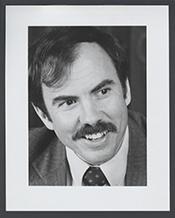
United States · United States Congress · 11 October 1989
Marginal Energy Producers Incentives Act of 1989 - Amends the Internal Revenue Code with respect to the oil and natural gas allowance to allow a tax deduction to the transferee in the case of a transfer of proven oil or gas property. Increases from 50 percent to 100 percent (thus removing) the net income limitations on the use of such depletion allowances. Sets a percentage depletion allowance of 15 percent for the marginal production of domestic crude oil or natural gas by independent producers. Makes the alternative minimum tax preference for percentage depletion inapplicable to such marginal production.
United States · United States Congress · 5 October 1989
Coal Industry Health Benefit Stabilization Act of 1989 - Authorizes the transfer of surplus assets from a coal industry pension plan to a coal industry health benefits plan, under specified conditions, without certain adverse effects in tax treatment under the Internal Revenue Code. Obliges specified employers to continue to contribute to multiemployer coal industry health benefits plans. Provides that nothing in this Act shall diminish or adversely affect any cause of action of such a plan, or its board of trustees, against an employer for contributions based on a collective bargaining agreement between the employer and a labor organization which is a settlor of the plan. Directs the United Mine Workers of America and the Bituminous Coal Operators' Association to report by February 1, 1994, on the effect of this Act on the delivery of retiree health benefits in the bituminous coal industry.
United States · United States Congress · 4 October 1989
Requires the U.S. Government to exhaust all reasonable possibilities to obtain proof of the death of a missing person in order to establish a reasonable presumption that a member of the armed forces in a missing status is dead. Requires the head of the Federal agency concerned to provide certain procedural rights to the primary next of kin of a missing person when an action is to be undertaken by such agency to review the status of such missing person, including the right to review all information obtained by such agency with regard to the missing person's status. Directs the Secretary of Defense to study and report to the Senate and House Armed Services Committees on current provisions of the Missing Persons Act.
United States · United States Congress · 4 October 1989
Homeownership Made Easier Act - Amends the National Housing Act to authorize the Secretary of Housing and Urban Development to make matching contributions (income-based multiples of buyer contributions) to eligible buyers who have established a home savings certificate amount for the purchase of a principal residence. Bases buyer eligibility on: (1) length of time from previous residential ownership, if any; and (2) qualifying income in relation to State median income. Requires matching contributions to be used for downpayments and related closing costs. Limits: (1) maximum buyer contributions matched by the Government; (2) aggregate matching contributions; and (3) income eligibility. Reserves 20 percent of program appropriations for low-income buyers. Requires: (1) matching contributions to be used within seven years of issuance; and (2) contribution reductions if redeemed before three years of issuance. Requires depository institutions holding home accounts to provide the Secretary with specified account information. Requires monthly repayment of matching contributions and authorizes the Secretary to charge interest) over the period of the residence's mortgage. Requires the Secretary to include a program report in the annual housing report. Authorizes appropriations. Terminates the Secretary's authority to provide matching contributions four years after enactment of this Act.
United States · United States Congress · 3 October 1989
Amends rule XI of the Rules of the House of Representatives to permit a committee to vote to allow live media coverage of the testimony of a subpoenaed witness against the wishes of such witness.
United States · United States Congress · 3 October 1989
Expresses the sense of the Congress that in determining the allocation of foreign assistance the Department of State should: (1) weigh heavily the persecution, torture, and execution of innocent Somalis by the armed forces of Siad Barre; and (2) insist upon significant improvements in human rights as a precondition to the resumption of foreign assistance to Somalia.
United States · United States Congress · 2 October 1989
Safe Transportation of Food Act - Prohibits any person from: (1) using a refrigerated motor vehicle in the transportation of solid waste; or (2) using a cargo tank that has been used in the transport of hazardous materials for the transportation of food. Authorizes the Secretary of Transportation to waive such prohibition if such waiver is not contrary to the public interest. Requires the Secretary to study measures that will provide for the safe transportation of food and hazardous materials. Directs the Secretary to submit to the Congress a report containing results of such study. Sets forth both civil and criminal penalties. Empowers the Attorney General, at the Secretary's request, to bring action in U.S. district court for equitable relief to redress any violation of this Act or any regulations issued under it.
United States · United States Congress · 28 September 1989
Amends the Rail Passenger Service Act to repeal an exemption from specified communicable disease control requirements of the Public Health Service Act for waste disposal from railroads operating in intercity rail passenger service.
United States · United States Congress · 28 September 1989
Authorizes the Secretary of Agriculture to make grants to aid businesses unable to secure credit and create jobs in rural areas. Amends the Consolidated Farm and Rural Development Act to increase annual water and waste facility assistance limits. Authorizes the Secretary to provide water and waste facilities loans to specified rural entities. Authorizes the Farm Credit System to provide loans and other financial assistance to rural sewer and water projects. Establishes in the Farmers Home Administration a national rural waste water circuit rider grant program. Amends the Rural Electrification Act of 1936 to establish: (1) a technical assistance unit; and (2) an Assistant Administrator for Economic Development. Amends the Consolidated and Rural Development Act to authorize a rural business development grant program. Directs the Secretary to establish within the National Agricultural Library a National Rural Assistance Information Clearinghouse. Treats a rural county experiencing specified population reduction as a labor surplus area.
United States · United States Congress · 27 September 1989
Amends the Federal Trade Commission Act to make it unlawful for any person to advertise any product unless the advertisement discloses: (1) the country in which the product is finally assembled; and (2) if parts constituting 50 percent or more of the cost to the assembler were manufactured in one or more foreign countries, then the name of the country or the disclosure that the parts are from a foreign country.
United States · United States Congress · 27 September 1989
Designates November 11, 1989, as Washington Centennial Day in recognition of the economic, social, and historic contributions of the State of Washington to the United States over the past century.
United States · United States Congress · 21 September 1989
Prohibits the Environmental Protection Agency (EPA) from enforcing, during the 12-month period following the enactment of this Act, its underground petroleum storage tank financial responsibility regulations promulgated pursuant to the Solid Waste Disposal Act with respect to certain underground tank owners. Permits enforcement after such period if the Administrator of the EPA determines that such enforcement would not impose an unjust economic burden on the owners. Requires the Administrator to conduct a study for the purpose of identifying the principal economic difficulties associated with compliance by underground tank owners with EPA technical standards for such tanks. Directs the Administrator to report the results of such study to specified congressional committees. Amends the Solid Waste Disposal Act to: (1) delete the requirement that regulations under such Act include provisions for compensation of third parties for injury and property damage caused by accidental releases from underground storage tanks; and (2) reduce financial responsibility requirements for specified underground petroleum storage tanks.
United States · United States Congress · 14 September 1989
Amends the Internal Revenue Code to make funds from the Airport and Airway Trust Fund available for the essential air transportation program under the Federal Aviation Act of 1958. Authorizes the Secretary of Transportation to enter into contracts and agreements to provide essential air services prior to September 30, 1998.
United States · United States Congress · 14 September 1989
Includes service of at least one year but less than two years in the Cadet Nurse Corps during World War II as creditable service for purposes of civil service retirement. (Current law provides for individuals with two or more years of service.) Requires affected individuals to: (1) file an appropriate written application with the Office of Personnel Management within 14 months of enactment of this Act; and (2) make required deposits to the Civil Service Retirement and Disability Fund with respect to service in the Corps.
United States · United States Congress · 14 September 1989
Expresses the sense of the Congress that illegal aliens should not be counted in the 1990 decennial census for purposes of congressional reapportionment.
United States · United States Congress · 13 September 1989
Farm Animal and Research Facilities Protection Act of 1989 - Amends the Food Security Act of 1985 to make it unlawful to disrupt or damage a farm animal facility, its animals, or property. Sets forth penalties for violations of this Act. Allows the Secretary of Agriculture to investigate such offenses. Grants U.S. district courts jurisdiction in such cases. Provides for a private right of action.
United States · United States Congress · 12 September 1989
Authorizes to be appropriated for FY 1990, in addition to sums already authorized, a certain amount to the National Cancer Institute for breast cancer research other than research which involves treatment or clinical trials.
United States · United States Congress · 4 August 1989
Acid Rain Control Act of 1989 - Amends the Clean Air Act to direct the Administrator of the Environmental Protection Agency to publish a list of the 20 electric plants which had the greatest emissions of sulfur dioxide during 1985. Permits such utilities to apply to the Administrator to substitute a unit for a unit at a plant originally listed by the Administrator. Authorizes the Administrator to modify such list if determined that equivalent reductions in such emissions will be achieved by such substitution. Requires electric utility coal-fired steam generating plants, no later than December 31, 1995, to comply with annual emissions limitations for sulfur dioxides which reflect a 90 percent average annual reduction from such plants' annual emissions during 1985 through 1987. Permits up to 15 percent of such reduction to be achieved through natural gas cofiring or other fuel substitution. Sets sulfur dioxide emissions limitations for oil-fired electric utility steam generating units, to be effective after 1995. Requires the Administrator to establish: (1) such emissions limitations as may be necessary to ensure that by December 31, 1995, sulfur dioxide emissions from stationary sources in each State do not exceed 1985 emissions levels; and (2) emissions limitations to achieve a 3,000,000 tons per year reduction in nitrogen oxide emissions from fossil fuel fired electric utility steam generating units. Sets sulfur dioxide emissions limitations for fossil fuel fired electric utility steam generating units with nameplate capacities over 75 MWe and which commenced operation on or before January 1, 1985. Authorizes such units to comply with such limitations by obtaining equivalent reductions from other units owned or operated by utilities which are part of the same holding company or from another utility in the same or an adjacent State. Directs the Administrator to require owners or operators of such units to maintain and make available to the public records on emissions and hours of operation. Permits the Administrator to extend the compliance period for up to three years if a unit will use clean coal technology resulting in greater emissions reductions than would be achieved by complying with such standards. Establishes the Acid Rain Control Trust Fund. Requires the Secretary of the Treasury to report annually to the Administrator and the Congress on the financial condition of the Fund and on its expected condition and operations during the next five fiscal years. Directs the Administrator to make periodic payments from the Fund to owners or operators of electric utility steam generating units subject to emissions limitations under this Act to cover costs of installing technology (including clean coal technology) for purposes of complying with this Act. Sets a ceiling on the total amount of payments to a unit. Provides that units shall be eligible for such payments only if they certify that the payments will be used for such purposes. Directs the Administrator to promulgate a rule requiring certain fossil fuel fired electric utility steam generating units and energy importers to pay a fee to the Administrator based on the amount of energy generated or imported. Establishes a fee schedule based on the average annual amount of sulfur dioxide emissions generated by a unit during 1990 through 2005. Authorizes fee reductions for States which adopt emissions limitations more stringent than Federal standards and for utilities burning natural gas in conjunction with fossil fuels. Provides for the substitution of emissions reductions from programs encouraging or requiring energy conservation if such reductions are equivalent to reductions required under this Act. Authorizes the Administrator to make payments to cover the costs of such programs from 1996 through 2010. Makes owners or operators of facilities that emit excess emissions of sulfur dioxide liable for excess emissions fees, based on the amount of excess emissions tonnage. Requires such fee to be adjusted for inflation in each year after 1996, using the Consumer Price Index. Requires such persons to obtain offsetting emissions reductions in the year after excess emissions were emitted. Directs the Administrator to promulgate revised new source performance standards for certain fossil fuel fired electric utility steam generating units which commence construction or modification after such standards are required to be promulgated.
United States · United States Congress · 4 August 1989
Yosemite National Park Centennial Medal Act - Directs the Secretary of the Treasury to strike and sell not more than 750,000 gold, silver, and bronze medals in commemoration of the centennial of Yosemite National Park, California, in 1990. Requires that all sales of such medals include a surcharge of $35 per medal for the gold medals, $7 per medal for the silver medals, and $2 per medal for the bronze medals. Requires that all surcharges be paid to an endowment fund for the benefit of the Park to be administered by the National Park Foundation. Requires that the interest from the fund be paid to the Secretary of the Interior to fund special supplemental projects relating to back country trail development and rehabilitation and the preservation of Sequoia groves within the boundaries of the Park. Requires the Secretaries to enter into a memorandum agreement to allow: (1) the Secretary of the Treasury to deliver medals to the Secretary of the Interior; and (2) the Secretary of the Interior to provide for the sale of the medals in National Park facilities. Grants the Comptroller General the right to examine all records of the National Park Foundation which are related to such medals. Provides that no medals may be struck after December 31, 1991.
United States · United States Congress · 4 August 1989
Department of Housing and Urban Development Accountability Act of 1989 - Requires the Secretary of Housing and Urban Development to provide for the following in the housing assistance selection process: (1) publication in the Federal Register of selection criteria and assistance availability; (2) documentation of selection decisions, including individual program documentation standards published in the Federal Register; and (3) specified applicant disclosure. Requires: (1) the Secretary to report to the Congress regarding such activities and a related consultant fee limitation plan; and (2) the Inspector General of the Department of Housing and Urban Development (HUD) to include in his semiannual reports an assessment of compliance with the requirements of this Act. Prohibits during any housing assistance selection process: (1) an applicant from soliciting or obtaining any covered selection information from any HUD officer or employee; or (2) a HUD officer or employee from knowingly disclosing such information to any person other than a person authorized by the Secretary to receive it. Sets forth administrative, civil, and criminal penalties for disclosure violations. Directs the Secretary to consider any applicable low-income tax credit in establishing assisted housing owner profit levels.
United States · United States Congress · 3 August 1989
Adult Literacy and Employability Act of 1989 - Title I: Literacy Coordination - Establishes a Joint Presidential-Congressional Task Force on Adult Literacy. Requires the Task Force to report to the Council for Literacy Coordination established by this Act. Terminates the Task Force six months after its last member is appointed. Authorizes appropriations for the Task Force for FY 1990. Establishes the Cabinet Council for Literacy Coordination (the Council). Requires the Council to report annually to the Congress and the President. Authorizes appropriations for the Council for FY 1990 through 1993. Amends the Department of Education Organization Act to establish in the Department of Education an Office of Adult Literacy, to be administered by a Director of such Office. Requires the Director to: (1) coordinate the administration of literacy programs within the Department; and (2) work with the Cabinet Council for Literacy to coordinate related activities. Establishes the National Center for Adult Literacy as a nonprofit corporation which will not be an agency or establishment of the Federal Government. Divides the Center into a research institute, a technical assistance and training institute, and a policy analysis institute. Requires an annual report to the Congress. Authorizes appropriations for the Center for FY 1990 through 1994. Directs the Chairperson of the Council to make grants to States for a network of State or regional adult literacy resource centers. Authorizes appropriations for such grants for FY 1990 through 1992 and succeeding fiscal years. Requires each State that receives adult literacy assistance under an applicable Federal program to: (1) establish a State advisory board on literacy; and (2) submit a State literacy coordination plan. Requires the State Governor to report annually to the Council. Title II: Investment in Literacy - Amends the Adult Education Act (AEA) to increase and extend through FY 1995 the authorization of appropriations for AEA programs. Revises allotment provisions. Requires limitations on the use of funds to: (1) eliminate a cap on high school equivalency certificate programs; and (2) require that a specified amount be used to support adult education and literacy services provided by community-based organizations and nonprofit volunteer agencies. Includes among projects for which State must expand a portion of their AEA allotments: (1) development and expansion of innovative programs; and (2) support for statewide volunteer technical assistance activities. Eliminates certain maintenance of effort requirements. Authorizes the Chairperson of the Council to make matching challenge grants to State for investment in adult literacy instruction staff training and educational technology. Allows States, for purposes of matching such grants, to reserve specified portions of funds for FY 1990 through 1995 under specified Federal laws. Requires that States receiving such grants make available federally-assisted adult literacy program equipment, facilities, or training services, when not in program use or when surplus capacity exists, to other adult literacy programs (without charge or in certain circumstances at cost). Authorizes appropriations for such challenge grants for FY 1990 and succeeding fiscal years. Establishes a Literacy Leader Training Fund. Directs the Secretary of Education (the Secretary), through the Office of Adult Literacy, to make scholarship grants from the Fund to individuals pursuing careers in adult education, instruction, management, research, or innovation, for education or research to expand their expertise. Authorizes appropriations for such purposes for FY 1990 and succeeding fiscal years. Amends the Library Services and Construction Act (LSCA) to establish a library literacy demonstration program. Directs the Secretary to make grants to State and local public libraries for model innovative programs for delivery of adult literacy services, including development of technology-based centers. Requires that a peer review panel advise on grant criteria and application review, and that an expert in library literacy activities administer such program in the Department of Education. Authorizes appropriations for FY 1990 through 1994 for such library literacy demonstration program. Extends through FY 1994 the authorization of appropriations for other LSCA library literacy programs. Title III: Family Literacy - Amends the Elementary and Secondary Education Act of 1965 to direct the Secretary to carry out through the Office of Adult Literacy the Secretary's functions under the Even Start program (which integrates early childhood education and adult education for parents). Title IV: Workplace Literacy - Amends the Job Training Partnership Act (JTPA) to provide for workplace literacy skills and programs. Revises State education coordination and grant programs to provide financial assistance for any State education, labor, or economic development agency (or consortia) to enhance provision of statewide workplace literacy training and education through cooperative agreements between appropriate agencies and organizations. Requires that at least 75 percent of funds for such activities be used to improve program quality by means such as application of learning technology, model program development, and investment in staff training and services targeted at participants lacking workplace skills. Revises general program requirements for the service delivery system to require private industry councils to give priority to participant placements with businesses and industries that have a workplace literacy program or are willing to develop one with other public and private agencies. Makes individuals lacking workplace literacy skills eligible for adult and youth training program services. Requires, beginning in program year 1990, that at least 40 percent of adult program participants in each service delivery area (SDA) be in need of and be offered basic training through an individual workplace literacy plan. Requires assessment and testing of each potential participant's workplace literacy skills and employment skills. Allows participants who have been placed in employment to continue workplace literacy training until they have achieved their goal or for at least two years, whichever is earlier. Requires SDAs to provide such training for such duration to participants who need and would benefit from it. Allows such training to include workplace literacy training and English-as-a-second-language. Requires such activities to be described in an individualized workplace literacy plan for each participant, including goals based on participant needs. Requires that eligible dislocated workers lacking workplace literacy be offered basic skills training for at least a two-year period from the date of entry into the program. Establishes a Workplace Literacy Demonstration Program. Authorizes the Secretary of Labor to make grants for joint ventures of business, industry, or labor (or consortia) cooperating with State, County, or local governments or private industry councils (or consortia) to provide large-scale model development approaches to improving the basic workplace skills of the workforce. Requires the use of such funds for: (1) basic skills training; (2) specific program offerings; (3) assessments of individual and workplace skill needs; (4) program evaluations; and (5) technology-based learning environments. Sets forth matching requirements for grantees. Requires independent evaluation of such programs. Authorizes appropriations for FY 1990 through 1995 for such programs.
United States · United States Congress · 3 August 1989
Agricultural Extended Retirement Credit Act of 1990 - Extends creditable service under the Civil Service Retirement System for periods of service in certain Federal-State cooperative programs which had agricultural or related purposes. Establishes a hiring limitation period of four fiscal years after 60 days following enactment of this Act on the replacement of retirees in the United States Department of Agriculture. Prohibits the obligation or expenditure of any budget authority or outlays saved in any fiscal year by reason of reduced pay and personnel resulting from implementation of this Act. Requires that the budget authority and outlays thus saved: (1) be carried to the surplus fund of the Department of Agriculture and deposited by the Secretary of Agriculture in the Treasury to the credit of the Civil Service Retirement Fund, as a Government contribution; and (2) credited against pay and other personnel costs required to be sequestered under the Balanced Budget and Emergency Deficit Control Act of 1985 (Gramm-Rudman-Hollings Act). Requires the Comptroller General to notify the Congress, of of each instance of noncompliance with the requirements of this Act. Directs the Director of the Office of Personnel Management to report to the Congress on an evaluation of the extended credit retirement program and the limitation on replacement of retirees provided under this Act.
United States · United States Congress · 3 August 1989
Title I: Combined Sewer and Storm Water System Overflow Control - Estuarine Zone and Marine Waters Combined Sewer Overflow Control Act - Amends the Federal Water Pollution Control Act to require the Administrator of the Environmental Protection Agency to issue regulations setting forth permit requirements for discharges from combined storm water and sanitary sewer overflows into the estuarine zone and marine waters. Directs the Administrator, in determining the content of such regulations, to take into account; (1) the expected composition, frequency, and volume of each discharge; (2) the anticipated effect of each discharge on the environment, economy, and aesthetic and recreational values of the receiving waters; and (3) the need for a flexible approach in minimizing such discharges. Authorizes the Administrator to issue permits after 1999 for such discharges only if the permittee has taken reasonable efforts to eliminate dry weather discharges and to minimize wet weather discharges. Requires the Administrator to provide technical assistance to State and local governments issued permits under this Act. Directs permittees, as a condition for permit issuance or renewal, to budget and expend an amount of funds for: (1) identifying all discharges of overflows into the estuarine zone and marine waters; (2) implementing technology-based limitations of such discharges; and (3) eliminating such discharges. Waives such requirement if the Administrator determines that the permittee or the State in which such permittee is located has begun to implement a plan that will result in the cessation of dry weather discharges and minimization of wet weather discharges by the year 2000. Makes funds available to permittees to address water quality problems resulting from such discharges. Directs the Administrator to report to the Congress on: (1) the feasibility and cost of establishing a technological clearinghouse to make available to States and local governments information on, and assistance in, controlling and ceasing discharges of overflows from combined storm water and sanitary sewers into the estuarine zone and marine waters; and (2) the major components of discharges which contribute significantly to floating debris and debris which washes up on shores and ways to eliminate the introduction of such debris into combined storm water and sanitary sewer systems. Authorizes appropriations. Title II: National Estuary Program Amendment - National Estuary Program Amendment Act - Requires the Administrator to: (1) identify estuaries where overflow discharges from combined storm water and sanitary sewer systems constitute a major source of pollution; (2) urge that the management conference for each estuary develop a priority action plan to address such overflows; and (3) report to the Congress on the extent of such discharges and the anticipated Federal cost of addressing the problem. Title III: Marine Pollution Discharge Abatement - Marine Discharge Abatement Act - Prohibits the issuance or renewal of permits for pollutant discharges into estuaries, estuarine zones, the territorial sea, the waters of the contiguous zone, or the oceans unless: (1) the need for the discharge has been demonstrated by the applicant and the Administrator has determined there is no environmentally sound alternative; (2) the permittee establishes an on-going monitoring program for each discharge; and (3) the applicant agrees to include within the permit a provision to allow the Administrator to modify or terminate such permit if such action is in the public interest and necessary to prevent the degradation of such waters. Directs the Administrator and the Under Secretary of Commerce for Oceans and Atmosphere to review existing guidelines and to promulgate guidelines necessary to prevent the degradation of such waters. Prohibits the waiver of such requirements for permit issuances or renewals.
United States · United States Congress · 2 August 1989
Steel Fair Trade Review Act - Requires the President to submit to the Congress a report concerning progress achieved, pursuant to the steel trade liberalization program, on an international consensus to remove trade distorting practices in global steel markets. Specifies the issues such report must address.
United States · United States Congress · 2 August 1989
Urges the people of the United States to buy American, and calls upon the President, the State Governors, leaders of civic and consumer organizations, the mass media, and U.S. producers and manufacturers to promote consumer awareness of, and to identify, such American goods and services.
United States · United States Congress · 31 July 1989
Benjamin Franklin National Memorial Commemorative Coin Act - Requires the Secretary of the Treasury to issue a specified number of five-dollar gold coins, one-dollar silver coins, and half-dollar clad coins in commemoration of the bicentennial of the death of Benjamin Franklin. Provides that such coins shall be considered legal tender. Requires the Secretary to begin issuing such coins on October 1, 1989. Directs the Secretary to obtain silver for the minting of such coins from stocks of silver held by the Secretary or from any other federally owned stocks of silver and to obtain gold pursuant to authority under existing law. Provides that the design of such coins shall be selected by the Secretary after consultation with the Chairman of the Benjamin Franklin National Memorial at the Franklin Institute and the Chairman of the Commission of Fine Arts. Specifies the sales price of such coins as the face value plus costs. Requires that all sales of such coins include a surcharge of $35 per coin for five-dollar coins, $7 per coin for one-dollar coins, and $2 for half-dollar coins. Requires that all surcharges received by the Secretary from the sale of such coins shall be paid to the Benjamin Franklin National Memorial (The Franklin Institute): (1) to restore and renovate the Memorial; (2) to construct or renovate certain adjoining areas of the Franklin Institute; (3) to establish an endowment to ensure the continued upkeep and maintenance of the Memorial; (4) for exhibits in the Memorial or certain adjoining areas of the Institute; and (5) for funds for construction of certain facilities and for the acquisition and preservation of artifacts relating to Franklin. Authorizes the Comptroller General to audit such payments. Prohibits the minting of such coins under this Act after December 31, 1990. Requires the Secretary to ensure that the minting and issuance of such coins shall not result in any net costs to the Government.
United States · United States Congress · 27 July 1989
Veterans PTSD Treatment and Psychological Readjustment Act of 1989 - Directs the Secretary of Veterans Affairs to increase the number of: (1) vet centers currently in existence by 20 additional units by December 31, 1991, and by 20 more units by December 31, 1994; and (2) post-traumatic stress disorder (PTSD) treatment facilities currently in existence by 15 additional units by December 31, 1991, and by 15 more units by December 31, 1994. Requires new vet centers to be established in cities which do not have such centers. Earmarks a specified amount of FY 1990 PTSD funding for contracts with private facilities and therapists for the provision of PTSD treatment. Requires the Secretary, in administering the Health Professionals Educational Assistance Program, to encourage the participation of individuals in the program who desire to become psychiatrists, psychologists, and psychiatric nurses specializing in the treatment of PTSD. Directs the Secretary to establish the Advisory Committee on Readjustment of Veterans. Requires the Secretary to consult with, and seek the advice of, the Committee with respect to: (1) the administration of Department benefits for veterans, particularly Vietnam veterans; (2) reports and studies pertaining to veterans, particularly Vietnam veterans; and (3) the needs of all veterans with respect to compensation, health care, readjustment, outreach, and other benefits and programs administered by the Department. Requires the Committee to report annually to the Secretary pertaining to the social, economic, educational, and psychological readjustment of veterans. Requires the Secretary to submit such reports to the Congress, along with comments and recommendations. Authorizes the Secretary to conduct a pilot program to contract for care and treatment and rehabilitative services in halfway houses, therapeutic communities, psychiatric residential treatment centers, and other community-based treatment facilities for eligible veterans suffering from PTSD. Requires the Chief Medical Director (CMD) to plan, design, and conduct such program. Requires the Secretary to approve the quality and effectiveness of a program operated by a contract facility before allowing veterans to be furnished treatment there under the pilot program. Directs the Secretary to: (1) urge all public and private entities to provide appropriate employment and training opportunities to veterans who have been provided treatment and rehabilitative services under this Act for PTSD and who have been determined to be sufficiently rehabilitated to be employable; and (2) provide all possible assistance to the Secretary of Labor in placing such veterans in such opportunities. Requires the Secretary to provide referral services and advice to veterans discharged or released from active service who are not eligible for PTSD treatment and services. Outlines provisions concerning the transfer of veterans to contract care facilities for treatment of PTSD, requiring such transfer only within 30 days of such member's enlisted tour of duty and only if such person requests such a transfer while on active duty. Limits the period of such care and rehabilitative services to five years after the fiscal year in which the pilot program is initiated. Requires the Secretary to report to the Senate and House Veterans' Affairs Committees on findings and recommendations pertaining to the operation of the pilot program authorized under this Act. Directs the CMD of the Department to conduct a research program relating to the treatment of PTSD.
United States · United States Congress · 27 July 1989
Commends the citizens of the Sioux City, Iowa, tri-State area for their heroism and volunteerism in providing assistance to the passengers and crew of crashed United Airlines Flight 232.
United States · United States Congress · 25 July 1989
Veterans Agent Orange Exposure and Vietnam Service Benefits Act of 1989 - Provides that the disease of chloracne in Vietnam veterans shall be considered to have been service-connected if such disease became manifest to a ten percent or more degree of disability within one year after the last date on which the veteran performed such service in Vietnam. Presumes the following diseases to be service-connected for veterans who performed active service in Vietnam during the Vietnam era, notwithstanding that there is no record of evidence of such disease during the period of such service: (1) non-Hodgkins lymphoma; (2) soft-tissue sarcoma; and (3) melanoma and basal cell carcinoma. Provides a presumption of service-connection in the case of a Vietnam veteran suffering from a disease associated with effects of exposure to certain dioxins or other herbicide agents during such service in Vietnam. Directs the Secretary to prescribe regulations listing a positive association between any disease and the biological effects of exposure to an herbicide agent in Vietnam. Requires the Secretary to update such list continually. Requires the Secretary, in prescribing and revising such list, to obtain by contract the determinations and estimates of a contract scientific organization. Requires such organization to: (1) determine which diseases have any degree of association with the biological effects of exposure to an herbicide agent; and (2) estimate the extent of association between each such disease and each such biological effects. Requires the organization to determine such association specifically with respect to non-Hodgkins lymphoma, each soft-tissue sarcoma, lung cancer, and each other cancer. Outlines contract provisions required in such agreements between the Secretary and the scientific organization, including surveys, evaluations, and periodic determinations. Requires such scientific organization to provide reports to the Secretary and the Senate and House Veterans' Affairs Committees regarding its determinations and evaluations. Requires such organization to determine, in the effect of a positive association, whether there is a reasonable basis for concluding that a Vietnam veteran with the highest level of exposure to that herbicide agent in Vietnam was exposed to such agent under the circumstances necessary for such biological effects. Requires a report from the organization to the Secretary and the veterans' committees when there is no such reasonable basis found. Requires the Secretary to make certain determinations and follow-up reports after receiving such reports from the contract scientific organization, including the issuance of a report to the veterans' committees and the promulgation of positive association regulations, if necessary. Requires benefits to be continued even though a disease is removed from the regulations listing diseases having positive associations. Terminates such contracting authority ten years after the first day of the fiscal year in which a scientific organization transmits its first report to the Secretary. Provides special effective dates. Directs the Secretary to compile and analyze all clinical data that: (1) is obtained by the Department in connection with examinations and treatment of veterans for disabilities related to exposure to certain herbicides or to service in Vietnam; and (2) is likely to be scientifically useful in determining the association, if any, between the disabilities of such veterans and their exposure to such herbicides and other toxic substances. Requires the Secretary to submit an annual report to the veterans' committees concerning such analysis and its results. Directs the Secretary to consult with the Director of the National Institutes of Health Research and Grants Division (NIH) before compiling and analyzing such information. Requires the Director of NIH to review each annual report submitted by the Secretary and transmit to the Secretary an evaluation of the contents of each report. Directs the Secretary to establish and maintain a system for the collection and storage of voluntarily contributed samples of blood and tissue of veterans who performed active service in Vietnam during the Vietnam era. Outlines provisions concerning the security and authorized uses of such specimens, as well as limitations on the acceptance of such samples. Requires the Secretary to consult with the National Academy of Sciences (NAS) to the extent that an agreement has been reached with the NAS serving as the contract scientific organization for the Secretary. Requires the Secretary to consult with the Director of the Medical Follow-up Agency in the event of no agreement with NAS. Directs the Secretary to establish a program to provide for the conduct of studies of the feasibility of conducting additional scientific research on health hazards resulting from: (1) exposure to dioxin; (2) exposure to other toxic agents in herbicides used in support of U.S. and allied military operations in Vietnam during the Vietnam era; and (3) active military, naval, or air service there. Requires the Secretary to report to the veterans' committees on the results of such studies. Requires the Secretary to consult with the NAS before undertaking such studies and requires the NAS, to review such studies and report recommendations to the Secretary and the veterans' committees, to the extent provided under any agreement between the Secretary and NAS. Amends the Veterans' Benefits Improvement Act of 1988 to require the Secretary to annually furnish updated information to veterans listed in the Department of Veterans Affairs' Agent Orange Registry on health risks resulting from exposure to dioxin or other toxic agents in herbicides as a result of service in Vietnam during the Vietnam era. Directs the Secretary of Health and Human Services to report to the veterans' committees on the research being conducted to develop treatments for psychological absorption of dioxin and other toxic agents used in herbicides by the United States in Vietnam, including research relating to exposure to dioxin and other toxic agents outside Vietnam. Extends through December 31, 2000, the eligibility for hospital and nursing home care for veterans exposed to toxic substances in Vietnam. Amends the Veterans' Benefits Improvement Act of 1988 to authorize direct consultation between the Ranch Hand Advisory Committee and Department of the Air Force scientists conducting the Ranch Hand Study (a study of the long-term health effects of exposure to phenoxy herbicides and contaminants). Requires the preparation and submission of annual reports and a final report in connection with such study.
United States · United States Congress · 25 July 1989
Congressional Witness Protection Act of 1989 - Amends the Federal criminal code to prescribe penalties for economic retaliation against a congressional witness for such witness' testimony or provision of information.
United States · United States Congress · 24 July 1989
Flag Protection Act of 1989 - Amends the Federal criminal code to eliminate knowingly casting contempt on the U.S. flag as an element of desecration of the flag. Provides for the expedited review by the Supreme Court of constitutional issues arising under this Act.
United States · United States Congress · 21 July 1989
Emergency Chinese Immigration Relief Act of 1989 - Amends the Immigration and Nationality Act to provide for the adjustment to temporary or permanent resident status, or change to another nonimmigrant status, of certain nonimmigrant (student, exchange visitor) nationals of the People's Republic of China. (Waives the two-year home country residence requirement for "J" visa exchange visitors.) Authorizes such persons to travel abroad and to work in the United States. Establishes a deferred departure period for such persons through June 5, 1993. Authorizes the Attorney General as of June 5, 1990, to terminate such deferred departure if the President certifies to the Congress that conditions in China have changed.
United States · United States Congress · 20 July 1989
Birth Control and Infertility Research Centers Act of 1989 - Amends the Public Health Service Act to require the Director of the Institute of Child Health and Human Development to make grants and enter into contracts for centers for improving methods of birth control and centers for diagnosing and treating infertility. Requires the Director, subject to appropriations, to provide for three centers with respect to birth control and two centers with respect to infertility. Requires each center to: (1) conduct clinical and other applied research; (2) develop training protocols for and conduct training of physicians, scientists, nurses, and other health and allied health professionals; (3) develop model continuing education programs; and (4) disseminate information to such professionals. Allows a center to use the funds to provide: (1) stipends for health and allied health professionals enrolled in the training programs; and (2) fees to individuals serving as subjects in the clinical trials. Requires each center to use the facilities of a single institution, or be formed from a consortium of cooperating institutions, meeting requirements as prescribed by the Secretary of Health and Human Services. Allows support for a center to be for a period of up to five years, with extensions of one or more periods of up to five years if the center's operations have been reviewed by a peer review group and the group has so recommended. Authorizes appropriations for FY 1990 through 1994. Amends the Public Health Service Act to direct the Secretary to establish a program of entering into agreements with health professionals, including graduate students, under which the professionals agree to conduct research with respect to birth control or infertility in consideration of the Government agreeing to repay, for each year of such service, not more than a specified amount of the principal and interest of their educational loans. Applies provisions of the National Health Service Corps Loan Repayment Program to this program, except as inconsistent. Authorizes appropriations for FY 1990 through 1992. Requires amounts appropriated to remain available until the end of the second fiscal year after they are appropriated.
United States · United States Congress · 20 July 1989
Establishes the Deficit Reduction Trust Fund and the Build America Trust Fund. Requires the Secretary of the Treasury to make investments for both trust funds in interest-bearing obligations of the United States. Requires transfer to the Build America Trust Fund of any interest earned on obligations in the Deficit Reduction Trust Fund. Provides for the appropriation of Federal moneys to both funds. Requires the President to report to the Congress annually on the financial condition and the use of such trust funds.
United States · United States Congress · 20 July 1989
Declares that the Congress should: (1) establish a program of research for the development of methods of birth control and methods of diagnosing and treating infertility; (2) provide adequate long-term resources for the program; (3) ensure that Federal programs with respect to sexually transmitted diseases adequately respond to the role of such diseases in infertility; (4) ensure public education on birth control and infertility; (5) establish as Federal goals the development, by the year 2010, of improved barrier methods to protect against pregnancy and diseases, new methods of birth control for use by men, a vaccine-like drug for women that prevents pregnancy for a significant period of time without other specified effects, and new and improved techniques of diagnosing and treating infertility; (6) require the Secretary of Health and Human Services to reestablish the Ethical Advisory Board in order to facilitate research with respect to infertility; (7) review the policies and procedures of the Food and Drug Administration with respect to expediting approval of drugs and devices for use by the public, especially with respect to birth control and infertility; and (8) determine to what extent measures can be implemented by public or private entities to resolve liability issues involved with drugs and devices concerned with birth control and infertility.
United States · United States Congress · 19 July 1989
Dolphin Protection Consumer Information Act of 1989 - Provides for the labeling of all tuna products as "DOLPHIN SAFE" if the products are, in their entirety: (1) not caught with specified nets or technologies; and (2) regardless of the country of origin, sold or consumed in the United States. Requires tuna products sold or consumed in the United States and not so labeled to bear the statement: "The tuna in this product has been captured with technologies that are known to kill dolphins." Deems a can, box, or package containing any tuna product mislabeled if it is not labeled as required by these provisions, or if its label contains any false or misleading information pertaining to dolphins, whales, or other cetaceans. Directs the Secretary of Health and Human Services, through the Food and Drug Administration, to conduct inspections to determine if tuna products are being labeled in accordance with provisions of this Act. Authorizes any person to commence a civil action against the Secretary where there is alleged a failure of the Secretary to perform the inspection. Provides for injunction proceedings, jurisdiction, burden of proof, trial by jury, and awarding of costs. Authorizes any U.S. citizen to seek an injunction or restraining order. Provides for criminal penalties.
United States · United States Congress · 19 July 1989
Authorizes the use of the official expenses allowance of each Member of the House of Representatives for production of newsletters containing directories of State, local, and nonprofit private drug counseling, treatment, and information programs.
United States · United States Congress · 12 July 1989
Amends the Omnibus Crime Control and Safe Streets Act of 1968 to provide a lump sum payment of $100,000 (adjusted to reflect the annual percentage change in the Consumer Price Index) to public safety officers (law enforcement officers and fire fighters) who become permanently and totally disabled as a result of a catastrophic injury sustained in the line of duty. Prohibits the payment of both a lump sum disability payment and a lump sum death benefit.
United States · United States Congress · 12 July 1989
Expresses the sense of the Congress that the President shall commence bilateral negotiations immediately with Japan for the creation of a bilateral framework agreement on trade and economic issues that includes: (1) a declaration of the political and economic importance of U.S.-Japan relations and respective commitments under GATT; (2) specification of the topics for regular discussion between the two countries, including expansion of domestic demand in Japan and reduction of the U.S. budget deficit, invisible trade barriers, and agricultural policy; and (3) a dispute settlement mechanism.
United States · United States Congress · 10 July 1989
Computer Matching and Privacy Protection Act Amendments of 1989 - Amends the Computer Matching and Privacy Protection Act of 1988 to delay until January 1, 1990, the effective date of such Act with respect to existing agency matching programs: (1) which are identified by an agency as being in operation before June 1, 1989; (2) whose identification is submitted by the agency to specified congressional committees and the Office of Management and Budget (OMB) before August 1, 1989, in a report containing a schedule for compliance with the Act; and (3) whose identification is published by OMB in the Federal Register before September 15, 1989.
United States · United States Congress · 28 June 1989
Alternate Fuels Transit Act of 1989 - Mandates that any new bus or new bus engine acquired after October 1, 1991, with Federal assistance for mass transportation operation predominantly in a nonattainment area (as defined under the Clean Air Act for ozone or any mobile-source pollutant) be operated exclusively on alcohol, natural gas, or LP gas. Directs the Secretary of Transportation to provide States with supplemental grants equal to 50 percent of the amount by which bus acquisition costs exceed the acquisition cost of a comparable diesel-fueled bus. Limits the number of buses covered by such grants to 1,000. Authorizes the Secretary to provide States with a supplemental grant for the purchase and installation of facilities to provide alcohol, natural gas, or LP-gas for such bus. Cites circumstances under which the Administrator of the Environmental Protection Agency may delay or suspend implementation of this Act. Authorizes appropriations for fiscal years after FY 1991.
United States · United States Congress · 28 June 1989
Innocent Landowner Defense Amendment of 1989 - Amends the Comprehensive Environmental Response, Compensation and Liability Act to create a rebuttable presumption that a defendant who has acquired real property has made all appropriate inquiry into previous ownership and uses of the property if he establishes that, immediately prior to or at the time of acquisition, he obtained a Phase I Environmental Audit (i.e., an investigation of the property, conducted by environmental professionals, to determine the obviousness of the presence or likely presence of a release or threatened release of hazardous substances including a review of specified records of the previous ownership and use of such property). Specifies that no such presumption shall arise: (1) unless the defendant has maintained a compilation of the information reviewed in the course of the Audit; and (2) if the Audit discloses the presence or likely presence of a release or threatened release of hazardous substances on the property to be acquired, unless the defendant has taken reasonable steps to confirm the absence of such release or threatened release.
United States · United States Congress · 28 June 1989
Freedom of Information Public Improvements Act of 1989 - Title I: Amendments to the Freedom of Information Act - Amends the Freedom of Information Act to require each agency, with respect to requests for records, to maintain a log of such requests and responses. Requires each agency to organize and maintain its records in a manner to make them easily accessible and retrievable. Revises provisions regarding fees and waivers for processing such requests. Makes eligible for reasonable standard fees or charges the document duplication requests of a nonprofit organization that intends to make the information available to the news media, to any branch or agency of Federal, State, or local government, or to the public. Allows documents to be furnished without charge or at a reduced fee if: (1) the information relates to a violation of law, inefficiency, or administrative error by an agency; or (2) the waiver or fee reduction is in the public interest because the furnishing of the information primarily benefits the general public. Declares that for purposes of reduced fees or waived charges the publication, reproduction, resale, or other dissemination of information obtained by any person from an agency is not a commercial use. Authorizes the appropriate district court to assess monetary penalties against the United States for unwarranted failure to comply with time limits for answering requests. Revises provisions relating to sanctions for such agency noncompliance. Requires that copies of recommendations on disciplinary action for any Federal employee responsible for wrongful noncompliance be submitted additionally to the court and to the House Committee on Government Operations and the Senate Committee on the Judiciary. (Currently, such report is submitted only to the agency and the employee or the employee-representative.) Requires each agency to expedite access to records if the requester demonstrates a compelling need. Requires agencies to include in regulations concerning information disclosure a detailed description of the procedure used to process requests. Includes as information exempt from disclosure: (1) matters which would cause identifiable damage to the national defense; and (2) matters in which the need to protect the information outweighs the public interest. Changes the disclosure exemption for internal personnel rules and practices to an exemption for law enforcement manuals that are internal in nature to the extent that disclosure would risk circumvention of an agency investigation, a regulation, or a statute. Revises the exemption for financial reports by prohibiting disclosure if it would directly injure the financial stability of an institution. Directs each agency to make available to the public a complete list of all statutes determined to authorize the agency to withhold information under the disclosure exemption. Requires each agency, upon notification of the introduction of any bill or resolution constituting authority for that agency to withhold information, to notify the House Committee on Government Operations and the Senate Committee on the Judiciary. Prohibits the withholding of information in order to conceal violations of law, inefficiency, or administrative error. Directs the Archivist of the United States to supervise compliance with the Freedom of Information Act. Changes the date of the annual report by agencies under such Act to December 1. Revises information to be included in such report to conform to amendments made by this Act. Directs the Archivist of the United States to submit an annual report on or before December 1 on activities under the Freedom of Information Act. (Currently, the Attorney General makes such annual report on March 1.) Title II: Recovery of Wrongfully Removed Agency Files - Authorizes any person to commence a civil action to recover agency records removed in violation of law.