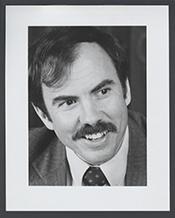
United States · United States Congress · 25 July 1984
Amends the Internal Revenue Code to repeal rules relating to the determination of the issue price of certain debt instruments issued for property. Amends the Tax Reform Act of 1984 to repeal the revisions made to rules for the imputation of interest on certain deferred payments. Provides that the Internal Revenue Code shall be applied and administered as if such revisions had not been enacted.
United States · United States Congress · 28 June 1984
Establishes the National Commission on Federal Budget Deficit Reductions to review all relevant elements of fiscal and monetary policy. Requires particular emphasis to be given to the causes of cyclical and structural Federal budget deficits and the impact which growing structural Federal deficits have on employment, capital formation, and the vigor and viability of economic growth in the United States. Requires the Commission to: (1) identify problems which may hinder the control and reduction of Federal budget deficits; and (2) analyze all potential options which would result in deficit reductions and place the Government on a sound financial basis. Requires the Commission to report to the President and Congress by January 15, 1985, detailed findings, conclusions, and recommendations for such legislation and administrative actions as it considers appropriate. Terminates the Commission 30 days after submission of such report.
United States · United States Congress · 28 June 1984
Expresses the sense of the Congress that in light of the Helsinki Final Act of the Conference on Security and Cooperation in Europe and other specified human rights agreements, the Soviet Union should: (1) provide the signatories of the Helsinki Final Act with information on the whereabouts, health, and legal status of Andrei Sakharov and Yelena Bonner; (2) void all charges against Yelena Bonner and issue her an exit visa in order to obtain medical care outside of the Soviet Union; and (3) allow them to live in the country of their choice. Urges the President to: (1) protest the Soviet Government's continued refusal to provide such information and to issue Yelena Bonner an exits visa; and (2) call upon all other signatory nations of the Helsinki Final Act to join in such protests.
United States · United States Congress · 20 June 1984
Social Security Reorganization Act of 1984 - Amends title VII (Administration) of the Social Security Act to establish as an independent executive agency a Social Security Agency. Provides that the Agency shall be headed by a Social Security Board. Provides that the Board shall: (1) govern the Old Age, Survivors and Disability Insurance program under title II and the Supplemental Security Income program under title XVI of the Social Security Act; (2) appoint a Commissioner of Social Security to act as the chief operating officer of the Agency responsible for administering such programs; (3) constitute five of the members of the Board of Trustees of the Federal Old-Age and Survivors Insurance Trust Fund and the Federal Disability Insurance Trust Fund; (4) make annual budgetary recommendations relating to the Agency to Congress; (5) make recommendations to Congress and the President with respect to the administration of such programs; (6) provide Congress and the President with all information relating to such programs; and (7) conduct policy analysis and research relating to such programs. Requires that the Office of the Board include an Office of the Actuary, an Office of Policy and Legislation, and an Office of General Counsel. Sets forth the Board's authority with respect to the appointment of employees and the organization of the Agency. Establishes an Office of the Inspector General within the Agency. Requires coordination between the Agency, the Department of Health and Human Services, and the Department of the Treasury in the administration of titles II, XVI, and XVIII (Medicare) of the Social Security Act. Establishes in the Agency an Office of the Commissioner, to be headed by a Commissioner of Social Security who shall be responsible for administering the Old Age, Survivors and Disability Insurance and Supplemental Security Income programs and for overseeing Agency operations. Provides that the Commissioner shall serve as Secretary of the Board of Trustees of the Federal Old-Age and Survivors Insurance Trust Fund and the Federal Disability Insurance Trust Fund. Requires the Commissioner to report annually to the Board and Congress on the administration of the Agency. Establishes in the Office of the Commissioner an Office of Hearings and Appeals, to be headed by a Chief Administrative Law Judge who shall assist the Commissioner in carrying out responsibilities related to hearings under the Social Security Act. Sets forth the Commissioner's authority with respect to the organization of the Office of the Commissioner and the appointment of employees. Establishes in the Agency an Office of the Ombudsman, to be headed by a Social Security Ombudsman who shall: (1) represent the concerns of the public relating to the Old Age, Survivors and Disability Insurance program and the Supplemental Security Income program to the Commissioner, the Board, the President, and Congress; and (2) conduct studies and surveys of the administrative effectiveness and program policy goals of the Agency. Establishes in the Office of the Ombudsman a Citizens' Advisory Committee which shall prepare and transmit to Congress a biennial report assessing the administration and objectivess of such programs. Authorizes the Committee to request, and assist in the preparation of, studies and surveys by the Ombudsman. Provides for the transfer to the Agency of all functions carried out by the Secretary of Health and Human Services with respect to the programs and activities to be carried out by the Agency under this Act. Abolishes the position of Commissioner of Social Security in the Department of Health and Human Services. Requires that appropriations requests by the Agency for staffing and personnel be based upon comprehensive workforce plans. Sets forth rules for the apportionment of administrative appropriations for the Agency. Provides that the Agency's authority for automated data processing procurement and facilities construction shall be provided in the form of contract authority covering the total acquisition costs. Makes amounts needed for the liquidation of contract authority so provided available from the Federal Old-Age and Survivors Insurance Trust Fund and the Federal Disability Insurance Trust Fund to the extent that such amounts are not needed to meet current obligations for benefit payments. Specifies the authorities which are to be delegated to the Commissioner from the Administrator of the General Services Administration. Authorizes funds to pay the costs of the administration of titles II and XVI of the Social Security Act for which the Commissioner is responsible, the cost of title XVIII of such Act for which the Secretary of Health and Human Services (the Secretary) is responsible, and the costs of carrying out the functions of the Agency relating to the processing of tax data under title II of such Act. Requires the Commissioner to determine how the costs of administering the Old Age, Survivors and Disability Insurance program and the Supplemental Security program should be apportioned for each fiscal year among the general fund of the Treasury, the Federal Old-Age and Survivors Insurance Trust Fund, and the Federal Disability Insurance Trust Fund. Requires the Secretary to determine how the costs of administering the Medicare program should be apportioned for each fiscal year among the general fund of the Treasury, the Federal Hospital Insurance Trust Fund, and the Federal Supplementary Medical Insurance Trust Fund. Provides that following such determinations, the Commissioner and the Secretary shall certify to the Managing Trustee of the social security trust funds the amounts (if any) which need to be transferred from the Treasury to the trust funds or from the trust funds to the Treasury to ensure that each of the trust funds and the Treasury have borne their proper share of such administrative costs. Requires the Secretary to study and make recommendations with respect to the most effective methods of providing economic security and with respect to administrative policy for the social security programs which he or she administers. Requires the Board, the Comptroller General of the United States, and the Secretary to each submit to Congress within five years after enactment of this Act a report assessing the organizational changes made by this Act. Requires each of them to submit to Congress recommendations for further technical and conforming amendments as necessary within one year after enactment of this Act. Requires that the Social Security Act be implemented in a manner consistent with a beneficiary bill of rights providing for: (1) fair and equitable treatment of all persons by the Board, the Commissioner, and the Secretary; (2) a prohibition against discrimination on account of age, sex, race, creed, color, handicap, national origin, or economic condition; (3) prompt, professional, and effective services which are accessible to the public; (4) timely and proper benefit payments, with due process of law accorded to beneficiaries whose benefits are reduced, terminated, withheld, or assigned to a representative payee; (5) personal conferences with employees of the Agency or the Department of Health and Human Services for any beneficiary with respect to any determination by the Commissioner or the Secretary which adversely affects him or her; and (6) a full, fair, and impartial administrative appeals process. Sets forth the effective date of this Act and interim rules.
United States · United States Congress · 18 June 1984
Designates the week beginning February 17, 1985, as a time to recognize the contributions of volunteers who give their time to become Big Brothers and Big Sisters to youths in need of adult companionship.
United States · United States Congress · 14 June 1984
Law Enforcement Officers Protection Act of 1984 - Amends the Federal criminal code to define "armor piercing ammunition." Excludes from the definition: (1) shot gun shot required by Federal or State regulations for hunting; (2) frangible projectiles for target shooting; and (3) projectiles that the Secretary of Treasury determines are primarily intended for sporting purposes. Makes it unlawful for any person to manufacture or import armor piercing ammunition. Allows for: (1) the manufacture or importation of armor piercing ammunition for the use of the United States or any State or local government; and (2) manufacture for the sole purpose of exportation. Establishes a licensing fee of $1,000 per year for manufacturers and importers of armor piercing ammunition. Imposes an additional mandatory sentence of not less than five years for any person who uses or carries a firearm and is in possession of armor piercing ammunition during the commission of a violent felony. Provides that such sentence shall not be suspended nor probation nor parole granted.
United States · United States Congress · 14 June 1984
Alzheimer's Disease and Related Disorders Treatment Act of 1984 - Directs the Secretary of Health and Human Services to designate 20 centers for the treatment of Alzheimer's disease and related disorders. Requires such centers to: (1) provide a central facility for diagnosis, evaluation, and counseling; (2) develop standards of treatment and methods of delivering cost-effective services; (3) train professionals and nonprofessionals in diagnosing and treating such disorders; and (4) develop a comprehensive acute and long-term treatment program. Authorizes FY 1985 through 1989 appropriations. Directs the Secretary to make $1,000,000 available to each center for each of at least five years for teaching, training, research, and staffing. Permits eligible persons to elect to receive benefits as provided for by this Act rather than under titles XVIII (Medicare), XIX (Medicaid), or XX (Grants to States for Service) of the Social Security Act, or under the Older Americans Act of 1965.
United States · United States Congress · 13 June 1984
Amends the Federal criminal code to define "armor piercing ammunition." Excludes from the definition: (1) shot gun shot required by Federal or State regulations for hunting; (2) frangible projectiles for target shooting; and (3) projectiles that the Secretary of Treasury determines are primarily intended for sporting purposes. Makes it unlawful for any person to manufacture or import armor piercing ammunition. Allows for: (1) the manufacture or importation of armor piercing ammunition for the use of the United States or any State or local government; and (2) manufacture for the sole purpose of exportation. Establishes a licensing fee of $1,000 per year for manufacturers and importers of armor piercing ammunition. Imposes an additional mandatory sentence of not less than five years for any person who uses or carries a firearm and is in possession of armor piercing ammunition during the commission of a violent felony. Provides that such sentence shall not be suspended nor probation nor parole granted.
United States · United States Congress · 13 June 1984
Atomic Veterans Relief Act - Provides disability benefits to veterans who participated in atomic tests or the occupation of Hiroshima or Nagasaki after World War II and who, within 40 years, suffer from diseases that may be attributable to ionizing radiation, including: (1) leukemia, (2) polycythemia vera; (3) carcinoma of the thyroid; (4) chromosomal damage; (5) posterior subcapsular cataracts; and (6) other radiogenic cancers. Directs the Administrator of Veterans Affairs to promulgate regulations to resolve benefit claims and provide standards for benefit determinations and the inclusion of additional diseases as the basis for benefits. Provides for survivors' benefits. Directs the Administrator to report to the Veterans' Affairs Committees of Congress whenever legislative action related to the subject matter of the regulations is needed. Establishes in the Veterans Administration the Advisory Committee on Veterans Exposed to Ionizing Radiation to report annually to the Administrator on the administration of the benefits provided by this Act. Directs the Administrator to submit such report to Congress with appropriate comments. Provides medical care for the treatment of genetic or congenital disorders in the natural children of affected veterans. Entitles such children to educational assistance. Requires the Administrator to carry out an outreach, screening, and counseling program to serve those veterans, dependents, and survivors entitled to benefits under this Act. Directs the Administrator to establish a research and training program for the diagnosis and treatment of disabilities caused by exposure to ionizing radiation, including a centralized registry of claims. Directs the Administrator to make a comprehensive report on these programs in the annual report to Congress under this Act.
United States · United States Congress · 3 May 1984
Requires the Administrator of General Services to include in any report to Congress on a proposed presidential archival depository a certification that any building or equipment offered as a gift or made available without transfer of title for such depository complies with the minimum standards of the Archivist of the United States relating to suitability for archival purposes. Authorizes the Administrator to solicit gifts or bequests of money or other property for a depository. Requires the proceeds of such gifts or bequests to be deposited into an account in the National Archives Trust Fund and expended for the same purposes and objects for which appropriations for operating, maintaining, protecting, or improving such depository might be expended. Directs the Administrator to provide for the establishment in such Trust Fund of separate endowments for the maintenance of depository land, buildings, and equipment to which shall be credited any gift or bequest offered for that purpose. Restricts the use of the income of such endowments to the payment of the cost of building operations. Prohibits the Administrator from taking title to, or making an agreement to use, any land, building, or equipment for a depository unless there is available, by gift or bequest, for deposit into an endowment for such depository an amount equal to at least 20 percent of the sum of: (1) the cost of acquiring or constructing such building and of acquiring and installing such equipment; and (2) the cost of acquiring such land to which the United States will hold title; or (3) the cost to the donor of making improvements to such land to which the United States will not hold title. Authorizes the National Archives Trust Fund Board to solicit gifts or bequests to benefit the national archival and records activities administered by the General Services Administration.
United States · United States Congress · 12 April 1984
Civil Rights Act of 1984 - Amends the Education Amendments of 1972, the Rehabilitation Act of 1973, the Age Discrimination Act of 1975 and the Civil Rights Act to prohibit discrimination by any recipient of Federal financial assistance. (Currently, discrimination is prohibited only in a program or activity receiving Federal assistance.) Defines the term "recipient" to extend comprehensive coverage for purposes of the four Acts to any State or local governmental unit, any public or private agency or entity, and any subunit, successor, assignee, or transfereee of any such unit, agency, or entity.
United States · United States Congress · 12 April 1984
Redesignates the Office of Under Secretary of Health and Human Services in the Department of Health and Human Services as the Office of the Deputy Secretary of Health and Human Services. Establishes in such Department the Offices of: (1) Under Secretary for Health; and (2) Under Secretary for Human Services. Makes the Under Secretary for Health responsible for the Public Health Service, the Health Care Financing Administration, and the Office of Assistant Secretary for Health. Makes the Under Secretary for Human Services responsible for the Social Security Administration, the Office of Human Development Services, and the Office of Community Services.
United States · United States Congress · 4 April 1984
Equal Access Act - Prohibits federally-funded public secondary schools which allow non-school-sponsored groups of students to meet from discriminating against any meeting of students on the basis of religious content if: (1) the meeting is voluntary and student initiated; (2) there is no government sponsorship; and (3) no unlawful activity is permitted.
United States · United States Congress · 3 April 1984
SSI Equitable Improvements and Reform Amendments of 1984 - Title I: Treatment of Income - Amends title XVI (Supplemental Security Income) of the Social Security Act to exclude from income unearned income received in the form of real or personal property: (1) if it meets the existing criteria for exclusion from resources; (2) which is of a type not normally converted into cash or otherwise used for the production of income, which is not so converted or used, and which cannot be used for food or clothing; or (3) which is received as a gift or heirloom possessing emotional or sentimental value and which is not converted into cash or otherwise used for the production of income. Makes permanent SSI and AFDC (Aid to Families with Dependent Children, part A of title IV of the Social Security Act) provisions which exempt in-kind home energy assistance provided by a private nonprofit organization. Provides for the exclusion of certain interest and dividend income. Provides that any temporary one-time income which is received by an individual in the individual's initial month of SSI eligibility shall be taken into account only for that month. Excludes from income amounts received by holocaust survivors as reparations from foreign countries. Title II: Treatment of Resources - Provides that to the extent that an overpayment results because a recipient's resources exceed the applicable limit, such overpayment shall be determined to be the lesser of: (1) the amount of benefits received or for which the recipient would have been eligible but for such resources; or (2) the amount by which the value of the resources exceeded the applicable resource limit. Modifies penalties where assets are transferred at less than fair market value. Provides that if assets are so transferred, the period of ineligibility shall bear a reasonable relationship to the uncompensated value of such resource. Permits a waiver of the penalty if: (1) the individual is in a hospital, nursing home, or other medical institution and cannot reasonably be expected to be discharged; (2) title was transferred to the individual's spouse or to the individual's child who is under age 21 or is blind or disabled; (3) the individual intended to dispose of the resource either at fair market value or for other valuable consideration; or (4) the inclusion of the resource in the individual's resources would work an undue hardship. Provides that in any event, if a State waives a similar penalty under Medicaid (title XIX of the Social Security Act) for such individual, the SSI penalty shall also be waived. Excludes from resources, for 12 months from the date of receipt, SSI or OASDI (Old Age, Survivors and Disability Insurance, title II of the Social Security Act) underpayment amounts received in the form of a retroactive check. Increases the SSI resources limit for single individuals from $1,500 to $2,000, and for married couples from $2,250 to $3,000. Excludes from the SSI resources limit an automobile, household goods, and personal effects. (Current law also exempts such items, but only to the extent determined reasonable by the Secretary of Health and Human Services.) Title III: Determination of Benefit Amounts - Revises SSI provisions providing for a one-third reduction in benefits for an SSI recipient who lives in another person's household and who receives support and maintenance in kind from such person. Provides that an individual shall not be considered to be "living in another person's household and receiving support and maintenance in kind from such person" if such individual lives in a household with another person and such individual's pro rata share of the expenses of maintaining such household does not exceed the benefit payable to an individual with no other income who is living in another person's household and receiving support and maintenance from such person. Provides for the continuation of regular SSI benefits until the end of the second consecutive month of institutionalization if an eligible individual is institutionalized. Increases the benefits standard payable annually to: (1) an institutionalized individual from $300 to $420; and (2) an institutionalized couple from $600 to $840. Title IV: Provisions Relating to Eligibility - Provides that a disabled child who is living outside the United States with his or her parents shall maintain SSI eligibility so long as the parents retain legal residence in the United States. Provides for the payment of benefits due a deceased SSI recipient to certain individuals who contributed to the support of the deceased. (Current law provides for the payment of benefits following a beneficiary's death only to the surviving spouse.) Provides for an exemption from the requirement that an SSI applicant or recipient must file for OASDI or other pension benefits if receipt of such benefits would cause the applicant or recipient to be ineligible for SSI or Medicaid. Reduces from six months to one month the length of time that an SSI individual and spouse must live separately before they will be treated as separate individuals for SSI purposes. Title V: Overpayments, Underpayments, and Benefit Reductions - Provides that, in situations where there has not been fraud in connection with an SSI overpayment, overpayments shall be recovered through adjustments in future benefits which do not reduce any benefit payment by more than the greater of ten percent or ten dollars. Expands the SSI interim assistance program to include payment of retroactive SSI funds to a State for assistance provided during any period following the termination of an individual's SSI benefits, if and to the extent that: (1) the individual is subsequently found on reconsideration of the termination to have been eligible for such benefits; and (2) a retroactive payment of benefits for months in that period is due the individual. Repeals the penalty imposed against an SSI recipient because the group living facility in which the recipient lives fails to meet applicable standards. Increases from $100 to an amount equal to monthly SSI benefits for three months the emergency cash advances available to a presumptively eligible individual. Provides that: (1) if at any time both an overpayment and an underpayment exist in the case of an individual without a final adjustment or recovery having yet been made with respect to either of them, no such adjustment shall be made with respect to the underpayment until the individual has had a reasonable opportunity to seek a waiver of the overpayment; and (2) the existence of the underpayment shall not preclude the granting of such a waiver of the overpayment or otherwise affect the disposition thereof. Prohibits the Secretary from taking any action to recover an SSI overpayment until the Secretary has sent the SSI recipient who has been overpaid a notice containing, in clear and understandable language, certain information, including a statement of the individual's right to seek a waiver of the overpayment and to seek a reconsideration of the determination that an overpayment exists. Title VI: Extension of SSI Program - Includes the Virgin Islands and Guam within the SSI program. Directs the Secretary to conduct a study of the feasibility of extending the SSI program to Puerto Rico and to report the results to Congress. Title VII: Other Amendments - Directs the Secretary to conduct a statistically reliable survey of current and potential recipients of SSI benefits, with the objective of determining the extent to which the program is being used by individuals who are or may be eligible for SSI benefits and the extent to which current data (on the number of such individuals and their reasons for filing or not filing SSI applications) are accurate, and to report the results of such survey to Congress together with any recommendations. Directs the Secretary to establish and conduct an ongoing program designed to provide information about SSI benefits (and State supplementary benefits) to individuals who are not currently receiving such benefits. Directs the Secretary to assist applicants and recipients in executing and filing applications for SSI benefits and in furnishing any other information which may be required, with particular attention to cases where such applicants and recipients because of their physical or mental condition are incapable without undue difficulty of executing or filing such applications or furnishing such information. Directs the Secretary to take certain steps to assure that all information and forms for SSI applicants and recipients are clear and readily understandable. Sets forth the effective date.
United States · United States Congress · 29 March 1984
Compassionate Pain Relief Act - Directs the Secretary of Health and Human Services to establish a 60-month program under which parenteral diacetylmorphine shall be made available through qualified pharmacies for the relief of pain from cancer. Directs the Secretary to provide for the manufacture of such drug. Permits physicians registered under the Controlled Substances Act to prescribe such drug. States that for purposes of such program the Federal Food, Drug, and Cosmetic Act and titles II and III of the Comprehensive Drug Abuse Prevention and Control Act of 1970 shall not apply with respect to: (1) the importing of opium; and (2) the manufacture, distribution, and dispensing of parenteral diacetylmorphine. Requires: (1) the Secretary to make program reports to the appropriate congressional committees; and (2) the Comptroller General of the United States to make a four-year program report to such committees.
United States · United States Congress · 22 March 1984
Truth in Savings Act - Requires each advertisement, announcement, or solicitation made by any depository institution regarding the rate of interest payable on any deposit to: (1) state the annual percentage yield and the method of compounding interest; (2) state the annual rate of simple interest for the period during which such rate will be effective; and (3) give equal prominence to all annual percentage yields and annual rates of simple interest. Requires the annual percentage yield to always be stated before the annual rate of simple interest. Requires the Board of Governors of the Federal Reserve System to prescribe such regulations as necessary to carry out and facilitate compliance with the provisions of this Act and to prevent their evasion or circumvention.
United States · United States Congress · 15 March 1984
State and Local River Conservation Act of 1984 - Requires the Secretary of the Interior to make grants to States for: (1) the establishment of State and local programs to conserve the natural environmental values of rivers; (2) conservation by the States, local governments, or private organizations of lands near rivers which are included in State, local, or Federal river programs; (3) the development of river management plans, technical assistance documents, or river regulations; and (4) projects demonstrating river conservation methods. Specifies restrictions on the use of such grants. Sets forth grant allocation requirements. Authorizes appropriations for the grants and for the administration of this Act. Conditions such grants upon the establishment of a State river conservation program or upon the development of an assessment of the river related resources of the State. Directs the Secretary to make grants to States for the development of such assessments. Specifies restrictions on such grants. Authorizes appropriations. Authorizes the Secretary of the Interior and the Secretary of Agriculture to encourage volunteers and volunteer organizations to conserve, maintain, and manage rivers throughout the United States. Requires each State with a river conservation program to establish review procedures in connection with applications for a Federal permit or license to conduct activities affecting land or water uses near any river included in the State program. Requires State concurrence with the granting of any such licenses by the Federal agencies with licensing authority. Authorizes landowners to make contributions of real property interests to tax-exempt organizations in order to conserve or enhance the values of rivers included in State, local, or Federal river programs. Requires the agency responsible for the management or supervision of the river involved to concur in the donation.
United States · United States Congress · 13 March 1984
Performing Arts Labor Relations Amendments - Amends the National Labor Relations Act to exclude specified types of employers and performers in the performing arts from coverage under unfair labor practice provisions prohibiting specified contracts or agreements between employers and labor organizations and prohibiting specified actions of labor organizations to force or require cessation of dealings with others, joining of labor or employer organizations, or recognition of or negotiation with labor organizations not certified as representative. Permits such employers, excluding employers in the broadcasting or motion picture industries, to: (1) agree with a labor organization to make membership in such organization a condition of performing arts employment; and (2) make agreements with a labor organization covering performing artists even if the majority status of the organization has not yet been established. Defines "employer" to include purchasers of musical performance services. Defines "employee" to include independent contractors engaged to perform musical services.
United States · United States Congress · 8 March 1984
Fair Trade in Steel Act of 1984 - Declares that it is the policy of Congress that access to the U.S. market for foreign-produced carbon, alloy, and specialty steel mill products should be on an equitable basis to safeguard national security, insure orderly trade in steel mill products, reduce unfair trade in steel mill products, and alleviate U.S. balance-of-payments problems. Expresses the intent of Congress to: (1) expand the economic viability of the U.S. steel industry and the jobs of its workers; (2) prevent the further decline of the domestic steel industry; and (3) temper the economic hardships resulting from unemployment in steel industry communities by encouraging reinvestment in existing steelmaking facilities. Limits annual imports of specified steel mill product categories to specified percentages of the apparent domestic supply which are based on adjusted average import penetration levels for each such product category for the years 1979, 1980, and 1981. Directs the Secretary of Commerce to allocate global product limitations among foreign countries, groups of countries, or areas. Sets forth guidelines for making such allocations. Requires the Secretary to make an annual determination of the expected apparent domestic supply in each steel mill product category. Requires the Secretary to revise such determination periodically during the year. Directs the Secretary to determine, within 90 days after the effective date of this Act, whether the steel industry companies have plans to use substantially all of the cash flow from the steel sector for reinvestment in and the modernization of the steel sector. Prohibits the import restrictions from taking effect until the Secretary determines that the steel companies have such plans. Directs the Secretary to monitor steel sector investments made and announced by the steel industry and to consult with steel industry representatives and employees in the course of such monitoring. Directs the Secretary to determine annually whether steel companies are using substantially all the cash flow from the steel sector for reinvestment in and modernization of the steel sector. Directs the Secretary to modify or suspend the relevant import restrictions if the Secretary determines that substantially less than all the cash flow from the steel sector is being used for such reinvestment and modernization and that the level of investment is not demonstrably justified by adverse financial conditions within the industry. Directs the Secretary to publish: (1) each annual determination and its rationale; and (2) the total amount of cash flow from the steel sector and the total amount used for reinvestment in and modernization of the steel sector. Requires the steel companies to provide the Secretary with the information necessary for making such determinations. Directs the Secretary to examine the supply and demand situation in the United States for a specified steel product category if requested by affected steel consumers. Sets forth criteria to be used in determining short supply. Directs the Secretary to monitor imports of fabricated steel mill products. Sets forth the method of investigating whether imports of fabricated steel products are rendering ineffective or materially interfering with the objectives of this Act. Limits the quantity of iron ore that may be entered from all sources during any calendar year after the effective date of this Act. Directs the Secretary to allocate global iron ore limitations among foreign countries, groups of countries or areas. Sets forth guidelines for making such allocation. Directs the Secretary, in making such allocations, to attempt first to accommodate the requirements of individual steel mills which have been traditionally dependent on ocean sourced foreign iron ore and the requirements of contractual obligations incurred before January 1, 1984. Authorizes the Secretary to waive the import restrictions on iron ore if necessary to meet the needs of such individual steel mills. Provides for the enforcement and implementation of this Act.
United States · United States Congress · 8 March 1984
Methanol Policy Act of 1984 - Amends the Energy Policy and Conservation Act to require that 1,000 of the total number of passenger automobiles acquired by executive agencies during FY 1985 be methanol-powered vehicles. Requires the Secretary of Energy to demonstrate the performance of methanol-powered vehicles so acquired and to conduct studies with respect to the operation and maintenance of such vehicles. Provides that methanol shall be offered for sale to the public through September 30, 1987, at locations where it is supplied to vehicles acquired by executive agencies. Sets forth reporting requirements which apply to the Secretary. Authorizes appropriations for FY 1985 through 1987 for this program. Provides that the following percentages of all automobiles acquired by executive agencies shall be methanol- powered vehicles: (1) ten percent of the automobiles acquired in FY 1988; (2) 20 percent of the automobiles acquired in FY 1989; and (3) 35 percent of the automobiles acquired in each of the fiscal years thereafter. Requires the Secretary to promulgate rules to implement such requirements unless there is evidence of substantial operating and maintenance problems, increases in tailpipe emissions, or increases in operation and maintenance costs with respect to methanol-powered vehicles. Requires the Administrator of the Environmental Protection Agency to purchase at least five methanol-powered buses during FY 1985 and to use them in urban settings for emissions and fuel economy testing. Sets forth reporting requirements which apply to the Administrator. Authorizes appropriations for FY 1985 through 1987 for this program. Provides that buses purchased by State or local governments with Federal funds after September 30, 1987, must be methanol-powered. Requires the Secretary to provide supplemental grants equal to 100 percent of the amount by which the purchase, operation, and maintenance of such methanol-powered buses exceeds the costs of comparable diesel-powered buses. Requires the Secretary to promulgate rules to implement this program unless there is evidence of substantial operating and maintenance problems, increases in tailpipe emissions, or increases in operation and maintenance costs with respect to methanol-powered buses. Authorizes appropriations for FY 1988 through 1990 for this program. Requires the Administrator to administer a program to study and conduct demonstration projects with respect to the use of methanol in stationary turbines and boilers. Sets forth reporting requirements which apply to the Administrator. Authorizes appropriations for FY 1985 through 1987 for this program. Establishes the Interagency Commission on Methanol to coordinate efforts to promote methanol usage. Requires the Commission to: (1) perform various studies with respect to the production, use, and promotion of methanol as a fuel; (2) develop a plan for the commercialization of methanol; (3) develop a public-awareness program on the use of methanol as a fuel; and (4) coordinate all Federal efforts with respect to methanol. Requires the Chairman of the Commission to establish a private sector advisory panel to inform the Commission about methanol-related matters. Sets forth reporting requirements which apply to the Commission. Terminates the Commission and the advisory panel on September 30, 1989. Authorizes appropriations for FY 1985 through 1989 for this program. Requires the Administrator to: (1) publish test procedures for emissions testing of new methanol-powered vehicles and engines; and (2) promulgate a rule for determining the quantity of methanol which is equivalent to one gallon of gasoline. Amends the Motor Vehicle Information and Cost Savings Act to include methanol in the definition of "fuel" for purposes of such Act.
United States · United States Congress · 5 March 1984
Petroleum Marketing Practices Act Amendments of 1984 - Amends the Petroleum Marketing Practices Act to: (1) redefine the term "failure"; and (2) define the terms "constructive termination" and "similar motor fuel marketing operations." Defines "constructive termination" to mean: (1) the failure by the franchisor to supply the franchisee with motor fuel in an amount equal to the minimum specified in the franchise agreement; (2) the failure by the franchisor to make motor fuel available to the franchisee such minimum amount at a price which enables the franchisee to compete with similar motor fuel marketing operations of the franchisor; or (3) any adjustment in the quantity of fuel a franchisee is required or entitled to receive unless the franchisor can show that either the adjustment is applied equally to all franchisees and marketing operations of the franchisor within the relevant geographic area, or, if it is a downward adjustment, the franchisor can show that it is reasonable. Prohibits a motor fuel franchisor from constructively terminating a franchise. Requires a franchisor, in certain circumstances prior to terminating a franchise, to make a bona fide reasonable offer to transfer the franchise to the franchisee. Permits nonrenewal of a franchise relationship if the franchisor and franchisee cannot agree to changes or additions to the provisions of the franchise which are fair and reasonable. Prohibits nonrenewal because of the failure of the franchisor and franchisee to agree to changes or additions to the provisions of the franchise which relate to materially altering, adding to, or replacing the marketing premises. Permits nonrenewal, in a situation where renewal is presently permitted, when it would be uneconomical to the franchisor despite any reasonable changes acceptable to the franchisee, only if the franchisor demonstrates that the nonrenewal is not being made with the intent of avoiding competition with the franchisee. Requires a franchisor to notify a franchisee, 90 days prior to the franchisor's final opportunity to exercise an option to buy or to continue leasing the land where the franchise is located, of the name, address, and phone number of the owner or holder of the underlying lease. Provides that if a franchisee enters into an agreement with the owner or lessor to maintain possession of the premises, then the franchise agreement may continue, at the option of the franchisee. Requires any franchisor who competes with its own franchisees to supply motor fuel to its franchisees at a price and on terms which reasonably enable the franchisee to compete with the franchisor. States that the burden of proof is on the franchisor to show lack of competition. Revises the definition of "trial franchise." Permits a franchisee to maintain a civil action against a franchisor if the franchisor constructively terminates the franchise. States that the death, retirement, or disability of a franchisee shall not be grounds for termination or nonrenewal of the franchise if, prior the franchisee's death, retirement, or disability, the franchisee provides the franchisor with a succession plan. Permits termination or nonrenewal if: (1) the franchisor notifies the franchisee in writing, within 30 days of receipt of the plan, of the franchisor's rejection of the plan; (2) the rejection notice includes reasons for the rejection; and (3) the rejection is reasonable. Provides a franchisee with the right to sell or otherwise transfer the franchise subject to the approval of the franchisor. Prohibits approval from being withheld unreasonably.
United States · United States Congress · 5 March 1984
Rural Development Reorganization Act of 1984 - Title I: Reorganization Within Department of Agriculture - Amends Federal law to rename the Department of Agriculture the Department of Agriculture and Rural Development. Retitles the Secretary of Agriculture the Secretary of Agriculture and Rural Development. Establishes the Rural Development Administration within such Department. Renames the Farmers Home Administration the Farm Administration. Makes conforming administrative changes. Directs the Secretary of Agriculture to carry out the provisions of the Consolidated Farm and Rural Development Act, except for specified loan provisions, through the Rural Development Administration. States that titles V and VI of the Rural Development Act of 1972 shall be carried out through the Rural Development Administration. Amends the Agriculture and Food Act of 1981 to expand the number of designated assistance areas from 225 to 450. Transfers certain conservation loan programs from the Farmers Home Administration to the Soil Conservation Service. Makes conforming amendments to specified agricultural and rural affairs acts. Title II: Administration of Federal Rural Housing and Community Development Programs - Transfers to the Rural Development Administration current FmHA loan programs for: (1) business and industry; (2) community facilities; (3) water and waste disposal (including grant authority); and (4) rural development and planning, excluding farm production. Transfers to the new Farm Administration current FmHA single-family housing loan programs. Makes conforming amendments to the Housing Act of 1949. Provides for farm ownership assistance to be carried out through such Administration. Makes conforming amendments to the Federal National Mortgage Association Charter Act and the Federal Financing Bank Act of 1973. Title III: Administrative Provisions - Sets forth administrative provisions.
United States · United States Congress · 1 March 1984
Religious Speech Protection Act - Prohibits federally funded public secondary schools which allow non-school-sponsored groups of students to meet from discriminating against any meeting of students on the basis of religious content if: (1) the meeting is voluntary and student initiated; (2) there is no government sponsorship; and (3) no unlawful activity is permitted.
United States · United States Congress · 1 March 1984
Amends the Education Amendments of 1972 to include educational institutions receiving Federal financial assistance within the prohibition against sex discrimination.
United States · United States Congress · 1 March 1984
Authorizes the President, on behalf of Congress, to present to Elie Wiesel a gold medal in recognition of his humanitarian efforts and outstanding contributions to world literature and human rights. Authorizes appropriations. Authorizes the Secretary of the Treasury to provide for the public sale of bronze duplicates of such medal.
United States · United States Congress · 23 February 1984
Directs the President to: (1) secure from the Indochina nations a full accounting of Americans captured or missing as a result of the Vietnam conflict; and (2) work for the release of captive Americans and the return of the remains of those American servicemen and civilians who died in Southeast Asia. Requires the President to submit two reports to Congress on American POW/MIAs in Southeast Asia.
United States · United States Congress · 22 February 1984
Amends the Bankruptcy Code to permit a trustee to reject or assume a collective bargaining agreement made under the authority of title II of the Railway Labor Act or the National Labor Relations Act only if and after the court approves such rejection or assumption. Requires notice to all parties and a hearing before the court may approve such a rejection. Prohibits the court from approving the rejection of a collective bargaining agreement if, absent the rejection: (1) the jobs covered by such agreement will be lost; and (2) any financial reorganization of the debtor will fail. Declares that a rejection of a collective bargaining agreement constitutes a breach at the time of such rejection. Declares that no provision of this Act shall be construed to permit the trustee unilaterally to terminate or alter any of the terms and conditions of such a collective bargaining agreement.
United States · United States Congress · 9 February 1984
Methanol Energy Policy Act of 1984 - Title I: Methanol Demonstration Program for Federal Vehicles - Requires the Secretary of Energy to acquire at least 1,000 methanol-powered passenger automobiles during FY 1985 and conduct studies with respect to the performance and maintenance of such vehicles. Requires that methanol be offered for sale to the public for use in other vehicles through September 30, 1989. Authorizes the Secretary to provide Federal agencies with such methanol-powered vehicles at their request. Requires the agencies to cooperate with the Secretary in studies related to such vehicles. Sets forth reporting requirements which apply to the Secretary. Title II: Demonstration Program for Methanol- Powered Buses - Amends the Urban Mass Transportation Act of 1964 to permit State and local entities which are eligible for grants under any other provision of such Act to apply to the Secretary of Transportation for grants for the acquisition of methanol-powered buses. Requires grant recipients to participate in a demonstration program under which the Secretary shall conduct studies and tests with respect to the performance and maintenance of such buses. Authorizes appropriations for FY 1985 for supplemental grants. Authorizes appropriations for FY 1985 through 1989 for the demonstration program. Sets forth reporting requirements which apply to the Secretary. Title III: Interagency Commission on Methanol - Establishes the Interagency Commission on Methanol to develop and coordinate implementation of a national methanol energy policy. Requires the Commission to: (1) perform various studies with respect to the production, use, and promotion of methanol as a fuel; (2) develop a plan for the commercialization of methanol; (3) develop a public-awareness program on methanol as a transportation fuel; (4) coordinate Federal efforts with respect to methanol research and commercialization; and (5) ensure communication between Federal agencies involved in methanol demonstration projects and establish an information clearinghouse for parties working with or interested in methanol and related projects. Requires the Chairman of the Commission to establish a private sector advisory panel to inform the Commission about methanol-related matters. Sets forth reporting requirements which apply to the Commission. Terminates the Commission upon the submission of its last report. Authorizes appropriations for FY 1985 through 1989 to carry out this title. Title IV: Pipeline Study - Requires the Secretary of Transportation to study and report to Congress on the transportation of methanol through the interstate liquid pipeline system in the United States. Title V: Allocation of Highway Revenues - Provides that for purposes of the minimum allocation of highway revenues to States, the amount of estimated tax payments attributable to highway users in any State shall be increased by the estimated amount of tax such users would have paid if there were no special tax rate or tax exemption under the Internal Revenue Code for any liquid which is at least 85 percent methanol, ethanol, or other alcohol. Title VI: Tax Incentives for the Use of Methanol As A Fuel - Amends the Internal Revenue Code to allow a tax credit of $1,000 for each passenger automobile purchased by the taxpayer the primary fuel for which is methanol, which is domestically manufactured, and the original use of which commences with the taxpayer. Imposes a tax of four and a half cents a gallon in the case of methanol or ethanol fuel: (1) sold by a person to an operator of a motor vehicle or motorboat as fuel; or (2) used by any person as a fuel in a motor vehicle or motorboat unless there was already a taxable sale of such liquid. Permits a tax exemption for methanol produced from natural gas if such methanol is used for an off-highway business use.
United States · United States Congress · 9 February 1984
Authorizes the Law Enforcement Officers Memorial Fund, Incorporated to erect a National Law Enforcement Heroes Memorial on public grounds in the District of Columbia or its environs in honor and recognition of law enforcement officials in the United States who died in the line of duty. Directs the Secretary of the Interior, in consultation with the Fund, to select with the approval of the Commission of Fine Arts and the National Capital Planning Commission, a suitable site on public grounds for such memorial. Subjects the design and any plans for the memorial to the approval of the Secretary of the Interior, the Commission of Fine Arts, and the National Capital Planning Commission. Declares that no moneys belonging to the United States or the District of Columbia shall be expended for the erection of such memorial other than expenses incurred in the process of site selection and approval of design and plans.