Resolution· HRESH.Res. 1524 (119th)referred
Expressing support for the designation of the week of September 19 through September 26, 2026, as "National Estuaries Week".
United States · United States Congress · 10 September 2026
The world's political record
Person
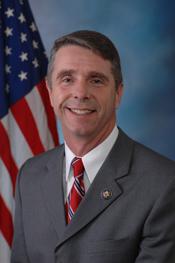
United States · Official source
23 July 2026 · United States · United States Congress
23 July 2026 · United States · United States Congress
22 July 2026 · United States · United States Congress
22 July 2026 · United States · United States Congress
22 July 2026 · United States · United States Congress
22 July 2026 · United States · United States Congress
22 July 2026 · United States · United States Congress
22 July 2026 · United States · United States Congress
22 July 2026 · United States · United States Congress
22 July 2026 · United States · United States Congress
21 July 2026 · United States · United States Congress
20 July 2026 · United States · United States Congress
20 July 2026 · United States · United States Congress
16 July 2026 · United States · United States Congress
16 July 2026 · United States · United States Congress
15 July 2026 · United States · United States Congress
15 July 2026 · United States · United States Congress
14 July 2026 · United States · United States Congress
14 July 2026 · United States · United States Congress
14 July 2026 · United States · United States Congress
Showing the 24 most recent votes of 3,360. Browse the full list
United States · United States Congress · 10 September 2026
United States · United States Congress · 27 July 2026
United States · United States Congress · 14 July 2026
United States · United States Congress · 9 July 2026
United States · United States Congress · 30 June 2026
Securing Agriculture's Workforce Act of 2026 This bill expands the H-2A agricultural visa program; creates online platforms for H-2A employers, workers, and agencies; and codifies certain wage calculations. Under current law, workers on H-2A visas are only allowed to perform agricultural work of a seasonal or temporary nature. Under the bill, the seasonal work requirement is removed, thus allowing H-2A workers to qualify for agricultural work that occurs year-round. The bill also expands the type of agricultural work that qualifies, including reforestation, aquaculture, and livestock work. The Department of Agriculture must issue rules to define agricultural labor or services for purposes of the H-2A program. The bill also establishes an H-2A visa pathway for current unauthorized agricultural workers who otherwise meet requirements. The Department of Labor must maintain a national, publicly accessible online job registry and database of all job offers submitted by employers seeking a labor certification required to employ H-2A workers. The Department of Homeland Security must establish an online platform for employers to submit information and documentation for review by federal agencies in the course of admitting H-2A workers. The H-2A program requires employers to provide workers with wage rates at or above those set in regulations and such wages must not adversely affect the wages and working conditions of workers similarly employed in the United States. The bill codifies the current calculation method for the adverse effect wage rate as set in regulation.
United States · United States Congress · 23 June 2026
United States · United States Congress · 23 June 2026
United States · United States Congress · 18 June 2026
United States · United States Congress · 10 June 2026
United States · United States Congress · 9 June 2026
United States · United States Congress · 20 May 2026
Nurture Originals, Foster Art, and Keep Entertainment Safe Act of 2026 or the NO FAKES Act of 2026 This bill creates a federal intellectual property right to protect individuals from unauthorized digital replicas (e.g., digital content made using generative artificial intelligence) of their voice and visual likeness. Specifically, the bill gives each individual or right holder the right to authorize the use of the individual's voice or visual likeness (1) in a digital replica, or (2) for a product or service requiring authorization to avoid liability under the bill. This property right is not assignable during the individual’s lifetime but is licensable and does not expire upon the death of the individual. Generally, any individual or entity that engages in specified prohibited activities (e.g., distributing a digital replica without authorization) shall be liable in a civil action and subject to related penalties. The bill exempts specified uses from liability, such as categories of conduct likely to involve protected speech under the First Amendment (e.g., news reporting, sports broadcasts, and satire). The bill establishes (1) a notice-and-takedown process for unauthorized digital replicas; and (2) a counter-notification process, which allows an individual to contest the removal of a digital replica. The bill establishes penalties related to false or deceptive notice or counter-notice. The bill expressly preempts state laws related to digital replicas except for causes of action under state statutes or common law in existence as of January 2, 2025.
United States · United States Congress · 19 May 2026
Removing Barriers to Work for Disabled Americans Act This bill reauthorizes through 2031 the Social Security Administration’s (SSA’s) authority to carry out demonstration projects within the Social Security Disability Insurance (SSDI) program. The bill also imposes requirements related to beneficiary income, project funding, and SSA reporting. SSDI demonstration projects must be designed to promote attachment to the workforce and generally involve temporary changes to SSDI policies tested on a subset of beneficiaries. Participation in a demonstration project must be voluntary. SSA’s authority to carry out these projects expired on December 31, 2022. Under the bill, SSA must ensure that an individual’s participation in a demonstration project does not reduce their total income. Further, the bill specifies that administrative expenses related to demonstration projects must be paid from funds appropriated for administration. Finally, the bill requires SSA to report to Congress 120 days before initiating a demonstration project. This is an increase from 90 days under current law. This advance notification must include evaluation metrics for the relevant project.
United States · United States Congress · 19 May 2026
United States · United States Congress · 19 May 2026
United States · United States Congress · 12 May 2026
United States · United States Congress · 7 May 2026
United States · United States Congress · 23 April 2026
United States · United States Congress · 6 April 2026
Accelerating Access to Critical Therapies for ALS Reauthorization Act of 2026 This bill reauthorizes through FY2031 and revises programs that support research and development of drugs and other therapies to address amyotrophic lateral sclerosis (also known as ALS or Lou Gehrig's disease) and other neurodegenerative diseases. The bill reauthorizes grants from the National Institutes of Health (NIH) for scientific research on investigational drugs to prevent or treat ALS for individuals not otherwise eligible for clinical trials, grants from the Food and Drug Administration (FDA) for research and development of therapies to prevent and treat ALS and other neurodegenerative diseases, and a Public-Private Partnership including the FDA and NIH that supports development and regulatory review of treatments for neurodegenerative diseases. Also, the NIH, in considering renewal of its grants, must assess available information on the safety and efficacy of the investigational drugs. It must also require grantees to promptly report serious and unexpected adverse events associated with their investigational drugs. Additionally, the FDA must publish a plan describing actions it will take over a five-year period to foster development of safe and effective drugs, and facilitate access to investigational drugs, that treat ALS and other rare neurodegenerative diseases. The FDA must also publish a report describing the actions it has taken under the plan.
United States · United States Congress · 30 March 2026
Provider Reimbursement Stability Act of 2026 This bill allows for larger annual adjustments to the Medicare physician fee schedule. It also requires the Centers for Medicare & Medicaid Services (CMS) to make certain corrections to compensate for expenditures under the fee schedule that exceed a certain amount in a given year, and it limits how much certain adjustment factors may vary each year. Current law prohibits annual adjustments to the Medicare physician fee schedule that would result in a more than $20 million difference between the adjusted amount and the non-adjusted amount of total expenditures. The bill increases this threshold to $54.3 million beginning in 2027, with adjustments for inflation every five years beginning in 2032. Additionally, for certain services, the bill requires the CMS to determine the difference between expenditures based on estimated utilization of the service and expenditures based on actual utilization. If this difference exceeds a certain percentage of total expenditures under the fee schedule, the CMS must reconcile this difference by adjusting payments for the following year. This requirement applies to services for which payment was bundled with another service and there was a separate or add-on payment during the previous year. Finally, the CMS must update the prices and rates of each category of direct costs that affect payments (e.g., prices of equipment) at least every five years, with updates made to each category in the same year. The bill also prohibits the CMS from varying a certain adjustment factor by more than 2.5% each year.
United States · United States Congress · 26 March 2026
United States · United States Congress · 18 March 2026
United States · United States Congress · 12 March 2026
United States · United States Congress · 9 March 2026
United States · United States Congress · 2 March 2026
Showing the 24 most recent records of 3,065. Browse the full list