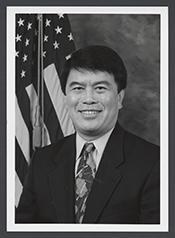
United States · United States Congress · 3 January 2001
Mental Health and Substance Abuse Parity Amendments of 2001 - Amends the Employee Retirement Income Security Act of 1974 (ERISA), the Internal Revenue Code, and the Public Health Service Act to prohibit group and individual health plans from imposing treatment limitations or financial requirements on the coverage of mental health benefits, or substance abuse and chemical dependency benefits, if similar limitations or requirements are not imposed on medical and surgical benefits. Amends the Health Insurance Portability and Accountability Act of 1986 to provide for coordination in implementation of such amendments.
United States · United States Congress · 3 January 2001
Amends the Federal Food, Drug, and Cosmetic Act to require the wholesale distributor of certain drugs who is not the manufacturer or an authorized distributor of record for a calendar year (currently, the language "for a calendar year" is not in the Act) of a drug to provide to the recipient of the drug a statement identifying each prior sale, purchase, or trade of such drug.
United States · United States Congress · 3 January 2001
Federal Elections Review Commission Act - Establishes the Federal Elections Review Commission to study and report to the President and the Congress on the nature and consequences of the Federal electoral process, making recommendations to ensure the integrity of, and public confidence in, Federal elections.
United States · United States Congress · 3 January 2001
Expresses the sense of the House of Representatives that: (1) the full realization of the rights of women is vital to the development and well-being of people of all nations; and (2) the Senate should give its advice and consent to the ratification of the Convention on the Elimination of All Forms of Discrimination Against Women.
United States · United States Congress · 3 November 2000
Amends the Immigration and Nationality Act to direct the Attorney General to establish a pilot program (Tech Smart pilot program) under which a specified number of aliens may be issued H- 1B specialty occupation visas without regard to applicable numerical limitations if the U.S. employer seeking such alien makes a qualifying annual scholarship contribution to an institution of higher education.
United States · United States Congress · 2 November 2000
Campaign Telemarketers Disclosure Act of 2000 - Amends the Federal Election Campaign Act of 1971 to require disclosure during any such telephone call of the identification of persons financing certain campaign-related telephone calls.
United States · United States Congress · 27 October 2000
Expresses the sense of the House of Representatives that the future of Taiwan should be resolved peacefully through a democratic mechanism and with the express consent of the Taiwanese people.
United States · United States Congress · 19 October 2000
Prohibits U.S. assistance (except humanitarian assistance) to the Palestinian Authority (or to any successor or related entity) or for programs, projects, and activities to the West Bank or Gaza unless the President determines and certifies to specified congressional committees that: (1) the leadership of the Palestinian Authority has publicly renounced violence as a means of political expression and has taken all actions to bring an end to the violence which commenced in early October 2000 in the West Bank and Gaza; and (2) the violence in the West Bank and Gaza has subsided.
United States · United States Congress · 19 October 2000
Expresses the sense of Congress that: (1) Japan's continued defiance of International Whaling Commission (IWC) requests to halt its scientific whaling program undermines international efforts to conserve and protect the world's whale populations; (2) such behavior calls into question the credibility of commitments made by the Japanese Government to international organizations; and (3) the President should not support Japan's appointment to a permanent seat on the United Nations Security Council until Japan stops whaling and complies with IWC requirements.
United States · United States Congress · 17 October 2000
Calls upon the President to: (1) take all appropriate action to provide relief from injury caused by steel imports; and (2) immediately request the U.S. Trade Commission to commence an expedited investigation for positive adjustment of such steel imports under section 201 of the Trade Act of 1974.
United States · United States Congress · 12 October 2000
Bring Our Children Home Act - Amends the Federal judicial code to provide that a contestant may bring an action in district court to determine which of conflicting State court child custody determinations shall prevail. Directs the Attorney General (AG) to establish a registry for all custody orders entered by State courts. Authorizes law enforcement officers of a State or local government to hold, for no more than 24 hours, any child listed as missing for proper disposition under the latest valid custody determination. Requires the Secretary of State to prepare a report on progress made by the United States in negotiating and entering into bilateral treaties relating to international child abduction with countries that are not contracting parties under the Hague Convention on the Civil Aspects of International Child Abduction. Amends the Foreign Assistance Act of 1961 to require information on each country's efforts to prohibit international child abduction. Requires the AG to prepare a report describing the status of each case involving a request for extradition in cases involving international kidnaping by parents.
United States · United States Congress · 12 October 2000
Expresses the solidarity of Congress with the state and people of Israel at this time of crisis. Condemns the Palestinian leadership for encouraging the violence and doing so little for so long to stop it. Calls upon the Palestinian leadership to: (1) refrain from exhortations to public incitement; and (2) vigorously use its security forces to act immediately to stop all violence, to show respect for all holy sites, and to settle all grievances through negotiations. Commends successive Administrations on their continuing efforts to achieve peace in the Middle East. Calls upon: (1) the current Administration to use its veto power at the United Nations Security Council to ensure that the Security Council does not again adopt unbalanced resolutions addressing the uncontrolled violence in the areas controlled by the Palestinian Authority; and (2) all involved parties to make all possible efforts to reinvigorate the peace process.
United States · United States Congress · 5 October 2000
Veterans Commemoration Act of 2000 - Directs the Secretary of the Treasury to mint and issue a maximum of 500,000 $1 coins to commemorate the service of veterans of the United States armed forces. Mandates that the proceeds from sale surcharges be paid promptly to the Disabled American Veterans to fund the transportation of veterans to and from hospitals administered by the Secretary of Veterans Affairs.
United States · United States Congress · 5 October 2000
Fairness for Fishing Families Act- Amends the Merchant Marine Act, 1936 and the Internal Revenue Act to provide for qualified withdrawals from the Capital Construction Fund (CCF) for fishermen leaving the industry and for the rollover of CCF funds to individual retirement plans.
United States · United States Congress · 27 September 2000
Social Security Students' Benefits Restoration Act of 2000 - Amends title II (Old Age, Survivors and Disability Insurance) (OASDI) of the Social Security Act to provide for the restoration of child's insurance benefits for students attending postsecondary schools.
United States · United States Congress · 27 September 2000
Fort Clatsop National Memorial Expansion Act of 2000 - Authorizes the acquisition of certain additional lands for inclusion within the Fort Clatsop National Memorial in Oregon. Requires the Secretary of the Interior to conduct a study of the area near McGowan, Washington, where the Lewis and Clark Expedition first camped after reaching the Pacific Ocean, to determine its suitability for inclusion in the National Park System.
United States · United States Congress · 27 September 2000
Death Tax Relief Now Act of 2000 - Amends the Internal Revenue Code to: (1) reduce the estate tax rates; (2) increase (and provide a cost of living adjustment for) the exemption equivalent of the unified credit; (3) repeal the family-owned business interests deduction provisions; (4) repeal provisions providing for a credit for State death taxes and provide for the deduction from an estate's value of State death taxes paid; and (5) increase the permissible number of partners or shareholders in a closely held business for purposes of eligibility for an extension of estate tax payments.
United States · United States Congress · 25 September 2000
Amends Internal Revenue Code (the Code) provisions concerning reporting requirements of political organizations to exempt from such requirements certain State and local political organizations which are required to make State filings which are publicly available and which contain the same information as is required under the Code.
United States · United States Congress · 21 September 2000
East Timor Transition to Independence Act of 2000 - Expresses the sense of Congress that the United States should support democracy and economic recovery in East Timor, strengthen its security, and promote its ability to play a positive role in the Asia-Pacific region and in international organizations. Sets forth requirements with respect to the provision to East Timor of bilateral assistance, multilateral assistance, Peace Corps assistance, certain trade and investment assistance, scholarships for East Timorese students, and security assistance.
United States · United States Congress · 21 September 2000
Lance Armstrong Congressional Gold Medal Act - Authorizes the President to present a congressional gold medal to Lance Armstrong, in recognition of his outstanding performance as two-time winner of the Tour de France and his courageous spirit in overcoming cancer. Authorizes the Secretary of the Treasury to strike and sell bronze duplicates. Requires deposit of sale proceeds in the United States Mint Public Enterprise Fund.
United States · United States Congress · 21 September 2000
Alien Children Protection Act of 2000 - Requires, with exceptions, an alien under the age of 18 who does not have an adult relative or guardian in the United States to be placed in a facility appropriate for children (as defined in this Act) while he or she is awaiting final immigration status adjudication. Amends the Immigration and Nationality Act to authorize the Attorney General to adjust the status of an alien under the age of 18 with no lawful immigration status to that of a permanent resident alien if: (1) the alien or parent or guardian has so applied, and the alien has resided in the United States for five consecutive years; or (2) no foreign-domiciled parent or guardian has requested the alien's return, and the Attorney General determines that a return would subject the alien to physical or mental abuse, and it is in the alien's best interests to remain in the United States. Limits the annual number of such status adjustments. Directs the Attorney General to appoint a child welfare professional or trained individual as such alien's guardian ad litem. Expresses the sense of Congress commending the Immigration and Naturalization Service for issuance and implementation of specified children's asylum claims guidelines. Directs the General Accounting Office to report with respect to U.S. embassy and consular efforts to reunify on a priority basis children in foreign countries with parents who are legally present in the United States.
United States · United States Congress · 19 September 2000
Veterans' Oral History Project Act - Requires the Director of the American Folklife Center at the Library of Congress to establish an oral history program to collect video and audio recordings of personal histories and testimonials of American war veterans.
United States · United States Congress · 14 September 2000
Needlestick Safety and Prevention Act - Revises the bloodborne pathogens standard, in effect under the Occupational Safety and Health Act of 1970 (OSHA), to include safer medical devices, such as sharps with engineered sharps injury protections and needleless systems, as examples of engineering controls designed to eliminate or minimize occupational exposure to bloodborne pathogens through needlestick and other percutaneous injuries. Requires certain employers to: (1) review and update exposure control plans to reflect changes in technology that eliminate or reduce such exposure, and document their consideration and implementation of appropriate commercially available and effective safer medical devices for such purpose; (2) maintain a sharps injury log, noting the type and brand of device used, where the injury occurred, and an explanation of the incident (exempting employers who are not required to maintain specified OSHA logs); and (3) seek input on such engineering and work practice controls from the affected health care workers (exempting employers who are not required to establish exposure control plans). Requires such modifications of the standard to: (1) be in force until superseded by regulations promulgated by the Secretary of Labor under OSHA; and (2) take effect without regard to specified procedural requirements.
United States · United States Congress · 14 September 2000
Live Performing Arts Labor Relations Amendments - Amends the National Labor Relations Act to exempt, from a prohibition against employer or labor organization boycotts, any leaders, contractors, purchasers of live entertainment or live music, promoters, producers, or persons similarly engaged or involved in an integrated production or performance of any kind in the live entertainment industry. Allows employers who hire, or contract for the services of, persons engaged in the live performing arts to make agreements covering such persons with labor organizations of which performing artists are members (provided that certain unfair labor practices are not involved), even if the majority status of such labor organization has been previously established or such agreement requires membership in such labor organization as a condition of employment. Revises definitions of: (1) employer, to include purchasers of live musical performance services regardless of whether the performer is an independent contractor, employer, or employee of another employer; and (2) employee, to include independent contractors (other than employers) engaged to perform live musical services.
United States · United States Congress · 14 September 2000
Calls for: (1) Congress and the executive branch to communicate directly with elected and appointed top Taiwanese officials; and (2) the United States to revise, with a view toward reducing, restrictions on high-level visits by Taiwanese officials to the United States.
United States · United States Congress · 12 September 2000
Directs the Secretary of the Army to: (1) conduct studies and ecosystem restoration projects within the Lower Columbia River and Tillamook Bay Estuaries, Oregon and Washington; (2) use comprehensive conservation and management plans and committees established pursuant to the Tillamook Bay National Estuary Project (TBNEP) and the Lower Columbia River Estuary Program (LCREP) as guides for estuary restoration projects; and (3) work with the LCREP Implementation Committee and the TBNEP Tillamook Performance Partnership Committee to select two sites for environmental restoration actions and to plan, design, and construct two demonstration projects at full Federal expense.
United States · United States Congress · 27 July 2000
Book Stamp Act - Directs the Secretary of Health and Human Services (HHS) to establish a program to promote child literacy and improve children's access to books at home and in early learning and other child care programs, by making books available through early learning and other child care programs. Directs the Secretary to carry out such program by allotting grants to applicant State agencies on the basis of relative amounts received by States under specified provisions of the Child Care and Development Block Grant Act of 1990. Requires State agencies to use such grants to enter into contracts with local child care resource and referral agencies to carry out program activities. Allows State agencies to reserve up to three percent of grant funds to support a public awareness campaign relating to program activities. Requires local agencies which receive such contracts to use grant funds to provide payments for eligible early learning program and other child care providers, on the basis of local needs, to enable the providers to make books available, to promote child literacy and improve children's access to books at home and in early learning and other child care programs. Amends Federal law relating to the U.S. Postal Service (USPS) to require USPS to establish special postage stamps for child literacy, at the regular first-class rate plus a differential amount. Makes patron use of such special-rate postage stamp voluntary. Requires the USPS to pay all of certain amounts raised by sales such stamp to HHS for child literacy promotion activities. Expresses the sense of Congress that nothing in this section should: (1) cause a net decrease in total funds received by HHS or any other Federal agency, component, or program; and (2) affect regular first-class or other regular postage rates. Authorizes appropriations.
United States · United States Congress · 27 July 2000
Violence Against Women Civil Rights Restoration Act of 2000 - Rewrites provisions of the Violence Against Women Act regarding remedies for civil rights violations. Makes a person who commits a crime of violence motivated by gender and thus deprives another of a prescribed right liable to the injured party where: (1) in connection with the offense, the defendant or the victim travels in interstate or foreign commerce, the defendant or the victim uses a facility or instrumentality of interstate or foreign commerce, or the defendant employs a weapon, a narcotic or drug listed under the Controlled Substances Act, or other noxious or dangerous substances that have traveled in interstate or foreign commerce; (2) the offense interferes with commercial or other economic activity in which the victim is engaged; or (3) the offense was committed with intent to interfere with the victim's commercial or other economic activity. Authorizes the Attorney General, whenever there is reasonable cause to believe that any State, political subdivision, official, employee, or agent thereof has discriminated on the basis of gender in the investigation or prosecution of gender-based crimes and that discrimination is pursuant to a pattern or practice of resistance to investigating or prosecuting gender-based crimes, to institute a civil action in U.S. district court for appropriate equitable relief.
United States · United States Congress · 26 July 2000
Middle East Peace Process Support Act - Prohibits U.S. assistance to any unilaterally-declared Palestinian state. Directs the President to instruct the U.S. Representative to the United Nations to oppose admission to the United Nations of a unilaterally-declared Palestinian state or formal recognition by the United Nations of such a state.
United States · United States Congress · 13 July 2000
Railroad Retirement and Survivors' Improvement Act of 2000 - Title I: Amendments to the Railroad Retirement Act of 1974 - Amends the Railroad Retirement Act of 1974 to increase benefits to railroad employees and their beneficiaries and to revise financing of the pension part (tier II) of the railroad retirement system. (Sec. 101) Increases benefits for widows and widowers by guaranteeing to them all of the tier II annuity the employee was entitled to at the time of the death. (Sec. 102) Makes employees with 30 years of service eligible to retire at age 60 with unreduced tier I and tier II annuities. Makes spouses of such employees eligible for unreduced annuities at age 60. (Sec. 103) Reduces the vesting requirement for tier II retirement annuities from ten years to five years of service after December 1995. Makes employees with at least five years of such service, but less than ten years of total service, eligible for a tier I disability annuity if their combined railroad retirement and social security earnings credits would satisfy social security eligibility requirements. Makes spouses, divorced spouses, and survivors of employees with at least five years of such service, but less than ten years of total service, eligible for a tier I annuity if they would have been entitled to a social security benefit based on combined service. (Sec. 104) Repeals a limit on the total amount of monthly railroad retirement benefits payable to an employee and spouse at the time the employee's annuity begins. (Sec. 105) Establishes a Railroad Retirement Trust Fund (the Fund) and a Railroad Retirement Investment Trust (RRIT) to manage and invest the assets of the Fund. Declares that RRIT is not an agency, department, or instrumentality of the U.S. Government. Requires RRIT to be administered by a Board of Trustees (the Trustees) with seven members (three representing labor, three representing employers, and one representing the general public) with experience and expertise in the management of financial investments and pension plans. Requires the Trustees to be appointed by a unanimous vote of the Railroad Retirement Board (RRB). Prohibits RRB members from being Trustees. Applies specified reporting requirements and fiduciary standards to the RRIT. Requires the Trustees to diversify investments so as to minimize the risk of large losses. Authorizes the Trustees to invest Fund assets in non-Governmental assets. (Sec. 106) Abolishes the Railroad Retirement Supplemental Annuity Account and provides for transfer of its funds to the Fund. (Sec. 107) Requires the RRB, upon the establishment of the Fund, to determine the portion of the Railroad Retirement Account not needed to pay current administrative expenses and direct the Secretary of the Treasury to transfer that amount into the Fund. Requires the Fund to transfer the necessary amount of funds to pay benefits and related administrative expenses to the disbursing agent. Transfers to the Fund Social Security Equivalent Benefit account funds not needed to pay current benefits, but requires that such funds only be used to pay benefits or to invest in U.S. Government or Government-guaranteed securities. Transfers to the disbursing agent from the Dual Benefit Account the amount necessary to make dual benefit payments. Requires the Trustees to consult with the Secretary of the Treasury to develop an appropriate method for transferring or converting existing account obligations. (Sec. 108) Requires the RRB to calculate the ratio of assets to benefits to determine annual tier II tax rates for employers, employee representatives, and employees. Establishes schedules for: (1) decreasing tax rates if the average account benefits ratio, based on the ratios for the ten most recent fiscal years, is above six; and (2) increasing employer and employee representatives' tax rates if the ratio is below four. Title II: Amendments to the Internal Revenue Code of 1986 - Amends the Internal Revenue Code to exempt the Railroad Retirement Trust Fund (the Fund) from taxation. (Sec. 203) Repeals a supplemental annuity tax that railroad employers pay to finance a benefit for long-time rail employees. (Sec. 204) Provides for adjustments to railroad employers, employee representatives, and employee tier II tax rates. Decreases such rates in 2001 and in 2002 for employers and employee representatives. Provides in the years after 2002 for tax rate schedules, based on the ten-year average account benefit ratio, for employers, employee representatives, and employees.
United States · United States Congress · 13 July 2000
Violence Against Women Office Act - Establishes within the Department of Justice (DOJ) a Violence Against Women Office, headed by a Director. Specifies the duties of the Director, including serving as special counsel to the Attorney General on the subject of, and carrying out DOJ functions under the Violence Against Women Act of 1994 and on matters relating to, violence against women.
United States · United States Congress · 13 July 2000
Declares that the House of Representatives supports and encourages programs such as the Saturday Academy (at the Oregon Graduate Institute of Science and Technology) to help students enter mathematics, science, and engineering fields.
United States · United States Congress · 29 June 2000
Ryan White CARE Act Amendments of 2000 - Title I: Emergency Relief for Areas with Substantial Need for Services - Subtitle A: HIV Health Services Planning Councils - Amends the Public Health Service Act to require that an HIV (human immunodeficiency virus) planning council reflect the demographics of the population of individuals with HIV disease (currently, the demographics of the epidemic) in the eligible area involved. Modifies requirements regarding council composition, including requiring representatives of former prisoners. Requires that at least 33 percent of the council be people who: (1) are receiving HIV-related services pursuant to a grant under provisions relating to emergency relief for areas with a substantial need for services (substantial need grant); and (2) are not officers, employees, consultants, or representatives of any entity that receives substantial need grant amounts. (Sec. 102) Modifies council duties, including regarding: (1) determining the size, demographics, and needs of the HIV disease population; (2) council establishment of fund allocation priorities; and (3) coordination with Federal grantees that provide HIV-related services in the area. Directs the Secretary of Health and Human Services to: (1) develop epidemiologic measures for establishing the number of individuals with HIV disease who are not receiving HIV-related health services and for carrying out council duties; and (2) provide to the chief elected official receiving a substantial need grant guidelines and materials for training council members regarding council duties. (Sec. 103) Requires that council meetings and records be open to the public, subject to exception. Subtitle B: Type and Distribution of Grants - Makes permanent provisions requiring expedited disbursement of certain substantial need grant amounts. Requires, after fiscal year 2004, that the substantial need grant amount formula use the number of cases of HIV disease in the most recent year rather than the number of cases of acquired immune deficiency syndrome (AIDS) in the most recent ten years, but until FY 2007 conditions that change on the Secretary's determination that there is sufficiently accurate and reliable data on HIV disease cases from all eligible areas, requiring the Secretary to consider: (1) the findings of a study mandated by title V of this Act; (2) the fiscal impact of using or of not using that data; and (3) the impact of the use of that data on the organization and delivery of HIV-related services. Modifies requirements regarding increases in the amount of a substantial need grant under expedited disbursement provisions. (Sec. 112) Requires that the amount of supplemental substantial need grants be determined by the Secretary based on a weighting of specified factors, with severe need counting one-third. Includes the current HIV disease prevalence, an increasing need for services, and unmet need for services as factors the Secretary must consider in determining severe need. Directs the Secretary, in determining the required factors, to develop a mechanism to use national, quantitative incidence data by 18 months after enactment of this Act (currently, by May 20, 1998). Requires mechanism modification based on the findings of a study mandated by title V of this Act. Removes provisions basing the amount of substantial need grants on substantial need grant applications. Subtitle C: Other Provisions - Requires that substantial need grant funds be used, among other purposes, for: (1) outreach to identify individuals with HIV disease who are not receiving HIV-related services; and (2) early intervention services. Requires that substantial need grants be used to provide health and support services to infants, children, youth, and women (currently, infants, children, and women) with HIV disease in the same ratio as those groups with HIV disease bear to those groups in the general population. Requires that the chief elected official of a substantial need grant-receiving area establish a quality management program to assess whether HIV health services under the substantial need grant are consistent with the most recent Public Health Service guidelines. (Sec. 123) Requires that official to ensure that the area's planning council: (1) reviews existing, available data on expenditures by substantial need grant recipient entities from their overall budget for administrative costs; and (2) makes a determination whether the financial compensation of any of those entity's officers or employees exceeds that of the official. Title II: Care Grant Program - Subtitle A: General Grant Provisions - Requires that grants to States to improve the quality, availability and organization of health care and support services for individuals with HIV disease (care grants) be used to provide health and support services to infants, children, youth, and women (currently, infants, children, and women) with HIV disease in the same ratio as those groups with HIV disease bear to those groups in the general population. (Sec. 202) Allows care grants to be used for support services, outreach activities, early intervention, and quality management. (Sec. 203) Modifies requirements regarding grants to establish HIV care consortia. (Sec. 204) Allows a State to meet a requirement to use a portion of its care grant to provide therapeutics to treat HIV disease or prevent related health deterioration (including prevention and treatment of opportunistic infections) by paying for health insurance or plans whose coverage includes a full range of such therapeutics and primary care. (Sec. 205) Requires care grant applications to contain determinations of the size, demographics, and needs of the population of individuals with HIV disease in the State. Modifies requirements regarding the comprehensive plan. Requires the public health agency that administers care grants for a State to engage in a public advisory planning process. (Sec. 206) Doubles, subject to appropriations, the minimum care grant allotment to each State and U.S. territory. Requires, after fiscal year 2004, that the care grant amount formula use the number of cases of HIV disease in the most recent year rather than the number of cases of acquired immune deficiency syndrome (AIDS) in the most recent ten years, but until FY 2007 conditions that change on the Secretary's determination that there is sufficiently accurate and reliable data on HIV disease cases. Provides for increases in the formula amount. Requires, if an appropriations Act provides an amount exclusively for treatment drug grants, that two percent of that exclusive amount be reserved for supplemental grants to States whose HIV population's need is greater than the quantities available under treatment drug grants from the remaining unreserved 98 percent. Adds the Federated States of Micronesia and the Republic of Palau to the list of U.S. territories. Adds the Commonwealth of Puerto Rico to the list of territories for minimum allotment provisions but keeps it in the list of States for other care grant provisions. (Sec. 207) Replaces provisions mandating coordination by specified Federal agencies of Federal HIV programs with provisions directing the Secretary to make grants to States to supplement care grants for comprehensive services for communities that have a severe need for supplemental financial assistance to combat the HIV epidemic. Provides for funding for the supplemental grants. Subtitle B: Provisions Concerning Pregnancy and Perinatal Transmission of HIV - Removes provisions prohibiting (after testing of pregnant women and newborns has become a routine practice in U.S. health care) care grants to a State unless the State meets certain requirements regarding such testing. (Sec. 212) Adds HIV disease treatment services to the uses for which the Secretary may make a grant to a State that is following the recommendations of the Centers for Disease Control and Prevention (CDC) regarding HIV counseling and voluntary testing for pregnant women. Authorizes appropriations. Prohibits using care grant appropriations for grants under this section. (Sec. 213) Directs the Secretary to provide for a study and report to appropriate congressional committees regarding: (1) the number of newborns with HIV born in the United States in the most recent year for which the information is available; (2) barriers that prevent or discourage an obstetrician from routinely offering pregnant women an HIV test and routinely testing newborns when the mother's HIV status is unknown; and (3) recommendations for each State for reducing perinatal HIV transmission. Requires States to make reasonable progress toward meeting the recommendations. Subtitle C: Certain Partner Notification Programs - Authorizes the Secretary to make grants to States for partner counseling and referral services, provided the State meets certain requirements regarding: (1) partner notification and (for the partner and the infected individual) testing, counseling, and referral; (2) health entity reporting of positive test results to the State; (3) reporting to the CDC regarding partner notification; and (4) State cooperation with the CDC national partner notification. Prohibits grants to a State after fiscal year 2003 unless the State's reporting system for HIV cases produces sufficiently accurate and reliable data. Authorizes appropriations. Title III: Early Intervention Services - Subtitle A: Formula Grants for States - Repeals provisions mandating formula grants to States for outpatient early intervention services regarding HIV disease. Subtitle B: Categorical Grants - Requires giving preference to rural or underserved areas in making currently-authorized categorical grants for outpatient early intervention services. Allows planning grants to be used, subject to limitation, to assist the recipients to expand their capacity to provide services, including early intervention services, in low income communities and affected subpopulations that are underserved. Subtitle C: General Provisions - Requires that the counseling that categorical grant recipients are required to provide to HIV-infected individuals emphasize that it is the duty of infected individuals to disclose their status to their sexual and needle-sharing partners, provide advice on how to make the disclosures and emphasize that it is the infected individual's continuing duty to avoid behaviors that expose others to HIV. (Sec. 322) Increases the percentage limit on administrative expenses. Requires recipients to establish a quality management program to assess the extent to which medical services are consistent with Public Health Service guidelines for treatment of HIV disease and related opportunistic infections. Title IV: Other Programs and Activities - Subtitle A: Certain Programs for Research, Demonstrations, or Training - Replaces a requirement that, with regard to grants for providing opportunities for women, infants, children, and youth to participate in HIV research and for providing to those groups outpatient health care and additional services, that a significant number of individuals in those groups be participating in research with a requirement that the grant applicant demonstrate linkages to research and how access to research is being offered to patients. Directs the Secretary to examine the distribution and availability of research regarding grantees to enhance and expand HIV-related research, especially in underrepresented communities. Requires grantees to implement a quality management program. Authorizes appropriations. (Sec. 402) Includes, as a use of currently-authorized grants and contracts for training health personnel: (1) training in prenatal and other gynecological care for women with HIV disease; and (2) developing protocols for the medical care of such women. Directs the Secretary to implement a strategy for the dissemination of HIV treatment information to care providers and patients. Adds accredited dental hygiene programs as possible recipients of currently-authorized grants with respect to oral health care to (sic) patients with HIV disease. Authorizes appropriations. Authorizes grants to dental schools, post-doctoral dental education programs, and accredited dental hygiene programs that partner with community-based dentists to provide care to HIV patients in underserved areas. Authorizes appropriations. Authorizes appropriations for grants and contracts to assist public and nonprofit private entities and schools and academic health science centers to train health personnel, train faculty, and develop and disseminate curricula and resource materials regarding the care of HIV patients and prevention of HIV infection among at risk individuals. Subtitle B: General Provisions in Title XXVI - Extends the authorization of appropriations for grants and contracts to evaluate programs carried out under title XXVI of the Public Health Service Act (HIV Health Care Services Program). (Sec. 412) Authorizes appropriations for collecting and providing data for program planning and evaluation under title XXVI. (Sec. 413) Adds the Substance Abuse and Mental Health Services Administration and the Health Care Financing Administration to the list of agencies (currently, the Health Resources and Services Administration and the Centers for Disease Control and Prevention) charged with coordinating the planning, funding, and implementation (currently, coordinating the planning of the funding) of Federal HIV programs to enhance continuity of care and prevention services (currently, continuity of care). Requires that State, local, or private entities receiving title XXVI funds enhance continuity of care and prevention services (currently, continuity of care). (Sec. 414) Directs the Secretary to develop and submit to Congress a plan for the medical case management of and the provision of support services to individuals who had HIV disease on their date of release from the Federal or State penal system. (Sec. 415) Authorizes the Secretary to reduce title XXVI grants to a State or political subdivision if the State or subdivision fails to prepare audits. (Sec. 416) Directs the Secretary to: (1) develop and submit to Congress a plan for coordinating the disbursement of appropriations for substantial need grants with the disbursement for care grants; (2) within two years after enactment of this Act, implement the disbursement plan, notwithstanding any title XXVI provision inconsistent with the plan; (3) determine whether administration of those grants by the Secretary and grantee compliance efficiency would be improved by requiring biennial rather than annual applications; (4) develop and submit to Congress a plan for simplifying the application process for those grants; and (5) within two years after enactment of this Act, implement the simplified application plan, notwithstanding any title XXVI provision inconsistent with the plan. (Sec. 417) Removes provisions directing the Secretary to develop and implement a method for adjusting the percentages allocated to substantial need grants and care grants to account for substantial need grants to new areas and other relevant factors. Authorizes appropriations for substantial need and care grants. Title V: General Provisions - Directs the Secretary to provide for studies, and report to the appropriate congressional committees, on: (1) whether the surveillance system of each State provides for the reporting of HIV infection cases in a way that provides information on the number and demographic characteristics of the cases that is sufficiently accurate for the formula grants under substantial need and care grant provisions and, if not, recommendations for improvements; and (2) the appropriate epidemiological measures and their relationship to the financing and delivery of primary care and health related support services for low income, uninsured, and underinsured individuals with HIV disease. (Sec. 502) Requires the Director of the National Institutes of Health (NIH) to expand, intensify, and coordinate research and other NIH activities regarding development of reliable and affordable HIV tests that can be rapidly administered and whose results can be rapidly obtained (rapid HIV tests). Authorizes appropriations. Directs the Secretary: (1) to report to appropriate congressional committees on the progress made toward, and barriers to, the premarket review and commercial distribution of rapid HIV tests; and (2) promptly after rapid HIV test commercial distribution begins, to establish or update guidelines for States, hospitals, and other entities regarding the availability of those tests for administration to pregnant women in labor or late stage pregnancy and whose HIV status is unknown. (Sec. 503) Directs the Secretary, of the amounts available to the Secretary for program management at the Health Resources and Services Administration, to spend amounts necessary to ensure at least a 20 percent increase in fiscal year 2001 over fiscal year 2000 of full- time-equivalent staff of the Bureau of HIV/AIDS who administer programs under title XXVI. Title VI: Effective Date - Sets forth the effective dates for this Act and its amendments.
United States · United States Congress · 23 June 2000
Wartime Parity and Justice Act of 2000 - Allows certain individuals of Japanese ancestry who were brought forcibly to the United States from countries in Latin America during World War II and interned in the United States to be provided restitution under the Civil Liberties Act of 1988. (Sec. 3) Declares that the United States apologizes to such individuals for the fundamental violations of their basic civil liberties and constitutional rights. Urges the President to transmit to each such individual a personal letter of apology on behalf of the United States. (Sec. 4) Places upon the Attorney General responsibility to identify and locate eligible individuals under this Act within 12 months. Authorizes any eligible individual to notify the Attorney General that the individual is eligible and provide documentation to that effect within six years. Directs the Attorney General to make a final determination of eligibility within one year after locating or receiving notification from an individual. Authorizes judicial review of a denial of compensation. Permits an individual covered by this Act who has accepted payment on a related claim against the United States before this Act's enactment to receive an appropriately reduced payment under this Act. (Sec. 5) Directs that: (1) individuals covered by this Act not be considered to have been present in the United States unlawfully during the evacuation, relocation, or internment period; and (2) each U.S. department or agency correct any records that indicate that such individuals were in the United States unlawfully. (Sec. 6) Directs: (1) the appropriate agencies to disclose to the public all information relating to the forcible removal of individuals from Latin America and their internment in the United States during that period; and (2) the President to share such information with other countries and to encourage those countries to make that information available to people in those countries. (Sec. 7) Reestablishes in the Treasury the Civil Liberties Public Education Fund to be available for such restitution. (Sec. 8) Establishes the Civil Liberties Public Education Fund Board of Directors which shall be responsible for making disbursements from the Fund: (1) to sponsor research and public education activities; and (2) for reasonable administrative expenses.
United States · United States Congress · 23 June 2000
National and Community Service Amendments Act of 2000 - Title I: Amendments to National and Community Service Act of 1990 - Amends the National and Community Service Act of 1990 (NCSA) to reauthorize and revise various programs. (Sec. 103) Revises provisions for school-based and community-based service-learning programs to: (1) include Indian tribes as qualified organizations for program participation; and (2) eliminate a requirement that the Corporation for National and Community Service (CNCS) give priority to grant applications containing specified proposals. (Sec. 104) Revises provisions for the national service trust program to: (1) eliminate provisions authorizing CNCS to transfer funds to another Federal agency to support a national service program; (2) limit the CNCS's share of the aggregate cost of national service positions, through a formula based on a specified amount per participant; (3) eliminate Federal agency positions from eligibility for approval for national service positions or educational awards; (4) establish a State minimum for national service grant awards; (5) provide for grants to increase the participation of individuals with disabilities, and for demonstration programs of outreach to such individuals; (6) reserve certain funds to support programs reducing CNCS costs; and (7) modify provisions relating to participant performance, selection, terms of service, and living allowances. (Sec. 105) Revises provisions for the national service trust to include, as an allowable use of trust funds, national service scholarships (under the program established by this Act). Makes expenditures from the trust available for interest payments during forbearance on loan repayment and for national service scholarship awards. Provides that a prohibition against using the educational award to pay off loans made to parents also applies to loans made to parents under the direct student loan program. Allows educational awards to be used to pay off private or State loans. Permits the trust to be used to support a national service scholarship program to recognize secondary school juniors and seniors engaged in community service activities. (Sec. 106)Authorizes the Director of the Civilian Community Corps (CCC) to select individuals with prior supervisory or service experience to be team leaders. Requires team leaders to be selected without regard to a specified age limitation. Revises authorized benefits for CCC members. (Sec. 107) Repeals the authority of State commissions and any division of CNCS to enter into agreements for coordinating functions. (Sec. 108) Eliminates a provision relating to staggered terms for CNS board members. Allows appointed board members whose terms have expired to continue to serve for a specified limited period. Authorizes the chief executive officer (CEO) of CNCS to enter into agreements with other agencies to carry out activities to implement national service laws. (Sec. 109) Authorizes the CEO of CNCS to serve as an ex officio, nonvoting member of the board of directors of the Points of Light Foundation. (Sec. 110) Extends through FY 2005 the authorization of appropriations for programs under NCSA. Title II: Amendments to the Domestic Volunteer Service Act of 1973 - Amends the Domestic Volunteer Service Act of 1973 (DVSA) to reauthorize and revise: (1) title I National Volunteer Antipoverty Programs, part A Volunteers in Service to America (VISTA) including VISTA Literacy Corps, part B University Year for VISTA, part C Special Volunteer Programs including literacy challenge grants; and (2) title II National Senior Service Corps (currently National Senior Volunteer Corps), part A Retired and Senior Volunteer Program (RSVP), part B Foster Grandparent Program (FGP), and part C Senior Companion Program (SCP). (Sec. 203) Includes as a VISTA objective the encouragement of supportive efforts by local agencies and organizations to achieve long-term sustainability of programs in the absence of Federal assistance. Encourages the VISTA Director to enter into agreements under which public agencies and private organizations pay all or part of the direct cost of supporting volunteers. Authorizes the VISTA Director to provide a stipend of a maximum of $200 per month to individuals designated as volunteer leaders. (Sec. 204) Renames the National Senior Volunteer Corps as the National Senior Service Corps (NSSC). Eliminates the priority for enrolling individuals age 60 and older (but continues to allow individuals age 55 and older to enroll). Allows individuals age 55 (currently 60) or older to enroll in FGP, but gives priority to enrolling individuals age 60 or older. Requires any stipend under FGP to be at least $2.55 per hour and be adjusted for inflation once prior September 30, 2005. Allows individuals age 55 (currently 60) or older to enroll in SCP, but gives priority to enrolling individuals age 60 or older. Requires the SCP Director spend certain amounts each year to promote SCP. Prohibits awarding national significance grants for RSVP, FGP, or SCP unless the appropriated allocation for each program exceeds the appropriated allocations for each of the two preceding years. (Sec. 206) Extends through 2005 the authorization of appropriations for programs under DVSA. Title III: Technical Amendments to Other Laws - Revises references and makes other technical and conforming amendments to various other Federal laws.
United States · United States Congress · 21 June 2000
Community Economic Adjustment Act of 2000 - Authorizes the Secretary of Commerce to establish in the Economic Development Administration (EDA) an Office of Community Economic Adjustment to coordinate the Federal Government's response to communities experiencing sudden economic distress caused by a loss of jobs due to plant closures, significant layoffs, or significant relocation of jobs to other communities for any reason, including shifting patterns in international trade, natural disasters, or other problems, by: (1) identifying relevant programs and resources to ensure that communities are aware of all available Federal resources that complement or support state and local resources and programs; (2) working with specified departments and agencies to ensure that communities receive Federal assistance in a targeted, integrated manner; and (3) assigning a project manager to work with an affected community. Directs such Office to: (1) provide technical assistance, planning grants, and other assistance to help communities organize themselves, develop, and carry out economic adjustment strategies for replacing industry and jobs that have been lost or are threatened by the economic downturn; and (2) help eligible applicants in completing applications for other assistance that may be useful in alleviating the economic distress in such communities. Authorizes appropriations for FY 2001 through 2005 for community adjustment assistance under the economic adjustment program of the EDA, including specified amounts for such Office and for communities successfully completing planning grants to implement their approved plans.
United States · United States Congress · 15 June 2000
Chief Information Officer of the United States Act of 2000 - Establishes an Office of Information Technology in the Executive Office of the President to serve as a source of technical, policy, and management analysis, leadership, and advice for the President and Federal agencies with respect to the development, application, and management of information technology by the Federal Government. Provides for such office to be headed by a Chief Information Officer who shall be the President's principal adviser on matters relating to such development, application, and management of information technology. Establishes in the executive branch a Chief Information Officers Council to assist and advise in the development and implementation of Federal policies and practices with regard to agency development, application, and management of information technology. Provides that this Act shall not apply to national security systems.
United States · United States Congress · 14 June 2000
Stamp Out Domestic Violence Act of 2000 - Amends Federal law to require the Postal Service to establish a special rate of postage for first class mail that is up to 25 percent higher than the regular rate as a voluntary alternative that the public may use to contribute to funding for domestic violence programs. Requires collected amounts to be paid to the Department of Justice. Expresses the sense of the Congress that nothing in this Act should: (1) cause a net decrease in total funds received by the Department or any other Federal agency below the level that would have otherwise been received but for this Act's enactment; or (2) affect first-class or other regular postage rates. Requires special postage stamps to be made available to the public. Directs the Comptroller General to report to Congress on the operation of this Act.
United States · United States Congress · 6 June 2000
Amends Federal law to reestablish and add acreage to the Bull Run Watershed Management Unit in Oregon. Directs the Secretary of Agriculture or the Interior, as applicable, to prohibit the cutting of trees on Federal land in the entire unit.
United States · United States Congress · 24 May 2000
Declares that it is the sense of Congress that if the People's Republic of China attacks, invades, or imposes a blockade on Taiwan, then pursuant to article XXI of the General Agreement on Tariffs and Trade (GATT) 1994 and existing statutory authority including the International Emergency Economic Powers Act, the United States should and would immediately: (1) revoke nondiscriminatory treatment (normal trade relations treatment) for the products of China; and (2) respond with all economic and military measures necessary.
United States · United States Congress · 24 May 2000
Expresses the sense of the Congress that pursuant to article XXI of the GATT 1994, nondiscriminatory treatment (normal trade relations treatment) should be withdrawn from the products of the People's Republic of China if that country attacks, invades, or imposes a blockade on Taiwan, in addition to whatever other measures the United States might take to assist Taiwan.
United States · United States Congress · 16 May 2000
Expresses the sense of the Congress that U.S. policy should: (1) support the restoration of democracy in Burma, including implementation of the results of the 1990 elections; (2) continue to call upon the military regime in Burma known as the State Peace and Development Council to guarantee freedoms of assembly, movement, speech, and the press for all Burmese citizens, to accept a political dialogue with Daw Aung San Suu Kyi, the National League for Democracy, and ethnic leaders to advance peace, to release all detained Members elected to the 1990 parliament and other political prisoners, and to uphold the terms and conditions of all human rights and related resolutions passed by the United Nations General Assembly, the Commission on Human Rights, the International Labor Organization, and the European Union; and (3) sustain current economic and political sanctions against Burma as the appropriate means of securing the restoration of democracy, human rights, and civil liberties and of supporting U.S. national security counternarcotics interests.
United States · United States Congress · 2 May 2000
East Timor Repatriation and Security Act of 2000 - Declares the sense of Congress that the U.S. Government should utilize all diplomatic and economic means to press for: (1) the safe repatriation to East Timor of all East Timorese in West Timor and elsewhere who wish to return; (2) an end to border incidents, infiltration of militias, and to any other violent actions by militias and the armed forces of the Republic of Indonesia against the people or territory of East Timor; (3) processes and prosecutions leading to justice for the victims of the 1999 violence in East Timor; (4) rapid reconstruction of East Timor, including maximum consultation with and inclusion of local personnel; and (5) a significant increase in employment for East Timorese in all internationally-sponsored reconstruction and United Nations efforts relating to East Timor. Prohibits resumption of U.S. military relations with, and military assistance for, the armed forces of the Republic of Indonesia suspended by the President on September 9, 1999, until the President certifies to Congress that the Government and armed forces of Indonesia provide for: (1) the territorial integrity of East Timor; (2) the security and safe return of refugees; and (3) have brought to justice those individuals who have committed murder, rape, torture, and other crimes against humanity in East Timor and elsewhere. Recognizes and salutes those members of the U.S. Armed Forces who have assisted the international peacekeeping operation in East Timor.
United States · United States Congress · 2 May 2000
Safe and Successful Schools Act - Amends the Elementary and Secondary Education Act of 1965 (ESEA) to reauthorize through FY 2005, and revise or establish requirements for, assistance for various programs, including: (1) reading and literacy; (2) technology for education; (3) safe and drug-free schools and communities; (4) class size reduction through hiring more teachers; (5) higher standards and higher pay for teachers and principals in public schools of low-income local educational agencies (LEAs); (6) the Fund for the Improvement of Education; (7) public charter schools; (8) arts in education; (9) civic education; (10) Ellender fellowships; (11) early learning; (12) Holocaust education; (13) 21st Century Learning Centers for after-school programs; (14) parental information and resource centers; (15) urban educational assistance; (16) coordinated services, including child opportunity zone family centers; (17) public school repair and renovation; and (18) support and assistance programs to improve education and establish America's educational goals. (Sec. 1) Prohibits any services under ESEA from being provided through voucher or certificate. (Sec. 2) Revises ESEA title I (Helping Disadvantaged Children Meet High Standards) part A (Improving Basic Programs Operated by Local Educational Agencies) (IA) to require State plans to describe: (1) specific steps the State educational agency (SEA) will take to assist schools and local educational agencies (LEAs) that receive IA funds (IA LEAs) to ensure that all their students reach a minimum proficient level of performance; (2) actions the State will take to ensure that critical education services and resources are available in IA LEAs to the extent that they are available in non-IA LEAs; and (3) annual measures and reports comparing IA LEAs and non-IA LEAs in terms of services, teachers, curricula, and instructional materials and resources. Requires each IA LEA to obtain SEA approval of a comprehensive plan to ensure comparability in use of State and local funds and educational services among its IA schools and its other schools with respect to: (1) teacher experience and qualifications; (2) curriculum range and opportunity to take rigorous courses, including advanced placement; and (3) quality and availability of instructional materials and resources including technology. Requires IA LEAs to update annually records relating to compliance with such comparability requirements. (Sec. 3) Extends the authorization of appropriations for the Reading and Literacy Grants program (part C of ESEA title II Dwight D. Eisenhower Professional Development Program). (Sec. 4) Revises, redesignates, and reauthorizes certain programs under ESEA title III (Technology for Education). Revises and renames part A as National Long-Range Technology Plans and Activities. Eliminates programs of: (1) national challenge grants for technology in education (but establishes a similar program, the Next-Generation Technology Innovation Awards program, as the new subpart 2 of part B); and (2) regional technical support and development (but establishes a similar program, Regional Technology in Education Consortium, as the new subpart 1 of part F). Redesignates as part B State and Local Programs for School Technology Resources (currently subpart 2 of part A). Eliminates the current part B Star Schools Program. Establishes the Technology Literacy Challenge Fund as a new subpart 1 of part B. Provides for grants to support State and local activities relating to education technology to improve student achievement, particularly in high-poverty, low-performing schools, and teachers' ability to integrate technology into the curriculum. Establishes the Next-Generation Technology Innovation Awards program as a new subpart 2 of part B. Authorizes the Secretary, through OET, to award competitive grants, contracts, or cooperative agreements for up to 50 percent of costs to eligible applicants, which are consortia that include: (1) at least one SEA or LEA; and (2) at least one institution of higher education (IHE), for-profit entity, museum, library, other public or private entity with appropriate expertise. Establishes a new part C, Preparing Tomorrow's Teachers to Use Technology. Authorizes the Secretary, through OET, to award competitive grants, contracts, or cooperative agreements to develop or redesign teacher preparation programs to enable prospective teachers to use technology effectively in their classrooms. Requires applicants to be consortia that include at least one IHE that offers a baccalaureate degree and prepares teachers for their initial entry into teaching, at least one SEA or LEA, and at least one other of specified types of entities with the capacity to contribute to the technology-related reform of teacher preparation programs. Establishes a new part D, Getting Our Girls Ready for the 21st Century Act (Go Girl). Authorizes the Secretary to make grants to, and contracts and cooperative agreements with, LEAs to provide subgrants to elementary and secondary schools for services that: (1) encourage the ongoing interest of girls in science, mathematics, and technology; and (2) prepare girls to pursue undergraduate and graduate degrees and careers in those fields. Establishes a new part E, Library Resources. Eliminates the current part E Elementary Mathematics and Science Equipment program. Directs the Secretary, under a part E subpart 1 Library Media Resources program, to make allotments to States for library media resources and discretionary grants for school library access during non-school hours. Requires SEAs to make allocations to applicant LEAs that have: (1) the greatest need for school library media improvement; and (2) the highest percentages of poverty. Authorizes the Secretary, under a part E subpart 2 School Library Access Program, to make grants to applicant LEAs to provide students with access to libraries in elementary schools and secondary schools during non-school hours, including the hours before and after school, weekends, and summer vacation periods. Requires that priority be given to LEAs that: (1) seek to provide activities that will increase reading skills and student achievement; (2) have effectively coordinated services and funding with entities involved in other Federal, State, and local efforts to provide programs and activities for students during non-school hours; and (3) have a high level of community support. Sets forth a new part F, Special Projects of National Significance, with a subpart 1 Regional Technology in Education Consortium which revises and replaces a similar regional technical support and development program currently under subpart 3 of part A. Establishes a program for Community Technology Centers, as subpart 2 of part F. Authorizes the Secretary, through OET, to award grants, contracts, or cooperative agreements to eligible applicants to create or expand community technology centers that expand access to information technology and related training for disadvantaged residents of distressed urban or rural communities or to provide technical assistance and support to such centers. Redesignates and renames as subpart 3 of part F, Ready-to-Learn-Digital-Television (currently part C, Ready-To-Learn Television), including provisions for Special Projects of National Significance. Redesignates and renames as subpart 4 part F, Telecommunications Project for Mathematics (currently part D, Telecommunications Demonstration Project for Mathematics). Establishes a program for Future Math and Science Teacher Recruitment, as subpart 5 of part F. Makes available 500 scholarship grants and stipends to outstanding students enrolled in nationally accredited teacher training graduate programs who are committed to pursuing teaching careers in secondary school mathematics and science teaching. Authorizes the Secretary to award funds for such National Math and Science Teacher Scholarships on a competitive basis to qualifying IHEs with graduate programs in teacher training. Makes an institution eligible for such funds only if it is ranked by the Secretary in the top 25 percent of schools in its State with the highest percentage of graduates passing the State teacher qualification assessment for new teachers. Directs the Secretary to give priority to eligible IHEs that have one or more of these: (1) a year-long internship program in a professional development school; (2) mentoring programs for novice teachers in their first three years; (3) a history of placing graduates in rural and urban schools; and (4) a high retention rate of teachers that the institution places in teaching positions. Requires scholarship recipients to agree to teach in an urban or rural public secondary school for at least three full academic years, or (with specified exceptions) repay the pro rata amount of awards received, plus interest, for any failure to fulfill such obligation. (Sec. 5) Safe and Drug-Free Schools and Communities Act - Revises ESEA title IV to change the short title (currently, Safe and Drug-Free Schools and Communities Act of 1994). Extends the authorization of appropriations for title IV Safe and Drug-Free Schools and Communities (SDFSC) programs. Eliminates provisions relating to a National Trust for Drug-Free Youth. Sets forth title IV part A subpart 1 provisions for State grants for drug and violence prevention programs. Establishes principles of effectiveness to be applied to title IV programs. Sets forth title IV part A subpart 2 provisions for National Programs. Directs the Secretary to carry out national programs to promote: (1) drug-free, safe, and orderly learning environments for students at all educational levels, from preschool through postsecondary; and (2) lifelong physical activity for such students. Requires the Secretary to reserve a specified amount of national program funds to make competitive grants to LEAS and community organizations for hate crime prevention activities. Establishes a title IV part B Technical Assistance program of comprehensive prevention technical assistance grants. Authorizes the Secretary to provide such grants to SEAs that meet specified requirements to implement prevention programs that meet a high scientific standard of program effectiveness. Establishes a title IV part C Alternative Education program to assist SEAs and LEAs in providing: (1) sound and equitable policies that ensure a safe, orderly, and drug-free learning environment for all children, while reducing the need to suspend or expel students and the number of such suspensions and expulsions; and (2) educational supports, services, and programs, using trained and qualified staff, for children aged five through 21 who have been suspended or expelled, so such children make continuing progress toward meeting the State's challenging academic standards. Establishes a title IV part D Resource Staff for Students program of establish a grants program to assist States and local educational agencies (LEAs) to recruit, train, and hire 100,000 school-based resource staff to work with students to: (1) reduce the student-to-counselor ratios nationally, in grades six through 12, to an average of one such staff for every 250 students; (2) help address the mental, emotional, and developmental needs of public school students; and (3) support other school staff and teachers in reaching students early before problems arise, conducting behavioral interventions to improve school discipline, and developing the awareness and skills to identify early warning signs of violence and the need for mental health services. Directs the Secretary to make such grants, for up to three years for each grant, to establish or expand the number of resource staff available for students' needs. Provides that resource staff means an individual with a specified kind of licensure, certification, or educational qualifications who has documented competence and training in mental health to be able to provide services to children and adolescents in a school setting. Establishes a title IV part E program, Project SERV (School Emergency Response to Violence) under which the Secretary to carry out Project SERV directly, or through contracts, grants, or cooperative agreements shall provide education-related services to LEAs in which the learning environment has been disrupted due to a violent or traumatic crisis, such as a shooting or major accident. Requires the establishment of a Federal Coordinating Committee on school crises, to coordinate Federal responses to crises that occur in schools or directly affect the learning environment in schools. Gun-Free Schools Act - Revises and transfers to title IV part F the provisions of the Gun-Free Schools Act (currently under title XIV part F). Requires each State receiving Federal funds under ESEA to have in effect a State law that: (1) requires LEAs to expel from school, for at least one year, any student determined to have possessed a firearm at school under the jurisdiction of the LEA in that State; and (2) allows the chief administering officer of that LEA to modify the expulsion requirement for a student on a case-by-case basis. Prohibits awarding ESEA funds to any LEA unless it has a policy ensuring that: (1) any student who possesses a firearm at a school served by such agency is referred to the criminal justice or juvenile delinquency system; (2) students who possess a firearm at school are referred to mental health professionals for assessment as to whether they pose an imminent threat of harm to themselves or others; and (2) any student determined to pose such a threat receives appropriate mental health services, in addition to other services, before being permitted to return to school. Requires each SEA and LEA that receives title IV funds to have a policy that prohibits cigarette vending machines, and the illegal possession or use of drugs and alcohol, in any form, at any time, and by any person, in school buildings, on school grounds, or at any school-sponsored event. (Sec. 6) Revises and reauthorizes ESEA title VI, Innovative Educational Strategies. Extends the authorization of appropriations for: (1) title VI programs; and (2) additional allotments to States of funds for LEAs demonstrating adequate yearly progress. Establishes, as a new part E under title VI, a Class Size Reduction program. Authorizes appropriations. Establishes, as a new part F of title VI, a Higher Standards, Higher Pay program. Authorizes the Secretary to make competitive grants to high-poverty LEAs to attract and retain fully qualified teachers and high-quality principals through better pay and benefits. Authorizes appropriations. (Sec. 7) Revises ESEA title X Programs of National Significance. Revises and reauthorizes title X part A (Fund for the Improvement of Education) (FIE). Includes among authorized uses of assistance: (1) senior mentoring of at-risk students; (2) student community service programs; (3) assisting all students to meet challenging State standards; (4) cultural education centers; (5) museum-operated Indian education programs in public schools; (6) improving academic achievement through innovative partnerships between LEAs and teachers unions; and (7) hiring and supporting school nurses. Extends the authorization of appropriations for FIE. Revises part A provisions for character education. Authorizes the Secretary to carry out programs of: (1) grants for State and local character education; and (2) grants, contracts, and cooperative agreements for character education research, dissemination, and evaluation. Authorizes appropriations. Extends the authorization of appropriations for the Smaller Learning Communities grants program under part A. Includes among authorized uses of such funds design and construction of improvements to the learning environment, including daylighting, energy conservation technologies, and renewable energy. Eliminates part A provisions for: (1) elementary school counseling demonstration programs; (2) Promoting Scholar Athlete Competitions; (3) National Student and Parent Mock Election; and (4) Model Projects. (Sec. 8) Extends the authorization of appropriations for title X part C, Public Charter Schools. (Sec. 9) Extends the authorization of appropriations for title X part D, Arts in Education, including: (1) Arts Education; and (2) Cultural Partnerships for At- Risk Children and Youth. Includes, among authorized uses of Arts Education funds, supporting model programs and projects in the performing arts for children and youth through arrangements with the Division of Cultural History of the Smithsonian Institution's National Museum of American History. (Sec. 9 (sic)) Education for Democracy Act - Revises ESEA title X, part F, Civic Education to provide for grants or contracts for the Center for Civic Education (CCE) to carry out civic education activities under: (1) (as under current law) (the We the People...) The Citizen and the Constitution program; and (2) (the We the People...) The Project Citizen program. Includes among program requirements: (1) civic education materials and services to address specific problems such as prevention of school violence and drug and alcohol abuse; and (2) optional simulated hearings of Congress (Citizen and Constitution) and State legislatures (Project Citizen). Extends the authorization of appropriations. (Sec. 10) Reauthorizes ESEA title X part G, the Allen J. Ellender Fellowship Program (which is administered by the Close Up Foundation, provides financial aid to enable economically disadvantaged middle and secondary students, their teachers, economically disadvantaged older Americans, recent immigrants, and students of migrant parents to come to Washington, D.C., to study the operations of the Federal Government). Extends the authorization of appropriations. (Sec. 11) Establishes a new ESEA title X part H, Early Learning Program to improve educational opportunities for young children, from birth through age five. Authorizes appropriations. Sets forth allowable program activities under categories of promoting: (1) children's learning at home, through parenting education; (2) quality teaching in child care settings; and (3) quality child care. (Sec. 12) Holocaust Education Assistance Act - Establishes a new ESEA title X part L, Holocaust Education. Authorizes the Secretary to make competitive grants to LEAs to carry out educational programs about the Holocaust. Authorizes appropriations. (Sec. 13) Revises ESEA title X part H, 21st Century Learning Centers program (known as the 21st Century Learning Centers Act) for program grants to SEAs for after-school center projects addressing educational, health, social service, cultural, and recreational needs of inner and small cities and rural and disadvantaged suburban communities. Extends the authorization of appropriations. (Sec. 14) Establishes a new ESEA title X part M for grants, contracts, or cooperative agreements for Parental Information and Resource Centers. Authorizes appropriations. Eliminating Educational Disparities and Promoting Learning for Urban Students Act of 1999 (sic) - Establishes a new ESEA title X part N, Urban Education Assistance, for urban school grants to eligible LEAs serving urban areas (or to SEAs which are LEAs) for activities to assist schools with high concentrations of students from racial and language minority groups to improve schoolwide academic achievement. Requires particular attention to be given to narrowing or overcoming disparities in achievement scores and school completion: (1) between minority and nonminority group students; and (2) between urban and nonurban public school students. Authorizes appropriations. (Sec. 15) Revises ESEA title XI, Coordinated Services, to: (1) continue certain coordinated services provisions; and (2) provide for coordinated services through child opportunity zone family centers (school-based or school-linked community service centers that provide and link children and their families with comprehensive information, support, services, and activities to improve the children's and families' education, health, mental health, safety, and economic well-being). Authorizes the Secretary to award competitive grants to eligible partnerships for the Federal share of costs of establishing and expanding such child opportunity zone family centers. Authorizes appropriations. (Sec. 15 (sic)) Establishes a new ESEA title XII, Public School Repair and Renovation, which authorizes Federal financial assistance for the urgent repair and renovation of public elementary and secondary schools in high-need areas. (Replaces the current title XII, School Facilities Infrastructure Improvement, which is also known as the Education Infrastructure Act of 1994.) Requires high-need LEAs to use the title XII grants or loans they receive for repairs and renovations to reduce health and safety problems, and to improve the learning environment. Authorizes appropriations. (Sec. 16) Revises and renames ESEA title XIII as Support and Assistance Programs to Improve Education and Establish America's Educational Goals (currently Support and Assistance Programs to Improve Education). Extends the authorization of appropriations for: (1) part A, Comprehensive Regional Assistance Centers; and (2) part B (currently part C), Eisenhower Regional Mathematics and Science Education Consortia. Eliminates the current part B, National Diffusion Network, and part D, Technology-Based Technical Assistance. Establishes a new part C, America's Educational Goals Panel and America's Educational Goals. Authorizes appropriations. (Sec. 17) Revises ESEA title XIV, General Provisions, to revise part E, Uniform Provisions, to prohibit any services under ESEA from being provided through voucher or certificate. Requires all SEAs that receive ESEA funds to have plans in place to have all teachers fully qualified by September 30, 2003. Prohibits any funds authorized under ESEA from being used to allow a third party to monitor, receive, gather, or obtain information intended for commercial purposes from any student under age 18 without prior, written, informed consent of the student's parent. Requires a school, LEA, or SEA, before entering into a contract with a third party, to inquire as to: (1) whether the third party intends to gather, collect, or store information on students; (2) the nature of the information to be gathered; (3) how the information will be used; (4) whether the information will be sold, distributed, or transferred to other parties; and (5) the amount of class time that will be consumed by such activity. Authorizes one-time grants to ESEA funds recipients to develop their data systems to help them make continuous program improvement. Authorizes the Secretary: (1) establish performance measures for each program under ESEA and subtitle B of title VII of the Stewart B. McKinney Homeless Assistance Act; and (2) require applicants for funds under such Acts to include information on how they will use such measures, and report data relating to such measures. Requires collaboration with SEAs, LEAs, and other ESEA funds recipients in establishing such measures. Revises part G, Sense of Congress, to eliminate provisions expressing the sense of Congress with respect to increasing the total share of Federal spending on education.
United States · United States Congress · 13 April 2000
National Science Education Act - Amends the National Science Foundation Act of 1950 (NSFA) to establish and expand programs relating to science, mathematics, engineering, and technology education. (Sec. 3) Provides that nothing in this Act may be construed to authorize any Federal department, agency, officer, or employee to exercise any direction, supervision, or control over the curriculum, program of instruction, administration, or personnel of any educational institution or school system. (Sec. 4) Requires the NSF Director to make grants to State or local educational agencies (SEAs or LEAs) or private elementary or middle schools to hire master teachers. Requires grant applicants to describe their requirements for master teachers and how professional development will be integrated with their mathematics or science program. Requires such master teachers to: (1) provide support for not more than ten teachers at public and private schools in mathematics, science, engineering, or technology programs for students in kindergarten through the eighth grade; and (2) be responsible for in-classroom assistance and oversight of hands-on inquiry materials, equipment, and supplies, including supplying and repairing such materials. Requires such grants to be made out of funds available for the NSF for Education and Human Resources Activities. (Sec. 5) Authorizes the Director to make competitive grants to secondary school and college students working with university faculty, software developers, and experts in educational technology, or to such faculty, developers, and experts working with such students, to develop high-quality educational software and Internet web sites. Requires the Director to: (1) designate official judges to recognize outstanding educational software and Internet web sites, developed with such assistance, that focus on core curriculum areas; (2) issue a certificate signed by the President and Director to each student and faculty member who develops such recognized software and sites; and (3) give priority to awarding grants to develop such software or sites in the areas of mathematics, science, engineering, and technology. (Sec. 6) Establishes in NSF a working group to review and coordinate regular and supplemental curricula in kindergarten through the 12th grade for science, mathematics, engineering, and technology. (Sec. 7) Requires the Director, subject to appropriations, to make demonstration project grants to eligible LEAS, which may use such funds to: (1) develop an information technology program that builds or expands mathematics, science, and information technology curricula; (2) purchase equipment necessary to establish such program; and (3) provide professional development in such fields. Requires such LEAs to enter into conditional agreements with representatives of the private sector which will participate by providing services and funds, including: (1) donating computer hardware and software; (2) establishing internship and mentoring opportunities for student participants in such program; and (3) donating higher education scholarship funds for eligible students who have participated in such program. Sets forth requirements for program applications, guidelines, assessment, study, and report. Authorizes appropriations to NSF for such program. Limits the maximum amount of such a grant award to any eligible LEA. (Sec. 8) Requires the Director, with the Secretary of Education, to compile and disseminate information on: (1) standard prerequisites for middle school and high school students who seek to enter a course of study at an institution of higher education in science, mathematics, engineering, or technology education for purposes of teaching in an elementary or secondary school; and (2) the licensing requirements in each State for science, mathematics, engineering, or technology elementary or secondary school teachers. (Sec. 9) Requires the Director to enter into an agreement with the National Academy of Sciences (NAS) for NAS to compile and evaluate studies on the effectiveness of technology in the classroom on learning and student performance, as measured by State standardized tests. Authorizes appropriations to NSF for such study-evaluation. (Sec. 10) Requires the Director to establish a grant program under which grants may be made for instruction of teachers for grades kindergarten through the 12th grade in the use of technology in the classroom. (Sec. 11) Authorizes the Director to award grants to assist States in reaching the goal of making all middle school graduates technology-literate. Requires such grants to be used for teacher training in technology, with an emphasis on programs that prepare one or more teachers in each middle school in the State to become technology leaders who then serve as experts and train other teachers. Requires States to encourage schools that receive such assistance to provide matching funds. (Sec. 12) Requires the Director to convene, as the National Science Education Forum, a conference of representatives from Federal, State, and local governments, private industries, professional organizations, educators, science, mathematics, engineering, and technology educational resource providers, students, and other stakeholders. (Sec. 13) Authorizes the Director to make grants to SEAs or LEAs or private elementary, middle, or secondary schools, under any grant program administered by the Director using funds appropriated for the NSF for Education and Human Resources Activities, for activities in which distance learning is integrated into the education process in kindergarten through the 12th grade. (Sec. 14) Requires the Director to make available through the Internet at no cost a complete field-test version of any curricular program for which the NSF provided development funds. (Sec. 15) Directs the President, acting through the NSF, to provide scholarships to teachers at public and private schools in kindergarten through the 12th grade to participate in Federal, State, or private research programs. Requires the Director to establish an Internet web site which may be used by students and teachers participating in such program to incorporate research knowledge and techniques into the educational process.
United States · United States Congress · 12 April 2000
Safe Highways Resolution - Expresses the sense of Congress that certain statutory proscriptions and restrictions: (1) on longer combination vehicles should not be amended so as to weaken the current "freeze" on those vehicles or result in any less restrictive prohibition or restrictions upon them; and (2) should not be amended so as to permit operation of commercial motor vehicles with a gross vehicle weight greater than that currently allowed under Federal law.