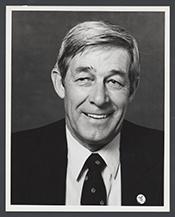
United States · United States Congress · 22 June 1982
Amends the Internal Revenue Code to authorize the Secretary of the Treasury to prescribe regulations exempting retirees or individuals over age 65 from interest penalties with respect to any underpayment of estimated tax. Requires that such underpayment be due to reasonable cause (defined to include mistake or ignorance of the law) and not to willful neglect.
United States · United States Congress · 15 June 1982
Federal Capital Investment Budget Act of 1982 - Amends the Budget and Accounting Act, 1921 to require the President to include with each Budget submitted on or after January 1, 1983, a special analysis, for the ensuing fiscal year which shall identify and summarize for each function, category, agency, and program of appropriation and expenditure in the Budget the amount of appropriations and expenditures which may be classified as public infrastructure investments. Sets forth other information to be included in such analysis. Requires the President also to include with each Budget, on or after January 1, 1984, a capital investment budget which shall identify by State the amount of appropriations and expenditures classifiable as public infrastructure investments. Declares that any appropriation or expenditure shall be classified as a public infrastructure investment to the extent that it will be used for the construction, rehabilitation, or repair of any civilian public facility in the United States. Amends the Public Works and Economic Development Act of 1965 to require the Economic Development Administration to prepare an inventory of civilian public facilities in the United States and an assessment of their physical condition. Requires the Secretary to make a report of such inventory and assessment to Congress not later than January 1, 1984, and to update such report annually.
United States · United States Congress · 7 June 1982
Amends titles II (Old Age, Survivors and Disability Insurance) and XVIII (Medicare) of the Social Security Act to prohibit the inclusion of the disbursements from the Federal Old-Age and Survivors Insurance Trust Fund, the Federal Disability Insurance Trust Fund, and the Federal Hospital Insurance Trust Fund and of the receipts from the old age, survivors and disability insurance taxes and the hospital insurance taxes on self-employment income, employees, and employers in the totals of the Federal budget. Exempts such disbursements and receipts from any general statutory limitation on Federal budget outlays.
United States · United States Congress · 3 June 1982
Natural Gas Consumer Relief Act - Amends the Natural Gas Policy Act of 1978 to eliminate the automatic inflation adjustment factor and to provide a new formula for determining the maximum lawful price for: (1) new natural gas and certain natural gas produced from the Outer Continental Shelf; (2) natural gas from new, onshore production wells; (3) natural gas dedicated to interstate commerce; (4) natural gas sales under existing intrastate contracts; (5) natural gas sales under both interstate and intrastate rollover contracts; (6) high-cost natural gas; (7) stripper well natural gas; and (8) other categories of natural gas. Authorizes the Federal Energy Regulatory Commission to prescribe increases in the maximum price for any category of natural gas, but only if such increases are based upon increased production costs and are just and reasonable. Prohibits the Commission, when determining a new maximum price, from considering the costs of fuels or commodities other than and commodities actually used in producing the gas. Provides for the application of this Act to high-cost natural gas produced from a well the surface drilling of which commenced after enactment. Requires a seller to petition the Commission for any adjustment in the maximum price.
United States · United States Congress · 27 May 1982
Fair Trade in Steel Act of 1982 - Declares that it is congressional policy to allow access to the U.S. market for foreign-produced steel on an equitable basis in order to safeguard the national security, insure orderly trade, and alleviate U.S. balance-of-payments problems. Title I: Steel Tripartite Advisory Council - Directs the President to establish within the Executive Office of the President a Steel Tripartite Advisory Council. Requires the Council to advise the President and Congress on problems within the basic steel industry and to provide advice and recommendations on related domestic and international issues. Requires other Federal agencies to provide the Council with economic information upon request. Directs the Council to report to the President on the condition of the steel industry. Title II: Quantitative Restrictions on Imports of Certain Steel Products - Limits to 5,000,000 tons the amount of articles in all steel product categories that may be imported between July 1, 1982, and January 1, 1983. Imposes a further limitation on such imports if unemployment in the domestic steel industry reaches between ten percent and 15 percent for three consecutive months. Prohibits any steel imports if unemployment in the domestic industry for three consecutive months is over 15 percent. Limits the amount of steel imports in each calendar year after 1982 to 10,000,000 tons. Imposes further limitations on imports depending upon the level of unemployment in the domestic industry. Imposes additional limitations on imports during any year after 1982 of articles in any one steel product category. Imposes a per country limitation on imports during such years of articles: (1) in all steel product categories; and (2) within any one steel product category. Directs the Secretary of Commerce to apportion shares of the U.S. market to foreign countries on the basis of information provided by the Secretary of the Treasury. Declares that it is the goal of this title to ensure that the imports of articles in all steel product categories be equalized on a monthly basis throughout each calendar year. Directs the Secretary of Commerce to impose additional limitations on the imports from a country whose exports to the United States exceed a specified limit. Authorizes the President to reduce such restrictions imposed under this title if the President makes a specified determination and the Congress, after notification by the President, does not adopt a concurrent resolution disapproving such reduction. Title III: Quantitative Restrictions on Iron Ore Imports - Limits the amount of iron ore that may be imported: (1) between July 1, 1982, and December 31, 1982, to 7,000,000 tons; (2) during 1983 to 14,000,000 tons; and (3) during 1984 to 14,000,000 tons, unless the Secretary finds that there has been an increase in employment in the domestic iron ore industry. Provides for a ten percent increase in imports in 1984 for each ten percent increase in employment. Authorizes the Secretary to waive the restrictions on imports of iron ore in order to insure continued operation of domestic steelmaking plants. Requires that such waiver be made on a plant-by-plant basis and only if the Secretary makes a specified determination.
United States · United States Congress · 21 May 1982
Professional Sports Stabilization Act of 1982 - Declares that it shall not be unlawful under any antitrust law for a professional sports league and its member clubs to enforce rules: (1) requiring approval by the league membership for the relocation of a member club; or (2) providing for the division of league or member club revenues that promote comparable economic opportunities for member clubs. Prohibits State and local governments from imposing limitations on the collective conduct of sports leagues or member teams authorized by this Act. Specifies the applicability of this Act to actions commenced under the antitrust laws before its enactment.
United States · United States Congress · 12 May 1982
Expresses the sense of the Congress that: (1) the President should direct the appropriate agencies to pursue vigorously and conclude promptly the countervailing duty and antidumping investigations being conducted under the Tariff Act of 1930 and the Trade Act of 1974 concerning foreign trade practices involving carbon steel mill products and specialty steel mill products; and (2) the Congress should consider legislation to strengthen U.S. trade laws if necessary.
United States · United States Congress · 20 April 1982
Expresses the sense of the House of Representatives that neither the President nor Congress should impose import fees on crude oil or refined petroleum products.
United States · United States Congress · 6 April 1982
Title I: National Development Investment - National Development Investment Act - Amends the Public Works and Economic Development Act of 1965 to cite such Act as the National Development Investment Act and to revise the emphasis of such Act from primary Federal initiative to coordination of investments between the public and the private sectors. Sets forth the findings of Congress. Authorizes the Secretary of Commerce, upon the application of an eligible State, economic development district, distressed local government (with a population under 50,000 and located outside an economic development district) Indian tribe, or nonprofit economic development organization. to make a grant for a portion of the cost of projects submitted in a development investment strategy. Sets forth eligible activities for such development investment assistance, including repairs, rehabilitation, and small business establishment. Sets forth specific eligibility criteria for applicants for such assistance. Requires an application for a grant under this Act to include: (1) a certification that the area concerned meets certain distress requirements; (2) a certification of any responsibilities which the Secretary has agreed to perform; and (3) a development investment strategy prepared in accordance with this Act. Requires the Secretary to consider specified purposes of this Act in approving applications. Lists as criteria any one of which an area must meet in order to be eligible for a grant under this Act: (1) a per capita income of 80 percent or less of the national average; (2) an employment growth rate below the national average; (3) a population loss over the most recent five-year period; (4) an unemployment rate above the national average for the most recent 24 month period; and (5) a sudden economic dislocation resulting in job loss. Sets forth the information to be contained in a grant applicant's development investment strategy. Authorizes the Secretary to make grants to establish a revolving loan fund for making or guaranteeing loans to small businesses for initial or working capital, or the purchase of facilities or equipment. Limits to $1,000,000 the amount of any such grant. Limits the amount of any grant under this Act to a maximum 50 percent of the cost of completing the project as determined at the time of the grant application. Permits the Secretary to reduce or waive the non-Federal share of a project in the case of an Indian tribe. Limits expenditures in any one State to a maximum 15 percent of the appropriations made pursuant to this Act. Requires the Secretary, each fiscal year, to obligate minimum amounts of funds for such grants. Authorizes the Secretary to make economic development planning grants to States, economic development districts, Indian tribes, distressed counties, and distressed units of local governments with a population over 50,000 (if located outside an econmic development district). Earmarks such grants for coordination of investment for community facilities, economic development, manpower training, and transportation services. Authorizes the Secretary to evaluate Federal, State, and local development investment efforts. Authorizes the Secretary to conduct any demonstration program to test the feasibility of new ways to increase productivity, foster innovative technology, match labor force with labor markets, or encourage economic diversity and regional balance. Limits the amount of any such grant to not more than 75 percent of the cost of economic development planning or of investment strategy preparation. Declares that the Secretary of Commerce shall administer this Act with the assistance of a specified Assistant Secretary of Commerce. Authorizes the Secretary to consult with other persons and agencies. Prohibits the approval of any grant unless the Secretary is satisfied that the project concerned will be properly and efficiently administered, operated, and maintained. Sets forth the powers of the Secretary under this Act. Permits the Secretary to discharge any of his responsibilities relative to a project by accepting a certification of the grant applicant's performance of such responsibilities. Requires the Secretary to make comprehensive annual reports to Congress detailing operations under this Act. Requires all laborers and mechanics employed by contractors or subcontractors on projects assisted under this Act to be paid the prevailing rate of wage. Authorizes appropriations through FY 1985. Title II: Appalachian Regional Development - Appalachian Regional Development Act Amendments of 1982 - Amends the Appalachian Regional Development Act of 1965 to declare that investments under such Act shall also be made in severely distressed and underdeveloped counties lacking resources for basic services. Authorizes appropriations through FY 1987 for the administrative expenses of the Appalachian Regional Commission. Authorizes the Commission to lease office space through FY 1987. Authorizes appropriations through FY 1990 for the Appalachian development highway system. Increases from 70 to 80 percent the subsequent Federal share of an Appalachian development highway segment when a participating State proceeds to construct a segment of such a highway without the aid of Federal funds. Applies such increase to projects approved after March 31, 1979. Authorizes the Commission to make grants to States and public and nonprofit entities for projects which will: (1) assist in the creation or retention of permanent private sector jobs, the upgrading of the region's manpower, or the attraction of private investment; (2) provide special assistance to severely distressed and underdeveloped counties which lack financial resources for improving basic services; (3) assist in achieving the goal of making primary health care accessible in the region; or (4) otherwise serve the purposes of this Act. Prohibits the authorization of any financial assistance to enable plant subcontractors to undertake work previously performed in another area by other subcontractors or contractors. Prohibits grants with funds authorized after October 1, 1982, from exceeding 50 percent of the costs of any approved project. Permits such grants to increase the Federal contribution to any project to such percentage as the Commission determines within specified limitations. Authorizes appropriations through FY 1987. Extends the termination date of such Act from 1982 to October 1, 1987.
United States · United States Congress · 5 April 1982
Intelligence Authorization Act for Fiscal Year 1983 - Title I: Intelligence Activities - Authorizes appropriations for FY 1983 for the conduct of intelligence and intelligence-related activities in specified departments and agencies of the U.S. Government. Requires the Director of Central Intelligence or the Secretary of Defense to give prior notice to the appropriate congressional committees of an intent to make an expenditure in excess of the amount specified in the classified Schedule of Authorizations. Authorizes an additional amount for the conduct of activities of the Federal Bureau of Investigation (FBI) to counter terrorism in the United States. Title II: Intelligence Community Staff - Authorizes appropriations for the Intelligence Community Staff for FY 1983. Title III: Central Intelligence Agency Retirement and Disability System - Authorizes appropriations for FY 1983 for the Central Intelligence Agency Retirement and Disability Fund. Title IV: Supplemental Authorization for Fiscal Year 1982 - Authorizes supplemental appropriations for fiscal year 1982 for the conduct of intelligence activities of the U.S. Government. Title V: Provisions Related to the Defense Intelligence Agency - Prohibits the unauthorized use of the name, seal, or initials of the Defense Intelligence Agency. Title VI: Provisions Related to the Central Intelligence Agency Retirement and Survivor's Annuity for Former Spouses - Amends the Central Intelligence Agency Act of 1949 to permit former spouses of CIA employees to receive survivors' benefits in a manner comparable to benefits administered under the Foreign Service Act of 1980. Title VII: General Provisions - Provides that authorizations under this Act shall not be deemed to authorize intelligence activities not otherwise authorized by Federal law.
United States · United States Congress · 5 April 1982
Amends the Airline Deregulation Act of 1978 with respect to the employee protection program by eliminating provisions which make payments under such program subject to amounts provided in appropriation Acts. Requires that monthly assistance payments be equal to the average of such amounts provided in the previous year. Grants protected employees who were furloughed or terminated by air carriers certified under the Federal Aviation Act of 1958 prior to enactment of this Act the first right of hire on a regional basis by any other such air carrier. Provides that flight deck operating crew members shall not retain rights of seniority or recall with the air carrier from which they were furloughed or terminated. Requires the Secretary of Transportation to periodically publish the comprehensive list of available jobs with certified air carriers on a regional basis. Terminates the Airline Employees Protective Account. Authorizes annual appropriations as may be necessary to carry out the employee protection program. Requires the Secretary of Labor to certify that employee protection agreements meet certain standards. Grants the United States district courts jurisdiction of actions to enforce duties under such agreements.
United States · United States Congress · 29 March 1982
Authorizes the President to designate April 4, 1982, as the National Day of Reflection. Notes that such date coincides with the 80th birthday of Rabbi Menachem Mendel Schneerson, head of the Lubavitch movement.
United States · United States Congress · 16 March 1982
Expresses the sense of the House of Representatives that changes to the Railroad Retirement Act of 1974 proposed in the FY 1983 budget should not be implemented.
United States · United States Congress · 2 March 1982
Motor Vehicle Import Limitation Act of 1982 - Limits the number of automobiles that may be imported during any calendar year after 1982 to ten percent of the domestic consumption during the immediately preceding calendar year. Directs the Secretary of Commerce to determine and to certify to the Secretary of the Treasury the number of automobiles that may be imported. Directs the Secretary of the Treasury to ensure adherence to the limitation. Directs the Secretary of Commerce to allocate the number of permitted automobile imports among the supplying countries. Directs the Secretary of Commerce to certify such allocation to the Secretary of the Treasury. Permits a foreign manufacturer that builds automobiles in the United States to import without including in its allocation a number of automobiles equal to the number built in the United States. Exempts from the import limitation the automobiles imported from Canada pursuant to the agreement concerning automotive products between Canada and the United States. States that Canada shall not be deemed a supplying country. Permits limitations under this Act to be applied on a calendar quarter or other intra-annual basis.
United States · United States Congress · 2 March 1982
Amends the Internal Revenue Code to disallow a business expense deduction for depreciation of imported motor vehicles. Grants the President authority to exempt any motor vehicle where the disallowance of depreciation is not in the public interest.
United States · United States Congress · 24 February 1982
Expresses the sense of the House of Representatives that the Federal Energy Regulatory Commission should take no action to accelerate the decontrol of wellhead natural gas prices.
United States · United States Congress · 10 February 1982
Amends title II (Old Age, Survivors and Disability Insurance) of the Social Security Act to direct the Secretary of the Treasury to implement procedures for identifying social security benefit checks issued under title II which have not been negotiated within 12 months and to credit the appropriate social security trust fund on a monthly basis for the amount of all unnegotiated benefit checks drawn on such trust fund. Requires the Secretary to pay a benefit check presented for payment after it has been credited to one of the trust funds if it is otherwise proper. Authorizes appropriations to reimburse the Federal Old-Age and Survivors Insurance Trust Fund and the Federal Disability Insurance Trust Fund for the total amount of unnegotiated benefit checks.
United States · United States Congress · 8 February 1982
Declares that any action by the United Nations to prevent a democratic state from exercising its rights to participate in the United Nations will seriously and harmfully affect congressional support for the United Nations.
United States · United States Congress · 2 February 1982
Expresses the gratitude of the Congress to the Italian Government and the Italian police for the rescue of Brigadier General James L. Dozier. Commends General Dozier for his bravery and patriotism throughout the ordeal. Declares congressional support for the Italian Government's efforts to end terrorism.
United States · United States Congress · 2 February 1982
Extends congratulations from the Congress to the Italian Government and its antiterrorist police forces for the successful rescue of Brigadier General James L. Dozier. Extends to General Dozier and his family best wishes for a quick recovery and return to normal life.
United States · United States Congress · 28 January 1982
Requests the President to present, on behalf of Congress, a gold medal to Lenny Skutnik, in recognition of his heroic rescue of one of the victims of the airline crash into the Potomac River on January 13, 1982. Authorizes appropriations. Authorizes the Secretary of the Treasury to cause bronze duplicates of such medal to be coined for sale to the general public.
United States · United States Congress · 25 January 1982
Modifies the project authorizing the Secretary of the Army, through the Chief of Engineers, to replace a certain dam and locks on the Mississippi River, Illinois and Missouri. Repeals specified authority of the Secretary concerning the Upper Mississippi River System.
United States · United States Congress · 16 December 1981
National Engineering and Science Manpower Act of 1982 - Authorizes each Federal agency and department to establish programs for training technical and engineering personnel and to cooperate with State and local governments on such programs. Creates a special Coordinating Council on Engineering and Scientific Manpower within the National Science Foundation to coordinate Federal efforts in science and engineering education. Establishes for five years a special Engineering and Science Manpower Fund administered by the chairman of the Council to develop manpower resources. Directs the Council to report to Congress biennially on the expenditures of the Fund. Authorizes appropriations for fiscal year 1983.
United States · United States Congress · 11 December 1981
Amends the Omnibus Budget Reconciliation Act of 1981 to extend by five months (until September 30, 1982) the period within which an individual must have become a full-time student at a postsecondary educational institution in order to receive, after July 1982, child's insurance benefits on the basis of student status under title II (Old Age, Survivors and Disability Insurance) of the Social Security Act. Extends by one year (through August 1986) the period during which such benefits may be paid to an individual so qualified.
United States · United States Congress · 11 December 1981
School Desegregation Amendments Act - Limits the authority of the Federal courts to order the assignment or transportation of students, consolidation of school districts, or alteration of State or local tax rates for the purpose of remedying unconstitutional segregation of students in actions involving the State or local school board.
United States · United States Congress · 9 December 1981
M. D. L. 235 Settlement Discounts Tax Act of 1981 - Excludes from gross income any discount or price reduction on property and services provided for under a specified fuel settlement involving Westinghouse Electric Corporation and certain public utilities.
United States · United States Congress · 8 December 1981
Fair Practices in Automotive Products Act - Title I: Domestic Content Requirements for Motor Vehicles - Sets forth for all motor vehicle manufacturers which produce over 100,000 motor vehicles for ultimate retail sale in the United States "minimum domestic content ratios" (the domestic value, including labor and parts, of the manufacturer's production costs of all automotive products sold in the United States). Requires all vehicle manufacturers producing more than 50,000 motor vehicles for sale in the United States to provide information to the Secretary of Transportation for the purpose of administering this requirement. Authorizes the imposition of import restrictions on manufacturers violating such standards. Title II: Unfair and Deceptive Practices by Vehicle Manufacturers - Defines as an unfair method of competition and deceptive act or practice under the Federal Trade Commission Act the refusal of any vehicle manufacturer to determine whether parts produced in the United States by a parts manufacturer satisfy reasonable replacement part standards established by the vehicle manufacturer. Grants the Federal Trade Commission rulemaking authority to administer this title.
United States · United States Congress · 8 December 1981
Amends the Depository Institutions Deregulation Act of 1980 to suspend, during the period beginning on the date of the enactment of this Act and ending six months after such date, the authority of the Depository Institutions Deregulation Committee.