Amendment· HAMDTHAMDT 1319 (99th)passed
An amendment relating to time financing of public buildings.
United States · United States Congress
The world's political record
Person
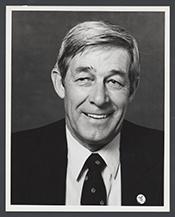
United States · Official source
1,276 records where Rep. Young, Robert A. [D-MO-2] is listed as a sponsor, author, or other actor. Search with topics and years
United States · United States Congress
United States · United States Congress
United States · United States Congress · 18 October 1986
Directs the Secretary of Transportation to amend certain Federal regulations to provide that: (1) all handicapped persons shall be eligible to use public bus service (special service or on-call accessible bus service) provided by a recipient of Federal financial assistance; and (2) any costs incurred to accommodate the special needs of such handicapped persons on a fixed route bus shall be eligible to be counted in determining whether the recipient has exceeded its limitation on required expenditures.
United States · United States Congress · 10 October 1986
Child Victim Witness Protection Act of 1986 - Amends the Comprehensive Crime Control Act of 1984 to authorize the Attorney General to make additional annual grants and other payments from the Crime Victims Fund to States for the protection of victims of child sexual abuse. Makes a State eligible for assistance if such State has enacted statutes with respect to the investigation and adjudication of child abuse which: (1) minimize the additional trauma to the child victim; and (2) improve the chances of successful criminal prosecution or legal action. Requires that such assistance be used to implement these statutes. Establishes a formula based on State population to determine the amount of the State's allotment. Requires the Attorney General to use up to $12,000,000 from the Crime Victims Fund each fiscal year for this purpose. Amends the Victims of Crime Act of 1984 to increase the level of the Crime Victims Fund. Directs the Attorney General to acquire statistical data for 1987 and 1988 regarding the incidence of child sexual abuse and annually publish a summary of such data.
United States · United States Congress · 6 October 1986
Designates March 16, 1987, as Freedom of Information Day.
United States · United States Congress · 25 September 1986
Amends the Public Buildings Act of 1959 to authorize the Administrator of General Services to issue obligations to finance the acquisition and construction of public buildings. Requires the Secretary of the Treasury to prescribe terms and conditions and to determine the interest rate for such loans. Prohibits the authorization of appropriations for loans for which a prospectus is required unless such acquisition or construction has been approved by certain congressional committees.
United States · United States Congress · 25 September 1986
Provides for the continuation of the three-year income tax basis recovery rule with respect to annuities of Federal employee contributions to Federal retirement systems. Directs the Office of Personnel Management to report to specified congressional committees on the effects of a retroactive repeal of such rule on the Federal workforce.
United States · United States Congress · 22 September 1986
Designates the United States Courthouse and Customhouse on West Broadway, Louisville, Kentucky, as the Gene Snyder United States Courthouse and Customhouse.
United States · United States Congress · 22 September 1986
Commercial Motor Vehicle Safety Act of 1986 - Prohibits, as of July 1, 1987, any person who operates a commercial motor vehicle from having more than one driver's license, except in certain circumstances. Requires commercial motor vehicle operators who have violated motor vehicle traffic control laws of a State other than the license-issuing State to: (1) notify the latter State of such violation; and (2) notify the operator's employer of such violation. Requires commercial motor vehicle operators to notify employers of any suspension or loss of: (1) commercial motor vehicle driving privileges; and (2) previous employment as a commercial motor vehicle operator. Prohibits employers from authorizing to operate a commercial motor vehicle any employees who: (1) have lost the right to drive such vehicles; or (2) possess more than one commercial motor vehicle driving license. Directs the Secretary of Transportation to promulgate regulations by January 1, 1989, establishing minimum Federal standards for testing the fitness of commercial motor vehicle operators. Prescribes guidelines for such standards. Authorizes the Secretary to make grants to a State which agrees to establish a program for testing the fitness of commercial motor vehicle operators. Authorizes appropriations for such grant program. Outlines the funding and eligibility guidelines for such grant program. Directs the Secretary to: (1) issue regulations by January 1, 1989, establishing minimum uniform standards for the issuance of classified drivers' licenses by the States; and (2) establish an information clearinghouse pertaining to the licensing, identification, and driving status of commercial motor vehicle operators. Requires the Secretary to review State-operated information systems to determine whether any such system could be used within the Federal system. Authorizes the Secretary to enter into an agreement with the appropriate State for the use of such system. Outlines the requirements of the Federal information system. Identifies the offenses for which a commercial motor vehicle operator's driving license shall be subject to Federal disqualification. Sets October 1, 1994, as the deadline by which each State must comply with the Federal standards for commercial motor vehicle operators in order not to have apportioned funds withheld. Details the requirements of such standards. Requires the Secretary to withhold certain percentages of highway funds apportionments from States that do not comply with this Act by September 30, 1994. Provides for release of withheld funds to States complying by September 30, 1997. Establishes criminal and civil penalties for violations of this Act. Authorizes the Secretary to waive any provision of this Act (or any regulation issued thereunder with respect to class of persons or commercial motor vehicles) if the Secretary determines that such waiver is not contrary to the public interest. Requires the Secretary to review, by January 1, 1989, the commercial motor vehicle alcohol regulations to determine whether such regulations should be applied uniformly throughout the United States. Nullifies certain truck brake regulations permitting front brake disconnections. Prohibits the Secretary from issuing new regulations to the same effect. Requires the Secretary to conduct a radar demonstration project on a certain highway in northern Kentucky, and to report the results of such project to the Congress.
United States · United States Congress · 12 September 1986
Pornography Victims Protection Act of 1986 - Amends the Federal criminal code with respect to the prohibition against the sexual exploitation of children to add as a condition triggering Federal penalties that the person concerned know that a minor was transported in interstate or foreign commerce for the purpose of producing pornography. Makes it a criminal offense for any person to coerce, intimidate, or fraudulently induce an individual 18 years or older to engage in any sexually explicit conduct for the purposes of producing any visual depiction of such conduct. Grants the U.S. district courts jurisdiction to prevent and restrain violations of this Act. Authorizes the Attorney General or any person threatened with loss or damage by such conduct to institute a civil suit. Provides for treble damages for a victim who suffers physical injury, emotional distress, or property damage. Imposes civil penalties for violation of the prohibition against sexual exploitation of children.
United States · United States Congress · 11 September 1986
Expresses the sense of the House of Representatives that the President should convene a summit meeting of world leaders to adopt a program against international terrorism.
United States · United States Congress · 11 September 1986
Declares that the Congress: (1) reaffirms its support for improved relations between Egypt and Israel based on the 1979 Treaty of Peace (Camp David Accords); and (2) calls upon those countries to resolve the Taba territorial dispute and to move forward in normalization of relations.
United States · United States Congress · 9 September 1986
Designates the week beginning November 30, 1986, as National Home Health Care Week.
United States · United States Congress · 8 September 1986
Omnibus Drug Enforcement, Education, and Control Act of 1986 - Title I: Committee on Foreign Affairs - International Narcotics Control Act of 1986 - Subtitle A: International Narcotics Control Assistance Programs - Amends the Foreign Assistance Act of 1961 to increase the FY 1987 authorization for aid for international narcotics control. Permits certain additional funds to be appropriated for FY 1987 only if the President has submitted to the Congress: (1) a budget request for such funds; and (2) a plan showing how such funds will be used. Requires that a specified amount of the FY 1987 military assistance authorization be available to provide aircraft to countries receiving such assistance for narcotics control eradication and interdiction efforts. Earmarks at least half of such funds for aircraft based in Latin America. Requires such aircraft to be made available to foreign countries only on a lease or loan basis. Requires the Secretary of State to maintain detailed records on the use of such aircraft. Requires that a specified amount of the FY 1987 military assistance authorization shall be available for education and training in the operation and maintenance of aircraft used in narcotics control interdiction and eradication efforts. Earmarks a specified amount of the FY 1987 international narcotics control assistance for research, development, and testing of safe and effective herbicides for use in aerial eradication of coca. Requires the Comptroller General to investigate and report to the Congress on the effectiveness of the international narcotics control assistance program. Subtitle B: Improving Law Enforcement and Other Narcotics Control Activities Abroad - Requires the President's annual report to the Congress on the international strategy to prevent cultivation and trafficking in narcotics to include a discussion of the extent to which each source country has cooperated with U.S. narcotics control efforts through the extradition or prosecution of drug traffickers and a description of the state of negotiations on updated extradition treaties. Commends the decision of the Secretary of State to issue diplomatic passports to officials and employees of the Drug Enforcement Administration. Requires the Secretary to report to the Congress before changing such policy. Prohibits participation by any U.S. officer or employee in direct narcotics arrest actions in foreign countries. Allows the Secretary to designate countries where a limited exemption from such prohibition may apply. Permits such direct action to protect life or safety. Requires the executive branch to establish expeditiously the information sharing system that will list all drug arrests of foreign nationals in the States as required by the Foreign Relations Authorization Act, Fiscal Years 1986 and 1987. Requires the executive branch to report to the Congress when the system is established. Urges the President to require that greater priority be given to the collection and sharing of information concerning narcotics related activities abroad. Requires the President to order the preparation of an updated threat assessment of narcotics trafficking from Africa. Requires the President to take steps to improve the capability of the executive branch to: (1) collect information concerning links between narcotic traffickers and acts of terrorism abroad; and (2) develop means to respond to the threat which those links pose. Requires the President to report to the Congress on such steps. Requires that a specified amount of the FY 1987 administration of justice program authorization be used to provide Colombia (and other countries in the region) assistance to protect judicial or other officials who are targets of narcoterrorist attacks. Urges the Secretary to increase efforts to negotiate with relevant countries procedures to facilitate the interdiction of vessels suspected of carrying illicit narcotics. Directs the President to take appropriate actions, including denial of access to U.S. ports, if a country refuses to negotiate interdiction procedures. Requires the Secretary to submit semiannual reports to the Congress identifying countries that fail to negotiate such procedures. Provides that the Secretary of Defense, the Attorney General, and the Secretary of State shall jointly determine when armed forces personnel are needed to provide law enforcement assistance (in enforcing specified customs and drug laws and the Immigration and Nationality Act) activities abroad. Subtitle C: Development and Illicit Narcotics Production and Trafficking - Requires the Secretary of State, with the assistance of the Secretary of Agriculture, to consult with authorities of the Government of Mexico on the development and implementation of a program to assist agricultural producers in Mexico to substitute the production of narcotic crops with other selected crops. Directs the Secretary of Agriculture to conduct research to identify substitute crops. Requires the annual report on foreign aid programs to contain a description of the development programs (other than narcotics control programs) dealing with illicit narcotics production. Subtitle D: Drug Education Programs Abroad - Authorizes additional appropriations for the U.S. Information Agency for FY 1987 which shall be available only for increasing drug education programs abroad. Authorizes additional appropriations for development assistance programs for FY 1987 which shall be used for additional activities aimed at increasing awareness of the effects of production and trafficking of illicit narcotics on sources and transit countries. Requires the Director of the U.S. Information Agency and the Director of the Agency for International Development to include in their annual reports to the Congress a description of the drug education programs carried out by their respective agencies. Subtitle E: United Nations Activities Relating to Drug Narcotics Control - Declares congressional support for the United Nations General Assembly decision to convene in 1987 an International Conference on Drug Abuse and Illicit Trafficking. Calls upon the President to appoint the head of the U.S. delegation well in advance of the conference and ensure that necessary resources are available for U.S. preparation and participation. Requires the President to report to the Congress by April 30, 1987, on the status of U.S. preparation for the conference. Calls for the conduct of a study of the effectiveness of the United Nations drug-related declarations, conventions, and entities. Requires the President to report any recommendations which result from such study to the Congress. Urges the United Nations Commission on Narcotic Drugs to complete work as soon as possible on a new draft convention against illicit traffic in narcotic drugs and psychotropic substances. Calls for more effective implementation of existing conventions relating to narcotics. Subtitle F: Provisions Relating to Specific Countries - Requires a specified amount of the narcotics control assistance for Mexico for FY 1987 to be withheld until the President reports to the Congress that Mexico has investigated the 1985 murders of a Drug Enforcement Agency agent and his pilot and has brought to trial and is effectively prosecuting those responsible. Requires the Secretary of State to submit monthly reports to the Congress on the illicit drug eradication program in Mexico. Urges the President to direct the Secretary to enter into negotiations with the Government of Mexico to create a Mexico-United States Intergovernmental Commission on Narcotics and Psychotropic Drug Use and Abuse. Requires the Secretary to report to the Congress within 90 days of enactment of this Act on progress in establishing such a commission. Urges Pakistan to adopt and implement a comprehensive narcotics control program. Requires the Secretary to report to the Congress within 60 days of enactment of this Act on the adoption and implementation of such a program. Calls upon the President to instruct the U.S. Ambassador to the United Nations to request that the problem of illict drug production in Iran, Afghanistan, and Laos be raised at the International Conference on Drug Abuse and Illicit Trafficking. Title II: Committee on Armed Services - Defense Narcotics Act of 1986 - Expresses the sense of the Congress that the President should: (1) apply the full measure of executive power against the introduction of controlled substances into the United States; and (2) expand the role of the armed forces in the war on illegal drugs. Directs the Secretary of Defense to acquire, for drug enforcement activities, aircraft (including Blackhawk helicopters), and seven radar aerostats. Directs the Secretary to make such aircraft and radar aerostats available to U.S. agencies designated by the Chairman of the National Drug Enforcement Policy Board. Requires that a specified amount of the FY 1987 Navy authorization be transferred to the Secretary of Transportation to be made available for Coast Guard personnel assigned to duty on naval vessels. Increases such personnel by 500. Allows the Secretaries of Defense and Transportation to assign specially trained members of the Coast Guard to duty on naval vessels for drug enforcement purposes. Allows the Secretary of Defense to assign Defense Department personnel, upon request, to provide enforcement assistance to officials of foreign nations. Directs the President to submit a report to the Congress describing the appropriate role of the armed forces in interdicting illegal drugs and participating in the national effort to control and reduce drug abuse. Increases the strength of the Coast Guard Reserve. Directs the Secretary of Defense to establish: (1) a comprehensive anti-drug abuse programs for members of the armed forces and civilian personnel of the Department of Defense; and (2) a drug abuse education curriculum and program for elementary and secondary schools. Amends the Uniform Code of Military Justice to include driving under the influence of drugs as an offense. Title III: Committee on Ways and Means - Drug Smuggling Enforcement Act of 1986 - Subtitle A: Amendments of the Tariff Act of 1930 - Part I: General Provisions - Amends the Tariff Act of 1930 to prohibit the importation into the United States of any drug paraphernalia (except paraphernalia intended for medical or scientific needs imported under regulations prescribed by the Attorney General). Requires the master of any vessel arriving at any U.S. or Virgin Island port to report such arrival at the nearest customs facility if such vessel is: (1) from a foreign port or place; (2) a foreign vessel from a domestic port; or (3) a U.S. vessel carrying bonded merchandise or foreign merchandise for which entry has not been made. Requires vehicles arriving in the United States to enter only at designated border crossing points. Requires the person in charge of such vehicle to report the arrival of such vehicle, and present the vehicle and all persons and merchandise on board for inspection, to the customs officer. Requires the pilot of any aircraft arriving in the United States or the Virgin Islands from any foreign airport or place to comply with the advance notification, arrival reporting, and landing requirements prescribed by the Secretary of Transportation. Prohibits the departure of such vessels or aircraft from U.S. or Virgin Island ports or airports or of such vehicles from the United States, or the discharge of passengers or merchandise, except in accordance with regulations prescribed by the Secretary. Imposes penalties for violations of the arrival, reporting, or entry requirements. Increases the fine for the unauthorized unloading of passengers. Sets forth reporting requirements for individuals arriving in the United States. Prohibits the departure of such individuals until authorized by a customs official. Imposes penalties for violations of such reporting requirements. Repeals the current penalties for failure to report or file a manifest upon arrival in the United States. Authorizes the issuance of summonses for records pertaining to merchandise the importation of which into the United States is prohibited. Increases the penalties for: (1) filing a false manifest; (2) failing to file a complete manifest; or (3) carrying illegal drugs. Repeals the prepenalty procedures in such cases. Increases the penalties for illegal unloading and transshipment. Makes aviation smuggling unlawful. Prohibits the at sea transfer of prohibited merchandise between U.S. owned aircraft and vessels. Prohibits the at sea transfer of prohibited merchandise between aircraft and vessels, regardless of the nationality of either, where the intent is to smuggle the merchandise into the United States. Imposes penalties, including seizure of the aircraft or vessel, for violations of such anti-smuggling provisions. Specifies certain acts that, if engaged in within 250 miles of the U.S. territorial seas, shall be: (1) presumed to indicate intent to smuggle; and (2) deemed prima facie evidence that the aircraft or vessel was used in aiding or facilitating such smuggling. Changes the procedures for the seizure and forfeiture of conveyances used in smuggling to require that a common carrier be seized and forfeited under certain circumstances. Authorizes the issuance of search warrants for places suspected of containing: (1) merchandise brought into the United States unlawfully; (2) property which is subject to forfeiture under the customs laws; or (3) articles which are evidence of a customs violation. Authorizes the seizure and forfeiture of smuggled merchandise. Requires that any deposit made in lieu of forfeiture of property seized under customs laws be treated in the same manner as the proceeds of a sale of any forfeited item. Provides that the expenses of a forfeiture proceeding shall be a priority claim in the same manner as court costs. Provides that compensation for informers shall not exceed 25 percent of the amount recovered. (Current law requires such compensation to equal 25 percent of such amount.) Declares that an action to recover a pecuniary penalty is considered to have been commenced when the penalty notice is issued. Authorizes the Secretary to require the production of foreign landing certificates to comply with international obligations. Permits the Secretary to authorize customs officials to exchange information or documents with foreign customs or law enforcement agencies under certain circumstances. Allows the Secretary, when authorized by treaty or executive agreement, to station customs officers in foreign countries to examine persons or merchandise prior to their arrival in the United States. Provides that merchandise seized at a foreign station may be transported to the United States for customs proceedings. Permits the stationing of foreign customs officers in the United States (if similar privileges are extended to the United States). Imposes penalties for making fraudulent statements to such foreign officials. Grants the Secretary certain investigatory powers in relation to: (1) certain reporting requirements on monetary instruments transactions; and (2) the enforcement of the Bank Secrecy Act. Sets forth certain requirements concerning the undercover investigative requirements of the Customs Service. Part II: Customs Forfeiture Fund - Extends the authority of the Customs Forfeiture Fund through FY 1991. Makes such Fund available for: (1) purchases by the Customs Service of evidence of smuggling controlled substances; (2) the equipping for law enforcement functions of any (currently only forfeited) vessel, vehicle, or aircraft available for use by the Customs Service; (3) the reimbursement of private citizens for expenses incurred in cooperating with the Customs Service; and (4) publicizing the availability of rewards. Authorizes appropriations. Subtitle B: Customs Service Authorizations, Miscellaneous Customs Provisions, and Amendments to the Controlled Substances Import and Export Act - Part I: Customs Service Authorizations - Amends the Customs Procedural Reform and Simplification Act of 1978 to authorize FY 1987 appropriations to the Department of the Treasury for the U.S. Customs Service. Part II: Miscellaneous Customs Amendments - Treats any vessel which has received merchandise while in the customs waters beyond the territorial sea or while on the high seas as being from a foreign port for the purposes of certain provisions of the Tariff Act of 1930. Allows any customs official needing assistance in making an arrest, search, or seizure, to demand such assistance from any person. Subjects any person who refuses such assistance without reasonable excuse to criminal penalties. Exempts any person who renders such assistance from liability for civil damages. Part III: Amendments to the Controlled Substances Import and Export Act - Amends the Controlled Substances Import and Export Act to make it unlawful for any person to manufacture or distribute a schedule I or III controlled substance intending or knowing that such substance will be imported into the United States. Makes it unlawful for any United States citizen on board any aircraft, or any person on board any aircraft owned by a U.S. citizen or registered in the United States, to manufacture or distribute or possess with intent to manufacture or distribute a controlled substance. Subtitle C: Denial of Trade Benefits to Uncooperative Drug Source Nations - Narcotics Control Trade Act - Directs the President to designate a country an uncooperative drug source nation if during any fiscal year beginning after September 30, 1986, such country: (1) was a source of any illicit narcotic and psychotropic drugs or other controlled substances that are significantly affecting the United States; and (2) did not cooperate with the United States in preventing such drugs and substances from affecting the United States by taking specified actions. Directs the President to report to the Congress the the name of each such country. Denies the products of each such country most-favored-nation treatment until the President notifies the Congress that such country has made significant progress and will continue to make progress in remedying those policies on which an uncooperative drug source nation designation was based. Title IV: Committee on Merchant Marine and Fisheries - Coast Guard Drug Interdiction and Law Enforcement Act of 1986 - Expresses the sense of the Congress that the Coast Guard: (1) should be given the resources to increase its ability to interdict the illegal transportation of drugs; and (2) is the best qualified Federal agency to carry out drug interdiction on the high seas and U.S. waters. Amends Federal law to provide that the Coast Guard may detect, track, and assist in the seizure of aircraft being used in drug trafficking. Authorizes additional appropriations for the Coast Guard for FY 1987 and 1988 for additional personnel, equipment, and related capital improvements. Title V: Committee on Banking, Finance and Urban Affairs - Subtitle A: Money Laundering - Comprehensive Money Laundering Prevention Act - Amends Federal law to prohibit any person from: (1) causing or attempting to cause a domestic financial institution to file a required coin or currency transaction report containing a material omission or misstatement of fact or to fail to file a required report; or (2) structuring or assisting in structuring a transaction with one or more institutions for the purpose of evading reporting requirements. Authorizes the seizure and forfeiture to the United States of: (1) any transported monetary instrument or any interest in other property (including any deposit in a financial institution) traceable to such instrument when a required report on such instrument has not been filed or contains a material omission or misstatement; and (2) any U.S. coin or currency or any interest in other property traceable to such coin or currency involved in a transaction for which a required report has not been filed, except where the property owner is a bona fide purchaser for value who took without notice of the violation, a depository institution, or a financial institution regulated by the Securities and Exchange Commission. Requires a financial institution to hold property in its possession for 15 days upon receipt of notice of the Secretary of the Treasury's intent to seize such property. Authorizes the appropriate U.S. district court to issue an order authorizing the Secretary to seize such property upon a showing by the Secretary that there is probable cause to believe that such property is subject to forfeiture. Exempts the United States, any financial institution, and any employee of either from liability in connection with such a hold being placed on any property. Provides that a financial institution which fails to hold property after receiving notice shall be liable to the United States for the value of the property the institution failed to hold. Amends the Internal Revenue Code to provide for the enforcement of such seizure and forfeiture authority by internal revenue enforcement officers. Authorizes the Secretary to impose a civil penalty on a person who knowingly or recklessly violates a coin or currency transaction reporting requirement. Limits the penalty to the amount of the coin or currency involved, reduced by any amount already forfeited. Amends the Federal Deposit Insurance Act, the Home Owners' Loan Act of 1933, the National Housing Act, and the Federal Credit Union Act to require each Federal banking regulatory agency to: (1) require insured banks, institutions, savings and loan associations, and credit unions (insured entities) to establish and maintain procedures to assure compliance with monetary transactions recordkeeping and reporting requirements; (2) include in each examination of an insured entity a review of such procedures identifying any problem; and (3) order any entity which has failed to maintain such procedures or correct any reported problem to cease and desist from violating this Act. Prescribes civil penalties for such violations. Amends provisions concerning monetary transactions recordkeeping and reporting requirements to: (1) include within the definition of a "financial institution" any foreign subsidiary or affiliate of such an institution and the U.S. Postal Service when it is carrying out a duty or power of such an institution; and (2) include as a "monetary instrument" any transfer of funds, as the Secretary may prescribe. Amends the Federal Deposit Insurance Act and the National Housing Act to authorize the appropriate regulatory agency to extend the period provided for the review and disapproval of a proposed change in control of an insured bank or savings and loan association two additional times for up to 45 days each time if: (1) the agency determines that the acquiring party has not furnished all required information; (2) the information submitted is substantially inaccurate; (3) the agency has been unable to complete the investigation because of delay caused by the acquiring party; or (4) the agency needs more time to determine that no acquiring party has a record of failing to comply with monetary transaction reporting requirements. Authorizes the Secretary to order any domestic financial institution to obtain certain information, maintain a record, and file a report concerning any transaction involving $3,000 or more in domestic coin or currency. Requires any domestic institution which issues a bank check, cashier's check, traveler's check, or money order in a transaction involving $3,000 or more in domestic coin or currency to: (1) obtain the signature of the person to whom the check or money order is issued; and (2) maintain a record of such transaction which shall include information concerning such person, the check or order, the method of payment, the payee of the check or order, and the aggregate amount of checks or money orders issued to such person on the same day to the extent such amount exceeds $10,000. Institutes other reporting requirements when such aggregate amount exceeds $10,000 or when the person receiving the check or money order refuses to provide information necessary to determine such amount. Requires any information required to be provided to a financial institution to be complete and accurate. Subjects to prescribed civil and criminal penalties any domestic financial institution or any employee, officer, or director thereof who knowingly or recklessly (currently, willfully) violates monetary transaction recordkeeping or reporting requirements. Amends the Right to Financial Privacy Act of 1978 to limit the information a financial institution may provide to a Government authority as relevant to a violation of Federal law or regulations to: (1) the names, addresses, and account numbers of persons; (2) information concerning the persons and acts involved (excluding financial records); and (3) the nature and a description of the violation. Preempts any State or local law that would prohibit such disclosure. Permits any financial institution or supervisory agency to disclose to the U.S. Attorney General, a State law enforcement agency, or the Secretary any financial record of any institution officer, director, employee, or controlling shareholder which is relevant to a possible violation of monetary transactions recordkeeping or reporting requirements or to a possible crime against the institution or supervisory agency by such individual. Grants the Secretary subpoena power in connection with investigations to enforce monetary transactions recordkeeping and reporting requirements. Directs the Secretary, within 30 days after any change in management or control of a financial institution, to review each outstanding exemption to such requirements granted by such institution. Prohibits a person from qualifying for such an exemption unless the relevant financial institution: (1) maintains a statement which contains such person's signature and describes why such person qualifies; and (2) certifies to the Secretary that such person qualifies. Amends the Federal Deposit Insurance Act and the National Housing Act to prescribe civil and criminal penalties for violations of certain recordkeeping requirements imposed on insured banks and institutions. Sets forth time limitations for: (1) the assessment of civil penalties for violations of monetary transactions recordkeeping and reporting requirements; and (2) commencement of civil actions to recover assessed penalties. Amends the Federal Deposit Insurance Act and the National Housing Act to direct the appropriate banking agency, upon receiving notice of a proposed acquisition of an insured bank or savings and loan association, to: (1) investigate the competence, experience, integrity, and financial ability of each person by or for whom the acquisition is to be made; (2) determine the accuracy and completeness of the information contained in such notice; (3) prepare and retain a report of its findings; and (4) publish the name of the bank or association to be acquired and the name of each person for or by whom the acquisition is to be made and solicit public comment on the proposed acquisition, unless such disclosure or solicitation would seriously threaten the safety or soundness of such bank or association. Authorizes any such agency, upon determining that a person has filed inaccurate, incomplete, or misleading information, or has violated other requirements of the Change in Bank Control Act or the Change in Savings in Loan Control Act, to seek injunctive or other equitable relief in the appropriate U.S. district court. Directs the Secretary to: (1) initiate discussions with the central banks or other appropriate governmental authorities of other countries on establishment of an information exchange system to assist the efforts of each country to reduce the international flow of money derived from illicit drug operations and other criminal activities; and (2) report to specified congressional committees within nine months on the results of such discussions. Increases the maximum criminal fine for Bank Secrecy Act violations from $500,000 to $1,000,000 for individuals and not more than $5,000,000 in other cases. Permits the Secretary to issue regulations defining the term "at one time" for purposes of reporting requirements on exporting and importing monetary instruments so that closely related events may be collectively considered to occur at one time. Subtitle B: Multilateral Development Banks - Drug Eradication Act of 1986 - Directs the United States to promote, through the International Bank for Reconstruction and Development, the International Development Association, the Inter-American Development Bank, the African Development Bank, and the Asian Development Bank, the development and implementation of national drug eradication programs in developing countries. Directs the Secretary of the Treasury to instruct U.S. Executive Directors of the multinational development banks to propose that assistance be provided to such countries in developing and implementing such programs. Authorizes the Secretary of State to certify the adequacy of such programs and annually review such programs. Requires the Secretary of the Treasury to instruct the U.S. Executive Directors of the multilateral development banks to: (1) vote against loans to major drug producing countries that have no certified program within one year of enactment of this Act; and (2) propose that their respective banks increase lending for crop substitution programs. Requires the Secretary to include an accounting of the manner and extent of compliance with this Subtitle in its annual report to the Congress. Requires the Secretary to instruct the United States Executive Directors of the multilateral development banks to vote against any loan for the benefit of any major illicit drug producing country when such action is required by: (1) the Drug Eradication Act of 1986; or (2) certain provisions of the Foreign Assistance Act of 1961. Title VI: Committee on the Judiciary - Subtitle A: Money Laundering - Money Laundering Control Act of 1986 - Amends the Federal criminal code to establish money laundering as a Federal offense. Sets forth fines and penalties for anyone who knowingly: (1) engages in a financial transaction in criminally derived property (inapplicable to bona fide attorney fees); (2) engages in a commercial transaction which is part of a scheme to conceal criminally derived property, or disguise the source or ownership of criminally derived property; or (3) transports or attempts to transport a monetary instrument or funds from a place in the United States to or through a place outside the United States, or vice versa, as part of a scheme to conceal criminally derived property, or disguise the source or ownership of criminally derived property. Provides for a fine of not more than $1,000,000 ($5,000,000 if the offender is a person other than an individual), or imprisonment for not more than 20 years, or both. Authorizes components of the Department of the Treasury to investigate such offenses. Establishes criminal and civil forfeiture procedures for the offense of money laundering. Authorizes the use of wiretaps in money laundering investigations. Amends the Right to Financial Privacy Act to make certain changes regarding the disclosure of information by financial institutions. Subtitle B: Designer Drugs - Designer Drug Enforcement Act of 1986 - Amends the Controlled Substances Act to include controlled substance analogs (designer drugs) as a schedule I controlled substance. Subtitle C: More Effective Criminal Penalties - Narcotics Penalties and Enforcement Act of 1986 - Part I: Controlled Substances Penalties - Amends the Controlled Substances Act to modify the threshold quantity and kinds of controlled substances (adding cocaine freebase, controlled substance analogs, and fentanyl analogs) which trigger enhanced penalties. Imposes a mandatory minimum sentence of ten years imprisonment (20 for subsequent offenses) for violations involving a specified large quantity of such substances. Increases the maximum sentence for such violations to 30 years imprisonment and a fine of up to $2,000,000 (life imprisonment and a fine of up to $4,000,000 for subsequent violations). Provides for a fine of up to $5,000,000 ($10,000,000 for subsequent violations) for violations involving a person other than an individual (organization). Specifies lesser penalties for smaller quantities of the same substance. Modifies the penalties for violations involving non-narcotic schedule I or II controlled substances, schedule III and IV and V controlled substances, and certain other substances (including marihuana). Increases the fines for certain Controlled Substances Act violations. Imposes criminal penalties (imprisonment for up to one year and a fine of up to $5,000, up to two years and $10,000 for subsequent violations) for possession of a controlled substance in a special maritime or territorial jurisdiction of the United States. Provides increased criminal penalties (a mandatory minimum sentence of 20 years imprisonment, maximum term of life) for certain Controlled Substances Act violations which result in death or a serious bodily injury. Amends the Controlled Substances Import and Export Act to modify the threshold quantity and kinds of controlled substances which trigger revised enhanced penalties. (Modifies the quantities and kinds of substances to reflect those in the Controlled Substances Act.) Increases the fines for certain Controlled Substances Import and Export Act violations. Provides increased criminal penalties (a mandatory minimum sentence of 20 years imprisonment, maximum term of life) for certain Controlled Substances Import and Export Act violations which result in death or serious bodily injury. Part II: Controlled Substance Offenses Relating to Children and Schools; Precursor and Essential Chemical Review - Imposes enhanced penalties for the manufacture of a controlled substance in or near an elementary or secondary school. (Current law imposes such enhanced penalties only for the distribution of a controlled substance in or near such schools.) Imposes increased penalties for employing persons under 18 years of age to manufacture or distribute a controlled substance. Directs the Attorney General to conduct a study on the need for legislation, regulation, or alternative methods to control the diversion of legitimate precursor and essential chemicals to the illegal production of drugs. Requires the Attorney General to report his findings to the Congress within 90 days of enactment of this Act. Part III: Controlled Substances Technical Amendments - Grants the Attorney General authority to enter into contracts with State and local law enforcement agencies to provide cooperative controlled substances enforcement. Subtitle D: White House Conference - White House Conference on Drug Abuse and Control Act of 1986 - Directs the President to call a White House Conference on Drug Abuse and Control to develop recommendations to prevent drug abuse and make treatment services available to drug abusers and to control the illicit trafficking of controlled substances. Directs the Conference to review: (1) the impact of recently enacted laws on efforts to control trafficking in controlled substances and to prevent drug abuse and treat drug abusers; (2) the recommedations of the President's Commission on Organized Crime as they relate to drug abuse and control of trafficking in controlled substances; (3) the extent to which specified sanctions have been, or should be, used in encouraging foreign states to comply with their international responsibilities respecting controlled substances; and (4) the circumstances contributing to the initiation of illicit drug usage. Requires the Conference to report its findings to the President and the Congress. Subtitle E: Career Criminals - Career Criminal Amendments Act of 1986 - Amends the Federal criminal code to provide increased mandatory penalties for any person who transports firearms or ammunition in interstate or foreign commerce if such person has multiple convictions for serious drug offenses and violent felonies. (Current law provides increased penalties where such person had multiple convictions for robbery and burglary.) Subtitle F: Drug and Alcohol Dependent Offenders Treatment - Drug and Alcohol Dependent Offenders Treatment Act of 1986 - Grants the Director of the Administrative Office of the United States Courts authority to contract with public and private agencies for the detection and treatment of alcohol-dependent and drug-dependent offenders. Amends the Contract Services for Drug Dependent Federal Offenders Authorization Act of 1983 to authorize appropriations for contracts for the supervision of released drug offenders through FY 1989. Subtitle G: Drug Enforcement Enhancement - Drug Enforcement Enhancement Act of 1986 - Authorizes appropriations for FY 1987 to the Department of Justice for: (1) the Drug Enforcement Administration; (2) assistant U.S. attorneys; and (3) U.S. marshals. Authorizes appropriations for: (1) FY 1987 through 1989 for the construction of Federal penal and correctional institutions; and (2) FY 1987 and 1989 for the Federal Prison System. Amends the Omnibus Crime Control and Safe Streets Act of 1968 to establish a grant program for the enforcement of State and local drug laws. Provides that the Federal portion of such programs shall be 50 percent (100 percent if such funds are distributed to Indian tribes which perform law enforcement functions). Sets forth eligibility and application requirements. Sets forth guidelines for the allocation and distribution of appropriated funds. Requires the Governor of each participating State to designate a State office to: (1) prepare the grant application; and (2) administer the funds received. Allows the Administrator of the DEA to make grants to State and local governments for the enforcement of State and local drug laws. Provides that such grants may cover up to 100 percent of the costs of such programs. Sets forth grant application requirements. States that such grants shall not be used for land acquisition or construction projects. Authorizes appropriations for FY 1987 and 1988. Permits the use of funds in the Department of Justice Drug Assets Forfeiture Fund for necessary program-related expenses and for equipping any vessels, vehicles, and aircraft available for official use by the Federal Bureau of Investigation. Authorizes appropriations for such Fund through FY 1988. Allows $10,000,000 (currently $5,000,000) in fund assets to be carried forward and available for appropriations in the next fiscal year. Title VII: Committee on Public Works and Transportation - Transportation Drug Act of 1986 - Amends the Federal Aviation Act of 1958 to permit the States to establish criminal penalties (including forfeiture of aircraft) for certain fraudulent activities regarding aircraft registration. Makes it mandatory for an aircraft operator to make an aircraft's certificate (or registration) available for inspection upon request by any law enforcement officer. Imposes criminal penalties (a fine of up to $25,000, and/or imprisonment for up to five years) for certain violations in connection with the air transportation of controlled substances. Directs the Secretary of Transportation to conduct a study to determine the relationship between the use of controlled substances and highway safety. Requires the Secretary to transmit the results of such study to the Congress. Title VIII: Committee on Education and Labor - Drug Abuse Education and Prevention Act of 1986 - Subtitle A: Establishment of Programs to Improve Drug Abuse Education and Prevention - Establishes a National Advisory Council on Drug Abuse Education and Prevention to: (1) attract and focus national attention on drug-related problems; (2) support and publicize programs of drug abuse education; and (3) advise the Secretary of Education. Directs the Secretary to establish Federal financial assistance programs for drug abuse education and prevention in elementary and secondary schools. Subtitle B: State and Local Programs of Drug Abuse Education and Prevention - Part I: General - Provides for: (1) State allocation of program grant funds; and (2) the allocation of such funds to local and intermediate educational agencies and consortia. Part II: State Programs of Drug Abuse Education and Prevention - Lists the State educational agency uses of such funds. Restricts the amount States may use for administrative costs. Sets forth the grant application requirements. Directs the Governor of each State, from specified reserved funds, to make grants to and enter into contracts with community-based organizations for drug abuse education and prevention programs for school dropouts (and for after school and vacation periods). Part III: Local Programs of Drug Abuse Education and Prevention - Lists the local or intermediate educational agency or consortium uses of such funds. Restricts the amount States may use for administrative costs. Sets forth the local educational agency, intermediate educational agency, or consortium grant application requirements. Subtitle C: Federal Programs of Drug Abuse Education and Prevention - Directs the Secretary to establish a national education and prevention program on drug abuse. Directs the Secretary to provide information on drug abuse education and prevention to the Secretary of Health and Human Services for dissemination by the clearinghouse for alcohol and drug abuse information (established under this Act). Directs the Secretary of Education to conduct a study of the nature and effectiveness of existing Federal, State, and local programs of drug abuse education and prevention. Requires the Secretary to report such findings to the President and the Congress. Directs the Secretary, from specified reserved funds, to make grants to or enter into contracts with institutions of higher education for drug abuse education and prevention programs. Requires that at least half of such funds be used for programs for students, with the remainder to be used for training grants and curricula development programs. Directs the Secretary, from specified reserved funds, to make payments and grants and enter into other financial arrangements for Indian programs of drug abuse education and prevention. Requires the Assistant Secretary of Indian Affairs to provide technical assistance and coordination for such programs. Subtitle D: General Provisions - Sets forth provisions for program participation of children and teachers from nonprofit private schools. Directs the Secretary of Labor to conduct a study on the incidence, severity, and impact of drug abuse at the workplace. Requires the Secretary to report such findings to specified congressional committees. Authorizes appropriations for FY 1987 for such report. Authorizes appropriations for FY 1987 through 1989. Title IX: Committee on Energy and Commerce - Drug Abuse Prevention and Treatment Act of 1986 - Subtitle A: Financial Assistance to States and Communities - Amends title XIX (Block Grants) of the Public Health Service Act to direct the Secretary of Health and Human Services to make allotments to States for: (1) treatment and rehabilitation services for persons suffering from drug abuse; and (2) community-based substance abuse prevention activities for school-aged children. Authorizes appropriations for such allotments. Subtitle B: Agency for Substance Abuse Prevention; Study - Establishes in the Alcohol, Drug Abuse, and Mental Health Administration the Agency for Substance Abuse Prevention. Provides that the Agency shall be headed by a Director who shall: (1) sponsor regional workshops on the prevention of drug and alcohol abuse; (2) coordinate research findings; (3) develop effective drug and alcohol abuse prevention literature; (4) create public service announcements for radio and television broadcasting; (5) support programs of clinical training of substance abuse counselors and other health professionals; (6) in cooperation with the Director of the Centers for Disease Control, develop educational materials to reduce the risks of AIDS among intravenous drug abusers; and (7) administer the allotment program established by this Act. Directs the Secretary to establish a clearinghouse for alcohol and drug abuse information. Establishes an advisory board to advise the Director of the Agency for Substance Abuse Prevention. Directs the Secretary to contract with the Institute of Medicine of the National Academy of Sciences to conduct a study of: (1) the extent to which coverage of drug abuse treatment is provided by private insurance, public programs, and other sources of payment; and (2) the adequacy of such coverage. Subtitle C: Advisory Commission on the Comprehensive Education of Intercollegiate Athletes - Establishes the Advisory Commission on the Comprehensive Education of Intercollegiate Athletes to investigate and advise the Congress regarding issues related to athletic programs at colleges and universities in the United States, including: (1) the use of drugs by athletes; (2) the impact of television on athletics; and (3) the balance between athletics and academics. Requires the Commission to report its findings to the Congress. Authorizes appropriations. Subtitle D: Alkyl Nitrites - States that alkyl nitrites and their isomers shall be treated as a drug for purposes of the Federal Food, Drug, and Cosmetic Act. Title X: Committee on Post Office and Civil Service - Federal Employee Substance Abuse Education and Treatment Act of 1986 - Requires the Office of Personnel Management to be responsible for appropriate prevention, treatment, and rehabilitation programs and services for drug and alcohol abuse among Federal employees. Requires the Office to report to the Congress regarding: (1) the drug and alcohol abuse programs being provided; (2) levels of participation in such programs; (3) the training and qualification requirements of personnel providing such programs and services; (4) training given to supervisory personnel; and (5) recommendations for legislative or administrative action. Directs the Director of the Office of Personnel Management to establish a Government-wide education program for Federal employees regarding drug and alcohol abuse. Requires the head of each executive agency to establish employee assistance programs and services for drug and alcohol abuse for the employees in such agencies. Requires the Office of Personnel Management to prepare guidelines for such programs and services. Directs the Office of Personnel Management to conduct a demonstration project to provide a basis for determining the feasibility and desirability of including certain benefits relating to the treatment of drug and alcohol abuse among those received under the Federal Employees Health Benefits Program. Requires the Office of Personnel Management to submit specified reports to specified congressional committees evaluating such projects. Title XI: Committee on Interior and Insular Affairs - Subtitle A: Indians and Alaska Natives - Indian Alcohol and Substance Abuse Prevention and Treatment Act of 1986 - Part I: General Provisions - Sets forth the findings, definitions, and purpose of this Act. Part II: Coordination of Resources and Programs - Directs the Secretary of the Interior and the Secretary of Health and Human Services to enter into a Memorandum of Agreement which shall: (1) define the scope of the problem alcohol and substance abuse for Indian tribes and assess its financial and human costs; (2) assess the resources available to combat alcohol and drug abuse among Indian people; (3) establish appropriate standards for each agency's program responsibility; (4) coordinate the Bureau of Indian Affairs and the Indian Health Service alcohol and substance abuse programs; (5) delineate the responsibilities of the Bureau of Indian Affairs and the Indian Health Service to coordinate services; (6) direct the Bureau of Indian Affairs agency and education superintendents and the Indian Health Service unit directors to cooperate; and (7) provide for an annual review of such agreement by the Secretary of the Interior and the Secretary of Health and Human Services. Requires the agreement to be submitted to the Congress and published in the Federal Register. Allows the governing body of any Indian tribe to establish a Tribal Action Plan to coordinate available resources and programs in an effort to combat alcohol and substance abuse among its members. Requires the Bureau of Indian Affairs agency and education superintendents and the Indian Health Service service unit director to cooperate, if requested, in developing such plans. Provides for the development of such plans by Bureau of Indian Affairs and Indian Health Service personnel if an Indian tribe fails to adopt such a plan. Establishes within the Office of the Assistant Secretary of Indian Affairs an Office of Alcohol and Substance Abuse to: (1) monitor the performance and compliance of programs of the Bureau of Indian Affairs in meeting the goals and purposes of such agreement and this Act; and (2) serving as a point of contact within the Bureau of Indian Affairs for Indian tribes and the Tribal Coordinating Committees. Establishes within the Office of Alcohol and Substance Abuse the position of Indian Youth Programs Officer. Directs the Secretary of the Interior and the Secretary of Health and Human Services to make available for community use, in the furtherance of the purposes and goals of this Act, local Federal facilities, property, and equipment. Directs the Secretary of the Interior to: (1) establish summer recreation, employment, and counseling programs for Indian youth; (2) keep open schools which are necessary to provide facilities for the programs established under this Act; and (3) provide coordinators, as needed, for such programs. Part III: Indian Youth Programs - Requires the Secretary of the Interior and the Secretary of Health and Human Services to review: (1) Federal programs providing specified services or benefits to Indian children and families; and (2) tribal, State, local, and private resources, benefits, and programs providing specified services. Requires the results of such review to be provided to each Indian tribe. Directs the Assistant Secretary of Indian Affairs to develop and implement a pilot program in selected schools to determine the effectiveness of summer youth programs in furthering the purposes and goals of this Act. Authorizes appropriations for FY 1987 through 1989. Directs the Secretary of the Interior to publish an alcohol and substance abuse newsletter. Requires the Tribal Action Plans to make provisions for the establishment, funding, licensing, and operation of emergency shelters or half-way houses for Indian youth who are alcohol or substance abusers. Urges States to require their law enforcement officers to place any youth arrested for any offense related to alcohol or substance abuse in such shelter or half-way house. Authorizes appropriations for FY 1987 through 1989 for the construction, renovation, and operation of such shelters and half-way houses. Directs the Secretary of the Interior to require the compilation of data relating to the number and types of child abuse and neglect cases seen and the type of assistance provided. Part IV: Law Enforcement and Judicial Services - Requires the Secretary of the Interior and the Secretary of Health and Human Services to review: (1) Federal programs providing law enforcement or judicial services to Indian tribes; and (2) tribal and State and local law enforcement and judicial programs and systems. Requires the results of such review to be provided to each Indian tribe. Part V: Bureau of Indian Affairs Law Enforcement - Increases the maximum sentence (from six months to one year) and fine (from $500 to $5,000) which a tribal court can impose for any offense. Requires the Secretary of the Interior to ensure that all Bureau of Indian Affairs and tribal law enforcement and judicial personnel have training available in the investigation and prosecution of offenses relating to illegal narcotics and in alcohol and substance abuse prevention and treatment. Authorizes appropriations for FY 1987 through 1989. Requires the Memorandum of Agreement to include a provision for the development and implementation of a procedure for the emergency medical assessment and treatment of Indian youth arrested or detained by the Bureau of Indian Affairs or tribal law enforcement personnel for offenses relating to or involving alcohol or substance abuse. Directs the Secretary of the Interior to: (1) establish and implement a program for the eradication of marijuana cultivation within Indian country; (2) provide assistance to the Papago Indian Tribe of Arizona for the investigation and control of illegal narcotics traffic on the Papago Reservation; (3) develop and implement a plan for the construction or renovation and staffing of tribal juvenile detention and rehabilitation centers; (4) provide for the development of a Model Indian Juvenile Code; and (5) collect data regarding calls and encounters, and arrests and detentions, and the disposition of cases involving Indians where alcohol or drug abuse is a contributing factor. Part VI: Indian Alcohol and Substance Abuse Treatment and Rehabilitation - Requires the Secretary of the Interior and the Secretary of Health and Human Services to review: (1) Federal programs providing health services and benefits to Indians; (2) tribal, State, local, and private health resources and programs; (3) where facilities that provide such treatment are or should be located; and (4) the effectiveness of private and public alcohol and substance abuse treatment programs. Requires the Memorandum of Agreement to include provisions pursuant to which the Indian Health Service shall assume responsibility for: (1) determining the scope of the alcohol and substance abuse problem among Indians; (2) assessing the existing and needed resources to support an alcohol and substance abuse prevention and treatment program for Indians; and (3) estimate the funding necessary to support such a program. Requires the Secretary of Health and Human Services to: (1) provide a comprehensive alcohol and substance abuse prevention and treatment program for members of Indian tribes; (2) develop and implement a program for acute detoxification and treatment for Indian youth who are alcohol and substance abusers; (2) begin the construction of 11 regional treatment centers serving Indian tribes; (3) develop and implement within each Indian Health Service service unit community-based rehabilitation and follow up services for Indian youth who are alcohol or substance abusers; (4) develop and implement within each service unit a program of community education and involvement; (5) require that the existing health staff of the Indian Health Service receive training in alcohol and substance abuse; (6) develop and implement a program of alcohol and substance abuse prevention through education intervention; (7) identify and use existing federally owned structures as residential alcohol and substance abuse treatment centers for Indian youths; (8) make grants to the Navajo tribe to establish a demonstration program in Gallup, New Mexico, to rehabilitate adult Navajo Indians suffering from alcoholism or alcohol abuse; and (9) compile data on the number of incidents where Indian Health Service personnel or services were involved in matters related to alcohol or substance abuse. Subtitle B: National Park Service Program - National Park Police Drug Enforcement Supplemental Authority Act - Authorizes additional appropriations for National Park Police for personnel, training, and equipment. Subtitle C: Programs in United States Insular Areas - U.S. Insular Areas Drug Abuse Act of 1986 - Requires the President to report annually to the Congress on the efforts of Federal agencies in preventing the illegal entry of controlled substances into the United States. Authorizes law enforcement officers of the Governments of American Samoa and the Northern Mariana Islands to: (1) execute and serve warrants, subpoenas, and summons issued under the authority of the United States; (2) make arrests without warrants; and (3) make seizures of property to carry out the purposes of this Act, the Controlled Substances Import and Export Act, and any other applicable Federal narcotics laws. Authorizes the Attorney General to train such law enforcement officers and provide certain law enforcement equipment. Requires the Drug Enforcement Administration, the Federal Bureau of Investigation, the Coast Guard, the Customs Service, and the Postal Service to assign and maintain a specified number of agents, officers, and vessels in Guam, Puerto Rico, and the Virgin Islands. Requires the Attorney General to provide technical assistance and equipment to such Governments. Authorizes appropriations. Title XII: Committee on Government Operations - National Antidrug Reorganization and Coordination Act - Requires the President to submit recommendations to the Congress for legislation to reorganize the executive branch to more effectively combat international drug traffic and drug abuse.
United States · United States Congress · 15 August 1986
Satellite Television Security and Fair Marketing Act - Amends the Communications Act of 1934 to subject any person who willfully or maliciously interferes with the operation of any satellite or the transmission of any satellite communication to up to a $250,000 fine and ten years' imprisonment. Directs the Federal Communications Commission (FCC) to commence an inquiry into equipment, methods, and systems for detecting and preventing such violations and other satellite communication signal interferences. Requires any person who encrypts any satellite cable programming for private viewing: (1) to make such programming available for private viewing by home satellite antenna users; (2) if such person uses cable systems to distribute such programming to home satellite antenna users, to not restrict such systems from selling outside of their franchised areas, to not discriminate in price, terms, or conditions based on whether sale of such programming is for cable subscribers or home satellite antenna users, to establish reasonable financial and character criteria under which noncable distributors may qualify to distribute such programming to home satellite antenna users, and to not discriminate among different distributors offering similar distribution services; and (3) to conduct such encryption according to FCC- approved standards designed to comply with specified criteria. Authorizes aggrieved persons to commence civil actions to enforce this Act. Defines "home satellite antenna user" and "reasonable financial and character criteria" for purposes of such Act.
United States · United States Congress · 15 August 1986
Renames a specified Veterans Administration care center in Queens, New York, the Joseph P. Addabbo Veteran's Administration Extended Care Center at Saint Albans.
United States · United States Congress · 15 August 1986
National Appliance Energy Conservation Act of 1986 - Amends the Energy Policy and Conservation Act to add to the list of products covered under the Act: (1) freezers which can be operated by alternating current electricity (with specified exceptions); (2) central air conditioning heat pumps; (3) direct heating equipment; and (4) pool heaters. Deletes from specific coverage: (1) television sets; (2) humidifiers; and (3) dehumidifiers. Excludes from such coverage consumer products designed solely for use in recreational vehicles and other mobile equipment. Authorizes the Secretary of Energy (the Secretary) to amend Federal energy efficiency test procedures for appliances under specified guidelines. Prohibits manufacturers from making any representations regarding the energy efficiency of appliances covered by this Act unless such appliances have been tested in accordance with the Federal test procedures, and the manufacturer's representations fairly disclose the results of such testing. Sets forth specific Federal energy conservation standards for products covered by this Act and manufactured after certain dates. Establishes deadlines by which the Secretary must issue rules regarding such standards. Details the criteria to be applied if such standards are revised. Revises the information requirements with which manufacturers must comply to provide that the Secretary shall exercise authority in a manner designed to minimize unnecessary burdens on manufacturers of covered products. Revises the rules under which State regulations are superseded by the Federal regulations for testing and labeling requirements and energy conservation standards. Permits the waiver of Federal preemption if the Secretary finds that such waiver is needed to meet compelling and unusual local energy conditions. Prescribes procedural guidelines for such a waiver. Details conditions under which State and local building code requirements regarding energy conservation standards are not superseded by the standards promulgated under this Act. Permits the commencement of a citizen's suit against the Secretary for failure to comply with a nondiscretionary duty to issue rules according to prescribed schedules. Directs the courts to expedite the disposition of such suits. Vests jurisdiction in the Federal district courts over actions brought by any adversely affected person to determine whether a State or local government is complying with the requirements of this Act. Declares that the required submission by the Secretary of an annual report regarding Federal energy efficiency standards does not constitute a defense or justification for a failure by such Secretary to comply with the nondiscretionary duty provided for in this Act.
United States · United States Congress · 15 August 1986
Authorizes and requests the President to designate the week beginning October 5, 1986, as National Port Week.
United States · United States Congress · 14 August 1986
Designates the week beginning October 6, 1986, as National Children's Television Awareness Week.
United States · United States Congress · 14 August 1986
Requests the entertainment industry to: (1) refrain from producing material which glamorizes or encourages the use of illegal drugs; and (2) develop material which encourages the rejection of illegal drug usage.
United States · United States Congress · 13 August 1986
Designates the year beginning October 1, 1986, as the National Institutes of Health Centennial Year.
United States · United States Congress · 12 August 1986
Metropolitan Washington Airports Act of 1986 - Authorizes the Secretary of Transportation (the Secretary) to enter into a 50-year lease of the Metropolitan Washington Airports (Washington National Airport and Washington Dulles International Airport) with the Airports Authority (a public corporation established by this Act solely to operate such airports). States that such authority shall lapse two years after the date of enactment of this Act. Sets forth lease payments and conditions, including requirements that: (1) the Metropolitan Washington Airports be operated as a unit and as primary airports serving the Metropolitan Washington area; (2) the real property constituting such airports be used only for airport purposes; (3) the Airports Authority (the Authority) be subject to certain requirements of the Airport and Airway Improvement Act of 1982; (4) the Authority may not change the number of instrument flight rule takeoffs and landings authorized by the High Density Rule at Washington National Airport; (5) the Authority shall continue all collective bargaining rights of Metropolitan Washington Airports employees; and (6) the Secretary must submit such 50-year lease to the Congress. Expresses the sense of the Congress that the Airports Authority should: (1) pursue the improvement, construction, and rehabilitation of the facilities at the Metropolitan Washington Airports simultaneously; and (2) complete such improvement, construction, and rehabilitation within five years after the earliest date on which the Airports Authority issues bonds. Requires the Airports Authority to be a public corporate body with powers conferred upon it jointly by the Commonwealth of Virginia and the District of Columbia under specified guidelines which include: (1) operation of Metropolitan Washington Airports for public purposes; (2) independence from the State and local governments of Virginia and the District of Columbia; (3) authority to issue bonds; (4) authority to acquire real and personal property; (5) authority to exercise the power of eminent domain within Virginia; and (6) authority to levy fees and enter into agreements. Sets forth conflict-of-interest provisions for members of the Board of Directors of such authority. Prescribes the membership and terms of the Airport Authority's board of directors, including the appointment of: (1) five members by the Governor of Virginia; (2) three members by the Mayor of the District of Columbia; (3) two members by the Governor of Maryland; and (4) one member by the President with the advice and consent of the Senate. Requires the board of directors to establish a Board of Review (comprised of members of Congress) to review certain actions of such board of directors for approval or disapproval. Sets forth the membership and terms of such Board of Review. Sets forth guidelines for the protection of Federal employee interests during the five-year period, including: (1) retention of employees; (2) adoption of pre-transfer labor agreements; (3) credit for accrued annual and sick leave and seniority rights; (4) life and health insurance benefits; and (5) retention of pre-transfer retirement benefits. Requires the continuation during the 50-year lease term of all collective bargaining rights enjoyed by transferred employees retained by the Airports Authority. Confers upon the Airports Authority during the 50-year lease the same proprietary powers and restrictions with respect to Federal law as any other airport. Declares that the Metropolitan Washington Airports qualify as a "public airport" eligible for Federal assistance on the same basis as any comparable public airport operated by a regional authority. Grants the Commonwealth of Virginia concurrent police power authority over the Metropolitan Washington Airports, and grants the Virginia courts jurisdiction over Washington National Airport. Makes the authority of the National Capital Planning Commission inapplicable to the Airports Authority, but requires the Airports Authority to consult with such Commission and with the Advisory Council on Historic Preservation before undertaking actions which would materially alter either the exterior of the Dulles Terminal or the skyline of Washington National Airport. Prohibits the Administrator of the Federal Aviation Administration (the Administrator) from altering the number of instrument flight rule takeoffs and landings authorized by the High Density Rule at Washington National Airport except for safety reasons. Authorizes the Secretary and the Airports Authority to extend the lease of the Metropolitan Washington Airports. Requires the Secretary and the Administrator to: (1) repeal the rule which permits airlines to buy and sell landing rights at specified high density traffic airports; and (2) refrain from issuing any rule, regulation, or order regarding such airports that is inconsistent with this Act (thus prohibiting future rules permitting the transfer of landing rights). Sets forth transition provisions which: (1) retain the slot allocations in effect on the date of enactment of this Act; and (2) prohibit any slot transfers except for a trade of slots at the same airport. Requires the Administrator to establish a slot allocation method using either allocation by scheduling committee or allocation by sale or lease. Requires the Administrator to make slots available for foreign air transportation and essential air transportation. Declares that: (1) slot allocation is an exercise of the Administrator's authority to assign the use of navigable airspace; and (2) the use of a slot is an operating privilege within the Administrator's exclusive control and jurisdiction. Outlines the composition of slot allocation scheduling committees. Requires such committees to reach slot allocation agreements by a unanimous vote of the members present and voting. Makes such allocation agreements (including any committee deadlock-breaking mechanism employed by the Administrator) effective for a six-month period. Requires the Administrator to allocate slots by either lease or lottery if a scheduling committee is deadlocked. Requires the proceeds of such slot leases to be deposited in the Airport and Airway Trust Fund. Authorizes air carriers to trade or sublease slots allocated by the Administrator as a result of a scheduling committee deadlock. Requires the Administrator to redistribute a minimum of five percent of available slots to air carriers not currently serving an airport (or that have fewer than eight slots at such airport) if the Administrator has allocated slots by lottery in order to break a scheduling committee deadlock. Authorizes air carriers to transfer slots acquired (from the Administrator) through either sale or lease. States that slots reserved for foreign or essential air transportation may only be traded for another slot at the same airport for foreign or essential air transportation. Requires a specified percentage of the gain from a slot transfer or disposition to be transferred to the Administrator for deposit in the Airport and Airway Trust Fund. Prescribes guidelines under which the Administrator may withdraw slots. Prohibits the withdrawal of foreign and essential air transportation reserved slots. States that the Administrator is not required to compensate an air or commuter carrier for such withdrawals. Prohibits the Administrator from imposing slot restrictions unless a report has been submitted to the Congress justifying the need for such restrictions. Requires the Administrator to: (1) biennially review and reauthorize (or eliminate) slot restrictions at high density airports; and (2) report to the Congress regarding such restrictions. Terminates such review authority upon its required completion date unless reauthorized by rule by the Administrator. Prohibits nonstop flights between Washington National Airport and any airport that is more than 1,000 statute miles away.
United States · United States Congress · 12 August 1986
Authorizes and requests the President to designate the week of November 23 to November 30, 1986, as American Indian Week.
United States · United States Congress · 11 August 1986
Designates October 6, 1986, as National Drug Abuse Education Day.
United States · United States Congress · 8 August 1986
Directs the Administrator of the National Aeronautics and Space Administration to: (1) review the findings, recommendations, and proposed space agenda of the National Commission on Space as set forth in its report; and (2) recommend to the President and the Congress a long-range plan for the implementation of such report by December 31, 1986.
United States · United States Congress · 5 August 1986
Designates the week of December 14 through December 20, 1986, as National Drunk and Drugged Driving Awareness Week.
United States · United States Congress · 1 August 1986
Designates the week beginning November 16, 1986, as National Arts Week.
United States · United States Congress · 1 August 1986
Designates the week of October 19 through October 26, 1986, as National Housing Week.
United States · United States Congress · 24 July 1986
Designates August 12, 1986, as National Civil Rights Day.
United States · United States Congress · 23 July 1986
Land Remote-Sensing Commercialization Act Amendments of 1986 - Amends the Land Remote-Sensing Commercialization Act of 1984 (the Act) to exempt contractors from a requirement to fully reimburse the Federal Government under certain circumstances in the case of research and development agreements. Authorizes the Secretary of Commerce, following the completion of a contract under provisions for data continuity after the Landsat system, and upon 30 days' advance notice to the Congress, to dispose of any Government assets so as to ensure continuation of the contractor's commercial activity. Requires that there be consultation with the National Remote-Sensing Advisory Committee (established by this Act) with respect to the national research and development plan under the Act. Directs the Secretary of Commerce and the Administrator of the National Aeronautics and Space Administration to establish a National Remote-Sensing Advisory Committee (the Committee). Sets forth provisions for Committee membership and functions. Revises provisions concerning the use of experimental data from Federal research and development programs. Requires Federal agencies to consult with the Committee in making determinations relating to such use. Adds provisions relating to the use of non-Federal data from the research and development activities of system operators or marketing entities. Authorizes system operators to require that unenhanced data not be reproduced or disseminated by a foreign or domestic purchaser.
United States · United States Congress · 15 July 1986
Designates the week beginning August 31, 1986, as National Pedestrian Safety Week.
United States · United States Congress · 26 June 1986
Designates August 1, 1986, the 11th anniversary of the signing of the Helsinki Accords, as Helsinki Human Rights Day. Requests the President to: (1) reassert American commitment to the Helsinki Accords; (2) raise the issue of noncompliance with such Accords with the U.S.S.R. and the Warsaw Pact nations; and (3) convey to U.S. allies the necessity of unity on these points.
United States · United States Congress · 24 June 1986
Asbestos Hazard Emergency Response Act of 1986 - Amends the Toxic Substances Control Act to direct the Administrator of the Environmental Protection Agency (EPA) to promulgate regulations for asbestos hazard abatement in the schools. Requires each local educational agency to develop an asbestos management plan which provides for inspections, removal, reinspections, and the use of accredited consultants involved in developing the plan or in the response actions concerning friable asbestos-containing material. Requires warning labels on any friable asbestos-containing material and asbestos-containing material still in routine maintenance areas of a school building. Requires local educational agencies to respond to asbestos according to EPA's most current guidance document, if the Administrator fails to promulgate regulations within the prescribed period. Requires such agencies to develop and implement operation and maintenance and management plans for friable asbestos-containing material in school buildings, including inspections and State approval. Sets forth standards for ambient interior concentrations of asbestos after completion of response actions under the current guidance document. Requires that the public be informed and protected during the phases of the management plan, including transportation and disposal. Requires each State Governor to establish administrative procedures for reviewing school asbestos management plans to be carried forward by the local educational agency. Directs the Administrator to develop a model accreditation plan for States to give accreditation to individuals who inspect, manage, and respond to friable asbestos problems in schools. Requires EPA training courses or trained personnel to meet such standards. Makes the use of accredited personnel a condition for receiving financial assistance under the Asbestos School Hazard Abatement Act of 1984. Makes any local educational agency which fails to comply with this Act liable for civil penalties, including injunctive action. Requires the Administrator or appropriate Governor to investigate citizen complaints. Permits citizen suits to compel the Administrator to meet deadlines for promulgating regulations. Authorizes the Administrator or the appropriate State Governor to take necessary response measures where the presence of airborne asbestos or the condition of friable asbestos-containing material in a school building may be hazardous and adequate local measures have not been taken. Sets forth notification requirements and cost recovery entitlements when such actions are taken. Provides that State law is not preempted from imposing additional liability or more stringent requirements with respect to asbestos in schools. Limits the liability of asbestos contractors or local educational agencies performing activities under this Act to damages caused by negligent actions or intentional misconduct. Prohibits discrimination by a State or local educational agency against a whistle-blower. Directs the Administrator to appoint an Asbestos Ombudsman to answer complaints and inquiries concerning aspects of this Act. Requires the Administrator to study and report to the Congress within one year on the need for a similar program for public and commercial buildings. Establishes the Asbestos Trust Fund in the Treasury to carry out the Asbestos Hazards Abatement Assistance Program. States that such Fund shall consist of amounts repayed under loans under the Asbestos School Hazard Abatement Act of 1984. Directs the Administrator to make grants to States during FY 1988 for grants to local educational agencies to inspect for asbestos in school buildings and develop management plans.
United States · United States Congress · 18 June 1986
Social Security Administrative and Investment Reform Act of 1986 - Title I: Establishment of the Social Security Administration - Amends title VII (Administration) of the Social Security Act to establish as an independent executive agency a Social Security Administration, headed by a Social Security Board. Provides that it shall be the duty of the Administration to administer the programs established by titles II (Old Age, Survivors and Disability Insurance) and XVI (Supplemental Security Income) of the Social Security Act. Requires the Board to study and make recommendations as to the most effective methods of providing economic security through social insurance and as to legislation and matters of administrative policy. Establishes in the Administration: (1) a Commissioner of Social Security; (2) a Deputy Commissioner of Social Security; (3) a General Counsel; (4) an Inspector General; and (5) an Office of the Beneficiary Ombudsman, to be headed by a Beneficiary Ombudsman who shall represent the interests of beneficiaries under the Old Age, Survivors and Disability Insurance program and the Supplemental Security Income Program within the Administration. Requires the annual report of the Board to include a description of the activities of the Beneficiary Ombudsman. Requires the Board to make annual budgetary recommendations relating to the Administration. Requires that appropriations requests by the Administration for staffing and personnel be based upon a comprehensive workforce plan as established by the Board. Provides for the apportionment of administrative costs. Requires the annual report of the Board to include a section reflecting the use of budget authority provided to the Administration. Requires that authority for automated data processing procurement and facilities construction be provided in the form of contract authority covering the total cost of such acquisitions. Makes amounts needed for the liquidation of contract authority so provided available from the Federal Old-Age and Survivors Insurance Trust Fund and the Federal Disability Insurance Trust Fund to the extent that such amounts are not needed to meet current obligations for benefit payments. Requires the Board and the Director of the Office of Personnel Management to implement demonstration projects relating to personnel matters. Directs the Board and the Administrator of General Services to implement such projects relating to delegations from the Administrator. Specifies the authorities which are to be delegated to the Board from the Administrator and the Director. Requires the Comptroller General to report to specified congressional committees concerning such projects, including an evaluation of the Board's readiness to assume full and permanent authority. Requires the Board to cause a seal of office to be made and judicial notice taken thereof. Provides for the transfer to the Administration of all functions carried out by the Secretary of Health and Human Services with respect to the programs and activities to be carried out by the Administration under this Act. Abolishes the position of Commissioner of Social Security in the Department of Health and Human Services. Sets forth effective date and transitional rule provisions. Title II: Conforming Amendments and Rules of Construction - Requires the Secretary and the Board to report to the Congress within 120 days after the beginning of each regular session on their administration under this Act. Requires the Secretary to study and make recommendations on the most effective methods of providing economic security and on the administrative policy for the programs. Directs the Board to appoint, quadrennially, an Advisory Council on the Old-Age, Survivors, and Disability Insurance Program and an Advisory Council on Health and Supplementary Medical Insurance to review the relation of the trust funds supporting the OASDI program and the Medicare program and the long-term commitments of those programs. Requires each council to submit a report to the Board for transmittal to the Congress and the Board of Trustees of each Trust Fund. Title III: Management of the Federal Old-Age and Survivors Insurance Trust Fund and the Federal Disability Insurance Trust Fund - Amends the OASDI program to direct the Managing Trustee of the Federal Old-Age and Survivors Insurance Trust Fund and the Federal Disability Insurance Trust Fund (OASDI trust funds) to immediately invest that portion of the OASDI trust funds which is not required for current withdrawals. Requires the investment to be made in accordance with policies established by the Social Security Board. Prohibits the sale and redemption of OASDI trust fund assets or the expenditure of OASDI trust fund amounts for purposes other than those specified in title II of the Act. Requires members of such trust funds' Board of Trustees to faithfully execute their duties, but does not impose a fiduciary duty. Requires that, in consideration of the public debt limit, required investment of trust fund amounts occur prior to the issuance of other obligations. Directs that tax receipts earmarked for the OASDI program be immediately transferred (currently, monthly transfers are made) from the general fund of the Treasury to the OASDI trust funds. Requires the Board of Trustees of the OASDI trust funds to meet at least twice each year. Sets forth provisions requiring reports by the Board of Trustees and the Managing Trustees to the Congress regarding the operation and status of the OASDI trust funds. Title IV: Additional Matters - Amends the OASDI program to prohibit the payment of OASDI benefits to individuals who have been deported pursuant to the Immigration and Nationality Act because of activities conducted under the direction of or in association with the Nazi government of Germany or its allies. Requires individuals to be paid interim benefits in cases where an administrative law judge has determined their entitlement to certain OASDI or SSI (Supplementary Security Income) benefits, but the Secretary's final decision has not been issued within 90 days of the judge's decision. Excludes any representative of the Department of Health and Human Services, the Social Security Administration, any other agency of such department, or an involved State agency from appearing as a party at an OASDI or SSI benefit hearing or participating in the development of the record of such hearing, unless, in the latter case, the presiding officer requests such participation.
United States · United States Congress · 18 June 1986
Designates the month of October 1986 as National Ceramic Arts Month.
United States · United States Congress · 12 June 1986
Designates the month of October 1986 as National Spina Bifida Month.
United States · United States Congress · 11 June 1986
Child Protection Act of 1986 - Amends the Racketeer Influenced and Corrupt Organizations (RICO) Statute to extend its coverage to the sexual exploitation of children. Allows any person injured personally or in his business or property by such violations to bring a civil suit for treble damages. Amends the Federal criminal code to require a mandatory life sentence in kidnapping offenses involving the murder of a minor. Establishes mandatory minimum sentences for the sexual exploitation of minors. Provides that the period of any applicable limitation for the commencement of prosecution for certain offenses involving the sexual exploitation of children shall not begin until the child has reached the age of 18 years. Directs the Attorney General to submit a report to the Congress detailing possible changes in the Federal Rules of Evidence, the Federal Rules of Civil Procedure, the Federal Rules of Criminal Procedure, and other procedures which would facilitate the participation of child witnesses in cases involving child abuse and sexual exploitation. Directs the Attorney General to modify the classification system used by the National Crime Information System and the Federal Bureau of Investigation with respect to offenses involving the sexual exploitation of children by: (1) including the age of the victim and the relationship of the victim to the offender; and (2) using a uniform definition of a child. Grants the Postal Service certain authority with respect to the seizure and forfeiture of materials used in, or depicting, the sexual exploitation of children. States that amounts received from such forfeitures shall be deposited in the Postal Service Fund.
United States · United States Congress · 10 June 1986
Designates the week of November 23 through November 29, 1986, as National Adoption Week.
United States · United States Congress · 10 June 1986
Honors the late Portuguese diplomat, Dr. Aristides de Sousa Mendes do Amarel e Abranches, for his extraordinary acts of mercy and justice during World War II.
United States · United States Congress · 9 June 1986
Designates the week of April 12 through April 18, 1987, as National Telecommunicators' Week.
United States · United States Congress · 4 June 1986
Designates July 20, 1986, as Space Exploration Day.
United States · United States Congress · 3 June 1986
Limits the obligation of funds for the deployment and maintenance of launchers for U.S. nuclear weapons. Waives such limitations if: (1) the President so requests in writing to the Congress, citing national security reasons for such waiver; and (2) each House of the Congress votes to authorize such waiver by bill or joint resolution within 60 days.
United States · United States Congress · 22 May 1986
Designates 1988 as the National Year of Friendship with Finland.
United States · United States Congress · 22 May 1986
Designates the week beginning May 17, 1987, as National Tourism Week.
United States · United States Congress · 21 May 1986
Anti-Apartheid Act of 1986 - Prohibits U.S. persons from: (1) making loans to South Africa or any organization owned or controlled by South Africa; (2) making any investment in South Africa; (3) contributing technology or technological services to the exploration for, or the research, development, or production of, energy sources in or for South Africa; or (4) making deposits in a foreign bank which is organized under South African law or owned or controlled by South Africans or a branch bank located in South Africa. Prohibits foreign banks organized under South African law or owned or controlled by South Africans from establishing or operating branches in the United States. Excludes from such prohibitions those loans, investments, and technology contracts entered into before May 21, 1986. Prohibits importing uranium ore, uranium oxide, coal, and steel from South Africa. Prohibits: (1) U.S. persons from making or holding any investment in South Africa in a business that sells computers, computer software, or computer services; and (2) exporting computers, computer software, or computer services to South Africa. Provides that such computer investment and export prohibitions shall not apply if, within 12 months of enactment of this Act: (1) the President certifies to the Congress that South Africa has freed Nelson Mandela and all political prisoners and has entered into good faith negotiations with truly representative leaders of the black majority for a new political system or has totally dismantled the apartheid system; and (2) a joint resolution is enacted approving such certification. Provides for expedited consideration of such resolution. Authorizes using additional funds for aid for South Africa under the Foreign Assistance Act of 1961 and the Migration and Refugee Assistance Act of 1962. Earmarks such funds for refugee assistance programs and community development projects. Requires the President to give quarterly reports to specified congressional committees on the assistance provided with such funds. Requires the Secretary of Transportation to prohibit the takeoff and landing in the United States of aircraft owned by South Africa or South African nationals except in emergencies. Provides for the enforcement of this Act and for penalties for violations of this Act. Requires the President to try, through negotiations, to persuade other countries to adopt restrictions on activities with respect to South Africa consistent with this Act. Requires the President to report annually to the Congress on the status of such negotiations. Sets forth information to be included in such reports. Requires the President, during June of 1988, to report to the Congress on whether South Africa has: (1) freed Nelson Mandela and all political prisoners and has entered into good faith negotiations with truly representative leaders of the black majority for a new political system; or (2) has totally dismantled the apartheid system. Requires the President, if such conditions have not been met, to include in such report recommendations on whether U.S. persons should be required to divest themselves of their South African investments. Terminates all the provisions of this Act upon enactment of a joint resolution approving a presidential determination that such conditions have been met.
United States · United States Congress · 21 May 1986
Amends the Consolidated Budget Reconciliation Act of 1985 to hold a State harmless in FY 1987 against changes that Act effected in the annual calculation of the Federal medical assistance percentage under title XIX (Medicaid) of the Social Security Act if such changes would cause a reduction of Medicaid payments to the State in FY 1987.
United States · United States Congress · 20 May 1986
Expresses the sense of the Congress that: (1) the essential air service to small communities program established under the Federal Aviation Act of 1958 should be maintained for the ten-year period for which it is authorized; and (2) no executive action should be taken to undermine this program.
United States · United States Congress · 19 May 1986
Designates the week of December 1 through December 7, 1986, as National Epidermolysis Bullosa Awareness Week.
United States · United States Congress · 15 May 1986
Amends the Federal Aviation Act of 1958 with respect to air carrier mergers or acquisitions to require the Secretary of Transportation to impose, as a condition of approval of such transactions, labor protective conditions that are calculated to mitigate possible adverse effects upon air carrier employees' employment, wages, or working conditions.
United States · United States Congress · 15 May 1986
Designates the week beginning November 9, 1986, as National Reye's Syndrome Awareness Week.