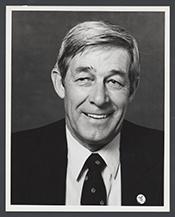
United States · United States Congress · 14 June 1984
Cancer Patients Employment Rights Act - Amends the Civil Rights Act of 1964 to make it an unlawful employment practice for an employer, employment agency or labor organization to: (1) require an employee or prospective employee with a cancer history to meet certain medical standards unrelated to job requirements; or (2) reveal any confidential medical information without consent. Makes it an unlawful employment practice for an employer to fail to make a good faith effort to explore where reasonable accommodations may be made for an employee with a cancer history. Provides that it shall not be an unlawful employment practice to fail or refuse to hire or to discharge an employee: (1) if the employer demonstrates no reasonable accommodation can be made; or (2) the employee is unable to perform the job safely. Includes cancer history within the protections of the Civil Rights Act of 1964.
United States · United States Congress · 12 June 1984
Requires the Administrator of the Office of Juvenile Justice and Delinquency Prevention in the Department of Justice (Administrator) to make grants to States for the purpose of establishing and operating Missing Children Information Clearinghouses. Sets forth a formula for the award of grants based on a State's population of individuals age 17 and younger. Limits the grants to 50 percent of the costs of establishing and operating the Clearinghouse. Requires any State Clearinghouse to: (1) work in conjunction with the National Crime Information Center; (2) educate parents, children, and community agencies; (3) provide public information to assist in locating missing children; (4) publish a directory of organizations that provide assistance in locating missing children; (5) establish an in-State toll-free line for reporting missing children; (6) work with other public and private organizations; and (7) work with the National Center for Missing and Exploited Children. Allows the Administrator to prescribe rules necessary to carry out this Act. Grants the Comptroller General of the United States access to any books, documents, records of any State receiving assistance for the purpose of audit. Authorizes appropriations.
United States · United States Congress · 6 June 1984
American Footwear Act of 1984 - Limits the imports of nonrubber footwear to 400,000,000 pairs per year. Directs the Secretary of Commerce (the Secretary) to allocate the import limitations among foreign countries, taking into consideration: (1) average levels of imports for the period 1978 through 1982; (2) findings of unfair trade practices with respect to nonrubber footwear products; and (3) recent market trends. Requires the Secretary to publish annually in the Federal Register the permissible level of imports by country, groups of countries, or area. Directs the Secretary and the Secretary of the Treasury to take all necessary actions to enforce this Act. Authorizes the Secretaries to issue such implementing regulations as necessary to effect the purposes of this Act and to enforce its provisions.
United States · United States Congress · 8 May 1984
Expresses the sense of the Congress that each State should establish a clearinghouse, to work in conjunction with the National Center for Missing and Exploited Children, to provide information on missing children within the State. Declares that each clearinghouse should: (1) provide a centralized file for statewide exchange of information; (2) cooperate with State law enforcement agencies; (3) work as a liaison between public and private organizations; (4) provide a toll-free in- State telephone line to allow persons to report missing children; (5) provide a directory of State resources; (6) publish monthly bulletins; (7) distribute emergency flyers; and (8) train individuals in the operation of the clearinghouse.
United States · United States Congress · 7 May 1984
Directs the Librarian of Congress, subject to the supervision and construction authority of a Federal, civilian, or military agency, to construct the Library of Congress Mass Book Deacidification Facility. Directs the Librarian to operate and maintain such facility. Authorizes appropriations.
United States · United States Congress · 3 May 1984
Clean Coal Production and Utilization Technology Demonstration Act - Directs the Secretary of Energy to establish a technology demonstration program of advanced systems to: (1) reduce air pollution from coal-burning powerplants and other facilities; and (2) prove more efficient and environmentally acceptable processes for producing coal-derived fuels. States that such program and its funding shall be in addition to the Research and Base Technology activity contained in the existing fossil energy research and development budget of the Department of Energy. Directs the Secretary to prepare detailed specifications for advanced systems to demonstrate: (1) five specified near-term technologies; (2) seven longer-term, second generation technologies; and (3) any other advanced technologies which may appear promising for extracting gas and oil from shale and coal through field tests, with an emphasis on exploiting these resources in the Eastern region of the United States. Directs the Secretary within six months from the date of the enactment of this Act to solicit proposals from the public to construct, install, and operate these systems pursuant to such detailed specifications, on a cooperative basis with appropriate assistance from the Secretary, in one or more new or existing electric powerplants. Directs the Secretary to report to the appropriate committees of Congress concerning the selection of a proposal at least 45 days prior to accepting any proposal for technology demonstration. Directs the Secretary, within eight months following the date of the enactment of this Act, to prepare and submit to the appropriate committees of Congress a five-year national coal engineering, development, and technology demonstration plan. Requires such plan to be updated annually and submitted to such committees by January 31 of each succeeding year. Makes available, pursuant to authorization and annual appropriation to the Secretary of Energy for use in carrying out this Act, a specified amount of the funds deposited in the Energy Security Reserve pursuant to provisions of the United States Synthetic Fuels Corporation Act of 1980. Authorizes an amount to be appropriated for FY 1986 from such reallocated funds to carry out the purposes of this Act.
United States · United States Congress · 3 May 1984
Directs the Librarian of Congress, subject to the supervision and construction authority of a Federal, civilian, or military agency, to construct the Library of Congress Mass Book Deacidification Facility. Directs the Librarian to operate and maintain such facility. Authorizes appropriations.
United States · United States Congress · 3 May 1984
Title I: Organ Procurement Activities - Amends the Public Health Service Act to authorize the Secretary of Health and Human Services to make grants for the planning of qualified organ procurement organizations. Authorizes the Secretary to make grants for the establishment, initial operation, and expansion of qualified organ procurement organizations. Sets forth eligibility criteria. Authorizes appropriations for FY 1984 through 1990. Directs the Secretary to: (1) establish a United States Transplantation Network to provide a central registry linking donors and potential recipients; (2) establish and maintain an organ recipient registry; (3) maintain an identifiable unit in the Department of Health and Human Services to coordinate Federal organ transplant programs and policies; and (4) publish an annual report on the scientific and clinical status of organ transplantation. Directs the Secretary to establish a Task Force on Organ Transplantation. Requires such Task Force to: (1) conduct a national conference within six months; and (2) report to the Secretary. Terminates the Task Force 12 months after such report is submitted. Requires the Secretary to make immunosuppressive drugs available, upon request and without cost, to transplant centers for use on an outpatient basis by individuals who have received an organ transplant at such centers. Requires such centers to furnish such drugs to its outpatients on the basis of the center's determination of the patient's need and the patient's inability to pay for them through insurance coverage or other resources. Requires the Comptroller General to report annually to Congress concerning the allocation of such drugs. Requires the Secretary to submit a recommendation to Congress by October 1, 1985, concerning the feasibility and desirability of authorizing reimbursements under title XVIII of the Social Security Act for immunosuppressive drugs on an outpatient basis by individuals who have received organ transplants. Authorizes appropriations through FY 1986. Title II: Prohibition of Organ Purchases - Prohibits the purchase or sale of human organs if such transfer affects commerce. Establishes criminal penalties for such violations.
United States · United States Congress · 11 April 1984
Older Americans Act Amendments of 1984 - Title I: Amendments Regarding Objectives and Definitions - Amends the Older Americans Act of 1965 to declare as an objective of such Act that our older people should have available a comprehensive array of community-based, long-term care services adequate to appropriately sustain them in their communities and in their homes. Title II: Amendments Regarding the Administration on Aging - Replaces provisions establishing the Administration on Aging in the Office of the Secretary of Health and Human Services with provisions establishing, under the general authority of the Secretary, an Office on Aging (the Office). Provides that the Office shall assume the duties and functions of the Administration on Aging. Provides that the Office shall, as was the Administration on Aging, be headed by the Commissioner on Aging. Requires the Office, in addition to the duties and functions of the Administration that it has assumed, to consult with national organizations representing minority individuals to develop and disseminate training packages and to provide technical assistance efforts designed to assist State and area agencies in providing services to older individuals with the greatest economic or social needs. Authorizes funds to be appropriated for FY 1985 through 1987 for the Federal Council on Aging. Directs the Secretary to issue regulations for the administration of the Older Americans Act of 1965. Prohibits the Secretary from making grants or contracts under such Act for training, research, and discretionary projects and programs until the Secretary develops and publishes general standards to be used in evaluating such projects and programs. Title III: Grants for Programs on Aging - Defines: (1) an "older individual" as any individual who is 60 or older; and (2) "multipurpose senior centers" as community facilities for the organization and provision of a broad spectrum of services, including health, social, nutritional, and educational services and facilities for recreational activities for older individuals. Authorizes funds to be appropriated for FY 1985 through 1987 for social service grants and nutrition project grants under the Older Americans Act of 1965. Requires each area agency on aging to: (1) specify annually in its area plan the amount of funds spent for each category of services in the preceding year; (2) conduct efforts to coordinate community- based, long-term care services designed to keep individuals in their homes, thereby deferring unnecessary institutionalization; (3) provide assurances that it will give particular attention in providing services to low-income minority older individuals; and (4) include minority individuals on the advisory councils which the agencies are required to establish. Requires a State's plan under such Act, in planning and operating its long-term care ombudsman program, to consider the views of area agencies on aging, older individuals, and provider agencies. Authorizes funds to be appropriated for FY 1985 through 1987 for the surplus commodity program under such Act. Provides for grants for counseling regarding appropriate health and life insurance coverage. Title IV: Training, Research, and Discretionary Programs Related to Aging - Revises provisions of the Older Americans Act of 1965 relating to training, research, and discretionary programs. Directs the Commissioner to make grants and enter into contracts for training, research, and discretionary programs related to aging in order to: (1) provide comprehensive and coordinated nondegree education, training programs, and curricula at institutions of higher education and at other educational organizations for practitioners in the fields of nutrition, health care, supportive services, housing, and long-term care; (2) provide inservice training opportunities to the personnel of State offices, area agencies, senior centers, and nutrition sites to strengthen their capacity to remain responsive to the needs of older individuals; and (3) provide courses on aging and dissemination of information about aging. Directs the Office on Aging to conduct both: (1) long-term educational activities to prepare personnel for careers in the field of aging; and (2) short-term inservice training and continuing education activities for State and area agency personnel, and other personnel, in the field of aging. Requires multidiscriplinary centers of gerontology to: (1) conduct research and policy analysis and function as a technical resource for the Commissioners, policy makers, service providers, and Congress; (2) recruit and train personnel; (3) conduct research toward the development of information related to aging; (4) stimulate the incorporation of information on aging into the teaching of biological, behavioral, and social sciences at colleges and universities; (5) develop training programs in the field of aging; (6) serve as a repository of information and knowledge on aging; (7) provide consultation to organizations servicing older individuals under provisions of this Act; and (8) provide data to the Commissioner on projects and activities for which training, research, and discretionary program funds are provided. Sets forth the purposes of research and development projects under the Older Americans Act of 1965. Directs the Commissioner to select for research assistance research activities which will, within three years of enactment of this Act: (1) contribute to the establishment and maintenance of a demographic data base which contains information on the population of older individuals; (2) identify the future needs of older individuals; (3) identify the kinds and comprehensiveness of programs required to satisfy such needs; and (4) identify the kinds and number of personnel required to carry out such programs. Authorizes making grants and contracts for projects designed to identify older individuals who suffer from Alzheimer's disease and other neurological diseases and provide family respite services and other community-based care services to such individuals. Revises provisions relating to special demonstration projects on legal services for older individuals. Directs the Commissioner to make grants and enter into contracts to: (1) provide nationwide legal services support activities to State and area agencies on aging for providing, developing, or supporting legal services for older individuals; and (2) support demonstration projects to expand or improve the delivery of legal services to older individuals with social or economic needs. Authorizes funds to be appropriated for FY 1985 through 1987 for training, research, and discretionary programs under the Older Americans Act of 1965. Directs the Commissioner to: (1) be responsible for the administration, implementation, and making of grants and contracts for such programs; and (2) annually provide a report on the expenditure of funds for such programs. Title V: Community Service Employment - Amends the Older Americans Community Service Employment Act to authorize funds to be appropriated for FY 1985 through 1987. Increases the number of part-time employment positions provided under such Act. Title VI: Grants for Indian Tribes - Decreases to 60 the number of individuals in a tribe who must have attained age 60 in order for a tribe to be eligible for a grant under the Older Americans Act of 1965. Authorizes funds to be appropriated for FY 1985 through 1987 under the Older Americans Act of 1965 for grants to Indian tribes. Title VII: Amendments to Other Laws; Effective DAtes - Sets forth conforming amendments and effective dates.
United States · United States Congress · 28 March 1984
Amends the John F. Kennedy Center Act to authorize appropriations for the nonperforming arts functions of the John F. Kennedy Center for the Performing Arts for FY 1985 and 1986.
United States · United States Congress · 27 March 1984
Designates the Regional Veterans Administration Medical Center in Poplar Bluff, Missouri, as the General Black Jack Pershing Regional Veterans Administration Medical Center.
United States · United States Congress · 14 March 1984
Prohibits the President from issuing a letter of offer to Jordan or Saudi Arabia for basic Stinger air defense guided missile systems. Prohibits the President, if such a sale has already been made, from making deliveries to the recipient country without specific authorization by the Congress.
United States · United States Congress · 8 March 1984
Fair Trade in Steel Act of 1984 - Declares that it is the policy of Congress that access to the U.S. market for foreign-produced carbon, alloy, and specialty steel mill products should be on an equitable basis to safeguard national security, insure orderly trade in steel mill products, reduce unfair trade in steel mill products, and alleviate U.S. balance-of-payments problems. Expresses the intent of Congress to: (1) expand the economic viability of the U.S. steel industry and the jobs of its workers; (2) prevent the further decline of the domestic steel industry; and (3) temper the economic hardships resulting from unemployment in steel industry communities by encouraging reinvestment in existing steelmaking facilities. Limits annual imports of specified steel mill product categories to specified percentages of the apparent domestic supply which are based on adjusted average import penetration levels for each such product category for the years 1979, 1980, and 1981. Directs the Secretary of Commerce to allocate global product limitations among foreign countries, groups of countries, or areas. Sets forth guidelines for making such allocations. Requires the Secretary to make an annual determination of the expected apparent domestic supply in each steel mill product category. Requires the Secretary to revise such determination periodically during the year. Directs the Secretary to determine, within 90 days after the effective date of this Act, whether the steel industry companies have plans to use substantially all of the cash flow from the steel sector for reinvestment in and the modernization of the steel sector. Prohibits the import restrictions from taking effect until the Secretary determines that the steel companies have such plans. Directs the Secretary to monitor steel sector investments made and announced by the steel industry and to consult with steel industry representatives and employees in the course of such monitoring. Directs the Secretary to determine annually whether steel companies are using substantially all the cash flow from the steel sector for reinvestment in and modernization of the steel sector. Directs the Secretary to modify or suspend the relevant import restrictions if the Secretary determines that substantially less than all the cash flow from the steel sector is being used for such reinvestment and modernization and that the level of investment is not demonstrably justified by adverse financial conditions within the industry. Directs the Secretary to publish: (1) each annual determination and its rationale; and (2) the total amount of cash flow from the steel sector and the total amount used for reinvestment in and modernization of the steel sector. Requires the steel companies to provide the Secretary with the information necessary for making such determinations. Directs the Secretary to examine the supply and demand situation in the United States for a specified steel product category if requested by affected steel consumers. Sets forth criteria to be used in determining short supply. Directs the Secretary to monitor imports of fabricated steel mill products. Sets forth the method of investigating whether imports of fabricated steel products are rendering ineffective or materially interfering with the objectives of this Act. Limits the quantity of iron ore that may be entered from all sources during any calendar year after the effective date of this Act. Directs the Secretary to allocate global iron ore limitations among foreign countries, groups of countries or areas. Sets forth guidelines for making such allocation. Directs the Secretary, in making such allocations, to attempt first to accommodate the requirements of individual steel mills which have been traditionally dependent on ocean sourced foreign iron ore and the requirements of contractual obligations incurred before January 1, 1984. Authorizes the Secretary to waive the import restrictions on iron ore if necessary to meet the needs of such individual steel mills. Provides for the enforcement and implementation of this Act.
United States · United States Congress · 8 March 1984
Information Dissemination and Research Accountability Act - Establishes in the National Library of Medicine a National Center for Research Accountability to assist in eliminating duplication of effort in Federal research proposals involving live animals. Directs the President to appoint as members of the Center 20 experts in the biomedical information sciences who are currently employed by a Federal agency in a capacity which qualifies them to make determinations as to whether research proposals involving live animals are duplicative of other research efforts. Requires submission to the Center before it is funded of any such proposal approved by a Federal agency. Prohibits funding of any proposal which the Center determines would duplicate other research completed or in process. Authorizes the Center to contract with private entities to assist in the conduct of comprehensive full-text literature searches. Requires an annual report to Congress and the President. Directs the National Library of Medicine to: (1) acquire, transcribe, and store all biomedical information owned or available for use by Federal agencies; (2) support by grants and contracts the creation of new information for teaching and demonstrations; and (3) increase, by making grants and awards, the number of persons trained in modern methods of biomedical information storage and dissemination technologies. Permits the Library to contract with the private-sector data recording industry to improve the development of such technologies and the dissemination of full-text biomedical information to medical libraries. Requires the Library to report annually to Congress and the President on its progress. Authorizes appropriations.
United States · United States Congress · 5 March 1984
Declares that it is the sense of the House of Representatives that the President should award the Presidential Medal of Freedom to David Phillip Vetter, of Spring, Texas, to be presented to his family in his memory as the oldest survivor of congenital severe combined immunodeficiency (SCID).
United States · United States Congress · 29 February 1984
Juvenile Justice, Runaway Youth, and Missing Children's Act Amendments of 1984 - Title I: General Provisions - Amends the Juvenile Justice and Delinquency Prevention Act of 1974 to make technical changes with regard to the Act's findings, purpose, and definitions. Title II: Juvenile Justice and Delinquency Prevention - Makes changes in the Act so that it is neutral as to sex. Decreases from seven and one-half to four percent the percentage of authorized appropriations for use by the Administrator of the Office of Juvenile Justice and Delinquency Prevention to implement policy. Decreases the authorized appropriations from $500,000 to $200,000 for the Coordinating Council on Juvenile Justice and Delinquency Prevention. Allows members of State advisory groups and State and local officials to be appointed to the National Advisory Committee for Juvenile Justice and Delinquency Prevention. Requires that at least two of the individuals appointed to the Advisory Committee be residents of rural areas. Decreases the authorized appropriations from $500,000 to $200,000 for the Advisory Committee. Revises certain requirements imposed on State plans receiving formula grants under the Act, including the involvement of family members in programs addressing the delinquency-related problems of juveniles and the provision of treatment to juveniles with a dependence on alcohol or drugs. Requires that State plans provide that no juvenile shall be detained or confined in any jail or lockup for adults except in certain cases of juveniles accused of nonstatus offenses who are awaiting an initial court appearance within 24 hours of custody. Revises the amount of funds appropriated for making grants and entering contracts with public and private non-profit agencies, organizations, or institutions, or individuals for certain activities and projects. Requires programs selected for such grants to be selected through a competitive process. Requires the Administrator to announce publicly the availability of funds for such assistance. Requires that the notification of grants and contracts and the applications for such grants be transmitted to the Chairman of the Committee on Education and Labor of the House of Representatives and the Chairman of the Committee on the Judiciary of the Senate. Requires the Administrator, acting through the National Institute for Juvenile Justice and Delinquency Prevention, to provide for a biennial national conference for the purpose of disseminating information, data, standard techniques, and program models. Establishes within the Institute a Law-Related Education Resource Center. Authorizes appropriations for FY 1985 through 1989. Title III: Runaway and Homeless Youth - Amends the Runaway and Homeless Youth Act to provide grants and assistance to programs that assist families. Repeals the section dealing with the procedure for a reorganization plan. Authorizes appropriations for FY 1984 through 1989. Title IV: Missing Children's Assistance - Missing Children's Assistance Act - Establishes within the Department of Health and Human Services a Bureau of Missing Children. Directs the Secretary, through the Bureau, to: (1) coordinate all federally-funded programs relating to missing children; (2) establish and allocate a national toll-free telephone line for missing children; (3) provide assistance to State and local governments, public and private nonprofit agencies, and individuals in locating missing children; (4) coordinate Federal efforts to locate missing children; (5) disseminate information relating to missing children; (6) conduct a national incidence study; and (7) publish an annual summary evaluating Federal, State, and local projects relating to missing children. Authorizes the Secretary of Health and Human Services to make grants for research, demonstration projects, and service programs for missing children. Authorizes appropriations for FY 1985 through 1989. Title V: Effective Dates - Sets forth effective dates.