Bill· HRH.R. 10060 (119th)referred
Presidential Tax Accountability and Audit Integrity Act
United States · United States Congress · 6 August 2026
The world's political record
Person
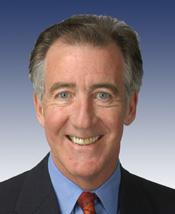
United States · Official source
4,918 records where Richard Neal is listed as a sponsor, author, or other actor. Search with topics and years
United States · United States Congress · 6 August 2026
United States · United States Congress · 21 July 2026
United States · United States Congress · 23 June 2026
United States · United States Congress · 9 June 2026
United States · United States Congress · 4 June 2026
United States · United States Congress · 13 May 2026
United States · United States Congress · 13 May 2026
United States · United States Congress · 30 April 2026
United States · United States Congress · 30 April 2026
No War Appropriations through Reconciliation Act or the No WAR Act This bill establishes a budget point of order that prohibits considering reconciliation legislation that provides funding for unauthorized military force against Iran. (Reconciliation is an expedited method by which Congress may adopt changes in spending and revenue laws to achieve the budgetary goals reflected in a congressional budget resolution. Reconciliation bills are considered by Congress using expedited legislative procedures that prevent a filibuster and restrict amendments in the Senate.) Specifically, the point of order may be raised to prohibit the consideration of reconciliation legislation that provides budget authority for hostilities, including hostilities conducted by a proxy force, against Iran unless Congress has authorized such hostilities through a declaration of war or a specific authorization for use of military force. Under the bill, hostilities includes any offensive military operation, strike, covert action, or sustained engagement involving armed conflict against Iranian military forces, territory, or government institutions. The point of order may be waived by a vote of at least three-fifths of all Senators duly chosen and sworn (60 votes if there are no vacancies).
United States · United States Congress · 29 April 2026
United States · United States Congress · 23 April 2026
United States · United States Congress · 2 April 2026
United States · United States Congress · 26 March 2026
United States · United States Congress · 24 March 2026
United States · United States Congress · 18 March 2026
United States · United States Congress · 5 March 2026
United States · United States Congress · 4 March 2026
United States · United States Congress · 26 February 2026
United States · United States Congress · 25 February 2026
United States · United States Congress · 20 February 2026
United States · United States Congress · 11 February 2026
Department of Homeland Security Appropriations Act, 2026 This bill provides FY2026 appropriations for various agencies and offices within the Department of Homeland Security (DHS), except for U.S. Immigration and Customs Enforcement (ICE), U.S. Customs and Border Protection (CBP), and management and oversight activities of the Office of the Secretary. Specifically, the bill provides appropriations to DHS for the Federal Protective Service, the Office of Inspector General, the Transportation Security Administration, the U.S. Coast Guard, the U.S. Secret Service, the Cybersecurity and Infrastructure Security Agency, the Federal Emergency Management Agency (FEMA), U.S. Citizenship and Immigration Services, the Federal Law Enforcement Training Centers, and the Science and Technology Directorate. The bill does not provide appropriations for some agencies and activities that have been funded in prior DHS appropriations acts, including ICE, CBP, and management and oversight activities of the Office of the Secretary.
United States · United States Congress · 11 February 2026
United States · United States Congress · 27 January 2026
This resolution supports the goals of National Catholic Schools Week, an event cosponsored by the National Catholic Educational Association and the U.S. Conference of Catholic Bishops and established to recognize the contributions of Catholic elementary and secondary schools in the United States.
United States · United States Congress · 14 January 2026
United States · United States Congress · 12 January 2026
United States · United States Congress · 8 January 2026
United States · United States Congress · 30 December 2025
United States · United States Congress · 17 December 2025
United States · United States Congress · 15 December 2025
United States · United States Congress · 3 December 2025
United States · United States Congress · 20 November 2025
United States · United States Congress · 18 November 2025
United States · United States Congress · 17 November 2025
United States · United States Congress · 7 November 2025
Keep SNAP and WIC Funded Act of 2025 This bill provides FY2026 appropriations for the Department of Agriculture (USDA) to continue operating the Supplemental Nutrition Assistance Program (SNAP); the Special Supplemental Nutrition Program for Women, Infants, and Children (WIC); and a related block grant program if there is a lapse in FY2026 appropriations for USDA. Specifically, the bill provides appropriations to USDA for any period in which legislation to provide FY2026 interim continuing appropriations or full-year appropriations for USDA has not been enacted. If such a lapse in appropriations occurs, the bill provides the appropriations that are necessary to continue providing uninterrupted SNAP benefits, providing consolidated block grants to Puerto Rico and American Samoa for nutrition assistance programs, and carrying out WIC without interruption. In addition, the bill provides appropriations to pay any benefits under these programs that were missed on or after September 30, 2025, and before this bill is enacted. The appropriations for these purposes are available until the earlier of (1) the enactment into law of legislation to provide FY2026 appropriations for USDA (including continuing appropriations), or (2) September 30, 2026. The bill also requires USDA to use the funds provided by this bill to reimburse state agencies for costs that were incurred to carry out these programs during a lapse in appropriations, to the extent that the programs were carried out in accordance with federal law (including regulations) during the lapse.
United States · United States Congress · 31 October 2025
United States · United States Congress · 28 October 2025
United States · United States Congress · 30 September 2025
Fair Pay for Federal Contractors Act of 2025 This bill provides back pay to employees of federal contractors who lost pay due to a lapse in appropriations (i.e., government shutdown) in FY2026. Specifically, the bill provides appropriations for federal agencies that are subject to a lapse in appropriations in FY2026 to adjust the price of contracts to compensate federal contractors for providing back pay to employees who were affected by the lapse in appropriations. The agencies must adjust the price of any contract for which the contractor stopped, suspended, delayed, or interrupted all or part of the work under the contract due to the lapse in appropriations. The price adjustment must compensate the contractor for reasonable costs incurred to (1) compensate employees who were furloughed or laid off, were not working, or experienced a reduction of hours or compensation due to the lapse in appropriations; or (2) restore paid leave taken by employees during the lapse in appropriations if the contractor required or permitted employees to use paid leave as a result of the lapse in appropriations. The maximum amount of weekly compensation of an employee for which an adjustment may be made under this bill may not exceed the lesser of (1) the employee's actual weekly compensation, or (2) $1,442 (or a lesser amount pro-rated for an employee who works less than 40 hours per week). The bill also requires the Office of Federal Procurement Policy to submit a report to Congress on the adjustments made under this bill.
United States · United States Congress · 19 September 2025
United States · United States Congress · 18 September 2025
Protecting Free Vaccines Act This bill requires Medicare, Medicaid, the Children's Health Insurance Program (CHIP), and private health insurers to cover, without cost-sharing, vaccines that were recommended by the Centers for Disease Control and Prevention's Advisory Committee on Immunization Practices as of October 25, 2024. The requirement ends on January 1, 2030.
United States · United States Congress · 17 September 2025
United States · United States Congress · 16 September 2025
United States · United States Congress · 16 September 2025
United States · United States Congress · 11 September 2025
United States · United States Congress · 11 September 2025
United States · United States Congress · 29 July 2025
Enhance Access To SNAP Act of 2025 or the EATS Act of 2025 This bill expands eligibility for the Supplemental Nutrition Assistance Program (SNAP) for certain students. Specifically, the bill removes the restriction on SNAP eligibility for students to allow otherwise eligible students who are attending institutions of higher education (IHEs) at least half time to participate in SNAP. Under current law, students 18-49 years old are restricted from participating in SNAP, with exceptions (e.g., caring for a child under the age of 6 or employed for at least 20 hours a week). The Consolidated Appropriations Act, 2021 temporarily exempted some students from certain SNAP eligibility requirements; these temporary student exemptions expired after the end of the COVID-19 public health emergency on May 11, 2023. Further, the bill provides that students enrolled at least half time in a recognized school, training program, or IHE constitute individual households (not residents of institutions ) and may be eligible for SNAP benefits. (Participation in SNAP is limited to households.)
United States · United States Congress · 29 July 2025
United States · United States Congress · 22 July 2025
United States · United States Congress · 16 July 2025
United States · United States Congress · 14 July 2025
United States · United States Congress · 10 July 2025
This resolution expresses support for the designation of Journeyman Lineworkers Recognition Day. (A journeyman lineworker is a person who builds and maintains electrical power systems.)