Bill· HRH.R. 4633 (119th)referred
USPS Act
United States · United States Congress · 23 July 2025
The world's political record
Person
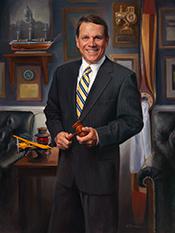
United States · Official source
2,337 records where Rep. Graves, Sam [R-MO-6] is listed as a sponsor, author, or other actor. Search with topics and years
United States · United States Congress · 23 July 2025
United States · United States Congress · 23 July 2025
Fixing Emergency Management for Americans Act of 2025 or the FEMA Act of 2025 This bill reestablishes the Federal Emergency Management Agency (FEMA) (currently within the Department of Homeland Security) as an independent, cabinet-level agency. It also makes broad changes to FEMA’s disaster and hazard mitigation assistance programs. The bill generally transfers FEMA’s current functions and authorities to the independent FEMA, except for certain security-related programs. The bill makes various changes to the Public Assistance program, including by establishing new grants for expedited funding to repair or replace disaster-damaged facilities, establishing block grants that recipients may choose instead of Public Assistance for smaller disasters, expediting and expanding uses of funding for emergency response and debris removal, and allowing use of excess administrative funds for increasing recipients’ disaster management capacity. The bill makes various changes to the Individual Assistance program, including by expanding eligibility for housing assistance, expanding mitigation and direct (non-financial) assistance for residences, reducing certain restrictions on funds duplicating program benefits, and establishing a unified disaster application system. The bill makes various changes to FEMA’s mitigation programs, including by establishing mitigation plans with preapproved projects, authorizing an entire Hazard Mitigation Grant Program grant to be provided before costs are incurred, changing pre-disaster mitigation assistance to noncompetitive formula grants, and allowing recipients to combine mitigation project funds from multiple federal programs. Additionally, federal entities must publish various information relating to disaster assistance and conduct various studies on related topics (e.g., preliminary damage assessments, fast-moving disasters, and government emergency alerting systems).
United States · United States Congress · 23 July 2025
United States · United States Congress · 17 July 2025
United States · United States Congress · 2 July 2025
United States · United States Congress · 30 June 2025
United States · United States Congress · 13 June 2025
United States · United States Congress · 11 June 2025
Promoting Efficient Review for Modern Infrastructure Today Act or the PERMIT Act This bill limits the scope of the Clean Water Act by redefining navigable waters to exclude (1) waste treatment systems, (2) ephemeral features that flow only in direct response to precipitation, (3) prior converted cropland, (4) groundwater, or (5) any other features determined to be excluded by the U.S. Army Corps of Engineers.
United States · United States Congress · 11 June 2025
United States · United States Congress · 10 June 2025
United States · United States Congress · 3 June 2025
United States · United States Congress · 23 May 2025
United States · United States Congress · 20 May 2025
Improving Seniors' Timely Access to Care Act of 2025 This bill establishes several requirements and standards relating to prior authorization processes under Medicare Advantage (MA) plans. Specifically, MA plans must (1) establish an electronic prior authorization program that meets specified standards; (2) annually submit to the CMS for publication specified prior authorization information, including the percentage of requests approved and the average response time; and (3) meet other standards, as set by the Centers for Medicare & Medicaid Services (CMS), relating to the quality and timeliness of prior authorization determinations. The CMS and the Office of the National Coordinator for Health Information Technology must publish on the CMS' website a report that analyzes the information received from MA plans, the feasibility of implementing real-time decision making with respect to prior authorization requests, and the impact of decisions that are made using artificial intelligence on patient access.
United States · United States Congress · 5 May 2025
United States · United States Congress · 5 May 2025
United States · United States Congress · 5 May 2025
United States · United States Congress · 30 April 2025
United States · United States Congress · 24 April 2025
United States · United States Congress · 17 April 2025
United States · United States Congress · 10 April 2025
Combating Organized Retail Crime Act of 2025 This bill expands federal enforcement of criminal offenses related to organized retail and supply chain crime. The term organized retail and supply chain crime includes criminal offenses involving the interstate transportation of stolen property, the sale or receipt of stolen goods, or theft from an interstate or foreign shipment that is committed by, in coordination with, or at the instruction of an organization. First, with respect to criminal offenses involving the interstate transportation of stolen property or the sale or receipt of stolen goods, the bill broadens the scope of conduct that qualifies as offenses by allowing prosecutions to be based on the aggregate value of stolen items over a 12-month period. Additionally, the bill makes the offenses predicate offenses (i.e., underlying offenses) for prosecutions under the federal money laundering statute and authorizes the criminal forfeiture of any property obtained from the proceeds of an offense. Second, with respect to criminal offenses involving theft from an interstate or foreign shipment, the bill also makes an offense an underlying offense for prosecution under the federal money laundering statute and authorizes the criminal forfeiture of any associated property. Third, the bill expands the federal money laundering statute to include offenses involving general-use prepaid cards, gift certificates, or store gift cards. Finally, the bill temporarily establishes a center within the Department of Homeland Security to coordinate federal law enforcement activities related to organized retail and supply chain crime.
United States · United States Congress · 1 April 2025
Comprehensive Alternative Response for Emergencies Act of 2025 or the CARE Act of 2025 This bill requires the Center for Medicare and Medicaid Innovation (CMMI) to test a five-year model that provides for Medicare payment for ground ambulance services that do not result in the transport of the patient. Under the model, Medicare payment may be furnished for ground ambulance services when an ambulance is dispatched in response to an emergency medical call but the ambulance does not end up transporting the patient. Payment rates under the model must generally align with the payment rates that apply when there is an actual transport. The Government Accountability Office must report on the general access of Medicare beneficiaries to emergency medical services, including the impact of the model on beneficiary access and outcomes.
United States · United States Congress · 27 March 2025
United States · United States Congress · 27 March 2025
Black Vulture Relief Act of 2025 This bill allows livestock producers and their employees to take certain actions against black vultures to protect livestock. (Black vultures are protected under the Migratory Bird Treaty Act.) Specifically, livestock producers and their employees may (1) take (i.e., capture, kill, or disperse, or transport the carcass of) a black vulture that they reasonably believe will cause death, injury, or destruction to livestock; or (2) in the course of taking or attempting to take the black vulture, cause injury to the bird. However, they may not take or attempt to take a black vulture through the use of poison. Livestock producers and their employees must submit an annual report to the U.S. Fish and Wildlife Service (FWS) on black vultures taken under this bill. The FWS must develop a reporting form and make this reporting form available on its website. Currently, the FWS has a permit process under the Migratory Bird Treaty Act for the taking of black vultures.
United States · United States Congress · 27 March 2025
United States · United States Congress · 25 March 2025
United States · United States Congress · 25 March 2025
Fair Access In Residency Act of 2025 or the FAIR Act of 2025 This bill requires hospitals that receive graduate medical education (GME) payments under Medicare to report certain information about the composition of their medical residency training programs. Specifically, hospitals must provide to the Centers for Medicare & Medicaid Services (CMS) (1) the number of applicants for residencies who are from osteopathic medical schools and from allopathic medical schools, (2) the number of applicants who are accepted from each of these types of medical schools, and (3) an affirmation that the hospital considers applicants from each of these types of medical schools and accepts specified related examination results, as appropriate. Hospitals that do not provide this information are subject to a 2% reduction in their GME payments. The CMS must post the information it receives on a public website.
United States · United States Congress · 24 March 2025
United States · United States Congress · 11 March 2025
United States · United States Congress · 11 March 2025
United States · United States Congress · 10 March 2025
This resolution supports preserving the stepped-up basis of certain inherited assets (such as land, equipment, or buildings), opposes any efforts to impose new taxes on family farms or small businesses, and recognizes the importance of generational transfers of farm and family-owned businesses. As background, the basis for federal tax purposes of certain inherited assets is reset (or stepped up) from the original cost basis to the fair market value of the asset on the date of the previous owner’s death. Thus, any gain or loss on the subsequent sale of an inherited asset generally is calculated based on the asset’s stepped-up basis (and not the original cost basis).
United States · United States Congress · 6 March 2025
Pay Our Troops Act of 2025 This bill provides continuing appropriations for military pay for any period during which interim or full-year appropriations for FY2025 are not in effect (i.e., a government shutdown). Specifically, the bill provides FY2025 continuing appropriations for the pay and allowances of (1) members of the Armed Forces, including reserve components, who perform active service during the period; and (2) civilian personnel and contractors of the Department of Defense (and the Department of Homeland Security in the case of the Coast Guard) who are providing support to such members of the Armed Forces. If a government shutdown occurs, the bill provides the continuing appropriations until the earlier of (1) the enactment into law of specified appropriations legislation, or (2) January 1, 2026.
United States · United States Congress · 6 March 2025
Anti-CBDC Surveillance State Act This bill prohibits a Federal Reserve bank from offering products or services directly to an individual, maintaining an account on behalf of an individual, or issuing a central bank digital currency (i.e., a digital dollar). Further, the Board of Governors of the Federal Reserve System is prohibited from using a central bank digital currency to implement monetary policy or from testing, studying, creating, or implementing a central bank digital currency, with exceptions as provided by the bill.
United States · United States Congress · 4 March 2025
United States · United States Congress · 3 March 2025
United States · United States Congress · 3 March 2025
Designation of English as the Official Language of the United States Act of 2025 This bill establishes English as the official language of the United States. The bill specifies that the official functions of government in the United States, including in each state and the District of Columbia, shall be conducted in English. Exceptions to this requirement include (1) actions or documents to protect the public health or safety, (2) actions or documents that protect the rights of victims of crimes or criminal defendants, and (3) requirements under the Individuals with Disabilities Education Act. The bill also establishes a framework for implementation and enforcement, including by testing English language ability as part of the naturalization process.
United States · United States Congress · 27 February 2025
Amplifying Processing of Livestock in the United States Act or the A–PLUS Act This bill directs the Department of Agriculture (USDA) to revise its regulations to allow certain packers to hold an ownership interest in, finance, or participate in the management or operation of a market agency selling livestock on a commission basis. The bill applies to packers that have a cumulative slaughter capacity of (1) less than 2,000 animals per day or 700,000 animals per year with respect to cattle or sheep, and (2) less than 10,000 animals per day or 3 million animals per year with respect to hogs. In addition, USDA must revise its regulations to include a disclosure requirement for a market agency that has an ownership interest in, finances, or participates in the management or operation of a packer. Specifically, the market agency must disclose the existence of such ownership interest, financial relationship, or participation.
United States · United States Congress · 27 February 2025
United States · United States Congress · 26 February 2025
Securing Our Lands and Resources Act or the SOLAR Act This bill prohibits the Department of Agriculture from providing financial assistance for certain projects that would result in the conversion of covered farmland for solar energy production. Under the bill, covered farmland generally refers to prime farmland, unique farmland, and farmland that is of statewide or local importance. Conversion means any activity that results in the covered farmland no longer meeting certain requirements for agricultural production, activity, or use. The bill includes an exception for certain smaller projects that result in the conversion of (1) less than 5 acres of covered farmland, or (2) less than 50 acres of covered farmland if the majority of the energy produced by the project is for on-farm use. The bill also includes an exception for projects that have the approval or support from the local county and municipality. For these projects, the applicant must (1) develop a farmland conservation plan for the project (e.g., implementing best practices to protect future soil health and productivity), and (2) ensure that sufficient funds are provided for the decommissioning of the solar energy production system and the remediation and restoration of the farmland.
United States · United States Congress · 26 February 2025
United States · United States Congress · 26 February 2025
United States · United States Congress · 24 February 2025
United States · United States Congress · 24 February 2025
This resolution expresses condolences to the families, friends, and loved ones of the victims of the crash of American Eagle Flight 5342 and the U.S. Army helicopter flying under the call sign PAT 25 near Ronald Reagan Washington National Airport on January 29, 2025. The resolution also commends the heroic actions of the first responders, emergency services personnel, and all those who aided in the recovery efforts.
United States · United States Congress · 21 February 2025
Accelerating Kids’ Access to Care Act of 2025 This bill requires states to establish a process through which qualifying out-of-state providers may temporarily treat children under Medicaid and the Children's Health Insurance Program (CHIP) without undergoing additional screening requirements. Specifically, states must establish a process through which qualifying out-of-state providers may enroll for five years as participating providers to treat individuals under the age of 21 without undergoing additional screening requirements. A qualifying out-of-state provider (1) must not have been excluded or terminated from participating in a federal health care program or state Medicaid program; and (2) must have been successfully enrolled in Medicare or a state Medicaid program based on a determination that the provider posed a limited risk of fraud, waste, or abuse. The bill’s changes take effect three years after enactment.
United States · United States Congress · 18 February 2025
United States · United States Congress · 18 February 2025
Enhanced Iran Sanctions Act of 2025 This bill imposes sanctions on certain foreign persons (individuals and entities) that are involved in Iran's petroleum sector as well as certain associated persons. The bill also requires or authorizes actions to facilitate the enforcement of sanctions on Iran. Specifically, the bill requires the President to impose visa- and property-blocking sanctions on any foreign person that, after the bill's enactment, knowingly engages in any transaction related to the processing, export, or sale of oil, condensates, gas, liquefied natural gas, or other petrochemical products in whole or in part from Iran. The President must also impose sanctions on certain foreign persons associated with a sanctioned individual or entity. For example, the President must sanction the subsidiaries and corporate officers of a sanctioned business. The bill provides certain exceptions to these sanctions, including specifying that sanctions do not apply to the importation of goods or to conducting or facilitating transactions for humanitarian assistance. The Department of State must establish an interagency working group that shall seek to establish a multilateral contact group to coordinate international efforts to enforce sanctions on Iran. The bill expands the State Department rewards program to authorize a reward payment to any individual who furnishes information leading to the identification of a person (1) subject to sanctions under this bill, or (2) that has attempted or is attempting to evade sanctions under this bill.
United States · United States Congress · 13 February 2025
United States · United States Congress · 13 February 2025
This concurrent resolution declares that Congress should not impose any new performance fee, tax, royalty, or other charge relating to the public performance of sound recordings on a local radio station for broadcasting sound recordings over the air, or on any business for such public performance of sound recordings.
United States · United States Congress · 13 February 2025
This resolution supports the designation of National FFA (Future Farmers of America) Week. It also celebrates the 90th anniversary of New Farmers of America (NFA), which served Black vocational agriculture students in segregated public schools until NFA and FFA became one organization in 1965. The resolution also commemorates the 75th anniversary of the federal charter for the Future Farmers of America.
United States · United States Congress · 13 February 2025
Nationwide Consumer and Fuel Retailer Choice Act of 2025 This bill amends the Clean Air Act to address the limitations on Reid Vapor Pressure (a measure of gasoline's volatility) that are placed on gasoline during the summer ozone season. Specifically, the bill applies the waiver for Reid Vapor Pressure requirements that is applicable to gasoline blended with 10% ethanol (E10) to gasoline blended with up to 15% ethanol (E15). This change allows gasoline that is blended with 10% to 15% ethanol to be sold year-round. Currently, states may be excluded from the waiver for Reid Vapor Pressure requirements by submitting documentation supporting that the waiver would increase air pollution. The bill nullifies existing state exclusions, but states may submit documentation after enactment of the bill to be excluded going forward. The bill also modifies the Renewable Fuel Standard Program, which requires transportation fuel sold or introduced into commerce in the United States to contain minimum volumes of renewable fuel. Under the existing program, obligated parties, such as small refineries, must satisfy the volume obligations by either blending renewable fuels into their gasoline or diesel fuel products or by acquiring credits that represent the required renewable fuel volume. The bill directs the Environmental Protection Agency to return compliance credits to small refineries under certain circumstances.
United States · United States Congress · 12 February 2025