Bill· HRH.R. 1822 (119th)referred
ACRE Act of 2025
United States · United States Congress · 4 March 2025
The world's political record
Person
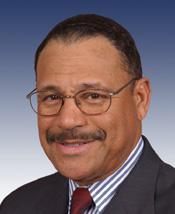
United States · Official source
6,517 records where Rep. Bishop, Sanford D. [D-GA-2] is listed as a sponsor, author, or other actor. Search with topics and years
United States · United States Congress · 4 March 2025
United States · United States Congress · 3 March 2025
Original Black History Month Resolution of 2025 This resolution recognizes the importance of commemorating Black History Month as it acknowledges the achievements of Black Americans throughout the nation's history.
United States · United States Congress · 3 March 2025
United States · United States Congress · 3 March 2025
United States · United States Congress · 3 March 2025
Safe Schools Improvement Act This bill requires states to direct their local educational agencies (LEAs) to establish policies that prevent and prohibit bullying and harassment of elementary and secondary school students. In particular, these policies must prohibit bullying and harassment based on race, color, national origin, disability, religion, or sex. Sex includes sexual orientation, gender identity, and sex characteristics (including intersex traits). Further, LEAs must provide (1) students, parents, and educational professionals with annual notice of the conduct prohibited in their disciplinary policies; (2) students and parents with grievance procedures that target such conduct; and (3) the public with annual data on the incidence and frequency of that conduct at the school and LEA level. The Department of Education must conduct and report on an independent biennial evaluation of programs and policies to combat bullying and harassment in elementary and secondary schools. The National Center for Education Statistics must collect state data to determine the incidence and frequency of the conduct prohibited by LEA disciplinary policies.
United States · United States Congress · 27 February 2025
United States · United States Congress · 27 February 2025
Benefits that Endure for Lifetimes Of Service Act or BELO’S Act This bill extends eligibility for a free lifetime National Parks and Federal Recreational Lands Pass to any individual who is a survivor to a member of the Armed Forces whose death entitles the survivor to (1) a death gratuity (e.g., the servicemember died while on active duty or during inactive duty training), or (2) dependency and indemnity compensation.
United States · United States Congress · 27 February 2025
Save America's Forgotten Equines Act of 2025 or the SAFE Act of 2025 This bill permanently prohibits the slaughter of equines (e.g., horses and mules) for human consumption. (Current law prohibits the slaughter of dogs and cats for human consumption. This bill extends the prohibition to equines.) Specifically, this bill prohibits a person from knowingly (1) slaughtering an equine for human consumption; or (2) shipping, transporting, possessing, purchasing, selling, or donating an equine to be slaughtered for human consumption or equine parts for human consumption. The bill subjects a violator to a fine. The bill applies to conduct in or affecting interstate or foreign commerce or within the special maritime and territorial jurisdiction of the United States. However, it does not apply to an activity carried out by an Indian for a religious ceremony. As background, in recent years, the appropriations acts have prohibited the Department of Agriculture (USDA) from using federal funds to inspect horses before they are slaughtered for human consumption. Therefore, there are currently no USDA-inspected horse slaughter facilities in the United States.
United States · United States Congress · 27 February 2025
United States · United States Congress · 27 February 2025
Prevent All Soring Tactics Act of 2025 or the PAST Act of 2025 This bill increases protections for horses at shows, exhibitions, sales, or auctions (horse events) to prevent the practice of soring horses. Generally, the soring of horses includes certain actions taken on horses' limbs to produce higher gaits that may cause pain, distress, inflammation, or lameness. Specifically, the bill expands existing soring prohibitions under the Horse Protection Act, including by banning the use of certain action devices (e.g., nonprotective boots) on specified horse breeds. The bill also requires soring inspectors at horse events to be assigned by the Animal and Plant Health Inspection Service (APHIS) of the Department of Agriculture rather than appointed by the management of horse events. APHIS must also license, train, and oversee inspectors to detect and diagnose soring at such events. Additionally, the bill increases penalties for violations of the act. It also directs APHIS to disqualify horses found to be sore from being shown or exhibited for specified periods. Further, APHIS may permanently disqualify violators from participating in horse events after the third or any subsequent violation. By way of background, APHIS issued a rule in 2024 to increase efforts to protect horses from soring practices. However, in 2025, a court vacated parts of the rule as exceeding APHIS' statutory authority (e.g., prohibiting the use of certain action devices) while deeming other parts acceptable (e.g., establishing APHIS-designated inspectors). APHIS subsequently delayed the effective date of the rule to December 31, 2026.
United States · United States Congress · 26 February 2025
This bill designates the Department of Agriculture U.S. National Poultry Research Center in Athens, Georgia, as the Abit Massey Poultry Research Center.
United States · United States Congress · 26 February 2025
United States · United States Congress · 26 February 2025
Heirs Estate Inheritance Resolution and Succession Act of 2025 or the HEIRS Act of 2025 This bill requires the Department of Housing and Urban Development (HUD) to provide grants to assist individuals with the legal processes associated with inheriting certain real property. Under the first program, HUD must provide grants to states that have enacted the Uniform Partition of Heirs Property Act (UPHPA) (or similar state law). The UPHPA provides due process protections against forced property sales for individuals who inherit real property from a landowner without a will. Historically, state property laws have provided that recipients of such property become tenants-in-common, which permits a single tenant to exercise their right to partition and sell the property. A state or local government must use grant funds to assist residents with expenses related to establishing and documenting property ownership rights or settling a decedent's estate, including costs related to obtaining title reports, title abstracts, copies of public records, and land surveys; estate planning; heirs searches or tracing services; and recording and filing fees, notary fees, and legal fees and expenses. Under the second program, HUD must provide grants to housing counseling agencies, legal services clinics at institutions of higher education, and qualified nonprofits. Such organizations must use grant funds to provide housing counseling, legal assistance, and financial assistance related to title clearing and home retention efforts for individuals who inherit property as tenants-in-common.
United States · United States Congress · 26 February 2025
Protect Veteran Jobs Act This bill provides reinstatement eligibility to veterans who were involuntarily removed or otherwise dismissed without cause from civil service positions from January 20, 2025, through the date of enactment of this bill. Such veterans must be eligible for reinstatement to their former positions or any other civil service positions for which they are qualified. Each executive branch agency must regularly report through January 20, 2029, to Congress regarding veteran employees who were removed or otherwise dismissed from the agency, including the total number of employees removed and the reasons for the dismissals.
United States · United States Congress · 26 February 2025
Respect, Advancement, and Increasing Support for Educators Act of 2025 or the RAISE Act of 2025 This bill establishes a refundable federal tax credit for eligible educators and increases and expands the federal tax deduction for certain classroom and professional development expenses. The bill also increases federal funding for programs that support effective instruction. Specifically, the bill allows (1) eligible educators (elementary and secondary public school teachers and early childhood educators) to claim a tax credit of $1,000, and (2) eligible educators employed at a qualifying school to claim an additional tax credit of up to $14,000 ($9,000 for an early childhood educator without a bachelor’s degree) based on the qualifying school’s student poverty ratio. The bill generally defines a qualifying school as a public elementary or secondary school served by a local education agency eligible for federal grants that support the education of disadvantaged children, an elementary school or secondary school funded by the Bureau of Indian Education, or an early childhood education program serving children who are eligible for certain financial or food assistance. Further, the bill increases to $500 ($300 in 2025) and continues to adjust annually the above-the-line tax deduction for certain classroom and professional development expenses of educators. The bill also expands eligibility for the credit to include early childhood educators. (Above-the-line tax deductions are subtracted from gross income to calculate adjusted gross income.) Finally, the bill provides additional funding for education programs, including teacher salary incentive grants and professional development, certificate, and credentialing programs.
United States · United States Congress · 26 February 2025
United States · United States Congress · 26 February 2025
Promoting Access to Diabetic Shoes Act This bill allows a nurse practitioner or physician assistant to fulfill documentation requirements for coverage, under Medicare, of special shoes for diabetic individuals. Under current law, such requirements may be satisfied only by a physician.
United States · United States Congress · 26 February 2025
American Dream and Promise Act of 2025 This bill provides certain non-U.S. nationals ( aliens under federal law) with a path to receive permanent resident status and contains other immigration-related provisions. The Department of Homeland Security (DHS) or the Department of Justice (DOJ) shall provide conditional permanent resident status for 10 years to a qualifying individual who entered the United States as a minor and (1) is deportable or inadmissible, (2) has deferred enforced departure (DED) status or temporary protected status (TPS), or (3) is the child of certain classes of nonimmigrants. The bill imposes various qualifying requirements, such as the individual being continuously physically present in the United States since January 1, 2021, passing a background check, and being enrolled in or having completed certain educational programs. DHS shall remove the conditions placed on permanent resident status granted under this bill if the individual applies and meets certain requirements, such as completing certain programs at an educational institution, serving in the military, or being employed. Furthermore, DHS or DOJ shall provide lawful permanent resident status to certain individuals who had TPS, were eligible for TPS, or were eligible for DED status on certain dates. Such individuals must meet certain requirements and apply for such status within three years of this bill's enactment. This bill also repeals a restriction that bars a state from providing higher education benefits to undocumented individuals unless those benefits are available to all U.S. nationals without regard to residency in the state.
United States · United States Congress · 25 February 2025
Veterans Claims Education Act of 2025 This bill requires the Department of Veterans Affairs (VA) to, upon receipt of an initial claim for benefits from a claimant that is not represented by an accredited person (i.e., a veterans service organization, attorney, or agent recognized by the VA), provide (1) notice that an accredited person may assist the claimant, (2) notice that a veterans service organization may represent the claimant for free, (3) information regarding a search tool to find an accredited person to assist in the filing of claims, and (4) information on how and where to report a person who is not accredited and charged a fee to assist with a claim. In its web portal, the VA must provide a warning regarding fees an agent or attorney may charge for assistance in filing benefits claims. (Under current law, fees are generally prohibited for filing an initial claim.)
United States · United States Congress · 25 February 2025
United States · United States Congress · 24 February 2025
New Era of Preventing End-Stage Kidney Disease Act This bill establishes regional centers of excellence, postgraduate fellowships, and training for health professionals relating to the diagnosis and treatment of rare kidney disease. It also requires the Department of Health and Human Services (HHS) to conduct various studies on rare kidney disease. Specifically, it authorizes the National Institute of Diabetes and Digestive and Kidney Diseases to award funding to public and private nonprofit entities for establishing regional centers of excellence that will increase public awareness, conduct research, and develop resources for diagnosing and treating rare kidney diseases. A center may receive such funding for up to five years, unless extended by the institute. The bill also requires health professions schools receiving a grant from the Health Resources and Services Administration (HRSA) Centers of Excellence program to award fellowships for training on preventing, diagnosing, and treating rare kidney disease in disproportionately impacted populations. Also, the bill expands the priorities of HRSA’s Primary Care Training and Enhancement program to include training for health care workers to care for individuals with kidney disease. Additionally, HHS must conduct several studies and report to Congress on topics such as treating rare kidney disease in disproportionately affected populations, eliminating the need for dialysis or kidney transplants, and increasing public awareness of rare kidney disease.
United States · United States Congress · 24 February 2025
United States · United States Congress · 24 February 2025
United States · United States Congress · 24 February 2025
Dentist and Optometric Care Access Act of 2025 or the DOC Access Act of 20 25 This bill prohibits private health insurance plans from setting rates for items and services, except for dental cleanings, provided by a doctor of optometry, of dental surgery, or of dental medicine (or an employer of such a doctor) for which the plan does not pay a substantial amount. Additionally, an agreement between a plan and such a doctor for limited scope dental or vision benefits may last longer than two years only with the prior acceptance of the doctor for each term extension. Plans also may not restrict such a doctor's choice of laboratories or suppliers. Such doctors may elect to waive the application of the payment amount and choice of laboratories provisions of this bill. The bill does not supersede state laws regarding health insurers and dental or vision benefit plans.
United States · United States Congress · 24 February 2025
Pay Our Coast Guard Parity Act of 2025 This bill provides continuing appropriations to the Coast Guard for pay and benefits when there is a Coast Guard-specific funding lapse. Under the bill, a Coast Guard-specific funding lapse occurs when (1) a bill providing appropriations for the Coast Guard for a fiscal year has not been enacted before the beginning of that fiscal year, and no joint resolution providing continuing appropriations for the Coast Guard is in effect; and (2) a bill providing appropriations for the Department of Defense (DOD) for the fiscal year has been enacted before the beginning of the fiscal year, or a joint resolution providing continuing appropriation for DOD is in effect. If a Coast Guard-specific funding lapse occurs, the bill provides appropriations to the Coast Guard for pay and allowances for military members of the Coast Guard who perform active service or inactive-duty training; pay and benefits for certain civilian employees and contract employees; the payment of a death gratuity; payments for travel related to funerals, the dignified transfer of remains, and unit memorial services; and the temporary continuation of the basic allowance for housing for dependents of members of the Coast Guard dying on active duty. The bill generally provides the appropriations to the Coast Guard until the earlier of the enactment of specified Coast Guard appropriations legislation, the termination of the availability of appropriations for DOD, or two weeks after the beginning of the Coast Guard-specific funding lapse.
United States · United States Congress · 21 February 2025
This resolution expresses support for the designation of International Black Aviation Professionals Day. It also encourages the observation of the day through recognition and celebration of the contributions of Black aviation professionals.
United States · United States Congress · 21 February 2025
Accelerating Kids’ Access to Care Act of 2025 This bill requires states to establish a process through which qualifying out-of-state providers may temporarily treat children under Medicaid and the Children's Health Insurance Program (CHIP) without undergoing additional screening requirements. Specifically, states must establish a process through which qualifying out-of-state providers may enroll for five years as participating providers to treat individuals under the age of 21 without undergoing additional screening requirements. A qualifying out-of-state provider (1) must not have been excluded or terminated from participating in a federal health care program or state Medicaid program; and (2) must have been successfully enrolled in Medicare or a state Medicaid program based on a determination that the provider posed a limited risk of fraud, waste, or abuse. The bill’s changes take effect three years after enactment.
United States · United States Congress · 18 February 2025
United States · United States Congress · 18 February 2025
CHAMPVA Children's Care Protection Act of 2025 This bill provides that a child shall be eligible for medical care under the Civilian Health and Medical Program of the Department of Veterans Affairs (CHAMPVA) until the child's 26th birthday, regardless of the child's marital status.
United States · United States Congress · 18 February 2025
Enhanced Iran Sanctions Act of 2025 This bill imposes sanctions on certain foreign persons (individuals and entities) that are involved in Iran's petroleum sector as well as certain associated persons. The bill also requires or authorizes actions to facilitate the enforcement of sanctions on Iran. Specifically, the bill requires the President to impose visa- and property-blocking sanctions on any foreign person that, after the bill's enactment, knowingly engages in any transaction related to the processing, export, or sale of oil, condensates, gas, liquefied natural gas, or other petrochemical products in whole or in part from Iran. The President must also impose sanctions on certain foreign persons associated with a sanctioned individual or entity. For example, the President must sanction the subsidiaries and corporate officers of a sanctioned business. The bill provides certain exceptions to these sanctions, including specifying that sanctions do not apply to the importation of goods or to conducting or facilitating transactions for humanitarian assistance. The Department of State must establish an interagency working group that shall seek to establish a multilateral contact group to coordinate international efforts to enforce sanctions on Iran. The bill expands the State Department rewards program to authorize a reward payment to any individual who furnishes information leading to the identification of a person (1) subject to sanctions under this bill, or (2) that has attempted or is attempting to evade sanctions under this bill.
United States · United States Congress · 14 February 2025
United States · United States Congress · 13 February 2025
Weatherization Enhancement and Readiness Act of 2025 This bill reauthorizes through FY2030 and modifies the Weatherization Assistance Program. Under the program, the Department of Energy (DOE) provides grants for low-income households to improve the energy efficiency of their homes. The bill increases the cap on the average assistance provided per home from $6,500 to $12,000. The bill also directs DOE to include in its annual report to Congress a description of the impacts of enhancement and innovation readiness efforts on eligibility for assistance under the program.
United States · United States Congress · 13 February 2025
United States · United States Congress · 13 February 2025
United States · United States Congress · 13 February 2025
This concurrent resolution declares that Congress should not impose any new performance fee, tax, royalty, or other charge relating to the public performance of sound recordings on a local radio station for broadcasting sound recordings over the air, or on any business for such public performance of sound recordings.
United States · United States Congress · 13 February 2025
More Homes on the Market Act This bill increases the amount of gain from the sale of a principal residence that an individual may exclude from gross income (for federal tax purposes). Under the bill, an individual may exclude from gross income gain from the sale of a principal residence of up to $500,000 (currently $250,000), and taxpayers who are married and file a joint federal income tax return may exclude up to $1 million (currently $500.000). The bill also requires these amounts to be adjusted annually for inflation.
United States · United States Congress · 13 February 2025
This resolution supports the designation of National FFA (Future Farmers of America) Week. It also celebrates the 90th anniversary of New Farmers of America (NFA), which served Black vocational agriculture students in segregated public schools until NFA and FFA became one organization in 1965. The resolution also commemorates the 75th anniversary of the federal charter for the Future Farmers of America.
United States · United States Congress · 13 February 2025
Fighting Trade Cheats Act of 2025 This bill increases penalties for, and establishes additional enforcement mechanisms related to, fraudulent and grossly negligent violations of U.S. customs laws. Specifically, the bill increases the maximum civil penalty for a fraudulent violation to three times the domestic value of the merchandise. (Currently, the maximum penalty is the domestic value of the merchandise.) It prohibits a person who commits a fraudulent violation from importing merchandise into the United States for a five-year period. Additionally, the bill increases the maximum civil penalty for a grossly negligent violation to the lesser of (1) 3 times the domestic value of the merchandise; or (2) 10 times the lawful duties, taxes, and fees. (Currently, the maximum penalty is the lesser of the domestic value of the merchandise or four times the lawful duties, taxes, and fees.) It prohibits a person who commits a grossly negligent violation from importing merchandise into the United States for a two-year period. Further, the bill applies these importation bans to an affiliated person (e.g., a family member or employee) of the person who committed the fraudulent or grossly negligent violation. The bill establishes a private right of action for an interested party (e.g., a manufacturer) affected by customs fraud or grossly negligent violations. The bill prohibits any person (or an affiliated person) who commits a fraudulent or grossly negligent violation from participating in the U.S. Customs and Border Protection's Importer of Record program, and further requires revocation of their importer of record numbers.
United States · United States Congress · 13 February 2025
First Rhode Island Regiment Congressional Gold Medal Act This bill provides for the award of a single Congressional Gold Medal to the First Rhode Island Regiment, collectively, in recognition of their dedicated service during the Revolutionary War.
United States · United States Congress · 12 February 2025
This bill provides specified funds to the 1890 Scholarships Program for FY2025 and each succeeding year for student scholarships. This National Institute of Food and Agriculture program provides grants to 1890 Institutions (i.e., historically Black colleges and universities that belong to the U.S. land-grant university system) for students who intend to pursue a career in the food and agricultural sciences. The bill also permanently reauthorizes the 1890 Scholarships Program. Further, the bill specifies that student scholarships include scholarships for programs leading to a bachelor or graduate degree.
United States · United States Congress · 12 February 2025
United States-Israel Defense Partnership Act of 2025 This bill requires or authorizes certain actions to increase defense-related cooperation between the United States and Israel. Specifically, the bill requires the Department of Defense (DOD) to establish a cooperative program, with the concurrence of Israel's Ministry of Defense (MOD), to develop and deploy advanced technologies for countering unmanned systems that threaten the United States and Israel; establish in Israel an office of the Defense Innovation Unit (an organization that focuses on rapidly fielding and scaling commercial technology across the U.S. military); and seek to engage Israel's MOD on the ascension of Israel into the national technology and industrial base (currently defined in law as the persons and organizations engaged in research, development, production, integration, services, or information technology activities conducted within the United States, the United Kingdom, Australia, New Zealand, and Canada). The bill authorizes DOD, upon request of Israel's MOD, to jointly conduct research, development, test, and evaluation (RDT&E) of emerging technologies such as artificial intelligence and robotics to meet defense challenges. Additionally, the bill extends the authority for DOD to (1) carry out RDT&E on a joint basis with Israel to establish anti-tunnel and counter unmanned aerial systems capabilities through 2028, and (2) transfer defense articles intended for use as reserve stocks for Israel through January 1, 2029.
United States · United States Congress · 12 February 2025
Investing in Rural America Act of 2025 This bill allows Farm Credit System (FCS) institutions to make and participate in loans and commitments (and extend other technical and financial assistance) for essential community facility projects as part of the Department of Agriculture's Community Facilities Direct Loan & Grant Program. This program provides funding to develop essential community facilities in rural areas. The FCS financing and technical assistance may be provided in order to make capital available to develop, build, maintain, improve, or provide related equipment or other support for essential community facilities in rural communities (e.g., certain facilities that provide healthcare, community support, public safety, educational, or utility services). Under the bill, the financing provided by an FCS institution may not exceed 15% of the total of all outstanding loans of the institution. Further, an FCS institution must (1) offer at least one non-FCS lending institution an interest in the financing under reasonable terms and conditions acceptable to the borrower, and (2) report the offer to the Farm Credit Administration (FCA). The FCA must submit an annual report to Congress on the activities undertaken by FCS institutions under this bill, including through the partnerships between FCS institutions and other lending institutions. The FCA must post the report on the administration's website.
United States · United States Congress · 12 February 2025
Give Kids a Chance Act of 2025 This bill expands the Food and Drug Administration’s (FDA’s) authority with respect to research on rare pediatric diseases, including by permitting the FDA to take enforcement action against drug sponsors that fail to satisfy pediatric study requirements and by reauthorizing programs that support pediatric research. Specifically, the bill modifies requirements relating to molecularly targeted pediatric cancer investigations to permit research on new drugs in combination with active ingredients that have already been approved, provided certain conditions are met; permits the FDA to take enforcement action against drug sponsors that fail to comply with pediatric study requirements, if such sponsors demonstrated a lack of due diligence in satisfying the requirement; renews the FDA’s authority to award priority review vouchers to sponsors of new products intended to treat rare pediatric diseases through September 30, 2029; and reauthorizes through FY2027 certain funding for the National Institutes of Health to support priority pediatric research. The bill also provides statutory authority for the FDA’s interpretation of the orphan drug exclusivity period. The bill specifies, consistent with FDA regulations, that the seven-year market exclusivity period for drugs for rare diseases or conditions (i.e., orphan drugs) prohibits the approval of the same drug for the same approved use or indication with respect to the disease or condition. (In Catalyst Pharmaceuticals, Inc. v. Becerra , a court rejected the FDA’s interpretation and held that orphan drug exclusivity extends to all uses or indications for the disease or condition.)
United States · United States Congress · 12 February 2025
United States · United States Congress · 12 February 2025
The Global Demining Protection Act This bill requires the Department of State to take such actions as needed to issue a waiver to allow for the immediate resumption of all State Department programs, projects, and activities related to demining, clearing of unexploded ordnance, and small arms destruction.
United States · United States Congress · 12 February 2025
Rural Obstetrics Readiness Act This bill creates and expands federal grant programs within the Health Resources and Services Administration (HRSA) to increase capacity to provide emergency obstetric health services in rural areas or areas without practitioners or facilities specializing in obstetric services. Specifically, HRSA must establish a program for providing grants to certain hospitals or consortiums that include hospitals in rural areas or areas with maternal health care professional shortages for training, developing a workforce, and purchasing equipment relating to obstetric emergencies. In addition, the bill requires HRSA’s Alliance for Innovation on Maternal Health Capacity program to provide grants for training on emergency obstetric services for practitioners in rural health care facilities without dedicated obstetric units. HRSA must also establish a pilot program to provide grants to government entities for developing or improving telehealth access programs to support urgent maternal health care in rural facilities without a dedicated obstetric unit.
United States · United States Congress · 11 February 2025
United States · United States Congress · 11 February 2025
PREEMIE Reauthorization Act of 2025 This bill reauthorizes through FY2029 and establishes actions by the Department of Health and Human Services (HHS) to address preterm birth (i.e., babies born before 37 weeks of pregnancy). Specifically, the bill reauthorizes epidemiological studies, data tracking, and prevention efforts conducted by the Centers for Disease Control and Prevention related to preterm birth. Also, the bill requires HHS to establish an interagency working group to improve federal coordination and provide recommendations on preventing preterm birth, infant mortality, and related adverse birth outcomes. Additionally, HHS must arrange for the National Academies of Sciences, Engineering, and Medicine to study preterm birth in the United States and report to HHS and Congress on certain aspects, including the financial costs and strategies to reduce the rate of preterm birth.
United States · United States Congress · 10 February 2025
Blind Americans Return to Work Act of 2025 This bill requires the Social Security Administration to carry out a demonstration project during which blind Social Security Disability Insurance (SSDI) beneficiaries receive reduced benefits commensurate with income above certain thresholds. Under current law, only individuals who earn under a specified monthly income, known as the substantial gainful activity (SGA) threshold, are considered disabled and thereby eligible for SSDI benefits. For blind workers, this limit is $2,700 per month in 2025. SSDI beneficiaries may earn beyond the SGA threshold for a limited period of time, known as the trial work period , before their benefits are suspended and ultimately terminate. The bill establishes a 20-year demonstration project during which individuals who are entitled to SSDI benefits by reason of blindness and who earn above the SGA threshold continue to receive benefits at an amount gradually reduced commensurate with their earnings beyond a specified amount. During this period, blind workers’ SSDI benefits must be reduced by $1 for every $2 that a worker earns above the sum of (1) the SGA threshold, and (2) the worker’s expenses reasonably attributable to their work. The SGA threshold may not be used to determine whether an individual is disabled during this period, and blind workers’ SSDI benefits may not be terminated due to work-related earnings. The trial work period also must not apply. After 10 years, affected beneficiaries may opt out of the modified benefits structure.
United States · United States Congress · 7 February 2025
This resolution supports the redesignation of a Scouting America Day in celebration of the 115th anniversary of the incorporation of Scouting America (formerly known as Boy Scouts of America).