Bill· HRH.R. 3569 (119th)referred
Fit to Serve Act
United States · United States Congress · 21 May 2025
The world's political record
Person
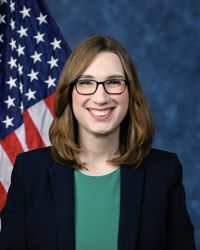
United States · Official source
661 records where Rep. McBride, Sarah [D-DE-At Large] is listed as a sponsor, author, or other actor. Search with topics and years
United States · United States Congress · 21 May 2025
United States · United States Congress · 21 May 2025
Disrupt Explicit Forged Images And Non-Consensual Edits Act of 2025 or the DEFIANCE Act of 2025 This bill expands civil remedies for the nonconsensual disclosure of intimate images (i.e., nonconsensual pornography). The bill also establishes a new federal civil action for nonconsensual conduct involving intimate digital forgeries (i.e., deepfakes). The term intimate digital forgery means any intimate visual depiction of an identifiable individual created using software, machine learning, artificial intelligence, or other computer-generated or technological means that looks authentic. With respect to the nonconsensual disclosure of intimate images, current law allows an identifiable individual to recover civil remedies, including litigation costs, damages, and injunctive relief. This bill increases the available damages by allowing the individual to recover punitive damages and by including, as part of actual damages, profits of the defendant that are attributable to the conduct at issue. The bill also allows an identifiable individual who is the subject of an intimate digital forgery to file a federal civil action against anyone who knowingly discloses, produces or possesses with intent to disclose, or solicits and receives the intimate digital forgery without the individual's consent. Under the bill, the identifiable individual may recover the same expanded civil remedies that are available for the nonconsensual disclosure of intimate images. Finally, the bill establishes a 10-year statute of limitations for filing civil actions involving nonconsensual intimate digital forgeries or nonconsensual disclosure of intimate images. The statute begins to run when the individual discovers the violation or turns 18, whichever is later.
United States · United States Congress · 21 May 2025
United States · United States Congress · 21 May 2025
United States · United States Congress · 20 May 2025
Improving Seniors' Timely Access to Care Act of 2025 This bill establishes several requirements and standards relating to prior authorization processes under Medicare Advantage (MA) plans. Specifically, MA plans must (1) establish an electronic prior authorization program that meets specified standards; (2) annually submit to the CMS for publication specified prior authorization information, including the percentage of requests approved and the average response time; and (3) meet other standards, as set by the Centers for Medicare & Medicaid Services (CMS), relating to the quality and timeliness of prior authorization determinations. The CMS and the Office of the National Coordinator for Health Information Technology must publish on the CMS' website a report that analyzes the information received from MA plans, the feasibility of implementing real-time decision making with respect to prior authorization requests, and the impact of decisions that are made using artificial intelligence on patient access.
United States · United States Congress · 20 May 2025
United States · United States Congress · 20 May 2025
United States · United States Congress · 20 May 2025
United States · United States Congress · 15 May 2025
United States · United States Congress · 15 May 2025
This joint resolution prohibits a proposed foreign military sale of certain defense articles and services to the United Arab Emirates.
United States · United States Congress · 15 May 2025
This joint resolution prohibits a proposed foreign military sale of certain defense articles and services to the United Arab Emirates.
United States · United States Congress · 15 May 2025
US-Japan-ROK Trilateral Cooperation Act This bill requires the Department of State to seek to enter negotiations with the governments of Japan and South Korea with the goal of establishing regular trilateral meetings (referred to as the US-Japan-ROK Inter-Parliamentary Dialogue ) to facilitate closer cooperation on shared interests and values. The bill sets forth membership requirements for a group representing the United States in such meetings. The group must be composed of not more than eight Members of Congress appointed by congressional leaders to serve for a term of two years. The bill also sets forth guidance and requirements for meeting frequency and location, group leadership, gifts and donations, expenditures, and reports.
United States · United States Congress · 15 May 2025
Stronger Communities through Better Transit Act This bill requires the Department of Transportation (DOT) to establish a grant program to support operating projects for public transportation and related service improvements, particularly in underserved communities and areas of persistent poverty. Specifically, the bill requires DOT to allocate funding under the program for urbanized areas, states, and Indian tribes that are recipients of funds under either the Federal Transit Administration's (FTA's) Urbanized Area Formula Funding program or Formula Grants for Rural Areas program. Eligible recipients may use funding for operating costs associated with projects that improve public transportation service for transit-dependent populations and support increased transit ridership (e.g., service expansion, information technology enhancements, and workforce development). DOT must apportion the funding so that recipients receive funds that are proportional to their share of operating costs. The bill also provides for an increased federal cost share for operating assistance for projects or programs carried out in areas of persistent poverty or underserved communities. DOT must set up a multimodal access measurement interface for public agencies to aid transit agencies in determining and reporting on access to jobs and essential services. A grant recipient must (1) report specific information to the FTA for inclusion in the National Transit Database, and (2) survey transit riders and non-riding residents regarding transit service improvements. Further, the bill expands the purposes of the public transportation programs to include supporting public transportation's role in combating climate change through growing/retaining transit ridership.
United States · United States Congress · 15 May 2025
SNAP Administrator Retention Act of 2025 This bill directs the Food and Nutrition Service (FNS) to pay Supplemental Nutrition Assistance Program (SNAP) state agencies for 100% of SNAP administrative personnel costs. The bill also requires that state SNAP agency administrators be paid at least the same amount as federal employees. (Under current law, FNS generally pays 50% of a state's administrative costs for SNAP.) Specifically, FNS must pay a state agency for 100% of all SNAP administrative personnel costs that are part of an FNS-approved state agency personnel wage plan. This must include all costs associated with hiring and training new employees, maintaining those personnel costs, and complying with wage standards. The state agency must use these funds (1) to supplement, not supplant, nonfederal funds used for existing administrative personnel costs; and (2) for existing or additional full-time positions that are above the number of positions that were held in FY2024. The bill also requires that the wage standards for SNAP state agency administrators be (1) at least the same amount as the General Schedule (GS) pay rate for federal employees; and (2) updated annually based on any increase in the GS pay rate, including locality adjustments.
United States · United States Congress · 14 May 2025
United States · United States Congress · 14 May 2025
United States · United States Congress · 14 May 2025
The Territorial Response and Access to Veterans' Essential Lifecare Act or the TRAVEL Act of 2025 This bill authorizes the Department of Veterans Affairs (VA) to assign a physician who has been appointed in the Veterans Health Administration to serve as a traveling physician for a period of not more than one year. Such physician must provide health care to veterans at VA facilities located in American Samoa, Guam, the Northern Mariana Islands, Puerto Rico, the U.S. Virgin Islands, and any other territory or possession of the United States. Traveling physicians must coordinate with non-VA providers when necessary to ensure high quality and coordinated care for veterans receiving hospital care and medical services. The VA must provide a relocation or retention bonus to traveling physicians.
United States · United States Congress · 14 May 2025
United States · United States Congress · 14 May 2025
United States · United States Congress · 14 May 2025
United States · United States Congress · 13 May 2025
United States · United States Congress · 13 May 2025
United States · United States Congress · 13 May 2025
United States · United States Congress · 13 May 2025
Improving Training for School Food Service Workers Act of 2025 This bill adds requirements regarding the availability of training that the Department of Agriculture provides under current law for local food service personnel in schools. The training must be scheduled during regular, paid working hours; provided at no cost to food service personnel; offered in-person whenever appropriate; and incorporate experiential learning. If the training is scheduled outside of working hours, food service personnel must be informed about the necessity of scheduling the program, consulted to schedule the program, and compensated for attending the program. Personnel may not be penalized for failing to attend a program outside of working hours.
United States · United States Congress · 13 May 2025
United States · United States Congress · 13 May 2025
Equal Opportunity for All Investors Act of 2025 This bill expands who may be considered an accredited investor for purposes of participating in private offerings of securities. (Certain unregistered securities may only be offered to accredited investors.) Specifically, the bill allows an individual to qualify through an examination established by the Securities and Exchange Commission. The examination must be designed with an appropriate difficulty level such that an individual with financial sophistication or training would be unlikely to fail, include methods to determine competency and knowledge in certain areas such as the disclosure requirements of different securities, and be administered by a registered national securities association and offered free of charge to the public. Currently, accredited investors must satisfy certain requirements indicating their reduced exposure to financial risk, including those related to income, net worth, or knowledge and experience.
United States · United States Congress · 13 May 2025
United States · United States Congress · 13 May 2025
United States · United States Congress · 8 May 2025
Air Traffic Control Workforce Development Act of 2025 This bill expands and modifies Air Traffic Control (ATC) workforce training and programs. The bill provides statutory authority for the Enhanced Air Traffic-Collegiate Training Initiative (AT-CTI) program. As background, standard AT-CTI institutions of higher education offer nonengineering aviation degrees that teach basic courses in ATC and aviation administration, and graduates complete training at the Federal Aviation Administration (FAA) Academy. Students at Enhanced AT-CTI schools are provided with equivalent FAA Academy ATC training and may be placed directly into an ATC facility. The bill establishes a grant program for schools participating in the Enhanced AT-CTI program and provides for a faculty annuity supplement for ATC instructors at participating institution of higher education. The FAA must convene an aviation rulemaking committee to review and provide recommendations on the (1) curricula of the FAA Academy, AT-CTI program, and Enhanced AT-CTI program; and (2) Air Traffic Skills Assessment exam. Based on the committee's recommendations, the FAA must initiate a rulemaking or make policy and guidance updates, with an exception. The bill authorizes funding through FY2031 for the procurement and placement at ATC facilities of Tower Simulator Systems, which are used to train air traffic controllers on airport tower operations. The bill also requires DOT to establish ATC recruitment and retention incentive programs, the FAA to support the development of mental health services training related to conditions for ATCs, and the FAA to submit a report to Congress on the status of the Airspace Non-cooperative Surveillance Radar program.
United States · United States Congress · 8 May 2025
United States · United States Congress · 8 May 2025
United States · United States Congress · 8 May 2025
United States · United States Congress · 8 May 2025
United States · United States Congress · 8 May 2025
United States · United States Congress · 8 May 2025
United States · United States Congress · 7 May 2025
United States · United States Congress · 7 May 2025
United States · United States Congress · 7 May 2025
American Ownership and Resilience Act This bill creates an investment facility to support the conversion of private businesses into employee-owned businesses. Specifically, the Department of Commerce must establish an investment facility that provides leverage to ownership investment companies (OICs) licensed by Commerce. Under the bill, OICs manage capital for the purpose of financing the sale of a private business to an employee stock ownership plan (ESOP) or eligible worker-owned cooperative, have the authority to borrow money and issue securities or other obligations to finance the sale, and have the full faith and credit of the United States to guarantee the payment of all such amounts. In a sale to an ESOP, an independent trustee must be appointed to obtain a fairness opinion on the investment from an independent financial advisor. New OICs may be mentored by other OICs through the Protégé OIC program established by the bill. The bill also establishes private capital requirements, third-party debt limitations, and enforcement provisions.
United States · United States Congress · 7 May 2025
United States · United States Congress · 6 May 2025
Protecting America's Property Rights Act This bill directs the government-sponsored enterprises—Fannie Mae and Freddie Mac—to establish standards for the use of products such as title insurance. (The enterprises facilitate liquidity in the mortgage market by purchasing mortgages and issuing mortgage-backed securities.) Specifically, the enterprises must establish regulations or guidelines for risk management related to loss or damage from liens upon, encumbrances on, or defects in the title to property, or the invalidity or unenforceability of any liens or encumbrances on property by using third party products subject to state regulation. Further, the enterprises must hold an additional 1% of the unpaid principal of any mortgage that does not meet the above regulations or guidelines as part of each enterprise’s minimum capital levels.
United States · United States Congress · 5 May 2025
United States · United States Congress · 5 May 2025
Supporting Access to Falls Education and prevention and Strengthening Training Efforts and Promoting Safety initiatives for Veterans Act of 2025 or the SAFE STEPS for Veterans Act of 2025 This bill addresses certain mobility and aging care and services provided by the Department of Veterans Affairs (VA). First, the bill requires the establishment and operation of the Office of Falls Prevention within the Veterans Health Administration (VHA) for purposes of providing, evaluating, and improving VA health care services related to falls prevention. Among other duties, the office must oversee and support a national education campaign for veterans, their families, and health care providers that focuses on reducing falls and increases awareness of available benefits or services provided by the VA to reduce falls. The bill also expands membership of the Interagency Coordinating Committee on Healthy Aging and Age-Friendly Communities by including the VA. The VA must issue or update directives of the VHA for facilities and providers relating to safe patient handling and mobility policies. Additionally, the VA must determine the feasibility and advisability of implementing a pilot program to provide home improvements and structural alterations to prevent falls for veterans who are eligible for such services under VA laws. Finally, the bill requires the VA to ensure certain veterans receive a falls risk assessment from a licensed physical therapist or occupational therapist.
United States · United States Congress · 5 May 2025
Bringing Real Accountability Via Enforcement in Burma Act or the BRAVE Burma Act This bill extends and expands a law imposing sanctions on Burma. The bill also requires the President to appoint a Special Envoy for Burma. Current law authorizes, and in some cases requires, the President to impose sanctions on certain Burmese state-owned enterprises, Burmese officials and family members, and other foreign persons. The bill extends this law through December 23, 2032. The bill also requires the President to annually determine, for the next seven years, whether the Myanma Oil and Gas Enterprise, the Myanma Economic Bank, or foreign persons operating in Burma's jet fuel sector meet the criteria for required sanctions under (1) the previously mentioned law; or (2) Executive Order 14014 , Blocking Property With Respect to the Situation in Burma . The U.S. Executive Director at the International Monetary Fund (IMF) must advocate and vote to limit any increase to Burma's IMF shareholding while Burma's State Administrative Council is in power. (The State Administrative Council is the junta installed after Burma's 2021 military coup.) The President must appoint a Special Envoy for Burma with the advice and consent of the Senate. The envoy shall have the rank and status of ambassador and be responsible for coordinating all aspects of U.S. policy regarding Burma, including sanctions, arms embargoes, and assistance to the people of Burma.
United States · United States Congress · 5 May 2025
United States · United States Congress · 1 May 2025
United States · United States Congress · 1 May 2025
Community Services Block Grant Improvement Act of 2025 This bill reauthorizes the Community Services Block Grant (CSBG) program through FY2032 and makes certain changes to the program and associated eligibility requirements. The CSBG program supports various antipoverty activities, primarily through formula-based allotments to states, tribes, and territories, the majority of which must be made available in grants to eligible local entities. Specifically, the bill permanently sets the measure of eligibility for services, assistance, or resources provided directly to individuals or families under the program at 200% of the poverty line. (Under current law, the eligibility measure is temporarily set at 200% of the poverty line, an increase from the previous measure of 125% of the poverty line.) The bill also makes certain changes to the permitted uses of funding, including by allowing CSBG funds to be used to facilitate low-income individuals’ and communities’ access to high-speed broadband, digital literacy training, technical support, and other services. States may also use certain funds allocated for training and technical assistance to assist eligible entities in responding to statewide and regional conditions that create economic insecurity, including emergency conditions. The bill also expands requirements for the plans that states must submit to the Department of Health and Human Services in order to receive CSBG funds (e.g., transparency assurances), and sets deadlines by which states must make funds available to eligible entities. Finally, the bill repeals a provision that allowed states to use CSBG funds to offset revenue losses associated with state charity tax credits.
United States · United States Congress · 30 April 2025
United States · United States Congress · 30 April 2025
Assault Weapons Ban of 2025 This bill makes it a crime to knowingly import, sell, manufacture, transfer, or possess a semiautomatic assault weapon (SAW) or large capacity ammunition feeding device (LCAFD). The prohibition does not apply to a firearm that is (1) manually operated by bolt, pump, lever, or slide action, except for certain shotguns; (2) permanently inoperable; (3) an antique; (4) only capable of firing rimfire ammunition; or (5) a rifle or shotgun specifically identified by make and model. The bill also exempts from the prohibition the following, with respect to a SAW or LCAFD: importation, sale, manufacture, transfer, or possession related to certain law enforcement efforts, or authorized tests or experiments; importation, sale, transfer, or possession related to securing nuclear materials; and possession by a retired law enforcement officer. The bill permits continued possession, sale, or transfer of a grandfathered SAW, which must be securely stored. A licensed gun dealer must conduct a background check prior to the sale or transfer of a grandfathered SAW between private parties. The bill permits continued possession of, but prohibits sale or transfer of, a grandfathered LCAFD. Newly manufactured LCAFDs must display serial number identification. Newly manufactured SAWs and LCAFDs must display the date of manufacture. The bill also allows a state or local government to use Edward Byrne Memorial Justice Assistance Grant Program funds to compensate individuals who surrender a SAW or LCAFD under a buy-back program.
United States · United States Congress · 30 April 2025
Fairness for Victims of SNAP Skimming Act of 2025 This bill requires the Supplemental Nutrition Assistance Program (SNAP) to provide for the replacement of the full amount of a household's stolen benefits. Specifically, using funds provided by the Department of Agriculture, a state agency must provide a household with replacement SNAP benefits equal to the amount of benefits stolen through card skimming, card cloning, or similar fraudulent methods. This requirement applies if the state agency determines that the benefits were stolen and meets certain requirements. Under current law, a state agency may only replace SNAP benefits that were stolen between the period beginning on October 1, 2022, and ending on December 20, 2024. Further, the replacement amount is limited to the lesser of the amount of (1) the benefits stolen, or (2) two months of the household's monthly allotment immediately prior to the date on which the benefits were stolen. Thus, this bill permanently extends the provision and provides for the replacement of the full amount of the benefits stolen.
United States · United States Congress · 30 April 2025