PoliticalRepoPoliticalRepo

Person

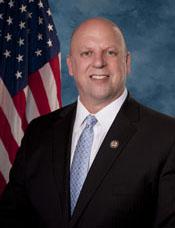
Rep. DesJarlais, Scott [R-TN-4]

United States · Official source

Memberships

  • R · R · present

Votes

Records

Bill· HRH.R. 45 (119th)referred

FIND Act

United States · United States Congress · 3 January 2025

Firearm Industry Non-Discrimination Act or the FIND Act This bill prohibits the federal government from entering into contracts with an entity that discriminates against firearm trade associations or businesses that deal in firearms, ammunition, or related products. Specifically, the bill requires a federal agency to include in each contract for the procurement of goods or services awarded by the agency a clause requiring the prime contractor to certify that it (1) has no policy, practice, guidance, or directive that discriminates against a firearm entity or firearm trade association; and (2) will not adopt a policy, practice, guidance, or directive that discriminates against a firearm entity or firearm trade association during the term of the contract. The bill establishes (1) a similar requirement with respect to subcontracts, and (2) penalties for violations. The bill makes such prohibition inapplicable to a contract for the procurement of goods or services that is a sole-source contract.

Bill· HRH.R. 116 (119th)referred

Stopping Border Surges Act

United States · United States Congress · 3 January 2025

Stopping Border Surges Act This bill modifies immigration law provisions relating to unaccompanied alien minors and to asylum seekers. The bill requires the Department of Homeland Security (DHS) to repatriate certain unaccompanied, inadmissible alien children, generally those not at risk of being trafficking victims nor having a fear of persecution. Currently, only inadmissible unaccompanied aliens from neighboring countries are subject to repatriation, and DHS has discretion whether to repatriate. When the Department of Health and Human Services releases an unaccompanied child to an individual, it shall provide DHS with certain information about that individual, including Social Security number and immigration status. The bill requires a stricter standard to find a credible fear of persecution and imposes additional rules on credible fear interviews. If an alien is granted asylum because of fear of persecution in a country, the alien shall be deemed to have renounced asylum status by returning to that country, if there has been no change in the country's conditions. The bill also (1) expands the definition of what constitutes a frivolous asylum application, (2) imposes additional limitations on eligibility for asylum, (3) shortens the deadline for applying for asylum, and (4) extends the time period an alien seeking asylum must wait before receiving employment authorization. Any individual who knowingly and willfully makes materially false statements or uses fraudulent documents in asylum-related proceedings shall be fined or imprisoned up to 10 years, or both.

Bill· HRH.R. 38 (119th)open

Constitutional Concealed Carry Reciprocity Act of 2025

United States · United States Congress · 3 January 2025

Constitutional Concealed Carry Reciprocity Act This bill establishes a federal statutory framework to regulate the carry or possession of concealed firearms across state lines. Specifically, an individual who is eligible to carry a concealed firearm in one state may carry or possess a concealed handgun (other than a machine gun or destructive device) in another state that allows its residents to carry concealed firearms. It sets forth requirements for lawful concealed carry across state lines. The bill preempts most state and local laws related to concealed carry and establishes a private right of action for a person adversely affected by interference with a concealed-carry right established by this bill.

Bill· HRH.R. 251 (119th)referred

Legal Workforce Act

United States · United States Congress · 9 January 2025

Legal Workforce Act This bill directs the Department of Homeland Security (DHS) to create an electronic employment eligibility confirmation system modeled after and to replace the E-Verify system, which allows employers and recruiters to verify the immigration status of individuals. The bill also mandates the use of such a system, where currently only some employers, such as those with federal contracts, are required to use E-Verify. The bill specifies documents that can establish an individual's identity and employment authorization. During the period starting when a job offer is made until three business days after hiring, the individual must attest to his or her employment authorization, and the employer or recruiter must attest that it has examined the individual's required documents. Employers shall reverify certain types of employees who were not previously verified using E-Verify. The Social Security Administration shall notify employees if their Social Security number has been used multiple times in an unusual manner. DHS shall establish programs for blocking and suspending misused numbers. Employers that are required to use the verification system shall not be liable for any employment-related action based on a good-faith reliance on the system. The bill establishes a phased-in participation deadline for different sizes and categories of employers, including agricultural employers. The bill increases civil penalties related to hiring individuals without work authorization. It also preempts state laws relating to hiring and employment eligibility verification, but states may use their authority of business licensing to penalize employers for failing to comply with the bill's provisions.

Bill· HRH.R. 335 (119th)referred

Repeal the NFA Act

United States · United States Congress · 13 January 2025

Bill· HRH.R. 425 (119th)open

Repealing Big Brother Overreach Act

United States · United States Congress · 15 January 2025

Repealing Big Brother Overreach Act This bill repeals the Corporate Transparency Act. The act requires existing companies and newly created companies to report beneficial ownership information to the Department of the Treasury’s Financial Crimes Enforcement Network for purposes of addressing the financing of terrorism and money laundering.

Bill· HRH.R. 404 (119th)referred

Hearing Protection Act

United States · United States Congress · 15 January 2025

Bill· HRH.R. 428 (119th)referred

Bonuses for Cost-Cutters and Fraud Preventers Act of 2026

United States · United States Congress · 15 January 2025

Bonuses for Cost-Cutters Act of  2025 This bill expands the awards program for cost-saving identifications by federal employees of fraud, waste, or mismanagement to include identifications of certain operational expenses that are wasteful (i.e., that are identified as wasteful by an employee and that an agency determines are not required for the purposes for which the amounts were made available). An agency must propose any identified wasteful expenses for rescission. The bill also doubles the maximum cash award that may be made under the program.

Bill· HRH.R. 556 (119th)referred

Protecting Access for Hunters and Anglers Act

United States · United States Congress · 16 January 2025

Protecting Access for Hunters and Anglers Act of 2025 This bill bars the Fish and Wildlife Service (FWS), the Bureau of Land Management (BLM), and the Forest Service from prohibiting or regulating the use of lead ammunition or tackle on federal land or water. The bill makes exceptions for specified existing regulations and where the FWS, the BLM, or the Forest Service determines that a decline in wildlife population at the specific unit of federal land or water is primarily caused by the use of lead in ammunition or tackle, based on the field data from such unit, and the state approves the regulations.

Bill· HRH.R. 563 (119th)referred

No Retaining Every Gun In a System That Restricts Your Rights Act

United States · United States Congress · 20 January 2025

No Retaining Every Gun In a System That Restricts Your Rights Act This bill modifies the retention requirements for firearm transaction records of federal firearms licensees (FFLs) that go out of business. Current law generally requires FFLs that go out of business to deliver their firearm transaction records to the Bureau of Alcohol, Tobacco, Firearms and Explosives (ATF). This bill removes the requirement for FFLs that go out of business to deliver their firearm transaction records to the ATF. Further, the bill requires the ATF to destroy all out-of-business records it has collected from FFLs.

Bill· HRH.R. 578 (119th)referred

Sarah’s Law

United States · United States Congress · 21 January 2025

Sarah's Law This bill requires the Department of Justice or the Department of Homeland Security (DHS) to detain a non-U.S. national ( alien under federal law) who is unlawfully present in the United States and has been charged with, arrested for, convicted of, or admits to having committed acts that constitute the essential elements of a crime that resulted in the death or serious bodily injury of another person. DHS must obtain information about the identity of any victims of the crimes for which the detained individual was charged or convicted. DHS shall provide the victim, or a relative or guardian of a deceased victim, with information about the detained individual, including name, date of birth, nationality, immigration status, criminal history, and a description of any related removal efforts.

Bill· HRH.R. 569 (119th)referred

Birthright Citizenship Act of 2025

United States · United States Congress · 21 January 2025

Birthright Citizenship Act of 2025 This bill limits birthright citizenship by redefining what it means to be subject to the jurisdiction of the United States. Currently, a person born in the United States and subject to U.S. jurisdiction is entitled to citizenship. Under the bill, a person is subject to U.S. jurisdiction if he or she is born to a parent who is (1) a U.S. citizen or national, (2) a lawful permanent resident residing in the United States, or (3) a non-U.S. national ( alien under federal law) with a lawful immigration status who is performing active service in the Armed Forces. The bill does not affect the citizenship or nationality status of any person born before the bill's enactment date.

Bill· HRH.R. 621 (119th)referred

Protecting First Responders from Secondary Exposure Act of 2025

United States · United States Congress · 22 January 2025

Protecting First Responders from Secondary Exposure Act of 2025  This bill expands the allowable uses of grant funds under the Comprehensive Opioid, Stimulant, and Substance Use Program administered by the Department of Justice. Specifically, the bill allows grants to be used for purchasing containment devices for first responders and training first responders on the use of containment devices to prevent secondary exposure to fentanyl and other potentially lethal substances.

Bill· HRH.R. 703 (119th)referred

Main Street Tax Certainty Act

United States · United States Congress · 23 January 2025

Main Street Tax Certainty Act This bill makes permanent the qualified business income (QBI) tax deduction. Under current law, individuals, estates, and trusts may deduct the lower of (1) 20% of QBI from a qualified business, qualified real estate investment trust dividends, and qualified publicly traded partnership income; or (2) 20% of taxable income less net capital gain. (Some limitations apply.) However, under current law, the QBI tax deduction expires after December 31, 2025.

Bill· HRH.R. 722 (119th)referred

Life at Conception Act

United States · United States Congress · 24 January 2025

Life at Conception Act This bill declares that the right to life guaranteed by the Constitution is vested in each human being at all stages of life, including the moment of fertilization, cloning, or other moment at which an individual comes into being. Nothing in this bill shall be construed to authorize the prosecution of any woman for the death of her unborn child.

Bill· HRH.R. 740 (119th)reported

Veterans’ ACCESS Act of 2025

United States · United States Congress · 28 January 2025

Veterans' Assuring Critical Care Expansions to Support Servicemembers Act of 2025 or the Veterans' ACCESS Act of 2025 This bill addresses the administration of the Veterans Community Care Program (VCCP) and other Department of Veterans Affairs (VA) health care matters. Among other provisions regarding the VCCP, the bill establishes in statute access standards that determine when a veteran is eligible to receive non-VA care through the VCCP, requires the VA to notify veterans regarding their eligibility for care within two business days after the VA is aware the veteran is seeking care, and extends the deadline for the submittal of claims under the VCCP by health care entities and providers. The VA must address its mental health treatment programs by establishing a standardized screening process to determine whether a veteran satisfies criteria for priority or routine admission to a mental health residential rehabilitation treatment program or a program for residential care for mental health and substance abuse disorders, tracking the performance of medical facilities and Veterans Integrated Service Networks in meeting the requirements for mental health treatment screenings and timely admission to treatment programs under such screenings, and establishing an appeal process for when a veteran is denied admission to a covered treatment program or is accepted into a program but not offered bed placement in a timely manner. Additionally, the VA must establish an online self-service module for veterans to request and manage appointments, track referrals, and appeal and track decisions related to requests for care.

Bill· HRH.R. 879 (119th)referred

Medicare Patient Access and Practice Stabilization Act of 2025

United States · United States Congress · 31 January 2025

Medicare Patient Access and Practice Stabilization Act of 2025 This bill increases certain payment adjustments under the Medicare physician fee schedule for services furnished between April 1, 2025, and January 1, 2026.

Bill· HRH.R. 850 (119th)referred

SHUSH Act

United States · United States Congress · 31 January 2025

Silencers Help Us Save Hearing Act or the SHUSH Act This bill removes silencers from regulation under certain federal statutes governing the sale, transfer, and possession of firearms. Specifically, it removes silencers from the list of firearms subject to regulation (i.e., registration and licensing requirements) under the National Firearms Act (NFA). Additionally, it excludes a muffler or silencer from the list of firearms subject to regulation (e.g., background check requirements) under the Gun Control Act of 1968 (GCA). Finally, the bill does the following: preempts state or local laws that tax or regulate firearm silencers, specifies that a person who lawfully acquires or possesses a silencer under provisions of the GCA meets the registration and licensing requirements of the NFA, eliminates mandatory minimum prison terms for a crime of violence or drug trafficking offense in which a defendant uses or carries a firearm equipped with a silencer or muffler, and permits active and retired law enforcement officers to carry a concealed silencer.

Bill· HRH.R. 909 (119th)referred

Crime Victims Fund Stabilization Act of 2025

United States · United States Congress · 4 February 2025

Crime Victims Fund Stabilization Act of 2025 This bill adds a new source of revenue for the Crime Victims Fund (CVF). Specifically, the bill requires certain civil monetary penalties collected from settlements and judgments in cases involving fraud and false claims against the federal government to be deposited into the CVF through FY2029.  The CVF supports federal, state, and local programs and activities to compensate and assist victims of crimes. Currently, the CVF is funded by deposits from a variety of sources, including federal criminal fines, penalties, and assessments; forfeited bail bonds; and certain other gifts, donations, and bequests. 

Bill· HRH.R. 987 (119th)referred

Fair Access to Banking Act

United States · United States Congress · 5 February 2025

Fair Access to Banking Act This bill places restrictions on certain banks, credit unions, and payment card networks if they refuse to do business with a person who complies with the law. Restrictions include prohibiting the use of electronic funds transfer systems and lending programs, termination of an institution's depository insurance, and specified civil penalties. Banks and other specified financial institutions are allowed to deny financial services to a person only if the denial is justified by a documented failure of that person to meet quantitative, impartial, risk-based standards established in advance by the institution. This justification may not be based upon reputational risks to the institution. The bill establishes the right for a person to bring a civil action for a violation of this bill.