Resolution· SRESS.Res. 275 (106th)passed
A resolution expressing the sense of the Senate regarding fair access to Japanese telecommunications facilities and services.
United States · United States Congress · 20 March 2000
See summary of: S.Res. 207
The world's political record
Person
United States · Official source
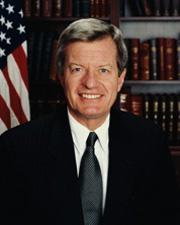
5,946 records where Sen. Baucus, Max [D-MT] is listed as a sponsor, author, or other actor. Search with topics and years
United States · United States Congress · 20 March 2000
See summary of: S.Res. 207
United States · United States Congress · 9 March 2000
Working Families Trade Bonus Act - Provides for the determination and announcement of whether international trade of the United States contributed to an increase in the gross domestic product of the United States for such calendar year. States that if there is an increase in the portion of the gross domestic product of the United States for any calendar year which is attributable to international trade of the United States workers ought to share in the benefits of the increase through employee stock purchase plans and additional contributions to individual retirement plans for those unable to participate in employee stock purchase plans. Amends the Internal Revenue Code to provide for an exclusion of gain for stock acquired through an employee stock purchase plan when there is a declared trade bonus. Provides that for any year in which there is a declared trade bonus additional qualified retirement contributions may be made. Establishes a credit for small employer stock purchase plan start-up costs.
United States · United States Congress · 9 March 2000
Digital Empowerment Act - Title I: One-Stop Shop for Technology Education - Amends the Department of Education Organization Act to provide that the Office of Educational Technology (OET) shall be administered by an Assistant Secretary (currently a Director) of Educational Technology. (Sec. 101) Requires OET to: (1) be a one-stop shop for all technology education programs within the Department of Education; (2) provide schools and community groups with information on technology education programs and sources of funds; and (3) serve as a clearinghouse for information on public and private efforts to bring technology to areas underserved by technology. (Sec. 102) Amends the Elementary and Secondary Education Act of 1965 (ESEA) to include, among specified uses of Federal leadership funds for national programs of technology in education, the development of a national repository of information on the effective uses of educational technology and the dissemination of that information nationwide. Title II: Digital Education - Amends ESEA to require State educational agencies (SEAs), in awarding school technology resource grants under a program of national challenge grants for technology in education, to give priority to local educational agencies (LEAs) that have: (1) the highest numbers or percentages of children in poverty; and (2) a substantial need for assistance in acquiring and using technology. (Sec. 201) Authorizes appropriations for such grants program. (Sec. 202) Includes among required local uses of such grant funds: (1) providing intensive training in the use of technology to school librarians and library media specialists; and (2) providing technical support and services to assist schools in maintaining their educational technology. (Sec. 203) Requires local grant applications to describe how the LEA will ensure that school libraries and media centers possess equipment and trained personnel that enables them to provide access to information in formats made possible by new information and communication technologies. (Sec. 204) Authorizes the Secretary of Education to award: (1) formula grants to SEAs to establish Teacher Technology Preparation Academies for teachers, librarians, and library media specialists; (2) competitive grants to institutions of higher education to train students entering the teaching workforce to use technology effectively in the classroom; and (3) grants to SEAs to provide school library technology and training for school librarians and library media specialists. Authorizes appropriations for such grants. Title III: Expansion of Universal Service Assistance - Amends the Communications Act of 1934 to authorize additional uses of universal service assistance (the e-rate program) by educational providers. (Sec. 301) Includes structured after-school activities among the educational purposes for which schools and libraries are to receive discount rates (E-rates) on telecommunications services. Allows schools to use specified offset funds, which they may receive in lieu of such discount E-rates, for maintenance and repair of technology necessary to use such services. (Sec. 302) Makes eligible for universal service assistance E-rates Head Start agencies and organizations that receive Federal job training funds. Title IV: E-Corps Programs - Amends the National and Community Service Act of 1990 to provide for E-Corps programs. (Sec. 401) Includes, among types of national service programs eligible for program assistance, an E-Corps program that involves participants who are proficient in technology and who provide service in a community by developing and assisting in carrying out technology programs in elementary schools, secondary schools, and community centers. Requires the Corporation for National and Community Services to ensure that specified funds are used only for E-Corps programs. Authorizes appropriations in a specified amount to carry out E-Corps programs and provide national service educational awards to E-Corps program participants. Title V: Community Technology Centers - Amends ESEA to establish a program for Community Technology Centers (CTCs). (Sec. 501) Authorizes the Secretary, through OET, to award competitive grants, contracts, or cooperative agreements, of up to three-years' duration, for: (1) creating or expanding CTCs; or (2) providing technical assistance and support to CTCs. Sets forth provisions for eligibility, applications, matching share of costs, and required and permissible uses of funds. Authorizes appropriations for such CTC program. Title VI: Neighborhood Networks for Public Housing - Amends the United States Housing Act of 1937 to provide for onsite computer access and training resources for public housing residents. (Sec. 601) Authorizes computer centers in and around public housing, through a Neighborhood Networks initiative and related activities, to be established, operated, and assisted by the use of: (1) public housing capital and operating funds, and certain technical assistance; and (2) demolition, site revitalization, replacement housing, and tenant-based assistance grants for projects. Title VII: Incentives for Technology Assistance - Amends the Internal Revenue Code to revise provisions for a tax deduction for corporate donations of computer technology and equipment for educational purposes (currently for elementary and secondary school purposes). (Sec. 701) Includes Head Start centers, structured after-school programs, and certain public libraries and community centers (in addition to elementary and secondary schools) as eligible donees of such deductible donations. Allows such deductible donations to include training or maintenance services with respect to such computer technology or equipment. Extends such deduction to donations made on or before June 30, 2004. Title VIII: Demonstration Project in K-12 Education Technology - Directs the Secretary of Education to carry out a demonstration project that: (1) delivers a highly flexible educational system designed for kindergarten through grade 12, or a component thereof, that includes hardware, software, training, and ongoing support and professional development; (2) implements an Internet-based, one-to-one pilot project that specifically targets the educational needs of students in grade three through grade 12 who reside in low-income school districts; and (3) is conducted by an organization with proven expertise in the research and development of education technology designed for kindergarten through grade 12. (Sec. 801) Requires the demonstration project to provide for: (1) a rugged notebook computer for every student participating in the project; (2) an infrared wireless connection to the school's local area network; (3) a low-cost, high-speed Internet connection; (4) customized, professional development for technical and instructional staff; (5) an academic information system that provides alignment between curricula, State standards, assessment, and teacher resources; and (6) a parental training component. Allows the Secretary to contract with a private company or organization to carry out such a demonstration. Requires the Secretary to coordinate project implementation and oversight with an LEA and a private company, if such a company is used in the project. Requires, to the extent practicable, the project to be conducted in a location where a similar program is already at least partially underway. Sets forth reporting requirements. Authorizes appropriations for such demonstration project.
United States · United States Congress · 9 March 2000
Designates Yellowstone, Missoula, and Cascade counties in Montana as part of the Rocky Mountain High Intensity Drug Trafficking Area under the program administered by the Office of National Drug Control Policy. Authorizes appropriations for drug control activities in such areas.
United States · United States Congress · 9 March 2000
Long-Term Care and Retirement Security Act of 2000 - Amends the Internal Revenue Code to allow: (1) a deduction for eligible long-term care insurance premiums for a taxpayer and the taxpayer's spouse and dependents; and (2) a credit for eligible caregivers caring for certain individuals with long-term care needs.
United States · United States Congress · 9 March 2000
Establishes in Congress the Congressional Trade Office. Sets forth the purposes and functions of such Office, including to: (1) reassert the constitutional responsibility of Congress with respect to international trade; (2) assist Congress in providing more effective oversight of trade policy; (3) monitor compliance with major bilateral, regional, and multilateral trade agreements; (4) provide Congress with more analytical capability on trade issues; and (5) perform certain dispute resolution functions with respect to the World Trade Organization and the North American Free Trade Agreement. Authorizes the Director of the Office, in carrying out his or her duties, to obtain information from, and use the services of, the General Accounting Office, the Library of Congress, and other congressional offices. Authorizes appropriations.
United States · United States Congress · 9 March 2000
Expresses: (1) the Senate's support for the Administration's decision to introduce a resolution at the 56th Session of the United Nations Human Rights Commission in Geneva, Switzerland, calling upon the People's Republic of China to end its human rights abuses; and (2) the sense of the Senate that the United States should make every effort necessary to pass such a resolution.
United States · United States Congress · 8 March 2000
Directs the Secretary of Agriculture to use specified Commodity Credit Corporation funds to provide assistance to dairy farmers for economic losses incurred in 2000.
United States · United States Congress · 8 March 2000
National Museum of the American Indian Commemorative Coin Act of 2000, or American Buffalo Coin Commemorative Coin Act of 2000 - Directs the Secretary of the Treasury to mint and issue a maximum of 500,000 $1 dollar coins in commemoration of the opening of the Museum of the American Indian of the Smithsonian Institution. Expresses the sense of Congress that the United States Mint Facility in Denver, Colorado, should strike such coins unless the Secretary determines that it would be technically or cost-prohibitive. Mandates that the proceeds from sales surcharges be paid promptly to the National Museum of the American Indian of the Smithsonian Institution to: (1) commemorate the opening of the Museum; and (2)supplement the Museum's endowment and educational outreach funds. Subjects the Museum to certain Federal audit requirements. Instructs the Secretary to take actions to ensure that coin minting and issuance will not result in any net cost to the Government.
United States · United States Congress · 6 March 2000
Amateur Radio Spectrum Protection Act of 1999 - Amends the Communications Act of 1934 to prohibit the Federal Communications Commission (FCC) from making any reallocations of amateur radio service and amateur satellite service frequency bands, diminishing the secondary allocations of such bands, or making additional allocations within such bands that would substantially reduce their utility unless at the same time the FCC provides equivalent replacement spectrum.
United States · United States Congress · 6 March 2000
Conservation and Stewardship Act - Title I: Land and Water Conservation Fund - Land and Water Conservation Fund Act Amendments of 2000 - Amends the Land and Water Conservation Fund Act of 1965 to provide for a permanent annual appropriation to the Land and Water Conservation Fund. Establishes the Non-Federal Lands of Regional or National Interest Fund. Title II: Coastal Stewardship - Coastal Stewardship Act of 2000 - Amends the Outer Continental Shelf Lands Act to establish the Ocean and Coast Conservation Fund and Outer Continental Shelf Impact Assistance Fund. Title III: Wildlife Conservation and Restoration - Wildlife Conservation and Restoration Act of 2000 - Amends the Federal Aid in Wildlife Restoration Act to provide for the deposit of an additional annual amount into the Federal Aid in Wildlife Restoration Fund. Establishes a wildlife conservation and restoration subaccount in such fund. Title IV: Endangered and Threatened Species Habitat Protection - Establishes the Endangered and Threatened Species Recovery Fund for recovery agreements with landowners. Title V: Historic Preservation Fund - Amends the National Preservation Act to provide for the deposit into the Historic Preservation Fund of a specified annual amount. Allocates amounts to State, local governmental, and tribal historic preservation programs, the American Battlefield Protection Program, and matching grant programs. Title VI: Natural Resource Restoration Programs - Establishes the National Park System Resource Protection Fund and the Coral Reef Resources Restoration Fund. Title VII: Urban Park and Forestry Programs - Amends the Urban Park and Recreation Recovery Act of 1978 to establish the Urban Park and Recreation Recovery Fund. Amends the Cooperative Forestry Assistance Act of 1978 to establish the Urban and Community Forestry Assistance Fund. Title VIII: Conservation Easements - Establishes the Forest Legacy Fund, the Farmland Protection Fund, and the Ranchland Protection Fund. Title IX: Natural Resource Community Investment Programs - Amends the Youth Conservation Corps Act of 1970 to establish the Youth Conservation Corps Fund. Amends the Cooperative Forestry Assistance Act of 1978 to establish the Forest Service Rural Development Fund. Amends the National Forest-Dependent Rural Communities Economic Diversification Act to establish the Forest Service Rural Community Assistance Fund. Title X: Payment in Lieu of Taxes - Establishes the Payment in Lieu of Taxes Fund.
United States · United States Congress · 29 February 2000
China-World Trade Organization Compliance Act - Directs the President, not later than 90 days after China accedes to the World Trade Organization (WTO), to submit to Congress a plan (including an estimate of the cost) for monitoring China's compliance with the commitments it makes as part of the accession. (Sec. 3) Directs the Comptroller General, in order to determine the degree to which China is complying with its WTO commitments and to obtain information about any problems encountered by U.S. businesses, to survey annually and report to Congress on the 50 U.S. companies doing the most business with China in exporting nonagricultural and agricultural goods, exporting or providing services, investing, or importing goods. Directs the International Trade Commission to report annually to Congress on United States-China bilateral export and import statistics, including, to the extent practicable, reconciling any differences in U.S.-source and Chinese-source data. (Sec. 4) Directs the United States Trade Representative (USTR), not later than one year after China accedes to the WTO, and annually thereafter, to report to Congress on China's compliance with its commitments under the WTO, including both multilateral commitments and any bilateral commitments made to the United States. (Sec. 5) Authorizes specified congressional committees to instruct the USTR to: (1) take appropriate trade relief action after initiating an investigation under the Trade Act of 1974 to determine if U.S. rights under any agreement are being denied, or an act, policy, or practice of China violates the provisions of, or otherwise denies benefits to the United States under, any trade agreement, or is unjustifiable and burdens or restricts U.S. commerce; or (2) initiate action before the Dispute Settlement Body of the WTO. Amends the Trade Act of 1974 to authorize the USTR, for purposes of making an affirmative determination with respect to an investigation, to draw an inference adverse to the interest of a country that fails or refuses to cooperate in the investigation. Directs the USTR, if he or she makes an affirmative determination with respect to China, to initiate an action before the Dispute Settlement Body, unless there exists another, more effective action. (Sec. 6) Expresses the sense of Congress that there should be a special multilateral process at the WTO for conducting an annual review of China's compliance with the commitments it makes as part of its accession to the WTO. Directs the USTR to propose that: (1) as part of the Trade Policy Review Mechanism of the WTO, a thorough review of China's trade policies be conducted each year; (2) the Trade Policy Review Mechanism be significantly enhanced and expanded in connection with the review of China; and (3) the Trade Policy Review Mechanism of China include onsite visits and active participation by representatives of WTO members. (Sec. 7) Directs the President to submit to Congress a plan for providing assistance to China to build the institutions necessary to carry out the obligations China has made as part of its accession to the WTO. Authorizes appropriations.
United States · United States Congress · 24 February 2000
Launching Our Communities' Access to Local Television Act of 2000 - Establishes the Local Television Loan Guarantee Board to approve or disapprove loan guarantees under this Act. Allows loan guarantees to be approved only to the extent provided for in advance in appropriations Acts. Requires such loans to be used to finance the means by which local television broadcast signals will be delivered to an unserved or underserved area, with a loan priority for unserved areas. Prohibits the Board from approving a loan which will serve one of the 40 most populated designated market areas. Limits: (1) each loan guarantee to 70 percent of the total cost of a project; and (2) the aggregate value of all loan guarantees to$1.25 billion. Requires the Administrator of the Rural Utilities Service to administer all loan guarantees approved under this Act. Requires loan applicants to enter into stipulated performance schedules with respect to the local television signals to be provided through the project. Outlines procedures governing loan application and credit requirements, default procedures, and recovery of payments for breach of conditions. Authorizes the Board to charge and collect a loan guarantee fee and use such fee to cover administrative costs. Requires an annual audit and report concerning the loan guarantee program. Prohibits any loan guarantee from being approved after December 31, 2006. Subjects all loan applicants to Federal copyright provisions relating to the required retransmission of local television stations. Authorizes appropriations for FY 2001 through 2006.
United States · United States Congress · 24 February 2000
Amends the Transportation Equity Act for the 21st Century to prohibit the Secretary of Transportation from distributing obligation authority, for each of FY 2001 through 2003, for amounts authorized for Indian reservation roads under the Federal Lands Highway Program.
United States · United States Congress · 22 February 2000
Social Security Earnings Test Elimination Act of 2000 - Amends title II (Old Age, Survivors and Disability Insurance) (OASDI) of the Social Security Act to repeal the limitation on the amount of outside income which beneficiaries who have attained retirement age may earn (earnings test) without incurring a reduction in benefits.
United States · United States Congress · 22 February 2000
Authorizes the President to present, on behalf of Congress, a gold medal to John Cardinal O'Connor, Archbishop of New York, in recognition of his accomplishments as a priest, a soldier, and a humanitarian. Authorizes the Secretary of the Treasury to strike and sell bronze duplicates. Authorizes appropriations.
United States · United States Congress · 10 February 2000
Amends Federal law to require the Postal Service to establish a special rate of postage for first class mail that is up to 25 percent higher than the regular rate as a voluntary alternative that the public may use to contribute to funding for organ and tissue donation awareness. Requires collected amounts to be paid to the Department of Health and Human Services. Expresses the sense of the Congress that nothing in this Act should: (1) cause a net decrease in total funds received by the Department of Health and Human Services or any other Federal agency below the level that would have otherwise been received but for this Act's enactment; or (2) affect first-class or other regular postage rates. Requires special postage stamps to be made available to the public.
United States · United States Congress · 10 February 2000
Kids 2000 Act - Directs the Attorney General to make grants to the Boys and Girls Clubs of America for the purpose of funding effective after-school technology programs, such as PowerUp, in order to provide: (1) constructive technology-focused activities that are part of a comprehensive program to provide access to technology and technology training to youth during after-school hours, weekends, and school vacations; (2) supervised activities in safe environments for youth; and (3) full-time staffing with teachers, tutors, and other qualified personnel. Directs the Boys and Girls Clubs of America to make sub-awards to local boys and girls clubs authorizing expenditures associated with providing technology programs, including the hiring of teachers and other personnel and the procurement of goods and services, including computer equipment. Sets forth provisions regarding grant eligibility, application requirements, and criteria for making grant awards. Authorizes appropriations. Allows funds to carry out this Act to be derived from the Violent Crime Reduction Trust Fund.
United States · United States Congress · 10 February 2000
Authorizes the President to present, on behalf of Congress, a congressional gold medal to Charles M. Schulz in recognition of his lasting artistic contributions to the Nation and the world. Authorizes the Secretary of the Treasury to strike and sell bronze duplicates. Authorizes appropriations.
United States · United States Congress · 10 February 2000
Proclaims the week of March 12 through March 18, 2000, as National Safe Place Week.
United States · United States Congress · 10 February 2000
Designates the week of February 14-18, 2000, as National Heart Failure Awareness Week.
United States · United States Congress · 9 February 2000
Combatting Illegal College and University Gambling Act - Directs the Attorney General to establish a panel, composed of Federal, State, and local government law enforcement officials, to conduct a study of illegal college sports gambling, including an analysis of: (1) its scope and prevalence; (2) the role of organized crime; (3) the role of State regulators and the legal sports books in Nevada in assisting law enforcement to uncover it; (4) the enforcement and implementation of the Professional and Amateur Sports Protection Act of 1992; (5) the effectiveness of steps taken by institutions of higher education to reduce the problem; (6) the factors that influence the attitudes or levels of awareness of administrators, professors, and students about it; (7) the effectiveness of new countermeasures to reduce it; and (8) potential actions that could be taken by the National Collegiate Athletic Association (NCAA) to address it. (Sec. 4) Directs the Attorney General to submit to Congress a report on the study, including recommendations for: (1) Federal and State legislative actions, administrative or private sector actions, and actions by colleges, universities, and the NCAA to address the issue; and (2) intensive educational campaigns by the NCAA to assist in the effort to prevent illegal gambling on college sports.
United States · United States Congress · 7 February 2000
Biomedical Revitalization Resolution of 2000 - Expresses the sense of the Senate that funding for the National Institutes of Health should be increased by $2.7 billion in FY 2001.
United States · United States Congress · 3 February 2000
Fort Peck Fish Hatchery Authorization Act of 2000 - Authorizes the Secretary of the Army to carry out a project at Fort Peck Lake, Montana, for the design and construction of a warm water fish hatchery and such associated facilities. Requires that the Federal share of the cost of design and construction of such project be 75 percent. Requires the Secretary to credit toward the non-Federal share of project costs: (1) the cost to the State of Montana of stocking Fort Peck Lake; and (2) the cost to the State and the counties having jurisdiction over land surrounding the Lake of construction of local access roads to such lake. Provides for the cost of operation and maintenance associated with raising threatened or endangered species to be a Federal responsibility. Directs the Secretary to offer low-cost project power for all hatchery operations. Authorizes appropriations.
United States · United States Congress · 26 January 2000
Expresses the condolences of the Senate on the death of the Honorable Floyd M. Riddick, Parliamentarian Emeritus of the Senate.
United States · United States Congress · 26 January 2000
Expresses the condolences of the Senate on the death of the Honorable Carl Curtis, formerly a Senator from Nebraska.
United States · United States Congress · 26 January 2000
Calls on the Government of the People's Republic of China to: (1) immediately release Yongyi Song from imprisonment and drop all charges against him; (2) guarantee in its legal system fair and professional treatment for criminal defense lawyers; and (3) open more criminal proceedings to the public.
United States · United States Congress · 19 November 1999
New Markets for State-Inspected Meat Act of 1999 - Directs the Secretary of Agriculture to review each State's meat and poultry inspection program, which shall include: (1) determination of plan effectiveness; and (2) identification of changes necessary for future transition to a State program as provided for by this Act. Authorizes appropriations. Title I: Meat Inspection - Amends the Federal Meat Inspection Act to authorize the Secretary to approve a qualifying State meat inspection program and allow the shipment in commerce of carcasses, parts of carcasses, meat, and meat food products so inspected. Requires the Secretary to review such approved plans to: (1) determine effectiveness; and (2) identify changes necessary to ensure enforcement of Federal requirements. Authorizes the Secretary to enter into a cooperative agreement with a State to establish the relationship between the State program and the Secretary. Sets forth provisions with respect to: (1) product marking; (2) labeling requirements; (3) authority of the Secretary; (4) State reimbursement; (5) sampling, including salmonella testing; (6) noncompliance; (7) establishment inspections, including exemptions for restaurants and retail stores; (8) acceptance of interstate shipments of meat and meat food products; and (9) advisory committees. Directs the Secretary to temporarily suspend or take over a noncomplying State program (or an establishment). Provides for program reinstatement. Title II: Poultry Inspection - Amends the Poultry Products Inspection Act to make similar amendments to those in title I. Title III: General Provisions - Terminates the Secretary's authority to establish interstate meat and poultry inspection programs under this Act if approval and cooperative agreements have not been concluded by a specified date.
United States · United States Congress · 19 November 1999
Amends the Omnibus Consolidated and Emergency Supplemental Appropriations Act, 1999 (the Act) to revise provisions regarding the conveyance of Bureau of Reclamation properties near the Canyon Ferry Reservoir in Montana. Requires the appraisal of properties under such provisions to use the Canyon Ferry Cabin Site appraisal with a completion date of March 29, 1999, and amended June 11, 1999, with an effective date of valuation of October 15, 1998, for the Bureau. Directs the contract appraisers that conducted the original appraisal having such effective date of valuation to make modifications to permit recalculation of the lot values established in the original appraisal into an updated appraisal, the function of which shall be to provide market values for the sale of each of the 265 Canyon Ferry Cabin Site lots. Provides for adjustments to the updated appraisal based on changes in property characteristics. Authorizes periodic updates of the fair market values through appropriate market analyses, subject to the approval of the Canyon Ferry Recreation Association (CFRA) and the Secretary of the Interior. Grants the Bureau and the 265 Canyon Ferry cabin owners the right to seek reconsideration, before commencement of the updated appraisal, of the assumptions used by the appraisers in arriving at the fair market values derived in the original appraisal. Requires the original appraisal to remain valid for use by the Bureau in the sale process for a period of at least three years from the date of completion of the updated appraisal to the extent consistent with the Uniform Appraisal Standards for Federal Land Acquisition. Grants nonpurchasing lessees the right to continue leasing through August 31, 2014. Permits such lessees to close under the terms of the sale at any time before such date. Removes all personal property and improvements, on termination of the lease either by expiration or by violation of lease terms, and requires the cabin site to remain in Federal ownership. Requires the Secretary to close on the property and prepare all other properties for closing within 45 days if no one (including CFRA) bids for a property. Directs CFRA and the lessees to purchase at least 75 percent of the properties not later than August 1 of the year that begins at least 36 months (currently, 12 months) after title to the first property is conveyed by the Secretary to a lessee. Requires the Secretary to allocate all funding necessary to conduct the sales process for the sale of property under the Act. Directs the Secretary to begin: (1) preparing for the sales process on enactment of the Act; and (2) conveying the property not later than one year after the Act's enactment. Requires the Montana Fish and Wildlife Conservation Trust, acting through the trust manager, to enter into a legally enforceable Recreation Trust Agreement with CFRA. Requires the Agreement to provide that: (1) the Trust shall loan up to $3 million of a property's sale proceeds to CFRA; (2) CFRA shall deposit such borrowed funds in the Canyon Ferry-Broadwater County Trust; (3) CFRA and the individual purchasers shall repay loan principal to the Trust as soon as practicable in accordance with a loan agreement repayment schedule; and (4) CFRA and the purchasers shall make an annual interest payment (at a rate between six and eight percent) on the outstanding loan principal. Prohibits the trust manager, except as otherwise provided, from disbursing any Trust funds until August 1, 2001, unless Broadwater County, at an earlier date, certifies that the Canyon Ferry-Broadwater County Trust has been fully funded. Bars any closing of property until the Recreation Trust Agreement is entered into. Prohibits any closing of property until CFRA and Broadwater County enter into a legally enforceable agreement concerning contributions to the Trust. Provides that such agreement shall require that CFRA ensure that $3 million is deposited in the Canyon Ferry- Broadwater County Trust by August 1, 2001. (Current law prohibits any sale of property before such amount is deposited as the initial corpus of such trust.)
United States · United States Congress · 19 November 1999
21st Century Rural Utility Service Rural Development Enhancement Through Local Information Act - Amends the Rural Electrification Act of 1936 to authorize the Administrator of the Rural Utilities Service to make loan guarantees (through a specified date) to providers of multichannel video services, including direct broadcast satellite licensees, to improve access to local television broadcasting to all households desiring such service in unserved and underserved rural areas. Requires loan guarantee approval by the National Telecommunications and Information Administration. Sets forth satellite carrier loan guarantee qualifications. Authorizes appropriations. Sets forth conditions under which a borrower shall be obliged to carry local broadcast signals without charge.
United States · United States Congress · 19 November 1999
Declares that the Senate: (1) recognizes the contribution of older persons to their communities; and (2) commends the work of organizations that participate in programs assisting older persons and that promote the goals of the International Year of Older Persons.
United States · United States Congress · 18 November 1999
CT-43A Federal Employee Settlement Act - Directs the Secretary of the Air Force to pay $2 million to the specified beneficiary of each of the 14 Federal civilian officers and employees killed in the crash of a United States Air Force CT-43A aircraft on April 3, 1996, near Dubrovnik, Croatia. Provides that acceptance of such payment constitutes full settlement of all claims by that person against the United States arising from the death. Prohibits any representative of a beneficiary from receiving more than ten percent of a payment for services rendered in connection with the beneficiary's claim.
United States · United States Congress · 18 November 1999
Expresses the sense of the Senate that, not later than March 1, 2000, the Secretary of Agriculture should resolve, or take other action to resolve, all pending cases of alleged civil rights discrimination by the Department of Agriculture against agricultural producers located in Montana.
United States · United States Congress · 17 November 1999
Firefighter Investment and Response Enhancement (FIRE) Act - Amends the Federal Fire Prevention and Control Act of 1974 to authorize the Director of the Federal Emergency Management Agency to: (1) make grants on a competitive basis for protecting the health and safety of the public and firefighting personnel against fire and fire-related hazards; and (2) provide assistance for specified fire prevention programs (requiring at least ten percent of grant funds to be used for such programs). Provides a program priority for organizations that focus on prevention of injuries to children from fire. Requires: (1) ten percent non-Federal matching funds; (2) each grantee to report to the Director on grant uses; and (3) grants to be made to a variety of recipients, including paid and volunteer firefighters and urban, suburban, and rural. Authorizes appropriations for FY 2000 through 2005.
United States · United States Congress · 17 November 1999
John H. Chafee Environmental Education Act of 1999 - Amends the National Environmental Education Act to rename it the John H. Chafee Environmental Education Act (the Act). (Sec. 2) Requires the Office of Environmental Education (OEE), within the Environmental Protection Agency (EPA), to: (1) develop and support balanced and scientifically sound programs; and (2) provide for implementation of the Act through the headquarters and regional offices of the EPA. Eliminates provisions for: (1) OEE administration of environmental internship and fellowship programs (internship programs are eliminated and fellowship program administration is transferred elsewhere later in this Act); (2) an OEE Director who is a member of the Senior Executive Service; and (3) a minimum of six full-time equivalent employees on the OEE headquarters staff (retains the maximum of ten). Authorizes the EPA Administrator to carry out OEE activities directly or through awards of grants, cooperative agreements, or contracts. (Sec. 3) Revises provisions for environmental education grants to decrease from 25 to 15 percent the portion of grant funds which must be used for grants of $5,000 or less. Prohibits environmental education grants from being used to support lobbying activities. Requires the EPA Science Advisory Board to review and approve the guidance before the EPA Administrator issues any guidance to grant applicants. (Sec. 4) Establishes the John H. Chafee Memorial Fellowship Program for the award and administration of five annual one-year graduate education fellowships in environmental sciences. (Eliminates provisions for OEE-administered environmental internships and fellowships.) Provides that such Fellowships are to stimulate innovative graduate level study and the development of expertise in complex, relevant, and important environmental issues and effective approaches to addressing those issues through organized programs of guided independent study and environmental research. Requires each $25,000 Fellowship to be made available to individual candidates through a sponsoring institution of higher education and an annual competitive selection process. Requires each Fellowship to focus on: (1) effective land and resource management; (2) innovative open space preservation; (3) science associated with such worldwide issues as global climate change and sustainable marine resources; or (4) any other issue that a sponsoring institution determines to be appropriate. Requires annual awards of two Fellowships by the University of Rhode Island. Allows three annual Fellowships to be applied for through any other sponsoring institution. Directs the National Environmental Learning Foundation (as renamed in this Act) to establish and administer the John H. Chafee Fellowship Panel to establish selection process criteria, receive and review applications, and select Fellowship recipients. Requires that Panel members with specified qualifications be appointed by a majority vote of the National Environmental Education Advisory Council. Directs the Foundation to make specified amounts available for such Fellowships and administrative expenses of the Fellowship Program. (Sec. 5) Revises provisions for national environmental education awards. Retains and revises provisions for: (1) President's Environmental Youth Awards; and (2) environmental education awards for elementary and secondary school teachers and their local educational agencies. (Eliminates provisions for awards named for Theodore Roosevelt, Henry David Thoreau, Rachel Carson, and Gifford Pinchot.) (Sec. 6) Revises provisions for the National Environmental Education Advisory Council and for the Federal Task Force on Environmental Education. Directs the EPA Administrator to appoint at least one Advisory Council member to represent each of the following sectors: (1) elementary schools and secondary schools; (2) colleges and universities; (3) not-for-profit organizations involved in environmental education; (4) State departments of education and natural resources; (5) business and industry; and (6) senior citizens. Revises requirements for Advisory Council meetings and reports. Opens membership on the Task Force to representatives of any Federal agency actively engaged in environmental education. (Sec. 7) Renames the National Environmental Education and Training Foundation as the National Environmental Learning Foundation. Increases the number of director's on the Foundation's Board. Allows the Foundation to acknowledge receipt of donations by listing the names of donors in materials it distributes, but prohibits such acknowledgment from: (1) appearing in educational material presented to students; or (2) identifying a donor by means of a logo, letterhead, or other corporate commercial symbol, slogan, or product. Eliminates a time limit on the EPA Administrator's provision of administrative services and support to the Foundation. (Sec. 8) Extends through FY 2005 the authorization of appropriations to EPA to carry out the Act, with specified portions for: (1) OEE activities; (2) the environmental education and training program; (3) environmental education grants; and (4) Foundation activities. Directs the EPA Administrator to submit an annual report to Congress on the activities for which such funds were expended.
United States · United States Congress · 16 November 1999
Vietnam Veterans Recognition Act of 1999 - Authorizes the American Battle Monuments Commission to place within the Vietnam Veterans Memorial a plaque to honor Vietnam veterans who died after service in the Vietnam War, but as a direct result of such service, and whose names are not otherwise eligible for placement on the Memorial wall.
United States · United States Congress · 10 November 1999
Freedom to Travel to Cuba Act of 2000 - Prohibits the President from prohibiting or regulating travel to or from Cuba by U.S. citizens or lawful resident aliens, including specified transactions ordinarily incident to such travel, financial or otherwise. Declares that nothing in this Act shall authorize the importation into the United States of any goods for personal consumption acquired in Cuba.
United States · United States Congress · 10 November 1999
High-Speed Rail Investment Act - Amends the Internal Revenue Code to allow a limited tax credit to holders of a qualified Amtrak bond. Sets forth definitions, State matching requirements, and other rules.
United States · United States Congress · 9 November 1999
Downtown Equity Act of 1999 - Amends the Public Buildings Act of 1959 to require the head of each Federal agency, in locating and relocating Federal facilities, to give first priority to central business areas, except when such location would: (1) materially compromise the agency's mission; or (2) not be economically prudent. Directs the Administrator of General Services to study and report to Congress on the feasibility of establishing a system for: (1) assessing the costs of locating Federal facilities in rural areas as compared to urban areas, in central business areas of rural areas as compared to rural areas outside central business areas, and in central business areas of urban areas as compared to urban areas outside central business areas; (2) adjusting the absolute comparable costs to correct for the inherent differences in property values between rural areas and urban areas; and (3) assessing the impacts on land use, air quality and other environmental factors, and to historic preservation, in the location of Federal facilities. Authorizes appropriations for FY 2001 and 2002.
United States · United States Congress · 9 November 1999
Expresses the sense of the Senate that the appropriate officials in the executive branch should: (1) include, in the U.S. negotiating objectives for the next round of multilateral negotiations of the Uruguay Round (World Trade Organization), specific expectations as to how such negotiations will result in changes in the Japanese market; (2) consult closely with Congress throughout the next round of negotiations about the specific impact of the negotiations on Japan's markets; and (3) provide periodic reports, with full input from the private sector, about progress being made in addressing Japanese barriers within such negotiations.
United States · United States Congress · 5 November 1999
United States - Chile Free Trade Agreement Act of 1999 - States that it is U.S. policy to seek the elimination of tariff and nontariff barriers in order to achieve more open market access, on a reciprocal basis, to internationally traded goods and services, through bilateral free trade agreements with like-minded countries. Authorizes the President to tenter into an agreement with Chile consistent with the described policy and other provisions of law. Provides for fast track congressional consideration of the bill implementing such trade agreement.
United States · United States Congress · 5 November 1999
Small Business Tax Reduction Act - Amends the Internal Revenue Code to provide a variety of tax credits, deductions, and incentives for small businesses, including: (1) the full deduction of health insurance costs for the self-employed; (2) a limited credit for employer-provided child care; (3) increased retirement and pension plan tax benefits; (4) an increase in the expensing limitation; (5) a limited new markets tax credit; (6) a limited credit for information technology training program expenses; (7) educational incentives; (8) extending the work opportunity and welfare-to-work credit; (9) an increased estate tax deduction for family-owned businesses; and (10) permitting the disclosure of taxpayer identity information to a State for the purpose of carrying out a combined Federal and State employment tax reporting program.
United States · United States Congress · 5 November 1999
United States-Republic of Korea Free Trade Agreement Act of 1999 - Declares it to be U.S. policy to seek the elimination of tariff and nontariff barriers in order to achieve more open market access, on a reciprocal basis, to internationally traded goods and services, through bilateral free trade agreements with like-minded countries. Authorizes the President to enter into a free trade agreement with the Republic of Korea. Amends the Trade Act of 1974 to apply its fast track procedures (precluding amendments) to the implementing bills for such an agreement.
United States · United States Congress · 5 November 1999
United States-Singapore Free Trade Agreement Act of 1999 - Declares it to be U.S. policy to seek the elimination of tariff and nontariff barriers in order to achieve more open market access, on a reciprocal basis, to internationally traded goods and services, through bilateral free trade agreements with like-minded countries. Authorizes the President to enter into a free trade agreement with Singapore. Amends the Trade Act of 1974 to apply its fast track procedures (precluding amendments) to the implementing bills for such an agreement.
United States · United States Congress · 4 November 1999
John H. Chafee Coastal Barrier Resources System Act - Redesignates the Coastal Barrier Resources System as the John H. Chafee Coastal Barrier Resources System.
United States · United States Congress · 4 November 1999
Small Employer Pension Start-up Incentive Act - Amends the Internal Revenue Code to provide a five-year contribution credit and a three-year start-up cost credit for qualifying small employer pension plans.
United States · United States Congress · 4 November 1999
Seniors as Volunteers in Our Schools Act - Amends the Elementary and Secondary Education Act of 1965 to require that appropriately qualified senior citizens be given an opportunity to serve as mentors, tutors, and volunteers for: (1) State Governors', local, and national programs for drug and violence prevention; (2) gifted and talented children's programs; (3) 21st Century Learning Centers; (4) programs for education of Indian children, through local educational agencies and special projects; (5) inclusion in training for professions that serve Indians; (6) Native Hawaiian community-based education learning centers; and (7) Alaska Native student enrichment programs.
United States · United States Congress · 2 November 1999
Designates November 1999 as National American Indian Heritage Month.
United States · United States Congress · 1 November 1999
Healthy Seniors Act of 1999 - Amends title XIX (Medicaid) of the Social Security Act (SSA) to provide for: (1) making specified medical assistance available for prescribed drugs under the State Medicaid plan for certain low-income Medicare beneficiaries not otherwise eligible for such assistance who are enrolled under part B (Supplementary Medical Insurance) of SSA title XVIII; and (2) making payments to the States with respect to such medical assistance at a Federal matching rate of 100 percent. Directs the Secretary of Health and Human Services to reduce payments to a State for a calendar quarter in a fiscal year to the extent that the Secretary determines that certain State expenditure levels for Medicare beneficiaries related to any State- funded prescription drug program or Medicare medical assistance provided under Medicare is less than the level of such expenditures under Medicare or Medicaid during FY 1999.
United States · United States Congress · 29 October 1999
Energy Security Act of 1999 - Amends the Internal Revenue Code to provide tax credits, tax deductions, taxable income limits, tax credit extensions, elections to expense, and other tax incentives concerning: (1) the use of energy efficient property in business; (2) nonbusiness energy efficient systems (residential and automotive); (3) alternative fuel (alcohol); (4) electric automobiles; (5) clean coal technologies; (6) methane recovery; (7) oil and gas production; (8) renewable power generation; (9) energy-efficient steelmaking; and (10) agricultural conservation.