Bill· SS. 2797 (118th)referred
Protecting Conscience in Our Health Care Act
United States · United States Congress · 13 September 2023
The world's political record
Person
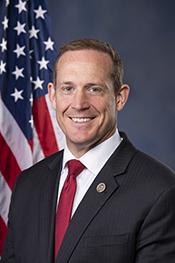
United States · Official source
2,264 records where Sen. Budd, Ted [R-NC] is listed as a sponsor, author, or other actor. Search with topics and years
United States · United States Congress · 13 September 2023
United States · United States Congress · 11 September 2023
United States · United States Congress · 7 September 2023
Allowing for Recreational Resources for Outdoor Wellness Act or the ARROW Act This bill authorizes the use of federal elementary and secondary education funds to purchase or use dangerous weapons for sports clubs, teams, training, or related activities provided for students. Current law prohibits the use of these funds to provide any person with a dangerous weapon or training in the use of a dangerous weapon. The bill specifies that this prohibition shall not apply to the use of these funds for sports clubs, teams, training, or related activities provided for students.
United States · United States Congress · 7 September 2023
Freedom to Breathe Act This bill prohibits the imposition of mask mandates on airplanes, public transit, or schools through December 31, 2024.
United States · United States Congress · 5 September 2023
This joint resolution nullifies the final rule submitted by the Department of Education titled Improving Income Driven Repayment for the William D. Ford Federal Direct Loan Program and the Federal Family Education Loan (FFEL) Program and published on July 10, 2023. The rule creates a new income-driven repayment plan called the Saving on a Valuable Education (SAVE) plan.
United States · United States Congress · 5 September 2023
This resolution designates April 5, 2023, as Gold Star Wives Day. The resolution also recognizes the contributions of the members of the Gold Star Wives of America, Inc., and their dedication to the members and veterans of the Armed Forces.
United States · United States Congress · 27 July 2023
This joint resolution nullifies the policy update issued by the Food and Nutrition Service (FNS) on May 5, 2022, related to discrimination on the basis of gender identity and sexual orientation. The Government Accountability Office (GAO) deemed the policy update a rule on June 5, 2023, and therefore subject to the Congressional Review Act (CRA) requirement that a rule must be submitted to Congress and the GAO before it can take effect. The CRA also permits Congress to review and disapprove rules using specified procedures. In June 2020, the U.S. Supreme Court held in Bostock v. Clayton County that, under Title VII of the Civil Rights Act of 1964, the prohibition on sex discrimination in employment includes discrimination on the basis of sexual orientation and gender identity. The FNS determined that the Bostock analysis also applies to certain FNS-enforced requirements under the Food and Nutrition Act of 2008 and Title IX of the Education Amendments of 1972 because the requirements are sufficiently similar to those in the Civil Rights Act of 1964. The FNS rule concludes that the prohibitions against sex discrimination in the FNS-enforced statutes prohibit discrimination on the basis of gender identity and sexual orientation. The rule also directs state agencies and program operators to handle complaints alleging discrimination on the basis of gender identity and sexual orientation as complaints of prohibited sex discrimination.
United States · United States Congress · 27 July 2023
Backcountry Aviation Protection Act This bill directs the Federal Aviation Administration (FAA) to revise regulations to allow a properly qualified pilot operating an aircraft to conduct a go-around, an inspection pass, a practice approach, or a qualified instrument approach without regard to minimum safe altitude standards. Under current regulations, a person may not operate an aircraft below certain minimum safe altitudes except when necessary for takeoff or landing. The regulation does not include exceptions for situations such as a go-around (i.e., an aborted landing) or a practice approach. Beginning one year after the bill's enactment, if the FAA has not published final regulations as required by the bill, the FAA may not take an enforcement action against a person related to a go-around, inspection pass, or practice approach. Under the bill, the FAA has the burden of proof with respect to enforcement actions to prove each element of the offense and the inapplicability of each exception to the offense.
United States · United States Congress · 27 July 2023
This joint resolution nullifies the final rule issued by U.S. Citizenship and Immigration Services and the Executive Office for Immigration Review titled Circumvention of Lawful Pathways and published on May 16, 2023. The final rule established a rebuttable presumption that a non-U.S. national ( alien under federal law) entering the United States from Mexico without valid entry documents is ineligible for asylum if that individual had traveled through another country to reach the United States but did not apply for asylum or similar protection in that other country.
United States · United States Congress · 27 July 2023
This resolution designates August 16, 2023, as National Airborne Day.
United States · United States Congress · 27 July 2023
Deregulating Restrictions on Interstate Vehicles and Eighteen-wheelers Act or the DRIVE Act This bill prohibits the Federal Motor Carrier Safety Administration (FMCSA) from issuing any rule or regulation to require vehicles that have a gross vehicle weight of more than 26,000 pounds and are operating in interstate commerce to be equipped with a speed limiting device set to a maximum speed. The FMCSA issued an advance notice of supplemental proposed rulemaking on this subject on May 4, 2022.
United States · United States Congress · 27 July 2023
Stillbirth Health Improvement and Education for Autumn Act of 2023 or the SHINE for Autumn Act of 2023 This bill authorizes grants and establishes other programs to improve data collection on stillbirths. Specifically, the Department of Health and Human Services (HHS) may award grants for surveillance and data collection on stillbirths, and HHS must issue guidelines for health departments and vital statistics units concerning the collection of stillbirth data. HHS must also develop educational awareness materials about stillbirths and make them publicly available. Furthermore, HHS must implement a fellowship program to provide training in perinatal autopsy pathology and otherwise support research on stillbirths and fetal autopsies. The bill also requires HHS to issue a report with educational guidelines on stillbirths and stillbirth risk factors.
United States · United States Congress · 27 July 2023
United States · United States Congress · 27 July 2023
This resolution expresses the Senate's commitment to embracing and promoting nuclear power to achieve a reliable, secure, and diversified electric grid.
United States · United States Congress · 26 July 2023
Rolling Active Pharmaceutical Ingredient and Drug Reserve Act or the RAPID Reserve Act This bill requires the Department of Health and Human Services to contract with drug manufacturers to ensure adequate supplies of critical drugs that have vulnerable supply chains. (Under the bill, drugs are considered critical if they are likely to be needed during a public health emergency or if a shortage would pose a significant threat to the health care system or at-risk populations.) Contracted drug manufacturers must agree to (1) maintain at least a 6-month reserve of the active ingredient in a critical drug and of the finished product and to regularly replenish these reserves, (2) produce the ingredient and drug in a manner and quantity as specified in the contract, and (3) agree to transfer portions of the reserve, if necessary, to other manufacturers to meet manufacturing needs and allow HHS to control the allocation of reserves in the event of a public health emergency or other threat. HHS must publish a list of critical drugs and issue guidance on the criteria for determining this list and awarding contracts. HHS must give preference to domestic manufacturers for contracts. In addition, the Government Accountability Office must report on the capacity of domestic manufacturing with respect to critical drugs, including the ability to manufacture different dosage forms and drugs with various characteristics.
United States · United States Congress · 26 July 2023
Veterans Protection from Fraud Act This bill makes enhanced criminal penalties for telemarking or email marketing fraud offenses applicable to telemarking or email fraud offenses that target veterans.
United States · United States Congress · 25 July 2023
This resolution recognizes the Motorcycle Safety Foundation for 50 years of safety education and improving the ride for motorcycle riders across the United States.
United States · United States Congress · 20 July 2023
Treat and Reduce Obesity Act of 2023 This bill expands Medicare coverage of intensive behavioral therapy for obesity. Specifically, the bill allows coverage for therapy that is provided by (1) a physician who is not a primary care physician; or (2) other health care providers (e.g., physician assistants and nurse practitioners) and approved counseling programs, if provided upon a referral from, and in coordination with, a physician or primary care practitioner. Currently, such therapy is covered only if provided by a primary care practitioner. The bill also allows coverage under Medicare's prescription drug benefit of drugs used for the treatment of obesity or for weight loss management for individuals who are overweight.
United States · United States Congress · 20 July 2023
Promoting Employment and Lifelong Learning Act or the PELL Act This bill expands student eligibility for Pell Grants by establishing the Workforce Pell Grants Program. Specifically, the bill requires the Department of Education (ED) to award Workforce Pell Grants to students enrolled in eligible short-term programs. Eligible programs are those that provide 150 to 600 clock hours of instructional time over a period of 8 to 15 weeks and meet other eligibility criteria. An accrediting agency or association recognized by ED must determine a program's eligibility based on several criteria, including that the program provides education aligned with the requirements of in-demand industry sectors and occupations and meets specified completion and job placement rates. ED must annually collect and publish information on the College Scorecard regarding each eligible program, including job outcomes. The College Scorecard is a comparison tool for information on school sizes, settings, graduation rates, average costs, and salary ranges per field of study.
United States · United States Congress · 20 July 2023
United States · United States Congress · 19 July 2023
United States · United States Congress · 19 July 2023
Fair Debt Collection Practices for Servicemembers Act This bill prohibits a debt collector from threatening a service member with a reduction of rank, revocation of their security clearance, or military prosecution in the course of collecting a debt. The Government Accountability Office must report on the impact of this prohibition on the timely delivery of information to service members, military readiness, and national security.
United States · United States Congress · 19 July 2023
Accelerating Kids' Access to Care Act This bill requires state Medicaid programs to establish a process through which qualifying out-of-state providers may enroll as participating providers for five years without undergoing additional screening requirements, unless the state has an agreement with other states that governs coverage of children with medically complex conditions that is in accordance with specified guidance from the Centers for Medicare & Medicaid Services (CMS). Among other requirements, a qualifying provider must (1) serve individuals under the age of 21; (2) have previously been screened for Medicare participation or for participation in the Medicaid program of the state in which the provider is located; and (3) have been determined by the CMS or state Medicaid program to pose a limited risk of fraud, waste, or abuse.
United States · United States Congress · 19 July 2023
Artificial Intelligence and Biosecurity Risk Assessment Act This bill requires the Administration for Strategic Preparedness and Response to assess the risks posed by artificial intelligence in developing novel pathogens, viruses, bioweapons, or chemical weapons and to address these risks through related initiatives and activities, such as by including the risk assessment in the National Health Security Strategy (a coordinated strategy among federal, state, and local entities to address public health emergencies).
United States · United States Congress · 18 July 2023
This resolution affirms that Israel is not a racist or apartheid state. The resolution also (1) rejects all forms of antisemitism and xenophobia, and (2) affirms that the United States will always be a staunch partner of Israel.
United States · United States Congress · 18 July 2023
Strategy for Public Health Preparedness and Response to Artificial Intelligence Threats This bill requires the Department of Health and Human Services to develop a strategy for public health preparedness, response, and biodefense that addresses the risks to national health security posed by the misuse of artificial intelligence, such as biological weapons and viruses and bacteria that are resistant to treatment.
United States · United States Congress · 18 July 2023
United States · United States Congress · 18 July 2023
Gene Synthesis Safety and Security Act This bill requires the Department of Health and Human Services (HHS) to update guidance to address the potential misuse of gene synthesis products (i.e., manufactured genetic products) to obtain biological agents or toxins of concern. The guidance must include recommendations relating to screening protocols, recordkeeping, technological safeguards, and other specified information. HHS must evaluate the current landscape of gene synthesis manufacturers and related technology to inform the guidance. HHS must also solicit public input to develop a list of genetic sequences of concern.
United States · United States Congress · 13 July 2023
Emerging Pathogen Preparedness Program Authorization Act This bill establishes a program in the Food and Drug Administration's Center for Biologics Evaluation and Research to support the development and approval of biological countermeasures. Authorized activities include the development of quality measures for countermeasures, surveillance programs to monitor countermeasures, and research and development of platform vaccine technology to support emergency use authorization requests.
United States · United States Congress · 13 July 2023
Middle Class Borrower Protection Act of 2023 This bill rolls back changes made by the Federal Housing Finance Agency (FHFA) to the fees charged by Fannie Mae and Freddie Mac for a conventional single-family mortgage (i.e., loan-level pricing adjustments) and restricts future fee adjustments. These changes, effective May 1, 2023, revised the fee charts that provide percentage adjustments based on a mortgagor's credit score and down payment. The bill reinstates the fee structure that was in place prior to May 1, 2023. The Government Accountability Office (GAO) must report on the changes made by the FHFA. Further adjustments to the fee structure by FHFA are prohibited until 90 days after the publication of the GAO report. After this period, FHFA must follow Administrative Procedure Act requirements when proposing adjustments to the fee structure. The bill also requires that, to the greatest extent feasible, revisions to the fee schedule must be based on risk. Further, FHFA, Fannie Mae, and Freddie Mac are prohibited from imposing any loan-level pricing adjustment fee that is based on the ratio of the debt of the mortgagor to the income of the mortgagor.
United States · United States Congress · 12 July 2023
United States · United States Congress · 11 July 2023
Building Chips in America Act of 2023 This bill modifies and limits the review of certain semiconductor (i.e., microchip) projects under the National Environmental Policy Act of 1969 (NEPA) and the National Historic Preservation Act (NHPA). Specifically, the bill exempts from NEPA and NHPA specified semiconductor projects that receive financial assistance under the William M. (Mac) Thornberry National Defense Authorization Act for Fiscal Year 2021. Next, the bill allows the Department of Commerce to serve as the lead agency for the review of a semiconductor project that receives such financial assistance but is not exempted from review under NEPA. A single environmental document and joint record of decision must be prepared for a semiconductor project. In completing the environmental review, Commerce may adopt a prior study or decision under certain circumstances. The bill also allows a state to assume the responsibility of an environmental review under NEPA for a semiconductor project. Finally, the bill sets a statute of limitations for certain claims under NEPA.
United States · United States Congress · 22 June 2023
United States · United States Congress · 22 June 2023
Iran Sanctions Relief Review Act This bill restricts the President's authority to unilaterally undertake certain actions with respect to Iran and increases congressional oversight of those actions. Specifically, the President must report to Congress before terminating or waiving sanctions related to Iran or taking a licensing action that significantly alters U.S. foreign policy with respect to Iran. Each report must (1) describe the proposed action and its rationale, and (2) indicate whether or not the action is intended to significantly alter foreign policy concerning Iran. If the intention is to alter that policy, the report must provide additional information about the policy objectives and anticipated effects of the action. After the President submits a report, the bill provides Congress with a 30-day period to review it; this period is extended to 60 days for reports submitted between July 10 and September 7. During this period, Congress may enact a joint resolution approving or disapproving the action. During the review period, the President may not take the action unless Congress passes a joint resolution of approval; if Congress enacts a joint resolution of disapproval, the bill prohibits the President from taking the action. The bill also outlines procedures for the introduction and consideration of these types of joint resolutions.
United States · United States Congress · 22 June 2023
Increase Support for Life-saving Endocrine Transplantation Act or the ISLET Act This bill removes pancreatic islets that are donated from human cadavers from regulation as a drug or biological product by the Food and Drug Administration (FDA). (Islets are groups of cells, including those that make insulin, in the pancreas, and islet transplantation is an experimental treatment for certain conditions, such as type 1 diabetes.) Current FDA guidance treats pancreatic islets as a biological product, which makes them subject to the biological license application process and related standards for manufacturing practices, safety, identity, purity, and potency. The bill, instead, treats human cadaveric islets as organs, which makes them subject to the regulatory framework that governs the allocation, safety, and efficacy of organ donation and transplantation. That framework, developed by the Health Resources and Services Administration, is carried out by contract through the Organ Procurement and Transplantation Network. (The network is a public-private partnership that links the professionals involved in the U.S. donation and transplantation system.) Specifically, the bill defines human cadaveric islets as organs and excludes them from definitions related to the regulation of drugs and biological products.
United States · United States Congress · 22 June 2023
This resolution commemorates one year since the Supreme Court's holding in Dobbs v. Jackson Women's Health Organization (that there is no constitutional right to abortion). The resolution also commits to protecting the right to life.
United States · United States Congress · 22 June 2023
Work Without Worry Act This bill modifies eligibility for Social Security Disability Insurance (SSDI) benefits for individuals who have a disability that began before age 22. Under current law, these individuals may obtain SSDI benefits based on the work record of a retired, disabled, or deceased parent. However, an individual with earnings after age 22 that exceed a specified monetary limit (i.e., constitute substantial gainful activity) permanently loses eligibility for such benefits. This bill allows individuals to retain eligibility for such benefits regardless of the amount of earnings after age 22. Additionally, individuals who apply for SSDI benefits on a parent's record and also independently qualify for Social Security benefits on their own record will receive the larger of the two benefit amounts.
United States · United States Congress · 22 June 2023
This joint resolution disapproves a rule submitted by the Office of Federal Contract Compliance Programs of the Department of Labor relating to Rescission of Implementing Legal Requirements Regarding the Equal Opportunity Clause's Religious Exemption Rule. Such rule shall have no force or effect.
United States · United States Congress · 21 June 2023
Preserving Choice in Vehicle Purchases Act of 2023 This bill modifies the waiver process under the Clean Air Act related to state emission control standards for new motor vehicles (or new motor vehicle engines). Under current law, states are preempted from adopting or enforcing emission control standards for new motor vehicles (or new motor vehicle engines) unless the Environmental Protection Agency (EPA) provides a waiver authorizing a state to adopt such standards if certain requirements are met. The bill provides that state standards that directly or indirectly limit the sale or use of new motor vehicles with internal combustion engines are not eligible for waivers. The bill also prohibits the EPA from determining that any state standards amended after the bill's enactment are within the scope of an existing waiver. Additionally, the bill requires the EPA to revoke waivers granted between January 1, 2022, and the date of enactment of this bill if the standards directly or indirectly limit the sale or use of new motor vehicles with internal combustion engines.
United States · United States Congress · 21 June 2023
United States · United States Congress · 21 June 2023
Child Tax Credit for Pregnant Moms Act of 2023 This bill allows a child tax credit for an unborn child who is born alive. It also allows the credit upon certification that a mother's pregnancy resulted in a miscarriage (the involuntary death of an unborn child who was carried in the womb for less than 20 weeks) or that the child was stillborn (the involuntary death of an unborn child who was carried in the womb for 20 weeks or more).
United States · United States Congress · 21 June 2023
Medicare Multi-Cancer Early Detection Screening Coverage Act This bill allows for Medicare coverage and payment for multi-cancer early detection screening tests that are approved by the Food and Drug Administration and that are used to screen for cancer across many cancer types, if the Centers for Medicare & Medicaid Services determines such coverage is appropriate.
United States · United States Congress · 15 June 2023
Save America's Forgotten Equines Act of 2023 or the SAFE Act of 2023 This bill permanently prohibits the slaughter of equines (e.g., horses and mules) for human consumption. (Current law prohibits the slaughter of dogs and cats for human consumption. This bill extends the prohibition to equines.) Specifically, this bill prohibits a person from knowingly slaughtering an equine for human consumption; or shipping, transporting, possessing, purchasing, selling, or donating an equine to be slaughtered for human consumption or equine parts for human consumption. The bill subjects a violator to a fine. The bill applies to conduct in or affecting interstate or foreign commerce or within the special maritime and territorial jurisdiction of the United States. However, it does not apply to an activity carried out by an Indian for a religious ceremony. In recent years, appropriations acts have prohibited the Department of Agriculture (USDA) from using federal funds to inspect horses before they are slaughtered for human consumption. Therefore, there are currently no USDA-inspected horse slaughter facilities in the United States.
United States · United States Congress · 15 June 2023
Ending Agricultural Trade Suppression Act This bill restricts state and local governments from imposing certain standards or conditions on the preharvest production of agricultural products sold or offered for sale in interstate commerce. Specifically, it prohibits the imposition of such standards or conditions if (1) the production occurs in another state, and (2) the standard or condition adds to requirements applicable under federal law and the laws of the state and locality where the product is produced. The bill also allows for a private right of action to challenge state or local regulations relating to agricultural goods sold in interstate commerce. A person may bring an action in (1) the U.S. district court for the judicial district in which the person is affected by a regulation or the person resides, operates, or does business; or (2) any other appropriate court with jurisdiction.
United States · United States Congress · 14 June 2023
Graduate Opportunity and Affordable Loans Act This bill limits federal student loan borrowing for graduate and professional students. Specifically, the bill terminates the ability of a graduate or professional student to receive a Direct PLUS Loan. Institutions of higher education (IHEs) must notify their prospective and enrolled graduate and professional students that Direct PLUS Loans terminate on June 30, 2024. Additionally, the bill establishes the aggregate loan limit for Direct Unsubsidized Loans as $65,000 for a graduate student (in addition to the amount borrowed for undergraduate education) and $130,000 for a professional student (in addition to the amount borrowed for undergraduate education). The bill allows IHEs to set lower loan limits.
United States · United States Congress · 14 June 2023
United States · United States Congress · 14 June 2023
One Flag for All Act This bill prohibits the display of flags other than the flag of the United States in public buildings, military installations, and U.S. embassies or consulates. Excepted flags include: the National League of Families POW/MIA flag; flags representing the nation of a visiting diplomat; the state flag of a Member of Congress, outside or within the Member's office; flags representing a unit or branch of the Armed Forces, on military installations; any flag representing an Indian tribe; and any flag representing the state, territory, county, city, or local jurisdiction where the public building is located.
United States · United States Congress · 14 June 2023
This resolution celebrates the 246th anniversary of the creation of the U.S. flag, recognizes that the Pledge of Allegiance has been a valuable part of life for the people of the United States for generations, and defends the constitutionality of the pledge.
United States · United States Congress · 13 June 2023
This joint resolution nullifies the final rule issued by the Consumer Financial Protection Bureau titled Small Business Lending under the Equal Credit Opportunity Act (Regulation B) and published on May 31, 2023. The rule requires financial institutions to collect and report to the bureau credit application data for small businesses. On July 31, 2023, the U.S. District Court for the Southern District of Texas ordered the bureau not to implement or enforce the rule until a related pending case is resolved.
United States · United States Congress · 13 June 2023
Beautifying Federal Civic Architecture Act of 2023 This bill establishes policy on the preferred architecture of federal public buildings. For example, the bill establishes that (1) traditional and classical architecture is the preferred style for federal public buildings, and (2) classical architecture is the default and preferred style for federal public buildings in the District of Columbia. The bill also establishes a Council on Improving Federal Civic Architecture to evaluate and advise the General Services Administration (GSA) on the design of new and existing federal public buildings. If GSA approves a design that diverges from preferred architecture, it must notify Congress and the Assistant to the President for Domestic Policy.