Bill· SS. 1520 (119th)referred
Investment Accelerator Act of 2025
United States · United States Congress · 29 April 2025
The world's political record
Person
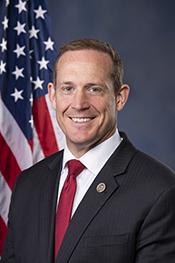
United States · Official source
2,264 records where Sen. Budd, Ted [R-NC] is listed as a sponsor, author, or other actor. Search with topics and years
United States · United States Congress · 29 April 2025
United States · United States Congress · 29 April 2025
United States · United States Congress · 29 April 2025
United States · United States Congress · 10 April 2025
Combating Organized Retail Crime Act This bill expands federal enforcement of criminal offenses related to organized retail and supply chain crime. The term organized retail and supply chain crime includes criminal offenses involving the interstate transportation of stolen property, the sale or receipt of stolen goods, or theft from an interstate or foreign shipment that is committed by, in coordination with, or at the instruction of an organization. First, with respect to criminal offenses involving the interstate transportation of stolen property or the sale or receipt of stolen goods, the bill broadens the scope of conduct that qualifies as offenses by allowing prosecutions to be based on the aggregate value of stolen items over a 12-month period. Additionally, the bill makes the offenses predicate offenses (i.e., underlying offenses) for prosecutions under the federal money laundering statute and authorizes the criminal forfeiture of any property obtained from the proceeds of an offense. Second, with respect to criminal offenses involving theft from an interstate or foreign shipment, the bill also makes an offense an underlying offense for prosecution under the federal money laundering statute and authorizes the criminal forfeiture of any associated property. Third, the bill expands the federal money laundering statute to include offenses involving general-use prepaid cards, gift certificates, or store gift cards. Finally, the bill temporarily establishes a center within the Department of Homeland Security to coordinate federal law enforcement activities related to organized retail and supply chain crime.
United States · United States Congress · 10 April 2025
United States · United States Congress · 10 April 2025
Service Dogs Assisting Veterans Act of 2025 or the SAVES Act of 2025 This bill requires the Department of Veterans Affairs (VA) to establish a five-year pilot program to award grants on a competitive basis to nonprofit entities to provide service dogs to veterans who have certain disabilities, conditions, or diagnoses (e.g., a visual impairment). Under the program, the VA may provide up to $2 million to a nonprofit entity in a fiscal year. The VA must provide a veterinary insurance policy to veterans who receive a service dog through a grant under the program.
United States · United States Congress · 10 April 2025
United States · United States Congress · 10 April 2025
United States · United States Congress · 10 April 2025
United States · United States Congress · 10 April 2025
United States · United States Congress · 9 April 2025
United States · United States Congress · 9 April 2025
Benton MacKaye National Scenic Trail Feasibility Study Act of 2025 This bill requires the Forest Service to study the feasibility of designating the Benton MacKaye Trail as a national scenic trail. The trail traverses approximately 287 miles in Georgia, Tennessee, and North Carolina.
United States · United States Congress · 9 April 2025
Abortion Funding Awareness Act of 2025 This bill establishes reporting requirements for states regarding certain Medicaid payments to abortion providers. Specifically, the bill requires states that make Medicaid payments using federal funds for any items or services furnished by an abortion provider to annually (1) submit a report to the Centers for Medicare & Medicaid Services on all such payments, and (2) publish the report on the state's website. The report must include specified information, including the number of abortions performed by the providers and the gestational age with respect to each such abortion. (Current law restricts the use of federal funds for abortions to cases of rape, incest, or life endangerment of the woman. States may use their own funds to cover abortions in other cases.)
United States · United States Congress · 9 April 2025
United States · United States Congress · 8 April 2025
Food Security and Farm Protection Act This bill restricts state and local governments from imposing certain standards or conditions on the preharvest production of agricultural products in another state. Specifically, it prohibits the imposition of such standards or conditions on products sold or offered for sale in interstate commerce if (1) the production occurs in another state, and (2) the standard or condition adds to requirements applicable under federal law and the laws of the state and locality where the product is produced. The bill also allows for a private right of action to challenge state or local regulations relating to agricultural goods sold in interstate commerce. A person may bring an action in (1) the U.S. district court for the judicial district in which the person is affected by a regulation or the person resides, operates, or does business; or (2) any other appropriate court with jurisdiction.
United States · United States Congress · 7 April 2025
United States · United States Congress · 7 April 2025
United States · United States Congress · 4 April 2025
Veterans Education and Technical Skills Opportunity Act of 2025 or the VETS Opportunity Act of 2025 This bill modifies which independent study programs are covered under veterans’ educational assistance benefits. The bill requires independent study programs that lead to a certificate that reflects graduation from a course of study to include regular and substantive interaction between students and instructors. The bill allows such independent study programs to be offered by any institutions of higher education, including for-profit institutions, that are approved to participate in the Department of Education’s financial assistance programs.
United States · United States Congress · 4 April 2025
This joint resolution nullifies the Environmental Protection Agency notice titled California State Motor Vehicle and Engine Pollution Control Standards; Advanced Clean Cars II; Waiver of Preemption; Notice of Decision (90 Fed. Reg. 642) and published on January 6, 2025. Among other elements, the notice grants the California Air Resources Board request for a waiver for its Advanced Clean Cars II (ACC II) regulations. (Under the Clean Air Act, California may seek waivers of the preemption prohibiting states from enacting certain emission standards.)
United States · United States Congress · 3 April 2025
United States · United States Congress · 3 April 2025
United States · United States Congress · 3 April 2025
Defending Education Transparency and Ending Rogue Regimes Engaging in Nefarious Transactions Act or the DETERRENT Act This bill expands oversight and disclosure requirements related to foreign sources and institutions of higher education (IHEs). Specifically, the bill requires an IHE to annually disclose to the Department of Education (ED) any year in which the IHE receives a gift from a foreign country of concern (e.g., China or Russia) or foreign entity of concern of any dollar amount; receives a gift or contract from a foreign source (other than a foreign country of concern or foreign entity of concern) that is valued at $50,000 or more, considered alone or in combination with all other gifts or contracts within a calendar year (current disclosure threshold is $250,000 or more), or which has an undetermined monetary value; enters into a contract with a foreign country of concern or foreign entity of concern after receiving a waiver for such contract; or is substantially controlled by a foreign source. Additionally, the bill prohibits IHEs from entering into contracts with a foreign country of concern or with a foreign entity of concern without obtaining a waiver, and requires certain IHEs to disclose gifts or contracts between covered individuals (e.g., researchers) and foreign sources. The bill requires ED to investigate possible violations of this bill and outlines the various penalties for each violation. Penalties may include losing eligibility for federal student financial aid.
United States · United States Congress · 2 April 2025
United States · United States Congress · 2 April 2025
Creating Opportunities Now for Necessary and Effective Care Technologies (CONNECT) for Health Act of 2025 or the CONNECT for Health Act of 2025 This bill expands coverage of telehealth services under Medicare. Among other provisions, the bill permanently removes geographic restrictions on originating sites (i.e., the location of the beneficiary) and allows the home of the beneficiary to serve as the originating site for all services; permanently allows federally qualified health centers and rural health clinics to serve as the distant site (i.e., the location of the health care practitioner); and allows the Centers for Medicare & Medicaid Services (CMS) to generally waive coverage restrictions during any public health emergency. Additionally, the CMS must post certain information about the effects of Medicare telehealth services on its website, including information about utilization, costs, and the outcome of services. The CMS must also (1) provide resources to health care professionals about the requirements for furnishing telehealth services under Medicare, including with respect to payment, patient privacy, and support for underserved populations; and (2) ensure certain quality measures are applied to telehealth services.
United States · United States Congress · 2 April 2025
United States · United States Congress · 1 April 2025
United States · United States Congress · 1 April 2025
Sanctioning Russia Act of 2025 This bill imposes penalties on certain persons (individuals and entities) if the President determines that the Russian government or a person acting at Russia's direction is involved with (1) refusing to negotiate a peace agreement with Ukraine; (2) violating a negotiated peace agreement; (3) initiating another invasion of Ukraine; or (4) overthrowing, dismantling, or seeking to subvert the Ukrainian government. If the President makes such a determination, the bill requires certain actions including the President must impose visa- and property-blocking sanctions on specified persons such as the Russian president, certain Russian military commanders, and any foreign person that knowingly provides defense items to the Russian armed forces; the President must increase the rate of duty on all goods and services imported from Russia into the United States to at least 500% relative to the value of such goods and services; the President must increase the rate of duty on all goods and services imported into the United States from countries that knowingly engage in the exchange of Russian-origin uranium and petroleum products to at least 500% relative to the value of such goods and services; the Department of the Treasury must impose property-blocking sanctions on any financial institution organized under Russian law and owned wholly or partly by Russia, and any financial institution that engages in transactions with those entities; and the Department of Commerce must prohibit the export, reexport, or in-country transfer to or in Russia of any U.S.-produced energy or energy product.
United States · United States Congress · 1 April 2025
Education Savings Accounts for Military Families Act of 2025 This bill directs the Department of Education (ED) to establish a program to provide children with parents on active duty in the uniformed services with funds to pay educational expenses. Specifically, ED must establish a tax-exempt Military Education Savings Account for dependent children of parents in the uniformed services for the payment of the children's educational expenses. Funds in the savings account may be used for specified purposes, including the cost of attendance at a private elementary or private secondary school or institution of higher education, private tutoring, or costs associated with an apprenticeship or other vocational training program.
United States · United States Congress · 31 March 2025
United States · United States Congress · 27 March 2025
United States · United States Congress · 27 March 2025
Restore Protections for Dialysis Patients Act This bill specifies certain requirements for private health insurers regarding coverage of individuals with end stage renal disease (ESRD) who are also covered under Medicare. In particular, the bill specifies that insurers may not limit benefits, including limiting network composition, in a manner that will affect ESRD Medicare beneficiaries differently compared to others without ESRD. The bill additionally specifies that insurers are not required to include a particular renal dialysis provider or a particular number of such providers as part of their networks.
United States · United States Congress · 27 March 2025
United States · United States Congress · 27 March 2025
United States · United States Congress · 27 March 2025
United States · United States Congress · 26 March 2025
United States · United States Congress · 25 March 2025
United States · United States Congress · 25 March 2025
Anti-CBDC Surveillance State Act This bill prohibits a Federal Reserve bank from offering products or services directly to an individual, maintaining an account on behalf of an individual, or issuing a central bank digital currency (i.e., a digital dollar). Further, the Board of Governors of the Federal Reserve System is prohibited from using a central bank digital currency to implement monetary policy or from testing, studying, creating, or implementing a central bank digital currency, with exceptions as provided by the bill.
United States · United States Congress · 25 March 2025
College Employment Accountability Act This bill prohibits an institution of higher education (IHE) from receiving certain federal funds or participating in federal student aid programs if the IHE does not take certain actions to prohibit the employment at the IHE of non-U.S. nationals ( aliens under federal law) who do not have work authorization. Specifically, the bill prohibits an IHE from receiving federal funds for student assistance or institutional aid if the IHE employs unauthorized individuals in violation of a specified section of the Immigration and Nationality Act (INA). (The section prohibits an employer from knowingly hiring, recruiting or referring for a fee, or continuing to employ a non-U.S. national who lacks work authorization.) Additionally, the bill requires an IHE that participates in federal student aid programs to participate in the E-Verify system. (This system allows employers and recruiters to verify an individual's eligibility for employment. The system is largely voluntary; however, federal employers, including federal contractors, must use E-Verify. Some IHEs currently participate in the system.) The bill directs the Department of Homeland Security (DHS) to, every six months, monitor whether an IHE is participating in the E-Verify system. Further, DHS must notify the Department of Education within 10 days of finding that an IHE (1) employs unauthorized individuals in violation of the INA, or (2) is not participating in the E-Verify system.
United States · United States Congress · 25 March 2025
United States · United States Congress · 13 March 2025
Safe and Secure Transportation of American Energy Act This bill expands the types of activities that are subject to criminal penalties related to damaging or destroying an interstate gas or hazardous liquid pipeline facility. Under current law, a person who knowingly and willfully damages or destroys a pipeline facility is subject to criminal penalties, including a fine, a prison term of up to 20 years, or both. If a death results from the offense, the person may be imprisoned for any term of years or life. Under the bill, these criminal penalties also apply to a person who knowingly and willfully vandalizes, tampers with, or disrupts or prevents the operation or construction of the facility.
United States · United States Congress · 13 March 2025
United States · United States Congress · 13 March 2025
United States · United States Congress · 13 March 2025
United States · United States Congress · 12 March 2025
United States · United States Congress · 12 March 2025
United States · United States Congress · 12 March 2025
United States · United States Congress · 12 March 2025
Preserving Choice in Vehicle Purchases Act of 2025 This bill modifies the waiver process under the Clean Air Act related to state emission control standards for new motor vehicles (or new motor vehicle engines). Under current law, states are preempted from adopting or enforcing emission control standards for new motor vehicles (or new motor vehicle engines) unless the Environmental Protection Agency (EPA) provides a waiver authorizing a state to adopt such standards if certain requirements are met. The bill provides that state standards that directly or indirectly limit the sale or use of new motor vehicles with internal combustion engines are not eligible for waivers. The bill also prohibits the EPA from determining that any state standards amended after the bill's enactment are within the scope of an existing waiver. Additionally, the bill requires the EPA to revoke waivers granted between January 1, 2022, and the date of enactment of this bill if the standards directly or indirectly limit the sale or use of new motor vehicles with internal combustion engines.
United States · United States Congress · 11 March 2025
This bill excludes from gross income the gain from the sale or exchange of qualified farmland property to a qualified farmer that is contributed to an individual retirement account (IRA). This generally prevents the federal capital gains tax from being imposed on such gain. (Conditions apply.) Specifically, the bill excludes from gross income any gain from the sale or exchange of qualified farmland property contributed to an IRA within 60 days of the sale or exchange if the requisite election is made, the property is sold to an individual actively engaged in farming (qualified farmer), the qualified farmer signs a written agreement consenting to the application of a federal tax if the property is disposed of or no longer used for farming within the first 10 years after the sale or exchange, and the written agreement is filed. The bill defines qualified farmland property as real property located in the United States that, for substantially all of the 10 years preceding the sale or exchange, is used by the farmer (or lessee) for farming purposes. However, under the bill, if the qualified farmland property is disposed of or no longer used for farming within the first 10 years after the sale or exchange, a tax is imposed on the qualified farmer equal to the amount excluded from gross income multiplied by the sum of the highest tax rate on adjusted net capital gains and the net investment income tax rate (currently 23.8%), plus interest.
United States · United States Congress · 11 March 2025
Protect Our Military Families' 2nd Amendment Rights Act This bill broadens the scope of allowable firearms transactions involving active-duty service members and their spouses. Specifically, the bill allows a licensed gun dealer, importer, or manufacturer to sell or ship a firearm or ammunition to the spouse of a member of the Armed Forces on active duty outside the United States. Current law already allows a licensed dealer, importer, or manufacturer to sell or ship a firearm or ammunition to a member of the Armed Forces on active duty outside the United States. The bill also specifies that, for purposes of federal firearms laws, a member of the Armed Forces on active duty, or his or her spouse, is a resident of the state in which (1) the member or spouse maintains legal residence, (2) the permanent duty station of the member is located, and (3) the member maintains a home from which he or she commutes to the permanent duty station.
United States · United States Congress · 11 March 2025
Traveler's Gun Rights Act This bill broadens the scope of allowable firearms transactions involving active duty servicemembers and their spouses and individuals who do not have a residence in any state. Currently, federal firearms laws generally prohibit a federal firearms licensee (e.g., a gun dealer) from selling or delivering a firearm to an individual whose state of residence is different than the state where the licensee's place of business is located. This bill defines the term state of residence as the state in which an individual is present with an intention of making a home. In the case of an individual who does not have a physical residence in any state, the term state of residence means the address of the individual's private mailbox or post office box. In the case of a member of the Armed Forces on active duty, or his or her spouse, the term state of residence means (1) the state in which the member's permanent duty station is located, and (2) the state where the member maintains a place of abode from which he or she commutes to the permanent duty station.