Bill· SS. 1983 (119th)referred
No WHO Pandemic Preparedness Treaty Without Senate Approval Act
United States · United States Congress · 5 June 2025
The world's political record
Person
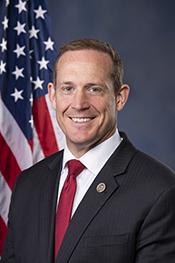
United States · Official source
2,264 records where Sen. Budd, Ted [R-NC] is listed as a sponsor, author, or other actor. Search with topics and years
United States · United States Congress · 5 June 2025
United States · United States Congress · 5 June 2025
United States · United States Congress · 3 June 2025
United States · United States Congress · 2 June 2025
United States · United States Congress · 22 May 2025
United States · United States Congress · 22 May 2025
United States · United States Congress · 22 May 2025
Innovative Feed Enhancement and Economic Development Act of 2025 or the Innovative FEED Act of 2025 This bill provides for the regulation of zootechnical animal food substances as food additives. The bill defines zootechnical animal food substance as a substance that is added to the food or drinking water of animals and that affects only the animal's gastrointestinal tract, with the intended purpose of affecting the byproducts of the animal's digestion, reducing foodborne pathogens, or altering the animal's gastrointestinal biome. The definition does not include substances that are used to treat or prevent diseases in animals, hormones, or active ingredients of animal drugs. Labels for zootechnical animal food substances must include a disclaimer that the substance may not be used to treat or prevent diseases in animals.
United States · United States Congress · 22 May 2025
Stratton Ridge Air Force Memorial Act This bill authorizes the Forest Service to relocate a memorial in North Carolina honoring the nine Air Force crew members who lost their lives in an airplane crash in the Cherokee and Nantahala National Forests during a training mission on August 31, 1982, if the owner of the private land where the memorial is currently located consents. The Forest Service may relocate the memorial to an appropriate site at the Stratton Ridge rest area located at mile marker 2 on the Cherohala Skyway in Graham County, North Carolina, in the Nantahala National Forest. The site must be approved by (1) the North Carolina Department of Transportation, and (2) the Federal Highway Administration if the site is located adjacent to a federal-aid highway.
United States · United States Congress · 22 May 2025
Plant Biostimulant Act of 2025 This bill excludes certain plant biostimulants (i.e., substances, microorganisms, or mixtures thereof that support a plant's natural processes independently of the nutrient content) from regulation as pesticides under the Federal Insecticide, Fungicide, and Rodenticide Act (FIFRA). Specifically, the bill excludes biological plant biostimulants (or those that are synthetic but structurally similar to substances of biological origin) from being classified as plant regulators, which are substances regulated as pesticides under FIFRA. Additionally, the bill excludes nutritional chemicals and plant biostimulants from being classified as nitrogen stabilizers, which are generally regulated as pesticides under FIFRA. The bill also establishes statutory definitions for plant biostimulants, nutritional chemicals, and vitamin hormone products. The bill requires the Department of Agriculture to study and report on the types of plant biostimulants and practices of plant biostimulant use that best achieve certain results, such as increasing organic matter content.
United States · United States Congress · 22 May 2025
Taiwan Non-Discrimination Act of 2025 This bill requires actions to support Taiwan's participation in the International Monetary Fund (IMF). The U.S. Governor of the IMF must advocate for (1) Taiwan's admission into the IMF as a member, to the extent Taiwan seeks to be a member; (2) Taiwan's participation in the IMF's regular surveillance activities relating to Taiwan's economic and financial policies; (3) employment opportunities at the IMF for Taiwan nationals; and (4) Taiwan's ability to receive IMF technical assistance and training.
United States · United States Congress · 22 May 2025
United States · United States Congress · 22 May 2025
United States · United States Congress · 21 May 2025
United States · United States Congress · 21 May 2025
Retirement Investment in Small Employers Act This bill increases the federal tax credit limit for startup costs incurred by certain small businesses to establish a qualified retirement plan. As background, a federal tax credit is allowed for 50% of the costs incurred by a small business with no more than 100 qualified employees (or 100% of such costs for a small business with no more than 50 qualified employees) to establish a qualified retirement plan. Under current law, the tax credit is limited to the greater of (1) $500, or (2) the lesser of $250 per eligible employee or $5,000. (Additional limits may apply.) The bill increases the limit on the tax credit for retirement plan startup costs for employers with no more than 10 employees to the greater of (1) $2,500, or (2) the lesser of $250 per employee or $5,000. For the increased tax credit limit to apply, the retirement plan established by the business must accept payment of the matching contribution under the Saver’s Match program. Under the Saver's Match program, beginning in 2027, individuals that meet certain requirements are eligible to have a federal matching contribution of up to $1,000 (or $2,000 for married joint filers) deposited into a qualified retirement account.
United States · United States Congress · 20 May 2025
Drone Espionage Act This bill makes it a federal crime under the Espionage Act to engage in certain activities related to obtaining, receiving, or transmitting video of national defense information. The term national defense information means information or other material that is related to national defense. The Espionage Act prohibits certain activities related to obtaining, receiving, or transmitting national defense information that could harm the United States or aid a foreign nation. Under current law, the prohibitions only apply if national defense information is obtained, received, or transmitted by certain means, such as a sketch, photograph, photographic negative, blueprint, plan, map, model, instrument, appliance, document, writing, or note. Under current law, a violator is subject to criminal penalties—a fine, a prison term of up to 10 years, or both. This bill makes the criminal prohibitions under the Espionage Act applicable if national defense information is obtained, received, or transmitted by means of video. Under this bill, a violator is subject to the same penalties as under existing law—a fine, a prison term of up to 10 years, or both.
United States · United States Congress · 20 May 2025
Black Vulture Relief Act of 2025 This bill allows livestock producers and their employees to take certain actions against black vultures to protect livestock. (Black vultures are protected under the Migratory Bird Treaty Act.) Specifically, livestock producers and their employees may (1) take (i.e., capture, kill, or disperse, or transport the carcass of) a black vulture that they reasonably believe will cause death, injury, or destruction to livestock; or (2) in the course of taking or attempting to take the black vulture, cause injury to the bird. However, they may not take or attempt to take a black vulture through the use of poison. Livestock producers and their employees must submit an annual report to the U.S. Fish and Wildlife Service (FWS) on black vultures taken under this bill. The FWS must develop a reporting form and make this reporting form available on its website. Currently, the FWS has a permit process under the Migratory Bird Treaty Act for the taking of black vultures.
United States · United States Congress · 20 May 2025
Improving Seniors' Timely Access to Care Act of 2025 This bill establishes several requirements and standards relating to prior authorization processes under Medicare Advantage (MA) plans. Specifically, MA plans must (1) establish an electronic prior authorization program that meets specified standards; (2) annually submit to the CMS for publication specified prior authorization information, including the percentage of requests approved and the average response time; and (3) meet other standards, as set by the Centers for Medicare & Medicaid Services (CMS), relating to the quality and timeliness of prior authorization determinations. The CMS and the Office of the National Coordinator for Health Information Technology must publish on the CMS' website a report that analyzes the information received from MA plans, the feasibility of implementing real-time decision making with respect to prior authorization requests, and the impact of decisions that are made using artificial intelligence on patient access.
United States · United States Congress · 19 May 2025
United States · United States Congress · 15 May 2025
Charlotte Woodward Organ Transplant Discrimination Prevention Act This bill expressly prohibits organ transplant service providers that receive federal funds and state and local government programs from denying or restricting an individual's access to organ transplants on the basis of the individual's disability, except in limited circumstances. Specifically, these entities may not take into account an individual's disability when providing transplant services, including with respect to eligibility, referrals for services, and placement on waiting lists. Entities must provide reasonable modifications to policies or appropriate auxiliary equipment and services unless doing so changes the fundamental nature of the program or activity involved. Any consideration of an individual's disability must be based on an individualized assessment and comply with the Americans with Disabilities Act of 1990 and other applicable laws. The Office for Civil Rights of the Department of Health and Human Services (HHS) must consider for expedited resolution complaints alleging discrimination on the basis of disability with respect to organ transplant services. HHS must annually report to Congress on complaints received and recommendations to improve enforcement of the bill. In addition, the bill prohibits discrimination on the basis of disability in the Organ Procurement and Transplantation Network's policies regarding allocating organs. This network is a public-private partnership linking professionals involved in the U.S. organ donation and transplantation system.
United States · United States Congress · 15 May 2025
United States · United States Congress · 14 May 2025
United States · United States Congress · 14 May 2025
United States · United States Congress · 14 May 2025
Supersonic Aviation Modernization Act This bill directs the Federal Aviation Administration (FAA) to allow civil aircraft to operate at speeds above Mach 1 (i.e., supersonic) over land in the United States under certain conditions. Specifically, the FAA must issue or revise regulations to allow for the operation of civil aircraft at speeds greater than Mach 1 in the national airspace system without a special authorization, so long as no sonic boom reaches the ground in the United States. Current regulations prohibit civil aircraft from operating above Mach 1 speeds over land in the United States without a special flight authorization issued by the FAA.
United States · United States Congress · 13 May 2025
United States · United States Congress · 13 May 2025
United States · United States Congress · 13 May 2025
United States · United States Congress · 13 May 2025
United States · United States Congress · 13 May 2025
United States · United States Congress · 12 May 2025
United States · United States Congress · 12 May 2025
United States · United States Congress · 12 May 2025
United States · United States Congress · 8 May 2025
United States · United States Congress · 8 May 2025
United States · United States Congress · 8 May 2025
Deregulating Restrictions on Interstate Vehicles and Eighteen-wheelers Act or the DRIVE Act This bill prohibits the Federal Motor Carrier Safety Administration (FMCSA) from issuing any rule or regulation to require a commercial motor vehicle to be equipped with a speed limiting device set to a maximum speed. The FMCSA issued an advance notice of supplemental proposed rulemaking on this subject on May 4, 2022. A commercial motor vehicle includes a vehicle operating in interstate commerce that (1) has a gross vehicle weight of 10,001 pounds or more, (2) is designed or used to transport more than 8 passengers for compensation, (3) is designed or used to transport more than 15 passengers and is not used to transport passengers for compensation, or (4) is used to transport certain quantities of hazardous materials.
United States · United States Congress · 8 May 2025
Access to Prescription Digital Therapeutics Act of 2025 This bill provides for Medicare and Medicaid coverage of prescription digital therapeutics (i.e., software applications that are used to prevent, manage, or treat medical conditions). The Centers for Medicare & Medicaid Services must establish a Medicare payment methodology for payments to manufacturers that takes into account certain factors (e.g., ongoing use); manufacturers must report specified information about private payors, subject to civil penalties.
United States · United States Congress · 8 May 2025
United States · United States Congress · 8 May 2025
United States · United States Congress · 7 May 2025
United States · United States Congress · 7 May 2025
United States · United States Congress · 7 May 2025
Bankruptcy Administration Improvement Act of 2025 This bill makes several changes to the administration of bankruptcy cases, particularly by increasing certain fees, extending the sunset date of various fees, and extending the term of specified bankruptcy judgeships. The bill increases the fees paid to the trustee in Chapter 7 (liquidation) cases. The bill extends for an additional five years the fees paid quarterly to the U.S. trustee in Chapter 11 (reorganization) cases. The bill also increases the fee percentage for cases with large disbursements, subject to limitations. Finally, temporary bankruptcy judgeships in various districts are extended for an additional five years.
United States · United States Congress · 6 May 2025
Authorizing Vocational and Instructional Aviation Training for Eligible Veterans Act of 2025 or the AVIATE Act of 2025 This bill authorizes the Department of Veterans Affairs (VA) to approve nondegree flight training courses for certain veterans with service-connected disabilities as part of the VA’s vocational rehabilitation programs under the Veteran Readiness and Employment (VR&E) program. Generally, the VR&E program provides job training and other employment-related services to veterans with service-connected disabilities, including long-term employment training courses.
United States · United States Congress · 6 May 2025
United States · United States Congress · 5 May 2025
This resolution honors the contributions of small businesses in the United States and supports the designation of National Small Business Week.
United States · United States Congress · 5 May 2025
Immigration Parole Reform Act of 2025 This bill limits the authority of the Department of Homeland Security (DHS) to grant immigration parole (i.e., give official permission for an individual to enter and temporarily remain in the United States). Specifically, the bill (1) limits what qualifies as an urgent humanitarian reason or a significant public benefit that would justify granting parole, and (2) prohibits granting parole based on an individual's membership in a defined class of individuals. An urgent humanitarian reason is limited to medical emergencies, the death of a close family member, and to green card applicants returning to the United States after temporary travel abroad. A significant public benefit is limited to assisting the U.S. government in a law enforcement matter. Individuals granted parole on the basis of an urgent humanitarian reason or a significant public benefit are not permitted to work while in the United States. Additionally, the bill provides statutory authority for DHS to grant parole to certain Cuban nationals and to certain family members of active-duty Armed Forces members.
United States · United States Congress · 1 May 2025
United States · United States Congress · 1 May 2025
Federal Carjacking Enforcement Act This bill lowers the threshold the government must meet to establish that a defendant committed a federal carjacking offense. Under current law, the federal carjacking statute prohibits taking (or attempting to take) a motor vehicle from the presence of another by force and violence or intimidation, with the intent to cause death or serious bodily harm. This bill removes the requirement that a defendant take (or attempt to take) a motor vehicle with the specific intent to cause death or serious bodily harm. Under the bill, the government need only prove that a defendant took (or attempted to take) a motor vehicle knowingly. A violation (or attempted violation) is subject to the same criminal penalties as under current law—a fine, a prison term of up to 15 years, or both. A violation that results in death or serious bodily injury is subject to the same criminal penalties as under current law—a fine, a prison term of up to 25 years, or both—but only if the offense involves certain aggravating circumstances: (1) the motor vehicle is taken with the intent to cause death or serious bodily harm, or (2) a firearm is brandished or discharged during the offense.
United States · United States Congress · 1 May 2025
United States · United States Congress · 30 April 2025
This bill increases the annual limit on the tax credit for qualified railroad track maintenance expenses (also referred to as the short line railroad tax credit) and expands eligibility for claiming the credit. Under current law, the tax credit is limited each tax year to $3,500 multiplied by the sum of the number of miles of railroad track owned or leased by the taxpayer (miles owned or leased) and the number of railroad track miles assigned to the taxpayer by a Class II or III railroad (miles assigned). This bill increases the annual limit to $6,100 multiplied by the sum of miles owned or leased and miles assigned. The $6,100 amount used in the calculation of the tax credit limit is adjusted for inflation for tax years beginning after 2025. The bill also expands eligibility for the tax credit to include gross expenses for maintaining railroad tracks owned or leased as of January 1, 2024. Under current law, the tax credit is limited to gross expenses for maintaining railroad tracks owned or leased as of January 1, 2015.
United States · United States Congress · 30 April 2025
United States · United States Congress · 29 April 2025