Bill· SS. 1112 (119th)open
Big Bend National Park Boundary Adjustment Act
United States · United States Congress · 25 March 2025
The world's political record
Person
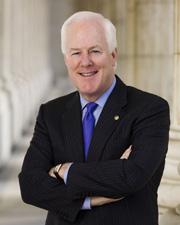
United States · Official source
4,950 records where Sen. Cornyn, John [R-TX] is listed as a sponsor, author, or other actor. Search with topics and years
United States · United States Congress · 25 March 2025
United States · United States Congress · 25 March 2025
Dennis and Lois Krisfalusy Act This bill expands eligibility for a memorial headstone or marker for the spouse, surviving spouse, child, or dependent of a veteran or member of the Armed Forces. Currently, for individuals whose remains are unavailable, such benefit is only available for individuals who died on or after November 11, 1998. The bill makes such individuals eligible regardless of the date they died.
United States · United States Congress · 24 March 2025
Opioid Overdose Data Collection Enhancement Act This bill allows grants under the Comprehensive Opioid, Stimulant, and Substance Use Program to be used to implement overdose data collection programs. An overdose data collection program tracks the locations of suspected overdoses and the administration of opioid overdose reversal medication by first responders.
United States · United States Congress · 14 March 2025
This bill requires the Department of Veterans Affairs to disinter the remains of Fernando V. Cota from Fort Sam Houston National Cemetery, Texas, after notifying his next of kin. The VA must relinquish the remains to the next of kin or, if no next of kin responds to the notification, arrange for the disposition of the remains. Cota was interred prior to the enactment of regulations that would have barred his interment due to a 1975 rape conviction.
United States · United States Congress · 13 March 2025
United States · United States Congress · 13 March 2025
Drug Competition Enhancement Act This bill prohibits product hopping by drug manufacturers and authorizes the Federal Trade Commission (FTC) to enforce this prohibition. Generally, product hopping describes a situation where, when the patents on a reference drug (or biological product) expire, the manufacturer switches to a follow-on product that is covered by a later-expiring patent. Under this bill, a follow-on product is a modified version of the reference drug that has an indication (what the drug is used for) that is identical or substantively similar to an indication of the reference drug. The bill establishes a presumption that product hopping has occurred when a reference drug manufacturer, after receiving notice that the Food and Drug Administration has received an application to market a competing generic (or biosimilar) version, takes certain actions such as withdrawing the reference drug from the market and selling a follow-on product. A drug manufacturer may rebut these presumptions by demonstrating that its conduct was not intended to limit competition. The bill makes product hopping an unfair method of competition and provides for enforcement by the FTC. If the FTC has reason to believe a manufacturer has violated or is about to violate this prohibition on product hopping, the FTC may institute an administrative proceeding or bring suit in federal court to stop the manufacturer’s action and seek equitable remedies, including disgorgement of unjust profits or paying restitution to those harmed.
United States · United States Congress · 13 March 2025
Improving Access to Addiction Medicine Providers Act This bill provides statutory authority for the Minority Fellowship Program to include fellowships for training in the field of addiction medicine. (The Minority Fellowship Program, administered by the Substance Abuse and Mental Health Services Administration, funds fellowships for individuals seeking graduate degrees and planning to work on addressing mental or substance use disorders in racial and ethnic minority populations.)
United States · United States Congress · 13 March 2025
United States · United States Congress · 13 March 2025
United States · United States Congress · 13 March 2025
Affordable Prescriptions for Patients Act This bill limits in certain instances the number of patents that the manufacturer of a biologic drug can assert in a lawsuit against a company seeking to sell a biosimilar version of that drug. (A biologic drug is produced through natural processes or isolated from natural sources. A biosimilar version is substantially similar to the original biologic, which is the reference product, and is often marketed as a less expensive alternative.) The bill's provisions apply to an existing framework that gives the biosimilar manufacturer an abbreviated path to Food and Drug Administration approval to sell the biosimilar. Specifically, if the biosimilar manufacturer completes certain actions under the framework, such as sharing certain information about its product with the reference product manufacturer, the bill limits the number of certain patents that the reference product manufacturer may assert in a lawsuit, such as patents that were filed more than four years after the reference product received market approval. The limit shall not apply to patents claiming certain methods for using the biologic drug. The court in which the infringement lawsuit is filed may increase the limit if justice so requires or if there is good cause for the increase.
United States · United States Congress · 13 March 2025
Foreign Investment Guardrails to Help Thwart China Act of 2025 or FIGHT China Act of 2025 This bill authorizes sanctions on certain foreign persons (individuals and entities) that are involved with China's defense or surveillance technology sectors. The bill also requires U.S. persons to notify the Department of the Treasury about their investments with certain foreign persons in various technologies, and (2) authorizes Treasury to prohibit U.S. persons from making investments with such foreign persons in some of these technologies. Specifically, the President is authorized to impose property-blocking sanctions on certain foreign persons (including members of the Chinese Communist Party Central Committee, Chinese businesses, Chinese governmental entities, and businesses with equity securities primarily traded on Chinese stock exchanges) that Treasury determines to be knowingly engaged in significant operations in China's defense, defense-related material, or surveillance technology sectors. Additionally, the bill authorizes Treasury to bar U.S. persons from knowingly engaging in certain transactions (such as acquiring an equity interest, providing a loan, or entering into a joint venture) with most of these categories of foreign persons if they involve a prohibited technology. Prohibited technologies include those that develop a quantum computer; develop, design, or produce materials, components, or systems for hypersonic systems; or develop, design, or produce artificial intelligence models for use by the Chinese government. Treasury must require U.S. persons to notify Treasury if they engage in such transactions involving a range of technologies, including the prohibited technologies.
United States · United States Congress · 13 March 2025
United States · United States Congress · 12 March 2025
Protecting Life and Integrity in Research Act of 2025 This bill prohibits federal agencies from supporting research involving, and prohibits any entity from soliciting or knowingly acquiring, human fetal tissue obtained pursuant to an induced abortion. Specifically, the bill prohibits any federal agency from conducting, funding, approving, or otherwise supporting research involving such tissue. Federal agencies may conduct or support research involving human fetal tissue obtained after a miscarriage or stillbirth. Additionally, the bill prohibits any entity from soliciting or knowingly acquiring, receiving, or accepting a donation of human fetal tissue where the entity knows it was obtained pursuant to an induced abortion. Entities violating this prohibition are subject to criminal penalties. The bill provides an exception for transfers for purposes of autopsy or burial.
United States · United States Congress · 12 March 2025
Medical Supply Chain Resiliency Act This bill authorizes actions to facilitate trade in medical goods (i.e., medical devices, pharmaceutical goods, or inputs for such devices or goods). Specifically, the bill authorizes the President to (1) negotiate, enter into, and enforce a trusted trade partner agreement with a country or countries with respect to medical goods; and (2) proclaim a modification of any existing duty, a continuance of existing duty-free or excise treatment, or additional duties to carry out the trade agreement. These actions may only be taken if the President determines, based on specified considerations, that the reciprocal elimination of existing duties or other import restrictions with respect to medical goods would contribute to U.S. national security and public health. A trusted trade partner agreement may include certain provisions, such as those to (1) reduce or eliminate duties, quotas, or other trade barriers; (2) diversify and expand supplier networks to secure a reliable supply of medical goods; and (3) harmonize regulatory procedures. Not later than 60 days before initiating negotiations with a trusted trade partner, the President must submit written notice to Congress. The bill requires congressional consultation and review of these trade agreements. A trade agreement shall not take effect if, during the required review period, Congress enacts a joint resolution of disapproval. The Office of the U.S. Trade Representative must monitor compliance by a trusted trade partner with the trade agreement's commitments and obligations. Further, the President may take certain actions in response to a failure to comply.
United States · United States Congress · 11 March 2025
Connecting Our Medical Providers with Links to Expand Tailored and Effective Care or the COMPLETE Care Act This bill increases payments and establishes certain requirements to support integrated behavioral health services under Medicare. Specifically, the bill increases payments for integrated behavioral health services that are provided by physicians under Medicare for 2027-2029, with payments increased by 175% in 2027, 150% in 2028, and 125% in 2029. The bill provides funds for FY2025-FY2029 for the Centers for Medicare & Medicaid Services to contract with entities to provide technical assistance to primary care practices that want to adopt models for behavioral health integration.
United States · United States Congress · 11 March 2025
This joint resolution nullifies the final rule issued by the Consumer Financial Protection Bureau titled Prohibition on Creditors and Consumer Reporting Agencies Concerning Medical Information (Regulation V) and published on January 14, 2025. This rule prohibits the inclusion of medical debt on credit reports and prohibits creditors from considering medical debt when making credit eligibility determinations.
United States · United States Congress · 11 March 2025
Fairness in Veterans’ Education Act of 2025 This bill modifies the process for repaying service members and veterans who paid to keep benefits under the Montgomery GI Bill, but later chose to utilize Post-9/11 GI Bill benefits. Specifically, the bill removes the requirement for the Department of Veterans Affairs (VA) to issue the repayments with the last monthly housing stipend under the Post-9/11 GI Bill. This requirement has limited the repayments to individuals who are receiving stipends. Under the bill, the VA must make such a repayment before the exhaustion of the individual's entitlement to education assistance.
United States · United States Congress · 10 March 2025
This bill designates the facility of the U.S. Postal Service located at 620 East Pecan Boulevard in McAllen, Texas, as the Agent Raul H. Gonzalez Jr. Memorial Post Office.
United States · United States Congress · 6 March 2025
United States · United States Congress · 5 March 2025
Hershel "Woody" Williams National Medal of Honor Monument Location Act This bill requires the authorized monument honoring Medal of Honor recipients to be located within the Reserve (the great cross-axis of the National Mall, which generally extends from the Capitol to the Lincoln Memorial and from the White House to the Jefferson Memorial).
United States · United States Congress · 5 March 2025
Disclosing Foreign Influence in Lobbying Act This bill requires registered lobbyists to disclose any foreign countries or political parties that are involved in the direction, planning, supervision, or control of the lobbyist's activities.
United States · United States Congress · 4 March 2025
Sea Turtle Rescue Assistance and Rehabilitation Act of 2025 This bill reauthorizes through FY2030 and expands the John H. Prescott Marine Mammal Rescue and Response Grant Program to include separate grants to rescue sea turtles. The grants must be used for the recovery, care, or treatment of sick, injured, or entangled sea turtles; responses to rescue stranded sea turtles; the collection of data and samples from living or dead stranded sea turtles for scientific research or health assessments; facility operating costs that are directly related to activities to assist sea turtles; or development of stranding network capacity where facilities do not exist or are sparse. In addition, the bill establishes the Sea Turtle Rescue, Rehabilitation, and Rapid Response Fund.
United States · United States Congress · 4 March 2025
United States · United States Congress · 3 March 2025
Taiwan Assurance Implementation Act This bill expands an existing requirement for the Department of State to review and report on its guidance to federal agencies on the U.S.-Taiwan relationship. (The U.S.-Taiwan relationship has been unofficial since 1979, when the United States established diplomatic relations with China and broke them with Taiwan.) Current law requires the State Department to conduct a one-time review of its guidance governing relations with Taiwan and report to Congress on this review. Under this bill, the State Department must review that guidance, reissue it, and report to Congress every five years while the guidance is in effect. The reports to Congress must (1) describe the results of the guidance review and any changes to it resulting from implementation of a law that encourages engagement between Taiwanese and U.S. officials; (2) describe how the guidance takes into account certain considerations, such as the sense of Congress that Taiwan is governed by a representative government peacefully constituted through free and fair elections; and (3) identify self-imposed restrictions on relations with Taiwan that the State Department has lifted in its most recent guidance update.
United States · United States Congress · 3 March 2025
Supporting all Healthy Options when Purchasing Produce Act of 2025 or the SHOPP Act of 2025 This bill modifies the Gus Schumacher Nutrition Incentive Program (GusNIP) to include fresh frozen fruits and vegetables. GusNIP is a Department of Agriculture (USDA) program that provides grants for projects that increase low-income consumers' purchases of fruits and vegetables. It is made up of three competitive grant programs, including the GusNIP Nutrition Incentive Program, which provides grants for projects that provide incentives for Supplemental Nutrition Assistance Program (SNAP) participants to purchase fruits and vegetables. The bill directs USDA, in awarding GusNIP Nutrition Incentive Program grants, to give priority to projects that increase year-round availability of nutrition incentives by offering fresh frozen fruits or vegetables in the program. In addition, the bill amends another GusNIP program, the Produce Prescription Program, to include fresh frozen fruits and vegetables, as well as fresh and fresh frozen legumes. Currently, only fresh fruits and vegetables are covered under the program. The GusNIP Produce Prescription Program supports projects that demonstrate and evaluate the impact of fruit and vegetable prescriptions on increasing procurement and consumption of fruits and vegetables, reducing individual and household food insecurity, and reducing healthcare usage and associated costs.
United States · United States Congress · 3 March 2025
United States · United States Congress · 3 March 2025
United States · United States Congress · 27 February 2025
United States Research Protection Act of 2025 This bill clarifies the definition of a malign foreign talent recruitment program under the Research and Development, Competition, and Innovation Act. The Research and Development, Competition, and Innovation Act, which was included in the CHIPS and Science Act, prohibits researchers who receive federal funds from participating in malign foreign talent recruitment programs, in which foreign countries incentivize or compensate researchers for activities that present a conflict of interest for the researcher or that are otherwise unauthorized (e.g., sharing proprietary information without proper authorization). The bill clarifies that these restrictions apply to programs that are sponsored by a foreign country of concern, including China, Iran, North Korea, and Russia. The bill also clarifies that malign foreign talent recruitment programs may involve direct or indirect compensation or incentives from such countries.
United States · United States Congress · 27 February 2025
Critical Minerals Security Act of 2025 This bill establishes requirements for the Department of the Interior related to securing U.S. access to critical minerals and rare earth element (REE) resources. Critical minerals mean any mineral, element, substance, or material designated as critical by the U.S. Geological Survey. REEs mean cerium, dysprosium, erbium, europium, gadolinium, holmium, lanthanum, lutetium, neodymium, praseodymium, promethium, samarium, scandium, terbium, thulium, ytterbium, and yttrium. First, Interior must report on the critical mineral and REE resources, including recyclable or recycled materials containing those resources, around the world. Among other information, the report must include an assessment of the global ownership and supply of critical mineral and REE resources. Interior must submit the report within a year and every two years thereafter. Next, Interior must establish a process to assist a U.S. person—a U.S. citizen, a non-U.S. National (alien under federal law) lawfully admitted for permanent residence, or an entity organized under U.S. laws—seeking to divest stock in mining, processing, or recycling operations for critical minerals and REEs in a foreign country with finding a purchaser that is not under the control of North Korea, China, Russia, or Iran. Finally, Interior must develop (1) a strategy to collaborate with U.S. allies and partners to develop advanced mining, refining, separation, processing, and recycling technologies; and (2) a method for sharing related intellectual property with U.S. allies and partners to enable those countries to license those technologies and develop their resources.
United States · United States Congress · 27 February 2025
United States · United States Congress · 26 February 2025
This resolution recognizes Black History Month as an opportunity to reflect on U.S. history and to commemorate the contributions of African Americans. It calls for the United States to (1) honor the contribution of pioneers who helped to ensure its legacy; and (2) move forward as a nation "indivisible, with liberty and justice for all."
United States · United States Congress · 25 February 2025
Veterans Mental Health and Addiction Therapy Quality of Care Act This bill requires the Department of Veterans Affairs (VA) to seek to enter into an agreement with an independent and objective organization to study the difference in quality of mental health and addiction therapy care provided by the VA compared to non-VA providers across various modalities. The organization must publish its findings publicly.
United States · United States Congress · 25 February 2025
United States · United States Congress · 25 February 2025
United States · United States Congress · 25 February 2025
Edward J. Dwight, Jr., Congressional Gold Medal Act of 2025 This bill provides for the award of a Congressional Gold Medal to Edward J. Dwight, Jr., the first African American astronaut candidate in the United States, in recognition of his historic service to the United States, his example of excellence during times of struggle and overt racism, and his contributions in art and Black history.
United States · United States Congress · 24 February 2025
United States · United States Congress · 24 February 2025
United States · United States Congress · 20 February 2025
North Platte Canteen Congressional Gold Medal Act This bill provides for the award of a Congressional Gold Medal to recognize the individuals and communities that provided financial and other support for the North Platte Canteen in North Platte, Nebraska, during World War II.
United States · United States Congress · 20 February 2025
United States · United States Congress · 20 February 2025
LEOSA Reform Act This bill broadens the authority for certain individuals to carry concealed firearms in school zones and across state lines. Specifically, the bill exempts the following categories of individuals from the federal prohibition on possessing (or discharging) a firearm in a school zone: certain active and retired law enforcement officers who are authorized to carry concealed firearms under federal law, and individuals who are allowed to carry concealed firearms under the law of a state. Additionally, the bill allows qualified active and retired law enforcement officers to carry concealed firearms and ammunition (including magazines) in national parks; on state, local, or private property that is open to the public; and in certain federal facilities that are open to the public. Finally, the bill permits states to reduce the frequency with which retired law enforcement officers must meet certain qualification standards.
United States · United States Congress · 20 February 2025
Border Airport Fairness Act of 2025 This bill requires the President to designate certain primary airports near the border as ports of entry and terminate the user fee requirement for customs services at these airports.
United States · United States Congress · 20 February 2025
United States · United States Congress · 18 February 2025
United States · United States Congress · 18 February 2025
United States · United States Congress · 13 February 2025
Antisemitism Awareness Act of 2025 This bill provides statutory authority for the requirement that the Department of Education’s Office for Civil Rights take into consideration the International Holocaust Remembrance Alliance's (IHRA's) working definition of antisemitism when reviewing or investigating complaints of discrimination based on race, color, or national origin in programs or activities that receive federal financial assistance. According to the IHRA's working definition, antisemitism is a certain perception of Jews, which may be expressed as hatred toward Jews.
United States · United States Congress · 13 February 2025
Healthy Poultry Assistance and Indemnification Act of 2025 This bill expands the Animal and Plant Health Inspection Service (APHIS) producer indemnity and compensation program to include compensation for all poultry growers and layers located in an APHIS-determined control area, which may include non-infected poultry. Currently, APHIS provides indemnity and compensation to producers to remove animals classified as affected, suspect, or exposed to diseases of concern, including highly pathogenic avian influenza (HPAI). An APHIS-determined control area consists of both an infected zone and a buffer zone. Under the bill, APHIS must compensate all owners of poultry growing or laying facilities within a control area, which may include facilities that are located in the buffer zones and have non-infected poultry. Further, the bill establishes a new compensation payment formula that requires payments to be based on the owner’s average income from the five most recent flocks.
United States · United States Congress · 13 February 2025
Border Enforcement, Security, and Trade Facilitation Act of 2025 or the BEST Facilitation Act This bill establishes a pilot program for positions within U.S. Customs and Border Protection (CBP) to review inspection images of vehicles and cargo entering or exiting the United States. Specifically, the bill establishes the position of image technician 1 within the CBP Office of Field Operations. An image technician must (1) review nonintrusive inspection images of vehicles and cargo entering or exiting the United States; (2) assess whether such vehicles and cargo contain contraband, illicit drugs, weapons, or persons seeking to unlawfully enter the United States; and (3) refer suspicious vehicles and cargo for further inspection by a CBP officer. These reviews must take place at one of five regional command centers established pursuant to this pilot program. The bill also establishes the position of image technician 2 with additional responsibilities, including receiving and reporting intelligence to the National Targeting Center about techniques used by malign actors to transport contraband, illicit drugs, weapons, and persons seeking to unlawfully enter the United States. Image technicians must be supervised by a supervisory CBP officer. The bill establishes annual training requirements for both positions, including training on privacy and civil liberties and how to analyze inspection images. This pilot program ends five years after the date of enactment of this bill. Individuals employed as image technicians at the end of the pilot program may transfer to comparable positions within CBP or the Department of Homeland Security.
United States · United States Congress · 13 February 2025
United States · United States Congress · 13 February 2025
The resolution urges the E3 (the United Kingdom, France, and Germany) to invoke the snapback of United Nations (UN) sanctions against Iran under UN Security Council Resolution 2231 before the option expires on October 18, 2025. This resolution also (1) recognizes that Iran's possession of a nuclear weapon would threaten U.S. and global security, (2) condemns Iran's repeated violations of certain international commitments related to nuclear weapons, and (3) reaffirms that the United States maintains the right to prevent Iran from acquiring nuclear weapons.
United States · United States Congress · 12 February 2025
PROTECT Our Children Reauthorization Act of 2025 This bill reauthorizes through FY2028 and updates (1) the National Strategy for Child Exploitation Prevention and Interdiction (National Strategy), and (2) the National Internet Crimes Against Children (ICAC) Task Force Program. With respect to the National Strategy, current law requires the Department of Justice (DOJ) to update the strategy every two years and include 19 specific elements in the strategy (e.g., long-range goals, annual measurable objectives, and future trends). This bill requires DOJ to update the National Strategy every four years. The bill also revises and consolidates the 19 required elements into 9 required elements, including an analysis of current trends and challenges as well as the overall magnitude of the threat of child exploitation. The ICAC Task Force Program is a national network of task forces that support state and local efforts to investigate and prosecute the online sexual exploitation of children. This bill requires ICAC task forces to increase the investigative capacity of law enforcement to identify child victims and report the number of child victims identified in their annual reports. The bill also limits the liability of ICAC task forces for civil claims or criminal charges in federal or state court arising from decisions with respect to leads related to internet crimes against children. Finally, the bill requires the National Center for Missing & Exploited Children to provide additional information to law enforcement agencies when it refers a report of online sexual exploitation of children for investigation.