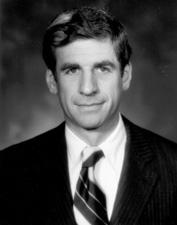
United States · United States Congress · 14 March 1991
Railroad Employee Testing Act of 1991 - Amends the Federal Railroad Safety Act of 1970 to require the Secretary of Transportation to issue regulations and standards that require: (1) railroads to conduct preemployment, reasonable suspicion, random, and post-accident testing of railroad employees responsible for safety-sensitive functions for use, in violation of Federal law, of alcohol or a controlled substance; (2) disqualification for a period of time or dismissal of employees found to have used or have been impaired by such alcohol or substances; and (3) rehabilitation programs for the treatment of such employees.
United States · United States Congress · 13 March 1991
General Aviation Accident Liability Standards Act of 1991 - Declares that this Act supersedes any State law regarding liability for general aviation accidents. Establishes guidelines for uniform standards of liability of general aviation manufacturers for general aviation accidents. States that all actions for harm arising out of a general aviation accident shall be governed by the principles of comparative responsibility. Establishes, with specified exceptions, a limitation of actions period of 20 years from delivery of aircraft or harm-causing part to the purchaser for general aviation civil liability brought against a general aviation manufacturer. Declares admissible as evidence certain income tax and payroll tax liability for purposes of establishing financial harm arising out of a general aviation accident. Permits the award of punitive damages if a claimant establishes by clear and convincing evidence that the harm suffered was the direct result of conduct manifesting conscious, flagrant indifference to safety. Establishes a two-year limitation of actions period for actions arising out of a general aviation accident. Declares the intent of the Congress that sanctions be strictly enforced for violations of Rule 11 of the Federal Rules of Civil Procedure, including orders to pay to the other party the reasonable costs of legal fees. Confers original jurisdiction upon the Federal district courts, concurrently with State courts, for all civil actions that exceed $50,000 for harm arising out of a general aviation accident. Provides procedures for removal from State to Federal district courts of such actions.
United States · United States Congress · 13 March 1991
Title I - Product Liability Fairness Act - Declares that this Act governs any product liability action brought against a manufacturer or product seller, on any theory, for harm caused by a product. States that a civil action brought against a manufacturer or product seller for loss or damage to a product itself or commercial loss shall be governed by applicable commercial or contract law. Supersedes any inconsistent State law regarding recovery in such actions. Lists specific laws not superseded, including: (1) defense of sovereign immunity asserted by any State or by the United States; (2) any Federal law (except the Federal Employees Compensation Act and the Longshore and Harbor Workers' Compensation Act); (3) the Foreign Sovereign Immunities Act of 1976; (4) State choice-of-law rules; (5) the right of any court to transfer venue or to apply the law of a foreign nation or to dismiss a claim of a foreign nation or citizen on the ground of inconvenient forum; and (6) any statutory or common law cause of action, including an action to abate a nuisance, that authorizes a State or person to institute an action for civil damages or civil penalties, clean up costs, injunctions, restitution, cost recovery, punitive damages, or any other form of relief from contamination or pollution of the environment or the threat of it. Declares that U.S. district courts shall not have jurisdiction over any civil action under this Act, based on specified provisions of Federal law relating to district court jurisdiction. Declares that, if any provision of this Act would shorten the period during which a manufacturer or seller would otherwise be exposed to liability, the claimant may, notwithstanding that period, bring any civil action under this Act within one year after the effective date of this Act. Title II - Allows any claimant to bring a civil action for damages against a person for harm caused by a product under applicable State law, except to the extent such law is superseded by this title. Sets forth expedited settlement measures, including: (1) an option to include an offer of settlement, for a specific dollar amount, by the plaintiff in the complaint and by the defendant in a responsive pleading; and (2) awarding attorney's fees and costs, in certain circumstances, to the prevailing party if the other party does not accept the settlement offer. Sets forth alternative dispute resolution procedures, including: (1) an option, in lieu of or in addition to a settlement offer, for a claimant or a defendant to offer to proceed under any voluntary alternative dispute resolution procedure established or recognized under the law of the State in which the action is brought or maintained; and (2) awarding of attorney's fees and costs to the offering party if the court determines that a refusal to so proceed was unreasonable or not in good faith. Creates a rebuttable presumption that a refusal to so proceed was unreasonable, or not in good faith, if a verdict is rendered in favor of the offeror. Title III - Allows a person seeking to recover for harm caused by a product to bring a civil action against the manufacturer or seller under applicable State or Federal law, except to the extent such law is superseded by this Act. Establishes a standard of product seller liability for proximate causes of harm, established by a preponderance of the evidence, which fall under the categories of negligence or express warranty. Allows the trier of facts, in a negligence action, to consider the conduct of the seller with respect to: (1) the construction, inspection, or condition of the product; and (2) failure to pass on warnings or instructions from the manufacturer. Deems the seller not liable for failure to provide warnings or instructions unless the claimant establishes that the seller failed to: (1) provide warnings or instructions received while the product was in the seller's possession and control; or (2) make reasonable efforts to provide users with warnings and instructions which it received after the product left its possession and control. Deems a seller not liable except for breach of warranty where there was no opportunity to inspect the product in a manner which would or should, in the exercise of reasonable care, have revealed the aspect which allegedly caused the harm. Declares that the seller shall be treated as the manufacturer and be liable for harm caused by a product as if it were the manufacturer if: (1) the manufacturer is not subject to service of process in any State in which the action might have been brought; or (2) the court determines that the claimant would be unable to enforce a judgment against the manufacturer. Allows punitive damages, if otherwise permitted by applicable law, to be awarded in any civil action under this title to any claimant who establishes by clear and convincing evidence that the harm suffered was the result of conduct manifesting a manufacturer's or product seller's conscious, flagrant indifference to the safety of those persons who might be harmed by a product. Declares that a failure to exercise reasonable care in choosing among alternative product designs, formulations, instructions, or warnings is not of itself such conduct. Prohibits awarding punitive damages in the absence of a compensatory award, subject to exception. Prohibits punitive damages against a manufacturer or seller of a drug or medical device where: (1) the drug or device was subject to pre-market approval by the Food and Drug Administration (FDA); or (2) the drug is generally recognized as safe and effective under conditions established by the FDA. Prohibits punitive damages against a manufacturer of an aircraft where: (1) the aircraft was subject to pre-market certification by the Federal Aviation Administration (FAA); and (2) the manufacturer complied, after delivery, with FAA requirements and obligations with respect to continuing airworthiness. Provides for separate proceedings, if requested by the manufacturer or seller, with regard to punitive damages. Lists factors the trier of fact is allowed to consider in determining the amount of punitive damages. Bars any civil action under this title: (1) unless filed within two years after the claimant discovered or should have discovered the harm and its cause, subject to exception; and (2) if the product involved is a capital good that is alleged to have caused harm which is not a toxic harm unless filed within twenty-five years after delivery of the product, provided the claimant has received or would be eligible for State or Federal workers' compensation. Excludes a motor vehicle, vessel, aircraft, or railroad used primarily to transport passengers for hire from these time limitations. States that nothing in these provisions affects the right of any person who is subject to liability under this Act to obtain contribution or indemnity from any other person who is responsible for the harm. Requires reduction in the damages awarded by the sum of all State or Federal workers' compensation benefits to which the employee is or would be entitled. Requires a claimant in a civil action under this title who is or may be eligible to receive State or Federal workers' compensation to notify the claimant's employer of the civil action. Requires an action to be stayed, at the sole discretion of the claimant, until a final determination is made on the amount payable as workers' compensation benefits. Declares that, unless the manufacturer or seller has expressly agreed to indemnify or hold an employer harmless, neither the employer nor the workers' compensation insurance carrier shall have a right of subrogation, contribution, or implied indemnity against the manufacturer or seller or a lien against the claimant's recovery, except if the claimant's harm was not in any way caused by the fault of the claimant's employer or co-employees. Allows the employer or workers' compensation insurer to intervene in the action to prove that fact. Prohibits a third party tortfeasor, where workers' compensation is involved, from maintaining any action for implied indemnity or contribution against the employer, any coemployee, or the exclusive representative of the injured person. Prohibits, for a person who is or would have been entitled to receive workers' compensation, any other action, unless a State or Federal workers' compensation law permits recovery based on a claim of an intentional tort. Makes these provisions inapplicable and declares that applicable State law shall control if the employer or the workers' compensation insurer asserts a right of subrogation, contribution, or implied indemnity against the manufacturer or seller or a lien against the claimant's recovery. Declares that, in any product liability action, the liability of each defendant for noneconomic damages shall be several and not joint. Requires the trier of fact to determine the proportion of responsibility of each party for the claimant's harm. Establishes a complete defense, in any civil action under this Act in which all defendants are manufacturers or sellers, that the claimant was under the influence of alcohol or any drug and that, as a result, the claimant was more than 50 percent responsible for the event which resulted in the harm. Defines "drug" to mean any non-over-the-counter drug which has not been prescribed by a physician.
United States · United States Congress · 12 March 1991
Motor Carrier Safety Assistance Program Reauthorization Act of 1991 - Amends Federal law to authorize the Secretary of Transportation (Secretary) to make grants to States for the development of programs for the enforcement of Federal and State commercial motor vehicle safety laws and standards. Requires the Secretary to formulate procedures for the submission of State plans enforcing such laws and standards. Sets forth specified plan requirements. Provides that the Federal share of costs for such programs shall not exceed 80 percent of such costs. Makes funds available for such grants out of the Highway Trust Fund. Amends the Surface Transportation Assistance Act of 1982 to authorize the reimbursement of costs in enforcing State commercial motor vehicle safety laws and standards to States with approved plans. Authorizes appropriations. Directs the Secretary to develop an improved formula for the allocation among States of Motor Carrier Safety Assistance Program funds. Amends the Commercial Motor Vehicle Safety Act of 1986 to require the Secretary to issue regulations establishing penalties for violations of out-of-service orders by commercial motor vehicle operators. Sets forth specified requirements. Requires the Secretary to submit to specified congressional committees a report on the effectiveness of: (1) the Commercial Vehicle Safety Alliance; and (2) the uniform financial penalty recommendations of the Alliance. Directs the Secretary to issue regulations specifying tolerance standards for ensuring compatibility of intrastate commercial motor vehicle safety laws under the Motor Carrier Safety Assistance Program. Requires the Secretary to consult with law enforcement organizations and affected industries to develop a model program for Program officers to enforce the .04 per centum blood alcohol concentration limit pursuant to the Commercial Motor Vehicle Safety Act of 1986. Directs the Secretary to add two additional positions at the headquarters of the Federal Highway Administration. Drug Free Truck Stop Act - Amends the Controlled Substances Act to impose mandatory minimum criminal penalties for the unlawful distribution or possession of controlled substances within 1,000 feet of a truck stop or safety rest area. Prohibits the suspension of a sentence, granting of probation, or eligibility for parole until the individual has served the minimum required sentence under the Federal criminal code for any person who violates this Act after a prior conviction under this Act has become final. Requires the U.S. Sentencing Commission to promulgate specified sentencing guidelines for violations of this Act. Bars multiple enhancements. Amends the Truck and Bus Safety and Regulatory Reform Act of 1988 to require the Secretary to initiate a rulemaking proceeding to adopt methods for improving braking performance standards for commercial motor vehicles. Requires the Secretary to give a high priority for safety, compliance, and other inspection or audit reviews to any motor carrier whose drivers demonstrate a serious pattern of violating state, local, or commercial motor vehicle safety laws, regulations, or standards.
United States · United States Congress · 7 March 1991
Surface Transportation Assistance Act of 1991 - Title I: Federal-Aid Highway Act of 1991 - Federal-Aid Highway Act of 1991 - Authorizes appropriations out of the Highway Account of the Highway Trust Fund (HTF) for: (1) the National Highway Program; (2) the Urban and Rural Program; (3) the Bridge Program; (4) the Right-of-Way Revolving Fund; (5) emergency relief; (6) the Federal Lands Highway Program; (7) the University Transportation Centers Program; and (8) highway use tax evasion projects. Specifies that unobligated balances of funds apportioned or allocated to a State under Federal highway provisions before October 1, 1991, shall be available for obligation in such State under the law, regulations, policies, and procedures relating to the obligation and expenditure of those funds in effect on September 30, 1991. Repeals the FY 1993 authorization under the Federal-Aid Highway Act of 1956. Authorizes appropriations for Interstate construction to complete the Interstate System (IS) out of the Highway Account of the HTF for each of FY 1992 through 1995. Provides for certain allocations for Massachusetts for such fiscal years. Sets forth a formula for the apportionment of authorized funds for such fiscal years among the States. Authorizes appropriations out of the Highway Account of the HTF for highway projects for the Interstate Substitution Program. Defines the National Highway System (NHS) as: (1) the highways of the IS; (2) other urban and rural principal arterials, including toll facilities; (3) highways of the Strategic Highway Network (SHN) (defined as a network of highways that constitutes an important factor in U.S. strategic defense policy); and (4) major Strategic Highway Network Connectors (SHNCs) (which provide access from major military installations to the SHN). Makes the following activities, subject to specified conditions, eligible for funding: (1) construction; (2) operational and highway safety improvements; (3) modifications to existing facilities necessary to accommodate other modes; (4) transportation planning; (5) highway safety research and development; (6) technology transfer activities; (7) control of junkyards and outdoor advertising; (8) projects that enhance rural and urban accessibility and mobility; and (9) startup costs for traffic management and control. Specifies that: (1) designation of the NHS, other than the IS, SHN, and SHNCs, shall be by the State in cooperation with local officials; (2) in urbanized areas, local officials shall act through the designated metropolitan planning organization; (3) the NHS shall be based on a functional reclassification of roads and streets in each State which shall be designated not later than September 30, 1993, in accordance with guidelines issued by the Secretary of Transportation; and (4) the Secretary shall have the authority to approve, in whole or in part, the NHS and may add segments to the NHS as necessary to meet National Highway Program objectives. Sets forth further specifications with respect to the use of the NHS by trucks, the selection of projects by the States, and new construction or major reconstruction of NHS beltways and bypasses. Directs the Secretary to establish an Urban and Rural Program to provide a category of funds that minimizes Federal requirements and provides flexibility in the use of available funds for either highway or transit projects. Specifies eligible highways and projects. Authorizes the Secretary to approve innovative highway- and transit-related immediate action, non-capital intensive projects to help relieve congestion and transportation-related air quality problems in urbanized areas of more than 200,000 population, or projects in rural areas that respond to rural transportation problems through innovative approaches and strategies. Sets forth provisions with respect to project compliance with State and Federal requirements. Requires States to have an ongoing bridge inspection and inventory system. Directs the Secretary to set aside specified funds for Metropolitan and Rural Innovative Bonus Projects. Sets forth provisions with respect to the obligation of funds, and the Federal share of projects, for the construction of toll roads, bridges, tunnels, and ferries. Declares it to be in the vital interest of the nation that a program be established to enable the States and Federal agencies to replace and rehabilitate highway bridges over waterways, other topographical barriers, other highways, or railroads when the State or Federal agencies and the Secretary find that a bridge is important, that it is unsafe and poses a safety hazard to highway users, that its replacement or rehabilitation would minimize disruptions, delays and costs to users, or that its replacement or rehabilitation would provide more efficient routes for emergency services. Directs the Secretary to: (1) inventory all highway bridges; (2) assess each bridge from the standpoint of safety and adequacy to serve traffic, based upon level-of-service criteria set by the Secretary; (3) assign each bridge not meeting such criteria to an improvement category (i.e., replacement or rehabilitation); and (4) determine the cost of improving each bridge based on such category. Sets forth requirements and procedures for Federal participation in, and approval of, bridge replacement and rehabilitation projects. Makes funds available to the States under a Major Bridge Discretionary Program. Sets forth criteria and requirements under such program. Makes provisions of the General Bridge Act of 1946 applicable to bridges authorized to be replaced, in whole or in part, by this Act, with exceptions. Specifies the Federal share (up to 75 percent) of bridge construction. Directs the Secretary to: (1) implement programs, in a manner that encourages the inventory, retention, rehabilitation, adaptive reuse, and future study of historic bridges; and (2) require each State to complete an inventory of all bridges on and off the Federal-aid system to determine their historic significance. Makes funds available for the repair or reconstruction of highways which the Secretary finds to have suffered serious damage as the result of a natural disaster over a wide area or a catastrophic failure from any external cause in any part of the United States, subject to specified restrictions. Authorizes the Secretary to: (1) assist the territorial governments of the Virgin Islands, Guam, American Samoa, and the Commonwealth of the Northern Mariana Islands in a program for the construction and improvement of a system of arterial highways and necessary inter-island connectors designated by the Governor of each territory; and (2) provide technical assistance for the establishment of an appropriate agency to administer on a continuing basis highway planning, design, construction, and maintenance operations. Makes funds available for engineering and economic surveys and investigations, planning of future highway programs, studies of the economy, safety, and convenience and the desirable regulation and equitable taxation of highway usage, and for research and development. Establishes a coordinated Federal Lands Highways Program consisting of forest highways, park roads and parkways, and Indian reservation roads. Authorizes the Secretary to: (1) engage in research, development, and technology transfer activities on motor carrier transportation and all phases of highway planning and development; (2) enter into contracts and cooperative agreements with the National Academy of Sciences, American Association of State Highway and Transportation Officials, or any State agency, authority, organization, or person, for such purposes; (3) make grants for research fellowships for such purposes; (4) engage in research, development, technology transfer, and other activities related to Intelligent Vehicle Highway Systems; and (5) undertake on a cost-shared basis collaborative research and development with non-Federal entities. Directs the Secretary to establish and operate in the Federal Highway Administration (FHWA) a National Highway Institute to develop and administer training programs for FHWA State and local transportation and highway department employees, State and local police, public safety and motor vehicle employees, and U.S. citizens and foreign nationals engaged in highway work of interest to the United States. Sets forth provisions with respect to the Federal share of the cost of tuition and direct educational expenses. Authorizes the Secretary to carry out a transportation assistance program that will provide highway and transportation agencies in urbanized areas of 50,000 to 1,000,000 population and in rural areas with access to modern highway technology. Authorizes the Secretary to engage in activities to inform the domestic highway community of technological innovations abroad that could significantly improve highway transportation in the United States and promote U.S. highway expertise internationally, and increase transfers of U.S. highway transportation technology to foreign countries. Directs the Secretary to cooperate with State and local officials in urbanized areas in the development of transportation plans and programs which are formulated with due consideration to comprehensive long-range land use plans, development objectives, innovative financing mechanisms, overall social, economic, environmental, system performance, and energy conservation goals and objectives; and with due consideration to their probable effect on the future development of the area. Specifies that the transportation planning process, at a minimum, shall cover the existing urbanized area and the area expected to become urbanized within the forecast period, and that it may encompass the entire Metropolitan Statistical Area/Consolidated Metropolitan Statistical Area at the discretion of the Governor and the affected units of local government. Requires that transportation plans and programs in urbanized areas of more than 200,000 population be based on a continuing transportation planning process which: (1) is carried out by a metropolitan planning organization and is comprehensive to the degree appropriate based on the complexity of transportation problems in the area, including transportation-related air quality problems; and (2) considers all modes of transportation, including intermodal connectivity, the balance between future development and transportation needs, and an areawide multimodal congestion management system. Specifies that in nonattainment areas for transportation-related pollutants the multimodal congestion management system shall address air quality considerations and be coordinated with the process for development of the transportation element of the State Implementation Plan required by the Clean Air Act. Requires that the costs and impacts of proposed action on both mobility and air quality be evaluated. Bars the Secretary from approving any highway project in urbanized areas of more than 200,000 population that by reconstruction or new construction significantly increases the vehicle carrying capacity of a transportation corridor unless the project is consistent with the congestion management system. Directs the metropolitan planning organization to cooperate with the State in the development of a congestion management, bridge management, pavement management, safety management, and traffic monitoring system. Requires that: (1) a metropolitan planning organization be designated in each urbanized area by agreement among the units of general purpose local government and the Governor to carry out such transportation planning process; (2) such organization develop a transportation improvement program that includes all projects proposed for funding within the study area under the National Highway Program, the Urban and Rural Program, and the Bridge Program; and (3) in urbanized areas of 200,000 population or less, such organization, the State, and transit operators, at a minimum, meet the requirements of this Act by the development of such a transportation improvement program (including consideration of transportation-related air quality problems). Directs the Secretary to cooperate with the States in carrying out: (1) statewide transportation planning to support transportation programs and projects funded under this Act; and (2) State highway research. Sets forth provisions regarding State matching fund requirements and waiver of such requirements. Requires the States and the Federal agencies to exercise effective control of the erection and maintenance of outdoor advertising signs, displays, or devices in areas adjacent to the NHS and rural arterials located outside of urbanized areas, and of the establishment and maintenance of junkyards outside of urbanized areas adjacent to the NHS. Encourages, and authorizes the Secretary to allocate funds to, States to initiate or expand efforts for planning and program development for scenic byways. Directs the Secretary to issue guidelines for evaluation of congestion pricing measures proposed in response to air quality problems for operational tests in designated urbanized areas. Sets forth provisions regarding: (1) the availability and apportionment of funds for the various programs, including specifications of the Federal share of certain projects; (2) administration of Federal lands highways funds; (3) acquisition of rights-of-way; and (4) private, State, and local donations. Specifies that the State matching share for a project with respect to which Federal assistance is provided out of the Highway Account of the HTF may be credited with the fair market value of land incorporated into the project and lawfully donated to the State after April 2, 1987, and the fair market value of land owned by the State or a local government and incorporated into the project. Authorizes the Secretary to withhold project approvals on National Highway Program projects for failure of a State to have a bridge management, pavement management, safety management, and congestion management system. Requires each State to have such systems, as well as a traffic monitoring system to provide statistically-based traffic data. Requires any State transportation or highway department which submits plans for: (1) a National Highway Program project involving the bypassing of, or going through, any city, town, or village, to certify to the Secretary that it has had public hearings or the opportunity for hearings and has considered the economic, social, and environmental effects and its consistency with the goals and objectives of urban planning promulgated by the community; and (2) an IS project to make a similar certification to enable persons in rural areas who have property contiguous to the highway or property through which the highway will pass to express objections they may have to the proposed locations of the highway. Requires the State transportation or highway department to prepare a record of the hearing. Sets forth NHS standards which, at a minimum, enable National Highway Program projects to accommodate the types and volumes of traffic anticipated for the project for a 20-year period, with exceptions. Sets forth additional provisions with respect to: (1) sign, curb, and pavement marking and traffic signal standards; (2) highway and railroad grade crossing safety standards; (3) soil erosion guidelines; (4) consideration of economic, social, and environmental effects; and (5) highway noise level standards. Directs the Secretary: (1) to develop and promulgate guidelines to assure that highways constructed pursuant to this title are in conformity with any approved plan for the implementation of any ambient air quality standard for any air quality control region designated pursuant to the Clean Air Act, as amended; (2) not to approve projects involving bridge approaches if the project and bridge will significantly affect the traffic volume and the highway system of a contiguous State without first taking into full consideration the views of such State; and (3) not to approve projects that will result in the severance or destruction of an existing major route for nonmotorized transportation traffic and light motorcycles unless the project provides a reasonable alternative route or an alternative route exists. Requires that projects for resurfacing, restructuring, or rehabilitating any highway, other than a fully access-controlled highway, in which Federal funds participated be constructed in accordance with standards to preserve and extend the service life of highways and to enhance highway safety, and that projects on fully access-controlled highways be constructed in accordance with new construction and major reconstruction standards. Sets forth: (1) procedures for submission and approval of State transportation or highway department plans, specifications, and estimates for proposed projects; (2) alternate project procedures; and (3) provisions with respect to right-of-way agreements, including commercial use and management of rest areas, vending machines, and the use of income from right-of-way airspace. Establishes guidelines with respect to highway construction, including: (1) limitations on the use of convict labor; (2) State warranty or guarantee provisions; (3) bidding requirements; (4) wages; (5) equal employment opportunity provisions, including the prohibition of discrimination based on sex; (6) highway construction training, including training of disadvantaged businesses to achieve proficiency to compete for contracts and subcontracts; (7) Indian employment; and (8) provisions with respect to utility facilities. Makes it the duty of the State transportation or highway department to maintain NHS projects and the IS. Authorizes the Secretary to approve as an NHS project the acquisition of land adjacent to the right-of-way for the construction of carpool and other publicly-owned parking facilities, to encourage carpools, for exclusive or preferential high occupancy vehicle lanes, and to accommodate needed rail (included high speed ground transportation and magnetic levitation systems) or non-highway public mass transit facilities, subject to specified conditions. Authorizes: (1) the State to use Federal highway funds to construct improved lanes, paths, or shoulders, traffic control devices, shelters, and parking facilities for bicycles and pedestrians, and carry out nonconstruction projects related to safe bicycle and pedestrian use, subject to specified limitations; and (2) the Secretary to approve as part of highway construction the costs of landscaped and roadside development. Declares it to be Government policy that special effort should be made to preserve the natural beauty on the countryside, public park and recreation lands, wildlife and waterfowl refuges, and historic sites. Authorizes the Secretary to approve certain transportation programs or projects requiring the use of publicly-owned land of a public park, recreation area, wildlife and waterfowl refuge, or historic site only if: (1) there is no prudent and feasible alternative to using such land; and (2) the program or project includes all possible planning to minimize harm to such park, recreation area, wildlife and waterfowl refuge, or historic site resulting from such use. Authorizes the use of National Highway Program and Urban and Rural Program funds to participate in wetland mitigation banks or to contribute to statewide programs that create, conserve, or enhance wetland habitat. Authorizes the Secretary, in an emergency, to use certain Department of Transportation appropriations for medical assistance necessary for the immediate relief of FHWA employees engaged in hazardous work. Declares it to be in the national interest to utilize small business enterprises to the fullest practicable extent in highway construction. Authorizes the Secretary to provide for: (1) the construction and maintenance of defense access roads (including bridges, tubes, and tunnels) to military reservations, defense industries and industry sites, and the sources of raw material when the roads are certified to the Secretary as important to the national defense; and (2) necessary reconstruction of the Alaska-Canada International Highway. Directs the Secretary to report to specified committees periodically regarding the condition and performance of the existing system and estimates of the future highway and bridge needs of the nation, including the results of studies of the air quality impacts of transportation programs. Authorizes the Secretary to carry out experimental programs which allow the FHWA and the States to demonstrate innovative and nontraditional design, construction, and management practices, or both, for highway projects while utilizing a competitive process for selection of contractors. Directs the Secretary to evaluate such projects and report on the results. Transfers funds made available for transit projects under this Act or under Federal highway provisions to, and for administration by, the Mass Transportation Administration. Lists Federal highway provisions, as amended by this Act, which are designed to promote clean air, such as: (1) the Research and Technology Program (to enable States to more effectively assess environmental impacts and the effectiveness of mitigation strategies); (2) the Urbanized Area Planning Program (requiring consideration of long-range land use plans, development objectives, and overall social, economic, and environmental impacts; consideration of all modes of transportation, including intermodal connectivity; and development of a multimodal congestion management system); (3) a right-of-way airspace provision permitting the use of income from such right-of-way without charge for high speed rail, magnetic levitation systems, and other transit use; and (4) provisions permitting bicycle and pedestrian projects with National Highway, Urban and Rural, and Federal Lands Highways Program funds. Waives matching fund requirements of qualifying projects between October 1, 1991 and September 30, 1993. Specifies that the Federal share shall be the percentage of the construction costs as the State transportation or highway department requests, up to 100 percent, but that the total amount of increased Federal share per fiscal year which may be obligated for qualifying projects in any State shall not be greater than 25 percent of the total amounts apportioned for the National Highway, Urban and Rural, and Bridge Programs in FY 1992. Requires States to repay the total amount of increases in the Federal share on or before March 30, 1994. Repeals provisions of the Federal-Aid Highway Act of 1978 prohibiting the expenditure of Federal funds for highway signs relating to speed limit, distance, or other measurement solely using the metric system. Sets forth limitations on obligations for Federal-aid highway program for FY 1992 through 1996 and provisions regarding the redistribution of unused obligation authority. Title II: Highway Safety Act of 1991 - Highway Safety Act of 1991 - Authorizes appropriations out of the Highway Account of the HTF for: (1) FHWA highway safety programs; (2) National Highway Traffic Safety Administration (NHTSA) highway safety programs and highway safety research and development; (3) a National Driver Register; (4) traffic and motor vehicle safety programs; and (5) motor vehicle information and cost saving programs. Directs the Secretary to periodically conduct a rulemaking to determine those programs most effective in reducing highway crashes, injuries, and deaths. Specifies that: (1) any rule issued pursuant to such rulemaking shall be developed in cooperation with the States; and (2) when such a rule takes effect, only the programs established by the rule as most effective in reducing highway crashes, injuries, and deaths shall be eligible to receive Federal financial assistance. Requires the State highway safety agency to coordinate its highway safety plan with the motor carrier safety plan developed under this Act. Directs each State to submit to the Secretary such speed-related data as the Secretary determines is necessary for each 12-month period ending on September 30, including data on citations and travel speeds on public highways with speed limits posted at or above 55 miles per hour (mph). Specifies that: (1) the annual apportionment to the Secretary of the Interior (for Indians in identified areas) shall not be less than three-quarters of one percent of the total apportionment of funds to the States; and (2) the Federal share for highway safety programs shall not exceed 60 percent of the total program costs, with exceptions. Authorizes the Secretary to award safety bonus funds to States that take specific actions to advance highway safety. Establishes criteria and eligibility requirements for, and formulas for determining the amount of, alcohol, safety belt use, and fatality rate bonuses and other safety bonuses (such as having programs that emphasize pedestrian, bicycle, and motorcycle safety; provision for a lead agency at the State level for emergency medical services with adequate powers and equipment; and public information and education programs on significant highway safety problems). Requires the Secretary to periodically report to the Congress on the States' efforts to qualify for safety bonus funds. Authorizes the Secretary to: (1) engage in research on all phases of highway safety and traffic conditions, including the effect thereon on State laws and activities related to Intelligent Vehicle Highway Systems; (2) test, develop, or assist in the testing and development of any material, invention, patented article, or progress; (3) use appropriated funds for training or education of highway safety personnel, research fellowships in highway safety, development of improved accident investigation procedures, emergency service plans, demonstration projects, and related research and development activities; and (4) carry out safety research on the relationship between the consumption and use of drugs and their effect upon highway safety and drivers of motor vehicles, driver behavior research, and biomechanics research. Authorizes the Secretary to: (1) undertake, on a cost-shared basis, collaborative research and development with non-Federal entities; and (2) enter into cooperative research and development agreements, except that the Secretary may agree to provide not more than 70 percent of the cost of any such research and development project and must establish a procedure to consider the views of experts and the public concerning the project areas. Bars a State from having: (1) a maximum speed limit on any public highway within its jurisdiction in excess of 55 mph other than on a highway on the IS located outside of an urbanized area; and (2) a maximum speed limit of 65 mph on any highway within its jurisdiction on the IS located outside of an urbanized area, or under other specified circumstances. Requires each State to annually certify to the Secretary that it is enforcing all speed limits on public highways, after considering the speed-related data it submits to the Secretary. Bars the Secretary from approving projects in any State which has failed to make such certification. Requires the Secretary to withhold ten percent of National Highway, and Urban and Rural, Program funds apportioned to any State on the first day of each fiscal year in which the purchase or public possession in such State of any alcoholic beverage by a person who is less than 21 years of age is lawful. Provides for apportionment of withheld funds to other States which are in compliance with such provision. Requires that all facts contained in any report of a Federal department, agency, officer, employee, or agent relating to a highway traffic crash or investigation be made available for use in any civil, criminal, or other judicial proceeding arising out of the crash. Specifies that: (1) any such officer, employee, or agent may be required to testify in such proceedings as to the facts developed in the investigation; and (2) this and other specified reports shall be made to the public in a manner which does not identify individuals. Directs the Secretary to establish and maintain a National Driver Register to assist chief driver licensing officials of participating States in exchanging information regarding the motor vehicle driving records of individuals. Sets forth provisions with respect to: (1) the contents of such Register; (2) responsibility for accuracy of information; (3) cut-off dates for maintaining information; (4) State participation in the Register; (5) reports by such officials to the Secretary; and (6) accessibility of Register information. Establishes: (1) criminal penalties for unauthorized disclosure of such information and for requesting and obtaining Register information under false pretenses; and (2) a National Driver Register Advisory Committee. Authorizes appropriations out of the Highway Account of the HTF to carry out highway and alcohol safety programs under the safety bonus provisions of this Act. Makes such funds available until expended and not subject to any obligation limitation for State and community highway safety programs. Requires the Secretary to establish: (1) national bridge inspection standards for the proper safety inspection and evaluation of all highway bridges; and (2) a program designed to train governmental employees to carry out highway bridge inspections. Bars the admission into evidence (or use for other purposes) in Federal or State court of reports and surveys compiled to identify, evaluate, or plan the safety enhancement of potential accident sites, hazardous roadway conditions, or railway-highway crossings, for the purpose of developing any highway safety construction improvement project which may be implemented utilizing Federal highway funds. Sets forth provisions regarding the use of automotive crash test dummies. Repeals the annual report requirement of the Highway Safety Act of 1966. Title III: Motor Carrier Act of 1991 - Motor Carrier Act of 1991 - Authorizes appropriations out of the Highway Account of the HTF for the Motor Carrier Safety Assistance Program and for the motor carrier safety functions of the FHWA. Prohibits States from enacting or enforcing laws denying reasonable access to commercial motor vehicles between the NHS and terminals, facilities for food, fuel, repairs, and rest, and points of loading and unloading for household good carriers and for any truck tractor-semitrailer combination in which the semitrailer has a length not to exceed 28 1/2 feet and which generally operates as part of a specified vehicle combination, with exceptions (but allows State or local governments to impose reasonable restrictions, based on safety considerations, on any such combination). Bars States from establishing, maintaining, or enforcing any regulation of commerce which imposes a vehicle length limitation of less than 48 feet on the length of the semitrailer unit operating in a truck tractor-semitrailer combination, and of less than 28 feet on the length of any semitrailer and trailer operating in such a combination, on any segment of the NHS. Sets forth: (1) additional provisions with respect to semitrailer and trailer combinations, and truck tractors; and (2) NHS segment exemptions (and procedures), such as where the Governor of a State transmits to the Secretary notification of specific evidence of safety problems. Sets forth analogous provisions limiting commercial motor vehicle width to 102 inches on NHS segments. Directs the Secretary: (1) within 12 months, to conduct a review of information systems utilized by one or more States or jurisdictions pertaining to the collection of and accounting for fees and taxes for vehicle registration, motor fuel use, or other purposes; (2) within 24 months, to establish an information system to serve as a clearinghouse and depository of information pertaining to the collection of and accounting for fees for registering commercial motor vehicles and taxes charged by States for motor fuel used by such vehicles, with the maintenance of the system to be supported by user fees; and (3) to establish standards to ensure uniform data collection and reporting by all States. Makes funds available for such purpose. Authorizes the Secretary to make grants to States: (1) for the development and implementation of a program to register and collect commercial motor vehicle fuel taxes according to standards established under this title; and (2) to carry out a project to demonstrate methods of linking safety fitness of the registrant or the motor carrier responsible for the operation of the commercial motor vehicle when registering such vehicle. Makes funds available for such purposes. Authorizes the Secretary to promulgate regulations barring States from registering commercial motor vehicles under the standards established under this title if the State or Secretary determines that the registrant or the motor carrier responsible for the operation of such vehicle has not demonstrated the safety fitness required to operate such vehicle. Authorizes and directs the Attorney General to institute a civil action for injunctive relief that may be appropriate to assure compliance with provisions under this title. Authorizes the court to issue specified injunctive relief as appropriate. Authorizes the Secretary to make grants to States (including the District of Columbia and the U.S. territories) for the development and implementation of programs for the enforcement of Federal rules, regulations, standards, and orders applicable to commercial motor vehicle safety, vehicle size, and maximum weight, and commercial motor vehicle awareness and enforcement, and compatible State rules, regulations, standards, and orders. Directs the Secretary to formulate procedures for a State to submit a plan where the State agrees to adopt, and assume responsibility for, enforcing such Federal rules. Sets forth requirements for State plans, including ensuring that the State will devote adequate resources for administering the plan and providing a right of entry and inspection to carry out the plan. Directs the Secretary to: (1) reject any State plan that does not provide that the aggregate expenditure of funds of the State and political subdivisions for commercial motor vehicle safety, drug awareness and enforcement, and size and weighing activities will be maintained at a level that does not fall below the average level of expenditures in such State for the last full fiscal year; (2) make a continuing evaluation of the manner in which each State is carrying out its State plan; and (3) withdraw approval under appropriate circumstances (subject to specified procedures and judicial review). Authorizes the Secretary to reimburse a State up to 75 percent of the costs incurred by such State in the development and implementation of programs for the enforcement of such rules, regulations, standards, and orders, and up to 100 percent of such costs if the Secretary determines that such programs are particularly beneficial to all jurisdictions. Sets forth additional provisions with respect to deductions of funds for administration, allocation criteria, the availability, release, and reallocation of funds, obligation of funds, and payments to States. Prohibits States, political subdivisions, or interstate agencies from enacting or enforcing laws or rules relating to interstate or intrastate rates, routes, or services of any motor carrier providing transportation of passengers or property in interstate commerce, or the leasing, rental, or other sourcing of commercial drivers and motor vehicles by interstate motor carriers. Directs the Secretary to issue regulations to establish uniform standards for: (1) the registration of commercial motor vehicles; and (2) the collection and distribution of taxes charged by States for motor fuel used by such vehicles (which, at a minimum, provide for single base State collection with proportional sharing of the motor fuel taxes charged within the States where the commercial motor vehicle is operated, reciprocity among the agreeing States, and uniform, simplified tax reporting requirements). Bars any State from having in effect or enforcing a law or regulation which: (1) limits operation of any commercial motor vehicle within its borders by reason of such vehicle's not being registered in the State when it is registered in another State; and (2) imposes a tax upon the use of motor fuel by commercial motor vehicles, except as may be imposed upon the purchase of fuel within such State, unless the State is in compliance with the requirements established under this title. Authorizes the Secretary to promulgate regulations to establish uniform standards for the collection and distribution of taxes and fees exclusively associated with the purchase, use, and operation of commercial motor vehicles. Sets forth provisions regarding State vehicle size and weight limitations, including a formula for the maximum gross weight to be allowed by any State for vehicles using the IS. Repeals: (1) various provisions of the Surface Transportation Assistance Act of 1982, including provisions regarding grants for enforcement programs for commercial motor vehicle safety, length and width limitations, and access to the IS, as well as certain unobligated authorizations; and (2) provisions relating to required State registration of operating authority granted by the Interstate Commerce Commission (ICC). Revises Federal provisions with respect to the registration of motor carriers by a State to prohibit any State from requiring an interstate private or former motor carrier or interstate broker of property to prove the lawfulness of specified interstate transportation activity, such as requiring such carrier or broker to: (1) file and maintain a certificate or permit issued to such carrier or broker by the ICC; (2) register more vehicles operated under such a certificate or permit; (3) display or carry on any vehicle any means of identification evidencing the lawfulness of such transportation activity; or (4) pay a fee or a tax with respect to such activities. Title IV: Federal Mass Transportation Act of 1991 - Federal Mass Transportation Act of 1991 - Amends Federal law to rename the Urban Mass Transportation Administration of the Department of Transportation the Mass Transportation Administration. Amends the Urban Mass Transportation Act of 1964 (the Act) to make the following projects eligible to receive discretionary capital grants under the Act: (1) public highways (other than those functionally classified as local or rural minor collectors); (2) the deployment of innovative techniques and methods in the management and operation of public transportation services; and (3) mass transportation services to meet the special needs of elderly and handicapped persons. Authorizes the obligation of such grants for full funding contracts. Revises the eligibility criteria for discretionary capital grants or loans for construction of new fixed guideway systems to provide that such systems: (1) be based upon a thorough assessment of the feasibility of using a variety of innovative financing mechanisms as well as its overall capital plan; and (2) are included in a specified report. Authorizes appropriations for FY 1992 through 1996. Prohibits the Secretary of Transportation (Secretary) from approving an application for discretionary capital grants or loans for the construction of highway transportation projects unless an authorization is made for the fiscal year in which such application is being sought. Authorizes the Secretary to approve innovative highway- and transit-related, immediate action, noncapital-intensive projects to help relieve congestion and transportation-related air quality problems in certain urbanized areas or projects in rural areas that respond to rural transportation problems through innovative approaches and strategies. Sets forth project requirements. Changes from 75 percent to no more than 60 percent the Federal share of net costs for highway transportation projects, except for construction of a new fixed guideway system and extension to a fixed guideway system which shall be up to 50 percent of net project cost. Declares that it is in the national interest to encourage and promote the development of transportation systems that will effectively serve the States and local communities. Directs the Secretary to cooperate with State and local officials in urbanized areas in the development of transportation programs which are based upon long-range land use plans and economical and environmental concerns, including their probable effect on the future development of the area. Requires a metropolitan planning organization to be designated in each urbanized area to develop a transportation improvement program. Authorizes the Secretary to contract for and make grants to States and local agencies, or enter into working agreements with other Federal agencies, for the planning, engineering, design, and evaluation of public transportation projects, and for other technical studies. Makes a specified amount of block grant transportation funds available based on a specified formula for expenditure in certain urbanized areas. Eliminates certain percentage requirements from such formula based grants. Requires recipients of such grants to assure that the proposed program of transportation projects provides for the maximum feasible coordination of public transportation services assisted under the Act with transportation services assisted by other Federal sources. Revises eligibility requirements with respect to such grants. Changes from 80 percent to no more than 60 percent the Federal share of net costs for construction of transportation projects, except for noncapital expenses which shall be 50 percent of net project cost. Authorizes the Secretary, in lieu of the Federal environmental review procedures under the National Environmental Policy Act of 1969, to approve projects by recipients of assistance under the Act who assume responsibilities for environmental review, decisionmaking, and other action that would apply to the Secretary if such projects were undertaken as Federal projects. Requires each recipient to submit a certain annual certification with respect to the approval of such projects. Includes research on transportation safety as a responsibility of each university transportation center established under the Act. Requires the Secretary to coordinate the research, education, training, and technology transfer in such centers, the dissemination of the results of the research, and a clearinghouse between the centers and the transportation industry. Directs the Secretary to make grants to universities to establish three additional National Centers for Transportation Management, Research, and Development as a means to accelerate the involvement of minorities and women in transportation-related professions, particularly in the science, technology, and engineering disciplines. Authorizes the Secretary to make funds that are appropriated to the Department of Transportation for transportation research available to one or more of the centers for research that is compatible with the research conducted in such centers pursuant to authorizations under the Act or the HTF. Authorizes the Secretary to transfer facilities and equipment that are acquired by a recipient of Federal transportation funds and are no longer needed by the recipient to any public body to be used for any public purpose for no less than five years after such transfer. Sets forth specified determinations to be made by the Secretary with respect to the transfer of such assets for purposes other than for mass transportation. Requires funds that are available under the Act for public highway projects to be transferred to the FHWA. Requires construction employees who work on transportation construction projects in excess of $250,000 to be paid wages at rates not less than those prevailing on similar construction in the locality. Prohibits any person from dividing any project into contracts of $250,000 or less if such project would not have been divided but for avoiding such minimum wage rate requirement. Revises provisions of the Act relating to Federal transportation assistance for mass transportation projects that meet the special needs of elderly persons and individuals with disabilities. Changes from 95 percent to no more than 60 percent the Federal share of net costs for such projects. Authorizes the Governor of a State to allocate certain Federal transportation funds for construction of highway projects to certain urbanized areas. Requires the Secretary to evaluate the performance of each Governor in allocating such funds every three years. Limits the amount of formula based grants for transportation projects in nonurbanized areas that may be used for operating assistance. Changes from 80 percent to no more than 60 percent the Federal share of net costs for public transportation construction projects in nonurbanized areas. Makes public highways (other than those functionally classified as local or rural minor collectors) eligible construction projects to receive Federal transportation formula based grants for nonurbanized areas provided specified conditions are met. Authorizes States to transfer facilities and equipment acquired with such assistance to recipients eligible to receive assistance under this Act so long as such assets continue to be used for transportation purposes. Authorizes the Secretary to retain funds returned to him or her in connection with grants or contracts for human resources projects that involve public transportation. Authorizes appropriations from the Mass Transit Account of the HTF for FY 1992 through 1996 for mass transportation projects. Sets forth a formula for allocation of such funds. Authorizes the Secretary to issue regulations requiring as a condition to receiving mass transportation assistance that a recipient certify that it has established alcohol and drug abuse control and testing programs for itself or for its workers who are involved in safety sensitive functions. Prohibits the Secretary from using more than three-quarters of one percent (currently, one-half of one percent) of funds for mass transportation projects to contract with persons to oversee the construction of such projects. Earmarks one-third of the funds appropriated from the Mass Transit Account of the HTF for grants or contracts for mass transportation projects. Authorizes the Secretary to charge and retain fees, tuition, or other related amounts resulting from conferences, seminars, and training sessions for the development of transit technology. Authorizes the Secretary to establish a program of transit technology development. Directs the Secretary to establish an Industry Technical Panel consisting of representatives of transportation suppliers and operators and others involved in technology development to assist him or her in the identification of priority technology development areas and in establishing guidelines for project development, project cost sharing, and project execution. Allocates on a specified formula funds from the HTF for State and local transit cooperative research and planning programs. Title V: Highway Revenue Act of 1991 - Highway Revenue Act of 1991 - Extends for three years: (1) HTF taxes and related exemptions; and (2) HTF appropriations and authorizations. Makes amounts in the Highway Account of the HTF available for specified traffic safety and cost savings programs. Makes conforming amendments to the Land and Water Conservation Fund Act of 1965. Amends the Internal Revenue Code to: (1) reduce Federal gasoline, and diesel and special motor fuels, taxes; and (2) reduce the amount transferred by the Secretary of the Treasury to the Mass Transit Account as the mass transit portion of the amount appropriated to the HTF which are attributable to taxes under the Code imposed after March 31, 1983.
United States · United States Congress · 7 March 1991
Highway Fatality and Injury Reduction Act of 1991 - Requires all passenger cars, trucks, buses, and multipurpose passenger vehicles manufactured after a specified date to be equipped with airbags.
United States · United States Congress · 7 March 1991
Expresses the sense of the Congress that: (1) all Arab nations should recognize Israel, end the economic boycott against Israel, end the state of belligerency with Israel, and enter into direct negotiations with Israel for the purpose of concluding peace treaties and establishing full diplomatic relations; and (2) the United States should use all available means to influence and encourage the Arab states which were allied with it in the Persian Gulf War to achieve those objectives.
United States · United States Congress · 6 March 1991
Amends the Internal Revenue Code to extend the targeted jobs credit permanently. Increases the maximum age requirement for economically disadvantaged youth from 23 to 25. Allows employers to use the targeted jobs credit for employment of economically disadvantaged Persian Gulf veterans.
United States · United States Congress · 5 March 1991
Parents as Teachers: the Family Involvement in Education Act of 1991 - Authorizes the Secretary of Education (the Secretary) to make grants to States for parents as teachers programs. Makes eligible for such a grant any State which operates a parents as teachers program associated with the Parents as Teachers National Center in Missouri. Sets forth program requirements, limiting services to families during the period from the last three months of a mother's pregnancy to the child's attaining age three. Prohibits requiring any person to participate in any program of parent education or developmental screening, or any program for developmentally delayed children. Directs the Secretary to: (1) establish a Parents as Teachers National Center for information dissemination and technical and training assistance for States with such programs; and (2) evaluate such programs within four years. Authorizes appropriations.
United States · United States Congress · 5 March 1991
Amends the Internal Revenue Code to allow an income tax deduction for interest on any indebtedness incurred to pay the educational expenses, including reasonable living expenses, of the taxpayer, spouse, or dependent.
United States · United States Congress · 28 February 1991
Campaign Advertising and Disclosure Act of 1991 - Amends the Communications Act of 1934 to: (1) reduce the period during which broadcast media rates for candidates may not exceed the lowest unit charge for the same time class and amount of time; (2) limit the cost to qualified candidates of broadcasting time for pre-election political advertising to the lowest rate charged for any time in the same period; and (3) prohibit any broadcast licensee from preempting the use of any such time purchased by a qualified candidate. Amends the Federal Election Campaign Act of 1971 to mandate certain aural and visual political advertising requirements which unambiguously identify the candidate in the broadcast media.
United States · United States Congress · 28 February 1991
Clean Campaign Act of 1991 - Amends the Communications Act of 1934 to require that, if any legally qualified candidate for any Federal elective office uses a broadcast station to refer to another legally qualified candidate, such reference shall be made in person. Requires any licensee that permits a broadcasting station to be used in a manner not in accordance with such requirement to provide to the candidate to whom the reference was made the opportunity to use, without charge, an equal amount of time. Requires any licensee that permits a person to use a broadcasting station to endorse or oppose a candidate for any Federal elective office to provide equal time to the opposing candidate. Makes this Act equally applicable in the case of an authorized committee speaking on behalf of or against a legally qualified candidate.
United States · United States Congress · 28 February 1991
Applauds and expresses the appreciation of the Nation to President George Bush, Secretary of Defense Dick Cheney, Armed Forces Chief of Staff Colin Powell, Desert Storm Commander Norman Schwarzkopf, the American forces deployed in the Persian Gulf region, the forces from our coalition partners, and the families of American service men and women participating in Operation Desert Storm. Sends condolences to the families of those killed during such operation. Demands from Saddam Hussein: (1) the immediate release of all prisoners of war held by Iraq; (2) a complete accounting for all American and coalition forces listed as missing in action or otherwise unaccounted for; and (3) the immediate and unconditional release and return of all Kuwaiti citizens held by Iraqi forces. Urges all relevant authorities to seriously examine the issue of possible war crimes by Hussein and other Iraqi military leaders and forces and to hold Iraq responsible in principle for reparations for the destruction caused by the invasion and occupation of Kuwait.
United States · United States Congress · 22 February 1991
Professional and Amateur Sports Protection Act - Prohibits a State, or any political subdivision, from sponsoring, operating, advertising, authorizing, licensing, or promoting any lottery, sweepstake, or other betting, gambling, or wagering scheme based, directly or indirectly, on any game or games engaged or conducted or scheduled by any professional or amateur sports organization, or on any performance or performances in such games.
United States · United States Congress · 21 February 1991
Calls for: (1) the Department of State to try to convince the Government of Saudi Arabia to eliminate the surcharge on telephone calls by U.S. service persons where Saudi facilities are not used in transmission and to reduce the charge applicable to calls using Saudi facilities; (2) the Federal Communications Commission (FCC) to exercise its existing regulatory authority to ensure that local and interexchange telephone service providers adopt flexible billing procedures and policies in connection with costs incurred by service persons or their families for telephone calls to and from the Persian Gulf; (3) the FCC to work with State authorities to ensure that no family or spouse is disconnected from basic telephone service due to financial hardship imposed by such costs; and (4) U.S. long distance service carriers to file, and the FCC to immediately consider, special reduced rates to and from the Saudi Arabia theater for the duration of the conflict.
United States · United States Congress · 7 February 1991
Amends the Agricultural Act of 1949, as amended by the Food, Agriculture, Conservation, and Trade Act of 1990, to replace "corn, grain sorghums, oats, barley" with "feed grains" in the definition of program crop (thus modifying the method of calculating crop acreage bases).
United States · United States Congress · 7 February 1991
Trade Agreement Compliance Act of 1991 - Amends the Trade Act of 1974 to require the United States Trade Representative (USTR), at the request of an interested person, to determine whether a foreign country is complying with any agreement it has with the United States. Requires the USTR to take specified action under the Act if he or she determines that such country is in material noncompliance with any agreement. Requires the amendments made by this Act to be consistent with U.S. international obligations, including the General Agreement on Tariffs and Trade.
United States · United States Congress · 6 February 1991
Amends the International Air Transportation Competition Act of 1979 to repeal a provision relating to the regulation of air carrier flights from Love Field, Texas, to destinations outside of Texas.
United States · United States Congress · 5 February 1991
Amends the Internal Revenue Code to remove charitable contributions of appreciated capital gain property as an item of tax preference for purposes of the alternative minimum tax.
United States · United States Congress · 31 January 1991
Amends the Internal Revenue Code to impose an excise tax on the sale or exchange of any international airline route certificate. Imposes such tax on the transferor of such certificate. Makes such tax nondeductible for income tax purposes.
United States · United States Congress · 31 January 1991
Garnishment Equalization Act of 1991 - Provides for the treatment of Federal pay in the same manner as non-Federal pay with respect to garnishment. Allows administrative costs to be included in such garnishment.
United States · United States Congress · 31 January 1991
PRIME Retirement Account Act of 1991 - Amends the Internal Revenue Code to establish a simplified retirement plan for small business to be known as PRIME accounts (private retirement incentives matched by employers). Allows an income tax deduction to employees who make pre-tax contributions of up to $3,000 annually to a PRIME account and requires an employer to match such contributions up to three percent of the employee's compensation. Declares that such accounts are not to be treated as pension plans. Excludes such accounts from limitation on the maximum amount allowed for retirement savings deductions. Specifies the pension plan rules that are applicable to PRIME accounts. Establishes a 25-percent penalty on withdrawals made from such accounts during the first three years. Imposes penalties upon: (1) account trustees for failure to provide requirement information to employers; and (2) employers for failure to make required notifications to employees.
United States · United States Congress · 30 January 1991
Amends the Internal Revenue Code to require that payment under a life insurance contract on the life of an insured who is terminally ill be treated as a death benefit, making such payment eligible for tax exclusion from gross income. Provides that any reference to life insurance shall be treated as referring to a qualified terminal illness rider. Provides for the tax treatment of such riders. Describes such a rider as one which provides for payments to an individual upon the insured's becoming terminally ill. Provides that applicants for or recipients of assistance under the Social Security Act may not be required to elect to receive accelerated death benefits under life insurance policies.
United States · United States Congress · 30 January 1991
Recognizes the 200th anniversary of the establishment of diplomatic relations between the United States and Portugal. Asserts the continued friendship and cooperation between the peoples of such countries. Authorizes and requests the President to issue a proclamation recognizing the bicentennial of United States and Portuguese diplomatic relations.
United States · United States Congress · 22 January 1991
Authorizes the Alpha Phi Alpha Fraternity to establish a memorial to Martin Luther King, Jr., in the District of Columbia and its environs. Prohibits the United States from paying any expense of establishing the memorial.
United States · United States Congress · 22 January 1991
Airline Bankruptcy Passenger Protection Act of 1991 - Amends the Federal Aviation Act of 1958 to direct the Secretary of Transportation to issue an order authorizing a covered air carrier to develop an air transportation plan which protects airline ticket holders in the event it becomes a debtor in bankruptcy proceedings after the ticket purchase date. Provides that if satisfactory plans have not been submitted by a specified deadline, the Secretary must promulgate regulations requiring all covered air carriers to provide air transportation for such ticket holders.
United States · United States Congress · 15 January 1991
Fairness in Broadcasting Act of 1991 - Expresses the findings of the Congress that the Fairness Doctrine: (1) fairly reflects the statutory obligations of broadcasters; (2) received statutory approval from the Congress in 1959; and (3) reasonably balances first amendment rights. Amends the Communications Act of 1934 to require broadcast licensees to provide a reasonable opportunity for the discussion of conflicting views on issues of public importance. Requires enforcement and application of such requirement to be consistent with the rules and policies of the Federal Communications Commission in effect on January 1, 1987.
United States · United States Congress · 14 January 1991
Telecommunications Equipment Research and Manufacturing Competition Act of 1991 - Amends the Communications Act of 1934 to authorize a Bell Telephone Company (BTC), through an affiliate, to manufacture and provide telecommunications equipment, except that no BTC may engage in such manufacturing with an unaffiliated BTC or affiliates thereof. Allows such manufacturing or provision to be conducted only through an affiliate that is separate from any BTC. Requires the Federal Communications Commission (FCC) to prescribe regulations to ensure that: (1) such manufacturing affiliate maintains separate accounts and records from its affiliated BTC which identify all transactions with the BTC; (2) neither a BTC nor any of its non-manufacturing affiliates carry out sales, advertising, installation, production, or maintenance operations for a manufacturing affiliate; (3) such manufacturing affiliate conducts all of its manufacturing activity within the United States and uses component parts manufactured in the United States unless specified requirements regarding good faith efforts to obtain such component parts in the United States and domestic content are met; (4) no more than 90 percent of the equity of the manufacturing affiliate is owned by the parent BTC; (5) such affiliate incurs debt entirely separate from and without recourse against the affiliated BTC; (6) such affiliate shall not be required to operate separately from any other affiliates of its BTC; (7) if an affiliate of a BTC becomes affiliated with a manufacturing entity, it shall be treated as a manufacturing affiliate of the BTC; and (8) such affiliate shall make available any telecommunications equipment manufactured by such affiliates to any purchasing carrier, so long as each such purchaser does not manufacture such equipment or agrees to make available to the BTC or any of its affiliates any telecommunications equipment manufactured by such purchasing carrier or any of its affiliates. Directs the FCC to require that each BTC maintain and file with the FCC complete information with respect to the protocols and technical requirements for connections with and use of its telephone exchange service facilities. Prohibits a BTC from disclosing any such information to its affiliates unless such information is immediately so filed. Requires any two or more carriers providing regulated telephone exchange service in the same area to notify each other of the deployment of telecommunications equipment. Requires the FCC to ensure that manufacturers in competition with a BTC's manufacturing affiliate have ready and equal access to information required for such competition that such BTC makes available to its affiliate. Requires the FCC to prescribe regulations to require any BTC which has a manufacturing affiliate to: (1) provide to other manufacturers of telecommunications equipment and customer premises equipment opportunities to sell such equipment to such BTC which are comparable to opportunities the BTC provides to its affiliates; (2) not subsidize its manufacturing affiliate with revenues from its regulated telecommunications service; and (3) only purchase equipment from its manufacturing affiliate at the open market price. Allows a BTC and its affiliates to engage in close collaboration with any manufacturer of customer premises or telecommunications equipment during the design and development of hardware and software relating to such equipment.
United States · United States Congress · 14 January 1991
Drunk Driving Child Protection Act of 1990 - Amends the Assimilative Crimes Statute to require the imposition of a Federal penalty (if not already imposed by a State) of one year imprisonment and a $1,000 fine in addition to any term of imprisonment under State law for driving under the influence of drugs or alcohol if a non-driving minor was present in the vehicle at the time of the offense. Amends the common carrier provisions of the Federal criminal code to increase the penalty for operating a common carrier under the influence of drugs or alcohol if a non-driving minor is present in the vehicle by up to one year's imprisonment and/or an additional $1,000 fine.
United States · United States Congress · 14 January 1991
Higher Education Tax-Exempt Bond Reform Act of 1991 - Amends the Internal Revenue Code to provide for the tax treatment of bonds of certain nonprofit tax-exempt organizations in a manner similar to governmental bonds.
United States · United States Congress · 14 January 1991
Amends the Internal Revenue Code to permanently extend the period during which qualified mortgage bonds and mortgage credit certificates may be issued.
United States · United States Congress · 14 January 1991
Cable Television Consumer Protection Act of 1991 - Amends the Communications Act of 1934 to prohibit any Federal agency, State, or franchising authority from regulating the rates for the provision of cable service or for the installation or rental of equipment used for the receipt of cable service, except as provided under this Act. Requires the Federal Communications Commission (FCC), if it finds that a cable system is not subject to effective competition, to ensure that the rates that such system provides for basic cable service (or charges for changes in service tiers), including the installation or rental of equipment used for the receipt of such basic service, are reasonable. Specifies that: (1) if fewer than 30 percent of all customers of such cable system subscribe only to basic cable service, the FCC shall also ensure that rates are reasonable for the lowest-priced tier of service subscribed to by at least 30 percent of the cable system's customers; and (2) no competing multichannel video programming distributor (MVPD) serving households in a cable community which is owned or controlled by, or affiliated through substantial common ownership with, the cable system in such cable community, shall be included in any determination regarding effective competition under this Act. Directs the FCC, upon written request by a franchising authority, to review the State and local laws and regulations governing the regulation of cable systems under the jurisdiction of such franchising authority. Allows the FCC to authorize the franchising authority to carry out such regulation in lieu of the FCC in certain instances. Directs the FCC, upon request by a cable operator or other interested party, to review regulation of cable system rates established by a franchising authority authorized by the FCC. Allows a cable operator to add or delete from a basic cable service tier any video programming other than retransmitted local television broadcast signals. Directs the FCC to prescribe procedures, standards, requirements, and guidelines for the establishment of reasonable rates for basic cable service by a cable operator not subject to effective competition. Authorizes a cable operator to file with the FCC a request for a rate increase in basic cable tier service. Considers such request granted if not acted upon within 180 days. Directs the FCC to prescribe: (1) criteria for determining whether rates for cable programming services are unreasonable; and (2) criteria for determining that a complaint objecting to such rates and establishing that such rates are unreasonable has been properly filed. Outlines factors for making such determinations. Prohibits a video programmer in which a cable operator has an attributable interest and who licenses video programming for national or regional distribution from: (1) unreasonably refusing to deal with any MVPD; or (2) discriminating in price, terms, and sale conditions among cable systems, operators, or other MVPDs if such action would impede retail competition. Specifies that, for purposes of this Act, any video programmer who licenses video programming for distribution to more than one cable community shall be considered a regional distributor of video programming. Allows such a programmer to: (1) impose reasonable requirements for creditworthiness, service, and financial stability; (2) establish different prices, terms, and conditions to take into account certain objective cost factors; and (3) permit price differentials which are made in good faith to meet the low price of a competitor. Prohibits a cable operator, system, or its affiliate from discriminating against any unaffiliated video programmer or requiring a financial interest as a condition of carriage on a cable system. Requires any person who encrypts any satellite cable programming for private viewing to make such programming available for private viewing by C-band receive-only home satellite antenna users. Directs the FCC to establish regulations governing program carriage agreements and related practices between cable operators and video programmers which: (1) include provisions designed to prevent a cable operator or other MVPD from requiring a financial interest in a program service as a condition for carriage on one or more of such operator's systems, to prohibit such operator or MVPD from coercing a video programmer to provide exclusive rights against other MVPDs as a condition of carriage on a system, and to prevent a MVPD from engaging in conduct which unreasonably restrains the ability of an unaffiliated video programmer to compete fairly by discriminating in video programming distribution on the basis of the affiliation or nonaffiliation in the selection, terms, or conditions for carriage of video programmers; (2) provide for expedited review of complaints made by a video programmer pursuant to this Act; and (3) provide penalties to be assessed for filing frivolous complaints under this Act. States as one of the purposes of the Communications Act of 1934 the promotion of competition in the delivery of diverse sources of video programming. Authorizes the FCC to: (1) determine the maximum reasonable rates a cable operator may establish for the commercial use of designated channel capacity; and (2) establish reasonable terms and conditions for such use. Directs the FCC to establish reasonable limits on the number of: (1) cable subscribers that may be reached through cable systems owned by one person; and (2) channels of a cable system that can be occupied by a video programmer in which a cable operator has an attributable interest. Makes it unlawful for a cable operator to hold a license for a multi-channel multipoint distribution service, or to offer satellite master antenna television service separate and apart from any franchised cable service, in any portion of the cable community served by that cable operator's cable system. Directs the FCC to waive such prohibition in certain instances. Directs the FCC to regulate the outside ownership of MVPDs if ten percent of U.S. households with television sets subscribe to service provided by such MVPDs directly via home satellite antennas. Requires access to such satellite service by unaffiliated video programmers in such case. Authorizes a franchising authority to establish customer service requirements that exceed standards set by the FCC under this Act, subject to specified limitations. Directs the FCC to: (1) establish customer service standards that ensure that all customers are fairly served; and (2) regularly review such standards and make such modifications as necessary. Authorizes a franchising authority to enforce the standards established by the FCC. States that any lawful action to revoke a cable operator's franchise for cause shall not be negated by the initiation of renewal proceedings by the cable operator. Gives the FCC authority to require that television sets wired for cable television be equipped with an electronic switch allowing users to readily change among all video distribution media. Requires such switch to be included only if the FCC determines that its installation is technically and economically feasible. Provides that, in any court proceeding asserting a violation of First Amendment rights by a franchising authority or governmental entity arising from actions expressly authorized or required under title VI of the Communications Act of 1934, any relief shall be limited to injunctive relief, declaratory relief, and attorney's fees and legal costs, with certain exceptions. Directs the FCC to establish minimum technical standards to ensure adequate signal quality for all classes of video programming signals provided over a cable system and to periodically update such standards to reflect improvements in technology. Directs the FCC to establish procedures for handling complaints or allegations that such standards have not been met. Prohibits a State, franchising authority, or other governmental entity from establishing any other technical standards once the FCC has done so. Requires each cable operator that relies upon compulsory licensing for secondary transmissions by its cable system (known hereafter as a participating operator) to carry the signals of qualified local commercial broadcast stations in accordance with this Act. Requires each participating operator with more than 12 usable activated channels to carry the number of signals of qualified local commercial broadcast stations that is equal to one-third of the aggregate number of usable activated channels of the system. Allows a participating operator discretion in selecting which local broadcast signals shall be carried on its cable system once the minimum number of qualified local broadcast stations presented on its system exceeds the minimum number required under this Act, with specified conditions. Makes the carriage of the minimum required number of noncommercial educational television stations nondiscretionary. Requires an operator of a cable system with: (1) 12 or fewer usable activated channels to carry the signal of only one qualified local noncommercial educational television station; and (2) 13 to 36 usable activated channels to carry the signal of at least one to three such stations. Specifies that, notwithstanding such provisions, all operators shall continue to provide carriage to all qualified local noncommercial educational television stations whose signals were carried on their systems as of March 29, 1990, subject to waiver under specified circumstances. Requires local signals carried in fulfillment of this Act to be carried on the lowest-priced service offered by the participating operator that includes the retransmission of local television broadcast signals. Prohibits a participating operator from accepting money or other consideration for the carriage of the signal of any qualified local noncommercial educational television station carried in fulfillment of the requirements of this Act, except that such station may be required to bear the cost associated with delivering a good quality signal to the principal headend of the cable system. Authorizes a qualified local noncommercial educational television station to file a complaint with the FCC when it believes that a participating operator is not complying with signal carriage requirements enumerated under this Act. Outlines administrative procedures for FCC review and rulings on such complaints. Provides that any civil action challenging the constitutionality of this Act shall be heard by a district court. Provides that any action holding such a provision unconstitutional shall be reviewable as a matter of right by direct appeal to the Supreme Court if such appeal is filed within 20 days after such holding. Directs the FCC to prescribe rules and regulations concerning the disposition, after a cable subscriber terminates service, of any cable installed by the operator within the premises of such subscriber.
United States · United States Congress · 14 January 1991
Amends Federal law to increase the Federal payments in lieu of taxes to units of local government for entitlement land. Requires the Secretary of the Interior to adjust such payments by the rate of inflation according to the Consumer Price Index.
United States · United States Congress · 14 January 1991
Homeless Mentally Ill Outreach Act of 1991 - Amends title XIX (Medicaid) of the Social Security Act to require States to develop and implement mobile outreach teams to identify and transport homeless mentally ill individuals residing in metropolitan areas to assessment-referral centers to obtain room and board and medical, psychiatric, and other needed services on a temporary basis. Requires such teams to provide such assistance regardless of whether or not such individuals are eligible for Medicaid benefits. Allows State Medicaid coverage of individualized treatment plans, on a presumptive eligibility basis, for any psychiatric and medical service otherwise covered. Establishes the National Commission for the Homeless Mentally Ill to study the availability, accessibility, and composition of mental health services for homeless mentally ill persons. Directs the Commission to submit an annual report to the Congress containing recommendations for improving the delivery of services to such persons.
United States · United States Congress · 14 January 1991
Amends the Internal Revenue Code to declare that any individual who performed Desert Shield services (and the individual's spouse) shall be entitled to an extension of time for performing certain tax-related acts by reason of service in a combat zone. Allows the payment of interest on any overpayments due such individuals starting April 15. (Generally, interest will be paid only on refunds made more than 45 days after a return is filed.) Applies the time extension granted by this Act to individuals during any period of continuous hospitalization.
United States · United States Congress · 14 January 1991
Veterans Compensation Rates Cost-of-Living Adjustment Act of 1991 - Increases the rates of compensation, dependency and indemnity compensation, and the clothing allowance payable to veterans with service-connected disabilities and their survivors. Authorizes the Secretary of Veterans Affairs to adjust administratively the rates of disability compensation payable to persons who are not in receipt of compensation for service-connected disability or death.