Bill· SS. 3994 (119th)referred
PRIME Meat Processing in Indian Country Act
United States · United States Congress · 4 March 2026
The world's political record
Person
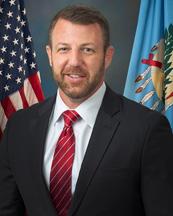
United States · Official source
1,720 records where Markwayne Mullin is listed as a sponsor, author, or other actor. Search with topics and years
United States · United States Congress · 4 March 2026
United States · United States Congress · 26 February 2026
Tribal Firearm Access Act This bill allows members of federally recognized Indian tribes to use their valid identification documents issued by tribal governments to obtain a firearm from a federally licensed dealer.
United States · United States Congress · 26 February 2026
This resolution supports the designation of February 21-28, 2026, as National FFA (Future Farmers of America) Week. It also celebrates the 50th anniversary of the chartering of Alaska as a State FFA Association of the National FFA Organization.
United States · United States Congress · 26 February 2026
Tribal Police Department Parity Act This bill treats tribal law enforcement agencies in the same manner as federal, state, and local law enforcement agencies for purposes of accessing firearms. The National Firearms Act (NFA) generally imposes a tax on the transfer of an NFA firearm; however, specified governmental entities (e.g., federal, state, and local law enforcement agencies) are exempt from this transfer tax. This bill extends this exemption to Indian tribes (and consequently, to tribal law enforcement agencies). The Gun Control Act (GCA) generally prohibits the interstate shipment of firearms to unlicensed persons, but exempts specified governmental entities from this prohibition. This bill makes Indian tribes (and consequently, tribal law enforcement agencies) eligible to receive firearms interstate. The GCA also prohibits the transfer or possession of machine guns manufactured after 1986, but exempts specified governmental entities from this prohibition. This bill makes Indian tribes (and consequently, tribal law enforcement agencies) eligible to transfer or possess these machine guns.
United States · United States Congress · 25 February 2026
United States · United States Congress · 11 February 2026
United States · United States Congress · 5 February 2026
United States · United States Congress · 5 February 2026
United States · United States Congress · 29 January 2026
Safeguard American Voter Eligibility Act or the SAVE America Act This bill requires individuals to provide documentary proof of U.S. citizenship when registering to vote, and requires photo identification to vote, in federal elections. Specifically, the bill prohibits states from accepting and processing an application to register to vote in a federal election unless the applicant presents documentary proof of U.S. citizenship. The bill specifies what documents are considered acceptable proof of U.S. citizenship, such as identification that complies with the REAL ID Act of 2005 that indicates U.S. citizenship. Further, the bill (1) prohibits states from registering an individual to vote in a federal election unless, at the time the individual applies to register to vote, the individual provides documentary proof of U.S. citizenship; and (2) requires states to establish an alternative process to demonstrate U.S. citizenship. Each state must take affirmative steps on an ongoing basis to ensure that only U.S. citizens are registered to vote, which shall include establishing a program to identify individuals who are not U.S. citizens using information supplied by certain sources. Additionally, states must remove noncitizens from their official lists of eligible voters. The bill (1) provides for a private right of action for certain violations, and (2) establishes criminal penalties for certain offenses. Individuals voting in federal elections must present an eligible photo identification document. An individual who votes by absentee ballot must submit a copy of their identification document with both the request for, and the submission of, the absentee ballot.
United States · United States Congress · 27 January 2026
United States · United States Congress · 15 January 2026
United States · United States Congress · 15 January 2026
United States · United States Congress · 13 January 2026
Pregnant Students' Rights Act This bill requires each institution of higher education (IHE) that participates in federal student aid programs to provide certain information to prospective and enrolled students on the rights and resources for pregnant students to carry a baby to term or students who may become pregnant while enrolled at the IHE to carry a baby to term. In particular, this required information must include a list of community and on-campus resources that exist to help a pregnant student in carrying the baby to term and caring for the baby after birth, information about the accommodations available to help a pregnant student carry the baby to term and parent the baby after birth, and information on how to file a discrimination complaint related to the student's determination to carry a baby to term.
United States · United States Congress · 8 January 2026
United States · United States Congress · 8 January 2026
United States · United States Congress · 7 January 2026
United States · United States Congress · 6 January 2026
United States · United States Congress · 15 December 2025
United States · United States Congress · 4 December 2025
United States · United States Congress · 4 December 2025
Back the Blue Act of 2025 This bill establishes new criminal offenses for violent conduct against judicial officers and law enforcement officers and makes related changes. The bill also broadens the authority of certain law enforcement officers to carry firearms. Specifically, the bill prohibits killing, attempting to kill, or conspiring to kill a federal judge, a federal law enforcement officer, or a public safety or judicial officer for a state, local, or tribal agency that receives federal funding. The bill also prohibits fleeing to avoid prosecution, custody, or confinement for an offense. Additionally, the bill prohibits killing former federal judges, former federal law enforcement officers, or former public safety or judicial officers for state, local, or tribal agencies that receive federal funding. The bill also prohibits certain assaults on state or local law enforcement officers for state (or District of Columbia) agencies that receive federal funding. The bill limits federal court review of challenges to state court convictions for killing a public safety officer or judge. The bill also limits the recoverability of damages and attorney's fees in a proceeding to enforce a civil rights violation during or relating to conduct by the injured person that constitutes a felony or crime of violence. The bill allows federal, state, and local law enforcement officers to carry firearms if authorized by law. The bill also allows qualified law enforcement officers to carry concealed firearms and ammunition (including magazines) in school zones and in certain federal facilities that are open to the public.
United States · United States Congress · 2 December 2025
Mikaela Naylon Give Kids a Chance Act of 2025 This bill authorizes certain targeted clinical trials involving combinations of drugs to treat pediatric cancer, and renews the Food and Drug Administration’s (FDA’s) authority to award priority review vouchers (PRVs) to sponsors of new products for rare pediatric diseases. Specifically, the bill modifies requirements relating to molecularly targeted pediatric cancer investigations to permit research on new drugs used in combination with active ingredients that have already been approved and that (1) have been determined to be part of the standard of care for treating a pediatric cancer, or (2) have been approved to treat an adult cancer and are directed at molecular targets for pediatric cancer. The FDA must issue guidance on the implementation of these provisions and report to Congress on its efforts to ensure implementation. The Government Accountability Office (GAO) must report on the effectiveness of the bill's changes with respect to the development of pediatric cancer drugs. The bill also renews the FDA’s authority to issue PRVs to sponsors of new products intended to treat rare pediatric diseases through September 30, 2030. This is known as the Rare Pediatric Disease PRV program. The program expired in December 2024. GAO must report on the effectiveness of the Rare Pediatric Disease PRV program, including to what extent PRVs were successful in promoting drug development and expediting patient access to drugs for the treatment or prevention of rare pediatric diseases.
United States · United States Congress · 19 November 2025
United States · United States Congress · 19 November 2025
United States · United States Congress · 18 November 2025
United States · United States Congress · 18 November 2025
This resolution recognizes November 2025 as National Native American Heritage Month and the Friday after Thanksgiving as Native American Heritage Day.
United States · United States Congress · 18 November 2025
This bill directs the Department of Housing and Urban Development (HUD) and the Department of Agriculture (USDA) to withdraw the final determination titled Adoption of Energy Efficiency Standards for New Construction of HUD- and USDA-Financed Housing and published on April 26, 2024. The determination adopted updated minimum energy efficiency standards for newly built homes (except manufactured housing) financed through certain HUD and USDA programs. Specifically, it adopted the (1) 2021 International Energy Conservation Code (IECC), which applies to single family homes and multifamily low-rise buildings up to three stories; and (2) 2019 American National Standards Institute/American Society of Heating, Refrigerating, and Air-Conditioning Engineers/Illuminating Electrical Society (ANSI/ASHRAE/IES) Standard 90.1, which applies to multifamily residential buildings with four or more stories. HUD and USDA must also revert to using the energy efficiency standards required before the determination. In addition, the bill prohibits HUD, USDA, and the Department of Veterans Affairs from taking actions or using federal funds to implement or enforce the determination or any substantially similar determination. It also prohibits the Federal Housing Finance Agency from finalizing, implementing, or enforcing a determination or rule relating to energy efficiency standards for single and multifamily housing. Finally, the bill prohibits HUD and USDA from adopting updates to the IECC or ANSI/ASHRAE/IES Standard 90.1 in certain circumstances unless at least 26 states have adopted codes or standards that meet or exceed the update's requirements.
United States · United States Congress · 18 November 2025
United States · United States Congress · 10 November 2025
United States · United States Congress · 7 November 2025
United States · United States Congress · 5 November 2025
United States · United States Congress · 4 November 2025
United States · United States Congress · 30 October 2025
United States · United States Congress · 29 October 2025
Pay Our Capitol Police Act This bill provides FY2026 continuing appropriations for the U.S. Capitol Police (USCP) to pay and provide benefits for employees who are working during a government shutdown. The bill provides the appropriations for any period during which interim or full-year appropriations for FY2026 are not in effect (i.e., a government shutdown). Specifically, the bill provides the appropriations to the USCP for salaries, overtime pay, hazardous duty pay, recruitment and retention bonuses, and employee benefits for (1) members of the USCP who are excepted employees (i.e., required to work) or are performing emergency work during the shutdown, and (2) civilian employees who are providing support to the members. The bill also provides appropriations for payments to USCP contractors who are providing support to the members of the USCP who are working during the shutdown. The appropriations provided by this bill may not be used during any period in which continuing appropriations are in effect for these purposes. The appropriations are available until the earlier of (1) the enactment into law of legislation to provide FY2026 appropriations for the USCP or the legislative branch (including continuing appropriations), or (2) September 30, 2026. The bill must take effect as if it had been enacted on October 1, 2025.
United States · United States Congress · 29 October 2025
This resolution designates November 1, 2025, as National Bison Day.
United States · United States Congress · 23 October 2025
Tribal Warrant Fairness Act This bill authorizes the U.S. Marshals Service (USMS) to assist with certain tribal law enforcement activities and allows tribal law enforcement agencies to participate in regional fugitive task forces. Specifically, the bill authorizes the USMS, upon the request of an Indian tribe, to investigate tribal fugitive matters. The USMS may investigate tribal fugitive matters both within and outside the United States, as directed by the Department of Justice (DOJ). Additionally, the USMS, upon the request of tribal law enforcement agencies, may assist these agencies in locating and recovering missing children. The bill also allows tribal law enforcement agencies to participate in regional fugitive task forces. DOJ must consult with tribes when establishing new task forces. (The USMS oversees regional fugitive task forces. Currently, these task forces combine the efforts of federal, state, and local law enforcement agencies to locate and apprehend fugitives.)
United States · United States Congress · 22 October 2025
Pay Our Military Act of 2025 This bill provides continuing appropriations for military pay for any period during which continuing or full-year appropriations for FY2026 are not in effect (i.e., a government shutdown). Specifically, the bill provides FY2026 continuing appropriations for pay, allowances, and certain benefits for members of the Armed Forces, including reserve components, who perform active service during the period. The benefits funded by the bill include individual clothing, subsistence, interest on deposits, gratuities, permanent change of station travel, and monthly payments to surviving spouses who care for a child of a member or former member of the Armed Forces. The bill also provides FY2026 continuing appropriations for pay and allowances for Department of Defense (DOD) civilian personnel (and Department of Homeland Security [DHS] personnel in the case of the Coast Guard) who are providing support to such members of the Armed Forces, and payments for DOD contractors (and DHS contractors in the case of the Coast Guard) who are providing support to the members of the Armed Forces. A federal agency may not use funds provided by this bill during any period in which continuing appropriations are available for the same payments, allowances, and benefits that are funded by this bill. If a government shutdown occurs, the bill provides the continuing appropriations until the earlier of (1) the enactment into law of specified appropriations legislation, or (2) September 30, 2026.
United States · United States Congress · 22 October 2025
Keep America Flying Act of 2026 This bill provides continuing appropriations to pay air traffic controllers, other essential Federal Aviation Administration (FAA) employees, and certain Transportation Security Administration (TSA) employees during the period in which interim or full-year appropriations for FY2026 are not in effect (i.e., the government shutdown). Specifically, the bill provides FY2026 continuing appropriations to pay and provide benefits to air traffic controllers and other FAA essential operational personnel whose services are required for the safe and orderly operation of the national airspace system; and TSA employees engaged in screening operations, aviation security duties, or related mission-support functions necessary to carry out security screening. The bill also provides appropriations for payments to FAA and TSA contractors who are providing support to these employees. The bill provides the continuing appropriations until the earlier of (1) the enactment into law of specified appropriations legislation, or (2) September 30, 2026. The bill must take effect as if it had been enacted on September 30, 2025.
United States · United States Congress · 16 October 2025
United States · United States Congress · 9 October 2025
Pay Our Military Act of 2025 This bill provides continuing appropriations for military pay for any period during which interim or full-year appropriations for FY2026 are not in effect (i.e., a government shutdown). Specifically, the bill provides FY2026 continuing appropriations for the pay and allowances of (1) members of the Armed Forces, including reserve components, who perform active service during the period; and (2) civilian personnel and contractors of the Department of Defense (and the Department of Homeland Security in the case of the Coast Guard) who are providing support to such members of the Armed Forces. If a government shutdown occurs, the bill provides the continuing appropriations until the earlier of (1) the enactment into law of specified appropriations legislation, or (2) January 1, 2027.
United States · United States Congress · 8 October 2025
United States · United States Congress · 7 October 2025
United States · United States Congress · 1 October 2025
United States · United States Congress · 30 September 2025
United States · United States Congress · 29 September 2025
United States · United States Congress · 19 September 2025
United States · United States Congress · 18 September 2025
United States · United States Congress · 18 September 2025
United States · United States Congress · 18 September 2025
United States · United States Congress · 18 September 2025
United States · United States Congress · 18 September 2025
Equal Campus Access Act of 2025 This bill prohibits funding made available under the Higher Education Act of 1965 from being provided to any public institution of higher education (IHE) that denies certain campus rights to religious student organizations. Specifically, the bill prohibits a public IHE from receiving these funds if it denies a religious student organization any right, benefit, or privilege that is otherwise afforded to other student organizations at the IHE because of the religious student organization's beliefs, practices, speech, leadership standards, or standards of conduct.