Resolution· SRESS.Res. 275 (119th)passed
A resolution honoring the memory of the victims of the heinous attack at the Pulse nightclub on June 12, 2016.
United States · United States Congress · 12 June 2025
The world's political record
Person
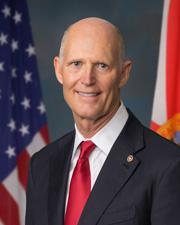
United States · Official source
2,325 records where Sen. Scott, Rick [R-FL] is listed as a sponsor, author, or other actor. Search with topics and years
United States · United States Congress · 12 June 2025
United States · United States Congress · 12 June 2025
United States · United States Congress · 12 June 2025
United States · United States Congress · 10 June 2025
National Prescribed Fire Act of 2025 This bill directs the Department of Agriculture (USDA) and the Department of the Interior to increase the number and size of prescribed fires conducted on federal lands. For 10 years, Interior and USDA must annually conduct prescribed fires on federal land so that the total acreage where prescribed fires are conducted is 10% greater than the previous fiscal year. Interior and USDA must establish a collaborative prescribed fire program to provide financial assistance to eligible entities to conduct prescribed fires in priority landscapes. Interior and USDA may enter into cooperative agreements or contracts with states, Indian tribes, counties, municipal governments, fire districts, nongovernmental organizations, or private entities to coordinate prescribed fires on federal land. Interior and USDA must expand employment opportunities for prescribed fire practitioners, including by expanding hazard pay, supporting underrepresented groups, and establishing additional training centers. To address the public health and safety risk of the expanded use of prescribed fire, the Environmental Protection Agency must coordinate with state, tribal, and local air quality agencies to support the environmental review of wildland fires.
United States · United States Congress · 10 June 2025
United States · United States Congress · 9 June 2025
United States · United States Congress · 9 June 2025
United States · United States Congress · 5 June 2025
United States · United States Congress · 5 June 2025
United States · United States Congress · 5 June 2025
United States · United States Congress · 5 June 2025
Licensing Aerospace Units to New Commercial Heights Act or the LAUNCH Act This bill makes changes to, and requires certain evaluations of, regulatory processes for licensing commercial space launch and reentry activities and private remote sensing systems. The Federal Aviation Administration (FAA) Office of Commercial Space Transportation regulates the launch and reentry of commercial spacecraft. In 2020, the FAA consolidated launch and reentry licensing requirements for all types of space vehicles into a single set of regulations, known as Part 450. The bill requires the FAA to evaluate and report on the implementation of Part 450 and its impacts on the commercial spaceflight industry, including whether the rule has resulted in uncertainty or operational delays. The FAA must also continue an aerospace rulemaking committee comprised of launch and reentry service providers. Further, the FAA must develop a digital system to accept commercial space launch and reentry applications and provide status information and notifications to applicants. The bill elevates the Office of Commercial Space Transportation to a modal administration reporting directly to the Department of Transportation (DOT). The administration must exercise all of DOT’s authorities related to commercial space launch and reentry. Finally, the bill revises the licensing process for private remote sensing systems and requires the Government Accountability Office to report on the Department of Commerce’s regulation of the private remote sensing industry. ( Remote sensing generally refers to the collection of data by instruments in Earth’s orbit, such as satellites, that can be processed into imagery of Earth’s surface.)
United States · United States Congress · 4 June 2025
United States · United States Congress · 4 June 2025
United States · United States Congress · 4 June 2025
READY Accounts Act This bill establishes a new Residential Emergency Asset-accumulation Deferred Taxation Yield (READY) account, allows individuals to make tax-deductible contributions of up to $4,500 per year to such accounts (adjusted annually for inflation beginning in 2027), and allows individuals to take tax-free distributions from such accounts to pay for qualified home disaster mitigation and recovery expenses related to a principal residence owned by the taxpayer. Under the bill, qualified home disaster mitigation expenses include expenses certified by a qualified industry professional as meeting criteria to mitigate damage from a natural or other disaster, including installing a roofing underlayment to sheathing, impact-resistant windows, impact-resistant entry doors, or ground anchors; replacing a roof covering; applying a foam adhesive to reinforce the roof structure; strengthening the connection of the roof deck to roof framing, roof-to-wall connections, soffits, or attic ventilation openings; elevating a residence; or achieving the current building code standard. Qualified home disaster recovery expenses include costs for repairing damage to a residence resulting from fire, storm, or other casualty (provided such costs are not reimbursed). Distributions from a READY account used for anything other than qualified home disaster mitigation and recovery expenses must be included in gross income and are subject to a 20% penalty. (Some exceptions apply.) Finally, the bill imposes a 6% tax on contributions in excess of the annual limit. (Some exceptions apply.)
United States · United States Congress · 3 June 2025
United States · United States Congress · 22 May 2025
United States · United States Congress · 22 May 2025
United States · United States Congress · 22 May 2025
Holocaust Expropriated Art Recovery Act of 2025 This bill permanently extends and expands judicial authority under the Holocaust Expropriated Art Recovery Act of 2016. The law allows and establishes procedures for civil claims and causes of action to recover artwork and other property lost between 1933 and 1945 because of Nazi persecution. Among the changes, the bill removes the deadline for filing civil claims or causes of action. Currently, the filing deadline is December 31, 2026. (Claims must still be filed within six years of the claimant's discovery of the property in question.) The bill permits courts to exercise jurisdiction over civil claims or causes of action against a foreign state without regard to the nationality or citizenship of the alleged victim. The art or property at issue must still have a connection to the foreign state's commercial activities in the United States. Additionally, the bill authorizes nationwide service of process, which allows courts to exercise personal jurisdiction over defendants in any judicial district where they may be found, reside, have an agent, or transact business. Finally, the bill limits the defenses that may be asserted against civil claims or causes of action, including by prohibiting defenses based on the passage of time, including equitable defenses such as laches (i.e., unreasonable delays); and discretionary bases for dismissal that are unrelated to the merits of the claim, including international comity (i.e., deference to the laws of other countries). These changes apply to pending and future civil claims or causes of action.
United States · United States Congress · 22 May 2025
United States · United States Congress · 22 May 2025
United States · United States Congress · 21 May 2025
United States · United States Congress · 21 May 2025
United States · United States Congress · 21 May 2025
United States · United States Congress · 20 May 2025
High-Quality Charter Schools Act This bill establishes a federal tax credit for 75% of the qualified contributions of cash or market securities made by an individual to an eligible charter school organization to create or expand the charter schools operated or managed by the organization. (Limitations apply.) The bill limits the tax credit to the greater of $5,000 or 10% of the individual’s adjusted gross income. The tax credit is not refundable, but any amount of the tax credit that exceeds an individual’s tax liability for the tax year may be carried forward for up to five tax years. Further, the bill establishes an annual $5 billion volume cap (which must be increased under certain circumstances) from which $10 million must be distributed to each state for allocation of the tax credit to individuals residing in the state. The remaining amount of the volume cap must be allocated to individuals on a first-come, first-serve basis. The bill requires the Internal Revenue Service (IRS) to develop a system for tracking qualified contributions in real time. Under the bill, an eligible charter school organization generally is required to spend all of the qualified contributions (less reasonable administrative expenses) within a certain amount of time. If the IRS determines that an organization has failed to meet such spending requirements, the tax credit is not allowed for contributions to the organization for one year after the date of the determination.
United States · United States Congress · 20 May 2025
United States · United States Congress · 20 May 2025
Black Vulture Relief Act of 2025 This bill allows livestock producers and their employees to take certain actions against black vultures to protect livestock. (Black vultures are protected under the Migratory Bird Treaty Act.) Specifically, livestock producers and their employees may (1) take (i.e., capture, kill, or disperse, or transport the carcass of) a black vulture that they reasonably believe will cause death, injury, or destruction to livestock; or (2) in the course of taking or attempting to take the black vulture, cause injury to the bird. However, they may not take or attempt to take a black vulture through the use of poison. Livestock producers and their employees must submit an annual report to the U.S. Fish and Wildlife Service (FWS) on black vultures taken under this bill. The FWS must develop a reporting form and make this reporting form available on its website. Currently, the FWS has a permit process under the Migratory Bird Treaty Act for the taking of black vultures.
United States · United States Congress · 20 May 2025
United States · United States Congress · 20 May 2025
Improving Seniors' Timely Access to Care Act of 2025 This bill establishes several requirements and standards relating to prior authorization processes under Medicare Advantage (MA) plans. Specifically, MA plans must (1) establish an electronic prior authorization program that meets specified standards; (2) annually submit to the CMS for publication specified prior authorization information, including the percentage of requests approved and the average response time; and (3) meet other standards, as set by the Centers for Medicare & Medicaid Services (CMS), relating to the quality and timeliness of prior authorization determinations. The CMS and the Office of the National Coordinator for Health Information Technology must publish on the CMS' website a report that analyzes the information received from MA plans, the feasibility of implementing real-time decision making with respect to prior authorization requests, and the impact of decisions that are made using artificial intelligence on patient access.
United States · United States Congress · 19 May 2025
United States · United States Congress · 15 May 2025
United States · United States Congress · 15 May 2025
Charlotte Woodward Organ Transplant Discrimination Prevention Act This bill expressly prohibits organ transplant service providers that receive federal funds and state and local government programs from denying or restricting an individual's access to organ transplants on the basis of the individual's disability, except in limited circumstances. Specifically, these entities may not take into account an individual's disability when providing transplant services, including with respect to eligibility, referrals for services, and placement on waiting lists. Entities must provide reasonable modifications to policies or appropriate auxiliary equipment and services unless doing so changes the fundamental nature of the program or activity involved. Any consideration of an individual's disability must be based on an individualized assessment and comply with the Americans with Disabilities Act of 1990 and other applicable laws. The Office for Civil Rights of the Department of Health and Human Services (HHS) must consider for expedited resolution complaints alleging discrimination on the basis of disability with respect to organ transplant services. HHS must annually report to Congress on complaints received and recommendations to improve enforcement of the bill. In addition, the bill prohibits discrimination on the basis of disability in the Organ Procurement and Transplantation Network's policies regarding allocating organs. This network is a public-private partnership linking professionals involved in the U.S. organ donation and transplantation system.
United States · United States Congress · 15 May 2025
United States · United States Congress · 15 May 2025
United States · United States Congress · 15 May 2025
United States · United States Congress · 15 May 2025
United States · United States Congress · 15 May 2025
United States · United States Congress · 14 May 2025
United States · United States Congress · 14 May 2025
Kids Online Safety Act This bill requires covered online platforms, including social media platforms, to implement tools and safeguards to protect users and visitors under the age of 17. Covered platforms are online platforms, video games, messaging applications, or video streaming services used or likely to be used by individuals under the age of 17, with specified exceptions. The bill generally requires covered platforms to exercise reasonable care in the design and use of features that increase minors’ online activity in order to prevent and mitigate harm to minors (e.g., mental health disorders and severe harassment). Covered platforms are also required to provide certain safeguards to minors, such as protections for minors’ data; tools for parents of minors, such as access to minors’ privacy settings; and a mechanism for account holders and visitors to report harm to minors on the platform. Covered platforms are prohibited from conducting market or product research on children under the age of 13, and may only conduct such research on those under the age of 17 with parental consent. The bill provides for enforcement through the Federal Trade Commission and states. The bill also requires online platforms to meet certain requirements before using algorithms that select, order, or prioritize information presented to users based on user-specific data not provided for that purpose. Specifically, such platforms must (1) provide users with notice of the use of such algorithms, and (2) permit users to switch to an algorithm that does not rely on such user-specific data.
United States · United States Congress · 13 May 2025
United States · United States Congress · 13 May 2025
United States · United States Congress · 13 May 2025
United States · United States Congress · 12 May 2025
United States · United States Congress · 12 May 2025
Safeguarding Transit Operations to Prohibit China Act or the STOP China Act This bill prohibits federal transportation funds from being used to purchase rolling stock (e.g., rail cars or buses) or fueling or charging infrastructure from entities with ties to China, North Korea, Russia, or Iran (i.e., a covered nation). In general, this replaces a current prohibition on the use of Federal Transportation Administration (FTA) funds for rolling stock from manufacturers owned or controlled by corporations based in certain countries. Specifically, Department of Transportation (DOT) funds, which include FTA funds, may not be used for the purchase of rolling stock or bus fueling or charging infrastructure from entities with ties to a covered nation. This prohibition also applies to vehicles that incorporate electric power trains from such entities. The prohibition broadly applies to corporations, joint ventures, individuals, and organizations with ties to covered nations. Examples of applicable entities include an individual whose activities are directed or financed by a covered nation or an entity that is owned or controlled by a covered nation or such an individual. The United States Trade Representative (USTR) must publish a list of the applicable entities and update the list annually. The bill includes an exception for motor vehicles or fueling and charging stations used for (1) inspecting or investigating vehicles or equipment; or (2) vehicle safety research, development, or testing.
United States · United States Congress · 8 May 2025
Chip Security Act This bill requires covered integrated circuit products (e.g., advanced computing chips) to incorporate certain security mechanisms. Specifically, the bill directs the Department of Commerce to require any covered integrated circuit product to have chip security mechanisms that implement location verification before the product is exported, reexported, or in-country transferred to or in a foreign country. Commerce must require any person that has received a license or other authorization under the Export Control Reform Act of 2018 to export, reexport, or in-country transfer a covered product to promptly report to Commerce's Bureau of Industry and Security if the person obtains credible information that the product has been diverted away from its intended location or has been subjected to tampering. Commerce must, in coordination with the Department of Defense (DOD), conduct an assessment and report to Congress on whether additional chip security mechanisms should be adopted. If Commerce determines additional security measures are necessary, then Commerce must require any covered product to include the secondary chip security mechanisms before the product is exported, reexported, or in-country transferred to or in a foreign country. The bill authorizes Commerce to take certain enforcement actions, such as verifying the ownership and location of a covered product that has been exported, reexported, or in-country transferred to or in a foreign country. Commerce must coordinate with DOD, within two years of the bill's enactment and annually thereafter for three years, to assess new chip security mechanisms and report to Congress.
United States · United States Congress · 8 May 2025
United States · United States Congress · 8 May 2025
United States · United States Congress · 8 May 2025
United States · United States Congress · 8 May 2025
United States · United States Congress · 8 May 2025
United States · United States Congress · 8 May 2025
INvestor Democracy is EXpected Act or the INDEX Act This bill establishes guidelines for passively managed funds (e.g., index funds) that vote shares on behalf of fund investors in proxy shareholder votes. Under the bill, these funds generally must vote shares on a proportional basis according to instructions from fund investors. The bill establishes an exemption for routine matters and matters requiring approval of a majority of outstanding securities. Additionally, the bill establishes a safe harbor from these requirements for investment advisers.