Bill· SS. 1647 (119th)referred
ROI of the Federal Reserve Act
United States · United States Congress · 7 May 2025
The world's political record
Person
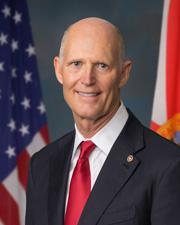
United States · Official source
2,325 records where Sen. Scott, Rick [R-FL] is listed as a sponsor, author, or other actor. Search with topics and years
United States · United States Congress · 7 May 2025
United States · United States Congress · 7 May 2025
Bankruptcy Administration Improvement Act of 2025 This bill makes several changes to the administration of bankruptcy cases, particularly by increasing certain fees, extending the sunset date of various fees, and extending the term of specified bankruptcy judgeships. The bill increases the fees paid to the trustee in Chapter 7 (liquidation) cases. The bill extends for an additional five years the fees paid quarterly to the U.S. trustee in Chapter 11 (reorganization) cases. The bill also increases the fee percentage for cases with large disbursements, subject to limitations. Finally, temporary bankruptcy judgeships in various districts are extended for an additional five years.
United States · United States Congress · 7 May 2025
Right-size the Federal Reserve Act This bill places restrictions on the Federal Reserve System, including by placing a cap on specified assets, eliminating a Federal Reserve Board facility, and setting forth conditions on bank reserve requirements. The bill places a cap on the total aggregate assets of all Federal Reserve banks. Specifically, these assets must not amount to more than 10% of the U.S. gross domestic product. This cap takes effect 10 years after the bill’s enactment. The bill also eliminates the Overnight Reverse Repurchase Facility, a board facility that conducts monetary policy through security repurchase agreements. The board’s depository institution reserves requirements must not be lower than the reserve requirements as of March 25, 2020. The board and each Federal Reserve bank must annually report on certain interest payments to foreign-owned banks and financial institutions.
United States · United States Congress · 7 May 2025
United States · United States Congress · 7 May 2025
United States · United States Congress · 6 May 2025
United States · United States Congress · 6 May 2025
United States · United States Congress · 6 May 2025
United States · United States Congress · 5 May 2025
This resolution honors the contributions of small businesses in the United States and supports the designation of National Small Business Week.
United States · United States Congress · 1 May 2025
United States · United States Congress · 1 May 2025
United States · United States Congress · 1 May 2025
United States · United States Congress · 1 May 2025
Improving SCRA Benefit Utilization Act of 2025 This bill expands interest rate protections under the Servicemembers Civil Relief Act (SCRA) and requires expanded training for and outreach to servicemembers regarding financial literacy and SCRA protections. The SCRA caps the maximum interest charged on any debt incurred by a servicemember prior to entering active duty at 6% annually if the servicemember's ability to pay is materially affected by active-duty status; servicemembers must provide notice and other documentation to creditors to receive this cap. The bill requires creditors to apply this cap to all of a servicemember’s obligations or liabilities with that creditor, regardless of whether a certain obligation or liability was specifically mentioned in the required notice provided by the member to invoke SCRA rights. Further, the bill requires creditors to provide all necessary mechanisms to ensure a servicemember is able to submit any required documentation. The bill also requires that the financial literacy training program provided to servicemembers include information about consumer financial protections afforded to such members and their dependents, including protections regarding interest rate limits under the SCRA. Additionally, the bill requires the military department concerned to provide written notice of benefits under the SCRA to servicemembers at the time they first enter military service and, for members of the reserve components, at the time they first enter service in the reserves and at any time when they are mobilized or ordered to active duty for more than 30 days.
United States · United States Congress · 30 April 2025
Veterans Opportunity Act of 2025 This bill establishes the Veterans Economic Opportunity and Transition Administration to administer economic opportunity assistance programs for veterans and their dependents and survivors. Specifically, the Veterans Economic Opportunity and Transition Administration must administer the following Department of Veterans Affairs (VA) programs: vocational rehabilitation and employment programs, educational assistance programs, veterans' housing loan and related programs, the responsibilities of the VA with respect to the Transition Assistance Program, and any other VA program that the VA determines is appropriate. Prior to the transfer of administrative responsibilities, the bill requires the VA to certify that (1) the transition of the provision of services will not negatively affect the provision of such services to veterans, and (2) such services are ready to be transferred.
United States · United States Congress · 30 April 2025
United States · United States Congress · 30 April 2025
United States · United States Congress · 30 April 2025
United States · United States Congress · 30 April 2025
This resolution supports designating April 2025 as Parkinson's Awareness Month.
United States · United States Congress · 29 April 2025
Claiming Age Clarity Act This bill changes certain terms that are used by the Social Security Administration (SSA) to describe the ages at which a worker may claim Social Security retirement benefits. First, the SSA must use minimum monthly benefit age instead of early eligibility age . This refers to the earliest age (62 under current law) at which a worker may claim benefits. (Currently, the benefit amount of a worker who claims benefits early is reduced to account for the longer period during which the worker is expected to receive benefits.) Second, the SSA must use standard monthly benefit age instead of full retirement age and normal retirement age . These terms refer to the age at which a worker may claim benefits without a reduction in the benefit amount. (Currently, this age ranges from 65 to 67, depending on the worker's year of birth.) Finally, the SSA must use the term maximum monthly benefit age for any reference to age 70 as the maximum age at which a worker may receive delayed retirement credits. The SSA may not use the term delayed retirement credit. These terms refer to the mechanism that increases the benefit amount of a worker who delays claiming benefits after reaching the full retirement age. (Currently, a worker receives a credit for each month between the full retirement age and age 70 that the worker delays claiming benefits. Each credit increases the benefit amount that the worker will receive after claiming benefits by a specified percentage.)
United States · United States Congress · 29 April 2025
United States · United States Congress · 29 April 2025
United States · United States Congress · 10 April 2025
Combating Organized Retail Crime Act This bill expands federal enforcement of criminal offenses related to organized retail and supply chain crime. The term organized retail and supply chain crime includes criminal offenses involving the interstate transportation of stolen property, the sale or receipt of stolen goods, or theft from an interstate or foreign shipment that is committed by, in coordination with, or at the instruction of an organization. First, with respect to criminal offenses involving the interstate transportation of stolen property or the sale or receipt of stolen goods, the bill broadens the scope of conduct that qualifies as offenses by allowing prosecutions to be based on the aggregate value of stolen items over a 12-month period. Additionally, the bill makes the offenses predicate offenses (i.e., underlying offenses) for prosecutions under the federal money laundering statute and authorizes the criminal forfeiture of any property obtained from the proceeds of an offense. Second, with respect to criminal offenses involving theft from an interstate or foreign shipment, the bill also makes an offense an underlying offense for prosecution under the federal money laundering statute and authorizes the criminal forfeiture of any associated property. Third, the bill expands the federal money laundering statute to include offenses involving general-use prepaid cards, gift certificates, or store gift cards. Finally, the bill temporarily establishes a center within the Department of Homeland Security to coordinate federal law enforcement activities related to organized retail and supply chain crime.
United States · United States Congress · 10 April 2025
Reduction of Excess Business Holding Accrual Act This bill treats certain stock repurchased by a corporation from an employee stock ownership plan (ESOP) as outstanding voting stock for purposes of the federal excise tax imposed on a private foundation’s excess business holdings. Thus, a private foundation may exclude such stock in calculating present holdings in a corporation and liability for the excise tax. (Exceptions apply.) As background, a federal excise tax is imposed on a private foundation that owns more than 20% of the voting stock in a corporation, reduced by the percentage of voting stock held by all disqualified persons (excess business holdings). However, a private foundation with excess business holdings on May 26, 1969 (grandfathered private foundation) may own a greater percentage of voting stock in certain circumstances. Under the bill, stock is treated as outstanding voting stock if such stock is not readily tradable on an established securities market; repurchased from an ESOP on or after January 1, 2020; and held by the corporation as treasury stock, cancelled, or retired. However, such stock is not treated as outstanding voting stock if it is repurchased within the first 10 years of establishing the ESOP or, as a result of the repurchase, the permitted holdings of the private foundation would exceed 49% of the voting stock in the corporation. Finally, under the bill, such stock does not reduce the percentage of voting stock a grandfathered private foundation may own.
United States · United States Congress · 10 April 2025
Audit the IRS Act This bill prohibits an individual who has a seriously delinquent tax debt from being appointed or continuing to serve as an officer, employee, or contract employee of the Internal Revenue Service (IRS). The bill defines seriously delinquent tax debt as any tax debt for which the IRS has filed a notice of a tax lien other than a tax debt (1) that is being paid in a timely manner pursuant to an installment agreement or offer in compromise, or (2) for which a collection due process hearing or innocent spouse relief is requested or pending. The bill requires the IRS to verify annually that IRS officers, employees, and contract employees do not have a seriously delinquent tax debt. The IRS also must verify that applicants for such positions do not have a seriously delinquent tax debt prior to hiring. Finally, the bill requires Office of Personnel Management to issue regulations necessary to carry out the provisions of this bill.
United States · United States Congress · 10 April 2025
United States · United States Congress · 10 April 2025
Homebuyers Privacy Protection Act This bill limits the circumstances in which credit reporting agencies may provide consumer credit reports to third parties in connection with residential mortgage transactions. Specifically, the bill prohibits a credit reporting agency from providing a consumer's credit report to a third party in connection with a residential mortgage transaction unless the transaction consists of a firm offer of credit or insurance and (1) the third party provides documentation certifying that it has the consumer's consent; or (2) the third party has originated a mortgage on behalf of the consumer, is a current mortgage loan servicer to the consumer, or has a current specified banking relationship with the consumer. These provisions take effect 180 days after the bill's enactment.
United States · United States Congress · 10 April 2025
United States · United States Congress · 10 April 2025
United States · United States Congress · 10 April 2025
This bill requires the U.S. Postal Service to designate a single, unique ZIP Code for each of the following 14 communities: Eastvale, California Scotland, Connecticut Castle Pines, Colorado Silver Cliff, Colorado Cooper City, Florida Miami Lakes, Florida Ocoee, Florida Urbandale, Iowa Franklin, Wisconsin Greenfield, Wisconsin Village of Caledonia, Wisconsin Village of Mount Pleasant, Wisconsin Village of Somers, Wisconsin Mills, Wyoming
United States · United States Congress · 10 April 2025
United States · United States Congress · 10 April 2025
United States · United States Congress · 9 April 2025
United States · United States Congress · 9 April 2025
TSP Fiduciary Security Act of 2025 This bill incorporates national security interests into management of the Thrift Savings Fund. Specifically, the bill requires fiduciaries that are responsible for managing the fund (i.e., the Federal Retirement Thrift Investment Board) to prevent fund investments and associated votes that harm the national security of the United States, including investments in entities on certain lists maintained by the Department of Defense and the Department of Commerce (e.g., Chinese military companies). The Department of Labor must issue implementing regulations that include these and other standards for compliance. Beginning January 1, 2027, fiduciaries may be held personally liable for monetary damages and may be assessed civil penalties for failing to meet these requirements. The bill also prohibits mutual funds that are accessible through an authorized mutual fund window from investing in any entity that is based in China or any subsidiary of such an entity.
United States · United States Congress · 9 April 2025
Veterans Accessibility Advisory Committee Act of 2025 This bill requires the Department of Veterans Affairs (VA) to establish the Veterans Advisory Committee on Equal Access to address the accessibility of the VA for individuals with disabilities. Prior to establishing the advisory committee, the VA must take action to abolish or consolidate advisory committees that are currently inactive.
United States · United States Congress · 8 April 2025
United States · United States Congress · 8 April 2025
United States · United States Congress · 8 April 2025
United States · United States Congress · 8 April 2025
United States · United States Congress · 8 April 2025
United States · United States Congress · 8 April 2025
United States · United States Congress · 8 April 2025
United States · United States Congress · 7 April 2025
United States · United States Congress · 4 April 2025
Veterans Education and Technical Skills Opportunity Act of 2025 or the VETS Opportunity Act of 2025 This bill modifies which independent study programs are covered under veterans’ educational assistance benefits. The bill requires independent study programs that lead to a certificate that reflects graduation from a course of study to include regular and substantive interaction between students and instructors. The bill allows such independent study programs to be offered by any institutions of higher education, including for-profit institutions, that are approved to participate in the Department of Education’s financial assistance programs.
United States · United States Congress · 4 April 2025
This joint resolution nullifies the Environmental Protection Agency notice titled California State Motor Vehicle and Engine Pollution Control Standards; Advanced Clean Cars II; Waiver of Preemption; Notice of Decision (90 Fed. Reg. 642) and published on January 6, 2025. Among other elements, the notice grants the California Air Resources Board request for a waiver for its Advanced Clean Cars II (ACC II) regulations. (Under the Clean Air Act, California may seek waivers of the preemption prohibiting states from enacting certain emission standards.)
United States · United States Congress · 4 April 2025
This joint resolution nullifies the Environmental Protection Agency notice titled California State Motor Vehicle and Engine Pollution Control Standards; Heavy-Duty Vehicle and Engine Emission Warranty and Maintenance Provisions; Advanced Clean Trucks; Zero Emission Airport Shuttle; Zero-Emission Power Train Certification; Waiver of Preemption; Notice of Decision (88 Fed. Reg. 20688) and published on April 6, 2023. Among other elements, the notice grants the California Air Resources Board request for a waiver several of its regulations, including the Heavy-Duty Vehicle and Engine Emission Warranty Regulations and Maintenance Provisions. (Under the Clean Air Act, California may seek waivers of the preemption prohibiting states from enacting certain emission standards.)
United States · United States Congress · 3 April 2025
Defending Education Transparency and Ending Rogue Regimes Engaging in Nefarious Transactions Act or the DETERRENT Act This bill expands oversight and disclosure requirements related to foreign sources and institutions of higher education (IHEs). Specifically, the bill requires an IHE to annually disclose to the Department of Education (ED) any year in which the IHE receives a gift from a foreign country of concern (e.g., China or Russia) or foreign entity of concern of any dollar amount; receives a gift or contract from a foreign source (other than a foreign country of concern or foreign entity of concern) that is valued at $50,000 or more, considered alone or in combination with all other gifts or contracts within a calendar year (current disclosure threshold is $250,000 or more), or which has an undetermined monetary value; enters into a contract with a foreign country of concern or foreign entity of concern after receiving a waiver for such contract; or is substantially controlled by a foreign source. Additionally, the bill prohibits IHEs from entering into contracts with a foreign country of concern or with a foreign entity of concern without obtaining a waiver, and requires certain IHEs to disclose gifts or contracts between covered individuals (e.g., researchers) and foreign sources. The bill requires ED to investigate possible violations of this bill and outlines the various penalties for each violation. Penalties may include losing eligibility for federal student financial aid.
United States · United States Congress · 2 April 2025
United States · United States Congress · 1 April 2025
United States · United States Congress · 1 April 2025
United States · United States Congress · 1 April 2025
Alleviating Barriers for Caregivers Act or the ABC Act This bill requires federal agencies to review and modify the administrative processes related to Medicare, Medicaid, the Children's Health Insurance Program (CHIP), and Social Security programs in order to streamline these processes for family caregivers. Specifically, the Centers for Medicare & Medicaid Services (CMS) and the Social Security Administration (SSA) must review processes related to eligibility determinations, applications, forms, and communications for these programs and identify ways to simplify and streamline these processes for family caregivers (e.g., reducing the need for family caregivers to submit the same information for multiple programs). The CMS and SSA must solicit input from family caregivers and state and regional organizations, implement any identified improvements, and report on these efforts to Congress. In addition, the CMS must issue a letter to state Medicaid and CHIP programs that encourages states to conduct a similar review and that provides potential improvements.