Bill· SS. 556 (119th)referred
Enhanced Iran Sanctions Act of 2025
United States · United States Congress · 12 February 2025
The world's political record
Person
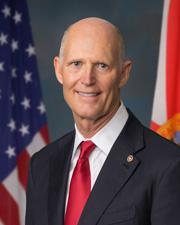
United States · Official source
2,325 records where Sen. Scott, Rick [R-FL] is listed as a sponsor, author, or other actor. Search with topics and years
United States · United States Congress · 12 February 2025
United States · United States Congress · 11 February 2025
Protecting Taxpayers’ Wallets Act of 2025 This bill requires labor unions representing federal agency employees to pay agencies for resources and official time they use for union activities. The bill directs federal agencies to charge unions a fee for using agency resources that is based on (1) the value of time spent by union representatives on union activities rather than agency business, and (2) the value of resources provided by the agency related to these activities, such as parking spaces and equipment. Agencies must track the amount of time union representatives use for union purposes and discipline representatives who fail to properly record such time. If a union has not paid in full by 90 days following a notice of the fee, the agency (1) may not provide further time or resources to the union until it is paid in full; and (2) is not subject to grievance procedures, binding arbitration, or unfair labor practice complaints or proceedings by the union. Further, an agency must notify a union and the Federal Labor Relations Authority (FLRA) when a union's unpaid balance has been outstanding for 365 days and, on the 380th day, the FLRA must terminate the union's certification as the exclusive representative of employees of the agency. The bill requires each agency's Office of Inspector General to periodically report on agency and union compliance with the bill's requirements.
United States · United States Congress · 11 February 2025
This bill repeals the Impoundment Control Act of 1974 (ICA). The ICA generally limits the authority of the President to impound (i.e., withhold from obligation or expenditure) funds that have been appropriated by Congress and establishes related procedures. It also establishes expedited legislative procedures that Congress may use to consider legislation to enact rescissions proposed by the President.
United States · United States Congress · 11 February 2025
Credit Union Board Modernization Act This bill revises the required frequency of meetings held by a credit union's board of directors. Specifically, new credit unions and credit unions with a low soundness rating must meet monthly. All other credit unions must hold at least six meetings annually, with at least one meeting held during each fiscal quarter. Currently, all credit union boards must meet at least once a month.
United States · United States Congress · 6 February 2025
United States · United States Congress · 6 February 2025
United States · United States Congress · 6 February 2025
Decoupling from Foreign Adversarial Battery Dependence Act This bill prohibits the Department of Homeland Security (DHS) from using appropriated funds to procure a battery produced by certain entities, particularly six specific companies owned and operated in China. This prohibition begins on October 1, 2027. The bill allows DHS to waive the prohibition if DHS assesses in the affirmative that (1) the batteries to be procured do not pose a risk to U.S. national security, data, or infrastructure; and (2) there is no available alternative to procure batteries that are of similar or better cost and quality and that are produced by an entity not specified in this bill. DHS may also waive the prohibition upon a determination that the batteries to be procured are for the sole purpose of research, evaluation, training, testing, or analysis. The bill requires DHS to notify Congress within 15 days after granting a waiver under this bill. The bill also requires DHS to report to Congress on the anticipated impacts associated with carrying out this bill, including with respect to specified agencies of DHS.
United States · United States Congress · 6 February 2025
This bill prohibits the Big Cypress National Preserve in Florida from being designated as wilderness or as a component of the National Wilderness Preservation System. The National Park Service currently manages Big Cypress National Preserve, which is a freshwater swamp ecosystem of 729,000 acres. In general, development activities, commercial activities, permanent structures, and roads are prohibited in wilderness areas. In contrast, natural preserves typically allow some development activities, such as hunting or oil and gas exploration.
United States · United States Congress · 6 February 2025
No Central Bank Digital Currency Act or the No CBDC Act This bill generally prohibits the Federal Reserve Board, Federal Reserve Banks, the Department of the Treasury, and other agencies from issuing or using a central bank digital currency.
United States · United States Congress · 6 February 2025
Veterans 2nd Amendment Protection Act of 2025 This bill prohibits the Department of Veterans Affairs (VA) from transmitting certain information to the National Instant Criminal Background Check System (NICS) utilized by licensed importers or dealers of firearms. Specifically, the bill prohibits the VA from transmitting personally identifying information of a veteran or a beneficiary to the NICS solely on the basis that such veteran or beneficiary has an appointed fiduciary to manage their benefits, unless there is an order or finding of a judicial authority that such veteran or beneficiary is a danger to themselves or others.
United States · United States Congress · 6 February 2025
Social Engagement and Network Initiatives for Older Relief Act or the SENIOR Act This bill expands the scope of authorized Administration on Aging (AOA) grants to include services addressing loneliness in older individuals (i.e., aged 60 or older), and requires a report evaluating whether certain federal programs are adequately addressing this topic. Under current law, the AOA provides grants to states for disease prevention and health promotion services for older individuals, including services addressing the negative health effects of social isolation. The bill expands the scope of the services eligible for these grants to include services addressing the negative health effects of loneliness. Also, the bill requires the Department of Health and Human Services to submit to Congress a report (1) evaluating whether its programs for older individuals are adequately addressing loneliness, and (2) recommending measures for reducing the negative health effects of loneliness and fostering multigenerational family connections.
United States · United States Congress · 6 February 2025
United States · United States Congress · 6 February 2025
Regulations from the Executive in Need of Scrutiny Act of 2025 This bill expands congressional review of federal agency rules and establishes additional procedures for major rules and agency guidance. Specifically, the bill requires the enactment of a joint resolution for a major rule to take effect. A major rule is a rule that has resulted in or is likely to result in (1) an annual economic effect of at least $100 million; (2) a major increase in costs or prices for consumers, individual industries, government agencies, or geographic regions; or (3) significant adverse effects on competition, employment, investment, productivity, or innovation. Additionally, major rules approved by a joint resolution under the bill expire, and are no longer effective, 10 years after the enactment of such joint resolution. Further, each agency must annually designate at least 10% of the agency’s major rules that are currently in effect for review and approval by a joint resolution of Congress. Such rules that are not approved shall no longer be in effect. Under the bill, agency guidance documents are considered rules and certain significant guidance documents are considered major rules. Significant guidance documents include guidance anticipated to lead to an annual effect of at least $100 million, or adversely affect in a material way the economy, the environment, public health, or state or local government. The Office of Management and Budget must establish an federal regulatory budget specifying the net amount of incremental regulatory costs allowed by the federal government for the next fiscal year.
United States · United States Congress · 6 February 2025
Denying Earnings to the Military Oligarchy in Cuba and Restricting Activities of the Cuban Intelligence Apparatus Act or the DEMOCRACIA Act This bill provides for asset- and visa-blocking sanctions for conduct relating to Cuba. It also establishes an interagency task force to facilitate access to uncensored internet in Cuba. The President must sanction foreign persons that engage in a transaction with or provide financial, material, or technological support to certain entities or individuals, including specified Cuban government sectors (e.g., the defense sector); any other government sector that the President certifies is involved in human rights abuses or terrorism; foreign persons that are military contractors or mercenaries operating on behalf of the Cuban government; or foreign persons that violate laws restricting trade with Cuba. Other individuals or entities the President must sanction include foreign persons responsible for or complicit in human rights abuses in Cuba; Cuban officials responsible for or complicit in corruption; and members of Cuba's Communist Party. The bill provides certain exceptions to these sanctions and the President may waive the sanctions in the interest of U.S. national security. The President may not license sanctionable conduct. U.S. persons seeking to engage in a sanctionable financial transaction must submit a written request to the Department of the Treasury's Office of Foreign Asset Control. The authority to impose sanctions under this bill ends when the President certifies that the Cuban government has taken specified steps to promote political rights and freedoms and Congress enacts a joint resolution approving the certification.
United States · United States Congress · 5 February 2025
Protection of Women in Olympic and Amateur Sports Act This bill requires certified national governing bodies (NGBs) of amateur sports (e.g., USA Gymnastics) to prohibit a person whose sex is male from participating in an amateur athletic competition that is designated for females, women, or girls. Under the bill, male means an individual who has, had, will have—or would have, but for a developmental or genetic anomaly or historical accident—the reproductive system that at some point produces, transports, and utilizes sperm for fertilization.
United States · United States Congress · 5 February 2025
Protecting Regular Order for Veterans Act of 2025 or the PRO Veterans Act of 2025 This bill requires the Department of Veterans Affairs (VA) to provide quarterly budget briefings to Congress and prohibits the VA from providing specified pay incentives to senior level employees. First, the bill requires VA to provide quarterly budget briefings to Congress, which must include information on any budget shortfalls the VA may be experiencing. The VA must present its plans to address or mitigate shortfalls during such briefings. Next, the bill prohibits the VA from providing certain senior level employees with a critical skill incentive, which is generally a payment bonus for employees possessing a high-demand skill or skill that is at a shortage. Specifically, the VA may not provide such an incentive to an employee in a Senior Executive Service position or other comparable position at the central office of the VA (e.g., the Veterans Health Administration), regardless of the actual location where the employee performs the functions of the position. The bill also provides that an incentive may be provided to senior-level employees on an individual basis and upon approval by specified officers (e.g., the Under Secretary for Health). Additionally, senior-level employees whose positions are primarily at the central office of the VA but perform some portion of the job function at other VA facilities are exempt from the prohibition. The VA must report to Congress annually regarding senior-level employees who were provided a critical skill incentive.
United States · United States Congress · 5 February 2025
Defending Defense Research from Chinese Communist Party Espionage Act of 2025 This bill generally prohibits contracts between certain foreign entities and institutions of higher education that are conducting research funded by the Department of Defense (DOD), and it imposes a post-employment restriction on principal investigators of certain DOD-funded research projects. Beginning on January 1, 2027, the bill generally prohibits institutions of higher education that conduct DOD-funded research from entering into contracts with North Korea, China, Russia, or Iran or a foreign entity of concern (e.g., an academic institution of China that meets certain criteria). DOD is prohibited from providing funds to such institutions unless the institution receives a waiver. Institutions seeking to contract with the listed countries or entities, and those with existing contracts, must submit waiver requests to DOD. Waivers are valid for one year. Institutions with contracts that are longer than one year may apply to renew the waiver for an additional one-year period. The bill also generally imposes a post-employment restriction on individuals who serve as principal investigators of certain defense research projects, unless DOD waives the restriction. Specifically, for the 10 years following their employment as a principal investigator, an individual may not seek or accept employment or conduct any activity for which a foreign entity of concern provides compensation. This applies to principal investigators of projects that are (1) operated by an institution of higher education; (2) funded by DOD; and (3) involve a critical or emerging technology, as determined by DOD.
United States · United States Congress · 4 February 2025
This joint resolution nullifies the Environmental Protection Agency (EPA) rule titled Waste Emissions Charge for Petroleum and Natural Gas Systems: Procedures for Facilitating Compliance, Including Netting and Exemptions and published on November 18, 2024. The rule outlines compliance requirements under the Methane Emissions Reduction Program. Under the program, the EPA collects an annual charge on emissions of methane and other greenhouse gases from entities in the oil and gas sector if their emissions exceed specified waste emissions thresholds.
United States · United States Congress · 4 February 2025
This resolution recognizes the 80th anniversary of the amphibious landing of U.S. troops on the Japanese island of Iwo Jima in 1945 and commemorates the historic raising of the U.S. flag on Mount Suribachi that occurred on February 23, 1945. Additionally, the resolution recognizes the 250th year since the founding of the U.S. Marine Corps and the U.S. Navy.
United States · United States Congress · 4 February 2025
This resolution expresses that the Panama Canal is vital to U.S. regional security, hemispheric hegemony, and economic interests. The resolution also assesses that Chinese-backed investment in Panama's port infrastructure and canal operations violates the Neutrality Treaty (i.e., the Treaty Concerning the Permanent Neutrality and Operation of the Panama Canal, signed in 1977) and urges the administration to ensure that the canal remains neutral.
United States · United States Congress · 4 February 2025
Fair Access to Banking Act This bill places restrictions on certain banks, credit unions, and payment card networks if they refuse to do business with a person who complies with the law. Restrictions include prohibiting the use of electronic funds transfer systems and lending programs, termination of an institution's depository insurance, and specified civil penalties. Banks and other specified financial institutions are allowed to deny financial services to a person only if the denial is justified by a documented failure of that person to meet quantitative, impartial, risk-based standards established in advance by the institution. This justification may not be based upon reputational risks to the institution. The bill establishes the right for a person to bring a civil action for a violation of this bill.
United States · United States Congress · 4 February 2025
United States · United States Congress · 3 February 2025
Secure Rural Schools Reauthorization Act of 2025 This bill extends and modifies the Secure Rural Schools and Community Self-Determination Act of 2000, including by extending payments made to states and counties containing federal land through FY2026, providing for payments for FY2024 and FY2025, extending the authority of counties to initiate projects using such funds through FY2028, and extending the authority to initiate projects proposed by resource advisory committees through FY2028.
United States · United States Congress · 3 February 2025
United States · United States Congress · 3 February 2025
United States · United States Congress · 3 February 2025
No Official Giveaways Of Taxpayers’ Income to Oppressive Nations Act or the NO GOTION Act This bill prohibits certain entities associated with China, Cuba, Iran, North Korea, Russia, or the Maduro regime of Venezuela from claiming various energy-related federal tax incentives. Specifically, certain energy-related federal tax incentives may not be claimed by the government, a government instrumentality, or an agency of China, Cuba, Iran, North Korea, Russia, or the regime of Nicolas Maduro in Venezuela; any entity that is organized under the laws of or is headquartered in one of these countries; or any entity that is owned, controlled, directed, or influenced by or that has certain financial or contractual connections with any such government, government instrumentality, agency, or entity. Such entities may not claim the federal tax credits for alternative fuel vehicle refueling property, second-generation biofuel, biodiesel fuel, sustainable aviation fuel, renewable electricity production, carbon sequestration, zero-emission nuclear power production, clean hydrogen production, clean commercial vehicles, advanced manufacturing production, clean electricity production, clean fuel production, investments in energy property, advanced energy projects, clean electricity investment, biodiesel mixtures, alternative fuel, and alternative fuel mixtures. Further, such entities are prohibited from claiming the federal tax deduction for energy efficient improvements to commercial buildings. Finally, such entities are not entitled to a credit or refund of federal excise taxes paid on biodiesel, alternative fuel, or sustainable aviation fuel mixtures produced by the entities.
United States · United States Congress · 3 February 2025
Stopping Political Discrimination in Disaster Assistance Act This bill prohibits discrimination on the basis of political affiliation by the Federal Emergency Management Agency (FEMA) and other participating entities (i.e., public or private entities providing or receiving assistance) in carrying out federal major disaster or emergency relief and assistance activities. Current law requires FEMA and other participating entities to provide federal major disaster or emergency relief and assistance without discrimination on the basis of race, color, religion, nationality, sex, age, disability, English proficiency, or economic status. The bill adds political affiliation to the classes protected under this requirement.
United States · United States Congress · 30 January 2025
Purple Heart Veterans Education Act of 2025 This bill authorizes certain Purple Heart recipients to elect to transfer to one or more eligible dependents (e.g., a spouse or child) unused portions of such recipients’ entitlement to Post-9/11 GI Bill educational assistance. This authority specifically applies to veterans who are awarded the Purple Heart for service in the Armed Forces occurring on or after September 11, 2001, and who have been discharged or released from active service. Under the bill, the total number of months of entitlement transferred by a Purple Heart recipient may not exceed 36 months. Additionally, the Purple Heart recipient may modify or revoke any unused portion of the transferred entitlement by submitting written notice. A transferred entitlement may not be treated as marital property or marital assets in divorce or other civil proceedings. The death of the Purple Heart recipient must not affect the use of the entitlement by the individual who receives the transferred entitlement. In the event of an overpayment of educational assistance, the Purple Heart recipient and the transferee of the entitlement must be held jointly and severally liable for the amount. The bill requires the VA and DOD to coordinate to facilitate the transfer of entitlements under the bill.
United States · United States Congress · 30 January 2025
United States · United States Congress · 30 January 2025
American Values Act This bill expands restrictions on using U.S. foreign assistance to pay for or promote abortions, involuntary sterilizations, or other related activities. Specifically, the bill expands existing prohibitions, including prohibitions against using foreign assistance to pay for abortions or involuntary sterilization for family planning, to apply to all assistance provided under the Foreign Assistance Act of 1961 (FAA). (Currently, these prohibitions apply to only certain parts of the FAA.) Furthermore, assistance provided under the FAA may not be made available to (1) pay for lobbying for or against abortion, or (2) any organization that supports a program of coercive abortion or involuntary sterilization. (These prohibitions have typically been in appropriations acts, but the bill would make the prohibitions a permanent part of the FAA.) The bill also makes permanent a prohibition against using funds made available to the Peace Corps to pay for abortions except when the pregnancy is the result of rape or incest or when the life of the mother would be endangered if the fetus were carried to term.
United States · United States Congress · 30 January 2025
Nancy Gardner Sewell Medicare Multi-Cancer Early Detection Screening Coverage Act This bill allows, beginning in 2028, for Medicare coverage and payment for multi-cancer early detection screening tests that are approved by the Food and Drug Administration and that are used to screen for cancer across many cancer types, if the Centers for Medicare & Medicaid Services determines such coverage is appropriate. Coverage is limited to those under a certain age (age 68 in 2028, increased by one year every year thereafter) and to one test every 11 months.
United States · United States Congress · 30 January 2025
This joint resolution nullifies the final rule issued by the Department of Homeland Security titled Increase of the Automatic Extension Period of Employment Authorization and Documentation for Certain Employment Authorization Document Renewal Applicants and published on December 13, 2024. This rule makes permanent the increase of the automatic extension period from 180 days to 540 days for expiring employment authorization documents. The extension applies to eligible noncitizens who renew these authorizations on time.
United States · United States Congress · 30 January 2025
This bill requires U.S. Customs and Border Protection to conduct recurrent and periodic screening and vetting of all evacuees from Afghanistan who were paroled into the United States under certain operations. The screening and vetting must include consulting all law enforcement and international terrorist screening databases.
United States · United States Congress · 30 January 2025
Silencers Help Us Save Hearing Act or the SHUSH Act This bill removes silencers from regulation under federal firearms laws. Specifically, it removes silencers from the list of firearms subject to regulation (i.e., registration and licensing requirements) under the National Firearms Act (NFA). Additionally, it excludes a muffler or silencer from the list of firearms subject to regulation (e.g., background check requirements) under the Gun Control Act of 1968 (GCA). Additionally, the bill does the following: preempts state or local laws that tax or regulate firearm silencers, specifies that a person who lawfully acquires or possesses a silencer under provisions of the GCA meets the registration and licensing requirements of the NFA, eliminates mandatory minimum prison terms for a crime of violence or drug trafficking offense in which a defendant uses or carries a firearm equipped with a silencer or muffler, and permits active and retired law enforcement officers to carry a concealed silencer. Finally, the bill excludes firearm mufflers and silencers from regulation by the Consumer Product Safety Commission. (Current law generally excludes firearms from regulation by the commission.)
United States · United States Congress · 29 January 2025
United States · United States Congress · 29 January 2025
Country of Origin Labeling Requirement Act or the COOL Online Act This bill requires sellers of imported products online to conspicuously disclose the country of origin of the products and the country where the seller's principal place of business is located. This requirement does not apply to specified products, such as agricultural commodities, food or drugs, or previously owned items. The Federal Trade Commission must enforce violations of this requirement as unfair or deceptive trade practices.
United States · United States Congress · 29 January 2025
Defund the CFPB Act This bill caps funding of the Consumer Financial Protection Bureau at $0.
United States · United States Congress · 29 January 2025
Stop Funding Global Terrorists Act of 2025 This bill prohibits the United States from making any voluntary or assessed contributions to the United Nations (UN) for assistance to Afghanistan until the Department of State certifies to Congress that (1) no U.S. funds are used in cash shipments by the UN to Afghanistan, and (2) terrorist organizations do not receive funds as a result of such cash shipments. If the State Department later determines such a certification is inaccurate, it must revoke the certification and notify Congress.
United States · United States Congress · 29 January 2025
AM Radio for Every Vehicle Act of 2025 This bill requires the Department of Transportation (DOT) to issue a rule requiring AM radio capabilities to be standard in all new passenger vehicles. (AM radio is often used to deliver emergency alerts and news and entertainment programming; some newer vehicles do not include AM equipment.) Specifically, this bill applies to passenger vehicles (1) manufactured in the United States for sale in the United States, imported into the United States, or shipped in interstate commerce; and (2) manufactured after the rule's effective date. The rule must require all such vehicles to have devices that can receive signals and play content transmitted by AM stations or digital audio AM stations installed as standard equipment and made easily accessible to drivers. Prior to the rule's effective date, manufacturers that do not include devices that can access AM radio as standard equipment (1) must inform purchasers of this fact through clear and conspicuous labeling, and (2) may not charge an additional or separate fee for AM radio access. DOT may assess civil penalties for any violation of the rule. The Department of Justice may also bring a civil action to enjoin a violation. DOT’s authority to issue the rule expires 10 years after the bill’s enactment. Further, the Government Accountability Office must study and report on the dissemination of emergency alerts to the public, including by conducting an assessment of AM broadcast stations relative to other Integrated Public Alert and Warning System communication technologies.
United States · United States Congress · 28 January 2025
Veterans' Assuring Critical Care Expansions to Support Servicemembers (ACCESS) Act of 2025 This bill addresses the administration of the Veterans Community Care Program (VCCP) and other Department of Veterans Affairs (VA) health care matters. Among other provisions regarding the VCCP, the bill establishes in statute access standards that determine when a veteran is eligible to receive non-VA care through the VCCP, requires the VA to notify veterans regarding their eligibility for care within two business days after the VA is aware the veteran is seeking care, and extends the deadline for the submittal of claims under the VCCP by health care entities and providers. The VA must address its mental health treatment programs by establishing a standardized screening process to determine whether a veteran satisfies criteria for priority or routine admission to a mental health residential rehabilitation treatment program or a program for residential care for mental health and substance abuse disorders, tracking the performance of medical facilities and Veterans Integrated Service Networks in meeting the requirements for mental health treatment screenings and timely admission to treatment programs under such screenings, and establishing an appeal process for when a veteran is denied admission to a covered treatment program or is accepted into a program but not offered bed placement in a timely manner. Additionally, the VA must establish an online self-service module for veterans to request and manage appointments, track referrals, and appeal and track decisions related to requests for care.
United States · United States Congress · 28 January 2025
Stop Illegal Reentry Act This bill increases criminal penalties for certain non-U.S. nationals ( aliens under federal law) who illegally reenter the United States after removal or exclusion. Generally, an individual who had been denied entry into or removed from the United States and who later enters or attempts to enter the United States without prior approval from the Department of Homeland Security shall be fined, imprisoned for up to five years, or both. Current law requires a fine, imprisonment for up to two years, or both, for such an individual. An individual who had been denied entry or removed three or more times and who later enters or attempts to enter the United States shall be fined, imprisoned for up to 10 years, or both. An individual who was convicted of an aggravated felony or convicted at least two times before removal or departure and who subsequently enters or tries to enter the United States shall be imprisoned at least 5 years and for up to 20 years and may also be fined. Currently, there is no minimum term of imprisonment for an individual who reenters after a conviction for an aggravated felony, and there are no criminal penalties for a reentering individual who had been convicted at least two times (other than the penalties for illegal reentry generally).
United States · United States Congress · 28 January 2025
Stop Human Trafficking of Unaccompanied Migrant Children Act of 2025 This bill establishes requirements relating to placing unaccompanied alien children with sponsors. (Under federal law, an unaccompanied alien child is a minor with no lawful immigration status and no parent or legal guardian in the United States to provide care and physical custody.) Before the Department of Health and Human Services (HHS) may release such a child to a sponsor, the sponsor must complete a fingerprint background check and vetting that includes (1) a public records check, (2) a National Sex Offender Registry check, (3) a Federal Bureau of Investigation National Criminal History Check, (4) a child abuse and neglect check, and (5) state and local criminal history checks. Each adult in the sponsor's household must also undergo such vetting before the placement. The bill also requires HHS to visit the home of a proposed sponsor before the placement and to conduct periodic home visits after. A child may not be placed with a sponsor who is unlawfully present in the United States unless the sponsor is the child's parent, relative, or legal guardian. HHS must retroactively apply these vetting standards to all sponsors for placements made since January 20, 2021.
United States · United States Congress · 24 January 2025
Removing Our Unsecure Technologies to Ensure Reliability and Security Act or the ROUTERS Act This bill requires the Department of Commerce, in consultation with the National Telecommunications and Information Administration, to conduct a study on the national security risks posed by consumer routers and modems (including devices that combine a modem and router) and provide the results of the study to Congress. The study must address devices developed, manufactured, or supplied by persons (i.e., individuals and entities) owned by, controlled by, or subject to the influence of China, Iran, North Korea, or Russia.
United States · United States Congress · 24 January 2025
Guidance Out Of Darkness Act or the GOOD Act This bill establishes requirements concerning the posting of agency guidance documents. Specifically, an agency must publish guidance documents online on the dates they are issued, publish all of its guidance documents that are in effect in a single location on a designated website, display a hyperlink on its website that provides access to the guidance documents on such website, and indicate on such website if a guidance document has been rescinded. The documents must be categorized as guidance documents and further divided into subcategories.
United States · United States Congress · 23 January 2025
This joint resolution nullifies the rule titled Energy Conservation Program: Energy Conservation Standards for Consumer Gas-fired Instantaneous Water Heaters and submitted by the Department of Energy (DOE) on December 26, 2024. Under the rule, DOE adopted amended energy conservation standards for gas-fired instantaneous water heaters to achieve the maximum improvement in energy efficiency that DOE determined was technologically feasible and economically justified.
United States · United States Congress · 23 January 2025
Main Street Tax Certainty Act This bill makes permanent the qualified business income (QBI) tax deduction. Under current law, individuals, estates, and trusts may deduct the lower of (1) 20% of QBI from a qualified business, qualified real estate investment trust dividends, and qualified publicly traded partnership income; or (2) 20% of taxable income less net capital gain. (Some limitations apply.) However, under current law, the QBI tax deduction expires after December 31, 2025.
United States · United States Congress · 23 January 2025
Maintaining Academy Culture and Assuring Retention of Tradition, Honor, and Unity of the Republic Act (MACARTHUR) Act This bill requires the Department of the Army to amend the mission statement of the United States Military Academy to include the phrase “Duty, Honor, Country.”
United States · United States Congress · 23 January 2025
This bill designates the area in front of the Cuban embassy in the District of Columbia as Oswaldo Payá Way. (Oswaldo Payá was a pro-democracy activist in Cuba.)
United States · United States Congress · 23 January 2025
Extending Limits of United States Customs Waters Act of 2025 This bill extends the customs waters territory of the United States to 24 nautical miles from the baselines of the United States. Under current law, customs waters means waters within four leagues (equivalent to 12 nautical miles) of the coast of the United States. This bill provides statutory authority for two presidential proclamations to extend the customs waters to 24 nautical miles from the baselines of the United States. Specifically, the bill revises the statutory definition of customs waters to include the waters within (1) the territorial sea of the United States to the limits permitted by international law in accordance with Presidential Proclamation 5928, dated December 27, 1988, that extended such limits to 12 nautical miles from the baselines of the United States; and (2) the contiguous zone of the United States to the limits permitted by international law in accordance with Presidential Proclamation 7219, dated September 2, 1999, that extended such limits to 24 nautical miles from the baselines of the United States.
United States · United States Congress · 23 January 2025