Bill· SS. 176 (119th)referred
Not One More Inch or Acre Act
United States · United States Congress · 22 January 2025
The world's political record
Person
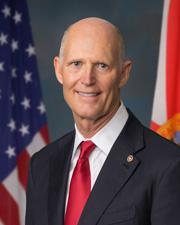
United States · Official source
2,325 records where Sen. Scott, Rick [R-FL] is listed as a sponsor, author, or other actor. Search with topics and years
United States · United States Congress · 22 January 2025
United States · United States Congress · 22 January 2025
Foreign Adversary Risk Management Act or the FARM Act This bill places the Secretary of Agriculture on the Committee on Foreign Investment in the United States (CFIUS). It also requires CFIUS to review any investment that could result in foreign control of any U.S. agricultural business. Further, the bill includes agricultural systems and supply chains in the definitions of critical infrastructure and critical technologies for the purposes of reviewing such investments. The Department of Agriculture and the Government Accountability Office must each analyze and report on foreign influence in the U.S. agricultural industry.
United States · United States Congress · 22 January 2025
This bill requires federal agencies to submit zero-based budgets to the Office of Management and Budget and the congressional budget committees . Under the bill, a zero-based budget is a systematic budget analysis in which managers (1) examine current objectives, operations, and costs; (2) consider alternative ways of carrying out programs or activities; and (3) rank different programs or activities by order of importance. The bill also requires federal agencies to submit recommendations to reduce spending by at least 2% from the previous year's levels. The Department of Defense and the National Nuclear Security Administration are exempt from this requirement.
United States · United States Congress · 22 January 2025
No Taxpayer Funding for Abortion and Abortion Insurance Full Disclosure Act of 2025 This bill modifies provisions relating to federal funding for, and health insurance coverage of, abortions. Specifically, the bill prohibits the use of federal funds for abortions or for health coverage that includes abortions. Such restrictions extend to the use of funds in the budget of the District of Columbia. Additionally, abortions may not be provided in a federal health care facility or by a federal employee. Historically, language has been included in annual appropriations bills for the Department of Health and Human Services (HHS) that prohibits the use of federal funds for abortions—such language is commonly referred to as the Hyde Amendment. Similar language is also frequently included in appropriations bills for other federal agencies and the District of Columbia. The bill makes these restrictions permanent and extends the restrictions to all federal funds (rather than specific agencies). The bill's restrictions regarding the use of federal funds do not apply in cases of rape, incest, or where a physical disorder, injury, or illness endangers a woman's life unless an abortion is performed. The Hyde Amendment provides the same exceptions. The bill also prohibits qualified health plans from including coverage for abortions. Currently, qualified health plans may cover abortion, but the portion of the premium attributable to abortion coverage is not eligible for subsidies.
United States · United States Congress · 22 January 2025
Protecting Military Installations and Ranges Act of 2025 This bill places restrictions on the purchase of certain property by a foreign person (e.g., an individual or entity) who is owned or controlled by, is acting for or on behalf of, or receives subsidies from Russia, China, Iran, or North Korea. Specifically, the Committee on Foreign Investment in the United States (CFIUS) must review a purchase or lease by, or a concession to, any such foreign person of private or public real estate in the United States that is within (1) 100 miles of a military installation; or (2) 50 miles of a military training route, special use airspace, a controlled firing area, or a military operations area. Further, the Department of Defense and the Department of Transportation may not issue final determinations regarding specified projects (e.g., energy projects) that involve a transaction under review by CFIUS until CFIUS concludes its action.
United States · United States Congress · 22 January 2025
PLO and PA Terror Payments Accountability Act of 2025 This bill requires the President to impose sanctions on foreign persons (individuals and entities) that are involved with the Palestinian Liberation Organization (PLO) or Palestinian Authority (PA) system of compensation supporting acts of terrorism. The bill defines this system of compensation as payments to an individual who (1) has been imprisoned for terrorist acts against Israeli or U.S. citizens after being fairly tried, (2) died while committing such terrorist acts, or (3) is a family member of such individuals. The definition also includes compensation for individuals imprisoned for terrorism where the level of compensation is based on the length of incarceration. Specifically, the President must impose visa- and property-blocking sanctions on any foreign person that has facilitated this compensation system, including PLO and PA officials as well as entities such as the Institute for the Care of the Families of the Martyrs and the Wounded. The President must also impose visa- and property-blocking sanctions on foreign persons who knowingly provide significant support to, or engage in significant transactions with, any of the aforementioned persons. The President must sanction foreign financial institutions that facilitate payments or benefits related to this compensation system by (1) prohibiting them from opening correspondent or payable-through accounts in the United States, and (2) prohibiting or imposing strict conditions on the maintenance of such accounts. The provisions of this bill shall terminate if the Department of State certifies that such compensation system has ceased.
United States · United States Congress · 21 January 2025
Standing Against Houthi Aggression Act This bill requires (1) the Department of State to designate Ansarallah, the Iran-backed movement in Yemen also known as the Houthis, as a foreign terrorist organization; and (2) the President to impose property- and visa-blocking sanctions with respect to Ansarallah and any foreign person who is a member, agent, or affiliate of, or owned or controlled by, Ansarallah.
United States · United States Congress · 21 January 2025
Midnight Rules Relief Act of 2025 This bill allows Congress to disapprove multiple regulations under one joint resolution of disapproval if the regulations were submitted for review during a portion of the final year of a President's term. Under current law, the Congressional Review Act generally provides for a period of additional review during the succeeding Congress for regulations that were submitted during the last 60 legislative days of the prior Congress. However, each joint resolution may disapprove of only one regulation.
United States · United States Congress · 21 January 2025
Stopping Adversarial Tariff Evasion Act This bill expands the applicability of certain trade enforcement actions to goods from entities (e.g., businesses) that are owned, controlled, directed, or operated by a foreign adversary (i.e., China, Russia, Iran, North Korea, Cuba, and the Maduro regime of Venezuela). The bill applies to an entity for which, on any date during the most recent 12-month period, at least 25% of the equity interests in such entity are held directly or indirectly by one or more foreign adversary parties. Currently, the Office of the U.S. Trade Representative may take certain enforcement actions under trade agreements or in response to certain unfair foreign trade practices (Section 301 of the Trade Act of 1974), and the President may take certain actions after a determination of import injury (Section 203 of the Trade Act of 1974) or to safeguard national security (Section 232 of the Trade Expansion Act of 1962). This bill applies these enforcement actions to any good that is produced, manufactured, or that underwent final assembly by a foreign adversary party or an entity owned, controlled, directed, or operated by a foreign adversary party, as if the good originated in the foreign adversary country. Therefore, these enforcement actions shall apply to goods from companies that are based in other countries and are tied to foreign adversaries. (For example, additional tariffs may be imposed on goods from a Chinese manufacturer that are produced in Vietnam.)
United States · United States Congress · 20 January 2025
Student Empowerment Act This bill expands the education-related expenses that may be paid for with tax-free distributions from a qualified tuition program (also known as a 529 plan) to include certain expenses related to elementary, secondary, and homeschool education. Under current law, distributions from a 529 plan are excluded from gross income if they are used to pay for qualified higher education expenses, which includes up to $10,000 (per year and per beneficiary) for tuition at an elementary or secondary public, private, or religious school. The bill expands the education-related expenses that may be paid for with tax-free distributions from a 529 plan to include tuition related to homeschooling and the following expenses related to elementary, secondary, and homeschool education: curriculum and curricular materials, books or other instructional materials, online educational materials, tutoring or educational classes outside the home, testing fees, fees for dual enrollment in an institution of higher education, and educational therapies for students with disabilities.
United States · United States Congress · 16 January 2025
Protecting Higher Education from the Chinese Communist Party Act of 2025 This bill prohibits certain members of the Chinese Communist Party (CCP) and their families from receiving an F (academic student) or J (exchange visitor) visa. Specifically, this prohibition shall apply to any CCP member who has served in any position in the CCP since this bill's enactment. The prohibition shall also apply to a spouse, child, parent, sibling, grandchild, niece, or nephew of such an individual. These prohibitions do not apply if an individual must be admitted for compliance with the United Nations headquarters agreement or other international obligations. The President may waive these prohibitions by certifying to Congress that the waiver is in the U.S. national interest.
United States · United States Congress · 16 January 2025
Red Snapper Act of 2025 This bill prohibits the National Oceanic and Atmospheric Administration (NOAA) from restricting certain fishing activities in the South Atlantic until data from the South Atlantic Great Red Snapper Count study is integrated into the next South Atlantic red snapper Southeast Data, Assessment, and Review (SEDAR) stock assessment. The bill provides that NOAA may not issue an interim rule, final rule, or Secretarial Amendment establishing an area closure or a bottom fishing closure for specified species until (1) the study is complete; and (2) the study data is integrated into the first South Atlantic red snapper SEDAR stock assessment that is carried out after the bill's enactment. The limitation applies to fishing for species managed under the Fishery Management Plan for the Snapper-Grouper Fishery of the South Atlantic Region, including red snapper, grouper, and porgy. (Closures generally restrict recreational and commercial fishing to prevent overfishing and for other conservation purposes.)
United States · United States Congress · 16 January 2025
Allowing Military Exemptions, Recognizing Individual Concerns About New Shots Act of 2025 or the AMERICANS Act This bill prohibits the Department of Defense (DOD) from issuing any COVID-19 vaccine mandate as a replacement for the rescinded vaccine mandate of August 24, 2021, unless the mandate is expressly authorized by Congress. The bill also provides that DOD must establish an application process for remedies for members of the Armed Forces who were discharged or subject to adverse action under the rescinded mandate. Any administrative discharge of a member on the sole basis of a failure to receive a COVID-19 vaccine must be categorized as an honorable discharge, and DOD is prohibited from taking any adverse action against such a member for that reason. DOD must try to retain unvaccinated members and provide such members with professional development, promotion and leadership opportunities, and consideration equal to that of their peers. Additionally, DOD may only consider the COVID-19 vaccination status of members in making certain decisions (e.g., deployments in countries where it is the law) and must establish a process to provide exemptions to certain members for such decisions. Members who were separated from the Armed Forces for refusing to receive a COVID-19 vaccine are not required to repay any bonuses and must be reimbursed if they repaid any portion of a bonus prior to this bill's enactment. This bill applies to all members of the Armed Forces, regardless of whether they sought an accommodation to any DOD COVID-19 vaccination policy.
United States · United States Congress · 16 January 2025
No Tax on Tips Act This bill establishes a new tax deduction of up to $25,000 for tips, subject to limitations. The bill also expands the business tax credit for the portion of payroll taxes an employer pays on certain tips to include payroll taxes paid on tips received in connection with certain beauty services. Under the bill, the new tax deduction for tips is limited to cash tips (1) received by an employee during the course of employment in an occupation that customarily receives tips, and (2) reported by the employee to the employer for purposes of withholding payroll taxes. (Under current law, an employee is required to report tips exceeding $20 per month to their employer.) Further, an employee with compensation exceeding a specified threshold ($160,000 in 2025 and adjusted annually for inflation) in the prior tax year may not claim the new tax deduction for tips. Finally, the bill expands the business tax credit for the portion of payroll taxes that an employer pays on certain tips to include payroll taxes paid on tips received in connection with barbering and hair care, nail care, esthetics, and body and spa treatments. (Under current law, an employer is allowed a business tax credit for the amount of payroll taxes paid on certain tips received by an employee in connection with providing, delivering, or serving food or beverages.)
United States · United States Congress · 16 January 2025
Restore Department of Veterans Affairs Accountability Act of 2025 or the Restore VA Accountability Act of 2025 This bill modifies personnel action procedures regarding certain employees and executives of the Department of Veterans Affairs (VA). The bill authorizes the VA to remove from civil service, demote, or suspend VA employees that are supervisors or managers if the VA determines by substantial evidence that the performance or misconduct of such individual warrants such action. This authority does not apply to certain appointees or individuals in their probationary or trial period. Supervisors or managers who are subject to a removal, demotion, or suspension under this bill are entitled to (1) advance notice of the action and supporting evidence, (2) representation by an attorney or representative, and (3) grieve the action in accordance with an internal grievance process. The bill also provides protections from removal, demotion, or suspension for supervisor or managers who are whistleblowers or are seeking corrective action for an alleged prohibited personnel practice such as discrimination. The bill also modifies the procedures to remove, demote, or suspend VA employees or senior executives based on performance or misconduct, specifically by requiring the VA to determine by substantial evidence that the performance or misconduct of the individual warrants such removal, demotion, or suspension. Such procedures must apply retroactively, beginning on the date of enactment of the Department of Veterans Affairs Accountability and Whistleblower Protection Act of 2017 (June 23, 2017).
United States · United States Congress · 16 January 2025
Qualified Immunity Act of 2025 This bill provides statutory authority for qualified immunity for law enforcement officers in civil cases involving constitutional violations. Current law provides a statutory civil cause of action against state and local government actors (e.g., law enforcement officers) for violations of constitutional rights, also known as Section 1983 lawsuits. The Supreme Court has also found an implied cause of action against federal law enforcement officers in certain situations (e.g., Fourth Amendment violations), also known as Bivens lawsuits. However, under the judicial doctrine of qualified immunity, government officials performing discretionary duties are generally shielded from civil liability, unless their actions violate clearly established rights of which a reasonable person would have known. The bill provides statutory authority for these principles with respect to law enforcement officers. Specifically, under the bill, law enforcement officers are entitled to qualified immunity if (1) at the time of the alleged violation, the constitutional right at issue was not clearly established or the state of the law was not sufficiently clear that any reasonable officer would have known that the conduct was unconstitutional; or (2) a court has held that the specific conduct at issue is constitutional. The bill applies to federal, state, and local law enforcement officers. It also specifies that law enforcement agencies and local governments may not be held liable if their officers are entitled to qualified immunity.
United States · United States Congress · 16 January 2025
Safeguard American Voter Eligibility Act or the SAVE Act This bill requires individuals to provide documentary proof of U.S. citizenship when registering to vote in federal elections. Specifically, the bill prohibits states from accepting and processing an application to register to vote in a federal election unless the applicant presents documentary proof of U.S. citizenship. The bill specifies what documents are considered acceptable proof of U.S. citizenship, such as identification that complies with the REAL ID Act of 2005 that indicates U.S. citizenship. Further, the bill (1) prohibits states from registering an individual to vote in a federal election unless, at the time the individual applies to register to vote, the individual provides documentary proof of U.S. citizenship; and (2) requires states to establish an alternative process under which an applicant may submit other evidence to demonstrate U.S. citizenship. Each state must take affirmative steps on an ongoing basis to ensure that only U.S. citizens are registered to vote, which shall include establishing a program to identify individuals who are not U.S. citizens using information supplied by certain sources. Additionally, states must remove noncitizens from their official lists of eligible voters. The bill allows for a private right of action against an election official who registers an applicant to vote in a federal election who fails to present documentary proof of U.S. citizenship. The bill establishes criminal penalties for certain offenses, including registering an applicant to vote in a federal election who fails to present documentary proof of U.S. citizenship.
United States · United States Congress · 16 January 2025
Firearm Industry Non-Discrimination Act or the FIND Act This bill prohibits the federal government from entering into contracts with an entity that discriminates against firearm trade associations or businesses that deal in firearms, ammunition, or related products. Specifically, the bill requires a federal agency to include in each contract for the procurement of goods or services awarded by the agency a clause requiring the prime contractor to certify that it (1) has no policy, practice, guidance, or directive that discriminates against a firearm entity or firearm trade association; and (2) will not adopt a policy, practice, guidance, or directive that discriminates against a firearm entity or firearm trade association during the term of the contract. The bill establishes (1) a similar requirement with respect to subcontracts, and (2) penalties for violations. The bill makes such prohibition inapplicable to a contract for the procurement of goods or services that is a sole-source contract.
United States · United States Congress · 16 January 2025
Dismantle Iran’s Proxy Act of 2025 This bill requires the President to take actions against Ansarallah, the Iran-backed movement in Yemen also known as the Houthis. Specifically, the bill requires the President to designate Ansarallah as a foreign terrorist organization. (Among other things, such a designation allows the Department of the Treasury to require U.S. financial institutions to block transactions involving the organization.) The President must also (1) impose property blocking sanctions on Ansarallah and any foreign person who is an official, agent, or affiliate of the organization; (2) submit to Congress a determination as to whether three specified individuals are officials, agents, or affiliates of Ansarallah; and (3) submit to Congress a strategy to degrade the offensive capabilities of Ansarallah and to restore freedom of navigation in the Red Sea and nearby waterways.
United States · United States Congress · 15 January 2025
Securing Semiconductor Supply Chains Act This bill requires the SelectUSA program to solicit comments from state economic development organizations regarding federal efforts to increase foreign direct investment in semiconductor-related manufacturing and production. SelectUSA must then report to Congress on such comments and the strategies that SelectUSA may employ to increase such investment and to secure the U.S. semiconductor supply chain. SelectUSA is a Department of Commerce program established to coordinate federal efforts to attract and retain business investment in the United States.
United States · United States Congress · 15 January 2025
Born-Alive Abortion Survivors Protection Act This bill establishes requirements for the degree of care a health care practitioner must provide in the case of a child born alive following an abortion or attempted abortion. Specifically, a health care practitioner who is present must (1) exercise the same degree of care as would reasonably be provided to any other child born alive at the same gestational age, and (2) ensure the child is immediately admitted to a hospital. Additionally, a health care practitioner or other employee who has knowledge of a failure to comply with the degree-of-care requirements must immediately report such failure to law enforcement. A health care practitioner who fails to provide the required degree of care, or a health care practitioner or other employee who fails to report such failure, is subject to criminal penalties—a fine, up to five years in prison, or both. An individual who intentionally kills or attempts to kill a child born alive is subject to prosecution for murder. The bill bars the criminal prosecution of a mother of a child born alive under this bill and allows her to bring a civil action against a health care practitioner or other employee for violations.
United States · United States Congress · 15 January 2025
Repealing Big Brother Overreach Act This bill repeals the Corporate Transparency Act. The act requires existing companies and newly created companies to report beneficial ownership information to the Department of the Treasury’s Financial Crimes Enforcement Network for purposes of addressing the financing of terrorism and money laundering.
United States · United States Congress · 15 January 2025
Miracle on Ice Congressional Gold Medal Act This bill provides for the award of Congressional Gold Medals to the members of the 1980 U.S. Olympic men's ice hockey team in recognition of the team's achievement at the 1980 Winter Olympic Games.
United States · United States Congress · 14 January 2025
Sarah's Law This bill requires U.S. Immigration and Customs Enforcement (ICE) to detain a non-U.S. national ( alien under federal law) who is unlawfully present in the United States and has been charged with a crime that resulted in the death or serious bodily injury of another person. ICE must make reasonable efforts to obtain information about the identity of any victims of the crimes for which the detained individual was charged or convicted. ICE shall provide the victim, or a relative or guardian of a deceased victim, with information about the detained individual, including name, date of birth, nationality, immigration status, criminal history, and a description of any related removal efforts.
United States · United States Congress · 14 January 2025
This bill eliminates automatic increases to pay for Members of Congress, beginning with the 120th Congress. Current law automatically increases Member pay according to a formula. The annual increase is (1) based on the percentage change in private sector wages as measured by the Employment Cost Index (ECI); and (2) capped at the percentage increase to General Schedule (GS) employees' base pay. The annual adjustment automatically goes into effect unless Congress modifies the increase in legislation.
United States · United States Congress · 14 January 2025
United States · United States Congress · 14 January 2025
Let's Get to Work Act of 2025 This bill modifies and expands work requirements under the Supplemental Nutrition Assistance Program (SNAP) and certain housing programs of the Department of Housing and Urban Development (HUD). Specifically, the bill expands the applicability of the work requirements for SNAP recipients who are able-bodied adults without dependents (ABAWDs). As background, SNAP recipients who are ABAWDs have work-related requirements in addition to the general SNAP work registration and employment and training requirements. The bill applies the work requirements for ABAWDs to adults who are not over 60 years old, whereas these requirements currently apply to adults who are not over 55 years old. Further, the ABAWD exemption for a parent or household member with responsibility for a dependent child is restricted under the bill to a dependent child under the age of six. Currently, the child must be under the age of 18. The bill allows a member of a household with responsibility for a dependent child to participate in SNAP for up to 6 months (currently 3 months) over a 36-month period without meeting the ABAWD work requirements. The bill also includes an exception for an individual who (1) is responsible for a dependent individual, and (2) is married to and resides with an individual who complies with the SNAP work requirements. Additionally, the bill establishes work requirements for families residing in public housing by applying the SNAP work requirements for ABAWDs to the HUD public housing and tenant-based rental assistance (voucher) programs.
United States · United States Congress · 14 January 2025
No Budget, No Pay Act This bill prohibits Members of Congress from being paid in a fiscal year until both chambers approve the budget resolution and pass all regular appropriations bills for that fiscal year. Retroactive pay is prohibited for such a period. This bill takes effect on September 29, 2027.
United States · United States Congress · 14 January 2025
Defending American Sovereignty in Global Pandemics Act This bill prohibits the United States from becoming a party to a World Health Organization (WHO) agreement related to strengthening pandemic prevention, preparedness, and response except pursuant to a treaty made under Article II, Section 2, clause 2 of the U.S. Constitution (which requires that two-thirds of Senators present concur with the treaty). The bill also prohibits federal funding for WHO beginning on the effective date of such an agreement and ending on the date when the Senate ratifies the agreement.
United States · United States Congress · 14 January 2025
Thin Blue Line Act This bill expands the list of statutory aggravating factors in death penalty determinations to also include killing or targeting a law enforcement officer, firefighter, or other first responder.
United States · United States Congress · 13 January 2025
Guidance Clarity Act of 2025 This bill requires federal agencies to state on the first page of guidance documents that such guidance (1) does not have the force and effect of law, and (2) is intended only to provide clarity to the public about existing legal requirements or agency policies.
United States · United States Congress · 13 January 2025
This bill requires the President to designate Ansarallah, the Iran-backed movement in Yemen also known as the Houthis, as a foreign terrorist organization. The President must also report to Congress a determination as to whether specified foreign persons are officials, agents, or affiliates of Ansarallah.
United States · United States Congress · 9 January 2025
Preserving Safe Communities by Ending Swatting Act of 2025 This bill makes it a crime to intentionally convey false or misleading information in circumstances where the information may reasonably be expected to cause an emergency response and the information indicates the occurrence of criminal conduct or a threat to health or safety (commonly referred to as swatting ).
United States · United States Congress · 9 January 2025
Securing Timely Opportunities for Payment and Maximizing Awards for Detaining Unlawful Regime Officials Act of 2025 or the STOP MADURO Act This bill authorizes the Department of State to pay a reward of up to $100 million for certain information directly leading to the arrest and conviction of Nicolas Maduro Moros. For example, under the bill, the State Department may pay such a reward to one or more individuals who furnish information directly leading to Maduro's arrest and conviction in any country for specified narcotics-related offenses. The bill also requires that any such payment come solely from the liquidation of assets that the U.S. President or the Department of the Treasury's Office of Foreign Assets Control has withheld pursuant to specified laws and executive orders from Maduro, officials of the Maduro regime, and their co-conspirators.
United States · United States Congress · 9 January 2025
Expel Illegal Chinese Police Act of 2025 This bill requires sanctions on certain foreign persons associated with the Chinese Communist Party (CCP) or Chinese law enforcement institutions, including those seeking to establish a Chinese police presence in the United States. The bill requires the President to impose visa-blocking sanctions on certain non-U.S. nationals ( aliens under federal law), including those who are (1) employees of Chinese law enforcement institutions or their immediate family members, or (2) directly associated with a Chinese police or United Front Work Department (UFWD) presence in the United States. (The CCP's UFWD seeks to win support for the CCP from non-CCP groups at home and abroad, with a focus on ethnic-Chinese diaspora communities.) The President must also impose property-blocking sanctions on foreign individuals or entities that are (1) Chinese law enforcement institutions, their senior leaders, or those acting under the control of such institutions; (2) directly associated with establishing or maintaining a Chinese police presence in the United States; or (3) acting under the control of the UFWD with the intention of covertly monitoring or intimidating those living in the United States. Additionally, the bill requires the President to prohibit federal agencies from participating in investigations into foreign persons subject to these sanctions unless the investigation is (1) initiated by the U.S. government; or (2) the President determines that such participation is vital to the health, safety, and well-being of U.S. citizens.
United States · United States Congress · 9 January 2025
Preventing the Recycling of Immigrants is Necessary for Trafficking Suspension Act or the PRINTS Act This bill addresses migrant minor children entering the United States. Specifically, the bill makes it a crime for a person to knowingly use a minor to gain entry to the United States if the minor is not a close relative or if the person is not the minor’s guardian. In addition, U.S. Customs and Border Protection (CBP) must fingerprint all non-U.S. nationals ( aliens under federal law) entering the United States who are younger than 14 years of age if a CBP officer suspects that the child is victim of human trafficking. The Department of Homeland Security (DHS) must share with the Department of Health and Human Services (HHS) any fingerprints collected under this bill from an unaccompanied child if that child is transferred to HHS custody. DHS must report to Congress on the number of children fingerprinted annually under this bill. DHS must also publish on a monthly basis the number of individuals apprehended for falsely claiming a child accompanying them into the United States was a close relative.
United States · United States Congress · 9 January 2025
This resolution (1) mourns the passing of former President Jimmy Carter and extends sympathy to his family; and (2) honors his life, legacy, and contributions to the United States.
United States · United States Congress · 9 January 2025
Constitutional Concealed Carry Reciprocity Act of 2025 This bill allows a qualified individual to carry a concealed handgun into or possess a concealed handgun in another state that allows its residents to carry concealed firearms. A qualified individual must (1) be eligible to possess, transport, or receive a firearm under federal law; (2) carry a valid photo identification document; and (3) carry a valid state-issued concealed carry permit, or be eligible to carry a concealed firearm in his or her state of residence.
United States · United States Congress · 8 January 2025
Homeowners Premium Tax Reduction Act of 2025 This bill establishes a new deduction of up to $10,000 claimed against gross income (above-the-line tax deduction) for annual policy premiums paid or incurred for homeowners insurance on an individual's principal residence.
United States · United States Congress · 8 January 2025
This joint resolution proposes constitutional amendments that (1) authorize the President to reduce or disapprove any appropriation in a bill or joint resolution using a line-item veto; (2) prohibit Members of Congress from serving more than six terms in the House of Representatives or two terms in the Senate; and (3) prohibit a chamber of Congress from agreeing to legislation that imposes, authorizes, or raises any tax or fee unless the legislation contains no other subject and is agreed to by an affirmative vote of at least two-thirds of the chamber.
United States · United States Congress · 8 January 2025
Protect Our Seniors Act This bill establishes Senate budget enforcement procedures (known as points of order) against measures that (1) reduce Medicare or Social Security benefits, or (2) use revenue or savings from the Medicare program to offset the cost of provisions unrelated to carrying out Medicare. Points of order are prohibitions against certain categories of legislation or congressional action. A point of order raised on the grounds established under the bill may be waived or suspended only by an affirmative vote of two-thirds of the Senators.
United States · United States Congress · 8 January 2025
Venezuela Advancing Liberty, Opportunity, and Rights Act of 2025 or the VALOR Act of 2025 This bill requires or authorizes various actions, including sanctions, targeting the current government of Venezuela and any nondemocratic successor government. The bill also authorizes certain types of assistance for the people of Venezuela and to support democracy-building efforts. Under the bill, the President must impose property-blocking sanctions on the Venezuelan government and persons supporting the Venezuelan government; may deny U.S. nonhumanitarian foreign assistance, arms-related assistance, and debt forgiveness to any country that provides assistance to the Venezuelan government; may provide support to individuals and independent nongovernmental organizations to support democracy-building efforts in Venezuela; must develop a plan to provide assistance to Venezuela under a democratically elected government, which may include food, medicine, and emergency energy assistance to meet the basic needs of Venezuelans; must take steps to terminate sanctions under this bill once the President determines that a democratically elected government is in power (criteria for such a determination include a Venezuelan government that is the result of free and fair elections, is making progress in establishing an independent judiciary and respecting human rights, and has released all political prisoners). The Department of the Treasury must oppose the seating of Venezuelan representatives at certain international financial institutions such as the International Monetary Fund. Additionally, the bill prohibits U.S. persons (individuals or entities) from engaging in transactions involving Venezuela's debt or any digital currency issued by Venezuela.
United States · United States Congress · 8 January 2025
Expediting Reform And Stopping Excess Regulations Act or the ERASER Act This bill generally requires federal agencies to repeal three rules before issuing a new rule. In the case of a new nonmajor rule, an agency must repeal at least three rules that, to the extent practicable, are related to the new rule. In the case of a new major rule, (1) an agency must repeal at least three rules that are related to the new major rule, and (2) the cost of the new major rule must be less than or equal to the cost of the repealed rules. A major rule is a rule that has resulted in or is likely to result in (1) an annual effect on the economy of $100 million or more; (2) a major increase in costs or prices for consumers, individual industries, government agencies, or geographic regions; or (3) significant adverse effects on competition, employment, investment, productivity, or innovation. These requirements apply to rules issued through the notice and comment process and do not apply to interpretative rules, general statements of policy, or rules of agency organization, procedure, or practice. Further, the requirements do not apply to a rule or major rule that relates to the management, organization, or personnel of an agency or procurement by the agency. Any rule repealed under this bill must be published in the Federal Register. Finally, the Government Accountability Office must report on the number and estimated cost of rules and major rules currently in effect.
United States · United States Congress · 7 January 2025
Protection of Women and Girls in Sports Act of 2025 This bill generally prohibits school athletic programs from allowing individuals whose biological sex at birth was male to participate in programs that are for women or girls. Specifically, the bill provides that it is a violation of Title IX of the Education Amendments of 1972 for federally funded education programs or activities to operate, sponsor, or facilitate athletic programs or activities that allow individuals of the male sex to participate in programs or activities that are designated for women or girls. (Title IX prohibits discrimination on the basis of sex in federally funded education programs or activities, including in public elementary and secondary schools and in colleges and universities.) Under the bill, sex is based on an individual's reproductive biology and genetics at birth.
United States · United States Congress · 7 January 2025
Sunshine Protection Act of 2025 This bill makes daylight saving time the new, permanent standard time. States with areas exempt from daylight saving time may choose the standard time for those areas.
United States · United States Congress · 7 January 2025
This joint resolution proposes an amendment to the Constitution establishing term limits for individuals serving in the Senate and the House of Representatives. The proposed amendment makes an individual who has served two terms in the Senate ineligible for appointment or election to the Senate and an individual who has served three terms as a Member of the House of Representatives ineligible for election to the House of Representatives. The joint resolution provides that the amendment shall be valid when ratified by the legislatures of three-fourths of the states within seven years after the date of its submission for ratification. Under Article V of the Constitution, both chambers of Congress may propose an amendment by a vote of two-thirds of all Members present for such vote. A proposed amendment must be ratified by the states as prescribed in Article V and as specified by Congress.
United States · United States Congress · 6 January 2025
Laken Riley Act This bill requires the Department of Homeland Security (DHS) to detain certain non-U.S. nationals ( aliens under federal law) who have been arrested for burglary, theft, larceny, or shoplifting. The bill also authorizes states to sue the federal government for decisions or alleged failures related to immigration enforcement. Under this bill, DHS must detain an individual who (1) is unlawfully present in the United States or did not possess the necessary documents when applying for admission; and (2) has been charged with, arrested for, convicted of, or admits to having committed acts that constitute the essential elements of burglary, theft, larceny, or shoplifting. The bill also authorizes state governments to sue for injunctive relief over certain immigration-related decisions or alleged failures by the federal government if the decision or failure caused the state or its residents harm, including financial harm of more than $100. Specifically, the state government may sue the federal government over a decision to release a non-U.S. national from custody; failure to fulfill requirements relating to inspecting individuals seeking admission into the United States, including requirements related to asylum interviews; failure to fulfill a requirement to stop issuing visas to nationals of a country that unreasonably denies or delays acceptance of nationals of that country; violation of limitations on immigration parole, such as the requirement that parole be granted only on a case-by-case basis; or failure to detain an individual who has been ordered removed from the United States.
United States · United States Congress · 20 December 2024
Pay Our Military Act of 2024 This bill provides continuing appropriations for military pay for any period during which interim or full-year appropriations for FY2025 are not in effect (i.e., a government shutdown). Specifically, the bill provides FY2025 continuing appropriations for the pay and allowances of (1) members of the Armed Forces, including reserve components, who perform active service during the period; and (2) civilian personnel and contractors of the Department of Defense (and the Department of Homeland Security in the case of the Coast Guard) who are providing support to such members of the Armed Forces. If a government shutdown occurs, the bill provides the continuing appropriations until the earlier of (1) the enactment into law of specified appropriations legislation, or (2) January 1, 2026.
United States · United States Congress · 19 December 2024
United States · United States Congress · 19 December 2024