Amendment· SAMDTSAMDT 3546 (113th)open
SAMDT 3546
United States · United States Congress
The world's political record
Person
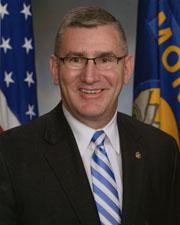
United States · Official source
162 records where Sen. Walsh, John E. [D-MT] is listed as a sponsor, author, or other actor. Search with topics and years
United States · United States Congress
United States · United States Congress
United States · United States Congress
United States · United States Congress
United States · United States Congress
United States · United States Congress
United States · United States Congress
United States · United States Congress
United States · United States Congress · 4 December 2014
Extends from 5 to 10 years after discharge or release from active duty after January 28, 2003, a combat veteran's eligibility for veterans' hospital care, medical services, and nursing home care for illnesses that have not been medically proven to be attributable to such veteran's service.
United States · United States Congress · 20 November 2014
Recognizes November 2014 as National Native American Heritage Month and the Friday after Thanksgiving as Native American Heritage Day.
United States · United States Congress · 18 September 2014
Commemorates the 50th anniversary of the Wilderness Act. Commends the work of the individuals and organizations involved in building and maintaining the National Wilderness Preservation System.
United States · United States Congress · 15 September 2014
Designates the Department of Veterans Affairs clinic located at 1766 Majestic Lane in Billings, Montana, as the "Bear Root Department of Veterans Affairs Clinic."
United States · United States Congress · 9 September 2014
Declares that the Senate has heard with profound sorrow and deep regret the announcement of the death of the Honorable James M. Jeffords, former member of the United States Senate. Declares that when the Senate adjourns September 9, 2014, it stand adjourned as a further mark of respect to the memory of Senator Jeffords.
United States · United States Congress · 1 August 2014
Ten in Ten Act - Establishes in the Treasury a Carbon Capture and Sequestration Deployment Acceleration Fund to be administered by the Department of Energy for promoting the establishment of at least 10 commercial-scale carbon capture and sequestration units in the next 10 years. (Carbon capture and sequestration is a three-step process: the capture, transport, and underground injection and geologic storage of carbon dioxide.) Includes as eligible projects carbon capture and sequestration units that are designed for: (1) new, retrofitted, or upgraded coal-fired power plants; and (2) certain nonmodular power plants using integrated gasification combined cycle technology.
United States · United States Congress · 31 July 2014
Open Book on Equal Access to Justice Act - Amends the Equal Access to Justice Act and the federal judicial code to require the Chairman of the Administrative Conference of the United States to submit to Congress and make publicly available on an Internet website an annual report on the amount of fees and other expenses awarded to prevailing parties other than the United States in certain administrative proceedings and civil action court cases (excluding tort cases) to which the United States is a party, including settlement agreements. Requires such reports to describe the number, nature, and amount of the awards, the claims involved in the controversy, and any other relevant information that may aid Congress in evaluating the scope and impact of such awards. Directs the Chairman to create and maintain a searchable database on an Internet website containing specified information with respect to each award, including: if available, the case name and number of, as well as a hyperlink to, any case in which the party other than the agency is not an individual; the name of the agency involved; for an award to an individual, a statement that excludes any personally identifiable information but indicates that the award was made to an individual; for an award made to a party other than an individual, the name of the party; the amount of the award; and the basis for finding that the position of the agency concerned was not substantially justified. Directs the head of each agency (including, with respect to court cases, the Attorney General [DOJ] and the Director of the Administrative Office of the United States Courts) to provide the Chairman all information requested to produce such reports.
United States · United States Congress · 31 July 2014
American Livestock Protection and Ranching Opportunity Act of 2014 - Expresses the sense of Congress that: the majority of consumers in the United States want to know where animals used to produce the meat eaten are born, raised, and slaughtered; country-of-origin labeling provides information that consumers have a right to know; and country-of-origin labeling facilitates supply chain information critical for food safety. Amends the Animal Health Protection Act to prohibit the Secretary of Agriculture (USDA) from allowing or advancing regulations that allow the importation of fresh meat and meat products from a country until the Secretary certifies to Congress that a country is free of foot-and-mouth disease without vaccination. Amends the Agricultural Research, Extension, and Education Reform Act of 1998 to establish a USDA livestock disease initiative to provide competitive grants for research and development related to surveillance methods, vaccines, vaccination delivery systems, or diagnostic tests for diseases in domestic livestock that present a potential concern to public health and safety. Makes federal agencies, national laboratories, institutions of higher education, research institutions, and state agricultural experiment stations eligible for grants. Amends the Agricultural Act of 2014 to provide eligible livestock producers with assistance for losses due to brucellosis and to alter the payment rates USDA uses to provide agricultural disaster assistance under the Livestock Indemnity Program and the Livestock Forage Disaster Program.
United States · United States Congress · 31 July 2014
Authorizes the Secretary of the Air Force, for purposes of modernizing the C-130 aircraft fleet, to install alternative communication, navigation, surveillance, and air traffic management program kits in lieu of C-130 aircraft avionics modernization program kits if the Secretary determines, on a case-by-case basis, that such alternative program is appropriate and notifies Congress of such determination. Requires the Secretary to ensure that all C-130 aircraft are capable of meeting applicable regulations of the Federal Aviation Administration (FAA) by January 1, 2020. Authorizes the Secretary to use amounts made available for FY2013 or FY2014 for the Air Force for the C-130 aircraft avionics modernization program that remain available for obligation to carry out this Act.
United States · United States Congress · 31 July 2014
Rural and Tribal Voter Rights Act - Directs the Election Assistance Commission to make a payment each fiscal year to each state which meets early voting location distribution plan development requirements for ensuring that eligible voters have adequate access to early voting locations. Requires a state or local election official to provide at least one one early voting location on tribal land when requested by the tribal government. Requires each state to, after reasonable notice and public hearings, adopt and submit to the Commission a plan which provides for the equitable distribution of early voting locations. Requires each state to make early voting available to any eligible voter for at least 10 days before an election for federal office. Directs the Secretary of Veterans Affairs, the Secretary of Health and Human Services (HHS), the Commissioner of the Social Security Administration, the Postmaster General, the Secretary of Agriculture, and the Secretary of the Interior to permit a state to designate facilities of the respective agencies located in the state as voter registration agencies. Requires each state to permit any eligible individual on the same day as a federal election and on any day when voting, including early voting, is permitted for a federal election to: (1) register to vote in the election, and (2) cast a vote in it. Requires each state to provide a secure online interface available to the public on a public, government website that allows any eligible individual to register electronically to vote or to update their voter registration. Authorizes the Attorney General to bring a civil action in an appropriate district court for declaratory or injunctive relief as necessary to carry out this Act. Allows any aggrieved person a private right of action, too.
United States · United States Congress · 31 July 2014
World War I American Veterans Centennial Commemorative Coin Act - Directs the Secretary of the Treasury to: (1) mint and issue $1 silver coins to commemorate the centennial of the involvement of the United States in World War I, and (2) hold a competition and provide compensation for its winner to design the obverse and reverse of the coins. Requires the design of such coins to be emblematic of the centennial of the involvement of the United States in World War I. Permits the Secretary to issue such coins only during the period beginning on January 1, 2018, and ending on December 31, 2018. Subjects the coin sales to a surcharge of $10 per coin, payable by the Secretary to the World War I Centennial Commission.
United States · United States Congress · 30 July 2014
Women's Small Business Ownership Act of 2014 - Amends the Small Business Act to direct the Office of Women's Business Ownership within the Small Business Administration (SBA) to address issues concerning specified disciplines required for starting, operating, and increasing a small business. Authorizes the SBA Administrator to provide annual training for women's business ownership representatives. Authorizes the Administrator to provide financial assistance to qualifying entities to conduct projects designed to provide training and counseling meeting the needs of women business owners, especially socially and economically disadvantaged women business owners. Specifies assistance amounts of up to $250,000 per project year. Directs the Administrator to seek advice, input, and recommendations for policy changes from any association of women's business centers to develop: (1) a training program for the staff of such centers, and (2) recommendations to improve the policies and procedures for governing the general operations and administration of the women's business center program. Authorizes the Administrator, upon request by a recipient organization, to waive for a fiscal year (but not more than two consecutive fiscal years) the requirement to obtain matching non-federal funds for the organization's technical assistance and counseling activities carried out using financial assistance under the women's business center program. Directs the Comptroller General (GAO) to study: (1) the unique economic issues facing women's business centers located in predominately rural, urban, or insular areas; and (2) SBA oversight of women's business centers. Authorizes a contracting officer to award a sole source contract under this Act to small businesses owned and controlled by women if each of the businesses is at least 51% owned by one or more women who are economically disadvantaged (and such ownership is determined without regard to any community property law), and meets specified additional criteria. Authorizes a contracting officer to award a sole source contract to a small business owned and controlled by women meeting the same criteria in an industry in which such businesses are substantially underrepresented if the small business also meets specified certification requirements. Extends indefinitely the SBA Intermediary Lending Program (ILP). Replaces requirements governing ILP loan limits, including maximum amounts, with requirements that limit to: (1) $1 million a single loan to an eligible intermediary, (2) $5 million the total amount outstanding and committed to the intermediary by the Administrator under the ILP, and (3) $20 million the total amount of all ILP loans during each of FY2015-FY2017. Revises requirements for the SBA microloan program (direct loans to eligible intermediaries for making fixed interest rate microloans to startup, newly established, or growing small businesses). Increases the ILP's aggregate loan limit for intermediaries after their first year of participation from $5 million to $7 million. Eliminates limitations on an intermediary's use of funds from an accompanying marketing, management, and technical assistance grant to provide information and technical assistance to small businesses that are prospective borrowers. Prohibits the Administrator from collecting the guarantee fee on a guaranteed loan unless amounts are made available to subsidize the cost of guaranteeing such loans for FY2016. Expresses the sense of the Senate on access to capital for small businesses owned and controlled by women.
United States · United States Congress · 30 July 2014
Protecting Student Privacy Act of 2014 - Amends the Family Educational Rights and Privacy Act of 1974 to prohibit programs administered by the Department of Education from making funds available to any educational agency or institution that has not implemented information security policies that: (1) protect personally identifiable information (PII) from education records, and (2) require each outside party to whom PII from education records is disclosed to have a comprehensive security program to protect such information. Defines "outside party" as a person that is not an employee, officer, or volunteer of the educational agency or institution or of a government agency. Includes within such term any contractor or consultant acting as a school official or authorized representative or in any other capacity. Prohibits such funds from being made available to any educational agency or institution that has a policy or practice of using, releasing, or providing access to PII to advertise or market a product or service. Requires state agencies receiving such funds, and each educational agency or institution, to ensure that any outside party with access to such records: (1) provides parents access to any PII it holds about their students; (2) provides a process to challenge, correct, or delete any inaccurate, misleading, or inappropriate data through a hearing by the agency or institution providing the outside party with access; (3) maintains a record of all individuals, agencies, or organizations that have requested or obtained access to the education records of a student; and (4) has information security procedures in place. Prohibits funds from being made available to any educational agency or institution, or any state educational agency, unless the agency or institution has a practice that: (1) promotes data minimization by meeting requests for student information with non-PII, and (2) requires that PII held by any outside party be destroyed when the information is no longer needed for the specified purpose. Directs educational agencies and institutions to maintain a record of all outside parties which have requested or obtained access to a student's education records. Requires such record to describe the information shared and to indicate specifically the party's legitimate interest in obtaining this information.
United States · United States Congress · 29 July 2014
Made in the U.S.A. Act - Prohibits the head of a federal agency from obligating or expending funds or providing financial assistance for projects for the construction, alteration, maintenance, or repair of a public building or public work unless substantially all of the iron, steel, wood products, cement, and manufactured goods used in the project are produced in the United States (Buy American requirements). Authorizes the head of an agency to waive such prohibition in certain circumstances. Amends the Internal Revenue Code, with respect to the Build America Bond program, to: (1) extend permanently the authority to issue such bonds and the authority for payments to issuers of such bonds, (2) reduce the bond holder tax credit percentage, and (3) treat as bonds qualified for the tax credit any bond (or series of bonds) issued to refund a qualified bond if certain criteria are met. Revises Buy American requirements with respect to federal-aid highways, particularly the handling of waiver requests. Revises similar Buy American requirements with respect to public transportation and Amtrak, particularly rolling stock. Requires the cost of rolling stock components and subcomponents produced in the United States to increase from 60% in FY2015 by 10% annual increments up to 100% for FY2019 and ensuing fiscal years. Prescribes Buy American requirements for procurement of a facility or equipment under federal aviation programs similar to those for rolling stock. Requires the Secretary of Transportation (DOT) to report annually to Congress on: (1) each project for which a waiver of Buy American requirements was issued; and (2) the country of origin and product specifications for steel, iron, or manufactured goods acquired pursuant to each waiver.
United States · United States Congress · 29 July 2014
Keeping Jobs in America Act - Directs the Secretary of Commerce to establish a program to award grants to states that are recruiting high-value jobs (e.g., manufacturing, software publishing, and computer system design jobs that pay a higher than average wage). Allows the use of grants to issue forgivable loans to entities that employ not fewer than 50 full-time employees in high-value jobs and that are deciding whether to locate in rural and distressed areas. Amends the Internal Revenue Code to: (1) grant business taxpayers a tax credit for up to 20% of insourcing expenses incurred for eliminating a business located outside the United States and relocating it within the United States, and (2) deny a tax deduction for outsourcing expenses incurred in relocating a U.S. business outside the United States. Requires an increase in the taxpayer's employment of full-time employees in the United States in order to claim the tax credit for insourcing expenses. Extends through 2017 the additional allowance for depreciation of business property (bonus depreciation) and the election to accelerate the alternative minimum tax credit in lieu of bonus depreciation. Makes permanent: (1) the increased $500,000 expensing allowance for depreciable business property and qualified real property, and (2) the new markets tax credit.
United States · United States Congress · 29 July 2014
Buy it in America Act - Directs the Secretary of Commerce to establish the America Star Program as a voluntary program under which manufacturers may have products certified as meeting the standards of a label (i.e., America Star label) that indicates to consumers the extent to which such products are manufactured in the United States. Amends the Internal Revenue Code to: (1) allow a new tax credit (angel investment tax credit) for up to 25% of equity investment in a small business entity that is located in the United States and engages in a qualified high technology trade or business; (2) make permanent the 100% exclusion from gross income of gain from the sale or exchange of qualified small business stock; and (3) establish tax-exempt small business startup savings accounts to make distributions for small business operating capital, the purchase of equipment or facilities, marketing, training, incorporation, and accounting fees.
United States · United States Congress · 28 July 2014
United States-Israel Strategic Partnership Act of 2014 - Expresses the sense of Congress that Israel is a major U.S. strategic partner. Amends the Department of Defense Appropriations Act, 2005 to extend authority to transfer certain obsolete or surplus Department of Defense (DOD) items to Israel. Amends the Foreign Assistance Act of 1961 to extend authority to make additions to foreign-based defense stockpiles for use as war reserve stocks through FY2015. Directs the President to take steps to make Israel eligible for the strategic trade authorization exception to the requirement for a license for the export, reexport, or in-country transfer of an item subject to certain export controls. Authorizes the President to carry out U.S.-Israel cooperative activities and to provide assistance for cooperation in the fields of energy, water, homeland security, agriculture, and alternative fuel technologies. Directs the President to report to Congress regarding U.S.-Israel cyber cooperation. Expresses the sense of Congress that the Secretary of Homeland Security (DHS) should designate Israel as a visa waiver program county when Israel meets certain program requirements. Amends the Energy Independence and Security Act of 2007 to authorize the Secretary of Energy to: enter into cooperative agreements supporting dialogue and planning involving international partnerships between the Department of Energy (DOE), including DOE National Laboratories, and the government of Israel and its ministries, offices, and institutions; and establish a joint United States-Israel Center based in an area of the United States with offshore energy development expertise to develop academic cooperation in energy innovation technology and engineering, water science, technology transfer, and analysis of geopolitical implications of new natural resource development. Extends, and expands the scope of covered energy, under the grant program to support U.S.-Israel research, development, and commercialization of renewable energy or energy efficiency.
United States · United States Congress · 28 July 2014
Columbia River Basin Restoration Act of 2014 - Amends the Federal Water Pollution Control Act (commonly known as the Clean Water Act) to require the Environmental Protection Agency (EPA) to establish a Columbia River Basin Restoration Program to reduce toxic contamination and clean up contaminated sites. Requires the program to be collaborative and stakeholder-based. Requires the EPA to: (1) assess trends in water quality and toxic contamination or toxics reduction; (2) collect, characterize and assess data on toxics and water quality to identify possible causes of environmental problems; (3) update the Columbia River Basin Toxics Reduction Plan (Action Plan) and the Estuary Partnership Comprehensive Conservation and Management Plan (Estuary Plan) and ensure that the plans form a coherent toxic contamination reduction strategy; and (4) provide technical assistance in implementing and updating the Action Plan. Directs the EPA to establish a Columbia River Basin Toxics Reduction Working Group to: (1) participate in developing updates to the Action Plan, (2) recommend and prioritize projects and actions for the Action Plan, and (3) review progress made. Requires the Lower Columbia River Estuary Partnership to perform those duties and fulfill those responsibilities of the Working Group relating to the Lower Columbia River Estuary. Requires the EPA to establish a Columbia River Basin toxics grant program to provide funding to develop or implement projects to implement the Action Plan and the Estuary Plan.
United States · United States Congress · 24 July 2014
Designates August 16, 2014, as National Airborne Day.
United States · United States Congress · 17 July 2014
Fair Share Act of 2014 - Consolidates and amends three federal programs that provide payments to local governments that have federal lands within their borders: the Department of the Interior's Payments in Lieu of Taxes (PILT) program, the Forest Service's Secure Rural Schools (SRS) program, and the U.S. Fish and Wildlife Service's Refuge Revenue Sharing (RRS) program. Expands the definition of "entitlement land" eligible for payment under the Department of the Interior's PILT program to include land owned by the U.S. government that was purchased for addition to the National Wildlife Refuge System. Combines the PILT, SRS, and RRS programs into one expanded PILT program, and alters the formulas for allocating payments under the programs. Provides permanent mandatory funding for the PILT program. Provides funding in FY2014-FY2018 for resource advisory committees created under the Secure Rural Schools and Community Self-Determination Act of 2000, and permits them to propose vegetation management projects, including projects authorized under the Healthy Forests Restoration Act of 2003.
United States · United States Congress · 17 July 2014
Access to Birth Control Act - Amends the Public Health Service Act to require pharmacies to comply with certain rules related to contraceptives, including: (1) providing a customer a contraceptive without delay if it is in stock; (2) immediately informing a customer if the contraceptive is not in stock and either transferring the prescription to a pharmacy that has the contraceptive in stock or expediting the ordering of the contraceptive and notifying the customer when it arrives, based on customer preference, except for pharmacies that do not ordinarily stock contraceptives in the normal course of business; and (3) ensuring that pharmacy employees do not take certain actions relating to a request for contraception, including intimidating, threatening, or harassing customers, interfering with or obstructing the delivery of services, intentionally misrepresenting or deceiving customers about the availability of contraception or its mechanism of action, breaching or threatening to breach medical confidentiality, or refusing to return a valid, lawful prescription. Provides that a pharmacy is not prohibited from refusing to provide a contraceptive to a customer if: (1) it is unlawful to dispense the contraceptive to the customer without a valid, lawful prescription and no such prescription is presented; (2) the customer is unable to pay for the contraceptive; or (3) the employee of the pharmacy refuses to provide the contraceptive on the basis of a professional clinical judgment. Provides that this Act does not preempt state law or any professional obligation of a state board that provides greater protections for customers. Sets forth civil penalties and establishes a a private cause of action for violations of this Act.
United States · United States Congress · 15 July 2014
Affirms that all children deserve a safe, loving, and permanent family. Recognizes the importance of ensuring that international adoptions of all children are conducted in an ethical and transparent manner. Expresses concern over the impact on children and families caused by the suspension of exit permit issuance within the Democratic Republic of Congo. Requests that the Congolese government resume processing adoption cases and issuing exit permits, prioritize the processing of intercountry adoptions which were initiated before the suspension, and expedite the adoption processing of medically fragile children. Encourages continued cooperation between the Department of State and the Democratic Republic of the Congo's Ministry of Foreign Affairs to improve the intercountry adoption process and ensure the welfare of all children adopted from the Democratic Republic of Congo.
United States · United States Congress · 14 July 2014
Amends the federal criminal code to prohibit a person from: (1) traveling in interstate or foreign commerce to purposely, knowingly, or negligently cause substantial risk of death or serious bodily injury to a child (defined as an individual under age 14) by placing the child in the physical custody of another individual who the person knows has previously injured a child or by operating a motor vehicle under the influence of alcohol or a controlled substance in violation of law while the child is in the vehicle; or (2) forcing a child to travel in interstate or foreign commerce to commit such an offense.
United States · United States Congress · 10 July 2014
Lewis and Clark National Historic Trail Interpretive Center Act of 2014 - Ratifies the conveyance of 27.29 acres of land from the Montana Department of Fish, Wildlife and Parks to the United States. Directs the Department of Agriculture (USDA) to carry out a pilot project under which USDA offers a lease to the Lewis & Clark Foundation of the land and improvements comprising the federal interest in the Lewis and Clark National Historic Trail Interpretive Center located in Great Falls, Montana. Requires the United States to reserve the right to locate, develop, and use the Interpretive Center for other uses by the federal government that are compatible with the purposes and operation of the Center.
United States · United States Congress · 9 July 2014
Protect Women's Health From Corporate Interference Act of 2014 - Affirms requirements, notwithstanding the Religious Freedom Restoration Act of 1993, that: (1) an employer that establishes or maintains a group health plan for its employees must provide coverage of a specific item or service for the employees or their dependents where the coverage is required under federal provisions or regulations pursuant to those provisions; and (2) group health plans sponsored by an employer or employee organization, and any health insurance coverage, must provide coverage required under the Public Health Service Act, including preventive health services. Authorizes the Departments of Labor, Health and Human Services (HHS), and the Treasury to modify regulations concerning coverage of contraceptive services by group health plans of religious employers consistent with the purposes and findings (regarding coverage of birth control services and the Supreme Court decisions in Burwell v. Hobby Lobby Stores, Inc. and Conestoga Wood Specialties Corp. v. Burwell ) of this Act.
United States · United States Congress · 9 July 2014
Sage-Grouse Accountability and Private Conservation Act of 2014 - Directs the Department of the Interior to report on the status of the greater sage-grouse conservation efforts by December 15, 2014. Requires the report to include a description of: (1) public (federal and state) and private programs and expenditures, (2) existing state management plans as well as plans that have been announced but not yet implemented, and (3) plans by land management agencies. Authorizes the Department of Agriculture (USDA) to provide funding under its agricultural land easements program for a conservation easement in an amount that is up to 75% of the value of land with greater or Gunnison sage-grouse habitat of special environmental significance. Adds maximizing the protection of that habitat as a consideration when ranking applications to the program.
United States · United States Congress · 8 July 2014
Bring Jobs Home Act - Amends the Internal Revenue Code to: (1) grant business taxpayers a tax credit for up to 20% of insourcing expenses incurred for eliminating a business located outside the United States and relocating it within the United States, and (2) deny a tax deduction for outsourcing expenses incurred in relocating a U.S. business outside the United States. Requires an increase in the taxpayer's employment of full-time employees in the United States in order to claim the tax credit for insourcing expenses.
United States · United States Congress · 7 July 2014
Declares that the Senate has heard with profound sorrow and deep regret the announcement of the death of the Honorable Alan John Dixon, former member of the U.S. Senate. Declares that when the Senate adjourns July 7, 2014, it stand adjourned as a further mark of respect to the memory of Senator Dixon.
United States · United States Congress · 26 June 2014
Bring Jobs Home Act - Amends the Internal Revenue Code to: (1) grant business taxpayers a tax credit for up to 20% of insourcing expenses incurred for eliminating a business located outside the United States and relocating it within the United States, and (2) deny a tax deduction for outsourcing expenses incurred in relocating a U.S. business outside the United States. Requires an increase in the taxpayer's employment of full-time employees in the United States in order to claim the tax credit for insourcing expenses.
United States · United States Congress · 26 June 2014
RESPONSE Act of 2014 - Amends the Homeland Security Act of 2002 to direct the Administrator of the Federal Emergency Management Agency (FEMA) to establish the Railroad Emergency Services Preparedness, Operational Needs, and Safety Evaluation Subcommittee of the National Advisory Council. Directs the Subcommittee to develop recommendations for improving emergency responder training and resource allocation, including regarding: the quality and application of training for local emergency first responders related to rail hazardous materials incidents, with a particular focus on local emergency responders and small communities near railroads; the effectiveness of funding levels related to training local emergency responders for rail hazardous materials incidents, with a particular focus on local emergency responders and small communities; a strategy for integration of commodity flow studies, mapping, and access platforms for local emergency responders and how to increase the rate of access to the individual responder in communications technology; the lack of emergency response plans for rail, similar to existing law related to maritime and stationary facility emergency response plans; the development of a train incident database; increasing access to relevant, useful, and timely information for the local emergency responder; and determining the most efficient agencies and offices for the implementation of the recommendations. Terminates the Subcommittee not later than four years after this Act's enactment, subject to one year extensions.
United States · United States Congress · 26 June 2014
Directs the Secretary of Veterans Affairs: (1) within 180 days after the Inspector General of the Department of Veterans Affairs (VA) submits a report to Congress in 2014 that identifies VA medical facilities at which scheduling practices did not comply with VA policies and procedures, to identify each VA employee who, during any of FY2011-FY2014, contributed to the purposeful omission of the names of veterans from an electronic wait list for health care at such a facility, who was a VA supervisor who knew or should have known that the employee contributed to such omission, and who received a bonus in part because of such omission; and (2) after notice and an opportunity for a hearing, to order such employee to repay the bonus.
United States · United States Congress · 26 June 2014
Designates July 26, 2014, as National Day of the American Cowboy.
United States · United States Congress · 26 June 2014
Declares that the Senate has heard with profound sorrow and deep regret the announcement of the death of the Honorable Howard H. Baker, Jr., former member of the U.S. Senate. Declares that when the Senate adjourns June 26, 2014, it stand adjourned as a further mark of respect to the memory of Senator Baker, Jr.
United States · United States Congress · 24 June 2014
Democracy Is Strengthened by Casting Light On Spending in Elections Act of 2014 or the DISCLOSE Act of 2014 - Amends the Federal Election Campaign Act of 1971 (FECA) to redefine the term "independent expenditure" as an expenditure by a person that, when taken as a whole, expressly advocates the election or defeat of a clearly identified candidate, or is the functional equivalent of express advocacy because it can be interpreted by a reasonable person only as advocating the election or defeat of a candidate, taking into account whether the communication involved mentions a candidacy, a political party, or a challenger to a candidate, or takes a position on a candidate's character, qualifications, or fitness for office. Expands the period during which certain communications are treated as electioneering communications. Prescribes disclosure requirements for corporations, labor organizations, and certain other entities, including a political committee with an account established for the purpose of accepting donations or contributions that do not comply with the contribution limits or source prohibitions under FECA (but only with respect to such accounts). Repeals the prohibition against political contributions by individuals age 17 or younger.
United States · United States Congress · 24 June 2014
Makes it out of order in the Senate to consider legislation that sells any federal land and uses the proceeds of the sale to reduce the federal deficit, except for the sale of federal land in a state as part of a program that acquires land in the same state of comparable value or contains exceptional resources. Permits waiver or suspension of such prohibition, or successful appeals from rulings of the Chair, only by an affirmative vote of three-fifths (60) of the Senate.
United States · United States Congress · 23 June 2014
Designates June 2014 as National Post-Traumatic Stress Disorder Awareness Month. Expresses support for the efforts of the Secretary of Veterans Affairs (VA), the Secretary of Defense (DOD), and the entire medical community to educate Armed Forces members, veterans, their families, and the public about the causes, symptoms, and treatment of post-traumatic stress disorder.
United States · United States Congress · 19 June 2014
American Digital Security and Commerce Act of 2014 - Requires the Director of the Office of Management and Budget (OMB), in coordinating standards and guidelines under the National Institute of Standards and Technology Act with agencies and offices operating or exercising control of national security systems (including the National Security Agency [NSA]), to assure that such agencies or offices do not intentionally weaken, circumvent, undermine, or create any mechanism through which a federal agency may bypass the privacy, security, or encryption protections included in any standard or guideline. Prohibits agencies and offices that consult with the National Institute of Standards and Technology (NIST) on information security policies from undermining such protective mechanisms. Prohibits federal agencies from intercepting shipments of computer or electronic products for the purpose of intentionally introducing into the products a mechanism or device that would allow a federal agency to circumvent a product's privacy, security, or encryption protections. Bars elements of the intelligence community from requiring, or contracting with, a manufacturer or developer of such products to place such a mechanism or device into its products. Exempts from such mechanism placement prohibitions certain lawful surveillance activities pursuant to a court order under specified provisions of the federal criminal code or the Foreign Intelligence Surveillance Act of 1978 (except with respect to procedures for targeting persons outside the United States other than U.S. persons). Permits persons (including certain associations and corporations, but excluding foreign powers) who suffer an injury relating to a mechanism placed into product to bring a civil action against the United States to recover money damages.
United States · United States Congress · 18 June 2014
Medicare Protection Act - Expresses the sense of the Senate that: (1) the eligibility age under title XVIII (Medicare) of the Social Security Act should not be increased, and (2) the Medicare program should not be privatized or turned into a voucher system. Amends the Congressional Budget and Impoundment Control Act of 1974, with respect to extraneous matter in reconciliation legislation, to require a provision to be considered extraneous if it eliminates or reduces guaranteed benefits for individuals entitled to, or enrolled for, benefits under Medicare or restricts the eligibility for such program. (Thus subjects such a provision to a point of order and stricken from the bill.)
United States · United States Congress · 18 June 2014
American Jobs for American Infrastructure Act - Amends the Internal Revenue Code to appropriate to the Highway Account and Mass Transit Account of the Highway Trust Fund for FY2014-FY2018 amounts necessary to ensure that the balance of each Account for any quarter is not less than specified levels. Declares the sense of Congress that Congress should provide annual inflation increases for the Federal Lands Access Program, the Federal Lands Transportation Program, and the Tribal Transportation Program in the next Surface Transportation reauthorization. Establishes in the Treasury a Reclamation Water Infrastructure Fund, to be administered by the Secretary of the Interior and used for: (1) rural water projects; (2) deferred maintenance of certain Indian irrigation projects; and (3) construction, planning, and design of projects to settle Indian reserved water rights. Establishes in the Treasury an Energy Upgrade and Retrofit Infrastructure Fund, to be administered by the Secretary of Energy (DOE) and used to: (1) support novel and innovative technologies to capture or prevent carbon dioxide emissions, as well as enable the beneficial use and long-term storage of carbon dioxide; and (2) fund certain commercial-scale, coal-fired electric generation units. Amends the Internal Revenue Code of 1986 to make a special rule to prohibit income deductions allocated to deferred foreign income from offsetting U.S. source income. Requires foreign-related deductions to be allocated to currently-taxed foreign income in the same proportion which currently-taxed foreign income bears to the sum of currently-taxed foreign income and deferred foreign income. Revises rules related to inverted domestic corporations (which used to be incorporated in the United States, or used to be a partnership in the United States, but now are incorporated in a foreign country, or are subsidiaries whose parent corporations are incorporated in a foreign country). Treats as an inverted domestic corporation, for income tax purposes, any foreign corporation (entity) which after May 8, 2014, completes the direct or indirect acquisition of substantially all of the properties or assets of a domestic corporation, and after the acquisition either: (1) more than 50% (currently, in different specified circumstances, 60% or 80%) of the entity's stock is held by former shareholders of the domestic corporation by reason of holding stock in that domestic corporation; or (2) the management and control of the expanded affiliated group which includes the entity occurs, directly or indirectly, primarily within the United States, and the expanded affiliated group has significant domestic business activities. Applies similar rules to an entity's acquisition of a domestic partnership. Dedicates to deficit reduction $1 billion of any increase in revenue to the Treasury by reason of this Act.
United States · United States Congress · 10 June 2014
American Indian Teacher Loan Forgiveness Act of 2014 - Amends title IV (Student Assistance) of the Higher Education Act of 1965 to provide up to $17,500 of loan forgiveness to borrowers under the Federal Family Education Loan program or the William D. Ford Federal Direct Loan program who: (1) are a member of an Indian tribe, and (2) have been employed as a full-time teacher for five consecutive complete school years in an Indian school or in a local educational agency that serves at least 10 Indian students or whose schools have an enrollment of students at least 25% of which are Indians.
United States · United States Congress · 9 June 2014
Veterans' Access to Care through Choice, Accountability, and Transparency Act of 2014 - Title I: Improvement of Scheduling System for Health Care Appointments - Directs the Secretary of Veterans Affairs (VA) to contract for an independent assessment of: the process at each VA medical facility for scheduling appointments for veterans; the staffing level and productivity of each VA medical facility; the organization, processes, and tools used by the VA to support clinical documentation and the subsequent coding of inpatient services; the VA's purchasing, distribution, and use of pharmaceuticals, medical and surgical supplies, and medical devices; and the VA's performance in paying amounts owed to third parties and collecting amounts it is owed. Directs the Secretary: (1) through a technology task force, to review the VA's needs regarding its system and software for scheduling veterans' medical appointments; and (2) to implement task force recommendations the Secretary considers feasible, advisable, and cost-effective. Title II: Training and Hiring of Health Care Staff - Requires the Inspector General of the VA to annually determine the five health care occupations for which there is the largest staffing shortage throughout the VA. Authorizes the Secretary, upon a determination by the Inspector General that there is such a staffing shortage regarding a particular health care occupation, to recruit and directly appoint highly qualified health care providers to serve in that particular occupation for the VA. Directs the Secretary, under the VA's Health Professionals Educational Assistance program, to give scholarship priority to applicants pursuing education or training towards a career in a health care occupation that represents one of the five largest staffing shortages in the VA. Requires the Secretary to submit a biennial report to Congress, until 2024, assessing the staffing of each VA medical facility. Directs the Secretary to establish a clinic management training program to provide in-person, standardized education on health care management to all managers of, and health care providers at, VA medical facilities. Terminates the program after two years. Requires the Secretary, thereafter, to provide health care management training materials to specified VA employees upon the commencement of their employment. Makes specified appropriations to the Veterans Health Administration (VHA) that remain unobligated at the end of FY2014 and FY2015 available to the Secretary to hire additional health care providers for the VHA, particularly in VA medical facilities and areas experiencing the greatest shortages. Title III: Improvement of Access to Care from Non-Department of Veterans Affairs Providers - Requires hospital care and medical services to be furnished to veterans through contracts with specified non-VA facilities if the veterans: have been unable to schedule an appointment at a VA medical facility within the VHA's wait-time goals for hospital care or medical services and such veterans opt for non-VA care or services; reside more than 40 miles from a VA medical facility; or reside in a state without a VA medical facility that provides hospital care, emergency medical services, and surgical care and such veterans reside more than 20 miles from such a facility. Provides for such care through contracts with any health care provider participating in the Medicare program, any federally-qualified health center, the Department of Defense (DOD), and the Indian Health Service (IHS). Directs the Secretary to provide veterans with information about the availability of care and services at non-VA facilities: (1) when they enroll in the VA patient enrollment system, and (2) when they attempt to schedule an appointment for VA hospital care or medical services but are unable to do so within the VHA's wait time goals. Terminates this Act's requirement that the Secretary furnish care and services through contracts with non-VA facilities two years after the Secretary publishes interim final regulations implementing the program. Requires the Secretary to transfer the authority to pay for health care through non-VA facilities from the VA's Veterans Integrated Service Networks and medical centers to the VHA's Chief Business Office. Directs the Secretary to conduct outreach to each Indian medical facility operated by an Indian tribe or tribal organization through a contract or compact with the IHS to raise awareness of the ability of such facilities, Indian tribes, and tribal organizations to enter into agreements with the VA for reimbursement for providing veterans with health care at such facilities. Requires the Secretary to establish performance metrics for assessing the performance of the VA and IHS under a memorandum of understanding to increase access to, and the quality and coordination of, health care services. Directs the Secretary to enter into agreements for the reimbursement of direct care services provided to veterans with Native Hawaiian health care systems that are in receipt of funds from grants awarded, or contracts entered into, under the Native Hawaiian Health Care Improvement Act. Expresses the sense of Congress that the Secretary must comply with the prompt payment rule or any similar regulation or ruling in paying for health care under contracts with non-VA providers. Title IV: Health Care Administrative Matters - Directs the Secretary to improve veterans' access to telemedicine and other health care through the use of VA mobile vet centers by establishing standardized requirements for the operation of such centers. Includes among those requirements: (1) the number of days each center is expected to travel each year, (2) the number of locations each center is expected to visit each year, (3) the number of appointments each center is expected to conduct each year, and (4) the method and timing of notification given by each center to individuals in the area to which such center is traveling. Requires each mobile vet center to have the capability to provide telemedicine services. Establishes an Independent Commission on Department of Veterans Affairs Construction Projects to review the VA's current construction and maintenance projects and medical facility leasing program to identify any problems the VA experienced in carrying out such projects and program. Establishes the Commission on Access to Care to examine veterans' access to VA health care and strategically examine how best to organize the VHA, locate health care resources, and deliver health care to veterans over the next 10 to 20 years. Directs the President to require the Secretary and the heads of other relevant federal agencies to implement each recommendation that the President considers feasible and advisable and determines can be implemented without further legislative action. Requires the Secretary to ensure that scheduling and wait-time metrics or goals are not used as factors in determining the performance of: (1) directors, associate directors, assistant directors, deputy directors, chiefs of staff, and clinical leads of VA medical centers; and (2) directors, assistant directors, and quality management officers of the Veterans Integrated Service Networks (VISNs). Directs the Secretary to modify the performance plans of the directors of the VA medical centers and VISNs to ensure that such plans are based on the quality of care received by veterans at the health care facilities under their jurisdictions. Prohibits the Secretary from including in the performance goals of any VISN or VA medical center employee any goal that might disincentivize the payment of VA amounts to provide health care through a non-VA provider. Requires the Secretary to publish: (1) within 90 days after this Act's enactment, the VA's wait time goals for the scheduling of a veterans' appointment for health care; and (2) within one year after this Act's enactment, the current wait times for an appointment for primary care and specialty care at each VA medical center. Directs the Secretary to develop, update, and make publicly available a comprehensive database containing all applicable patient safety, quality of care, and outcome measures for VA health care that are tracked by the Secretary. Requires the Secretary to enter into an agreement with the Secretary of Health and Human Services (HHS) to provide the HHS Secretary with the information needed to make VA medical center patient quality and outcome information publicly available through the HHS's Hospital Compare website. Requires: (1) the VA website to include a link to the VA's health care providers database that provides veterans with the location of each VA physician's residency training, and (2) each veteran who is to undergo a surgical procedure by or through the VA to be provided information on the credentials of the surgeon who is to perform the procedure. Directs the Comptroller General (GAO) to submit an assessment to Congress of: (1) the manner in which contractors under the VA's Patient-Centered Community Care initiative oversee the credentials of physicians within their networks, (2) the VA's oversight of the contracts under the Patient-Centered Community Care initiative, and (3) the VA's verification of the credentials and licenses of health care providers furnishing hospital care and medical services to veterans in non-VA facilities. Requires the Secretary to implement a plan to address the Comptroller General's findings and recommendations. Requires the annual budget that the President submits to Congress to include specified information regarding: (1) the cost of providing, and the number of veterans receiving, medical care through contracts with non-VA facilities; and (2) the number of VA employees on paid administrative leave during the preceding fiscal year. Directs the Secretary to establish policies penalizing VA employees who knowingly submit, or knowingly require another VA employee to submit, false data concerning health care wait times or quality measures to another VA employee. Authorizes the Secretary to: (1) remove any individual from the VA Senior Executive Service if the Secretary determines that the individual's performance warrants such removal, and (2) remove such individual from the civil service or transfer the individual to a General Schedule position at any appropriate grade for which the individual is qualified. Gives an individual seven days to appeal such a removal or transfer to the Merit Systems Protection Board (Board). Requires the Board to conduct an expedited review process that results in a final decision on such an appeal within 21 days after it was submitted. Title V: Health Care Related to Sexual Trauma - Expands eligibility for counseling and treatment for sexual trauma to veterans who were on inactive duty training when they experienced sexual assault or harassment. Authorizes the Secretary to provide such counseling and treatment to active-duty members of the Armed Forces who experienced sexual assault or harassment while serving on active duty or active or inactive duty training. (Under current law, such services are provided only to veterans.) Prohibits such a member from being required to obtain a referral before receiving such services. Requires the Secretary to report to Congress on the treatment and services available from the VA for male veterans who experience military sexual trauma compared to such treatment and services available to female veterans who experience such trauma. Directs the Department of Veterans Affairs-Department of Defense Joint Executive Committee to submit reports to Congress on the transition of military sexual abuse treatment from the DOD to the VA. Title VI: Major Medical Facility Leases - Authorizes the Secretary to carry out certain major medical facility leases at specified locations for up to specified amounts. Directs the Secretary, in exercising the authority to enter into such leases, to record as the full cost of the contractual obligation at the time a contract is executed either: (1) the amount of total payments under the full lease term, or (2) the first-year payments plus the specified cancellation costs if the lease is terminated before its full term. Requires the funding prospectus of a proposed lease to include a detailed analysis of how the lease is expected to comply with Office of Management and Budget (OMB) Circular A-11 and the Anti-Deficiency Act, including an analysis of: (1) the classification of the lease as a lease-purchase, capital lease, or operating lease; (2) the obligation of budgetary resources associated with the lease; and (3) the methodology used in determining the asset cost, fair market value, and cancellation costs of the lease. Directs the Secretary, at least 30 days before entering into a lease, to submit to Congress: (1) notice of the intention to enter into, and a detailed summary of, such lease; (2) a description and analysis of any differences between the lease prospectus submitted and the proposed lease; and (3) a scoring analysis demonstrating that the proposed lease fully complies with OMB Circular A-11. Requires the Secretary, no more than 30 days after entering into a lease, to report any material differences between the proposed lease and the lease entered. Title VII: Veterans Benefits Matters - Expands the Marine Gunnery Sergeant John David Fry Scholarship to include surviving spouses (currently, children) of service members who die in the line of duty on or after September 11, 2001. Requires a surviving spouse entitled to such assistance and also to veterans' educational assistance under the Montgomery GI Bill to elect a single coverage. Directs the Secretary to disapprove, for purposes of the All-Volunteer Force and the Post-9/11 Educational Assistance programs, courses of education provided by a public educational institution of higher education (IHE) that charges veterans living in the state higher tuition and fees than it charges in-state residents, regardless of the veteran's state of residence. Makes this provision applicable to: (1) veterans who were discharged or released from at least 90 days of active service less than three years before their date of enrollment in the applicable course, (2) family members eligible for such assistance due to their relationship to such veterans, and (3) courses that commence on or after July 1, 2015. Prohibits the Secretary from disapproving a public IHE's course on the grounds that the IHE conditions a veteran's receipt of in-state tuition rates on such veteran: (1) demonstrating an intent, by means other than physical presence, to establish residency in the state; or (2) satisfying other requirements not related to the establishment of residency. Title VIII: Appropriation and Emergency Designations - Authorizes and appropriates such sums as may be necessary to carry out this Act for FY2014-FY2016. Treats such funding as emergency funding that is not subject to pay-as-you-go spending constraints.
United States · United States Congress · 5 June 2014
Northern Cheyenne Lands Act - Directs the Secretary of the Interior to take approximately 1,567 acres of land in Montana into trust for the Northern Cheyenne Tribe. Requires Great Northern Properties to convey to the Tribe its coal and iron ore mineral interests underlying the land on the Northern Cheyenne Reservation in exchange for U.S. coal mineral interests underlying the land referred to as Bull Mountains and East Fork. Sets forth conditions on the conveyance to Great Northern Properties. Directs the Secretary to ensure that the deed for those federal coal mineral interests includes a covenant that precludes surface mining of the coal unless certain conditions are met. Prohibits Montana from taxing the mineral interests this Act conveys to the Tribe. Sets forth conditions regarding waiver of claims by the Tribe and Great Northern Properties. Requires the Northern Cheyenne Trust Fund to be transferred to the Tribe in exchange for the Tribe waiving all of its claims arising from U.S. management of the Fund. Directs the Secretary to prepare an inventory of fractionated land interests held by the United States in trust for the benefit of the Tribe or individual Indians on the Tribe's Reservation.