Bill· HRH.R. 2764 (119th)referred
Tax Cut for Workers Act of 2025
United States · United States Congress · 9 April 2025
The world's political record
Person
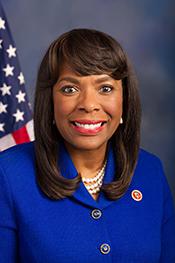
United States · Official source
3,343 records where Rep. Sewell, Terri A. [D-AL-7] is listed as a sponsor, author, or other actor. Search with topics and years
United States · United States Congress · 9 April 2025
United States · United States Congress · 9 April 2025
Hands Off Medicaid and SNAP Act of 2025 This bill establishes a budget point of order against considering budget reconciliation legislation in the House or the Senate that (1) reduces enrollment or benefits for individuals enrolled in the Medicaid program, or (2) reduces eligibility or benefits for households that participate in the Supplemental Nutrition Assistance Program (SNAP). (Under current law, reconciliation bills are considered by Congress using expedited legislative procedures that prevent a filibuster and restrict amendments in the Senate.) The point of order expires on January 20, 2029.
United States · United States Congress · 8 April 2025
United States · United States Congress · 8 April 2025
United States · United States Congress · 8 April 2025
United States · United States Congress · 8 April 2025
United States · United States Congress · 8 April 2025
United States · United States Congress · 8 April 2025
United States · United States Congress · 7 April 2025
United States · United States Congress · 7 April 2025
Expanding Access to School Meals Act of 2025 This bill increases student access to free school lunches and breakfasts under the National School Lunch Program and School Breakfast Program of the Department of Agriculture (USDA). Specifically, the bill expands program eligibility to include students in households with income at or below 224% of the federal poverty level. (Currently, students in households with income at or below 130% are eligible.) The bill also eliminates the reduced price school lunch and breakfast programs and prohibits USDA from providing reimbursements for reduced price programs. States may use Medicaid participation data to directly certify students for free school meals. (Direct certification allows schools to approve meals without the need for a separate application for children who receive assistance under other programs.) Under current law, states may apply to participate in a USDA demonstration project to directly certify children for free and reduced price meals based on household income data acquired through Medicaid. Further, the bill increases the number of free meals a school in a high-poverty area may be reimbursed for at the free-meal rate under the Community Eligibility Provision. (This provision allows eligible schools, groups of schools, and school districts to offer free meals at no cost to all enrolled students without collecting separate applications.) Specifically, the bill increases from 1.6% to 2.5% the reimbursement multiplier, which is used to calculate how many meals USDA will reimburse the school for at the free meal rate.
United States · United States Congress · 7 April 2025
United States · United States Congress · 7 April 2025
United States · United States Congress · 7 April 2025
United States · United States Congress · 3 April 2025
United States · United States Congress · 1 April 2025
Comprehensive Alternative Response for Emergencies Act of 2025 or the CARE Act of 2025 This bill requires the Center for Medicare and Medicaid Innovation (CMMI) to test a five-year model that provides for Medicare payment for ground ambulance services that do not result in the transport of the patient. Under the model, Medicare payment may be furnished for ground ambulance services when an ambulance is dispatched in response to an emergency medical call but the ambulance does not end up transporting the patient. Payment rates under the model must generally align with the payment rates that apply when there is an actual transport. The Government Accountability Office must report on the general access of Medicare beneficiaries to emergency medical services, including the impact of the model on beneficiary access and outcomes.
United States · United States Congress · 1 April 2025
Workplace Violence Prevention for Health Care and Social Service Workers Act This bill requires the Department of Labor to address workplace violence in health care, social service, and similar sectors. Specifically, Labor must issue an occupational safety and health standard that requires certain employers to take actions to protect workers and other personnel from workplace violence. The standard applies to employers in the health care sector, in the social service sector, and in sectors that conduct activities similar to those in the health care and social service sectors. Among other elements, the standard must require each employer to (1) develop a workplace violence prevention plan, (2) promptly investigate incidents of workplace violence, and (3) provide relevant training and education to employees. The bill requires certain hospitals and skilled nursing facilities to comply with this standard as a condition of Medicare participation.
United States · United States Congress · 1 April 2025
United States · United States Congress · 1 April 2025
This resolution supports the designation of Second Chance Month to promote awareness of unnecessary legal and social barriers that prevent individuals with criminal records from becoming productive members of society.
United States · United States Congress · 1 April 2025
Protect America's Workforce Act This bill nullifies the Executive Order titled Exclusions from Federal Labor-Management Relations Programs (issued on March 27, 2025), which excludes specified executive agencies and subdivisions from the Federal Service Labor-Management Relations Statute. The statute authorizes federal employees' participation in collective bargaining and enforces collective bargaining rights. The bill also specifies that a covered collective bargaining agreement in place as of March 26, 2025, shall have full force and effect through the stated term of the agreement.
United States · United States Congress · 1 April 2025
United States · United States Congress · 1 April 2025
United States · United States Congress · 1 April 2025
Sanctioning Russia Act of 2025 This bill imposes penalties on certain persons (individuals and entities) if the President determines that the Russian government or a person acting at Russia's direction is involved with (1) refusing to negotiate a peace agreement with Ukraine; (2) violating a negotiated peace agreement; (3) initiating another invasion of Ukraine; or (4) overthrowing, dismantling, or seeking to subvert the Ukrainian government. If the President makes such a determination, the bill requires certain actions including the President must impose visa- and property-blocking sanctions on specified persons such as the Russian president, certain Russian military commanders, and any foreign person that knowingly provides defense items to the Russian armed forces; the President must increase the rate of duty on all goods and services imported from Russia into the United States to at least 500% relative to the value of such goods and services; the President must increase the rate of duty on all goods and services imported into the United States from countries that knowingly engage in the exchange of Russian-origin uranium and petroleum products to at least 500% relative to the value of such goods and services; the Department of the Treasury must impose property-blocking sanctions on any financial institution organized under Russian law and owned wholly or partly by Russia, and any financial institution that engages in transactions with those entities; and the Department of Commerce must prohibit the export, reexport, or in-country transfer to or in Russia of any U.S.-produced energy or energy product.
United States · United States Congress · 31 March 2025
Seniors’ Access to Critical Medications Act of 2025 This bill temporarily expands flexibilities under the Stark law (i.e., the Physician Self-Referral Law) for certain physicians who dispense covered outpatient drugs under the Medicare prescription drug benefit at the physician's office location (e.g., through an integrated pharmacy). The Stark law generally prohibits physicians from referring patients to receive services that are payable under Medicare or Medicaid from entities in which the physician or an immediate family member has a financial relationship. Specifically, the bill allows, from 2026-2030, physicians to dispense such drugs from the physician's office, including through in-person pickup by a caregiver or via mail, if (1) the physician prescribed the drug, (2) the beneficiary has an ongoing relationship with the physician, (3) the beneficiary had at least one face-to-face visit with the physician in the prior year, and (4) the physician bills for the drug. These requirements also apply to physicians within the same group practice. The Government Accountability Office must report on pharmacies or pharmacy networks that dispense significantly more covered drugs under the Medicare prescription drug benefit after the bill's enactment, the extent to which such pharmacies and networks are owned by physicians or integrated into physician practices, and the common characteristics of these types of arrangements.
United States · United States Congress · 31 March 2025
United States · United States Congress · 31 March 2025
Hot Foods Act of 2025 This bill expands the Supplemental Nutrition Assistance Program (SNAP) to permit the use of SNAP benefits to purchase hot foods or hot food products ready for immediate consumption.
United States · United States Congress · 31 March 2025
United States · United States Congress · 31 March 2025
Connecting Our Medical Providers with Links to Expand Tailored and Effective Care or the COMPLETE Care Act This bill increases payments and establishes certain requirements to support integrated behavioral health services under Medicare. Specifically, the bill increases payments for integrated behavioral health services that are provided by physicians under Medicare for 2027-2029, with payments increased by 175% in 2027, 150% in 2028, and 125% in 2029. The bill provides funds for FY2025-FY2029 for the Centers for Medicare & Medicaid Services to contract with entities to provide technical assistance to primary care practices that want to adopt models for behavioral health integration.
United States · United States Congress · 27 March 2025
Repealing Outdated and Unilateral Tariff Authorities Act This bill repeals the statute that directs the President to impose new or additional tariffs on articles produced by, or imported on the vessels of, foreign countries that discriminate against U.S. commerce.
United States · United States Congress · 27 March 2025
United States · United States Congress · 27 March 2025
Protecting Taxpayer Resources Act This bill provides that Department of Homeland Security functions (e.g., immigration enforcement) may not be assigned to Internal Revenue Service (IRS) personnel (e.g., IRS criminal investigators) unless the Treasury Inspector General for Tax Administration determines (1) such IRS personnel are trained to administer such functions, and (2) the imposition of such functions on IRS personnel will not impede the IRS from enforcing federal tax law and providing quality services to taxpayers.
United States · United States Congress · 27 March 2025
United States · United States Congress · 27 March 2025
No Hungry Kids in Schools Act This bill directs the Department of Agriculture (USDA) to establish an option for states to utilize a statewide Community Eligibility Provision (CEP) for USDA school meal programs. As background, the CEP allows eligible schools, groups of schools, and school districts the option to offer free breakfast and lunch to all enrolled students without collecting household applications. Specifically, USDA must establish a statewide CEP option that may be used by a state agency. The state agency must provide state (nonfederal) funding to local educational agencies to reimburse applicable schools at the free reimbursement rate for 100% of the meals served. Eligibility for the statewide CEP must be based on a statewide calculation of the percentage of identified enrolled students, regardless of a school's local educational agency. Further, the bill lowers the CEP participation threshold for a statewide CEP to an identified student percentage (ISP) of zero, from a minimum of 25% under current regulations. The ISP is the percentage of students who are eligible for free school meals without a household application, primarily those who are directly certified through the Supplemental Nutrition Assistance Program (SNAP). In addition, the bill specifies that the reimbursement multiplier for school meals remains at the current level of 1.6. The reimbursement multiplier is used to calculate how many meals will be reimbursed at the free meal rate.
United States · United States Congress · 27 March 2025
Reclaim Trade Powers Act This bill repeals the statute that directs the President to take certain actions, such as imposing a tariff of up to 15% for up to 150 days on articles imported into the United States, when necessary to address large and serious U.S. balance-of-payments deficits or certain other situations that present fundamental international payments problems.
United States · United States Congress · 27 March 2025
United States · United States Congress · 26 March 2025
United States · United States Congress · 26 March 2025
United States · United States Congress · 26 March 2025
This resolution expresses support for the goals and ideals of Endometriosis Awareness Month. Endometriosis is a painful condition in which the tissue that normally lines the inside of the uterus grows outside the uterus.
United States · United States Congress · 26 March 2025
United States · United States Congress · 26 March 2025
Raise the Age Act of 2025 This bill establishes new restrictions on the sale or transfer of certain semiautomatic firearms to individuals under 21 years of age. Specifically, this bill makes it unlawful for a licensed gun dealer, importer, manufacturer, or collector to sell or deliver a semiautomatic center-fire rifle or semiautomatic center-fire shotgun that has (or has the capacity to accept) an ammunition feeding device with a capacity of more than five rounds to an individual who the licensee knows or has reasonable cause to believe is under age 21. The prohibition does not apply if the individual under age 21 is a full-time law enforcement officer or active-duty member of the Armed Forces. The bill also requires the Federal Bureau of Investigation to report on the operation of its public access line, including a description of information sharing protocols and recommendations for improving such protocols.
United States · United States Congress · 25 March 2025
This bill authorizes the President to posthumously award the Medal of Honor to Doris Miller for acts of valor as a member of the Navy during World War II, for which he was previously awarded the Navy Cross.
United States · United States Congress · 25 March 2025
United States · United States Congress · 24 March 2025
This joint resolution provides that the Equal Rights Amendment, which prohibits discrimination on the basis of sex, was ratified by three-fourths of the states and is therefore a valid constitutional amendment, regardless of any time limit that was in the original proposal. The Equal Rights Amendment was originally proposed to the states in 1972. The original proposal included a deadline for ratification of March 22, 1979; Congress subsequently extended the deadline to June 30, 1982. Although the requisite 38 states have ratified the amendment, three of these states did so after the deadlines, and five states subsequently rescinded their ratifications. The status of the amendment has been the subject of litigation.
United States · United States Congress · 21 March 2025
This resolution recognizes the deadly impact colorectal cancer; acknowledges racial disparities in the impact of colorectal cancer, particularly in the Black community; and encourages actions to address colorectal cancer and those disparities.
United States · United States Congress · 21 March 2025
This resolution supports the designation of Sleep Awareness Week.
United States · United States Congress · 18 March 2025
United States · United States Congress · 18 March 2025
Restore Protections for Dialysis Patients Act This bill specifies certain requirements for private health insurers regarding coverage of individuals with end stage renal disease (ESRD) who are also covered under Medicare. In particular, the bill specifies that insurers may not limit benefits, including limiting network composition, in a manner that will affect ESRD Medicare beneficiaries differently compared to others without ESRD. The bill additionally specifies that insurers are not required to include a particular renal dialysis provider or a particular number of such providers as part of their networks.
United States · United States Congress · 18 March 2025
Protecting Access to Ground Ambulance Medical Services Act of 2025 This bill extends the specialized rate increase for Medicare payment of ground ambulance services in rural areas for an additional three years (until January 1, 2028).
United States · United States Congress · 18 March 2025
United States · United States Congress · 18 March 2025
United States · United States Congress · 18 March 2025
Preserving Patient Access to Home Infusion Act This bill specifically includes pharmacy services and home infusion drugs that are administered without a pump as part of covered home infusion therapy under Medicare. The bill also allows nurses and physician assistants to establish and review the plan of care for home infusion therapy, and it specifies that payment may be made regardless of whether a practitioner is physically present in the home at the time the drug is administered.