Bill· HRH.R. 10269 (119th)referred
Stop Auto Fraud Act of 2026
United States · United States Congress · 3 September 2026
The world's political record
Person
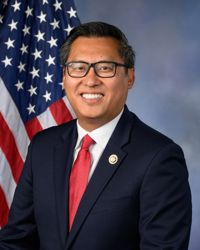
United States · Official source
191 records where Vince Fong is listed as a sponsor, author, or other actor. Search with topics and years
United States · United States Congress · 3 September 2026
United States · United States Congress · 10 August 2026
United States · United States Congress · 6 August 2026
United States · United States Congress · 3 August 2026
United States · United States Congress · 3 August 2026
United States · United States Congress · 22 July 2026
United States · United States Congress · 22 July 2026
United States · United States Congress · 11 June 2026
United States · United States Congress · 11 June 2026
This resolution commemorates Taiwan’s first direct presidential election, which was held on March 23, 1996, and commends Taiwan for preserving a democratic system. The resolution also expresses commitment to supporting Taiwan's self-defense.
United States · United States Congress · 10 June 2026
United States · United States Congress · 29 May 2026
United States · United States Congress · 21 May 2026
United States · United States Congress · 19 May 2026
United States · United States Congress · 19 May 2026
United States · United States Congress · 13 May 2026
United States · United States Congress · 12 May 2026
United States · United States Congress · 28 April 2026
United States · United States Congress · 22 April 2026
United States · United States Congress · 15 April 2026
United States · United States Congress · 6 April 2026
United States · United States Congress · 5 March 2026
United States · United States Congress · 5 March 2026
United States · United States Congress · 4 March 2026
United States · United States Congress · 25 February 2026
United States · United States Congress · 23 February 2026
This resolution supports the designation of National FFA (Future Farmers of America) Week. It also celebrates the 50th anniversary of the chartering of Alaska as a State FFA Association of the National FFA Organization.
United States · United States Congress · 20 February 2026
Airspace Location and Enhanced Risk Transparency Act of 2026 or the ALERT Act This bill addresses aviation safety by increasing requirements for aircraft tracking and communication using Automatic Dependent Surveillance-Broadcast (ADS-B) technology and expanding oversight. As background, ADS-B for broadcasting (Out) and receiving (In) transmits information (e.g., location and weather) among aircraft and air traffic control (ATC). The bill requires the Department of Defense (DOD) and the Department of Transportation (DOT) to enter into an agreement regarding the use of collision prevention technologies on DOD aircraft. The agreement must require the use of ADS-B Out as the default practice for DOD helicopters operating in the national airspace, unless such use would affect operational security. For DOD helicopters that are carrying out special missions in the Washington, DC, metropolitan area and are exempt from ADS-B Out transmission requirements, DOD must coordinate with DOT to conduct a safety risk assessment and implement appropriate mitigations. By December 31, 2031, DOD aircraft (other than certain special mission aircraft) must be equipped with and operating integrated ADS-B In technology. With respect to civil aircraft, by December 31, 2031, the Federal Aviation Administration (FAA) must generally require aircraft that are currently required to be equipped with ADS-B Out to also be equipped with ADS-B In. Additionally, among other requirements, the FAA must establish time-on-position limits for supervisory ATC personnel; establish a process to timely notify parties involved in certain near-miss incidents; and evaluate and revise, as necessary, helicopter routes around Ronald Reagan Washington National Airport.
United States · United States Congress · 9 February 2026
United States · United States Congress · 5 February 2026
United States · United States Congress · 30 January 2026
United States · United States Congress · 22 January 2026
United States · United States Congress · 15 January 2026
This bill designates a portion of Interstate Route 680 in Omaha, Nebraska, as the Hal Daub Freeway. Harold John Daub Jr. served in the House of Representatives from 1981-1989 and as the mayor of Omaha, Nebraska, from 1995-2001.
United States · United States Congress · 13 January 2026
Hemp Planting Predictability Act This bill extends by two years the implementation of changes to the regulation of hemp products, which reimpose certain federal controls over some hemp products. Specifically, Congress enacted the FY2026 agriculture appropriations act (P.L. 119-37) on November 12, 2025. Effective November 12, 2026, the act modifies the statutory definition of hemp products that are considered to be lawful. This bill extends the effective date to November 12, 2028. As background, the 2018 farm bill excluded hemp from the Controlled Substances Act definition of marijuana and defined hemp . As a result, hemp and hemp-derived products at or below the 0.3% delta-9 tetrahydrocannabinol (THC, the psychoactive component of marijuana) concentration threshold were no longer regulated as Schedule I controlled substances and registration with the Drug Enforcement Administration was no longer required to cultivate or handle hemp and hemp-derived products. However, hemp remained subject to Department of Agriculture and Food and Drug Administration regulation. The 2025 changes to the definition of hemp, include changing the limit to a total THC concentration of not more than 0.3% on a dry weight basis rather than only delta-9 THC, explicitly including industrial hemp, excluding seeds from a cannabis plant that exceed a certain THC concentration, and excluding various types of hemp-derived cannabinoid products. Cannabinoids refer to unique chemical compounds that are found in hemp and marijuana (e.g., THC) and are known to exhibit a range of psychological and physiological effects.
United States · United States Congress · 13 January 2026
Developing Overseas Mineral Investments and New Allied Networks for Critical Energies Act or the DOMINANCE Act This bill establishes a Bureau of Energy Security and Diplomacy in the Department of State and authorizes several programs to address access to energy and critical minerals. The bureau must formulate and implement policies related to international energy, energy technology, critical minerals, and related supply chains. An assistant secretary is authorized to lead the bureau. The bill authorizes the State Department to establish multi-year energy security compacts with partner countries. The purpose of such compacts is to increase reliable access to energy, electricity, or critical minerals for both parties to the compact. The bill also authorizes the State Department to lead U.S. participation in a Minerals Security Partnership (MSP), whose purpose includes supporting investment in critical mineral mining, processing, and refining projects that enable critical mineral supply chains. The United States must prioritize MSP projects that advance the national and economic security interests of the United States and U.S. allies and partners. Fellowships are authorized to support (1) U.S. citizens attending foreign mining institutions in order to build the capacity of the U.S. mining workforce; and (2) foreign mining academics and professionals being placed at U.S. institutions to help advance research and development initiatives in the U.S. mining industry and expand U.S. mining education and workforce development programs.
United States · United States Congress · 13 January 2026
United States · United States Congress · 12 January 2026
Stop Insider Trading Act This bill generally prohibits Members of Congress and their spouses and dependent children from purchasing stocks and requires public notice before these individuals may sell stocks. Specifically, Members of Congress and the spouses and dependent children of Members of Congress may not purchase covered investments. Between 7 and 14 days before a Member or a covered spouse or dependent sells a covered investment, the relevant Member must file public notice of the intent to sell with the Clerk of the House of Representatives or the Secretary of the Senate, as appropriate. The Clerk or Secretary must publish this notice online. If the individual decides not to sell the covered investment, the notice must be withdrawn. Under the bill, a covered investment is a security issued by a publicly traded company or a comparable economic interest. Some investments are exempt, including interest in a widely held investment fund and certain investments held in a trust. Violations of these provisions are subject to a fee and, in the case of a purchase, a requirement to sell the covered investment. The fee must equal (1) the greater of $2,000 or 10% of the transaction value, and (2) any net gain realized from the transaction during a specified period. The fee may not be paid using campaign donations or Members’ official allowances. Certain transactions by covered spouses and dependents are exempt, including transactions made on behalf of another person or made as part of compensation from the individual’s employer.
United States · United States Congress · 18 December 2025
United States · United States Congress · 9 December 2025
Safeguarding Americans from Fraudulent and Experimental Drugs Act of 2025 or the SAFE Drugs Act of 2025 This bill provides for increased oversight of drug compounding and imposes statutory limits on compounded drugs that are essentially copies of commercially available drugs. Currently, subject to certain requirements, compounded drugs (i.e., drugs that are mixed or altered to meet patient needs) do not require Food and Drug Administration (FDA) approval. Additional limits apply to the compounding of drugs that are essentially copies of commercially available drug products. Under the bill, a compounded drug is essentially a copy of a commercially available drug product if (1) the compounded drug contains any active ingredient found in a commercially available drug product, and (2) there is no change made for an individual patient that results in a significant difference between the compounded drug and the commercially available drug. (The FDA’s current definition of the term also addresses dosage strength and route of administration.) The bill increases the frequency at which a licensed pharmacist or physician may compound a drug that is essentially a copy of a commercially available drug to 20 times per month. Current FDA policy allows four such prescriptions per month. The bill also imposes annual reporting requirements on physicians, facilities, and pharmacies (except hospital-based pharmacies) that compound certain drug products for out-of-state patients more than 20 times per month. Further, the bill subjects certain large-scale outsourcing facilities (i.e., FDA-registered facilities that compound in bulk) to regular inspection and reporting requirements.
United States · United States Congress · 4 December 2025
United States · United States Congress · 21 November 2025
United States · United States Congress · 21 November 2025
United States · United States Congress · 20 November 2025
United States · United States Congress · 20 November 2025
United States · United States Congress · 19 November 2025
This bill designates the facility of the United States Postal Service located at 28201 Franklin Parkway in Santa Clarita, California, as the "Deputy Ryan Clinkunbroomer Post Office Building".
United States · United States Congress · 10 November 2025
United States · United States Congress · 28 October 2025
United States · United States Congress · 17 October 2025
United States · United States Congress · 14 October 2025
United States · United States Congress · 3 October 2025
United States · United States Congress · 19 September 2025
United States · United States Congress · 18 September 2025
Dismantle Foreign Scam Syndicates Act This bill requires the President to (1) impose applicable sanctions on foreign persons (individuals or entities) responsible for online financial scams against U.S. nationals, and (2) establish an interagency task force to shut down the criminal syndicates perpetuating such scams. Under the bill, the President must determine whether 43 specified foreign persons, and any other foreign persons the President determines are responsible for or complicit in online financial scams against U.S. nationals, are subject to sanctions under specified laws and Executive Order 13581 . Upon such determination, the President must impose applicable sanctions (for example, blocking the sanctioned person's property transactions within the United States). The President must also establish an interagency task force to shut down transnational criminal syndicates that use large scam centers and forced labor of trafficked persons to perpetuate mass online scams against Americans. The task force must (1) submit a comprehensive strategy to Congress to combat these scam centers and dismantle the criminal elements involved with them, and (2) coordinate and oversee implementation of the strategy. Within 360 days of submitting the strategy to Congress and annually thereafter for five years the task force must submit to Congress a report addressing various topics related to such scam centers including a list of all foreign persons sanctioned by the United States for their scam center involvement. The Department of State is authorized to provide trauma-informed care, shelter, reintegration, and support services for victims of trafficking in persons within online scam centers.