Bill· HRH.R. 2345 (119th)referred
Ocmulgee Mounds National Park and Preserve Establishment Act
United States · United States Congress · 25 March 2025
The world's political record
Person
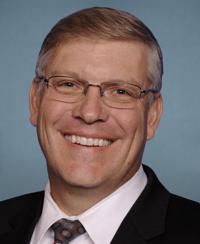
United States · Official source
1,142 records where Rep. Loudermilk, Barry [R-GA-11] is listed as a sponsor, author, or other actor. Search with topics and years
United States · United States Congress · 25 March 2025
United States · United States Congress · 24 March 2025
World War II Women's Memorial Location Act This bill allows the commemorative work for women who worked on the home front during World War II to be located in either (1) the Reserve, an area that generally extends from the United States Capitol to the Lincoln Memorial, and from the White House to the Jefferson Memorial; or (2) the area just outside the Reserve, known as Area I. (This map shows the Reserve in red and Area I in yellow.)
United States · United States Congress · 18 March 2025
United States · United States Congress · 14 March 2025
United States · United States Congress · 14 March 2025
This resolution commemorates the centennial of Delta Air Lines.
United States · United States Congress · 14 March 2025
Safe Routes Act of 2025 This bill directs the Department of Transportation to waive vehicle weight limits for covered logging vehicles, thus allowing logging vehicles to travel on interstate highways in certain circumstances. The term covered logging vehicle means a vehicle that (1) is transporting raw or unfinished forest products, including logs, pulpwood, biomass, or wood chips; (2) is traveling a distance not greater than 150 air miles on interstate highways from origin to a storage or processing facility; and (3) meets state legal weight tolerances and vehicle configurations for transporting raw or unfinished forest products within the state boundaries in which the vehicle is operating.
United States · United States Congress · 11 March 2025
United States · United States Congress · 6 March 2025
This joint resolution nullifies the final rule issued by the Consumer Financial Protection Bureau titled Prohibition on Creditors and Consumer Reporting Agencies Concerning Medical Information (Regulation V) and published on January 14, 2025. This rule prohibits the inclusion of medical debt on credit reports and prohibits creditors from considering medical debt when making credit eligibility determinations.
United States · United States Congress · 6 March 2025
Pay Our Troops Act of 2025 This bill provides continuing appropriations for military pay for any period during which interim or full-year appropriations for FY2025 are not in effect (i.e., a government shutdown). Specifically, the bill provides FY2025 continuing appropriations for the pay and allowances of (1) members of the Armed Forces, including reserve components, who perform active service during the period; and (2) civilian personnel and contractors of the Department of Defense (and the Department of Homeland Security in the case of the Coast Guard) who are providing support to such members of the Armed Forces. If a government shutdown occurs, the bill provides the continuing appropriations until the earlier of (1) the enactment into law of specified appropriations legislation, or (2) January 1, 2026.
United States · United States Congress · 6 March 2025
Anti-CBDC Surveillance State Act This bill prohibits a Federal Reserve bank from offering products or services directly to an individual, maintaining an account on behalf of an individual, or issuing a central bank digital currency (i.e., a digital dollar). Further, the Board of Governors of the Federal Reserve System is prohibited from using a central bank digital currency to implement monetary policy or from testing, studying, creating, or implementing a central bank digital currency, with exceptions as provided by the bill.
United States · United States Congress · 3 March 2025
Designation of English as the Official Language of the United States Act of 2025 This bill establishes English as the official language of the United States. The bill specifies that the official functions of government in the United States, including in each state and the District of Columbia, shall be conducted in English. Exceptions to this requirement include (1) actions or documents to protect the public health or safety, (2) actions or documents that protect the rights of victims of crimes or criminal defendants, and (3) requirements under the Individuals with Disabilities Education Act. The bill also establishes a framework for implementation and enforcement, including by testing English language ability as part of the naturalization process.
United States · United States Congress · 3 March 2025
United States · United States Congress · 3 March 2025
Financial Reporting Threshold Modernization Act This bill increases the threshold amounts for certain reporting by financial institutions, adjusts these amounts periodically for inflation, and requires a review of specified financial forms and reporting requirements. The bill increases the threshold dollar amounts above which financial institutions are required to file currency-transaction and suspicious-activity reports with the Financial Crimes Enforcement Network (FinCEN). The bill also increases the transaction threshold above which an entity must register with FinCEN as a money services business. Further, these amounts must be updated every five years to reflect the change in the consumer price index. Treasury must review and report on the effectiveness and efficiency of the forms and requirements regarding domestic coin and currency transactions, foreign currency transactions, and anti-money laundering and combating the financing of terrorism measures, among other matters. Treasury must also make appropriate updates to such forms. The bill also extends through 2031 the requirement that the director of FinCEN must be made annually available for testimony before congressional committees regarding certain FinCEN issues, including resources needed to implement beneficial ownership reporting requirements.
United States · United States Congress · 3 March 2025
Federal Firearms Licensee Protection Act of 2025 This bill modifies criminal penalties for an offense involving the theft of a firearm from a licensed importer, manufacturer, or dealer, or from their business premises. Specifically, the bill does the following: increases from 10 to 20 years the maximum prison term, and creates a 3- or 5-year mandatory minimum prison term for an offense that occurs during the commission of a burglary or robbery. An attempt to commit an offense is subject to the same penalties as a substantive offense.
United States · United States Congress · 27 February 2025
This joint resolution nullifies the final rule issued by the Consumer Financial Protection Bureau (CFPB) titled Defining Larger Participants of a Market for General-Use Digital Consumer Payment Applications and published on December 10, 2024. The rule defines larger participants in the general-use digital consumer payment application market (i.e., payment apps) that are subject to CFPB supervisory authority. The rule defines larger participants in this market as nonbanks (1) with an annual volume of at least 50 million transactions, and (2) that are not small business concerns.
United States · United States Congress · 26 February 2025
This bill designates the Department of Agriculture U.S. National Poultry Research Center in Athens, Georgia, as the Abit Massey Poultry Research Center.
United States · United States Congress · 26 February 2025
United States · United States Congress · 26 February 2025
United States · United States Congress · 24 February 2025
United States · United States Congress · 21 February 2025
United States · United States Congress · 21 February 2025
North Platte Canteen Congressional Gold Medal Act This bill provides for the award of a Congressional Gold Medal to recognize the individuals and communities that provided financial and other support for the North Platte Canteen in North Platte, Nebraska, during World War II.
United States · United States Congress · 13 February 2025
Smithsonian American Women’s History Museum Act This bill authorizes the Smithsonian American Women's History Museum to be located on a particular site within the Reserve of the National Mall in Washington, DC. Specifically, the bill designates the South Monument site as the location for the museum; however, the President may designate an alternative site within 180 days of the bill's enactment. (The site is the undeveloped land across the National Mall from the National Museum of African American History and Culture.) Administrative jurisdiction of the site must be transferred to the Smithsonian Institution. The Board of Regents of the Smithsonian Institution must have the approval of specified federal entities (e.g., the Commission of Fine Arts) to plan, design, and construct a museum building. The bill (1) outlines the criteria for considering site and design proposals, and (2) requires the Smithsonian Institution to reimburse for costs resulting from the building approval process. The bill directs the museum to be dedicated to preserving, researching, and presenting the history, achievements, and lived experiences of biological women in the United States. Under this bill, the museum may not identify, present, describe, or depict any biological male as a female. In carrying out its duties, the museum's advisory council must (1) seek and utilize guidance from a broad array of knowledgeable and respected sources reflecting the diversity of the political viewpoints and authentic experiences held by women in the United States, and (2) seek guidance for the creation and substantial revision of exhibits and programs.
United States · United States Congress · 13 February 2025
This joint resolution nullifies the final rule issued by the Consumer Financial Protection Bureau titled Overdraft Lending: Very Large Financial Institutions and published on December 30, 2024. The rule revises provisions regarding charges for insufficient funds in a customer’s bank account (i.e., overdrafts) at very large financial institutions. Under the rule, these institutions must (1) cap overdraft charges at $5; (2) with justification, cap charges at a higher amount; or (3) handle overdrafts as credit and comply with applicable Truth in Lending Act disclosure requirements.
United States · United States Congress · 13 February 2025
This concurrent resolution declares that Congress should not impose any new performance fee, tax, royalty, or other charge relating to the public performance of sound recordings on a local radio station for broadcasting sound recordings over the air, or on any business for such public performance of sound recordings.
United States · United States Congress · 12 February 2025
United States · United States Congress · 12 February 2025
Water Systems PFAS Liability Protection Act This bill exempts specified water management entities from liability under the Comprehensive Environmental Response, Compensation, and Liability Act of 1980 (CERCLA) for releases of certain perfluoroalkyl or polyfluoroalkyl substances, commonly referred to as PFAS. Specifically, the entities covered under the bill are public water systems, publicly or privately owned or operated treatment works, municipalities with a stormwater discharge permit, political subdivisions or special districts of a state that act as a wholesale water agency, and contractors performing the management or disposal activities for such entities. Under the bill, the exemption only applies if a specified entity transports, treats, disposes of, or arranges for the transport, treatment or disposal of PFAS consistent with applicable laws and during and following the conveyance or treatment of water under federal or state law, such as through the management or disposal of biosolids consistent with the Federal Water Pollution Control Act. Liability for damages or costs associated with the release of certain PFAS must not be precluded if an entity acted with gross negligence or willful misconduct.
United States · United States Congress · 12 February 2025
Give Kids a Chance Act of 2025 This bill expands the Food and Drug Administration’s (FDA’s) authority with respect to research on rare pediatric diseases, including by permitting the FDA to take enforcement action against drug sponsors that fail to satisfy pediatric study requirements and by reauthorizing programs that support pediatric research. Specifically, the bill modifies requirements relating to molecularly targeted pediatric cancer investigations to permit research on new drugs in combination with active ingredients that have already been approved, provided certain conditions are met; permits the FDA to take enforcement action against drug sponsors that fail to comply with pediatric study requirements, if such sponsors demonstrated a lack of due diligence in satisfying the requirement; renews the FDA’s authority to award priority review vouchers to sponsors of new products intended to treat rare pediatric diseases through September 30, 2029; and reauthorizes through FY2027 certain funding for the National Institutes of Health to support priority pediatric research. The bill also provides statutory authority for the FDA’s interpretation of the orphan drug exclusivity period. The bill specifies, consistent with FDA regulations, that the seven-year market exclusivity period for drugs for rare diseases or conditions (i.e., orphan drugs) prohibits the approval of the same drug for the same approved use or indication with respect to the disease or condition. (In Catalyst Pharmaceuticals, Inc. v. Becerra , a court rejected the FDA’s interpretation and held that orphan drug exclusivity extends to all uses or indications for the disease or condition.)
United States · United States Congress · 11 February 2025
Protecting Privacy in Purchases Act This bill prohibits payment card networks from using merchant codes that distinguish firearms retailers from general-merchandise retailers or sporting-goods retailers. The Department of Justice must enforce this bill and report annually on the resulting investigations and cases.
United States · United States Congress · 7 February 2025
Freedom to Invest in Tomorrow’s Workforce Act This bill expands the expenses eligible for tax-free withdrawals from a qualified tuition program (known as a 529 plan) to include tuition, fees (including test fees), books, supplies, equipment, and other expenses related to the enrollment or attendance in a recognized postsecondary credentialing program. Under the bill, a recognized postsecondary credentialing program includes certain programs identified by a state as providing training services, a program listed in the Web Enabled Approval Management System (WEAMS) maintained by the Department of Veterans Affairs, certain examinations required to obtain or maintain a credential, and other reputable credentialing programs. Further, under the bill, such programs must be designed for an individual to obtain an industry-recognized postsecondary employment credential (e.g., project management professional certificate, advanced emergency medical technician certificate, and welding supervisor certificate), a certificate of completion of a registered and certified apprenticeship, an occupational or professional license issued or recognized by a state or the federal government (and any certification required for obtaining such license), or an associate or baccalaureate degree.
United States · United States Congress · 6 February 2025
Respect State Housing Laws Act This bill eliminates a provision that requires a 30-day notice period before a landlord may begin eviction proceedings against a tenant in federally assisted or federally backed housing.
United States · United States Congress · 6 February 2025
United States · United States Congress · 5 February 2025
AM Radio for Every Vehicle Act of 2025 This bill requires the Department of Transportation (DOT) to issue a rule requiring AM radio capabilities to be standard in all new passenger vehicles. (AM radio is often used to deliver emergency alerts and news and entertainment programming; some newer vehicles do not include AM equipment.) Specifically, this bill applies to passenger vehicles (1) manufactured in the United States for sale in the United States, imported into the United States, or shipped in interstate commerce; and (2) manufactured after the rule's effective date. The rule must require all such vehicles to have devices that can receive signals and play content transmitted by AM stations or digital audio AM stations installed as standard equipment and made easily accessible to drivers. Prior to the rule's effective date, manufacturers that do not include devices that can access AM radio as standard equipment (1) must inform purchasers of this fact through clear and conspicuous labeling, and (2) may not charge an additional or separate fee for AM radio access. DOT may assess civil penalties for any violation of the rule. The Department of Justice may also bring a civil action to enjoin a violation. The rule, including DOT’s authority to enforce it, must expire 10 years after the bill’s enactment. Further, the Government Accountability Office must study and report on the dissemination of emergency alerts to the public, including by conducting an assessment of AM radio relative to other Integrated Public Alert and Warning System communication technologies.
United States · United States Congress · 4 February 2025
1071 Repeal to Protect Small Business Lending Act This bill repeals the statute that requires financial institutions to collect data regarding applications for women-owned, minority-owned, or small business loans. Currently, financial institutions must collect and report to the Consumer Financial Protection Bureau information on (1) how many applications were received; (2) the disposition of each application; (3) the type of loan; (4) the amount applied for; (5) the amount approved; and (6) each applicant’s census tract, revenue, race, sex, and ethnicity.
United States · United States Congress · 31 January 2025
Nancy Gardner Sewell Medicare Multi-Cancer Early Detection Screening Coverage Act This bill allows, beginning in 2028, for Medicare coverage and payment for multi-cancer early detection screening tests that are approved by the Food and Drug Administration and that are used to screen for cancer across many cancer types, if the Centers for Medicare & Medicaid Services determines such coverage is appropriate. Coverage is limited to those under a certain age (age 68 in 2028, increased by one year every year thereafter) and to one test every 11 months.
United States · United States Congress · 24 January 2025
United States Reciprocal Trade Act This bill expands presidential trade authorities. The bill allows the President, in certain circumstances, to (1) negotiate with a foreign country for tariff reductions on exported U.S. goods, or (2) impose additional duties on imported goods. Specifically, the President may take these actions if it is determined that the country (1) when importing a good from the United States, applies a higher rate of duty on that good than the rate imposed by the United States when the good is imported from that country; or (2) similarly imposes other, nontariff trade restrictions on that good. This authority shall be effective for three years, subject to a three-year renewal. The President must terminate a rate of duty increase under this bill if the country no longer applies such higher rates or nontariff trade restrictions, or if the higher rate is no longer in the interest of the United States. The bill also requires the President to consult with and notify Congress regarding the intention of the President to increase a rate of duty on imported goods. Congress may nullify a rate of duty increase implemented under this bill through a joint resolution of disapproval.
United States · United States Congress · 24 January 2025
Protect American Election Administration Act of 2025 This bill generally prohibits a state from soliciting, receiving, or expending any payment or donation of funds, property, or personal services from a private entity for the purpose of administering a federal election. For example, the bill prohibits the use of these payments or donations for programs related to voter education, outreach, and registration. The prohibition shall not apply to a state's acceptance and use of a private entity's donation of space to be used for a polling place or an early voting site.
United States · United States Congress · 24 January 2025
Life at Conception Act This bill declares that the right to life guaranteed by the Constitution is vested in each human being at all stages of life, including the moment of fertilization, cloning, or other moment at which an individual comes into being. Nothing in this bill shall be construed to authorize the prosecution of any woman for the death of her unborn child.
United States · United States Congress · 23 January 2025
United States · United States Congress · 23 January 2025
Federal Insurance Office Elimination Act This bill eliminates the Federal Insurance Office (FIO) within the Department of the Treasury. The bill also removes the FIO director as a nonvoting member of the Financial Stability Oversight Council.
United States · United States Congress · 23 January 2025
Taking Account of Bureaucrats' Spending Act of 2025 or the TABS Act of 2025 This bill restructures the Consumer Financial Protection Bureau and renames it as the Consumer Financial Empowerment Agency. The new agency is established as an independent agency outside of the Federal Reserve System. The bill also changes the funding structure of the agency by prohibiting the transfer of funds to the agency from the Federal Reserve System and by authorizing congressional appropriations for FY2026-FY2027.
United States · United States Congress · 23 January 2025
Main Street Tax Certainty Act This bill makes permanent the qualified business income (QBI) tax deduction. Under current law, individuals, estates, and trusts may deduct the lower of (1) 20% of QBI from a qualified business, qualified real estate investment trust dividends, and qualified publicly traded partnership income; or (2) 20% of taxable income less net capital gain. (Some limitations apply.) However, under current law, the QBI tax deduction expires after December 31, 2025.
United States · United States Congress · 23 January 2025
China Exchange Rate Transparency Act of 2023 This bill requires the U.S. Executive Director at the International Monetary Fund (IMF) to use the voice and vote of the United States to advocate for increased exchange rate transparency from China. Some areas of focus for this advocacy are (1) Chinese exchange rate arrangements, including any indirect foreign exchange market intervention through Chinese financial institutions or state-owned enterprises; (2) enhanced multilateral and bilateral surveillance by the IMF; and (3) stronger consideration of China's performance as a responsible stakeholder in the international monetary system when evaluating quota and voting shares at the IMF. The requirements of the bill expire seven years and 30 days after the date of the bill's enactment or earlier if China meets certain conditions regarding its exchange rate policies.
United States · United States Congress · 23 January 2025
United States · United States Congress · 22 January 2025
This joint resolution proposes a constitutional amendment requiring the Supreme Court to consist of nine Justices.
United States · United States Congress · 22 January 2025
No Taxpayer Funding for Abortion and Abortion Insurance Full Disclosure Act of 2025 This bill modifies provisions relating to federal funding for, and health insurance coverage of, abortions. Specifically, the bill prohibits the use of federal funds for abortions or for health coverage that includes abortions. Such restrictions extend to the use of funds in the budget of the District of Columbia. Additionally, abortions may not be provided in a federal health care facility or by a federal employee. Historically, language has been included in annual appropriations bills for the Department of Health and Human Services (HHS) that prohibits the use of federal funds for abortions—such language is commonly referred to as the Hyde Amendment. Similar language is also frequently included in appropriations bills for other federal agencies and the District of Columbia. The bill makes these restrictions permanent and extends the restrictions to all federal funds (rather than specific agencies). The bill's restrictions regarding the use of federal funds do not apply in cases of rape, incest, or where a physical disorder, injury, or illness endangers a woman's life unless an abortion is performed. The Hyde Amendment provides the same exceptions. The bill also prohibits qualified health plans from including coverage for abortions. Currently, qualified health plans may cover abortion, but the portion of the premium attributable to abortion coverage is not eligible for subsidies.
United States · United States Congress · 16 January 2025
This bill increases the annual limit on the tax credit for qualified railroad track maintenance expenses (also referred to as the short line railroad tax credit) and expands eligibility for claiming the credit. Under current law, the tax credit is limited each tax year to $3,500 multiplied by the sum of the number of miles of railroad track owned or leased by the taxpayer (miles owned or leased) and the number of railroad track miles assigned to the taxpayer by a Class II or III railroad (miles assigned). This bill increases the annual limit to $6,100 multiplied by the sum of miles owned or leased and miles assigned. The $6,100 amount used in the calculation of the tax credit limit is adjusted for inflation for tax years beginning after 2025. The bill also expands eligibility for the tax credit to include gross expenses for maintaining railroad tracks owned or leased as of January 1, 2024. Under current law, the tax credit is limited to gross expenses for maintaining railroad tracks owned or leased as of January 1, 2015.
United States · United States Congress · 16 January 2025
Make the Migrant Protection Protocols Mandatory Act of 2025 This bill requires the Department of Justice (DOJ) to remove certain non-U.S. nationals ( aliens under federal law) from the United States while such an individual's application for admission is pending. Specifically, if such an individual arrived by land from a foreign country bordering the United States and the individual is not clearly and beyond a doubt entitled to admission into the United States, DOJ must return that individual to that bordering foreign country while the individual's application for admission is pending. (Currently, DOJ may choose to detain such an individual or return the individual to the bordering foreign country while the application for admission is pending.)
United States · United States Congress · 16 January 2025
Restore Department of Veterans Affairs Accountability Act of 2025 or the Restore VA Accountability Act of 2025 This bill modifies personnel action procedures regarding certain employees and executives of the Department of Veterans Affairs (VA). The bill authorizes the VA to remove from civil service, demote, or suspend VA employees that are supervisors or managers if the VA determines by substantial evidence that the performance or misconduct of such individual warrants such action. This authority does not apply to certain appointees or individuals in their probationary or trial period. Supervisors or managers who are subject to a removal, demotion, or suspension under this bill are entitled to (1) advance notice of the action and supporting evidence, (2) representation by an attorney or representative, and (3) grieve the action in accordance with an internal grievance process. The bill also provides protections from removal, demotion, or suspension for supervisor or managers who are whistleblowers or are seeking corrective action for an alleged prohibited personnel practice such as discrimination. The bill also modifies the procedures to remove, demote, or suspend VA employees or senior executives based on performance or misconduct, specifically by requiring the VA to determine by substantial evidence that the performance or misconduct of the individual warrants such removal, demotion, or suspension. Such procedures must apply retroactively, beginning on the date of enactment of the Department of Veterans Affairs Accountability and Whistleblower Protection Act of 2017 (June 23, 2017).
United States · United States Congress · 16 January 2025
Promoting New Bank Formation Act This bill eliminates and reduces certain requirements applicable to new depository institutions, certain rural community depository institutions, and federal savings associations. Federal banking agencies must issue rules allowing a new depository institution or depository institution holding company three years to meet capital requirements. During this period, a depository institution or its depository institution holding company may request to deviate from an approved business plan, and the appropriate agency has 30 days to approve or deny the request. In addition, the community bank leverage ratio—a way of evaluating debt levels—is reduced for new rural community depository institutions. Specifically, new rural community depository institutions must have a ratio of 8%, with a three-year phase-in of the rate. After this period, the ratio rises to its current level of 9%. Finally, the bill removes certain restrictions to allow federal savings associations to invest in, sell, or otherwise deal in agricultural loans.
United States · United States Congress · 16 January 2025
This joint resolution nullifies the rule titled Energy Conservation Program: Energy Conservation Standards for Walk-In Coolers and Walk-In Freezers and submitted by the Department of Energy (DOE) on December 23, 2024. Under the rule, DOE adopted amended energy conservation standards for walk-in coolers and freezers to achieve the maximum improvement in energy efficiency that DOE determined was technologically feasible and economically justified.