Bill· HRH.R. 1809 (119th)open
Great Lakes Fishery Research Reauthorization Act
United States · United States Congress · 3 March 2025
The world's political record
Person
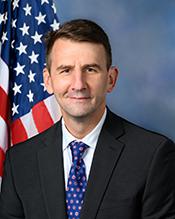
United States · Official source
804 records where Rep. Mrvan, Frank J. [D-IN-1] is listed as a sponsor, author, or other actor. Search with topics and years
United States · United States Congress · 3 March 2025
United States · United States Congress · 3 March 2025
United States · United States Congress · 3 March 2025
United States · United States Congress · 3 March 2025
Safe Schools Improvement Act This bill requires states to direct their local educational agencies (LEAs) to establish policies that prevent and prohibit bullying and harassment of elementary and secondary school students. In particular, these policies must prohibit bullying and harassment based on race, color, national origin, disability, religion, or sex. Sex includes sexual orientation, gender identity, and sex characteristics (including intersex traits). Further, LEAs must provide (1) students, parents, and educational professionals with annual notice of the conduct prohibited in their disciplinary policies; (2) students and parents with grievance procedures that target such conduct; and (3) the public with annual data on the incidence and frequency of that conduct at the school and LEA level. The Department of Education must conduct and report on an independent biennial evaluation of programs and policies to combat bullying and harassment in elementary and secondary schools. The National Center for Education Statistics must collect state data to determine the incidence and frequency of the conduct prohibited by LEA disciplinary policies.
United States · United States Congress · 27 February 2025
Governing Unaccredited Representatives Defrauding VA Benefits Act or the GUARD VA Benefits Act This bill imposes fines on individuals for soliciting, contracting for, charging, or receiving any unauthorized fee or compensation with respect to the preparation, presentation, or prosecution of any claim for Department of Veterans Affairs benefits. The attempted commission of such offenses is also punishable by fine.
United States · United States Congress · 27 February 2025
Keep Americans Safe Act This bill establishes a new criminal offense for the import, sale, manufacture, transfer, or possession of a large capacity ammunition feeding device (LCAFD). The bill does not prohibit certain conduct with respect to an LCAFD, including the following: importation, sale, manufacture, transfer, or possession related to certain law enforcement efforts, or authorized tests or experiments; importation, sale, transfer, or possession related to securing nuclear materials; and possession by a retired law enforcement officer. The bill permits continued possession of, but prohibits sale or transfer of, a grandfathered LCAFD. Newly manufactured LCAFDs must display serial number identification and the date of manufacture. Additionally, the bill allows a state or local government to use Edward Byrne Memorial Justice Assistance Grant Program funds to compensate individuals who surrender an LCAFD under a buy-back program.
United States · United States Congress · 27 February 2025
Save America's Forgotten Equines Act of 2025 or the SAFE Act of 2025 This bill permanently prohibits the slaughter of equines (e.g., horses and mules) for human consumption. (Current law prohibits the slaughter of dogs and cats for human consumption. This bill extends the prohibition to equines.) Specifically, this bill prohibits a person from knowingly (1) slaughtering an equine for human consumption; or (2) shipping, transporting, possessing, purchasing, selling, or donating an equine to be slaughtered for human consumption or equine parts for human consumption. The bill subjects a violator to a fine. The bill applies to conduct in or affecting interstate or foreign commerce or within the special maritime and territorial jurisdiction of the United States. However, it does not apply to an activity carried out by an Indian for a religious ceremony. As background, in recent years, the appropriations acts have prohibited the Department of Agriculture (USDA) from using federal funds to inspect horses before they are slaughtered for human consumption. Therefore, there are currently no USDA-inspected horse slaughter facilities in the United States.
United States · United States Congress · 27 February 2025
United States · United States Congress · 27 February 2025
Truck Parking Safety Improvement Act This bill directs the Department of Transportation (DOT) to provide competitive grants for projects that provide public parking for commercial motor vehicles and improve the safety of commercial motor vehicle drivers. States, metropolitan planning organizations, tribal governments, and local governments are eligible for these grants. The grants must be used for projects on federal-aid highways or a facility with reasonable access to such a highway or a freight facility. A grant recipient may not charge a fee to a commercial motor vehicle driver to access a public parking facility that is constructed, opened, maintained, or improved with a grant under this program. In providing grants, DOT must determine that there is a shortage of commercial motor vehicle parking capacity in the project's corridor; the eligible entity has consulted motor carriers, commercial motor vehicle drivers, public safety officials, and private providers of commercial motor vehicle parking regarding the project; the project will likely increase the availability or utilization of commercial motor vehicle parking, facilitate the efficient movement of freight, or improve highway safety, traffic congestion, and air quality; and the eligible entity has demonstrated the ability to provide for the facility's maintenance and operation. To the maximum extent practicable, DOT must select grant projects that maximize the geographic dispersion of new commercial motor vehicle parking capacity across the United States.
United States · United States Congress · 27 February 2025
This joint resolution redesignates the memorial to Robert. E. Lee in Arlington National Cemetery as the Arlington House National Historic Site.
United States · United States Congress · 27 February 2025
Prevent All Soring Tactics Act of 2025 or the PAST Act of 2025 This bill increases protections for horses at shows, exhibitions, sales, or auctions (horse events) to prevent the practice of soring horses. Generally, the soring of horses includes certain actions taken on horses' limbs to produce higher gaits that may cause pain, distress, inflammation, or lameness. Specifically, the bill expands existing soring prohibitions under the Horse Protection Act, including by banning the use of certain action devices (e.g., nonprotective boots) on specified horse breeds. The bill also requires soring inspectors at horse events to be assigned by the Animal and Plant Health Inspection Service (APHIS) of the Department of Agriculture rather than appointed by the management of horse events. APHIS must also license, train, and oversee inspectors to detect and diagnose soring at such events. Additionally, the bill increases penalties for violations of the act. It also directs APHIS to disqualify horses found to be sore from being shown or exhibited for specified periods. Further, APHIS may permanently disqualify violators from participating in horse events after the third or any subsequent violation. By way of background, APHIS issued a rule in 2024 to increase efforts to protect horses from soring practices. However, in 2025, a court vacated parts of the rule as exceeding APHIS' statutory authority (e.g., prohibiting the use of certain action devices) while deeming other parts acceptable (e.g., establishing APHIS-designated inspectors). APHIS subsequently delayed the effective date of the rule to December 31, 2026.
United States · United States Congress · 26 February 2025
United States · United States Congress · 26 February 2025
American Dream and Promise Act of 2025 This bill provides certain non-U.S. nationals ( aliens under federal law) with a path to receive permanent resident status and contains other immigration-related provisions. The Department of Homeland Security (DHS) or the Department of Justice (DOJ) shall provide conditional permanent resident status for 10 years to a qualifying individual who entered the United States as a minor and (1) is deportable or inadmissible, (2) has deferred enforced departure (DED) status or temporary protected status (TPS), or (3) is the child of certain classes of nonimmigrants. The bill imposes various qualifying requirements, such as the individual being continuously physically present in the United States since January 1, 2021, passing a background check, and being enrolled in or having completed certain educational programs. DHS shall remove the conditions placed on permanent resident status granted under this bill if the individual applies and meets certain requirements, such as completing certain programs at an educational institution, serving in the military, or being employed. Furthermore, DHS or DOJ shall provide lawful permanent resident status to certain individuals who had TPS, were eligible for TPS, or were eligible for DED status on certain dates. Such individuals must meet certain requirements and apply for such status within three years of this bill's enactment. This bill also repeals a restriction that bars a state from providing higher education benefits to undocumented individuals unless those benefits are available to all U.S. nationals without regard to residency in the state.
United States · United States Congress · 25 February 2025
Ethan's Law This bill establishes a framework to regulate the storage of firearms on residential premises at the federal, state, and tribal levels. At the federal level, the bill establishes statutory requirements for firearms on residential premises to be safely stored if a minor is likely to gain access without permission or if a resident is ineligible to possess a firearm. An individual who violates the requirements is subject to criminal penalties. A firearm stored in violation of the requirements is subject to seizure and forfeiture. At the state and tribal levels, the bill requires the Department of Justice to award grants to implement functionally identical requirements for the safe storage of firearms.
United States · United States Congress · 25 February 2025
United States · United States Congress · 24 February 2025
Leveling the Playing Field 2.0 Act This bill addresses unfair trade practices by making various changes to U.S. antidumping and countervailing duty laws. Antidumping laws provide relief to U.S industries and workers that are materially injured or threatened with injury due to imports of like products sold in the U.S. market at less than fair value, while countervailing duty laws provide such relief from imports of products subsidized by a foreign government or public entity. Specifically, the bill establishes a process for successive antidumping and countervailing duty investigations. Successive investigations may be concurrent (an ongoing investigation of the same product) or recently completed (not more than two years before the date of the initiation of the successive investigation). Further, the bill establishes a timeline for the Department of Commerce to issue determinations in successive investigations. Among other provisions, the bill authorizes Commerce to apply countervailing duty law to subsidies provided by a foreign government or public entity to a company operating in a different country, use another method for calculating the cost of production in specific circumstances, and require importers to certify that the imported merchandise is not subject to an antidumping or countervailing duty order. Additionally, the bill statutorily establishes procedures for Commerce to conduct circumvention inquiries, including by specifying the deadlines for preliminary and final determinations. The bill also provides statutory authority for Commerce to investigate currency undervaluation as a countervailable subsidy.
United States · United States Congress · 24 February 2025
United States · United States Congress · 24 February 2025
Dentist and Optometric Care Access Act of 2025 or the DOC Access Act of 20 25 This bill prohibits private health insurance plans from setting rates for items and services, except for dental cleanings, provided by a doctor of optometry, of dental surgery, or of dental medicine (or an employer of such a doctor) for which the plan does not pay a substantial amount. Additionally, an agreement between a plan and such a doctor for limited scope dental or vision benefits may last longer than two years only with the prior acceptance of the doctor for each term extension. Plans also may not restrict such a doctor's choice of laboratories or suppliers. Such doctors may elect to waive the application of the payment amount and choice of laboratories provisions of this bill. The bill does not supersede state laws regarding health insurers and dental or vision benefit plans.
United States · United States Congress · 21 February 2025
More Options to Develop and Enhance Remote Nutrition in WIC Act of 2025 or the MODERN WIC Act of 2025 This bill permanently allows individuals to remotely certify their eligibility for, and receive benefits through, the Special Supplemental Nutrition Program for Women, Infants, and Children (WIC). Specifically, the bill requires that a state agency allow an individual seeking a WIC certification, recertification, or a nutritional risk evaluation to do so by phone or through video teleconference, in addition to the in-person option. A state agency has 90 days to collect data for a nutritional risk evaluation for a remotely certified individual. Further, a state agency may consider an applicant who meets the income eligibility standards to be temporarily eligible on an interim basis to participate in the program and may certify the individual for immediate participation without waiting for a nutritional risk evaluation. The bill also allows states to provide benefits on WIC electronic benefit transfer cards through mail or remote issuance instead of requiring participants to pick up or reload benefits in person at a WIC office. Further, the Department of Agriculture must report to Congress about the use of remote technologies and other digital tools in the WIC program. Currently, individuals are generally required to be physically present to certify their WIC eligibility and receive benefits, with exceptions. The Food and Nutrition Service has temporarily waived these requirements and allowed remote certification and benefits using authorities that were provided by laws that were enacted to address COVID-19.
United States · United States Congress · 21 February 2025
United States · United States Congress · 21 February 2025
Accelerating Kids’ Access to Care Act of 2025 This bill requires states to establish a process through which qualifying out-of-state providers may temporarily treat children under Medicaid and the Children's Health Insurance Program (CHIP) without undergoing additional screening requirements. Specifically, states must establish a process through which qualifying out-of-state providers may enroll for five years as participating providers to treat individuals under the age of 21 without undergoing additional screening requirements. A qualifying out-of-state provider (1) must not have been excluded or terminated from participating in a federal health care program or state Medicaid program; and (2) must have been successfully enrolled in Medicare or a state Medicaid program based on a determination that the provider posed a limited risk of fraud, waste, or abuse. The bill’s changes take effect three years after enactment.
United States · United States Congress · 18 February 2025
CHAMPVA Children's Care Protection Act of 2025 This bill provides that a child shall be eligible for medical care under the Civilian Health and Medical Program of the Department of Veterans Affairs (CHAMPVA) until the child's 26th birthday, regardless of the child's marital status.
United States · United States Congress · 18 February 2025
Buffalo Soldiers Congressional Gold Medal Act of 2025 This bill provides for a Congressional Gold Medal to be awarded to the Buffalo Soldier regiments (six all-Black cavalry and infantry regiments authorized by Congress in 1866 to serve in the Armed Forces) in recognition of their vital service to the United States.
United States · United States Congress · 18 February 2025
Enhanced Iran Sanctions Act of 2025 This bill imposes sanctions on certain foreign persons (individuals and entities) that are involved in Iran's petroleum sector as well as certain associated persons. The bill also requires or authorizes actions to facilitate the enforcement of sanctions on Iran. Specifically, the bill requires the President to impose visa- and property-blocking sanctions on any foreign person that, after the bill's enactment, knowingly engages in any transaction related to the processing, export, or sale of oil, condensates, gas, liquefied natural gas, or other petrochemical products in whole or in part from Iran. The President must also impose sanctions on certain foreign persons associated with a sanctioned individual or entity. For example, the President must sanction the subsidiaries and corporate officers of a sanctioned business. The bill provides certain exceptions to these sanctions, including specifying that sanctions do not apply to the importation of goods or to conducting or facilitating transactions for humanitarian assistance. The Department of State must establish an interagency working group that shall seek to establish a multilateral contact group to coordinate international efforts to enforce sanctions on Iran. The bill expands the State Department rewards program to authorize a reward payment to any individual who furnishes information leading to the identification of a person (1) subject to sanctions under this bill, or (2) that has attempted or is attempting to evade sanctions under this bill.
United States · United States Congress · 18 February 2025
Guard and Reserve GI Bill Parity Act of 2025 This bill expands eligibility for Post-9/11 educational assistance for members of the reserve components of the Armed Forces and members of the National Guard. Specifically, the bill expands the types of activities that count towards Post-9/11 GI Bill eligibility to include active duty, inactive-duty training, annual training duty, and full-time National Guard duty or active duty. (Generally, under current law, only federal active duty counts towards educational assistance eligibility.)
United States · United States Congress · 14 February 2025
Codifying Useful Regulatory Definitions Act or the CURD Act This bill establishes a statutory definition for natural cheese . Under the bill, natural cheese is defined as cheese (ripened or unripened soft, semi-soft, or hard) that is produced from animal milk or certain dairy ingredients and is produced in accordance with established cheese-making standards. The definition excludes pasteurized process cheeses, cheese foods, and cheese spreads. A food that does not meet this definition is deemed misbranded and may not be sold if its label includes the term natural cheese as a factual descriptor of a category of cheese.
United States · United States Congress · 13 February 2025
Prostate-Specific Antigen Screening for High-risk Insured Men Act or the PSA Screening for HIM Act This bill requires private health insurance plans to cover evidence-based, preventive care and screenings for prostate cancer that are not already covered under the recommendations of the U.S. Preventive Services Task Force for certain men. Specifically, plans must cover such care and screenings for men who are age 40 and over and are at high risk of developing prostate cancer (e.g., with a family history of prostrate cancer). Such coverage must be provided without imposing any cost-sharing requirement.
United States · United States Congress · 13 February 2025
This concurrent resolution declares that Congress should not impose any new performance fee, tax, royalty, or other charge relating to the public performance of sound recordings on a local radio station for broadcasting sound recordings over the air, or on any business for such public performance of sound recordings.
United States · United States Congress · 13 February 2025
More Homes on the Market Act This bill increases the amount of gain from the sale of a principal residence that an individual may exclude from gross income (for federal tax purposes). Under the bill, an individual may exclude from gross income gain from the sale of a principal residence of up to $500,000 (currently $250,000), and taxpayers who are married and file a joint federal income tax return may exclude up to $1 million (currently $500.000). The bill also requires these amounts to be adjusted annually for inflation.
United States · United States Congress · 13 February 2025
United States · United States Congress · 13 February 2025
United States · United States Congress · 13 February 2025
Fighting Trade Cheats Act of 2025 This bill increases penalties for, and establishes additional enforcement mechanisms related to, fraudulent and grossly negligent violations of U.S. customs laws. Specifically, the bill increases the maximum civil penalty for a fraudulent violation to three times the domestic value of the merchandise. (Currently, the maximum penalty is the domestic value of the merchandise.) It prohibits a person who commits a fraudulent violation from importing merchandise into the United States for a five-year period. Additionally, the bill increases the maximum civil penalty for a grossly negligent violation to the lesser of (1) 3 times the domestic value of the merchandise; or (2) 10 times the lawful duties, taxes, and fees. (Currently, the maximum penalty is the lesser of the domestic value of the merchandise or four times the lawful duties, taxes, and fees.) It prohibits a person who commits a grossly negligent violation from importing merchandise into the United States for a two-year period. Further, the bill applies these importation bans to an affiliated person (e.g., a family member or employee) of the person who committed the fraudulent or grossly negligent violation. The bill establishes a private right of action for an interested party (e.g., a manufacturer) affected by customs fraud or grossly negligent violations. The bill prohibits any person (or an affiliated person) who commits a fraudulent or grossly negligent violation from participating in the U.S. Customs and Border Protection's Importer of Record program, and further requires revocation of their importer of record numbers.
United States · United States Congress · 13 February 2025
Nationwide Consumer and Fuel Retailer Choice Act of 2025 This bill amends the Clean Air Act to address the limitations on Reid Vapor Pressure (a measure of gasoline's volatility) that are placed on gasoline during the summer ozone season. Specifically, the bill applies the waiver for Reid Vapor Pressure requirements that is applicable to gasoline blended with 10% ethanol (E10) to gasoline blended with up to 15% ethanol (E15). This change allows gasoline that is blended with 10% to 15% ethanol to be sold year-round. Currently, states may be excluded from the waiver for Reid Vapor Pressure requirements by submitting documentation supporting that the waiver would increase air pollution. The bill nullifies existing state exclusions, but states may submit documentation after enactment of the bill to be excluded going forward. The bill also modifies the Renewable Fuel Standard Program, which requires transportation fuel sold or introduced into commerce in the United States to contain minimum volumes of renewable fuel. Under the existing program, obligated parties, such as small refineries, must satisfy the volume obligations by either blending renewable fuels into their gasoline or diesel fuel products or by acquiring credits that represent the required renewable fuel volume. The bill directs the Environmental Protection Agency to return compliance credits to small refineries under certain circumstances.
United States · United States Congress · 12 February 2025
United States-Israel Defense Partnership Act of 2025 This bill requires or authorizes certain actions to increase defense-related cooperation between the United States and Israel. Specifically, the bill requires the Department of Defense (DOD) to establish a cooperative program, with the concurrence of Israel's Ministry of Defense (MOD), to develop and deploy advanced technologies for countering unmanned systems that threaten the United States and Israel; establish in Israel an office of the Defense Innovation Unit (an organization that focuses on rapidly fielding and scaling commercial technology across the U.S. military); and seek to engage Israel's MOD on the ascension of Israel into the national technology and industrial base (currently defined in law as the persons and organizations engaged in research, development, production, integration, services, or information technology activities conducted within the United States, the United Kingdom, Australia, New Zealand, and Canada). The bill authorizes DOD, upon request of Israel's MOD, to jointly conduct research, development, test, and evaluation (RDT&E) of emerging technologies such as artificial intelligence and robotics to meet defense challenges. Additionally, the bill extends the authority for DOD to (1) carry out RDT&E on a joint basis with Israel to establish anti-tunnel and counter unmanned aerial systems capabilities through 2028, and (2) transfer defense articles intended for use as reserve stocks for Israel through January 1, 2029.
United States · United States Congress · 12 February 2025
United States · United States Congress · 12 February 2025
Give Kids a Chance Act of 2025 This bill expands the Food and Drug Administration’s (FDA’s) authority with respect to research on rare pediatric diseases, including by permitting the FDA to take enforcement action against drug sponsors that fail to satisfy pediatric study requirements and by reauthorizing programs that support pediatric research. Specifically, the bill modifies requirements relating to molecularly targeted pediatric cancer investigations to permit research on new drugs in combination with active ingredients that have already been approved, provided certain conditions are met; permits the FDA to take enforcement action against drug sponsors that fail to comply with pediatric study requirements, if such sponsors demonstrated a lack of due diligence in satisfying the requirement; renews the FDA’s authority to award priority review vouchers to sponsors of new products intended to treat rare pediatric diseases through September 30, 2029; and reauthorizes through FY2027 certain funding for the National Institutes of Health to support priority pediatric research. The bill also provides statutory authority for the FDA’s interpretation of the orphan drug exclusivity period. The bill specifies, consistent with FDA regulations, that the seven-year market exclusivity period for drugs for rare diseases or conditions (i.e., orphan drugs) prohibits the approval of the same drug for the same approved use or indication with respect to the disease or condition. (In Catalyst Pharmaceuticals, Inc. v. Becerra , a court rejected the FDA’s interpretation and held that orphan drug exclusivity extends to all uses or indications for the disease or condition.)
United States · United States Congress · 12 February 2025
Rural Obstetrics Readiness Act This bill creates and expands federal grant programs within the Health Resources and Services Administration (HRSA) to increase capacity to provide emergency obstetric health services in rural areas or areas without practitioners or facilities specializing in obstetric services. Specifically, HRSA must establish a program for providing grants to certain hospitals or consortiums that include hospitals in rural areas or areas with maternal health care professional shortages for training, developing a workforce, and purchasing equipment relating to obstetric emergencies. In addition, the bill requires HRSA’s Alliance for Innovation on Maternal Health Capacity program to provide grants for training on emergency obstetric services for practitioners in rural health care facilities without dedicated obstetric units. HRSA must also establish a pilot program to provide grants to government entities for developing or improving telehealth access programs to support urgent maternal health care in rural facilities without a dedicated obstetric unit.
United States · United States Congress · 11 February 2025
United States · United States Congress · 11 February 2025
United States · United States Congress · 7 February 2025
Freedom to Invest in Tomorrow’s Workforce Act This bill expands the expenses eligible for tax-free withdrawals from a qualified tuition program (known as a 529 plan) to include tuition, fees (including test fees), books, supplies, equipment, and other expenses related to the enrollment or attendance in a recognized postsecondary credentialing program. Under the bill, a recognized postsecondary credentialing program includes certain programs identified by a state as providing training services, a program listed in the Web Enabled Approval Management System (WEAMS) maintained by the Department of Veterans Affairs, certain examinations required to obtain or maintain a credential, and other reputable credentialing programs. Further, under the bill, such programs must be designed for an individual to obtain an industry-recognized postsecondary employment credential (e.g., project management professional certificate, advanced emergency medical technician certificate, and welding supervisor certificate), a certificate of completion of a registered and certified apprenticeship, an occupational or professional license issued or recognized by a state or the federal government (and any certification required for obtaining such license), or an associate or baccalaureate degree.
United States · United States Congress · 6 February 2025
Protect Our Letter Carriers Act of 2025 This bill requires or authorizes certain actions related to the U.S. Postal Service (USPS). The bill requires the Department of Justice to appoint an assistant U.S. attorney in each judicial district to coordinate and supervise the investigation and prosecution of various crimes related to postal services (for example, assault on a postal service employee, breaking into a post office, or obstruction of mails). The bill also requires the U.S. Sentencing Commission to amend sentencing guidelines to provide that the assault or robbery of a postal employee shall be treated the same as the assault of a law enforcement officer. Additionally, the bill authorizes appropriations for the USPS to install high security collection boxes and replace older versions of the universal mailbox key with electronic versions.
United States · United States Congress · 6 February 2025
Taxpayer Data Protection Act This bill restricts access to any public money receipt or payment system belonging to the Department of the Treasury. Specifically, access is limited to authorized Treasury officers, employees, or contractors meeting certain performance standards who have held a qualified position for at least a year, or who hold other qualifications as provided by the bill. The bill specifically prohibits special government employees (i.e., temporary appointees hired to perform specific tasks) from having access to such systems. The bill also provides that an individual accessing such systems shall be treated as an executive branch employee for purposes of federal criminal conflict of interest laws. Treasury's Office of Inspector General must investigate and report on each instance of unauthorized use or other access of such payment systems.
United States · United States Congress · 6 February 2025
United States · United States Congress · 5 February 2025
Love Lives On Act of 2025 This bill extends entitlement for various benefit programs and services for surviving spouses of deceased members of the Armed Forces or veterans. The bill provides that the remarriage of a surviving spouse must not bar the furnishing of dependency and indemnity compensation or special pension benefits to such spouse. Additionally, the Department of Defense may not terminate the payment of an annuity for a surviving spouse under the Survivor Benefit Plan solely because the surviving spouse remarries. The bill also expands the definition of a dependent under TRICARE to include a remarried widow or widower whose subsequent marriage has ended due to death, divorce, or annulment.
United States · United States Congress · 5 February 2025
AM Radio for Every Vehicle Act of 2025 This bill requires the Department of Transportation (DOT) to issue a rule requiring AM radio capabilities to be standard in all new passenger vehicles. (AM radio is often used to deliver emergency alerts and news and entertainment programming; some newer vehicles do not include AM equipment.) Specifically, this bill applies to passenger vehicles (1) manufactured in the United States for sale in the United States, imported into the United States, or shipped in interstate commerce; and (2) manufactured after the rule's effective date. The rule must require all such vehicles to have devices that can receive signals and play content transmitted by AM stations or digital audio AM stations installed as standard equipment and made easily accessible to drivers. Prior to the rule's effective date, manufacturers that do not include devices that can access AM radio as standard equipment (1) must inform purchasers of this fact through clear and conspicuous labeling, and (2) may not charge an additional or separate fee for AM radio access. DOT may assess civil penalties for any violation of the rule. The Department of Justice may also bring a civil action to enjoin a violation. The rule, including DOT’s authority to enforce it, must expire 10 years after the bill’s enactment. Further, the Government Accountability Office must study and report on the dissemination of emergency alerts to the public, including by conducting an assessment of AM radio relative to other Integrated Public Alert and Warning System communication technologies.
United States · United States Congress · 5 February 2025
United States · United States Congress · 5 February 2025
United States · United States Congress · 5 February 2025
This resolution disapproves of pardons for individuals who were found guilty of assaulting U.S. Capitol Police officers.
United States · United States Congress · 5 February 2025
This resolution supports the designation of Career and Technical Education Month to celebrate career and technical education across the United States.
United States · United States Congress · 5 February 2025