Bill· HRH.R. 10735 (119th)referred
To amend the Federal Crop Insurance Act to require certain types of cattle to be included in a livestock pilot program, and for other purposes.
United States · United States Congress · 5 October 2026
The world's political record
Person
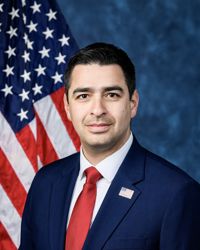
United States · Official source
280 records where Rep. Evans, Gabe [R-CO-8] is listed as a sponsor, author, or other actor. Search with topics and years
United States · United States Congress · 5 October 2026
United States · United States Congress · 1 October 2026
United States · United States Congress · 28 September 2026
United States · United States Congress · 24 September 2026
United States · United States Congress · 16 September 2026
United States · United States Congress · 16 September 2026
United States · United States Congress · 16 September 2026
United States · United States Congress · 14 September 2026
United States · United States Congress · 14 September 2026
United States · United States Congress · 10 September 2026
United States · United States Congress · 8 September 2026
United States · United States Congress · 4 September 2026
United States · United States Congress · 27 August 2026
United States · United States Congress · 17 August 2026
United States · United States Congress · 22 July 2026
United States · United States Congress · 22 July 2026
United States · United States Congress · 14 July 2026
United States · United States Congress · 13 July 2026
United States · United States Congress · 30 June 2026
Securing Agriculture's Workforce Act of 2026 This bill expands the H-2A agricultural visa program; creates online platforms for H-2A employers, workers, and agencies; and codifies certain wage calculations. Under current law, workers on H-2A visas are only allowed to perform agricultural work of a seasonal or temporary nature. Under the bill, the seasonal work requirement is removed, thus allowing H-2A workers to qualify for agricultural work that occurs year-round. The bill also expands the type of agricultural work that qualifies, including reforestation, aquaculture, and livestock work. The Department of Agriculture must issue rules to define agricultural labor or services for purposes of the H-2A program. The bill also establishes an H-2A visa pathway for current unauthorized agricultural workers who otherwise meet requirements. The Department of Labor must maintain a national, publicly accessible online job registry and database of all job offers submitted by employers seeking a labor certification required to employ H-2A workers. The Department of Homeland Security must establish an online platform for employers to submit information and documentation for review by federal agencies in the course of admitting H-2A workers. The H-2A program requires employers to provide workers with wage rates at or above those set in regulations and such wages must not adversely affect the wages and working conditions of workers similarly employed in the United States. The bill codifies the current calculation method for the adverse effect wage rate as set in regulation.
United States · United States Congress · 25 June 2026
United States · United States Congress · 24 June 2026
United States · United States Congress · 18 June 2026
United States · United States Congress · 18 June 2026
United States · United States Congress · 18 June 2026
United States · United States Congress · 18 June 2026
United States · United States Congress · 18 June 2026
United States · United States Congress · 18 June 2026
United States · United States Congress · 11 June 2026
United States · United States Congress · 11 June 2026
United States · United States Congress · 10 June 2026
United States · United States Congress · 8 June 2026
United States · United States Congress · 29 May 2026
United States · United States Congress · 29 May 2026
United States · United States Congress · 21 May 2026
United States · United States Congress · 21 May 2026
United States · United States Congress · 12 May 2026
Spending Aviation Fees for Equipment, Guaranteeing Upgraded and Advanced Risk Detection and Safety Act of 2026 or the SAFEGUARDS Act of 2026 This bill allocates additional funding for the Transportation Security Administration (TSA) for aviation security, including checked baggage explosives detection equipment and security checkpoint technology. As background, TSA collects passenger civil aviation security service fees (often referred to as the 9/11 security fee or passenger security fee) on air carrier passengers originating at airports in the United States. In general, these fees are deposited into the Department of the Treasury general fund and applied towards debt reduction. A portion of these fees are allocated to TSA for aviation security. The bill requires that the first $500 million collected in each fiscal year from passenger security fees be deposited into the Aviation Security Capital Fund. This is an increase from the currently required $250 million. This fund provides for the costs associated with acquiring and installing in-line baggage screening systems (i.e., systems that use a conveyor belt infrastructure to automatically screen, sort, and track baggage) to accommodate checked baggage explosives detection equipment and for certain other airport security improvements. The bill also requires that the next $250 million collected in each fiscal year from passenger security fees be deposited into a new Aviation Security Checkpoint Technology Fund for the costs associated with acquiring, installing, and sustaining aviation security checkpoint technology.
United States · United States Congress · 7 May 2026
This resolution honors the contributions of small businesses in the United States and supports the designation of National Small Business Week.
United States · United States Congress · 7 May 2026
United States · United States Congress · 4 May 2026
This resolution expresses support for police officers and other law enforcement personnel. The resolution further recognizes law enforcement officers across the United States in the pursuit of preserving safe and secure communities; the need to ensure that such officers have the equipment, training, and resources necessary to protect their health and safety while they are protecting the public; and the law enforcement community for acts of sacrifice and heroism. The resolution expresses condolences and appreciation to the loved ones of each law enforcement officer who has made the ultimate sacrifice in the line of duty.
United States · United States Congress · 30 April 2026
United States · United States Congress · 22 April 2026
United States · United States Congress · 21 April 2026
This bill includes hot rotisserie chicken as an eligible food to purchase with Supplemental Nutrition Assistance Program (SNAP) benefits.
United States · United States Congress · 15 April 2026
United States · United States Congress · 27 March 2026
This resolution supports recognizing the International Year of Rangelands and Pastoralists. It also encourages federal agencies, universities, and organizations across the country to promote education, research, and outreach related to rangeland management.
United States · United States Congress · 24 March 2026
United States · United States Congress · 24 March 2026
This resolution supports the designation of National Agriculture Day.
United States · United States Congress · 20 March 2026
This resolution recognizes the importance of fully funding the Department of Homeland Security (DHS). The resolution also (1) cautions that Americans are at greater risk each day DHS is subject to a lapse in appropriations, and (2) expresses gratitude to DHS employees for their commitment to protect the United States.
United States · United States Congress · 19 March 2026
Stop Pills That Kill Act This bill increases criminal penalties for offenses relating to the manufacture of fentanyl or counterfeit substances. It also establishes requirements for federal agencies to address the use of counterfeit substances. Specifically, the bill applies an increased criminal penalty for possessing, manufacturing, or distributing certain equipment or materials that are used to illegally manufacture fentanyl, an analogue of fentanyl, or a counterfeit substance (the increased penalty is currently limited to offenses involving methamphetamine). The Drug Enforcement Administration must establish and implement a plan to address counterfeit fentanyl or methamphetamine substances through law enforcement action and education and prevention efforts. In addition, the Department of Justice must annually report on the collection of counterfeit fentanyl or methamphetamine substances by law enforcement and on related prosecutions.
United States · United States Congress · 12 March 2026
United States · United States Congress · 9 March 2026