Bill· HRH.R. 10758 (119th)referred
Veterans Outdoor Rehabilitation Act
United States · United States Congress · 6 October 2026
The world's political record
Person
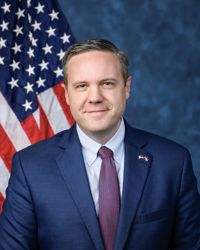
United States · Official source
233 records where Rep. Hurd, Jeff [R-CO-3] is listed as a sponsor, author, or other actor. Search with topics and years
United States · United States Congress · 6 October 2026
United States · United States Congress · 1 October 2026
United States · United States Congress · 17 September 2026
United States · United States Congress · 16 September 2026
United States · United States Congress · 16 September 2026
United States · United States Congress · 15 September 2026
United States · United States Congress · 15 September 2026
United States · United States Congress · 15 September 2026
United States · United States Congress · 15 September 2026
United States · United States Congress · 10 September 2026
United States · United States Congress · 27 July 2026
This resolution supports the goals and ideals of American Grown Flower and Foliage Month and recognizes that purchasing flowers and foliage grown in the United States supports the farmers, small businesses, jobs, and economy of the United States.
United States · United States Congress · 22 July 2026
United States · United States Congress · 22 July 2026
United States · United States Congress · 13 July 2026
United States · United States Congress · 25 June 2026
United States · United States Congress · 23 June 2026
United States · United States Congress · 18 June 2026
AI Flaw Reporting and Security Enhancement Act This bill establishes a program to facilitate the voluntary reporting and tracking of artificial intelligence (AI) flaws, to be administered by the National Institute of Standards and Technology (NIST). In carrying out this program, NIST must seek to convene various stakeholders to establish common definitions for terms related to AI flaws and criteria for the classification of AI flaws (e.g., security-related flaws and safety-related flaws). The group must also support the development of technical standards and guidance related to detecting, managing, and disclosing AI flaws and prioritizing the remediation of such flaws. Further, NIST must develop, or enter into cooperative agreements with institutions of higher education or research institutions to develop, infrastructure for the voluntary reporting, collection, and tracking of AI flaws. This must include a national database of AI flaws or the modification of an existing national database to account for AI flaws. (NIST currently administers a national database of cybersecurity vulnerabilities.) NIST must consider certain topics when developing this infrastructure, including the interoperability of the infrastructure with relevant existing systems, standards, and best practices. Within three years of the bill’s enactment, NIST must report to Congress on the implementation of these provisions. Under the bill, an AI flaw is a set of conditions or behaviors that allow for the violation of certain policies (e.g., safety or security policies) and is not necessarily associated with malicious intent.
United States · United States Congress · 18 June 2026
United States · United States Congress · 11 June 2026
United States · United States Congress · 11 June 2026
United States · United States Congress · 10 June 2026
United States · United States Congress · 10 June 2026
United States · United States Congress · 9 June 2026
United States · United States Congress · 8 June 2026
United States · United States Congress · 21 May 2026
United States · United States Congress · 21 May 2026
Rural Community Hospital Demonstration Program Reauthorization This bill extends the Rural Community Hospital Demonstration Program for an additional five years. The program tests the feasibility of cost-based reimbursement under Medicare for small rural hospitals that are too large to qualify for special payment as critical access hospitals. The bill specifies that hospitals that participate in the program between December 30, 2024, and January 1, 2027, may continue to participate during the five-year extension period.
United States · United States Congress · 21 May 2026
United States · United States Congress · 13 May 2026
United States · United States Congress · 7 May 2026
United States · United States Congress · 4 May 2026
This resolution expresses support for police officers and other law enforcement personnel. The resolution further recognizes law enforcement officers across the United States in the pursuit of preserving safe and secure communities; the need to ensure that such officers have the equipment, training, and resources necessary to protect their health and safety while they are protecting the public; and the law enforcement community for acts of sacrifice and heroism. The resolution expresses condolences and appreciation to the loved ones of each law enforcement officer who has made the ultimate sacrifice in the line of duty.
United States · United States Congress · 4 May 2026
Indian Health Service Emergency Claims Parity Act This bill extends from 72 hours to not less than 15 days the time period to notify the Purchased/Referred Care (PRC) program of emergency medical care received from a non-Indian Health Service (IHS) medical provider or at a non-IHS medical facility. This bill does not apply to individuals who are elderly or disabled, who continue to have a 30-day notification requirement for emergency services. The IHS provides medical and dental services directly to American Indian and Alaska Native patients whenever possible. The PRC program pays for medical or dental care that is provided away from an IHS or tribal health care facility. The PRC program must be notified of requests for authorization of payment for health care services from a non-IHS provider. Currently in emergency cases, the patient, an individual on behalf of the patient, or the medical care provider must, within 72 hours after the beginning of treatment for the condition or after admission to a health care facility, notify a PRC authorizing official of the need for the emergency medical care. This bill instead allows the patient, other individual, or provider to notify PRC not less than 15 days of the treatment or admission.
United States · United States Congress · 4 May 2026
This resolution expresses support for the designation of a National Day of Awareness for Missing and Murdered Indigenous Women and Girls.
United States · United States Congress · 28 April 2026
United States · United States Congress · 23 April 2026
United States · United States Congress · 21 April 2026
This bill includes hot rotisserie chicken as an eligible food to purchase with Supplemental Nutrition Assistance Program (SNAP) benefits.
United States · United States Congress · 14 April 2026
United States · United States Congress · 6 April 2026
Accelerating Access to Critical Therapies for ALS Reauthorization Act of 2026 This bill reauthorizes through FY2031 and revises programs that support research and development of drugs and other therapies to address amyotrophic lateral sclerosis (also known as ALS or Lou Gehrig's disease) and other neurodegenerative diseases. The bill reauthorizes grants from the National Institutes of Health (NIH) for scientific research on investigational drugs to prevent or treat ALS for individuals not otherwise eligible for clinical trials, grants from the Food and Drug Administration (FDA) for research and development of therapies to prevent and treat ALS and other neurodegenerative diseases, and a Public-Private Partnership including the FDA and NIH that supports development and regulatory review of treatments for neurodegenerative diseases. Also, the NIH, in considering renewal of its grants, must assess available information on the safety and efficacy of the investigational drugs. It must also require grantees to promptly report serious and unexpected adverse events associated with their investigational drugs. Additionally, the FDA must publish a plan describing actions it will take over a five-year period to foster development of safe and effective drugs, and facilitate access to investigational drugs, that treat ALS and other rare neurodegenerative diseases. The FDA must also publish a report describing the actions it has taken under the plan.
United States · United States Congress · 26 March 2026
United States · United States Congress · 19 March 2026
United States · United States Congress · 17 March 2026
United States · United States Congress · 12 March 2026
United States · United States Congress · 9 March 2026
United States · United States Congress · 5 March 2026
United States · United States Congress · 5 March 2026
United States · United States Congress · 26 February 2026
United States · United States Congress · 25 February 2026
United States · United States Congress · 24 February 2026
United States · United States Congress · 23 February 2026
This resolution supports the designation of National FFA (Future Farmers of America) Week. It also celebrates the 50th anniversary of the chartering of Alaska as a State FFA Association of the National FFA Organization.
United States · United States Congress · 20 February 2026
Airspace Location and Enhanced Risk Transparency Act of 2026 or the ALERT Act This bill addresses aviation safety by increasing requirements for aircraft tracking and communication using Automatic Dependent Surveillance-Broadcast (ADS-B) technology and expanding oversight. As background, ADS-B for broadcasting (Out) and receiving (In) transmits information (e.g., location and weather) among aircraft and air traffic control (ATC). The bill requires the Department of Defense (DOD) and the Department of Transportation (DOT) to enter into an agreement regarding the use of collision prevention technologies on DOD aircraft. The agreement must require the use of ADS-B Out as the default practice for DOD helicopters operating in the national airspace, unless such use would affect operational security. For DOD helicopters that are carrying out special missions in the Washington, DC, metropolitan area and are exempt from ADS-B Out transmission requirements, DOD must coordinate with DOT to conduct a safety risk assessment and implement appropriate mitigations. By December 31, 2031, DOD aircraft (other than certain special mission aircraft) must be equipped with and operating integrated ADS-B In technology. With respect to civil aircraft, by December 31, 2031, the Federal Aviation Administration (FAA) must generally require aircraft that are currently required to be equipped with ADS-B Out to also be equipped with ADS-B In. Additionally, among other requirements, the FAA must establish time-on-position limits for supervisory ATC personnel; establish a process to timely notify parties involved in certain near-miss incidents; and evaluate and revise, as necessary, helicopter routes around Ronald Reagan Washington National Airport.
United States · United States Congress · 20 February 2026