Bill· HRH.R. 7502 (119th)referred
Recycled Materials Attribution Act of 2026
United States · United States Congress · 11 February 2026
The world's political record
Person
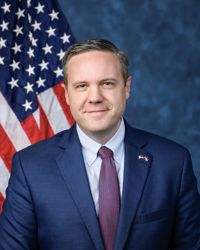
United States · Official source
233 records where Rep. Hurd, Jeff [R-CO-3] is listed as a sponsor, author, or other actor. Search with topics and years
United States · United States Congress · 11 February 2026
United States · United States Congress · 4 February 2026
Made in America Jobs Act of 2026 This bill expands the criteria for various grants under the Economic Development Administration's public works program to include projects that facilitate the relocation of employment opportunities into the United States or the growth of the manufacturing sector. Specifically, the bill modifies grants for (1) public works and economic development; (2) planning and administrative expenses; (3) training, research, and technical assistance; and (4) regions experiencing adverse economic changes.
United States · United States Congress · 3 February 2026
United States · United States Congress · 30 January 2026
United States · United States Congress · 22 January 2026
United States · United States Congress · 15 January 2026
This bill designates a portion of Interstate Route 680 in Omaha, Nebraska, as the Hal Daub Freeway. Harold John Daub Jr. served in the House of Representatives from 1981-1989 and as the mayor of Omaha, Nebraska, from 1995-2001.
United States · United States Congress · 14 January 2026
United States · United States Congress · 14 January 2026
United States · United States Congress · 13 January 2026
United States · United States Congress · 12 January 2026
Stop Insider Trading Act This bill generally prohibits Members of Congress and their spouses and dependent children from purchasing stocks and requires public notice before these individuals may sell stocks. Specifically, Members of Congress and the spouses and dependent children of Members of Congress may not purchase covered investments. Between 7 and 14 days before a Member or a covered spouse or dependent sells a covered investment, the relevant Member must file public notice of the intent to sell with the Clerk of the House of Representatives or the Secretary of the Senate, as appropriate. The Clerk or Secretary must publish this notice online. If the individual decides not to sell the covered investment, the notice must be withdrawn. Under the bill, a covered investment is a security issued by a publicly traded company or a comparable economic interest. Some investments are exempt, including interest in a widely held investment fund and certain investments held in a trust. Violations of these provisions are subject to a fee and, in the case of a purchase, a requirement to sell the covered investment. The fee must equal (1) the greater of $2,000 or 10% of the transaction value, and (2) any net gain realized from the transaction during a specified period. The fee may not be paid using campaign donations or Members’ official allowances. Certain transactions by covered spouses and dependents are exempt, including transactions made on behalf of another person or made as part of compensation from the individual’s employer.
United States · United States Congress · 9 January 2026
United States · United States Congress · 9 January 2026
United States · United States Congress · 19 December 2025
United States · United States Congress · 18 December 2025
United States · United States Congress · 15 December 2025
United States · United States Congress · 11 December 2025
United States · United States Congress · 10 December 2025
United States · United States Congress · 9 December 2025
United States · United States Congress · 9 December 2025
United States · United States Congress · 20 November 2025
United States · United States Congress · 20 November 2025
United States · United States Congress · 18 November 2025
United States · United States Congress · 18 November 2025
Aviation Funding Solvency Act This bill provides continuing appropriations to the Federal Aviation Administration (FAA) if (1) an appropriations bill for the FAA has not been enacted before a fiscal year begins, or (2) a law making continuing appropriations for the FAA is not in effect. Specifically, the bill provides appropriations from the Aviation Insurance Revolving Fund at the rate of operations that was provided for the prior fiscal year to continue programs, projects, and activities that were funded in the preceding fiscal year. The FAA may use the balance of the fund, minus $1 billion. If the FAA determines that the amounts from the fund are insufficient to continue all programs, projects, or activities, then the FAA must prioritize compensation payments for employees of the Air Traffic Organization (e.g., air traffic controllers). The bill provides the appropriations until the date on which either (1) specified appropriations legislation for the fiscal year becomes law, or (2) a bill making continuing appropriations becomes law. Finally, the bill permanently extends the FAA Non-premium War Risk Insurance Program. This program provides aviation insurance without a premium to eligible air carriers at the request of the Department of Defense or another federal agency, provided that the agency agrees to indemnify the FAA from all losses covered under the insurance. Eligible air carriers include those whose operations are under a federal contract and are necessary for national security or to carry out U.S. foreign policy.
United States · United States Congress · 12 November 2025
This bill repeals the authority for a Senator to bring a civil action against the federal government if an internet service provider or the Senate Sergeant at Arms (SAA) accessed or disclosed, or accesses or discloses, data from the Senator's office to provide to a federal agency without following prescribed notice requirements. The authority applies to a qualifying instance occurring on or after January 1, 2022. The authority for the civil action was enacted in H.R. 5371, the Continuing Appropriations, Agriculture, Legislative Branch, Military Construction and Veterans Affairs, and Extensions Act, 2026 , which was signed by the President on November 12, 2026. The relevant provision requires written notice from the internet service provider or the SAA to the Senate office upon receipt of any legal process seeking access or disclosure of covered data. A Senator affected by a federal violation of the provision may sue the federal government for the greater of $500,000 per violation or the actual damages, plus attorney's fees and related costs.
United States · United States Congress · 12 November 2025
United States · United States Congress · 7 November 2025
This resolution honors the service and sacrifice of America's veterans.
United States · United States Congress · 7 November 2025
United States · United States Congress · 4 November 2025
Crystal Reservoir Conveyance Act This bill directs the Forest Service to convey specified property and water rights in Ouray County, Colorado, to the City of Ouray, Colorado, for use as open space for recreational activities (such as fishing) at no cost to the public. The property and water rights include the site known as Crystal Reservoir and the associated lake and infrastructure, Full Moon Dam and the associated facilities, and the approximately 45-acre parcel of land underlying and surrounding Crystal Reservoir. The conveyance must (1) convey fee simple title to the land; (2) be subject to existing valid rights and easements; and (3) be completed at no cost to the city, except for costs related to necessary surveys. The conveyance must also be subject to a reversionary interest whereby if the land is used in a manner that violates the conveyance, the land shall revert to the United States, subject to the discretion of the Forest Service. In addition to holding the land open to the public for recreational purposes, the city must assume responsibly for Full Moon Dam and must not conduct unneeded development or commercial operations, nor alter Crystal Reservoir in a manner that would harm wetlands located upstream, subject to certain conditions. After the completion of this conveyance, the Forest Service must recognize a perpetual easement for the site known as Red Mountain Ditch for use by the city for specified activities related to Crystal Reservoir.
United States · United States Congress · 4 November 2025
This bill authorizes any federally recognized Indian tribe to lease their land held in trust for a term of up to 99 years.
United States · United States Congress · 31 October 2025
United States · United States Congress · 31 October 2025
Firearm Access During Shutdowns Act This bill requires various federal agencies to continue certain operations, functions, and services related to firearms during a government shutdown. The bill applies to the Federal Bureau of Investigation's National Instant Criminal Background Check System, including the processing of background checks in support of the operations of the Directorate of Enforcement Programs and Services of the Bureau of Alcohol, Tobacco, Firearms and Explosives (ATF); the ATF's Directorate of Enforcement Programs and Services; the activities of the Department of Commerce's Bureau of Industry and Security relating to firearms and firearm-related products, including activities related to processing of applications for export licenses; and the activities of the Department of State's Directorate of Defense Trade Controls relating to firearms and firearm-related products, including activities related to processing of applications for export licenses. Under the bill, (1) these operations, functions, and services are deemed to relate to an emergency involving the safety of human life or the protection of property; and (2) employees carrying out the operations, functions, and services are deemed to be excepted employees. (Under an exception in the Antideficiency Act, an employee whose duties involve the safety of human life or the protection of property may be required to work during a government shutdown. Employees who are required to work during a government shutdown because they fall under this or other exceptions are known as excepted employees.)
United States · United States Congress · 31 October 2025
Prevent Government Shutdowns Act This bill provides continuing appropriations to prevent a government shutdown if the appropriations bills for a fiscal year have not been enacted before the fiscal year begins and continuing appropriations are not in effect. Specifically, the bill provides appropriations at the rate of operations that was provided for the prior fiscal year to continue programs, projects, and activities that were funded in the preceding fiscal year. The bill also limits official travel, congressional recesses or adjournments, and the consideration of legislation that is unrelated to appropriations after the beginning of a fiscal year if the appropriations process has not been completed.
United States · United States Congress · 31 October 2025
United States · United States Congress · 24 October 2025
This concurrent resolution denounces socialism and opposes the implementation of socialist policies in the United States.
United States · United States Congress · 24 October 2025
Keep SNAP Funded Act of 2025 This bill provides appropriations for the Department of Agriculture (USDA) to provide uninterrupted benefits under the Supplemental Nutrition Assistance Program (SNAP) during any period in which legislation has not been enacted to provide continuing or full-year FY2026 appropriations to USDA. The bill also provides appropriations for retroactive payments for SNAP benefits that were missed on or after September 30, 2025, and before this bill is enacted. The appropriations provided by this bill are available until legislation is enacted to provide FY2026 appropriations for USDA (including continuing appropriations).
United States · United States Congress · 30 September 2025
Geothermal Ombudsman for National Deployment and Optimal Reviews Act This bill establishes a geothermal ombudsman and task force to oversee geothermal project permitting and authorizations on federal land. The Department of the Interior must appoint a geothermal ombudsman from within the Bureau of Land Management (BLM). The ombudsman must act as a liaison among different parts of BLM, provide dispute resolution services between BLM and geothermal project applicants, and facilitate permit processing in different BLM field offices regarding geothermal projects on federal land. The ombudsman must also lead the Geothermal Permitting Task Force established by this bill. The task force must support the ombudsman’s duties. Through the task force, the ombudsman may reassign employees from other Interior bureaus or offices to assist in the completion of geothermal authorizations. The ombudsman may pay a retention allowance to reassigned employees.
United States · United States Congress · 23 September 2025
United States · United States Congress · 19 September 2025
United States · United States Congress · 19 September 2025
United States · United States Congress · 18 September 2025
United States · United States Congress · 18 September 2025
United States · United States Congress · 16 September 2025
United States · United States Congress · 16 September 2025
Pay Our Troops Act of 2026 This bill provides continuing appropriations for military pay for any period during which interim or full-year appropriations for FY2026 are not in effect (i.e., a government shutdown). Specifically, the bill provides FY2026 continuing appropriations for the pay and allowances of (1) members of the Armed Forces, including reserve components, who perform active service during the period; and (2) civilian personnel and contractors of the Department of Defense (and the Department of Homeland Security in the case of the Coast Guard) who are providing support to such members of the Armed Forces. If a government shutdown occurs, the bill provides the continuing appropriations until the earlier of (1) the enactment into law of specified appropriations legislation, or (2) January 1, 2027.
United States · United States Congress · 16 September 2025
This resolution (1) condemns the assassination of Charles "Charlie" James Kirk and all forms of political violence; and (2) honors the life, leadership, and legacy of Charlie Kirk.
United States · United States Congress · 11 September 2025
United States · United States Congress · 11 September 2025
This resolution condemns the assassination of Charlie Kirk, extends condolences and sympathies to his family, and honors his commitment to civil discussion and debate.
United States · United States Congress · 10 September 2025
United States · United States Congress · 4 September 2025
Bipartisan Premium Tax Credit Extension Act This bill extends for one year, through 2026, temporary changes enacted by the American Rescue Plan Act of 2021 (ARPA) and the Inflation Reduction Act of 2022 (IRA) that generally expand eligibility for and increase the amount of the premium tax credit. Currently, eligible taxpayers may be able to claim the premium tax credit, which applies toward the cost of obtaining health insurance through health insurance exchanges. To be eligible for the premium tax credit, a taxpayer’s household income must meet or exceed 100% of the federal poverty level (FPL) and, after 2025, may not exceed 400% of the FPL (maximum income limit). For 2021-2025, the ARPA and IRA eliminated the maximum income limit, which generally expands eligibility for the premium tax credit. Further, under current law, the amount of the premium tax credit is (1) generally the plan premium (conditions apply), minus (2) the taxpayer’s household income multiplied by the applicable percentage. The applicable percentage is a specific percentage that varies depending on which of six income ranges (adjusted for inflation after 2025) the taxpayer’s household income falls within. For 2021-2025, the ARPA and IRA lowered the applicable percentages and eliminated the adjustment of the applicable percentages for inflation, which generally increases the amount of the premium tax credit. The bill extends for one year, through 2026, the elimination of the 400% maximum income limit, the lower applicable percentages, and the elimination of the inflation adjustment for the applicable percentages.
United States · United States Congress · 3 September 2025
United States · United States Congress · 29 July 2025