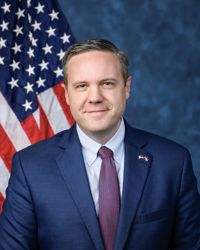
United States · United States Congress · 10 April 2025
Combating Organized Retail Crime Act of 2025 This bill expands federal enforcement of criminal offenses related to organized retail and supply chain crime. The term organized retail and supply chain crime includes criminal offenses involving the interstate transportation of stolen property, the sale or receipt of stolen goods, or theft from an interstate or foreign shipment that is committed by, in coordination with, or at the instruction of an organization. First, with respect to criminal offenses involving the interstate transportation of stolen property or the sale or receipt of stolen goods, the bill broadens the scope of conduct that qualifies as offenses by allowing prosecutions to be based on the aggregate value of stolen items over a 12-month period. Additionally, the bill makes the offenses predicate offenses (i.e., underlying offenses) for prosecutions under the federal money laundering statute and authorizes the criminal forfeiture of any property obtained from the proceeds of an offense. Second, with respect to criminal offenses involving theft from an interstate or foreign shipment, the bill also makes an offense an underlying offense for prosecution under the federal money laundering statute and authorizes the criminal forfeiture of any associated property. Third, the bill expands the federal money laundering statute to include offenses involving general-use prepaid cards, gift certificates, or store gift cards. Finally, the bill temporarily establishes a center within the Department of Homeland Security to coordinate federal law enforcement activities related to organized retail and supply chain crime.
United States · United States Congress · 9 April 2025
Conservation Reserve Enhancement Program Improvement Act of 2025 This bill revises the Conservation Reserve Enhancement Program (CREP), which is a component of the Farm Service Agency's (FSA's) Conservation Reserve Program (CRP). CREP is a public-private partnership program which allows states, tribal governments, and nonprofit and private entities to partner with FSA to implement CRP practices. CRP is a land conservation program that provides an annual rental payment to farmers in exchange for removing environmentally sensitive land from agricultural production and planting species that will improve environmental health and quality. The bill specifies that dryland agricultural uses and grazing are included as appropriate practices under CREP. The bill also allows a land owner or operator to elect to determine the annual payment amount allocated for each year of a CREP agreement, instead of a fixed payment per year for the contract period. For drought and water conservation agreements that include the permanent retirement of water rights, annual payment rates must be equal to the irrigated acre payment rates determined by the Department of Agriculture (USDA). In the case of an agreement that permits dryland agricultural uses, the annual payment rates must be equal to the difference between the irrigated acre payment rates and the dryland acre payment rates determined by USDA. The payment formula is retroactive for certain existing drought and water conservation agreements. Further, the bill exempts CREP payments from the $50,000 annual payment limitation under CRP.
United States · United States Congress · 7 April 2025
Trade Review Act of 2025 This bill requires congressional notification and review of new or increased duties (i.e., tariffs) imposed by the President on articles imported into the United States. Specifically, the President must notify Congress within 48 hours of imposing or increasing a duty on articles imported into the United States. This notification must include (1) the rationale for imposing or increasing the duty, and (2) an assessment of the duty's potential impact on U.S. businesses and consumers. The bill limits the duration of a duty to 60 days, unless a joint resolution of approval is enacted into law. A duty shall cease to have force or effect if a joint resolution of disapproval is enacted into law.
United States · United States Congress · 7 April 2025
CBO Scoring Accountability Act This bill requires the Congressional Budget Office (CBO) to provide additional cost estimates and reports regarding major legislation that has been enacted into law. Under the bill, major legislation is any bill or joint resolution that would be projected to result in outlays of mandatory spending or receipts of federal revenue equal to or greater than 0.25% of the current projected gross domestic product of the United States for that year. For the first 10 years after major legislation has been enacted into law, the bill requires CBO to annually prepare and make publicly available an analysis of the results of carrying out the provisions of the legislation. The analysis must include an estimate of the costs and the change in federal revenue as a result of the legislation, a comparison of the current and previous estimates of the costs and change in revenue, and any applicable updates to the estimates. The bill also requires CBO to submit reports to Congress that explain any discrepancy between the actual and estimated costs and change in revenue that is greater than or equal to 10%.
United States · United States Congress · 7 April 2025
Religious Workforce Protection Act This bill allows the Department of Homeland Security (DHS) to extend the nonimmigrant visa status of certain religious workers. Under current law, if specified conditions are met, nonimmigrant religious workers may receive a visa for a period not to exceed five years. The bill allows DHS to grant an extension until the individual’s application for adjustment of status to permanent resident or an immigrant visa has been processed and a decision has been made. To be eligible for the extension, the individual must be (1) the beneficiary of a certain type of immigrant petition, and (2) eligible for such immigrant status absent the application of certain numerical limitations. Such individuals who have pending adjustment of status applications are also granted certain job flexibilities, such as the ability to change employers. Individuals who have previously departed the U.S. due to the expiration of their visa are exempt from the one-year foreign residence requirement to renew their visa.
United States · United States Congress · 2 April 2025
Accessing Satellite Capabilities to Enable New Discoveries Act or the ASCEND Act This bill provides statutory authority for the Commercial SmallSat Data Acquisition (CSDA) program run by the National Aeronautics and Space Administration (NASA). Through the CSDA program, NASA acquires remote sensing data and imagery from commercial satellites to support its Earth science research. ( Remote sensing generally refers to the collection of data by instruments in Earth’s orbit, such as satellites, that can be processed into imagery of Earth’s surface.) Under the bill, NASA may establish or modify end-use agreements to allow for broad use of data and imagery acquired under the program, including by individuals outside of NASA (e.g., other federal agencies). The terms of any data or imagery acquisition may not prevent the publication of such data or imagery for scientific purposes or the publication of information derived from it. To the extent practicable, NASA must acquire such data and imagery from U.S. vendors.
United States · United States Congress · 1 April 2025
Sanctioning Russia Act of 2025 This bill imposes penalties on certain persons (individuals and entities) if the President determines that the Russian government or a person acting at Russia's direction is involved with (1) refusing to negotiate a peace agreement with Ukraine; (2) violating a negotiated peace agreement; (3) initiating another invasion of Ukraine; or (4) overthrowing, dismantling, or seeking to subvert the Ukrainian government. If the President makes such a determination, the bill requires certain actions including the President must impose visa- and property-blocking sanctions on specified persons such as the Russian president, certain Russian military commanders, and any foreign person that knowingly provides defense items to the Russian armed forces; the President must increase the rate of duty on all goods and services imported from Russia into the United States to at least 500% relative to the value of such goods and services; the President must increase the rate of duty on all goods and services imported into the United States from countries that knowingly engage in the exchange of Russian-origin uranium and petroleum products to at least 500% relative to the value of such goods and services; the Department of the Treasury must impose property-blocking sanctions on any financial institution organized under Russian law and owned wholly or partly by Russia, and any financial institution that engages in transactions with those entities; and the Department of Commerce must prohibit the export, reexport, or in-country transfer to or in Russia of any U.S.-produced energy or energy product.
United States · United States Congress · 27 March 2025
Freedom from Unfair Gun Taxes Act of 2025 This bill prohibits a state or any political subdivision of a state from imposing or collecting an excise tax on the sale of a firearm, ammunition, or any part or component of a firearm or ammunition by a manufacture or dealer.
United States · United States Congress · 27 March 2025
Modern, Clean, and Safe Trucks Act of 2025 This bill repeals the 12% federal excise tax imposed on the first retail sale of certain heavy trucks, trailers, and tractors that generally are used on the highway. As background, a 12% federal excise tax is imposed on the sale price (of the first retail sale) of truck bodies and chassis suitable for use with a vehicle having a gross vehicle weight of over 33,000 pounds; truck trailer and semitrailer bodies and chassis suitable for use with a vehicle having a gross vehicle weight over 26,000 pounds; and tractors that are generally used for highway transportation in combination with a trailer or semitrailer, have a gross vehicle weight over 19,500 pounds, and have a gross combined weight of greater than 33,000 pounds. Amounts collected from the excise tax on the retail sale of heavy trucks, trailers, and tractors are deposited into the Highway Trust Fund. (The Highway Trust Fund supports surface transportation programs and projects.) Under current law, the excise tax on the retail sale of heavy trucks, trailers, and tractors expires on October 1, 2028.
United States · United States Congress · 25 March 2025
Wetlands Conservation and Access Improvement Act of 2025 This act extends until FY2033 a requirement for the interest earned on certain funds held in the Federal Aid to Wildlife Restoration Fund to be distributed to states for carrying out certain wildlife conservation and restoration programs. Specifically, the act extends the period in which the interest earned on revenue generated from excise taxes on certain firearms, ammunition, and archery equipment must be used for wildlife conservation and restoration programs established under the North American Wetlands Conservation Act. This requirement was set to expire at the beginning of FY2026. In the absence of this requirement, this funding would be distributed to states, according to a formula, for (1) wildlife restoration, (2) hunter education and safety, (3) multistate conservation grants, and (4) administrative costs.
United States · United States Congress · 18 March 2025
This resolution expresses the sense of Congress that Congress and the Administration must work together to pursue effective food and agricultural trade policies that include specified components. Among others, these components include (1) a renewed commitment to secure market access and maintain global competitiveness for the U.S. food and agriculture industries; and (2) consideration of comprehensive trade agreements, enforcement of existing trade agreements, and elimination of certain nontariff trade barriers.
United States · United States Congress · 14 March 2025
Fair and Open Competition Act of 2025 or the FOCA Act of 2025 This bill requires that federal contracts for construction projects neither require nor prohibit a bidder, offeror, contractor, or subcontractor from entering into agreements with one or more labor organizations with respect to such projects or related projects. Under the bill, the controlling documents for federal construction contracts (such as bid specifications and project agreements) may not require or prohibit a bidder, offeror, contractor, or subcontractor from entering into or adhering to such labor agreements. Additionally, the controlling documents may not discriminate against or give preference to a bidder, offeror, contractor, or subcontractor who signs or refuses to sign such a labor agreement. These requirements also apply to any (1) construction manager acting on behalf of the federal government with respect to such contract, (2) recipient of a federal grant or financial assistance for construction projects or construction manager acting on the recipient's behalf, and (3) party to a federal cooperative agreement for construction projects or construction managers acting on the party's behalf. An agency may exempt a project from this prohibition to avert an imminent threat to public health or safety or to serve the national security.
United States · United States Congress · 14 March 2025
Safe Routes Act of 2025 This bill directs the Department of Transportation to waive vehicle weight limits for covered logging vehicles, thus allowing logging vehicles to travel on interstate highways in certain circumstances. The term covered logging vehicle means a vehicle that (1) is transporting raw or unfinished forest products, including logs, pulpwood, biomass, or wood chips; (2) is traveling a distance not greater than 150 air miles on interstate highways from origin to a storage or processing facility; and (3) meets state legal weight tolerances and vehicle configurations for transporting raw or unfinished forest products within the state boundaries in which the vehicle is operating.
United States · United States Congress · 11 March 2025
Space National Guard Establishment Act of 2025 This bill establishes a Space National Guard as the reserve component of the U.S. Space Force, specifically in Alaska, California, Colorado, Florida, Hawaii, New York, and Ohio. The Space National Guard consists of specified units of the Air National Guard and must use existing facilities, infrastructure, and installations.
United States · United States Congress · 10 March 2025
25th Anniversary of 9/11 Commemorative Coin Act This bill directs the Department of the Treasury to mint and issue coins to commemorate the 25th anniversary of the September 11, 2001, terrorist attacks on the United States and the establishment of the National September 11 Memorial and Museum at the World Trade Center. The sale of all coins issued under this bill must include a surcharge to be paid to the National September 11 Memorial and Museum at the World Trade Center to support operations and maintenance. However, if the issuance of this commemorative coin exceeds certain annual limits, no surcharge may be included.
United States · United States Congress · 6 March 2025
ESA Amendments Act of 2025 This bill reauthorizes through FY2031 the Endangered Species Act and generally narrows protections provided under the act. The bill directs the Fish and Wildlife Service and the National Marine Fisheries Service to submit a National Listing Work Plan that establishes a five-year schedule and plan for addressing listing of endangered or threatened species and designation of critical habitats for such species. Under the plan, the bill gives the Services flexibility on the timing of acting on listing petitions and eliminates the requirement for the Services to act within 12 months on listing petitions. The bill limits what land may be designated as critical habitat for an endangered or threatened species. It also limits protections provided to threatened species and allows a state to regulate the recovery of such species if the Services determine the state's proposed recovery strategy would conserve the species. The bill provides statutory authority for Conservation Benefit Agreements, which allow private landowners to voluntarily enter agreements to reduce threats to candidate species in exchange for being allowed to continue their operations if the species is later listed. The bill also modifies the permitting process for certain other voluntary conservation agreements, including by exempting incidental take permits (e.g., permits to harm or kill a species) from environmental review requirements. The bill also makes a variety of other changes to the act, including limiting consultation requirements, judicial review, and awards for attorneys’ fees in certain cases.
United States · United States Congress · 6 March 2025
Pay Our Troops Act of 2025 This bill provides continuing appropriations for military pay for any period during which interim or full-year appropriations for FY2025 are not in effect (i.e., a government shutdown). Specifically, the bill provides FY2025 continuing appropriations for the pay and allowances of (1) members of the Armed Forces, including reserve components, who perform active service during the period; and (2) civilian personnel and contractors of the Department of Defense (and the Department of Homeland Security in the case of the Coast Guard) who are providing support to such members of the Armed Forces. If a government shutdown occurs, the bill provides the continuing appropriations until the earlier of (1) the enactment into law of specified appropriations legislation, or (2) January 1, 2026.
United States · United States Congress · 5 March 2025
TAP Promotion Act This bill requires that pre-separation counseling under the Transition Assistance Program include a presentation that promotes the benefits available to veterans from the Department of Veterans Affairs (VA). The bill also requires the VA to annually report on the presentation to (1) identify veterans service organizations that participate, (2) provide the number of members of the Armed Forces who attend, and (3) provide any recommendations for changes to the presentation.
United States · United States Congress · 27 February 2025
Truck Parking Safety Improvement Act This bill directs the Department of Transportation (DOT) to provide competitive grants for projects that provide public parking for commercial motor vehicles and improve the safety of commercial motor vehicle drivers. States, metropolitan planning organizations, tribal governments, and local governments are eligible for these grants. The grants must be used for projects on federal-aid highways or a facility with reasonable access to such a highway or a freight facility. A grant recipient may not charge a fee to a commercial motor vehicle driver to access a public parking facility that is constructed, opened, maintained, or improved with a grant under this program. In providing grants, DOT must determine that there is a shortage of commercial motor vehicle parking capacity in the project's corridor; the eligible entity has consulted motor carriers, commercial motor vehicle drivers, public safety officials, and private providers of commercial motor vehicle parking regarding the project; the project will likely increase the availability or utilization of commercial motor vehicle parking, facilitate the efficient movement of freight, or improve highway safety, traffic congestion, and air quality; and the eligible entity has demonstrated the ability to provide for the facility's maintenance and operation. To the maximum extent practicable, DOT must select grant projects that maximize the geographic dispersion of new commercial motor vehicle parking capacity across the United States.
United States · United States Congress · 27 February 2025
Unhandcuffing Police to Locate and Interdict Foreign Transgressors Act or the UPLIFT Act This bill requires additional cooperation from state and local governments in federal immigration enforcement. Under current law, state and local governments are prohibited from implementing a ban on or in any way restricting the sharing of information regarding an individual’s immigration status with federal agencies. The bill expands the prohibition to include any ban or restriction on complying with federal immigration laws or policies or on assisting or cooperating with federal law enforcement. Additionally, state and local governments may not prohibit (1) inquiring about the immigration status of an individual who is suspected of involvement in a crime, (2) notifying the federal government of certain encounters, and (3) complying with federal requests for such information. The bill also expands the standard for the issuance of a detainer by the Department of Homeland Security (DHS). Under the bill, DHS may issue a detainer for an individual who is arrested on criminal charges or for a motor vehicle violation (currently, for drug violations) if DHS has probable cause that the individual is inadmissible or deportable. Probable cause may be established through methods including an identification match, voluntary statements made, or through other means. Federal immunity is also generally extended to state and local officials and government contractors who comply with a DHS detainer. The bill also allows legal challenges against (1) state governments and local governments brought by certain crime victims, and (2) state governments brought by local jurisdictions.
United States · United States Congress · 25 February 2025
Protecting American Agriculture from Foreign Adversaries Act of 2025 This bill makes changes to the Committee on Foreign Investment in the United States (CFIUS), including by requiring CFIUS to determine whether a national security review is necessary for reportable agricultural land transactions that are referred by the Department of Agriculture (USDA). (CFIUS oversees the national security risks of certain foreign investment in the United States. CFIUS has the authority to review covered transactions, which include mergers, acquisitions, and takeovers that could result in foreign control of a U.S. business; certain investments in businesses involved in critical technologies, critical infrastructure, or sensitive personal data; and certain real estate transactions.) Specifically, the bill directs CFIUS to, after receiving notification from USDA, determine (1) whether a reportable agricultural land transaction is a covered transaction, and (2) whether CFIUS should initiate a national security review or take another action with respect to the transaction. Reportable agricultural land transaction means a transaction (1) that USDA has reason to believe is a covered transaction; (2) that involves the acquisition of an interest in agricultural land by a foreign person of China, North Korea, Russia, or Iran; and (3) with respect to which a foreign person is required to submit a report to USDA regarding their agricultural land transactions. The bill also expands the membership of CFIUS to include the Secretary of Agriculture for covered transactions that involve agricultural land, agricultural biotechnology, or the agriculture industry (e.g., agricultural transportation, storage, and processing).
United States · United States Congress · 21 February 2025
North Platte Canteen Congressional Gold Medal Act This bill provides for the award of a Congressional Gold Medal to recognize the individuals and communities that provided financial and other support for the North Platte Canteen in North Platte, Nebraska, during World War II.
United States · United States Congress · 18 February 2025
Enhanced Iran Sanctions Act of 2025 This bill imposes sanctions on certain foreign persons (individuals and entities) that are involved in Iran's petroleum sector as well as certain associated persons. The bill also requires or authorizes actions to facilitate the enforcement of sanctions on Iran. Specifically, the bill requires the President to impose visa- and property-blocking sanctions on any foreign person that, after the bill's enactment, knowingly engages in any transaction related to the processing, export, or sale of oil, condensates, gas, liquefied natural gas, or other petrochemical products in whole or in part from Iran. The President must also impose sanctions on certain foreign persons associated with a sanctioned individual or entity. For example, the President must sanction the subsidiaries and corporate officers of a sanctioned business. The bill provides certain exceptions to these sanctions, including specifying that sanctions do not apply to the importation of goods or to conducting or facilitating transactions for humanitarian assistance. The Department of State must establish an interagency working group that shall seek to establish a multilateral contact group to coordinate international efforts to enforce sanctions on Iran. The bill expands the State Department rewards program to authorize a reward payment to any individual who furnishes information leading to the identification of a person (1) subject to sanctions under this bill, or (2) that has attempted or is attempting to evade sanctions under this bill.
United States · United States Congress · 18 February 2025
Cameron's Law This bill increases the orphan drug tax credit to 50% (from 25%) of qualified clinical testing expenses paid or incurred in the development of drugs to treat certain rare diseases or conditions. As background, the Tax Cuts and Jobs Act reduced the orphan drug tax credit (for tax years after 2017) to 25% of qualified clinical testing expenses (e.g., wages, supplies, and certain contract expenses) paid or incurred in the development of drugs to treat certain rare diseases or conditions. For 2017 and prior tax years, the orphan tax credit was 50% of such expenses paid or incurred.
United States · United States Congress · 14 February 2025
Secure Rural Schools Reauthorization Act of 2025 This bill extends and modifies the Secure Rural Schools and Community Self-Determination Act of 2000, including by extending payments made to states and counties containing federal land through FY2026, providing for payments for FY2024 and FY2025, extending the authority of counties to initiate projects using such funds through FY2028, and extending the authority to initiate projects proposed by resource advisory committees through FY2028.
United States · United States Congress · 13 February 2025
More Homes on the Market Act This bill increases the amount of gain from the sale of a principal residence that an individual may exclude from gross income (for federal tax purposes). Under the bill, an individual may exclude from gross income gain from the sale of a principal residence of up to $500,000 (currently $250,000), and taxpayers who are married and file a joint federal income tax return may exclude up to $1 million (currently $500.000). The bill also requires these amounts to be adjusted annually for inflation.
United States · United States Congress · 13 February 2025
This resolution supports the designation of National FFA (Future Farmers of America) Week. It also celebrates the 90th anniversary of New Farmers of America (NFA), which served Black vocational agriculture students in segregated public schools until NFA and FFA became one organization in 1965. The resolution also commemorates the 75th anniversary of the federal charter for the Future Farmers of America.
United States · United States Congress · 12 February 2025
United States-Israel Defense Partnership Act of 2025 This bill requires or authorizes certain actions to increase defense-related cooperation between the United States and Israel. Specifically, the bill requires the Department of Defense (DOD) to establish a cooperative program, with the concurrence of Israel's Ministry of Defense (MOD), to develop and deploy advanced technologies for countering unmanned systems that threaten the United States and Israel; establish in Israel an office of the Defense Innovation Unit (an organization that focuses on rapidly fielding and scaling commercial technology across the U.S. military); and seek to engage Israel's MOD on the ascension of Israel into the national technology and industrial base (currently defined in law as the persons and organizations engaged in research, development, production, integration, services, or information technology activities conducted within the United States, the United Kingdom, Australia, New Zealand, and Canada). The bill authorizes DOD, upon request of Israel's MOD, to jointly conduct research, development, test, and evaluation (RDT&E) of emerging technologies such as artificial intelligence and robotics to meet defense challenges. Additionally, the bill extends the authority for DOD to (1) carry out RDT&E on a joint basis with Israel to establish anti-tunnel and counter unmanned aerial systems capabilities through 2028, and (2) transfer defense articles intended for use as reserve stocks for Israel through January 1, 2029.
United States · United States Congress · 12 February 2025
Give Kids a Chance Act of 2025 This bill expands the Food and Drug Administration’s (FDA’s) authority with respect to research on rare pediatric diseases, including by permitting the FDA to take enforcement action against drug sponsors that fail to satisfy pediatric study requirements and by reauthorizing programs that support pediatric research. Specifically, the bill modifies requirements relating to molecularly targeted pediatric cancer investigations to permit research on new drugs in combination with active ingredients that have already been approved, provided certain conditions are met; permits the FDA to take enforcement action against drug sponsors that fail to comply with pediatric study requirements, if such sponsors demonstrated a lack of due diligence in satisfying the requirement; renews the FDA’s authority to award priority review vouchers to sponsors of new products intended to treat rare pediatric diseases through September 30, 2029; and reauthorizes through FY2027 certain funding for the National Institutes of Health to support priority pediatric research. The bill also provides statutory authority for the FDA’s interpretation of the orphan drug exclusivity period. The bill specifies, consistent with FDA regulations, that the seven-year market exclusivity period for drugs for rare diseases or conditions (i.e., orphan drugs) prohibits the approval of the same drug for the same approved use or indication with respect to the disease or condition. (In Catalyst Pharmaceuticals, Inc. v. Becerra , a court rejected the FDA’s interpretation and held that orphan drug exclusivity extends to all uses or indications for the disease or condition.)
United States · United States Congress · 12 February 2025
Fair Sharing of Highways and Roads for Electric Vehicles Act of 2025 This bill imposes a new excise tax in the amount of $1,000 on the sale of an electric vehicle and a new excise tax in the amount of $550 on the sale of a battery module weighing over 1,000 pounds for use in an electric vehicle. The bill also requires the Department of the Treasury to transfer amounts collected from the new excise taxes to the Highway Trust Fund. (The Highway Trust Fund, which supports surface transportation programs and projects, is funded by transportation-related excise taxes.) The bill defines electric vehicle as a light-duty vehicle (a motor vehicle weighing less than 8,500 pounds that is manufactured for use on public roads) that is powered by a battery with a capacity of at least seven kilowatt hours and is recharged through an external source of electricity. Under the bill, the excise tax does not apply to hybrid vehicles, which are powered by a combination of fuel and a rechargeable energy storage system. The bill defines battery module as a module with two or more battery cells configured to create voltage or current (or no battery cells) and with an aggregate capacity of at least seven kilowatt hours (or one kilowatt hour for a hydrogen fuel cell vehicle).
United States · United States Congress · 11 February 2025
Protecting Privacy in Purchases Act This bill prohibits payment card networks from using merchant codes that distinguish firearms retailers from general-merchandise retailers or sporting-goods retailers. The Department of Justice must enforce this bill and report annually on the resulting investigations and cases.