Bill· HRH.R. 3021 (118th)referred
Protecting the Second Amendment in Financial Services Act
United States · United States Congress · 28 April 2023
The world's political record
Person
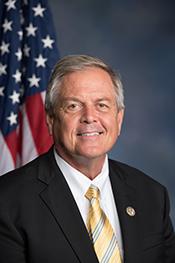
United States · Official source
2,211 records where Rep. Norman, Ralph [R-SC-5] is listed as a sponsor, author, or other actor. Search with topics and years
United States · United States Congress · 28 April 2023
United States · United States Congress · 27 April 2023
Audit the Pentagon Act of 2023 This bill requires defense spending reductions during any fiscal year after FY2022 where the Comptroller of the Department of Defense (DOD) fails to certify that a department, agency, or other element of DOD has achieved an unqualified opinion on its full financial statements. The amount of any reductions must be deposited in the Treasury and must be available for deficit reduction. The bill excludes from any reductions accounts related to military personnel, reserve personnel, National Guard personnel, and the Defense Health Program. The President may waive a reduction if the President certifies that a reduction would negatively affect (1) national security or members of the Armed Forces who are deployed in combat zones, or (2) the Defense Health Program account.
United States · United States Congress · 27 April 2023
Repeal CFPB Act This bill repeals the Consumer Financial Protection Act of 2010, which established the Consumer Financial Protection Bureau.
United States · United States Congress · 27 April 2023
Federal Insurance Office Elimination Act This bill eliminates the Federal Insurance Office (FIO) within the Department of the Treasury. The bill also removes the FIO director as a nonvoting member of the Financial Stability Oversight Council.
United States · United States Congress · 27 April 2023
Cost Openness and Spending Transparency Act of 2023 or the COST Act of 2023 This bill requires recipients of federal funds to disclose financing information relating to programs, projects, or activities carried out using such funds. Specifically, such a recipient (including a state or local government or a recipient of a federal research grant) must clearly state in any press release, request for proposals, bid solicitation, or other document describing the activity the amount and percentage of federal funding and the amount and percentage of nongovernmental funding. An individual or entity carrying out a program, project, or activity that is carried out using federal funds must, as part of the performance progress reporting, include a certification indicating whether the individual or entity complied with the disclosure requirements. The Office of Management and Budget (OMB) must annually review a random sampling of public communications issued by agencies and recipients of federal funds for compliance with the disclosure requirements, and make publicly available the findings of the review. The OMB must make available to the public a mechanism to anonymously report communications that do not comply.
United States · United States Congress · 26 April 2023
This bill prohibits the Federal Housing Finance Agency, the Federal National Mortgage Association (Fannie Mae) and the Federal Home Loan Mortgage Corporation (Freddie Mac) from implementing their January 2023-announced changes to the single-family pricing framework for fees on purchase, rate-term refinance, and cash-out refinance loans. The changes revise the fee charts that provide percentage adjustments based on a borrower's credit score and other factors.
United States · United States Congress · 25 April 2023
Processing Revival and Intrastate Meat Exemption Act or the PRIME Act This bill exempts from federal inspection requirements animals and meats that are slaughtered and prepared at custom animal slaughter facilities for distribution within the state. Under current law, a custom slaughter exemption applies if the meat is slaughtered exclusively for personal, household, guest, or employee uses. Specifically, the bill expands the federal inspection exemption to include the slaughter of animals or the preparation of carcasses, meat, and meat food products that are slaughtered and prepared at a custom slaughter facility in accordance with the laws of the state where the facility is located; and prepared exclusively for distribution to household consumers in the state or restaurants, hotels, boarding houses, grocery stores, or other establishments in the state that either prepare meals served directly to consumers or offer meat and food products for sale directly to consumers in the state. The bill does not preempt any state law concerning (1) the slaughter of animals or the preparation of carcasses, meat, and meat food products at a custom slaughter facility; or (2) the sale of meat or meat food products.
United States · United States Congress · 25 April 2023
This joint resolution nullifies a Department of Labor final rule entitled Adverse Effect Wage Rate Methodology for the Temporary Employment of H-2A Nonimmigrants in Non-Range Occupations in the United States and published on February 28, 2023. This rule makes changes to the methodology used to set adverse effect wage rates for H-2A workers (temporary agricultural workers), including by using Bureau of Labor Statistics wage surveys in certain instances. (Generally, the minimum wage for an H-2A worker is the highest of the adverse effect wage rate, the applicable minimum wage, the prevailing wage for that occupation in that area, or any agreed-upon collective bargaining wage.)
United States · United States Congress · 25 April 2023
Save Local Business Act This bill provides that a person may be considered a joint employer in relation to an employee under federal labor law only if such person directly, actually, and immediately (and not in a limited and routine manner) exercises significant control over the essential terms and conditions of employment. Such control may by demonstrated by hiring and discharging employees, determining individual employee rates of pay and benefits, day-to-day supervision of employees, assigning individual work schedules, positions, and tasks, and administering employee discipline.
United States · United States Congress · 20 April 2023
Go Woke, Go Broke Act This bill abolishes the Advisory Committee on Racial Equity in the Department of the Treasury. The bill also prohibits Treasury from reestablishing this advisory committee or establishing any substantially similar advisory committee.
United States · United States Congress · 20 April 2023
Stop the Invasion Act This bill requires the President to bar the entry of certain non-U.S. nationals (aliens under federal law) into the United States if U.S. Customs and Border Protection (CBP) encounters a certain number of inadmissible non-U.S. nationals. Specifically, this bar shall apply if CBP detains or finds on average more than 30,000 such inadmissible individuals each month over the most recent 12-month period. The bar shall cease when the average drops below 30,000 encounters. Such encounters shall include non-U.S. nationals who seek entry into the United States when the President has suspended entry to prevent the spread of a communicable disease. While this bar is in effect, the President must prohibit the entry of non-U.S. nationals who are inadmissible for specified reasons related to illegal entry, violation of immigration law, or lack of documentation.
United States · United States Congress · 20 April 2023
Fair Access to Banking Act This bill places restrictions on certain banks, credit unions, and payment card networks if they refuse to do business with a person who complies with the law. Restrictions include prohibiting the use of electronic funds transfer systems and lending programs, termination of an institution's depository insurance, and specified civil penalties. Banks and other specified financial institutions are allowed to deny financial services to a person only if the denial is justified by a documented failure of that person to meet quantitative, impartial, risk-based standards established in advance by the institution. This justification may not be based upon reputational risks to the institution. Banks may also deny services to a person who engaged in rude or harassing conduct toward an employee of the bank. The bill establishes the right for a person to bring a civil action for a violation of this bill.
United States · United States Congress · 19 April 2023
Employee Rights Act This bill generally addresses employer obligations related to unionized workplaces. This bill provides that an employer may be considered a joint employer in relation to an employee under federal labor law only if such employer directly, actually, and immediately (and not in a limited and routine manner) exercises significant control over the essential terms and conditions of employment. Such control may by demonstrated by hiring and discharging employees, determining individual employee rates of pay and benefits, day-to-day supervision of employees, assigning individual work schedules, positions, and tasks, and administering employee discipline. The bill also requires a workplace election to approve or reject a union to be conducted by secret ballot. Further, the bill requires an employer to provide limited employee information to union representatives to facilitate a workplace election. An employer that mishandles or fails to provide such information according to the bill's requirements may be liable for an unfair labor practice (i.e., labor law violation). Additionally, the bill requires an employee to authorize in writing any use of the employee's labor organization dues or other contribution for a purpose other than collective bargaining or contract administration. Such authorization must be made upon 35 days' notice and expires after one year. Finally, the bill exempts Indian Tribes, including Indian Tribe enterprises and institutions, from the collective bargaining rights and related provisions of federal labor law.
United States · United States Congress · 19 April 2023
Work Not Woke Act This bill prohibits certain training that includes race or sex stereotyping or scapegoating. Specifically, the uniformed services shall not teach, instruct, or train any member of the services to believe any concepts that include race or sex stereotyping or scapegoating. Government contracting agencies must include in each government contract provisions stating that the contractor shall not use any workplace training that inculcates any form of race or sex stereotyping or scapegoating. The Department of Labor's Office of Federal Contract Compliance Programs must establish a hotline and investigate complaints alleging that a federal contractor is utilizing such training programs in violation of the contractor's obligations. All federal agencies must review their grant programs and identify programs for which the agency may, as a condition of receiving a grant, require the recipient to certify that it will not use federal funds to promote certain concepts that include race or sex stereotyping or scapegoating. The bill requires the Office of Personnel Management and the Office of Management and Budget to take specified actions regarding review of agency training. The Department of Justice should continue to assess the extent to which workplace training that teaches race or sex stereotyping or scapegoating may contribute to a hostile work environment and give rise to potential liability under title VII of the Civil Rights Act of 1964. The bill prohibits obligating or expending federal funds to carry out specified executive orders related to diversity, equity, and inclusion.
United States · United States Congress · 18 April 2023
Capital Loss Inflation Fairness Act This bill increases the allowance for capital losses and adjusts the increased allowance amount for inflation after 2023.
United States · United States Congress · 13 April 2023
Encouraging the European Union to Determine that the European Union Should Sanction the Iranian Revolutionary Guard Corps Now As a Terrorist Entity Resolution or Encouraging the EU to DESIGNATE Resolution This resolution urges the European Union (EU) to expeditiously designate the Islamic Revolutionary Guard Corps (IRGC) as a terrorist organization under the EU Common Position 931 on terrorism. It also encourages the Biden Administration to make the EU designation of the IRGC as a terrorist organization a diplomatic priority in engagements with the EU.
United States · United States Congress · 13 April 2023
Accountability for Lawless Violence In our Neighborhoods Act or the ALVIN Act This bill specifies that no federal funding is authorized to be awarded or made available to the Manhattan District Attorney's Office.
United States · United States Congress · 6 April 2023
Protect Our Law enforcement with Immigration Control and Enforcement Act of 2023 or the POLICE Act of 2023 This bill makes assaulting a law enforcement officer a deportable offense.
United States · United States Congress · 6 April 2023
CFPB Dual Mandate and Economic Analysis Act This bill establishes the Office of Economic Analysis in the Consumer Financial Protection Bureau (CFPB) to review all proposed and existing guidance, orders, rules, and regulations. The CFPB must also identify in each proposed rulemaking the problem to be solved by the rule or regulation and the metrics the CFPB will use to measure the success of the rule or regulation. These metrics must include a measurement of changes regarding consumer access to, and the cost of, consumer financial products and services. Additionally, the purpose of the CFPB is revised to include strengthening private sector participation in markets, without government interference or subsidies, to increase competition and enhance consumer choice.
United States · United States Congress · 3 April 2023
This resolution supports the designation of Barth Syndrome Awareness Day. Barth Syndrome is a rare, life-threatening genetic disorder of lipid metabolism that primarily affects males.
United States · United States Congress · 3 April 2023
This joint resolution nullifies the final rule issued by the Consumer Financial Protection Bureau titled Small Business Lending under the Equal Credit Opportunity Act (Regulation B) and published on May 31, 2023. The rule requires financial institutions to collect and report to the bureau credit application data for small businesses. On July 31, 2023, the U.S. District Court for the Southern District of Texas ordered the bureau not to implement or enforce the rule until a related pending case is resolved.
United States · United States Congress · 30 March 2023
This joint resolution proposes a constitutional amendment repealing the Sixteenth Amendment to the Constitution (authorizing taxation of income).
United States · United States Congress · 30 March 2023
Freedom of Association in Higher Education Act of 2023 This bill addresses freedom of association protections for college students in single-sex social organizations. Specifically, the bill gives students (or groups of students) enrolled at institutions of higher education (IHEs) the right to form or join social organizations, including single-sex social organizations. Additionally, the bill prohibits IHEs that participate in federal student-aid programs from taking adverse actions against single-sex social organizations or students who are members or prospective members of such organizations based solely on the practice of limiting membership to only individuals of one sex; taking actions that require or coerce members or prospective members of such organizations to waive protections provided under the bill, including as a condition of enrolling in the IHE; or imposing a recruitment restriction on a single-sex social organization that is not imposed upon other student organizations, unless the organization and IHE have entered into a written agreement allowing the restriction.
United States · United States Congress · 30 March 2023
Special Inspector General for Ukraine Assistance Act This bill establishes the Office of the Special Inspector General for Ukraine Assistance, led by the Special Inspector General for Ukraine Assistance. The Special Inspector General shall be appointed by the President with the advice and consent of the Senate. The duties of the office include conducting, supervising, and coordinating audits and investigations of the amounts appropriated or otherwise made available for the military and nonmilitary support of Ukraine, and of the programs, operations, and contracts carried out utilizing such funds; establishing, maintaining, and overseeing such systems, procedures, and controls as the office considers appropriate for such audits and investigations; and coordinating with the Inspectors General of the Department of Defense (DOD), the Department of State, and the U.S. Agency for International Development. Whenever information or assistance requested by the office is unreasonably refused or not provided, the office shall report the circumstances to the State Department or DOD and to Congress without delay. The office shall submit a report to Congress on a quarterly basis.
United States · United States Congress · 29 March 2023
Cellphone Jamming Reform Act of 2023 This bill allows a state or federal correctional facility to operate a jamming system to interfere with cellphone signals within inmate housing facilities.
United States · United States Congress · 29 March 2023
90-Day Review Act This bill reduces the time limit to file a petition for judicial review of a federal permit, license, or approval for a highway or public transportation capital project. Specifically, the bill reduces the current 150-day time limit to 90 days.
United States · United States Congress · 28 March 2023
Combating Illicit Xylazine Act This bill criminalizes the illicit use of xylazine. (Xylazine, also known as Tranq , is a sedative that is approved for use in animals. The Drug Enforcement Administration (DEA) has reported an increase in the trafficking of fentanyl mixed with xylazine.) Specifically, the bill establishes criminal penalties for manufacturing, distributing, or dispensing, or possessing with intent to manufacture, distribute, or dispense, xylazine for illicit use (i.e., for use in humans) in accordance with the penalties for schedule III substances (up to 10 years imprisonment or, if death or serious bodily injury occurs, up to 15 years imprisonment, as well as criminal fines). In addition, the DEA must coordinate with the Food and Drug Administration to report on the prevalence of the illicit use of xylazine, including associated supply chains. The bill also declares the illicit use of xylazine as an emerging drug threat.
United States · United States Congress · 28 March 2023
Aviation Workforce Development Act This bill expands the qualified tuition program (commonly referred to as 529 plans) to allow distributions to pay education-related expenses required for participation in certain aviation maintenance and commercial pilot courses.
United States · United States Congress · 27 March 2023
This joint resolution nullifies the rule issued by the Department of Education on October 12, 2022, that suspends federal student loan payments and discharges debt.
United States · United States Congress · 24 March 2023
Assessing Unintended Drivers of Illegal Trafficking Act or the AUDIT Act This bill prohibits certain federal agencies from giving grants to implementing partners that provide abortion services to asylum seekers. The bill also requires these agencies to submit quarterly reports to Congress on grants that the agencies have provided for migrant services programs in Central and South America. The reporting requirements and grant prohibitions apply to (1) the U.S. Agency for International Development; (2) the Department of State's Bureau of Population, Refugees, and Migration; and (3) the State Department's Bureau of Democracy, Human Rights, and Labor. These federal agencies may not give grants to any implementing partners that (1) perform abortions, (2) provide health services that include referrals for abortions, or (3) provide assistance or funding in any manner for obtaining abortions. Among other required elements, the quarterly reports for specified migrant services grants shall explain why each implementing partner was chosen, the amount of money the partner received, the availability of asylum claims processing in countries where those partners operate, and the number of asylum claims processed in those countries.
United States · United States Congress · 24 March 2023
United States-Israel Future of Warfare Act of 2023 This bill requires the Department of Defense to establish the United States-Israel Future of Warfare Research and Development Fund to conduct collaborative defense projects between the United States and Israel in areas of emerging technologies (e.g., artificial intelligence). The purpose of the fund is to enable the Armed Forces of the United States and Israel to meet emerging defense challenges.
United States · United States Congress · 24 March 2023
Ensuring Lawful Collection of Hidden Assets to Provide Order Act or the EL CHAPO Act This bill requires the forfeited profits of Joaquin Archivaldo Guzman Loera (El Chapo) from his illicit drug trafficking enterprise to be reserved for border security measures between the United States and Mexico, including the completion of a wall. Additionally, it requires the forfeited funds from the felony conviction of a member of a drug cartel to be reserved for border security measures between the United States and Mexico, including the completion of a wall.
United States · United States Congress · 23 March 2023
Making the CFPB Accountable to Small Businesses Act of 2023 This bill requires the Consumer Financial Protection Bureau (CFPB) to consider the impact of proposed rules on small entities. In addition, the CFPB must justify its decision to not adopt certain alternatives to regulations applicable to small entities.
United States · United States Congress · 22 March 2023
Strengthening Enforcement and Criminalizing Unlawful Records Enabling Flights Act or the SECURE Flights Act This bill prohibits the use of certain warrants and other documents issued by U.S. Immigration and Customs Enforcement (ICE), the Department of Homeland Security (DHS), and U.S. Customs and Border Protection (CBP) as proof of identification at airport security checkpoints. If an individual uses a prohibited document as proof of identification, the Transportation Security Administration (TSA) must inform ICE, CBP, and local law enforcement to determine whether the individual is in violation of any term of release from custody of the agency. An individual who is in violation may not be permitted to enter a sterile area (e.g., the boarding area) unless the individual (1) is being removed or deported from the United States, or (2) presents a covered valid and unexpired identification document. Examples of covered identification documents include a U.S. passport, a biometrically secure card issued by a DHS trusted or registered traveler program, a state-issued enhanced driver's license, and an employment authorization document issued by U.S. Citizenship and Immigration Services. Further, prior to authorizing entry into a sterile area, the TSA must collect biometric information from an individual who (1) does not present a covered identification document, and (2) the TSA cannot verify is a U.S. national. The TSA must submit the information to the national Automated Biometric Identification System (IDENT).
United States · United States Congress · 22 March 2023
End Zuckerbucks Act This bill prohibits tax-exempt charitable organizations from providing direct or indirect funding (e.g., below-cost services, scholarships, subsidies) to official election organizations, including any state or local government entity or any government election organization.
United States · United States Congress · 22 March 2023
ATF Transparency Act This bill modifies procedural requirements related to the transfer or making of firearms that are subject to regulation under the National Firearms Act (e.g., machine guns, short-barreled shotguns, and silencers). The bill permits the transfer of a firearm if 90 days have elapsed since the application to transfer the firearm was filed, and the application has not been denied. Additionally, the bill establishes an administrative relief process with respect to an application to transfer that is denied. The bill permits the making of a firearm if 90 days have elapsed since the application to make the firearm was filed, and the application has not been denied. Finally, the bill requires reports on firearms-related background check inquiries that remain unresolved after 90 days and the percentage of firearms-related background check inquiries related to the transfer of a firearm that were administered by the Federal Bureau of Investigation.
United States · United States Congress · 21 March 2023
This resolution supports the preservation of the stepped-up basis tax rule that allows recipients of inherited assets such as land, equipment, or buildings to adjust the cost basis of the assets to reflect their fair market value. The resolution opposes any efforts to impose new taxes on family farms or small businesses and recognizes the importance of generational transfers of farm and family-owned businesses.
United States · United States Congress · 17 March 2023
This joint resolution nullifies the rule issued by the Bureau of Alcohol, Tobacco, Firearms and Explosives titled Factoring Criteria for Firearms With Attached "Stabilizing Braces" and published on January 31, 2023. The rule establishes criteria for determining whether a firearm equipped with an attached stabilizing brace that facilitates shoulder fire is a rifle subject to regulation (e.g., registration) under the National Firearms Act.
United States · United States Congress · 17 March 2023
Save Our Gas Stoves Act This bill places limits on energy conservation standards for kitchen ranges or ovens under the Energy Policy and Conservation Act. The Department of the Energy (DOE) may not prescribe or amend energy conservation standards for kitchen ranges or ovens if they would result in the unavailability of a product on account of the type of fuel the range or oven uses. In addition, DOE may not finalize, implement, or enforce the proposed rule titled Energy Conservation Program: Energy Conservation Standards for Consumer Conventional Cooking Products issued on February 1, 2023, or any substantially similar rule. The proposed rule prescribes energy conservation standards for consumer conventional cooking tops, including electric cooking tops, gas cooking tops, electrical ovens, and gas ovens.
United States · United States Congress · 14 March 2023
This concurrent resolution calls for a convention for proposing amendments to the U.S. Constitution, with each proposed amendment to be ratified by a vote in three-quarters of the states via state convention delegates.
United States · United States Congress · 10 March 2023
Daylight All Year Leads to Ideal Gains in Happiness and Temperament Act or the DAYLIGHT Act This bill allows states to observe daylight savings time year-round. (States may already choose to observe standard time year-round.) No later than two years after enactment of this bill, the Government Accountability Office shall submit a report to Congress containing the results of a study on implementing daylight savings time year-round.
United States · United States Congress · 10 March 2023
Protecting American Sovereignty Act This bill prohibits the federal government from implementing any obligations upon the United States that may be contained in a draft report by a World Health Organization (WHO) working group on strengthening the WHO's preparedness and response to health emergencies. This prohibition shall also apply to any related or successor reports and recommendations regarding pandemics.
United States · United States Congress · 10 March 2023
Drug Cartel Terrorist Designation Act This bill directs the Department of State to designate four specified drug cartels as foreign terrorist organizations. (Among other things, such a designation allows the Department of the Treasury to require financial institutions to block transactions involving the organization.) The four specified cartels in the bill are the Gulf Cartel, the Cartel Del Noreste, the Cartel de Sinaloa, and the Cartel de Jalisco Nueva Generacion. The bill also requires the State Department to submit a detailed report on those four cartels and any other cartels it may identify. Based on this report, the State Department must designate as a foreign terrorist organization any such identified cartel (or faction thereof) that meets certain criteria for designation as a foreign terrorist organization. The bill specifies that it may not be construed to expand eligibility for asylum.
United States · United States Congress · 9 March 2023
CBO Show Your Work Act This bill requires the Congressional Budget Office (CBO) to make available to Congress and the public each fiscal model, policy model, and data preparation routine that the CBO uses to estimate the costs and other fiscal, social, or economic effects of legislation. For each estimate of the costs and other fiscal effects of legislation, the CBO must also disclose, in a manner sufficient to permit replication by individuals not employed by the CBO, the data, programs, models, assumptions, and other details of the computations used to prepare the estimate. For data that may not be disclosed, the CBO must make available to Congress and the public a complete list of all data variables for the data; descriptive statistics for all data variables for the data, to the extent that the descriptive statistics do not violate the rule against disclosure; a reference to the statute requiring that the data not be disclosed; and contact information for the individual or entity who has unrestricted access to the data.
United States · United States Congress · 8 March 2023
Safe Responsible Ethical Scientific Endeavors Assuring Research for Compassionate Healthcare Act or the Safe RESEARCH Act This bill prohibits the National Institutes of Health (NIH) from conducting or supporting research on human fetal tissue obtained from an abortion procedure. It also imposes other restrictions on human fetal tissue research. Under the bill, the NIH may conduct or support research on human fetal tissue only if it was obtained from a stillbirth. Current law allows research on tissue from stillbirths or from spontaneous or induced abortions. The bill also applies informed consent and other requirements applicable to research on the transplantation of human fetal tissue for therapeutic purposes to all research with human fetal tissue. This includes research on stem cells and other human fetal tissue alternatives. Additionally, human fetal tissue used for this research must be obtained in accordance with state anatomical gift laws. These laws govern organ and tissue donation for therapeutic, research, and other purposes. Some states already apply anatomical gift laws to human fetal tissue donation. Currently, executive branch officials may not prohibit the NIH from conducting or supporting research on the transplantation of human fetal tissue for therapeutic purposes. The bill repeals this limitation on executive branch officials. It also repeals a requirement that the NIH fund certain proposals for this research.
United States · United States Congress · 8 March 2023
No Federal Funds for Abortion Travel Expenses Act of 2023 This bill prohibits the use of federal funds to support interstate travel to obtain an abortion.
United States · United States Congress · 8 March 2023
This bill prohibits the Department of Defense from requiring individuals to wear masks on military installations inside the United States for the purpose of preventing the spread of COVID-19.
United States · United States Congress · 7 March 2023
Protect Children's Innocence Act This bill places restrictions on the provision of gender affirming care. Gender affirming care includes performing surgery, administering medication, or performing other procedures for the purpose of changing the body of an individual to correspond to a sex that differs from the individual's biological sex. Specifically, the bill makes it a felony to perform any gender affirming care on a minor and it permits a minor on whom such care is performed to bring a civil action against each individual who provided the care. Additionally, the bill prohibits the use of federal funds for gender affirming care or for health insurance that covers such care. Such care may not be provided in a federal health care facility or by a federal employee. The bill also prohibits qualified health plans from including coverage for gender affirming care. Further, plans that include coverage for such care are not eligible for federal subsidies. Finally, the bill prohibits institutions of higher education from offering instruction in gender affirming care. It also makes any non-U.S. national ( alien under federal law) who performs gender affirming care on a minor deportable and inadmissible to the United States. The restrictions under this bill do not apply to the provision of care under certain circumstances such as when an individual does not have normal sex chromosome structure, sex steroid hormone production, or sex steroid hormone action.
United States · United States Congress · 7 March 2023
No WHO Pandemic Preparedness Treaty Without Senate Approval Act This bill establishes that any convention or agreement on pandemic-related issues reached by the World Health Assembly (WHA) pursuant to a specified negotiating body shall be deemed to be a treaty requiring the advice and consent of the Senate. Specifically, this bill applies to any international instrument negotiated by the intergovernmental negotiating body established by the WHA in December 2021 to strengthen pandemic prevention, preparedness, and response.
United States · United States Congress · 7 March 2023
Taking Account of Bureaucrats' Spending Act of 2023 or the TABS Act of 2023 This bill restructures the Consumer Financial Protection Bureau and renames it as the Consumer Financial Empowerment Agency. The new agency is established as an independent agency outside of the Federal Reserve System. The bill also changes the funding structure of the agency by prohibiting the transfer of funds to the agency from the Federal Reserve System and by authorizing appropriations for FY2024-2025.