Bill· HRH.R. 10097 (119th)referred
Earn to Learn Act
United States · United States Congress · 13 August 2026
The world's political record
Person
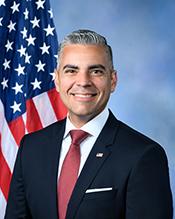
United States · Official source
737 records where Juan Ciscomani is listed as a sponsor, author, or other actor. Search with topics and years
United States · United States Congress · 13 August 2026
United States · United States Congress · 22 July 2026
United States · United States Congress · 16 July 2026
United States · United States Congress · 15 July 2026
United States · United States Congress · 14 July 2026
United States · United States Congress · 14 July 2026
United States · United States Congress · 13 July 2026
United States · United States Congress · 25 June 2026
United States · United States Congress · 23 June 2026
United States · United States Congress · 11 June 2026
United States · United States Congress · 10 June 2026
Take Care of America's Veterans Act This bill addresses veterans’ benefits, health care, counseling, Department of Veterans Affairs (VA) personnel, VA infrastructure, and the Veterans Community Care Program (VCCP). The bill modifies various compensation programs for veterans, including by (1) allowing concurrent receipt of disability compensation and military retired pay for certain retirees with a combat-related disability, (2) extending entitlement for various benefits and services to remarried surviving spouses, (3) increasing the rate of dependency and indemnity compensation, and (4) establishing a supplemental monthly allowance for certain disabled veterans. The bill also addresses VA education and training benefits, including by (1) modifying which independent study programs are covered under veterans’ educational assistance benefits, (2) requiring Transition Assistance Program counseling to include a presentation about VA benefits, and (3) increasing the housing allowance rate for individuals pursuing apprenticeships. The bill revises health care provisions, including by (1) expanding support and assistance provided to family caregivers, (2) extending the Staff Sergeant Parker Gordon Fox Suicide Prevention Grant Program, and (3) expanding the scope of VA mental health research. Among other elements, the bill revises VA disability ratings for sleep apnea and tinnitus; expands eligibility for a memorial headstone or marker for the spouse, surviving spouse, child, or dependent of a veteran or member of the Armed Forces; addresses the administration of the VCCP and codifies the eligibility standards; establishes a standardized screening process for priority or routine admission to certain mental health care programs; and addresses VA personnel, hiring, and infrastructure matters.
United States · United States Congress · 10 June 2026
United States · United States Congress · 9 June 2026
United States · United States Congress · 4 June 2026
Public Lands Integrity Act This bill generally prohibits provisions that result in the sale, disposal, or transfer of federal lands from being included in reconciliation legislation by requiring the provisions to be considered extraneous under the Senate's Byrd Rule. The Senate's Byrd Rule (named after it's principal author, Senator Robert Byrd of West Virginia) prohibits the inclusion of matter in reconciliation legislation that is extraneous to a congressional committee's reconciliation directives in the associated congressional budget resolution. Reconciliation is an expedited method by which Congress may adopt changes in spending and revenue laws to achieve the budgetary goals reflected in a congressional budget resolution. Reconciliation bills are considered by Congress using expedited legislative procedures that prevent a filibuster and restrict amendments in the Senate. For additional information, see CRS Report R48640, The Senate’s Byrd Rule: Frequently Asked Questions.
United States · United States Congress · 22 May 2026
United States · United States Congress · 15 May 2026
United States · United States Congress · 13 May 2026
United States · United States Congress · 12 May 2026
United States · United States Congress · 4 May 2026
This resolution expresses support for police officers and other law enforcement personnel. The resolution further recognizes law enforcement officers across the United States in the pursuit of preserving safe and secure communities; the need to ensure that such officers have the equipment, training, and resources necessary to protect their health and safety while they are protecting the public; and the law enforcement community for acts of sacrifice and heroism. The resolution expresses condolences and appreciation to the loved ones of each law enforcement officer who has made the ultimate sacrifice in the line of duty.
United States · United States Congress · 27 April 2026
United States · United States Congress · 23 April 2026
Kayleigh’s Law Act of 2026 This bill establishes a federal statutory framework to require federal courts to issue an order prohibiting contact with a victim (i.e., a no-contact order) in the case of a defendant who is convicted of certain violent crimes or sex crimes. Specifically, in the case of a defendant convicted of a felony offense that is a crime of violence or that involves a sexual act or sexual conduct, on a motion by the victim or federal government, the court must issue a no-contact order. Under the framework, the no-contact order must be imposed at sentencing and be in effect for the lifetime of the defendant unless it is terminated or suspended in accordance with specified procedures. Additionally, no fee may be assessed or collected from a victim in connection with the issuance of a no-contact order.
United States · United States Congress · 20 April 2026
United States · United States Congress · 20 April 2026
United States · United States Congress · 20 April 2026
United States · United States Congress · 16 April 2026
United States · United States Congress · 15 April 2026
United States · United States Congress · 9 April 2026
United States · United States Congress · 2 April 2026
United States · United States Congress · 30 March 2026
Provider Reimbursement Stability Act of 2026 This bill allows for larger annual adjustments to the Medicare physician fee schedule. It also requires the Centers for Medicare & Medicaid Services (CMS) to make certain corrections to compensate for expenditures under the fee schedule that exceed a certain amount in a given year, and it limits how much certain adjustment factors may vary each year. Current law prohibits annual adjustments to the Medicare physician fee schedule that would result in a more than $20 million difference between the adjusted amount and the non-adjusted amount of total expenditures. The bill increases this threshold to $54.3 million beginning in 2027, with adjustments for inflation every five years beginning in 2032. Additionally, for certain services, the bill requires the CMS to determine the difference between expenditures based on estimated utilization of the service and expenditures based on actual utilization. If this difference exceeds a certain percentage of total expenditures under the fee schedule, the CMS must reconcile this difference by adjusting payments for the following year. This requirement applies to services for which payment was bundled with another service and there was a separate or add-on payment during the previous year. Finally, the CMS must update the prices and rates of each category of direct costs that affect payments (e.g., prices of equipment) at least every five years, with updates made to each category in the same year. The bill also prohibits the CMS from varying a certain adjustment factor by more than 2.5% each year.
United States · United States Congress · 25 March 2026
United States · United States Congress · 25 March 2026
United States · United States Congress · 24 March 2026
United States · United States Congress · 24 March 2026
United States · United States Congress · 24 March 2026
This resolution supports the designation of National Agriculture Day.
United States · United States Congress · 20 March 2026
Pay Our Homeland Defenders Act This bill provides appropriations to the Department of Homeland Security (DHS) for the remainder of FY2026. It also ends the partial DHS shutdown that began on February 14, 2026, because the continuing resolution (CR) that was funding DHS expired and a regular FY2026 DHS appropriations bill had not been enacted. Specifically, the bill provides appropriations to DHS for Departmental Management, Intelligence, Situational Awareness, and Oversight, including the Office of the Secretary and Executive Management; the Management Directorate; Intelligence, Analysis, and Situational Awareness; and the Office of Inspector General. In addition, the bill provides appropriations for Security, Enforcement, and Investigations, including U.S. Customs and Border Protection, U.S. Immigration and Customs Enforcement, the Transportation Security Administration, the U.S. Coast Guard, and the U.S. Secret Service. The bill provides appropriations for Protection, Preparedness, Response, and Recovery, including the Cybersecurity and Infrastructure Security Agency, and the Federal Emergency Management Agency (FEMA). The bill provides appropriations for Research, Development, Training, and Services, including U.S. Citizenship and Immigration Services, the Federal Law Enforcement Training Centers, and the Science and Technology Directorate. The bill also authorizes back pay, in accordance with current law, for federal employees who were affected by the partial DHS shutdown. Finally, the bill ratifies and approves certain obligations that were incurred during the partial DHS shutdown, including obligations incurred to maintain the essential level of activity to protect life and property and bring about an orderly termination of government functions.
United States · United States Congress · 18 March 2026
United States · United States Congress · 25 February 2026
This bill designates the facility of the United States Postal Service located at 101 North Colorado Street in Chandler, Arizona, as the "Mayor Coy Payne Memorial Post Office Building".
United States · United States Congress · 23 February 2026
United States · United States Congress · 9 February 2026
United States · United States Congress · 5 February 2026
United States · United States Congress · 4 February 2026
This bill designates the facility of the United States Postal Service located at 1225 Kempsville Road in Virginia Beach, Virginia, as the "Colonel Edward Shames Post Office Building".
United States · United States Congress · 4 February 2026
United States · United States Congress · 3 February 2026
Truth and Healing Commission on Indian Boarding School Policies Act of 2026 This bill establishes the Truth and Healing Commission on Indian Boarding School Policies in the United States within the legislative branch and sets forth its powers, duties, and membership. Among other duties, the commission must investigate the impacts and ongoing effects of the Indian Boarding School Policies (federal policies under which American Indian, Alaska Native, and Native Hawaiian children were forcibly removed from their family homes and placed in boarding schools). Further, the commission must develop recommendations on ways to (1) protect unmarked graves and accompanying land protections; (2) support repatriation and identify the tribal nations from which children were taken; and (3) discontinue the removal of American Indian, Alaska Native, and Native Hawaiian children from their families and tribal communities by state social service departments, foster care agencies, and adoption agencies.
United States · United States Congress · 2 February 2026
United States · United States Congress · 27 January 2026
United States · United States Congress · 22 January 2026
United States · United States Congress · 22 January 2026
United States · United States Congress · 21 January 2026
United States · United States Congress · 16 January 2026
United States · United States Congress · 15 January 2026
Equitable Access to School Facilities Act This bill expands and revises certain grant programs under the Charter Schools Program (CSP). Currently, the CSP's State Charter School Facilities Incentive Grant (SFIG) program provides competitive grants to help states establish and enhance or administer per-pupil facilities aid for charter schools. The bill replaces the SFIG program with a new grant program, which requires the Department of Education to (1) award competitive grants to state entities with the highest-quality applications for paying the federal share of acquiring and maintaining charter school facilities; and (2) give priority to certain state entities, such as those located in a state that has tax-exempt financing for charter schools. Further, the bill outlines program requirements (e.g., cost-sharing) and allowable uses of grants. Currently, the CSP's State Entities (SE) program authorizes competitive grants to state entities and, through them, subgrants to eligible applicants to enable them to open and prepare for the operation of a new charter school or replicate or expand a charter school. The bill revises the SE program by allowing grants to be used for (1) providing assistance to charter schools with locating and accessing a facility, and (2) providing one-time assistance to ensure the facility complies with building codes. Further, state entities may reserve up to 10% of grant funds for a revolving loan fund. The bill (1) specifies that no funds made available under the CSP create a federal interest in associated property, and (2) revises reporting requirements for the CSP's Credit Enhancement grants.