Bill· HRH.R. 9720 (119th)reported
D.C. Taxing Authority Review Act
United States · United States Congress · 16 July 2026
The world's political record
Person
United States · Official source
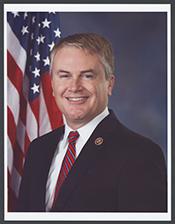
659 records where James Comer is listed as a sponsor, author, or other actor. Search with topics and years
United States · United States Congress · 16 July 2026
United States · United States Congress · 11 June 2026
United States · United States Congress · 23 April 2026
Stopping Fraudulent Payments Act This bill establishes requirements to prevent fraudulent or improper payments from federal programs. Specifically, the bill directs executive agencies to take corrective actions to temporarily pause, condition, or segment payment voucher requests before certifying them if the agencies have sufficient reason to determine that the payments present elevated risks of fraud or improper payments resulting in financial loss to the government. The corrective actions must be (1) based on objective, documented fraud-risk indicators; (2) narrowly applied to the portion of the payments presenting the elevated risk; and (3) limited in duration to the minimum period necessary to verify the eligibility or accuracy of the payments. The Department of the Treasury must return certified payment vouchers to agencies for corrective action if they present an elevated risk of fraud based on an output of Treasury’s Do Not Pay system. The bill also prohibits officers or employees of the federal government from being personally liable for actions taken in good faith under this bill.
United States · United States Congress · 23 April 2026
Pre-Payment Fraud Prevention and Treasury Data Access Act This bill expands efforts to identify, prevent, and recover improper payments of federal funds (e.g., overpayments, underpayments, payments to ineligible recipients). Specifically, the Department of the Treasury must establish certain requirements that agencies must meet before directing Treasury to make a payment of federal funds. These pre-payment requirements must include verification of payee information, payment details, and fund availability. Further, agencies must, to the extent practicable, verify the accuracy of payee bank account information before directing Treasury to make a payment. The bill also expands the Do Not Pay system, which provides agencies with access to centralized data for the purpose of verifying payee eligibility, and provides statutory authority for Treasury’s role as administrator of the system. The bill requires specified data assets to be added to the system and authorizes Treasury to (1) designate additional data assets for inclusion, and (2) access certain taxpayer and Social Security information for the system. The bill specifies that information obtained through the system may only be used to prevent and recover improper payments and establishes penalties for the unlawful disclosure of such information. The bill explicitly requires executive agencies and state and local governments administering federally funded programs to screen payees against all appropriate Do Not Pay data assets and risk tools before making an award or directing a payment. Finally, the bill establishes post-award reporting requirements for certain first-time fund recipients under federal programs for awards of $50,000 or more.
United States · United States Congress · 6 April 2026
United States · United States Congress · 27 January 2026
United States · United States Congress · 13 January 2026
Hemp Planting Predictability Act This bill extends by two years the implementation of changes to the regulation of hemp products, which reimpose certain federal controls over some hemp products. Specifically, Congress enacted the FY2026 agriculture appropriations act (P.L. 119-37) on November 12, 2025. Effective November 12, 2026, the act modifies the statutory definition of hemp products that are considered to be lawful. This bill extends the effective date to November 12, 2028. As background, the 2018 farm bill excluded hemp from the Controlled Substances Act definition of marijuana and defined hemp . As a result, hemp and hemp-derived products at or below the 0.3% delta-9 tetrahydrocannabinol (THC, the psychoactive component of marijuana) concentration threshold were no longer regulated as Schedule I controlled substances and registration with the Drug Enforcement Administration was no longer required to cultivate or handle hemp and hemp-derived products. However, hemp remained subject to Department of Agriculture and Food and Drug Administration regulation. The 2025 changes to the definition of hemp, include changing the limit to a total THC concentration of not more than 0.3% on a dry weight basis rather than only delta-9 THC, explicitly including industrial hemp, excluding seeds from a cannabis plant that exceed a certain THC concentration, and excluding various types of hemp-derived cannabinoid products. Cannabinoids refer to unique chemical compounds that are found in hemp and marijuana (e.g., THC) and are known to exhibit a range of psychological and physiological effects.
United States · United States Congress · 12 January 2026
This bill extends by two years the implementation of changes to the regulation of hemp products, which reimpose certain federal controls over some hemp products. Specifically, Congress enacted the FY2026 agriculture appropriations act (P.L. 119-37) on November 12, 2025. Effective November 12, 2026, the act modifies the statutory definition of hemp products that are considered to be lawful. This bill extends the effective date to November 12, 2028. As background, the 2018 farm bill excluded hemp from the Controlled Substances Act definition of marijuana and defined hemp . As a result, hemp and hemp-derived products at or below the 0.3% delta-9 tetrahydrocannabinol (THC, the psychoactive component of marijuana) concentration threshold were no longer regulated as Schedule I controlled substances and registration with the Drug Enforcement Administration was no longer required to cultivate or handle hemp and hemp-derived products. However, hemp remained subject to Department of Agriculture and Food and Drug Administration regulation. The 2025 changes to the definition of hemp, include changing the limit to a total THC concentration of not more than 0.3% on a dry weight basis rather than only delta-9 THC, explicitly including industrial hemp, excluding seeds from a cannabis plant that exceed a certain THC concentration, and excluding various types of hemp-derived cannabinoid products. Cannabinoids refer to unique chemical compounds that are found in hemp and marijuana (e.g., THC) and are known to exhibit a range of psychological and physiological effects.
United States · United States Congress · 11 December 2025
United States · United States Congress · 11 December 2025
United States · United States Congress · 1 December 2025
This bill designates the facility of the United States Postal Service located at 10660 Page Avenue in Fairfax, Virginia, as the "Congressman Gerald E. Connolly Post Office Building".
United States · United States Congress · 20 November 2025
This resolution expresses condolences to the families, friends, and loved ones of the victims of UPS Airlines flight 2976, which crashed in Louisville, Kentucky, on November 4, 2025. The resolution also honors those who lost their lives, and commends the first responders and emergency personnel.
United States · United States Congress · 31 October 2025
Firearm Access During Shutdowns Act This bill requires various federal agencies to continue certain operations, functions, and services related to firearms during a government shutdown. The bill applies to the Federal Bureau of Investigation's National Instant Criminal Background Check System, including the processing of background checks in support of the operations of the Directorate of Enforcement Programs and Services of the Bureau of Alcohol, Tobacco, Firearms and Explosives (ATF); the ATF's Directorate of Enforcement Programs and Services; the activities of the Department of Commerce's Bureau of Industry and Security relating to firearms and firearm-related products, including activities related to processing of applications for export licenses; and the activities of the Department of State's Directorate of Defense Trade Controls relating to firearms and firearm-related products, including activities related to processing of applications for export licenses. Under the bill, (1) these operations, functions, and services are deemed to relate to an emergency involving the safety of human life or the protection of property; and (2) employees carrying out the operations, functions, and services are deemed to be excepted employees. (Under an exception in the Antideficiency Act, an employee whose duties involve the safety of human life or the protection of property may be required to work during a government shutdown. Employees who are required to work during a government shutdown because they fall under this or other exceptions are known as excepted employees.)
United States · United States Congress · 24 October 2025
Keep SNAP Funded Act of 2025 This bill provides appropriations for the Department of Agriculture (USDA) to provide uninterrupted benefits under the Supplemental Nutrition Assistance Program (SNAP) during any period in which legislation has not been enacted to provide continuing or full-year FY2026 appropriations to USDA. The bill also provides appropriations for retroactive payments for SNAP benefits that were missed on or after September 30, 2025, and before this bill is enacted. The appropriations provided by this bill are available until legislation is enacted to provide FY2026 appropriations for USDA (including continuing appropriations).
United States · United States Congress · 14 October 2025
United States · United States Congress · 14 October 2025
United States · United States Congress · 10 October 2025
United States · United States Congress · 26 September 2025
Expanding Whistleblower Protections for Contractors Act of 2025 This bill expands whistleblower protections for employees of federal contractors and grant recipients to include the act of refusing to obey an unlawful order and to apply these protections to members of the intelligence community and other governmental employees. Current law protects employees of federal contractors or grant recipients from a reprisal (i.e., discharge, demotion, or discrimination) for disclosing evidence to Congress or another appropriate official of certain misconduct involving federal contracts, grants, or funds. The bill expands these protections to include an employee's refusal to obey an order that would require the employee to violate a law, rule, or regulation related to any contract, subcontract, grant, or subgrant. The bill also specifies that these protections apply to employees of federal contractors or grant recipients who are current or former members of the intelligence community or employees of state, local, or tribal governments. Further, the bill specifies that these protections may not be waived in a predispute arbitration agreement and renders any such agreement unenforceable. The bill specifies that an executive branch official may not request a federal contractor or grant recipient to engage in a reprisal against a protected employee, and it authorizes federal agencies to propose disciplinary action against officials that do so.
United States · United States Congress · 16 September 2025
Pay Our Troops Act of 2026 This bill provides continuing appropriations for military pay for any period during which interim or full-year appropriations for FY2026 are not in effect (i.e., a government shutdown). Specifically, the bill provides FY2026 continuing appropriations for the pay and allowances of (1) members of the Armed Forces, including reserve components, who perform active service during the period; and (2) civilian personnel and contractors of the Department of Defense (and the Department of Homeland Security in the case of the Coast Guard) who are providing support to such members of the Armed Forces. If a government shutdown occurs, the bill provides the continuing appropriations until the earlier of (1) the enactment into law of specified appropriations legislation, or (2) January 1, 2027.
United States · United States Congress · 16 September 2025
This resolution (1) condemns the assassination of Charles "Charlie" James Kirk and all forms of political violence; and (2) honors the life, leadership, and legacy of Charlie Kirk.
United States · United States Congress · 10 September 2025
United States · United States Congress · 8 September 2025
District of Columbia Home Rule Improvement Act This bill establishes a uniform 60-day period of congressional review for all nonemergency legislation enacted by the District of Columbia (DC). It also authorizes congressional disapproval of DC regulations and other executive actions, specific provisions in legislation, and extensions of emergency legislation. Currently, DC legislation is generally subject to a 30-day period of congressional review during which time Congress may enact a joint resolution of disapproval to nullify the legislation. Legislation involving criminal law is subject to a 60-day period of congressional review. Emergency legislation is not subject to congressional review. The bill applies a 60-day period of congressional review to all DC legislation other than emergency legislation. It also authorizes Congress to nullify (1) extensions of emergency DC legislation, and (2) one or more discrete provisions in DC legislation. The bill prohibits the DC Council from withdrawing legislation that it has transmitted to Congress for review or enacting legislation that is substantially the same as legislation that Congress disapproved. The bill also establishes a 60-day period of congressional review for DC executive orders and regulations according to procedures comparable to those for legislation. The bill additionally specifies the procedures for expedited consideration of joint resolutions of disapproval for DC legislation in each chamber, particularly the Senate. Finally, the bill requires the DC Mayor and the chair of the DC Council to present a report on DC to specified congressional committees at least once every calendar year.
United States · United States Congress · 22 August 2025
United States · United States Congress · 19 August 2025
Farm Credit Adjustment Act This bill allows the Farm Credit Administration (FCA) to examine low-risk Farm Credit System institutions every 24 months. Specifically, FCA has the sole discretion to extend the currently mandated 18-month examination period for all institutions to 24 months for low-risk institutions. FCA regulates the Farm Credit System, which is a network of borrower-owned lending institutions that operates as a government-sponsored enterprise and makes loans to creditworthy farmers.
United States · United States Congress · 1 August 2025
Fairness for Khobar Act of 2025 This bill authorizes lump sum catch-up payments from the United States Victims of State Sponsored Terrorism (USVSST) Fund to certain victims of the 1983 Beirut barracks bombing or the 1996 Khobar Towers bombing who did not apply for catch-up payments during the application period. The USVSST Fund is administered by the Department of Justice (DOJ) and provides compensation to certain U.S. persons injured in acts of international state sponsored terrorism and their immediate family members. The Fairness for 9/11 Families Act, enacted in 2022, authorized and provided funding for lump sum catch-up payments from the USVSST Fund to victims of the 1983 Beirut barracks bombing or the 1996 Khobar Towers bombing. Claimants who were previously found eligible for regular payment distributions from the USVSST Fund were also eligible for lump sum payments, but the act required them to apply from December 29, 2022, to June 27, 2023. In a 2024 report, the Government Accountability Office found that up to 274 eligible victims did not apply for lump sum catch-up payments because of DOJ guidance that stated, in part, that claimants who were previously found eligible for regular payment distributions are not eligible for the lump sum catch-up payments.
United States · United States Congress · 22 July 2025
United States · United States Congress · 17 July 2025
United States · United States Congress · 16 July 2025
United States · United States Congress · 14 July 2025
Save Local Business Act This bill provides that a person may be considered a joint employer of the employees of another employer under federal labor law only if such person directly, actually, and immediately exercises significant control over the essential terms and conditions of employment. Such control may by demonstrated by hiring and discharging employees; determining individual employee rates of pay and benefits; day-to-day supervision of employees; assigning individual work schedules, positions, or tasks; or administering employee discipline.
United States · United States Congress · 10 July 2025
United States · United States Congress · 25 June 2025
United States · United States Congress · 4 June 2025
United States · United States Congress · 19 May 2025
Esophageal Cancer Awareness Act This bill requires the Government Accountability Office to report to Congress on (1) the impact of esophageal cancer-related health care spending under the Federal Employees Health Benefits Program (FEHBP) for federal employees and retirees diagnosed with esophageal cancer, and (2) how often FEHBP participants with a high risk of esophageal cancer undergo screenings according to established guidelines.
United States · United States Congress · 19 May 2025
Protect Children’s Innocence Act of 2025 This bill establishes federal criminal offenses for providing gender-affirming care to minors. The bill also changes the existing federal criminal offense that prohibits female genital mutilation (FGM) and related conduct. Specifically, the bill makes it a federal crime to knowingly perform or attempt to perform procedures or provide medications (e.g., hormonal treatments) to a minor for the purpose of changing their body to correspond to a sex that differs from their biological sex. The bill provides exceptions for specified types of surgeries or procedures, including those for treating (1) individuals who have both ovarian and testicular tissue or abnormal sex chromosome structure or hormones, or (2) infections or other harms that result from a previous gender-transition procedure. A violation is punishable by a fine, a prison term of up to 10 years, or both. The bill prohibits the arrest or prosecution of an individual who undergoes gender-affirming procedures or medications. Additionally, the bill makes changes to the existing federal criminal prohibition on performing FGM on a minor and related conduct. Among the changes, the bill broadens the scope of prohibited conduct to include the facilitation or consent to FGM by any person (currently, prohibited facilitation or consent applies only to a parent, guardian, or caretaker of the minor). The bill also prohibits the arrest or prosecution of an individual who undergoes FGM. The bill does not change the applicable criminal penalty of a fine, a prison term of up to 10 years, or both.
United States · United States Congress · 8 May 2025
United States · United States Congress · 8 May 2025
United States · United States Congress · 6 May 2025
United States · United States Congress · 29 April 2025
United States · United States Congress · 24 April 2025
Duty Drawback Clarification Act This bill revises Chapter 22 of the Harmonized Tariff Schedule of the United States to provide a uniform rate of duty for all whiskies.
United States · United States Congress · 8 April 2025
United States · United States Congress · 7 April 2025
District of Columbia Electronic Transmittal of Legislation Act This bill authorizes the District of Columbia (DC) Council to transmit legislation, including amendments to the DC Charter, to Congress by electronic means. (Current law requires most nonemergency DC legislation to be transmitted to Congress for a period of congressional review.)
United States · United States Congress · 27 March 2025
Guidance Clarity Act of 2025 This bill requires federal agencies to state on the first page of guidance documents that such guidance (1) does not have the force and effect of law, and (2) is intended only to provide clarity to the public about existing legal requirements or agency policies.
United States · United States Congress · 27 March 2025
United States · United States Congress · 27 March 2025
United States · United States Congress · 21 March 2025
Federal Accountability Committee for Transparency Act or the FACT Act This bill delays termination of the Pandemic Response Accountability Committee until December 31, 2026. (This committee, part of the Council of the Inspectors General on Integrity and Efficiency, was established to promote transparency and support oversight of the coronavirus response and certain coronavirus-related funds.) The bill also renames the committee as the Fraud Prevention and Accountability Committee.
United States · United States Congress · 14 March 2025
United States · United States Congress · 14 March 2025
United States · United States Congress · 14 March 2025
Fair and Open Competition Act of 2025 or the FOCA Act of 2025 This bill requires that federal contracts for construction projects neither require nor prohibit a bidder, offeror, contractor, or subcontractor from entering into agreements with one or more labor organizations with respect to such projects or related projects. Under the bill, the controlling documents for federal construction contracts (such as bid specifications and project agreements) may not require or prohibit a bidder, offeror, contractor, or subcontractor from entering into or adhering to such labor agreements. Additionally, the controlling documents may not discriminate against or give preference to a bidder, offeror, contractor, or subcontractor who signs or refuses to sign such a labor agreement. These requirements also apply to any (1) construction manager acting on behalf of the federal government with respect to such contract, (2) recipient of a federal grant or financial assistance for construction projects or construction manager acting on the recipient's behalf, and (3) party to a federal cooperative agreement for construction projects or construction managers acting on the party's behalf. An agency may exempt a project from this prohibition to avert an imminent threat to public health or safety or to serve the national security.
United States · United States Congress · 3 March 2025
Federal Firearms Licensee Protection Act of 2025 This bill modifies criminal penalties for an offense involving the theft of a firearm from a licensed importer, manufacturer, or dealer, or from their business premises. Specifically, the bill does the following: increases from 10 to 20 years the maximum prison term, and creates a 3- or 5-year mandatory minimum prison term for an offense that occurs during the commission of a burglary or robbery. An attempt to commit an offense is subject to the same penalties as a substantive offense.
United States · United States Congress · 26 February 2025