Law· HJRESH.J.Res. 519 (101st)enacted
Designating April 16, 1990, as "National Sarcoidosis Awareness Day".
United States · United States Congress · 14 March 1990
Designates April 16, 1990, as National Sarcoidosis Awareness Day.
The world's political record
Person
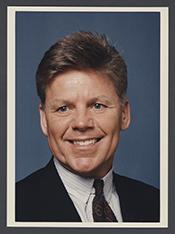
United States · Official source
1,593 records where Rep. Condit, Gary A. [D-CA-18] is listed as a sponsor, author, or other actor. Search with topics and years
United States · United States Congress · 14 March 1990
Designates April 16, 1990, as National Sarcoidosis Awareness Day.
United States · United States Congress · 13 March 1990
Amends the Internal Revenue Code to exclude from gross income the value of any subsidy provided by a public utility to a customer for the purchase or installation of energy or water conservation measures.
United States · United States Congress · 8 March 1990
Regulated Precursor Chemicals Act of 1990 - Amends the Controlled Substances Act to revise and expand the list of precursor chemicals, including transferring to such list hydriodic acid from the list of essential chemicals. Revises the definition of "regulated transaction" to include transfers of any amount of an essential listed precursor chemical, with exceptions. Requires each regulated person to report to the Attorney General on any regulated transaction involving any quantity of a listed essential chemical. Makes it unlawful for any person to engage in a regulated transaction involving a listed precursor chemical or any other conduct that defines such person as a regulated person for purposes of such Act without a license required under such Act. Requires the Attorney General to establish a program requiring licenses for regulated persons and regulated transactions involving listed precursor chemicals where such requirement will contribute to carrying out the purposes of such Act and to criminal drug law enforcement. Provides for fines and imprisonment of not more than four years for violations of the licensing requirement. Requires the Attorney General to provide for the audit and control of listed precursor chemical inventories of persons possessing a license under this Act. Directs the Attorney General to cooperate with State authorities by providing information regarding regulated transactions in such chemicals that might be useful in the administration of State laws relating to precursor chemicals, controlled substances, and other illegal drugs.
United States · United States Congress · 8 March 1990
Designates July 10, 1990, as Wyoming Centennial Day.
United States · United States Congress · 7 March 1990
Amends the Internal Revenue Code to impose an additional tax on income derived from publishing a newspaper which does not use at least 50 percent recycled newsprint.
United States · United States Congress · 1 March 1990
Organic Foods Production Act of 1990 - Title I: National Standards Governing the Organic Production of Agricultural Products - Directs the Secretary of Agriculture to establish: (1) a national organic production certification program; (2) a label for organically produced and handled agricultural products; (3) a national list of approved and prohibited substances to be included in the organic production standards; and (4) a certifying agent accreditation program. Authorizes State organic certification programs. Sets forth: (1) prohibited crop production practices and materials; (2) animal production practices and materials; (3) processing and marketing requirements; and (4) violations of this Act and related penalties. Authorizes appropriations. Title II: National Boards - Directs the Secretary to establish a National Organic Promotion, Research, and Consumer Education Program. Directs the Secretary to issue organic production and handling orders which shall: (1) establish the Initial Organic Delegate Body which shall elect the Initial National Organic Board and the Initial Organic Standards Board; and (2) provide for the election of the National Organic Assembly. Establishes: (1) an Initial National Organic Board; and (2) an Initial Organic Standards Board. Directs the National Organic Assembly to elect members to serve on the National Organic Board and the Organic Standards Board. Authorizes appropriations. Title III: Low Input Label Demonstration Program - Directs the Secretary to establish: (1) a National Low Input Label Demonstration Program; and (2) two experimental agricultural product labels for Program use. Authorizes appropriations. Title IV: National Laboratory Accreditation - Directs the Secretary to: (1) establish a National Laboratory Accreditation Program for laboratories that test for residues in agricultural products; and (2) establish minimum standards with regard to quality assurance, equipment, methodologies, and personnel. Authorizes appropriations.
United States · United States Congress · 1 March 1990
Urges that: (1) Federal support for local drug enforcement be substantially increased; and (2) a funding mechanism be developed to provide Federal drug enforcement funds directly to local governments to enable a quick response to critical drug enforcement needs.
United States · United States Congress · 28 February 1990
Tire Recycling Incentives Act of 1990 - Amends the Solid Waste Disposal Act to require tire producers or importers to recycle an amount of scrap tires equal to at least the amount determined by multiplying the amount of tires produced or imported that year by the recycling percentage established by the Administrator of the Environmental Protection Agency. Authorizes compliance by: (1) recycling scrap tires through reintroducing the reclaimed rubber into a manufacturing process to produce new tires or retread old tire casings; or (2) purchasing recycling credits under this Act. Requires such individuals to report annually to the Administrator on the amount of tires produced or imported. Directs the Administrator to establish a recycling percentage that is five percentage points higher than the existing recycling rate for tires. Provides for increases in such percentage of five points annually in the ten years following the date of enactment of this Act. Requires the Administrator to promulgate regulations allowing recyclers to create credits for tire recycling and tire producers or importers to purchase such credits. Sets forth: (1) specified recordkeeping requirements for owners or operators of tire sale and installation facilities and tire producers and importers; and (2) the amount of credits allowed for scrap tires. Directs the Attorney General to determine the effects of the credit system on competition within the tire and scrap tire recycling industries and to report annually to the Congress. Sets the recycling percentage at 60 percent if the Administrator fails to promulgate regulations. Directs the Administrator to: (1) publish in the Federal Register minimum requirements for State scrap tire management and procedures under which such requirements shall be incorporated into State solid waste management plans; (2) provide for expedited review of State plans which include specified scrap tire recycling measures; and (3) establish standards to minimize health and environmental damages from the improper disposal and storage of tires. Requires such standards to provide for: (1) bans on the disposal of tires in land disposal facilities; (2) State inventories of scrap tire collection facilities, tire advisory boards, and scrap tire abatement plans; (3) agreements between facilities which distribute more than 1,000 tires annually and licensed tire haulers for the exclusive hauling of scrap tires by licensed haulers; and (4) prohibitions on the transportation of scrap tires by transporters without transportation identification numbers, with specified exceptions. Directs the Administrator to publish guidelines for States for the issuance of permits to scrap tire storage, processing, transfer, and recycling facilities. Provides for: (1) limits on the size of scrap tire piles at such facilities; (2) bans on open burning within 50 feet of a scrap tire pile; (3) regulations on vegetation, rodent, and mosquito control at such facilities; and (4) different requirements for collection and storage facilities located in 100-year flood plains or other areas where water resources are critical. Requires the Administrator to promulgate guidelines for States for facility emergency plans. Directs facility owners or operators to maintain and update emergency preparedness manuals. Requires facility operators to notify the State immediately in the event of an emergency with potential offsite impacts. Sets forth specified emergency and operational recordkeeping, reporting, and inspection requirements. Requires all regulated facilities to have appropriate financial responsibility or insurance to maintain the facility for at least five years after closure. Exempts specified persons from permitting requirements. Requires the Secretary of the Interior, together with the heads of agencies responsible for public lands or military installations, to implement a plan to remediate tire piles. Applies plan requirements to the National Railroad Passenger Corporation. Directs the Administrator to develop a guideline for procuring goods that make use of scrap or used tires. Permits States to: (1) enter into consent orders with owners and operators of scrap tire collection facilities for proper management and abatement of scrap tires; and (2) levy fines on facilities for noncompliance. Imposes fines on tire facilities and landfills for specified violations of this Act. Authorizes appropriations.
United States · United States Congress · 27 February 1990
Repeals the provision of the Revenue Reconciliation Act of 1989 which requires the withholding of income tax from wages paid for agricultural labor. Requires the Internal Revenue Code to be applied as though such provision had not been enacted.
United States · United States Congress · 27 February 1990
Student Loan Default Reduction Amendments of 1990 - Amends the Higher Education Act of 1965 with respect to reduction of student loan defaults. Requires provision for graduated repayment of student loans under federally insured student loans and the insurance program under the guaranteed student (or Stafford) loan program. Restricts certain institutional promotional activities. Sets forth wage garnishment requirements for collection of student loan repayments. Requires that students admitted on the basis of ability to benefit pass certain tests prior to enrollment. Requires eligible institutions participating in student loan and assistance programs to have certain tuition refund policies.
United States · United States Congress · 27 February 1990
Designates March 30, 1990, as National Doctor's Day.
United States · United States Congress · 26 February 1990
Amends the Higher Education Act of 1965 to suspend eligibility for any educational grant, loan, or work assistance for individuals convicted of drug offenses. Allows resumption of such eligibility if the student completes a drug rehabilitation program.
United States · United States Congress · 22 February 1990
National Drug and Crime Emergency Act - Declares a National Drug and Crime Emergency for a five-year period, during which time it shall be U.S. policy that: (1) every person convicted in a Federal court of a crime of violence against a person or a drug trafficking felony (other than simple possession) shall serve no less than five years' imprisonment without release; (2) prisoners may be housed in tents and other temporary facilities; and (3) the Federal courts may limit the inmate population of a Federal or State prison or jail only when an inmate proves that crowding has resulted in cruel and unusual punishment and no other remedy exists. Title I: Elimination of Crime Without Punishment - Subtitle A: National Drug and Crime Emergency Policies - Amends the Federal criminal code to prohibit the Federal courts, during such emergency, from: (1) holding prison crowding unconstitutional under the Eighth Amendment except to the extent that an individual plaintiff inmate proves that the crowding causes the infliction of cruel and unusual punishment; and (2) placing an inmate ceiling on any Federal, State, or local detention facility as an equitable measure for conditions that violate the Eighth Amendment unless crowding itself is inflicting cruel and unusual punishment on individual prisoners. Requires that each Federal court order seeking to remedy an Eighth Amendment violation be reopened at the behest of a defendant for recommended alteration at a minimum of two-year intervals. Applies this title to all outstanding court orders on the date of enactment of this Act. Permits any State or municipality to seek modification of any outstanding Eighth Amendment decree pursuant to this Act. Directs the Attorney General to take steps, consistent with security considerations, to ensure that sufficient facilities exist to house individuals whom the courts have ordered incarcerated, including consideration of tent housing or other shelters placed on available military bases and at other locations. Authorizes the President to direct the National Guard and the Army Corps of Engineers to design and construct temporary detention facilities. Requires: (1) the Secretary of Defense, the Commission on Alternative Utilization of Military Facilities, and the Director of the Bureau of Prisons to identify suitable military installations and examine the feasibility of using tent housing; and (2) the Director to report to the Congress within 90 days. Amends the Defense Authorization Amendments and Base Closure and Realignment Act to require the Secretary to notify the Attorney General and the Governor of each of the U.S. territories and possessions (currently, all departments and instrumentalities within the Department of Defense (DOD)) of the availability of any real property or facility located at a military installation to be closed. Authorizes the transfer of such property to the Attorney General, a State, territory, or possession, or the District of Columbia for use as a correctional institution. Requires the Director to: (1) review current construction standards and methods used in building Federal prisons; (2) examine and recommend cost cutting measures that could be employed in prison construction; and (3) submit the results to the Congress. Authorizes the Attorney General to contract for private construction and operation of Federal prisons. Requires the use of creative and cost-effective private financing alternatives and private prison construction and operation where possible. Specifies that operating costs of privately-operated prisons shall be covered through rent charged to Government units placing inmates in prisons. Requires the Administrator of the General Services Administration to identify at least 20 parcels of surplus Federal property which the Attorney General has certified are not needed for Federal correctional facilities but which may be suitable for State or local correctional facilities. Makes property determined to be in excess of Federal needs that may be suitable for use as correctional facilities available during such Emergency to the Attorney General, or secondarily, to a State, the District of Columbia, or a local government. Permits State and local governments to use Federal temporary incarceration facilities, when they are not needed to accommodate Federal prisoners, for incarcerating prisoners at a per diem fee payable to the Bureau of Prisons. Requires every person who, during the Emergency, is convicted in Federal court of committing a crime of violence against a person or a drug trafficking crime (other than simple possession), to be sentenced to and serve no less than five years' imprisonment. Prohibits any such person from being released from custody for any reason prior to completion of the sentence unless the sentence imposed is greater than five years and is not a mandatory minimum sentence without release. Subtitle B: Imposition of Mandatory Minimum Sentences Without Release - Amends the Federal criminal code to establish the following penalties for offenses committed during and in relation to any crime of violence or drug trafficking crime, in addition to the punishment provided for such crime. Provides that whoever: (1) possesses a firearm shall be sentenced to imprisonment for ten years without release; (2) discharges a firearm with intent to injure another person shall be sentenced to imprisonment for 20 years without release; or (3) possesses a firearm that is a machinegun or is equipped with a firearm silencer or muffler shall be sentenced to imprisonment for 30 years without release. Sets penalties for second, third, and subsequent convictions. Prohibits the release of any person convicted for any reason during a term of imprisonment imposed under this subtitle. Amends the Controlled Substances Act (CSA) to: (1) mandate life imprisonment without release for individuals convicted after two or more felony drug offenses or for a crime of violence; (2) increase the sentences for distributing illegal drugs to persons under age 21 and for employing persons under 18 years of age in drug operations to up to ten years without release for a first offense and up to 20 years without release for a second offense. Prohibits the court from placing such persons on probation or suspending the sentence. Prohibits their release during the term of the sentence. Increases prison sentences for trafficking in marihuana and specified categories of controlled substances. Establishes mandatory sentences, in addition to any other sentence imposed for the underlying possession or distribution, of: (1) one year imprisonment without release in a case involving possession of a controlled substance within a Federal prison or other Federal detention facility; and (2) ten years without release in a case involving the smuggling of a controlled substance within such prison or facility. Prohibits the court from placing such individuals on probation or suspending the sentence. Prohibits such person from being eligible for parole during such term of imprisonment. Amends the Immigration and Nationality Act to: (1) require the deportation of aliens convicted of drug trafficking crimes or crimes of violence; and (2) increase the penalty (currently, 15 years for individuals whose deportation was subsequent to certain felony convictions) to 20 years without release, and to life imprisonment without release for a second violation, without probation, suspension of sentence, or early release, for reentry of a deported alien whose deportation was subsequent to a conviction for a drug trafficking crime or crime of violence. Grants priority for Federal drug law enforcement assistance funds from Bureau of Justice Assistance (BJA) Grant Programs to States having laws providing for mandatory minimum sentences, elimination of early release, and payment of trial costs and mandatory fines by individuals convicted of specified controlled substance violations. Revises the formula for determining the amount distributed from the Drug Control and System Improvement Grant Program. Subtitle C: Mandatory Work Requirements for Prisoners, Withholding Federal Benefits, and Drug Testing of Prisoners - Expresses Federal policy that: (1) prisoners shall work absent medical certification of 100 percent disability, security considerations, or disciplinary action; and (2) States and local governments have the same authority to require all convicted prisoners to work. Provides for the deposit in a separate fund in the Treasury of funds generated from prison labor for prison construction and operating expenses or payment of judgments. Specifies that prisoners shall be paid a share of funds generated by their labor. Repeals provisions establishing penalties for transportation or importation of prison-made goods. Authorizes the Federal Prison Industries to sell such goods to the public. Amends the Walsh-Healy Act to permit convict labor under specified conditions. Requires the Attorney General to submit to the Congress a report making recommendations for legislation to: (1) ensure that businesses and labor do not suffer unfair consequences from such repeal; and (2) encourage greater private sector participation in prison industries. Authorizes the Attorney General to enter into contracts with private businesses for the use of inmate skills that may be of commercial use to such businesses. Sets forth provisions with respect to security requirements involved in the use of convict labor. Provides for the withholding of prisoners' Federal benefits to offset incarceration costs. Directs the Attorney General to establish a program of drug testing of targeted classes of arrestees, prisoners, and persons on release. Amends the Omnibus Crime Control and Safe Streets Act of 1968 to bar Federal funding under the drug control and system improvement grant program for States failing to have an analogous State program. Subtitle D: Judicial Reform to Protect the Innocent and Punish the Guilty - Specifies that: (1) evidence obtained as a result of a search or seizure shall not be excluded in any Federal court proceeding on the ground that the search or seizure was in violation of the Fourth Amendment, if the search or seizure was carried out in circumstances justifying an objectively reasonable belief that it was in conformity with the Fourth Amendment; and (2) the fact that evidence was obtained pursuant to and within the scope of a warrant constitutes prima facie evidence of the existence of such circumstances. Prohibits the exclusion of evidence in any Federal court proceeding on the ground that it was obtained in violation of a statute, administrative rule or regulation, or rule of procedure unless exclusion is expressly authorized by statute or by Supreme Court rule. Amends the Federal judicial code to condition consideration of a habeas corpus claim by a State prisoner on a showing of actual prejudice resulting from the denial of a Federal right, and that: (1) State action precluded assertion of the right; (2) the Federal right asserted was newly recognized; or (3) the factual basis of the claim could not have been discovered through the exercise of reasonable diligence prior to the procedural default. Establishes a one-year statute of limitations for habeas corpus actions brought by State prisoners. Vests authority to issue certificates for probable cause for appeal of habeas corpus orders exclusively in the courts of appeals. Permits denial on the merits of habeas corpus writs notwithstanding the failure to exhaust State remedies. Prohibits the granting of a habeas corpus writ with respect to any claim which has been fully and fairly adjudicated in State proceedings. Amends the CSA to require: (1) the court, prior to sentencing on a conviction in a Federal court of a felony under such Act, to compile a list of assets owned by the defendant not subject to forfeiture; and (2) upon request of the Attorney General, the court to direct the defendant to provide proof that any asset owned by the defendant not on such list was legally obtained. Authorizes the Attorney General to seize assets that the defendant does not prove were legally obtained. Requires the proceeds from such assets to be deposited in the Department of Justice Assets Forfeiture Fund and to be available for transfer to the building and facilities account of the Federal prison system. Sets forth provisions regarding the term of appointment, authority, and jurisdiction of special masters. Requires the Administrative Office of the United States Courts to publish annually a report on the sentencing patterns of Federal judges. Title II: Achieving a Drug-Free America by 1995 - Requires individuals convicted of a CSA violation of possession of a controlled substance to pay to the Treasury the cost of the trial or, where defendant has insufficient income and property, an appropriate amount as determined by the court. Limits such payment to 25 percent of such person's annual income. Provides for mandatory fines of at least ten percent of income for a first offense and 25 percent for subsequent offenses. Subjects such person's property to forfeiture where there is insufficient income to pay such fines. Amends the Anti-Drug Abuse Act of 1988 to eliminate the judge's discretion in making individuals convicted of State offenses for the distribution of controlled substances ineligible for unearned Federal benefits, with exceptions for persons who: (1) declare and show by clear and convincing (currently, a reasonable body of) evidence that they are addicts and submit to long-term treatment; or (2) are determined to be rehabilitated. Makes similar changes with respect to individuals convicted of Federal or State drug possession offenses. Authorizes the court to reduce the period of ineligibility for such benefits to three months if the individual: (1) successfully completes a supervised drug rehabilitation program which includes periodic, random drug testing; or (2) completes a period of community service and passes such testing. Grants priority for Federal drug law enforcement assistance funds from BJA Grant Programs to States having laws providing for revocation of drivers' licenses for individuals convicted of specified controlled substances violations. Revises the formula for determining the amount distributed from the Drug Control and System Improvement Grant Program to reduce allocations to States which do not have such laws. Sets forth conditions for reinstatement. Requires the Secretary of Transportation to cause the Federal Aviation Administration to amend its regulations to revoke pilots' licenses for such violations. Amends the Public Health Service Act to make a State's receipt of Federal drug abuse allotments contingent upon the State submitting: (1) Statewide Drug Treatment Plan annually that meets certain specifications; and (2) periodic progress reports. Amends the Higher Education Act of 1965 to bar institutions of higher education from eligibility for Federal assistance unless they certify that they have adopted and implemented an alcohol and drug abuse prevention program for students and employees meeting specified requirements. Amends the Drug-Free Schools and Communities Act of 1986 to bar local educational agencies from eligibility for Federal assistance unless they make a similar certification. Transportation Employee Testing Act - Amends the Federal Aviation Act of 1958 to require the Administrator of the Federal Aviation Administration to: (1) establish a program requiring foreign and domestic air carriers to conduct preemployment, reasonable suspicion, random, and post-accident testing for illegal drug and alcohol use of air carrier personnel responsible for safety-sensitive functions and providing for periodic recurring testing of such employees; and (2) require the suspension or revocation of any certification issued to such person, or disqualification or dismissal, where such illegal drug or alcohol use has been confirmed. Bars air carrier personnel responsible for safety-sensitive functions from serving in such positions without having completed a rehabilitation program. Requires the Administrator to prescribe regulations for such programs which: (1) provide for the identification and opportunity for treatment of employees needing assistance; (2) specify the circumstances under which such employees shall be required to participate; (3) promote individual privacy in the collection of specimen samples; and (4) with respect to laboratories and testing procedures, incorporate Department of Health and Human Services scientific and technical guidelines intended to assure accuracy, confidentiality, and nondiscriminatory methods. Directs the Secretary of State and the Secretary of Transportation to jointly call upon member countries of the International Civil Aviation Organization to strengthen and enforce existing standards to prohibit illegal drug and alcohol use by crewmembers in international civil aviation. Amends the Federal Railroad Safety Act of 1970, the Commercial Motor Vehicle Safety Act (CMVSA), and the Urban Mass Transportation Act of 1964 to establish programs similar to the Federal Aviation Act program for drug and alcohol testing. Provides for a pilot program, under the CMVSA, for the random testing of commercial motor vehicle operators and requires the Secretary to report on the results to the Congress. Makes funds from the Surface Transportation Assistance Act of 1982 available for the CMVSA program. Requires the Secretary to determine appropriate sanctions for mass transportation vehicle operators who are determined to have used alcohol or controlled substances in violation of law or Federal regulation but who are not under the influence of such substances. Amends the Federal judicial code to provide for the payment of awards to persons providing information leading to the arrest and conviction of individuals for the unlawful sale, or possession for sale, of a controlled substance or controlled substance analogue. Title III: Authorization of Appropriations - Authorizes appropriations to carry out this Act.
United States · United States Congress · 22 February 1990
Nursing Home Access to Respiratory Therapy Act of 1990 - Amends title XVIII (Medicare) of the Social Security Act to include respiratory therapy within covered extended care services.
United States · United States Congress · 20 February 1990
Supports the right of citizens to conduct peaceful and lawful demonstrations. Condemns the acts of physical violence of demonstrators who, on January 31, 1990, threw blood on the columns and steps of the U.S. Capitol and, on February 17, 1990, threw blood on the entrance gate to the White House. Urges that such demonstrators be prosecuted and charged with a felony.
United States · United States Congress · 7 February 1990
Civil Rights Act of 1990 - Amends the Civil Rights Act of 1964 to provide that: (1) once a complainant has demonstrated that an employment practice results in a disparate impact on the basis of race, color, religion, sex, or national origin, the respondent has the burden of proving that the practice is justified by business necessity; (2) a complainant need not demonstrate which of a group of practices results in the demonstrated disparate impact; and (3) a respondent need not show business necessity for a specific practice within a group of practices if the respondent shows that that practice does not contribute to the disparate impact. Declares that an unlawful employment practice is established on a demonstration that race, color, religion, sex, or national origin was a motivating factor for any employment practice, even though such practice was also motivated by other factors, but bars certain types of relief if the respondent establishes that it would have taken the same action in the absence of any discrimination. Prohibits a challenge to an employment practice that implements a litigated or consent judgment or order resolving a claim of employment discrimination: (1) by a person who had certain types of notice and opportunity; (2) by a person whose interests were adequately represented by another person who challenged the judgment or order; or (3) if reasonable efforts were made to provide notice to interested persons. Increases to two years the time limit within which a charge of an unlawful employment practice must be filed. Removes provisions setting a separate time limit for charges initially filed with a State or local agency. Declares that a seniority system or practice which is part of a collective bargaining agreement is an unlawful employment practice if it was included in the agreement with the intent to discriminate. Allows, except for disparate impact cases, for compensatory damages (but not back pay) and, where there is malice or reckless or callous indifference, for punitive damages. Allows any party, where compensatory or punitive damages are sought, to demand a jury trial. Includes expert fees and other litigation expenses in any attorney's fees awarded. Prohibits a consent order or judgment settling a claim unless the parties and their counsel attest that a waiver of attorneys' fees was not compelled as a condition of the settlement. Allows to the prevailing party in the original action an award of attorney's fees and costs in defending a challenged judgment or order. Increases to 90 days after final action by a Federal agency the time limit for a Federal employee to bring a civil action. Allows to Federal employees the same interest to compensate for delay in payment as in cases involving non-public parties. Requires Federal civil rights laws to be broadly construed to effect their purpose to eliminate discrimination and provide effective remedies. Prohibits, except as expressly provided, any Federal civil rights law from being construed to restrict or limit the rights, procedures, or remedies available under any other Federal civil rights law. Declares that, for purposes of provisions relating to equal rights under the law, the right to make and enforce contracts includes the making, performance, modification, and termination of contracts, and the enjoyment of all benefits, privileges, terms, and conditions of the contractual relationship.
United States · United States Congress · 7 February 1990
Designates March 25, 1990, as Greek Independence Day: A National Day of Celebration of Greek and American Democracy.
United States · United States Congress · 7 February 1990
Designates March 20, 1990, as National Agriculture Day.
United States · United States Congress · 7 February 1990
Calls upon all levels of government to continue efforts to enforce antidrug laws and to discourage the use of illegal drugs. Opposes the legalization of such controlled substances.
United States · United States Congress · 6 February 1990
Federal Victim's Service and Protection Act of 1990 - Title I: Federal Victim's Services and Protections Compliance - Directs the Attorney General to: (1) establish an evaluation system for law enforcement officers which rates such officers on their compliance with specified laws protecting victims of crimes; and (2) use such evaluation system to create standards governing services to victims and witnesses in Federal cases and to serve as a model to States and localities. Requires the Office for Victims of Crime to report periodically to the public, the Congress, and the President on victim protections and on compliance with this Act. Title II: The Federal Child Victim's Bill of Rights - Amends the Federal criminal code to require the court, at the earliest possible stage, to determine whether the appointment of a guardian ad litem for a child who is an alleged victim or witness in a criminal proceeding would be in the best interests of the child and if so, to appoint such guardian. Sets forth provisions with respect to the qualifications, duties and powers, and immunity of such guardian. Grants a child testifying at a criminal proceeding the right to be accompanied by an adult. Authorizes the court to order that a child's testimony be taken by closed-circuit television (TV) if it finds that the child is unable to testify in open court because of: (1) the child's persistent refusal to testify despite judicial requests to do so; (2) the child's total inability to communicate about the offense because of extreme fear, failure of memory, or other similar reasons; or (3) the substantial likelihood that the child will suffer substantial emotional trauma from so testifying. Specifies that the prosecuting attorney and the defense attorney shall be present in the room with the child and the child shall be subject to direct and cross-examination. Requires that: (1) the child's testimony be transmitted by closed-circuit TV into the courtroom; (2) the defendant be provided with the means of private, contemporaneous communication with his attorney during the testimony; and (3) the closed-circuit TV transmission relay the defendant's image into the room in which the child is testifying, and the child's testimony into the room in which the defendant is viewing the proceeding. Sets forth provisions with respect to videotaped depositions of child victims and child witnesses. Authorizes the court to permit the child to use anatomical dolls, puppets, drawings, or any other demonstrative device it deems appropriate to assist a child in testifying. Sets forth requirements with respect to competency examinations for child witnesses. Prohibits: (1) the release to the public of the name, or other identifying information about the child victim or child witness except as authorized by the court; and (2) the name and any identifying information from appearing in any public record. Grants the child victim or witness the same right to submit victim impact statements prior to sentencing as prescribed for an adult victim. Directs that child victims or witnesses be assisted by their court appointed guardian ad litem in preparing victim impact statements. Authorizes the court, in any proceeding where a child is called to give testimony, to designate the case as being of special public importance and to expedite the action. Requires the court to ensure a speedy trial and, in deciding whether or not to grant a continuance, to take into account the child's age and the potential adverse impact the delay may have on the child's well-being. Creates a hearsay exception for an out-of-court statement related to sexual abuse, physical abuse, or sexual exploitation of that or another child if the court finds that: (1) the statement possesses particularized guarantees of trustworthiness; (2) the proponent of the statement has given sufficient notice to adverse parties of the intent to introduce the statement; and (3) there is corroborative evidence of the statement or the truth of the statement. Encourages the use of multidisciplinary teams designed to assist child victims or child witnesses. Delineates the role of such teams. Specifies that there shall be no statute of limitations for the prosecution of any child physical abuse, sexual abuse, or sexual exploitation offense. Requires physicians, social workers, teachers, and specified other individuals who, while involved in any such capacities on Federal land or in a federally operated (or contracted) facility, have reason to suspect that a child is an abused or neglected child to immediately report to the appropriate authorities. Grants civil and criminal immunity to individuals who, acting in good faith, make such a report or otherwise provide information or assistance with a report investigation, or legal intervention. Makes failure to report a misdemeanor. Makes spousal privileges and the privileged nature of any communications between physician (or psychotherapist, psychologist, social worker, and any other health care provider) and patient inapplicable in any criminal proceeding after a report of child abuse, neglect, or sexual exploitation. Title III: Child Care Worker Employee Background Check - Requires: (1) each Federal agency and facility that hires, or contracts for hire, individuals involved with the provision of services to children under age 18 to assure that all existing and newly-hired employees undergo a criminal history background check; and (2) all existing staff to receive such checks within six months and prohibits the hiring of additional staff without a check having been initiated. Sets forth procedures with respect to the conduct of such background checks. Specifies that: (1) any conviction for a sex crime, an offense involving a child victim, or a drug offense shall be grounds for denying employment or for dismissal of an employee engaged in specified child care services; (2) an incident in which an individual has been charged, but where the charge has not yet been disposed of, shall permit the employee's suspension from any job-related contact with children until the case is resolved; and (3) convictions of other crimes may be considered if they bear on an individual's fitness to have responsibility for the safety and well-being of children. Sets forth requirements with respect to questions to be asked in employment applications, criminal history records checks, and access to (and the right to challenge the accuracy of) the criminal history report.
United States · United States Congress · 6 February 1990
Designates August 7, 1990, as National Neighborhood Crime Watch Day.
United States · United States Congress · 6 February 1990
Expresses the sense of the Congress that: (1) the right of self-determination should be restored to the people of Lithuania through free and fair elections conducted under the auspices of an international commission; and (2) the withdrawal of all non-Lithuanian military forces and political, administrative, and police personnel from Lithuania prior to the February 24, 1990, scheduled elections will enhance the prospects that the elections will be free and fair.
United States · United States Congress · 1 February 1990
Medicaid Frail Elderly Community Care Amendments of 1990 - Amends title XIX (Medicaid) of the Social Security Act to permit States to provide Medicaid coverage of community care for functionally disabled elderly individuals. Considers individuals who are unable to perform at least two daily living activities or who have Alzheimer's disease and require substantial assistance or supervision as functionally disabled individuals. Defines a covered community care setting as a nonresidential setting or a residential setting in which more than two unrelated adults reside and personal services are provided. Requires that community care be provided to each client in accordance with an individual community care plan (ICCP) prepared and periodically reviewed and revised by a community care case manager on the basis of the manager's consultation with the client and a comprehensive functional assessment of a client's needs conducted by an interdisciplinary team before his or her receipt of care and at least annually thereafter. Sets a ceiling on Medicaid payments to States for community care. Reduces Federal Medicaid payments to States that reduce their Medicaid community care expenditures below their FY 1990 expenditures for such care. Requires that community care and community care settings meet requirements, to be developed by the Secretary of Health and Human Services, concerning client rights, the quality of such care, and safety and sanitation. Imposes specified minimum requirements on such care and settings, including certain Medicaid requirements currently applicable to nursing facilities. Requires that community care settings: (1) disclose persons having an ownership or control interest in the setting; and (2) exclude a person from such interest if he or she has been excluded from the Medicaid program or had an interest in a community care setting repeatedly found to have provided substandard care. Makes: (1) the Secretary responsible for certifying that State community care providers and settings comply with Medicaid requirements; and (2) States responsible for certifying that other community care providers and settings comply with Medicaid requirements. Requires that providers and settings be certified annually. Bases community care setting certification on an annual, unannounced survey. Directs the Secretary to: (1) develop a protocol for conducting surveys; and (2) conduct sample surveys of community care settings, within two months of State surveys, to test the adequacy of State surveys. Authorizes the Secretary to conduct a special survey of a setting or a review of a provider when there is reason to question its compliance with this Act. Prohibits the use of surveyors who have an interest in the provider or setting being surveyed. Requires States and the Secretary to investigate complaints against providers or settings concerning violations of this Act's requirements. Requires each State to provide, through the State agency responsible for the certification of such providers and settings, for the receipt, review, and investigation of allegations of client neglect and abuse, and of misappropriation of client property by providers. Requires that: (1) certain information regarding providers and settings and their compliance with this Act's requirements be made available to the public; and (2) State Medicaid fraud and abuse control units be given access to provider or setting survey and certification information. Requires that when the Secretary or State determines that a provider's or setting's deficiencies immediately jeopardize the client's health and safety, immediate action be taken to remove the jeopardy and correct the deficiencies or the provider's or setting's participation in Medicaid be terminated. Authorizes the Secretary or States to terminate a community care provider's participation in the Medicaid program and to impose a civil monetary penalty for failure to meet this Act's requirements. Sets forth the Secretary's responsibilities relating to community care requirements. Requires that State Medicaid payment rates for community care be reasonable and adequate to meet the costs of providing such care efficiently, economically, and in accordance with applicable laws, regulations, and standards. Prohibits the coverage of substandard community care, penalties imposed for such care, and community care furnished by family members.
United States · United States Congress · 1 February 1990
Amends the National Labor Relations Act to make it an unfair labor practice for an employer to offer or grant: (1) permanent replacement employee status during a labor dispute; or (2) any employment preference to an individual who worked or indicated a willingness to work during a labor dispute over an employee who exercised specified rights during such dispute.
United States · United States Congress · 31 January 1990
Requires cost-of-living adjustments to take effect for FY 1991 for persons receiving: (1) civil service retirement pay from the Civil Service Retirement and Disability Fund; (2) military retired pay; or (3) an annuity under a veterans survivors' benefits program. Prohibits any reduction or suspension of such adjustments under any presidential order or any other provision of law, except applicable Federal civil service retirement or armed forces provisions.
United States · United States Congress · 30 January 1990
Provides for all Federal civilian and military retirees to receive the full cost-of-living adjustment in annuities payable under Federal retirement systems for FY 1991. (Includes benefits payable under the Civil Service Retirement and Disability System, military retirement and survivor benefit programs, the Foreign Service Retirement and Disability System, the Central Intelligence Agency Retirement and Disability System, and railroad retirement programs.)
United States · United States Congress · 30 January 1990
Designates July 3, 1990, as Idaho Centennial Day.
United States · United States Congress · 29 January 1990
Energy and Environmental Security Act of 1990 - Title I: Extension and Modification of Tax Incentives for Ethanol - Amends the Internal Revenue Code to extend excise tax reductions for specified alcohol fuel mixtures for nine years. Directs the U.S. Comptroller General to study the options for reimbursing the Highway Trust Fund for the reduction in its receipts due to such reductions. Extends a tax credit for alcohol fuels to December 31, 2002. Prohibits carryovers of such credits after 2004. Extends such credits to alcohol used to produce ethyl tertiary butyl ether (ETBE). Amends the Harmonized Tariff Schedule of the United States to extend: (1) the tariff treatment for ethanol to ETBE; and (2) the effective period of the temporary duty on ethanol to December 31, 2002. Title II: Oxygenated Fuels and Aromatic Compounds - Amends the Clean Air Act to prohibit, during October to March of each year, the introduction into commerce in any carbon monoxide nonattainment area of gasoline with an oxygen content of less than 3.1 percent. Provides for the exchange of oxygen credits between sellers of fuels with an oxygen content higher than required and other sellers of fuels to offset the use of fuels with a lower content than required. Prohibits such exchanges between sellers in different nonattainment areas. Requires retailers of oxygenated fuels to label fuel dispensing systems with a notice that the fuel is oxygenated and will reduce carbon monoxide emissions. Directs the Administrator of the Environmental Protection Agency to develop environmental profiles for each of the aromatic compounds in gasoline and to take action to limit the use of such compounds in accordance with the profiles. Title III: Development and Use of Ethanol - Requires the Secretary of Energy to: (1) give funding priority to ethanol development projects that have high potential for immediate benefits; and (2) establish a program to promote the development and use of ethanol in motor fuel.
United States · United States Congress · 25 January 1990
Designates April 22 through April 28, 1990, as National Crime Victims' Rights Week.
United States · United States Congress · 24 January 1990
Medicare Benefit Improvements Act of 1990 - Amends title XVIII (Medicare) of the Social Security Act to cover screening mammographies for women over age 34 at a frequency which varies on the basis of a woman's age and risk of developing breast cancer. Covers up to 80 hours of annual in-home respite care furnished to an individual who has incurred expenses equal to a specified Medicare Part B (Supplementary Medical Insurance) cost-sharing limit and, for the preceding three months, has been unable to perform at least two specified daily living activities without the assistance of an uncompensated primary caregiver with whom he or she resides. Covers nursing care and home health aide services as home health services if such services are needed less than seven days each week or are needed for up to 38 consecutive days. Amends part A (Hospital Insurance) of the Medicare program to create an extension period of hospice care for terminally ill beneficiaries which is to follow the two 90-day periods and the subsequent 30-day period of hospice care coverage currently provided in an individual's lifetime. Increases the Medicare part B premium.
United States · United States Congress · 24 January 1990
Congressional Commitment to Long-Term Care Concurrent Resolution - Expresses the sense of the Congress that payments to long-term care providers under titles XVIII (Medicare) and XIX (Medicaid) of the Social Security Act be sufficient to maintain the highest quality of patient care in nursing homes.
United States · United States Congress · 23 January 1990
Rose Kushner Medicare Screening Mammography Act of 1990 - Amends title XVIII (Medicare) of the Social Security Act to cover screening mammographies for women over age 34 at a frequency which varies on the basis of a woman's age and risk of developing breast cancer. Finances such coverage by increasing the Medicare part B (Supplementary Medical Insurance) premium.
United States · United States Congress · 23 January 1990
Department of Environmental Protection Act - Title I: Establishment of Department of Environmental Protection - Redesignates the Environmental Protection Agency as the Department of Environmental Protection, an executive department to be administered by a Secretary of Environmental Protection. Establishes within the Department: (1) an Office of International Environmental Affairs; (2) an Office of Enforcement; and (3) a Center for Environmental Statistics (Center). Encourages the Secretary to assist the Secretary of State in negotiating and administering international environmental protection agreements and participating in the work of international environmental protection organizations. Encourages the Secretary to continue the Department's role in conducting international environmental research and providing technical assistance to other nations to improve environmental quality. Requires the Secretary to establish an Advisory Committee on Environmental Statistics to advise the Center and the Congress on the collection and dissemination of statistical data. Directs the Secretary to maintain a comprehensive guide to the Department's environmental and public health information services. Requires the Secretary to establish an Advisory Committee on Public Access to provide recommendations on improving public access to departmental information. Directs the Secretary to: (1) study the use of computer telecommunications and other means to provide for access to such information; and (2) permit the reduction or waiver of user fees for such access. Title II: Commission on Environmental Administration - Establishes the Commission on Environmental Administration to analyze and make recommendations on specified reorganization and management issues in the Department. Authorizes appropriations.
United States · United States Congress · 23 January 1990
Amends the Internal Revenue Code to provide that income from any property of a child shall not be included in the net unearned income of the child for tax purposes if such income is used for the child's educational expenses. Establishes an excise tax if such amounts are used for any purpose other than the taxpayer's educational expenses. Requires such amounts to be used before the end of the taxable year in which the taxpayer attains age 24.
United States · United States Congress · 23 January 1990
Designates May 6 through May 12, 1990, as Be Kind to Animals and National Pet Week.
United States · United States Congress · 21 November 1989
Unsolicited Sexually Oriented Advertisements Prevention Act - Establishes a civil penalty for mailing sexually oriented advertisements to individuals included on the Postal Service's list of persons who have indicated a desire not to receive any such mailings. Eliminates the charge for being on such list.
United States · United States Congress · 21 November 1989
Amends Federal law to authorize and request the President to designate May as Asian/Pacific American Heritage Month annually, beginning in 1990. (Current law designates a seven-day period beginning on May 4, 1979).
United States · United States Congress · 21 November 1989
Parks and Monuments Centennial Act of 1989 - Directs the Secretary of the Interior to appoint a Centennial Commission for each national park and national monument established less than 98 years before enactment of this Act. Requires each Commission to plan appropriate activities to celebrate the 100th anniversary of the park's or monument's establishment. Directs the Secretary to arrange for the preparation of a centennial history of each park and monument, including Yellowstone National Park and Yosemite and Sequoia National Parks, California. Authorizes appropriations.
United States · United States Congress · 21 November 1989
Federal Fire Service Pay Schedule Act of 1989 - Establishes a pay schedule for Federal fire service personnel. Excludes employees of the District of Columbia from such schedule. Provides for periodic and additional step increases, minimum hours of work, the computation of overtime, educational incentive service step increases, retirement, pay comparability, and additional compensation for technicians.
United States · United States Congress · 21 November 1989
Rehabilitation Act Drug Abuse Accountability Amendments of 1989 - Amends the Rehabilitation Act of 1973 (the Act), with respect to nondiscrimination in employment under Federal contracts or in federally assisted programs, to exclude from the definition of "individual with handicaps": (1) (except in drug treatment programs) any current user of an illegal drug, when the discriminatory conduct involved is carried out against the individual on the basis of such use; (2) any alcoholic or user of a legal drug whose current use of alcohol or legal drugs either constitutes a direct threat to property or the safety of others or prevents the individual from meeting performance standards or eligibility requirements; (3) students who currently use or possess alcohol or any illegal drug (thus permitting local educational agencies to take disciplinary actions); and (4) any individual with a currently contagious disease or infection which either constitutes a direct threat to the health or safety of others or prevents the individual from meeting performance standards or eligibility requirements.
United States · United States Congress · 21 November 1989
Expedited Consideration of Proposed Rescissions Act of 1990 - Amends the Congressional Budget and Impoundment Control Act of 1974 to require a special message, in the case of budget authority proposed to be rescinded or reserved, to include language amending the law authorizing such programs to allow them to continue to function at the proposed new level of budget authority. Allows the President to transmit to both Houses of the Congress, for expedited consideration, one or more special messages proposing to rescind all or part of any item of budget authority provided in an appropriation bill. Requires that such special message be transmitted not later than three days after the President approves the appropriation bill and be accompanied by a draft bill or joint resolution that would, if enacted, rescind the budget authority proposed to be rescinded. Sets forth House and Senate procedures for the expedited consideration of such a proposal.
United States · United States Congress · 21 November 1989
Disaster Relief Savings Account Act of 1989 - Amends the Internal Revenue Code to allow a tax deduction for amounts paid to a disaster relief savings account established to pay for qualified disaster relief expenses. Provides a tax exclusion for distributions from individual retirement plans for disaster relief expenses.
United States · United States Congress · 21 November 1989
Competitive Agricultural Research Grant Act of 1990 - Amends Federal law to provide for expanded competitive grants for agricultural, food, and environmental research, including research facilities improvement. Authorizes appropriations. Expresses the sense of the Congress that funds for such purposes should not be derived by reducing farm support programs, unless changing market conditions warrant such reductions.
United States · United States Congress · 20 November 1989
Firefighters Equity Act of 1989 - Establishes a work schedule for Federal firefighters consisting of a biweekly work period of 108 hours, computed on the basis of a period of 28 consecutive days. Revises provisions regarding biweekly pay periods and the computation of pay to require the hourly rate for Federal firefighters to be determined in the same manner as is currently determined for other Federal employees. Provides that hours of work officially ordered or approved in excess of 108 in a biweekly work period performed by a Federal firefighter are overtime work and shall be compensated in the manner provided for other Federal employees. Requires firefighters in positions requiring them regularly to remain at their stations longer than ordinary periods of duty, a substantial part of which consists of remaining in a standby status rather than performing work, to receive premium pay that does not exceed 25 percent of such part of their basic pay rate. Entitles Federal firefighters to hazardous duty pay when subjected to unusual hazards including exposure to toxic chemicals and firefighting at air crash sites. Sets forth procedures for calculating average pay and actual services for computing annuities for retiring firefighters.
United States · United States Congress · 20 November 1989
Pornography Victims' Compensation Act of 1989 - Creates a cause of action against a producer, distributor, exhibitor, or seller of sexually explicit material by a victim of a rape, sexual assault, or sexual crime, or by the estate, guardian, or survivors of any such victim. Conditions the recovery of damages on proof by a preponderance of the evidence that: (1) the victim was a victim of a rape, sexual assault, or a sexual crime; (2) the material is obscene, in the case of sex crimes, is sexually explicit and violent, or in the case of sex crimes against minors, depicts minors participating in sexually explicit activity and was a proximate cause of the offense; and (3) the defendant is a producer or distributor of the material or exhibited or sold it to the sexual offender and should have known that the material was obscene, in the case of sex crimes, is sexually explicit and violent, or, in the case of sex crimes against minors, depicts minors participating in sexually explicit activity. Sets forth criteria by which the finder of fact may reasonably infer that such material was a proximate cause of the offense, including unusual similarities between the acts depicted and the actual offense, testimony of the offender, and testimony of experts who have examined the offender that such material influenced or incited the commission of the offense. Authorizes the award of damages for economic loss, compensation for pain and suffering, reasonable attorney's fees, and costs to prevailing plaintiffs. Sets a statute of limitations of six years from the date the right of action first accrued or, in the case of a legal disability, not later than three years after the termination of such disability.
United States · United States Congress · 20 November 1989
Amends the Internal Revenue Code to provide for contributions by individual taxpayers to the Drug Rehabilitation and Treatment Trust Fund with their income tax returns. Establishes the Drug Rehabilitation and Treatment Trust Fund to carry out the war on drugs.
United States · United States Congress · 20 November 1989
Amends the Controlled Substances Act to impose a mandatory minimum sentence for the illegal manufacture, distribution, or dispensation of 50 grams or more of smokable crystal methamphetamine.
United States · United States Congress · 19 November 1989
Amends title XIX (Medicaid) of the Social Security Act to permit States to cover substance abuse treatment services for Medicaid-eligible individuals who desire to rid themselves of substance abuse problems.
United States · United States Congress · 19 November 1989
Amends the Internal Revenue Code to provide that payment under a life insurance contract to an insured who is terminally ill be treated as a death benefit, making such payment eligible for tax exclusion from gross income. Provides that any reference to life insurance shall be treated as referring to a qualified terminal illness rider. Provides for the tax treatment of such riders. Describes such a rider as one which provides for payments to an insured upon the insured's becoming terminally ill.
United States · United States Congress · 17 November 1989
Provides that a Federal annuitant or member or former member of a uniformed service who is employed in a temporary position in the Federal Emergency Management Agency shall be exempt from a reduction in retirement pay, retainer pay, or annuity benefits while employed in connection with an emergency or major disaster. Limits the length of employment and rate of pay of such temporary employees.