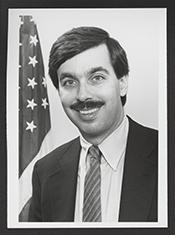
United States · United States Congress · 12 May 1993
Many Neighbors, One Earth Resolution - Urges the President to develop and implement a coordinated economic and development policy and program of action designed to promote broadbased, sustainable development that will reduce global hunger and poverty in environmentally sound ways. Specifies that such policy and program should have as its principal objectives: (1) expanding economic opportunities; (2) meeting basic human needs; (3) promoting environmental protection and sustainable use of natural resources; and (4) promoting pluralism, democratic participation, and human rights. Specifies that such policy and program should involve all relevant international activities of the U.S. Government. Urges the President to take specific actions, including: (1) proposing the enactment of legislation providing for a post-Cold War foreign assistance program to promote sustainable development, especially the reduction of hunger and poverty in environmentally sound ways; (2) developing and implementing development cooperation programs and projects in pursuit of such objectives; (3) ensuring that development cooperation programs take into account relevant local perspectives of the rural and urban poor during the design, planning, and implementation process for project and program assistance; and (4) encouraging and supporting the efforts of countries to reduce their level of military spending when such spending is disproportionate to security needs and to spending on health, education, and environmental protection.
United States · United States Congress · 6 May 1993
TABLE OF CONTENTS: Title I: Programs and Related Provisions Subtitle A: Programs Subtitle B: Related Provisions Title II: Organization Title III: Reauthorization Subtitle A: National and Community Service Act of 1990 Subtitle B: Domestic Volunteer Service Act of 1973 Title IV: Technical and Conforming Amendments National Service Trust Act of 1993 - Amends the National and Community Service Act of 1990 and the Domestic Volunteer Service Act of 1973 to reauthorize, revise, and reorganize national and community service and domestic volunteer programs, establish a Corporation for National Service and a National Service Trust program of Federal investment in support of national service, and provide expanded opportunities for national service and educational awards for participants. Title I: Programs and Related Provisions - Subtitle A: Programs - (Sec. 101) Amends the National and Community Service Act of 1990 (the Act) to establish the National Service Trust program, replacing the current American Conservation and Youth Service Corps. Authorizes the Corporation for National Service (CNS) to make matching grants to State and local governments, Indian tribes, public and private nonprofit organizations, and higher education institutions for: (1) full- or part-time national service programs, including summer programs; and (2) subgrants for national service programs of other entities. Authorizes CNS to enter into agreements with other Federal agencies to support their national service programs. Directs CNS to approve national service educational awards for participants serving in CNS-assisted national service programs. Describes types of eligible national service programs addressing unmet human, educational, environmental, or public safety needs, including community corps, youth corps, service-learning, special skills or specialized training, individualized placement, campus-based, preprofessional training, professional corps, disadvantaged youth community service, national service entrepreneur, intergenerational, or other programs. Directs CNS to establish qualification criteria. Authorizes CNS to provide the following types of program assistance: planning, operational, replication, subgrantee, training, technical, and other special assistance (including support for State commissions and challenge grants for national service programs). Requires CNS to ensure that participants in VISTA or the Civilian Community Corps receive national service educational awards, except in specified circumstances. Sets forth application and program requirements. Requires an assurance that the program assisted will not perform service that provides a direct benefit to any: (1) for-profit business; (2) labor union; (3) partisan political organization; or (4) organization engaged in religious activities (unless such service does not involve use of assistance or participants to give religious instruction, conduct worship services, or engage in any form of proselytization). Sets a minimum age for national service participants of 17, except for certain youth programs where the beginning of service may be between age 16 and 25. Sets rules for selection of participants, including selection and training of a national leadership pool. Sets a term of service at a minimum of 1,700 hours during: (1) a full-time period of nine months to one year; or (2) a part-time period of one to two years. Establishes requirements for participant living allowances. Limits the Federal share to not more than 85 percent of the VISTA volunteer allowance. Makes those who serve in approved national service positions eligible for national service educational awards. (Sec. 102) Establishes the National Service Trust in the Treasury to provide for the payment of national service educational awards. Sets forth eligibility standards for national service educational awards. Bases such awards on only the first and second terms of service. Requires that the award be used within five years after completion of the term of service. Sets the award's value at $5,000 for each term of service (up to two terms). Allows the use of such awards to: (1) repay outstanding student loans; (2) pay current educational expenses; (3) enable participation in approved school-to-work programs; and (4) pay interest during forbearance on loan repayment. Provides that awards shall not be considered: (1) in a means-test for Federal or federally-assisted benefits; or (2) as taxable income under the Internal Revenue Code. Makes conforming amendments to student loan provisions of the Higher Education Act of 1965 (HEA). Makes Stafford loan forgiveness available. (Sec. 103) Establishes School-Based and Community-Based Service-Learning programs to replace current Programs for Students and Out-of-School Youth. Revises the Serve-America program (currently named Service-America) to include: (1) school-based programs for students; (2) community-based service programs for school-age youth; and (3) a service-learning clearinghouse. Authorizes CNS to make planning grants to local educational agencies (LEAs) with respect to service-learning coordinators participating in an assisted national service program or receive a national service educational award. Authorizes grants for school-based service-learning programs and community-based service programs. Directs CNS to provide financial assistance to eligible public and private nonprofit organizations to establish a service-learning clearinghouse. Adds priority criteria for the making of grants for Higher Education Innovative Programs for Community Service. (Sec. 104) Establishes an Investment for Quality and Innovation program to carry out specified innovation and quality improvement activities. Directs CNS to provide assistance to appropriate entities to establish one or more clearinghouses, including the service-learning clearinghouse. Authorizes the President, acting through CNS, to make Presidential awards for service to individuals providing significant service, and to outstanding service programs. Provides that Civilian Community Corps members may receive educational awards (or suitable alternative benefits if ineligible for such awards). Amends the National Defense Authorization Act for Fiscal Year 1993 to extend the authority to conduct the Civilian Community Corps Demonstration Program. Subtitle B: Related Provisions - (Sec. 111-121) Makes conforming amendments and repealers to specified Federal law. Title II: Organization - (Sec. 201) Amends the National and Community Service Act of 1990 to require the establishment of State commissions on national service as a condition for receiving certain grants or allotments or a distribution of approved national service positions. Sets commission membership standards, and duties, including planning. (Sec. 202) Establishes the Corporation for National Service (CNS) as a Government corporation to administer programs under the Act. Amends the Domestic Volunteer Service Act of 1973 to require the Director of the ACTION Agency to report directly to the CNS Chairperson (under interim authorities). Directs the Chairperson to establish (or request the Director of the Office of Personnel Management to provide) job search and related assistance to employees of the ACTION Agency who are not transferred to CNS. (Sec. 202 & 203) Transfers to CNS functions of: (1) the Commission on National and Community Service (under interim authorities); and (2) the ACTION Agency (under final authorities). Title III: Reauthorization - Subtitle A: National and Community Service Act of 1990 - Extends the authorization of appropriations for the National and Community Service Act of 1990. Subtitle B: Domestic Volunteer Service Act of 1973 - Domestic Volunteer Service Act Amendments of 1993 - Amends the Domestic Volunteer Service Act of 1978 (DVSA) to reauthorize, reorganize, and revise its programs. Chapter I: VISTA and Other Anti-Poverty Programs - (Sec. 321) Adds to VISTA program objectives generating private sector resource commitment, encouraging local level volunteer service, and strengthening local agencies and organizations to carry out the program. (Sec. 322) Revises procedures and other requirements for selection and assignment of VISTA volunteers. Allows a sponsoring organization to recruit VISTA volunteers, subject to final approval of the Director of the ACTION Agency (the Director). (Sec. 323) Revises provisions for terms and periods of service. Authorizes a VISTA summer associates program. (Sec. 324) Revises postservice stipends. (Sec. 325) Requires encouragement of participation of both younger (18 through 27) and older (55 and older) VISTA volunteers. (Sec. 328) Repeals authority for student community service programs grants and contracts. (Sec. 329) Renames the University Year for ACTION the University Year for VISTA program. Shortens the minimum period of participation to an academic semester or equivalent. Allows volunteers to receive a living allowance or such other support the Director deems appropriate. (Sec. 330) Revises authority to establish and operate special volunteer and demonstration programs. Requires a competitive process for any grant or contract exceeding $100,000. (Sec. 331) Permits the Director to provide technical and financial assistance to employers and other private organizations that use or desire to use volunteers. (Sec. 332) Repeals a separate authority for drug abuse education and prevention programs under special volunteer programs. Chapter 2: National Senior Volunteer Corps - (Sec. 342) Renames the retired senior volunteer program the Retired and Senior Volunteer Program (RSVP). (Sec. 343) Expands RSVP eligibility to include older working persons and those over 55 (currently 60). (Sec. 345) Requires certain adjustments and minimums for stipends for low-income volunteers. (Sec. 346) Allows non-low-income persons to participate in the Foster Grandparent and the Senior Companion programs, without any financial support except reimbursement for related expenses. (Sec. 347) Repeals certain conditions for grants and contracts under those two programs, including a requirement that volunteers no longer be in the regular work force. (Sec. 348) Eliminates one type of evaluation of the Senior Companion Program. (Sec. 349) Encourages agreements with other Federal agencies involving retired, senior, intergenerational, and conservation volunteer programs. (Sec. 352) Authorizes grants and contracts for demonstration programs of innovative activities involving older volunteers. Prohibits reducing other older volunteer programs to support such demonstrations. Chapter 3: Administration - (Sec. 365) Bases disability or death benefits for VISTA volunteers on a grade GS-5 (rather than GS-7) Federal employee entrance salary. (Sec. 370) Grants copyright protection for the programs of the ACTION Agency. (Sec. 371) Authorizes the Director to establish a Center for Research and Training on Volunteerism. (Sec. 372) Amends Federal law relating to Federal employees to make retirement credit for time served as a VISTA volunteer available to all who become Federal employees subsequent to such volunteer service, upon their paying a deposit based on their post-service stipend. Chapter 4: Authorization of Appropriations and Other Amendments - (Sec. 381-383) Extends the authorization of appropriations for various programs under the Domestic Volunteer Service Act of 1973. (Sec. 385) Repeals Youthbuild Projects authority. Chapter 5: General Provisions - (Sec. 391) Sets forth technical and conforming amendments. Title IV: Technical and Conforming Amendments - (Sec. 401-405) Sets forth various changes of definitions and references in specified Federal law.
United States · United States Congress · 4 May 1993
Calls for the U.S. Trade Representative to insist that any trade agreement negotiated pursuant to the Uruguay Round must provide U.S. copyright-based industries with: (1) fair and equal access to the markets of the nations that are party to the General Agreement on Tariffs and Trade; (2) equal opportunities to obtain government funding; (3) adequate and effective copyright protection, including full national treatment and recognition of contractual rights; and (4) a mechanism to resolve expeditiously disputes concerning market access, national treatment, and copyright protection.
United States · United States Congress · 29 April 1993
Provides that any amount remaining in an official allowance of a Member of the House of Representatives at the end of the session of Congress or other period for which the allowance is made available shall be returned to the Treasury to be used for deficit reduction.
United States · United States Congress · 27 April 1993
Disregards payments made to victims of Nazi persecution in determining eligibility for and the amount of need-based benefits and services under any Federal or federally assisted program.
United States · United States Congress · 26 April 1993
Superconducting Super Collider Immediate Termination Act of 1993 - Prohibits the use or obligation of Federal funds for the Superconducting Super Collider Project, except as necessary for Project termination.
United States · United States Congress · 26 April 1993
Wool and Mohair Price Support Program Termination Act of 1993 - Repeals the National Wool Act of 1954 (thus eliminating wool and mohair price supports).
United States · United States Congress · 22 April 1993
Saguaro National Park Establishment and Expansion Act of 1993 - Redesignates the Saguaro National Monument in Arizona as the Saguaro National Park. Revises the boundaries of the Tucson Mountain District of the Park to include certain lands. Withdraws Federal lands within the Park from public land, mining, and mineral leasing laws and from the Geothermal Steam Act of 1970. Transfers Bureau of Land Management lands within the Park to the National Park Service. Authorizes the transfer of any Federal property located within the boundaries of the Park which is administered by any other U.S. department or agency to the administrative jurisdiction of the Secretary of the Interior for purposes of the Park. Permits acquisition of lands within the boundaries of the Park which are owned by Arizona or any political subdivision only by donation or purchase with donated or appropriated funds. Authorizes appropriations.
United States · United States Congress · 20 April 1993
Resolution Trust Corporation Compensation Reform Act of 1993 - Amends the Federal Home Loan Bank Act and the Federal Deposit Insurance Act to set limitations upon the compensation (including bonuses and regional pay differentials) received by employees of: (1) the Thrift Depositor Protection Oversight Board; (2) the Resolution Trust Corporation; and (3) the Federal Deposit Insurance Corporation.
United States · United States Congress · 5 April 1993
Women in Military Service for America Memorial Commemorative Coin Act - Directs the Secretary of the Treasury to issue five-dollar gold coins and one-dollar silver coins symbolic of women's service in the armed forces.
United States · United States Congress · 2 April 1993
Aeronautical Technology Consortium Act of 1993 - Directs the President to establish: (1) an Aeronautical Technology Program to coordinate Federal research programs relating to aeronautical and related manufacturing technologies, and promote their civilian transfer and commercial application; and (2) a National Aeronautics Strategy to implement the Program. Declares that the Program shall be administered through an Aeronautical Technology Coordinating Committee, which shall provide assistance to a private sector Aeronautical Technology Consortium. Establishes an Aeronautical Technology Advisory Committee.
United States · United States Congress · 1 April 1993
Expedited Rescissions Act of 1993 - Amends the Congressional Budget and Impoundment Control Act of 1974 to allow the President to transmit to both Houses of the Congress, for expedited consideration, one special message proposing to rescind all or part of any item of budget authority provided in an appropriation bill. Requires that such special message be transmitted not later than three days after the President approves the appropriation bill and be accompanied by a draft bill or joint resolution that would, if enacted, rescind the budget authority proposed to be rescinded. Sets forth House and Senate procedures for the expedited consideration of such a proposal. Provides a special transition rule for messages of the 104th Congress proposing to rescind certain budget authority of the 103d Congress. Provides judicial review of congressional actions under this Act.
United States · United States Congress · 1 April 1993
1994 Vietnam Veterans Memorial Commemorative Coin Act - Directs the Secretary of the Treasury to issue one-dollar silver coins emblematic of the Vietnam Veterans Memorial. Mandates that surcharges from the sale of such coins be paid to the Vietnam Veterans Memorial Fund to help raise an endowment to be a permanent source of support for the Memorial.
United States · United States Congress · 1 April 1993
Wool and Mohair Federal Support Program Elimination and Deficit Reduction Act of 1993 - Repeals the National Wool Act of 1954 (thus eliminating wool and mohair price supports).
United States · United States Congress · 31 March 1993
Repeals the Helium Act (an Act concerned mainly with the extraction and recovery of helium for national defense purposes). Directs the Secretary of the Interior to sell or otherwise dispose of: (1) all facilities, equipment, and real or personal property held for activities under such Act; and (2) all helium reserves held by the United States other than those required for specific immediate needs. Requires sale proceeds to be used solely to reduce outstanding Federal debt.
United States · United States Congress · 25 March 1993
National Defense Stockpile Modernization Act of 1993 - Directs the President to dispose of specified excess or obsolete materials in the National Defense Stockpile (NDS), in specified amounts. Limits the disposal of silver to coin only. Repeals all previous disposal authority of the President or the NDS Stockpile Manager. Directs the President to acquire additional quantities of strategic and critical materials for the NDS determined to be in deficient supply. Requires the disposals and acquisitions mandated under this Act to be completed by the end of FY 2002 and accomplished in compliance with requirements of the Strategic and Critical Materials Stock Piling Act. Authorizes the President to use barter arrangements to achieve such disposals and acquisitions. Outlines provisions for: (1) annual quantity rates for acquisitions and disposals; and (2) deposits of proceeds from sales of disposed materials into the National Defense Stockpile Transaction Fund. Directs the President to report to the Congress on the manner in which the President will implement and carry out the disposals and acquisitions required under this Act. Amends the Strategic and Critical Materials Stock Piling Act to repeal a requirement prohibiting a stockpile disposal that would result in an unobligated balance in the Fund in excess of $100 million.
United States · United States Congress · 25 March 1993
Amends the Agricultural Act of 1949 to repeal the tobacco price support program. Amends the Agricultural Adjustment Act of 1938 to repeal tobacco marketing quota provisions.
United States · United States Congress · 18 March 1993
Ethics in Government Reform Act of 1993 - Codifies in the Federal criminal code the lobbying restrictions on senior executive branch appointees under Executive Order 12834, generally, and with certain technical changes, and extends those restrictions to the Vice President, Members of Congress, and highly paid staffers. Prohibits the President, Vice President, Members of Congress, and certain other Federal officials from receiving gifts from a foreign government after their Federal service or employment ends.
United States · United States Congress · 18 March 1993
Animal Medicinal Drug Use Clarification Act of 1993 - Amends the Federal Food, Drug, and Cosmetic Act to permit the extra-label use of drugs in animals if such use is upon the order of licensed veterinarian, is in compliance with appropriate regulations, and is in the context of a veterinarian-client-patient relationship. Prohibits such use if it results in unacceptable residues of a drug in food.
United States · United States Congress · 11 March 1993
United States One Dollar Coin Act of 1993 - Amends Federal currency law to prescribe the color and content of one-dollar coins. Mandates that the reverse side of the one-dollar coin have a design recognizing America's veterans. Directs the Secretary of the Treasury to cease regular production of one-dollar Federal Reserve notes by a specified date (except for such quantities as are required to meet collectors' needs).
United States · United States Congress · 11 March 1993
Religious Freedom Restoration Act of 1993 - Prohibits any agency, department, or official of the United States or any State (the government) from burdening a person's exercise of religion even if the burden results from a rule of general applicability, except that the government may burden a person's exercise of religion only if it demonstrates that application of the burden to the person: (1) furthers a compelling governmental interest; and (2) is the least restrictive means of furthering that compelling governmental interest. Sets forth provisions pertaining to judicial relief, attorney's fees, and applicability.
United States · United States Congress · 10 March 1993
TABLE OF CONTENTS: Title I: Safety and Health Programs Title II: Safety and Health Committees and Employee Safety and Health Representatives Title III: Coverage Title IV: Occupational Safety and Health Standards Title V: Enforcement Title VI: Protection of Employees from Discrimination Title VII: Technical Assistance and Training Title VIII: Recordkeeping and Reporting Title IX: NIOSH Title X: State Plans Title XI: Victim's Rights Title XII: Construction Safety Title XIII: Worker's Compensation Study Title XIV: Administration Title XV: Effective Date Comprehensive Occupational Safety and Health Reform Act - Amends the Occupational Safety and Health Act of 1970 (OSHA) with respect to occupational safety and health programs, committees, employee representatives, coverage, standards, enforcement, antidiscrimination, training and education, hazard and illness evaluation, State plans, and victims' rights. Title I: Safety and Health Programs - (Sec. 101) Amends requirements for each employer to set up and carry out a written occupational safety and health program that includes specified methods and procedures. Title II: Safety and Health Committees and Employee Safety and Health Representatives - (Sec. 201) Amends OSHA to require each employer of 11 or more employees (each for 20 or more hours per week) to provide for: (1) health committees; and (2) employee safety and health representatives. Authorizes the Secretary of Labor (the Secretary), upon the employer's application, to approve establishment of an alternative method of employee participation in worksite health and safety activities in a manner at least as effective as committee participation, if such alternative mechanism meets specified conditions. Provides for employee participation in the Secretary's inspections of workplaces. Title III: Coverage - (Sec. 301) Revises the OSHA definition of employer to extend OSHA coverage to States and local government employees. (Sec. 302) Directs the Committee on House Administration of the House of Representatives to establish a comprehensive occupational safety and health program meeting specified OSHA and other requirements. (Sec. 303) Applies OSHA to employment performed in Federal nuclear facilities under the control or jurisdiction of the Department of Energy. (Sec. 304) Extends an employer's duties under OSHA to all employees working at the place of employment (even if they are not the employer's employees). Title IV: Occupational Safety and Health Standards - (Sec. 401) Specifies timeframes and procedures for setting OSHA standards. (Sec. 403) Requires each OSHA standard to prescribe requirements for recording or reporting work-related adverse medical conditions determined as a result of medical examinations or test. (Sec. 404) Requires public disclosure of all communications on OSHA standards with parties outside the Department of Labor, including those with executive branch officials (except the President). (Sec. 405) Directs the Secretary, in cooperation with the Secretary of Health and Human Services (HHS) acting through the National Institute for Occupational Safety and Health (NIOSH) to modify and establish exposure limits for toxic materials and harmful physical agents on a regular basis in a specified manner. (Sec. 406 and 407) Directs the Secretary to promulgate final standards: (1) on exposure monitoring and medical surveillance programs; and (2) on ergonomic hazards to protect employees from work-related musculoskeletal disorders. (Sec. 408) Requires that emergency temporary standards: (1) be issued based on the best available evidence; and (2) remain in effect for no more than 18 months (currently six months). (Sec. 409) Directs the Secretary to issue, within 60 days, an interim final regulation reducing permissible exposure limits to toxic substances, including a specified final rule on air contaminants and a proposed rule on air contaminants for construction, agriculture, and maritime. Title V: Enforcement - (Sec. 501) Provides that time spent by an employee in accompanying the Secretary's representative on an OSHA inspection shall be deemed hours worked, with no loss of wages, benefits, or other terms and conditions of employent. (Sec. 502) Requires the Secretary to notify employees or their representatives, within 30 days after receipt of their request for inspection, of the Secretary's determination that there are no reasonable grounds to believe a violation or danger exists. (Sec. 503) Requires the Secretary to make a special inspection upon notification by any Federal or State agency of reasonable grounds to believe that a violation of OSHA or specified safety and health standards exists that threatens physical harm. (Sec. 504) Directs the Secretary to carry out a special emphasis inspection program for conducting inspections of industries or operations where existing hazards or newly recognized or new hazards introduced into work sites warrant more intensive than normal inspections. (Sec. 505) Requires the Secretary to investigate any work-related death or serious incident resulting in hospitalization of two or more employees. Requires the employer to: (1) notify the Secretary of any death or serious incident occurring in a place of employment covered by OSHA; and (2) prevent the destruction or alteration of evidence that would assist in an investigation. (Sec. 506) Revises provisions for abatement of serious hazards during employer contests to a citation. (Sec. 507) Grants employees the right to contest a citation's designation of the character of a violation or any proposed penalties as inadequate. (Sec. 508) Grants employee representatives the right to participate in other proceedings (as well as hearings) conducted under specified OSHA enforcement procedures. (Sec. 509) Requires the Occupational Safety and Health Review Commission's rules of procedure to provide for prompt notice to affected employees or their representatives if the Secretary intends to withdraw or modify a citation as a result of any agreement with the employer. Grants employees or their representative, regardless of whether they have previously elected to participate in the proceedings, the right to object to modifications or withdrawals of citations. (Sec. 510) Revises OSHA provisions for restraining imminent dangers. Grants employees the right to refuse to perform a duty identified as the source of an imminent danger, and prohibits discrimination against them for such refusal. Specifies a civil penalty against an employer for each day during which an employee continues to be exposed. (Sec. 511) Authorizes the Secretary to issue citations and assess penalties for violations of specified OSHA provisions relating to: (1) inspections, investigations, and recordkeeping; (2) safety and health programs; (3) safety and health committees; and (4) construction plans and programs. (Sec. 512) Revises OSHA criminal penalties to subject to them not only the employer but also certain officers, management officials, and supervisiors. Increases the maximum amount of fines and length of prison terms for specified violations. Establishes criminal penalties for a willful violation that causes serious bodily injury (currently, death only). Prohibits a penalty or fine imposed on a director, officer, or agent of an employer from being paid out of the employer's assets. Provides that nothing in OSHA shall preclude State and local law enforcement agencies from conducting criminal prosecutions. (Sec. 514) Directs the Secretary to establish an effective system for targeting inspections of worksites, with priority given to those with a high potential for death, serious injury, or exposures to toxic materials or harmful physical agents. (Sec. 515) Provides for the vacating of specified citations for violations if the employer demonstrates that certain conditions involving adequate employee training and work rule enforcement have been met. (Sec. 516) Increases the minimum penalty for specified types of serious offenses. Title VI: Protection of Employees from Discrimination - (Sec. 601) Extends OSHA antidiscrimination coverage to employees: (1) reporting any injury, illness, or unsafe condition to the employer, employer's agent, safety and health committee, or employee safety and health representative; and (2) refusing to perform duties when reasonably apprehensive that doing so would result in serious injury to themselves or other employees, after having sought and been unable to obtain from the employer corrections of the circumstances causing such refusal. Revises procedures for consideration of discrimination complaints. Revises remedies. (Sec. 602) Requires the Secretary's regulations to include provisions requiring employers to post employee rights protections under such OSHA antidiscrimination provisions. Title VII: Technical Assistance and Training - (Section 701) Requires the Secretary to develop and disseminate curricula, model programs, and other information and materials to assist employers in complying with OSHA standards and requirements for safety and health programs, employee training and education, and safety and health committees. Directs the Secrtary to establish a program to provide technical assistance and consultative services concerning worksite safety and health to employers and employees. Requires targeting of such assistance and consultation at small employers, high hazard worksites, and high hazard industries. Establishes in the Treasury a revolving fund, the OSHA Assistance Fund, to pay for such programs. Directs the Secretary to impose fees to offset program costs. Title VIII: Recordkeeping and Reporting - (Sec. 801) Requires the Secretary to collect information and conduct analyses identifying: (1) industries, employers, processes, operations, and occupations, with a high rate of injury or illness; (2) factors that cause or contribute to injuries and illnesses; (3) workers' compensation costs associated with injuries and illnesses; and (4) employee exposure to toxic substances and harmful physical agents. Directs the Secretary to require each employer covered by OSHA to report: (1) each work-related death of an employee immediately upon knowledge; and (2) each serious incident resulting in hospitalization of two or more employees within 24 hours of the incident. (Sec. 802) Revises OSHA requirements for employer records and reports to include work-related illnesses reported by an employee or an employee's physician, unless the employer determines the illness is not work-related. (Sec. 803) Requires all such employer records and reports to be made available to the Secretary, the Secretary of HHS, employees, and employee representatives. Title IX: NIOSH - (Sec. 901) Requires NIOSH hazard to evaluation reports to evaluate whether any potentially hazardous condition or harmful physical agent found in the place of employment poses a risk to exposed employees. (Sec. 902) Directs the Secretary of HHS to identify major factors contributing to occupational injuries and deaths through accident investigations and epidemiological research. (Sec. 903) Extends the authority of the Secretary of HHS, and of NIOSH, to inspect records to the Secretary's designees and contractors. (Sec. 904) Directs the Secretary of HHS, to establish a national surveillance program to identify cases of occupational illnesses, deaths, and serious injuries. (Sec. 905) Establishes NIOSH as a separate agency within the U.S. Public Health Service in the Department of HHS. (Sec. 907) Includes education programs for employees and members of safety and health committees under NIOSH training provisions. Title X: State Plans - (Sec. 1001 and Sec. 1002) Revises OSHA requirements for State plans to provide for: (1) development of safety and health programs and safety and health committees and training programs that are at least as effective as those under the new OSHA requirements; and (2) reporting requirements, protection of employee rights, and access to information that are at least as effective as those under OSHA or other Federal laws governing access to information related to OSHA. (Sec. 1003) Requires a State to enforce a Federal OSHA standard until a State standard at least as effective is in effect, if a State fails to adopt or promulgate such a standard within six months after the Federal standard is promulgated. (Sec. 1004 and Sec. 1005) Sets forth requirements and procedures for the Secretary of Labor to: (1) investigate complaints against a State's compliance with and enforcement of the State plan; and (2) take corrective action against such State noncompliance. (Sec. 1006) Requires States operating State safety and health plans to conform them to this Act. Title XI: Victim's Rights - (Sec. 1101) Provides for victims' rights under OSHA, including family members as well as the injured employee. Title XII: Construction Safety - (Sec. 1202) Amends OSHA to establish in the Occupational Safety and Health Administration (the Administration) an Office of Construction Safety, Health, and Education (the Office). Directs the Secretary of Labor (the Secretary) to: (1) identify construction employers with high rates of fatalities or lost workday injuries or illnesses or with patterns of noncompliance with health and safety requirements; (2) develop a system for notifying such employers; (3) establish courses and curricula for training OSHA inspectors an other OSHA employees with construction safety and health duties; (4) establish model compliance programs and assist employers, employees, and their representative organizations in setting up their training programs; and (5) establish a toll-free line on which reports, complaints, and notifications required under OSHA may be made. Establishes within the Administration the position of Deputy Assistant Secretary of Labor for Construction. (Sec. 1203) Establishes requirements for construction safety and health plans and programs, involving construction employers and designated project constructors and coordinators. (Sec. 1204) Directs the Secretary to establish an effective targeting system for general schedule construction inspections. Directs the Secretary to require constructors to report promptly any incident involving construction work that results in a fatality, an injury or illness causing two or more hospitalizations, or a structural failure or fire or explosion which caused or could have caused serious bodily injury to employees. (Sec. 1205) Expands the advisory jurisdiction of the Advisory Committee on Construction Safety and Health (the Committee). (Sec. 1206) Requires any State construction safety and health plan to contain requirements at least as effective as those imposed by the Act and the Contract Work Hours and Safety Standards Act. (Sec. 1207) Establishes in OSHA a Construction Safety and Health Academy to train OSHA employees who conduct construction worksite inspections and others the Secretary considers appropriate. (Sec. 1208) Considers a project constructor an employer for specified OSHA enforcement purposes. (Sec. 1209) Directs the Secretary to report to the President and the Congress annually on the construction industry and after three years on whether the office should be continued or a Construction Industry Safety and Health Administration should be established in the Department of Labor. (Sec. 1210) Directs the Secretary to recommend to specified congressional committees any legislative changes required to make safety records (including records of compliance with Federal safety and health laws and regulations) one criterion considered in the awarding of Federal construction contracts. Title XIII: Worker's Compensation Study - (Sec. 1301) Establishes the Federal Workers' Compensation Commission. Directs the Commission to study and report on workers' compensation laws and system with respect to specified issues. Title XIV: Administration - Establishes an Occupational Safety and Health Administration in the Department of Labor, to be headed by an Assistant Secretary for Occupational Safety and Health. Title XV: Effective Date - (Sec. 1501) Sets forth the effective date of this Act.
United States · United States Congress · 10 March 1993
TABLE OF CONTENTS: Title I: Legislative Reform Title II: Federal Intergovernmental Relations Fiscal Accountability and Intergovernmental Reform Act (FAIR Act) - Title I: Legislative Reform - Provides that, with certain exceptions, whenever a committee of either House reports a bill or resolution of a public character to its House mandating unfunded requirements upon State or local governments or the private sector, the report accompanying that bill or resolution shall analyze the effect of the new requirements on: (1) State and local government expenditures necessary to comply with Federal mandates; (2) private businesses; and (3) economic growth and competitiveness. Title II: Federal Intergovernmental Relations - Requires, to the fullest extent practicable, that: (1) the policies, regulations, and public laws of the United States be interpreted and administered in accordance with this Act; (2) all Federal agencies, consistent with attainment of the requirements of Federal law, minimize the adverse effects of rules affecting the economy; and (3) Federal agencies take certain actions in promulgating new rules, reviewing existing rules, developing legislative proposals, or initiating any other major Federal action affecting the economy whenever an agency identifies two or more alternatives which will satisfy the agency's statutory obligations. Provides that, whenever an agency publishes a general notice of proposed rulemaking, promulgates a final rule, or before initiating or implementing any other major Federal action affecting the economy, the agency shall prepare and make available for public comment an Intergovernmental and Economic Impact Assessment. Specifies the contents of such an assessment.
United States · United States Congress · 10 March 1993
Amends the Immigration and Nationality Act to provide that members of Hamas (commonly known as the Islamic Resistance Movement) be considered to be engaged in a terrorist activity and ineligible to receive visas and excluded from admission into the United States.
United States · United States Congress · 10 March 1993
Amends the Legislative Branch Appropriations Act, 1991 to reduce the Official Mail Allowance for each Member of the House of Representatives by 20 percent.
United States · United States Congress · 4 March 1993
Amends the Davis-Bacon Act to raise the threshold amount of contracts covered by such Act. Sets forth provisions relating to multiple contracts, apprentices, trainees, helpers, wage review, and administration of such Act. Amends the Copeland Anti-Kickback Act to revise payroll information reporting requirements. Directs the Secretary of Labor to study and report to the Congress on electronic reporting of such information.
United States · United States Congress · 4 March 1993
Limits the Official Mail Allowance for each Member of the House of Representatives for the second session of the 103d Congress to 80 percent of the allowance for the first session. Applies savings to deficit reduction.
United States · United States Congress · 3 March 1993
Subjects the purchases of district office equipment or furnishings by a departing Member of the House of Representatives to the right of the Member's successor to retain such equipment or furnishings for official use.
United States · United States Congress · 2 March 1993
Amends Federal law to increase the Federal payments in lieu of taxes to units of local government for entitlement land. Requires the Secretary of the Interior to adjust such payments by the rate of inflation according to the Consumer Price Index.
United States · United States Congress · 25 February 1993
Requires any foreign nation that conducts a nuclear weapons test in the United States to pay the costs associated with such test, including environmental restoration costs.
United States · United States Congress · 24 February 1993
TABLE OF CONTENTS: Title I: Safe Streets For Women Subtitle A: Law Enforcement and Prosecution Grants to Reduce Violent Crimes Against Women Subtitle B: Rape Prevention Programs Subtitle C: Victim Compensation Subtitle D: National Board on Violent Crime Against Women Subtitle E: Safe Campuses for Women Title II: Safe Homes for Women Subtitle A: Interstate Enforcement Subtitle B: Arrest in Domestic Violence Cases Subtitle C: Safe Homes for Immigrant Women Subtitle D: Confidentiality for Abused Persons Title III: Civil Rights Title IV: Equal Justice for Women in the Courts Subtitle A: New Evidentiary Rules Subtitle B: Education and Training for Judges and Court Personnel in State Courts Subtitle C: Education and Training for Judges and Court Personnel in Federal Courts Violence Against Women Act of 1993 - Title I: Safe Streets for Women - Safe Streets for Women Act of 1993 - Subtitle A: Law Enforcement and Prosecution Grants to Reduce Violent Crimes Against Women - Amends the Omnibus Crime Control and Safe Streets Act of 1968 (Omnibus Act) to authorize the Director of the Bureau of Justice Assistance to: (1) make grants to reduce the rate of violent crimes against women to States and nonprofit nongovernmental victim services programs, and to Indian tribes, tribal organizations, or nongovernmental domestic violence and sexual assault victim services programs on Indian reservations; and (2) request any Federal agency, with or without reimbursement, to use its authorities and resources to support such State and local efforts. (Sec. 112) Specifies that no State is entitled to funds under this title unless the State or other grantee incurs the full cost of forensic medical exams for victims of sexual assault. Subtitle B: Rape Prevention Programs - Chapter 1: Rape Prevention Grants - Authorizes the Director to make education and prevention grants to reduce sexual assaults against women. Chapter 2: Offender Training and Information Programs - Directs the: (1) National Institute of Justice to establish criteria and develop training programs to assist probation and parole officer and other personnel who work with released sex offenders in the areas of case management, supervision, and relapse prevention; and (2) Attorney General to compile information regarding sex offender treatment programs and ensure that information regarding treatment programs in the community into which a convicted sex offender is released is made available to persons imprisoned for sexual abuse offenses. Subtitle C: Victim Compensation - Amends the Federal criminal code to require that a court order restitution for violations of Federal sexual abuse laws. Subtitle D: National Board on Violent Crime Against Women - Establishes an Interagency Advisory Board on Violent Crime Against Women to assess and review, and make recommendations regarding, policies and practices of the Government regarding violence against women. Subtitle E: Safe Campuses for Women - Directs the Attorney General to provide for a national baseline study to examine the scope of the problem of campus sexual assaults and the effectiveness of institutional and legal policies in addressing such crimes and protecting victims. Title II: Safe Homes for Women - Safe Homes for Women Act - Subtitle A: Interstate Enforcement - Amends the Federal criminal code to establish penalties for traveling across a State line with the intent to: (1) contact that person's spouse or intimate partner and, in the course of such contact, intentionally committing a crime of violence causing bodily injury to such spouse or partner; and (2) engage in conduct that violates a protection order, or that would violate such order if the conduct occurred in the jurisdiction in which the order was issued, and engaging in such conduct. Requires that in any proceeding for the purpose of determining whether a defendant charged shall be released pending trial, or the conditions of such release, the alleged victim be given an opportunity to be heard regarding the danger posed by the defendant. Mandates that a court order restitution to the victim of an offense under this Act. Requires, provided that certain conditions are met, that a protection order issued by the court of one State be accorded full faith and credit by the court of another State. Subtitle B: Arrest in Domestic Violence Cases - Amends the Omnibus Act to authorize the Director to make grants to eligible States, Indian tribes, municipalities, or local governmental entities to encourage arrest policies in domestic violence cases, including mandatory arrest programs for protective order violations and improving judicial handling of domestic violence cases. Subtitle C: Safe Homes for Immigrant Women - Amends the Immigration and Nationality Act to: (1) permit an alien to petition for preference or immediate relative status under the Act (currently, only a U.S. citizen may petition claiming that an alien is entitled to such status), and provide that such a petition may only be withdrawn by the beneficiary or self-petitioner; (2) provide that an abused alien family member shall be considered to remain the spouse or child of a citizen or resident abuser after the legal termination of the marriage through which the member seeks immigrant status if specified conditions are met; and (3) provide for a stay of deportation and the granting of work authorization for abused alien family members until such time as an immigrant visa is available and the alien's application for adjustment of status has been finally adjudicated by the Attorney General (but authorizes the Attorney General to revoke the work authorization of, and initiate deportation proceedings against, any alien who has fraudulently made a claim to be an abused alien family member, if the alien has received notice of intent to revoke and has a reasonable opportunity to rebut evidence supporting the revocation). Subtitle D: Confidentiality for Abused Persons - Directs the Postmaster General to promulgate regulations to secure the confidentiality of abused persons' addresses or otherwise prohibit the disclosure of an abused person's address, subject to specified requirements. Title III: Civil Rights - Declares that all individuals within the United States, and the special maritime and territorial jurisdiction of the United States, shall have the right to be free from crimes of violence motivated by the victim's gender. Permits individuals deprived of such right to bring a civil action for compensatory damages, punitive damages, injunctive relief, declaratory relief, or any combination thereof, subject to specified limitations. Title IV: Equal Justice for Women in the Courts - Subtitle A: New Evidentiary Rules - Amends the Federal Rules of Evidence to make evidentiary rulings pursuant to Rule 412 (Rape Cases; Relevance of Victim's Past Behavior) subject to interlocutory appeal by the Government. (Sec. 402) Makes reputation or opinion evidence of the past sexual behavior of an alleged victim inadmissible in a criminal case, other than a sex offense case. Allows other types of evidence of a victim's past sexual behavior in accordance with specified procedures if its probative value outweighs the danger of unfair prejudice. (Sec. 403) Makes reputation or opinion evidence of the plaintiff's past sexual behavior inadmissible in a civil action involving allegations of actionable sexual misconduct. Allows other types of evidence of a plaintiff's past sexual behavior in accordance with specified procedures if its probative value outweighs the danger of unfair prejudice. (Sec. 404) Makes evidence of an alleged victim's clothing in a criminal case under Federal laws relating to sexual abuse inadmissible to show that the victim incited or invited the offense. Subtitle B: Education and Training for Judges and Court Personnel in State Courts - Authorizes the State Justice Institute to award grants to develop, test, present, and disseminate model programs to be used by States in training judges and court personnel in the laws of the State on rape, sexual assault, domestic violence, and other crimes of violence motivated by the victim's gender. Subtitle C: Education and Training for Judges and Court Personnel in Federal Courts - Directs the: (1) circuit judicial councils to conduct studies of the instances of gender bias in their respective circuits; (2) Judicial Conference of the United States to designate an entity within the judicial branch to act as a clearinghouse to disseminate any reports and materials issued by the gender bias task forces and to respond to requests for such reports and materials; and (3) Federal Judicial Center to include in its educational programs information on issues related to gender bias in the courts, prepare materials necessary to accomplish that end, and take into consideration the findings and recommendations of such studies and consult with individuals and groups with relevant expertise in gender bias issues as it prepares or revises such materials.
United States · United States Congress · 24 February 1993
Declares that it is the sense of the Congress that any legislation enacted to reform the health care system must: (1) ensure that every person has access to coverage for medically and psychologically necessary treatments for mental disorders that is equitable to the coverage provided for treatments of physical illnesses; and (2) meet specified requirements concerning coverage, consumer choice, financial protection, financing policies, and coordination across Federal, State, and local programs.
United States · United States Congress · 23 February 1993
Vehicle Damage Disclosure Act of 1993 - Amends the Motor Vehicle Information and Cost Savings Act to prohibit the licensing in a State of a vehicle whose ownership has been transferred unless the State discloses on the vehicle's title information indicating: (1) whether it was previously issued a title containing a word or symbol signifying that it was "salvage," "junk," "reconstructed," or "rebuilt," or that it has been damaged by flood; and (2) if it was issued such a title, which State first issued it. Requires the Secretary of Transportation to prescribe rules governing the manner in which a State shall disclose such information.
United States · United States Congress · 23 February 1993
Amends title XVIII (Medicare) of the Social Security Act to include, as a home health service, nutritional counseling provided by or under the supervision of a registered dietitian.
United States · United States Congress · 18 February 1993
Amends title II (Old Age, Survivors and Disability Insurance) (OASDI) of the Social Security Act to expand current restrictions on the payment to prisoners of OASDI benefits to include payments of OASDI benefits to individuals confined to public institutions after having been found not guilty of a criminal offense by reason of insanity or other mental disorder.
United States · United States Congress · 18 February 1993
Gift of Life Congressional Medal Act of 1993 - Directs the Secretary of the Treasury to design and strike a bronze medal in commemoration of organ donors and their families. Declares that any organ donor, or donor's family, is eligible for the medal. Requires the Secretary of Health and Human Services to arrange for medal presentation to eligible individuals through a qualified organ procurement organization. Declares the medals to be national medals. Authorizes the Secretary of the Treasury to enter into an agreement with the entity operating the Organ Procurement and Transplantation Network with respect to the solicitation of donations to offset expenditures relating to medal issuance.
United States · United States Congress · 18 February 1993
TABLE OF CONTENTS: Title I: Regulatory Impact on Credit Availability Subtitle A: General Provisions Subtitle B: Impact of Accounting and Capital Issues on Credit Availability Subtitle C: Disincentives to Risk-Taking Subtitle D: Miscellaneous Credit Availability Provisions Title II: Regulatory Micromanagement Title III: Unnecessary Cost, Paperwork and Regulation Subtitle A: General Provisions Subtitle B: Holding Company Efficiencies Title IV: Consumer Inconvenience, Paperwork, and Cost; Other Non-Supervisory Reforms Subtitle A: Consumer Benefits and Lending Process Improvements Subtitle B: Other Non-Supervisory Reforms Title V: Community Investment Economic Growth and Financial Institutions Regulatory Paperwork Reduction Act of 1993 - Title I: Regulatory Impact on Credit Availability - Subtitle A: General Provisions - (Sec. 101) Amends the Federal Deposit Insurance Act (FDIA) to direct the appropriate Federal banking agencies to minimize the negative impact upon credit availability for small business, residential, and agricultural purposes and on low-and moderate-income communities when prescribing real estate lending standards. (Sec. 102) Amends the Financial Institutions Reform, Recovery, and Enforcement Act of 1989 to direct the Appraisal Subcommittee to encourage the States to develop reciprocity agreements among themselves so as to readily authorize licensed appraisers in good standing to perform appraisals in sister States. Subtitle B: Impact of Accounting and Capital Issues on Credit Availability - (Secs. 111-113) Amends the FDIA to amend the regulatory scheme with respect to: (1) audits of insured depository institutions; (2) recourse agreements; and (3) market value accounting. (Sec. 114) Requires the Department of the Treasury to report to certain congressional committees on the effect on the national economy resulting from implementation of risk based capital standards (including the Basle international capital standards). Subtitle C: Disincentives to Risk Taking - (Sec. 121) Amends the FDIA and the Federal Credit Union Act with respect to the due process protections accorded the attachment of assets, and the statutory authority to require a depository institution to prohibit a person from alienating property under certain circumstances. Subtitle D: Miscellaneous Credit Availability Provisions - (Sec. 131) Mandates the establishment of a regulatory appeals process within each appropriate Federal banking agency and the National Credit Union Administration. (Secs. 132 and 133) Amends the Federal Reserve Act to modify the aggregate limits on insider lending for specified small banks. Mandates that certain agencies study and report to the Congress on the advisability and budgetary impact of requiring insured depository institutions to maintain sterile reserves. (Sec. 134) Amends the FDIA to prescribe guidelines under which the Federal Deposit Insurance Corporation (FDIC) may, with respect to an undercapitalized insured depository institution, waive its right to repudiate an agreement to sell credit card accounts receivable. (Sec. 135) Amends the Federal Home Loan Bank Act to permit FHLBA banks to: (1) make secured advances upon obtaining a security interest in certain nonresidential real estate-related collateral; and (2) invest surplus funds to purchase participation interests in residential construction loans originated by member institutions. Title II: Regulatory Micromanagement - (Secs. 201-204) Amends the FDIA to modify the regulatory scheme with respect to: (1) safety and soundness standards; (2) paperwork reduction; (3) rules on deposit taking; and (4) a transition period for new regulations. Title III: Unnecessary Cost, Paperwork and Regulation -Subtitle A: General Provisions - (Secs. 301-303) Amends the FDIA with respect to: (1) bank examinations; (2) coordination of State and Federal examinations; and (3) the use of accounting principles. (Secs. 304-306) Prescribes guidelines for the reduction of call report requirements and capital compliance requirements. Excludes automated teller machines and specified bank branches from FDIA branch closure notice requirements. (Sec. 307) Amends Federal law regarding monetary instruments transactions to direct the Secretary of the Treasury to annually: (1) review all regulations pertaining to monetary instruments transaction requirements, seeking public comment; and (2) publish all written rulings interpreting such law, as well as staff commentaries. (Sec. 309) Amends the FRA and the FDIA to cite conditions under which accounts of U.S. banks are shielded from liability to repay] deposits made at foreign branches. Subtitle B: Holding Company Efficiencies - (Secs. 321-325) Amends the Bank Holding Company Act of 1956 to modify the procedures under which bank holding companies: (1) are formed; and (2) acquire interests in nonbanking activities. Reduces the post-approval waiting period for bank holding company acquisition and bank mergers. Title IV: Consumer Inconvenience, Paperwork, and Cost; Other Non-Supervisory Reforms - Subtitle A: Consumer Benefits and Lending Process Improvements - (Sec. 401) Mandates a Federal Reserve study and report to the Congress on ways to streamline the credit-granting process. (Secs. 402-403) Amends the Truth in Lending Act regarding: (1) certain exemptions from credit cost disclosure requirements; (2) modification of waiver of the debtor's rescission rights; and (3) alternative disclosures for adjustable rate mortgages. (Sec. 405) Amends the Truth in Savings Act to exempt business accounts from its purview. Subtitle B: Other Non-Supervisory Reforms - (Secs. 411-413) Amends the Expedited Funds Availability Act regarding: (1) the availability of Treasury checks and local checks; (2) new accounts; and (3) the allocation of risks of loss and liability to the States and political subdivisions. (Secs. 414 and 421) Amends the Electronic Fund Transfer and the Truth in Lending Act to increase the consumer liability limit in specified circumstances of unauthorized electronic fund transfers and unauthorized use of credit cards where the cardholder has substantially contributed to the unauthorized transfer or use. (Sec. 432) Amends the Housing and Urban Development Act of 1968 to reduce the homeownership debt counseling notification requirement to no more than once per year. (Sec. 433) Prohibits a Federal banking agency from imposing data collection requirements upon an institution under its jurisdiction other than the information required under the Home Mortgage Disclosure Act of 1975. (Secs. 441 and 442) Amends the Real Estate Settlement Procedures Act of 1974 to: (1) modify the disclosure guidelines for the servicing of mortgage loans; and (2) exempt certain credit transactions from its purview. Title V: Community Investment - (Sec. 501) Amends the Community Reinvestment Act of 1977 (the Act) with respect to: (1) minimizing the regulatory paperwork costs and burdens associated with compliance; (2) conditions under which an application for a deposit facility shall not be denied on the basis of compliance; (3) granting credit to a financial institution for making investments and loans to either minority and women's depository institutions, or to entities providing benefits to distressed communities; (4) assessments of special purpose banks; and (5) the acceptability of State examinations in lieu of Federal examinations.