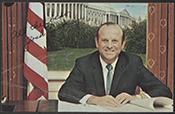
United States · United States Congress · 28 June 1976
Expresses the sense of the Congress that no individual whose social security benefits are increased should suffer, by reason of such increase, a loss of or reduction in any benefits which he or she is otherwise entitled to receive under any Federal or federally assisted program.
United States · United States Congress · 25 June 1976
National Meals-on-Wheels Act - Amends the Older Americans Act of 1965 to allow States to distribute Federal funds for the establishment of: (1) projects to provide home-delivered meals to qualified homebound elderly persons; (2) an information and referral system for homebound individuals receiving such meals; and (3) an operation to seek volunteer personnel for the delivery of such meals and to compensate such personnel for related transportation expenses. Authorizes the appropriation of specified sums in fiscal years 1977 and 1978 for the purpose of providing home-delivered meals under this Act. Directs the Commissioner of the Administration on Aging to conduct a demonstration project involving at least three States to determine the feasibility of using the meals system designed by the National Aeronautics and Space Administration for the elderly as a component of, or substitute for, regular nutrition projects assisted under the Older Americans Act of 1965. Authorizes the appropriation of such sums as may be necessary in fiscal year 1977 to carry out this project.
United States · United States Congress · 24 June 1976
Immigration and Nationality Act Amendments - Sets immigration quotas under the Immigration and Nationality Act for aliens from Eastern Hemisphere countries at 45,000 per quarter and 170,000 per year and for aliens from Western Hemisphere countries at 32,000 per quarter and 120,000 per year. States that whenever the maximum number of visas or conditional entries have been made under the Act to natives of any single foreign state or dependent area, in the next following fiscal year a number of visas and conditional entries up to 20,000 in the case of a foreign state or 600 in the case of a dependent area shall be made available pursuant to priorities set forth in this Act. States that aliens seeking to enter the United States to perform labor in the teaching profession, sciences, or the arts may enter if they are as qualified as Americans holding such jobs or if they have exceptional ability in the sciences or the arts (present law requires that such persons be better qualified for such jobs than those United States citizens seeking such jobs). Directs that when the status of a Cuban alien residing in the United States before the enactment of this Act is changed to permanent resident, such change will not be reflected in any immigration quota.
United States · United States Congress · 23 June 1976
Establishes in the House of Representatives a select committee to be known as the Select Committee on Narcotics Abuse and Control. Provides that the select committee shall conduct a continuing comprehensive study and review of the problems of narcotics abuse and control and shall review any recommendations made by the President, or by any department or agency of the executive branch of the Federal Government, relating to programs or policies affecting narcotics abuse or control. Authorizes the select committee to conduct field investigations or inspections. Requires the select committee to submit an annual report to the House which shall include a summary of the activities of the select committee during the calendar year to which such report applies.
United States · United States Congress · 18 June 1976
Older Americans Home Services and Catastrophic Insurance Act - Title I: Home Care for the Elderly and the Disabled - Establishes a voluntary home care benefits program for aged and disabled individuals who are eligible for medicare benefits, such program to be financed with contributions from funds appropriated by the Federal Government and contributions by the States. Includes within such coverage home health services, homemaker services, nutrition services, long- term institutional care services, day care and foster home services, and community mental health center outpatient services. Stipulates that such benefits shall not go into effect in a State until the Secretary of Health, Education, and Welfare has determined that such State has an agency able to perform the requisite functions under this title and such agency submits to the Secretary a satisfactory plan for operation of a home care benefits program. Creates within the United States Treasury the Federal Home Care Trust Fund, supervised by a Board of Trustees who shall report annually to Congress on the operation and status of the Fund. Authorizes the appropriation to the Trust Fund of such sums as are necessary to carry out this title. Requires participating community home care centers to: (1) furnish services as directed by this title; (2) evaluate and certify the home care needs of eligible individuals; (3) maintain a continuous relationship with each individual receiving items and services; (4) allow full opportunity for individuals and their families to participate in the determinations and functions under this program; (5) make known its existence and location to all eligible individuals in its service area; and (6) submit to the State home care agency an annual report on its activities. Directs the Secretary to pay to each State which has a State home care agency an amount equal to 75 percent of the total amount expended during each quarter as payment to community home care centers. Directs the Secretary to determine whether an individual is entitled to benefits under this title. Entitles any individual dissatisfied with such determination to a hearing and judicial review of the Secretary's final decision. Title II: Catastrophic Health Insurance Coverage for the Elderly and the Disabled - Amends the Social Security Act to extend Medicare coverage of hospital care for the aged to remove time limitations on the coverage of inpatient hospital services and posthospital extended care services. Restructures the limitations on coinsurance under the hospital insurance plan and under the supplementary medical insurance program. Authorizes the appropriation, from time to time, to the Federal Hospital Insurance Trust Fund and the Federal Supplementary Medical Insurance Trust Fund, of such sums as the Secretary deems necessary to compensate for the increased benefit costs of catastrophic coverage.
United States · United States Congress · 15 June 1976
Refugee Act - Permits the Attorney General, under the Immigration and Nationality Act, to admit up to 20,000 refugees to the United States. Provides that not more than 5,000 of such admissions may be available to adjust to permanent residence status. Authorizes the President to admit refugees to the United States upon appeal from an international refugee migration organization of which the United States is a member and upon such organization's determination that a emergency refugee situation exists if the President determines that other countries will accept their fair share of refugees. Limits the number of such entering refugees to 15 percent of the total refugee caseload or 5,000, whichever is less. Authorizes the President to admit up to 20,000 such refugees whether or not recommended by such an organization after consultation with the Committees on the Judiciary of the Senate and House of Representatives after he has determined that an emergency refugee situation exists and that admission of such refugees will significantly promote the national interest and is justified by grave humanitarian concerns. Requires the President to discontinue such admission if it is disapproved by resolution by either House of Congress. Requires the President to report to Congress any exercise of powers under this Act. Permits any alien admitted to the United States under this Act to be admitted as a permanent resident if approved by the Immigration and Naturalization Service two years after such alien has entered the United States. States that permanent resident status will be granted to such alien notwithstanding immigration quotas. Makes this Act effective October 1, 1976.
United States · United States Congress · 15 June 1976
Amends the Internal Revenue Code to allow a deduction to individuals who rent their principal residences for a portion of the real property taxes paid or accrued by their landlord.
United States · United States Congress · 15 June 1976
Condemns the Soviet Union's failure to observe existing international conventions to which it is a party, especially the restriction respecting the delivery of parcels.
United States · United States Congress · 14 June 1976
Expresses the sense of the House of Representatives that the United States Postal Service shall not close or suspend the operation of any post offices, unless there is a clear and compelling need to do so. Encourages the service to continue cost-cutting programs which do not affect levels of service.
United States · United States Congress · 9 June 1976
Extends the delimiting period in the case of any eligible veteran who is pursuing, during his or her tenth year of eligibility, a program of education. Terminates such extension on whichever of the following dates first occurs: (1) the date on which the veteran completes, or ceases to pursue, the program he was pursuing in his tenth year of eligibility; or (2) the last day of the 11-year period beginning on the date of his discharge from active duty. (Adds 38 U.S.C. 1662(e))
United States · United States Congress · 3 June 1976
Provides that any person who sells or transfers for profit cigarettes in quantities exceeding 4,000 cigarettes whereby such cigarettes are delivered for transportation into a State taxing the sale or use of cigarettes, for the account or use of any person other than a distributor licensed by or located in such State shall file with the tobacco tax administrator of the State into which the cigarettes are transported a statement containing the identity of the person to whom the cigarettes are transferred. Provides that any person who transports cigarettes in a quantity exceeding 4,000 into or through a State taxing the sale or use of cigarettes shall have in his possession, and shall, upon request, show to any Federal, State, or local official, invoices, bills of sale, or delivery tickets showing the name and complete address of the person or persons who will assume liability for the payment of applicable taxes in such State. Prohibits the transportation by any person of more than 4,000 cigarettes into any State in violation of State law imposing a tax on the sale or use of cigarettes.
United States · United States Congress · 2 June 1976
Amends Title II (Old-Age, Survivors, and Disability Insurance) of the Social Security Act to entitle widows and widowers who are under a disability to receive unreduced widow's and widower's benefits without regard to age.
United States · United States Congress · 2 June 1976
Directs the House Select Committee on Aging and the Senate Special Committee on Aging to jointly sponsor, plan, and conduct a Congressional Conference on Aging in 1977. States that the conference shall review the reports of the 1971 White House Conference on Aging, and develop legislative recommendations for developing a national policy toward the improvement of the conditions of older persons in the United States. Authorizes $750,000 from the General Treasury of the United States to carry out the provisions of this joint resolution.
United States · United States Congress · 1 June 1976
Recommends that the Board on Geographic Names approve a proposal to name two mountains in Alaska after the later Congressmen Hale Boggs and Nick Begich.
United States · United States Congress · 26 May 1976
Aircraft Noise Reduction and Airport Protection Act - Directs the Administrator of the Federal Aviation Administration to promulgate regulations prescribing noise standards for the operation of civil subsonic turbojet powered aircraft above a specified weight at any airport within the United States. States that such regulations shall provide for requirements of partial compliance at intervals prior to the end of a five-year period after the enactment of this Act. Prohibits the operation of aircraft which do not meet such requirements at the end of such five-year period. Directs the Secretary of Transportation to publish a list of the operators of noncomplying aircraft. Authorizes grants to such individuals to retrofit or replace such noncomplying aircraft. Authorizes appropriations out of the Airport and Airway Trust Fund of $300,000,000 for each of the fiscal years 1977, 1978, 1979, and 1980 to carry out the purposes of this Act.
United States · United States Congress · 25 May 1976
Constituent Postal Card Act - Sets the postage rate for a postal card mailed to the official address of a Member of Congress by a Constituent of such Member at an amount equal to the cost of the manufacture, printing, and delivery of such card.
United States · United States Congress · 25 May 1976
Amends the Internal Revenue Code to deny a tax deduction as an ordinary and necessary business expense for any amount paid or incurred in connection with lobbying expenses with respect to legislation or proposed legislation before Congress or any legislative body of a State.
United States · United States Congress · 24 May 1976
Housing Incentive Investment Act - Amends the National Housing Act to authorize the Government National Mortgage Association (GNMA) to make monthly housing investment interest differential payments to lenders. Prohibits GNMA from approving a mortgage for assistance unless: (1) the mortgage covers a one-to-four family dwelling; (2) the home mortgage is not in excess of $35,000; (3) the purchaser's interest payments are at least two but not more than six percent below the market rate of interest for home mortgages; (4) the lender's interest rate will be adjusted every six months by GNMA to reflect the yield on VA-FHA mortgages; and (5) the purchaser agrees to repay the aggregate amount of differential payments with interest. Requires that upon sale or other disposition of the dwelling or upon termination of the use of the dwelling by the purchaser as his principal residence prior to retirement of the first mortgage, the cost of the extra assistance by GNMA be repaid by the borrower from the appreciation on his home. Authorizes GNMA to establish a lender's interest rate which may not exceed the average yield on VA-FHA mortgages during the six calendar months preceding the date of execution of the mortgage. Allows GNMA to adjust the lender's interest rate upward or downward every six months except that no single adjustment may exceed one quarter of one percent nor may an aggregate upward adjustment exceed two and one-half percent. Provides that if the lender's rate falls below the borrower's rate that the borrower shall be credited with the difference. Establishes in the Treasury a Housing Incentive Investment Fund to carry out the provisions of this Act. Authorizes GNMA to issue to the Secretary of the Treasury notes or other obligations in an aggregate amount not to exceed $1,000,000,000. Authorizes the Secretary of the Treasury to purchase and sell such notes and obligations. Sets the termination of this program for five years after the date of enactment.
United States · United States Congress · 20 May 1976
Amends Title XVIII (Medicare) and Title XIX (Medicaid) of the Social Security Act to include as "medical and other health services" for which coverage will be provided under Medicare, and as "medical assistance" for which coverage will be provided under Medicaid, that medical or other remedial care furnished by licensed (registered) nurses within the scope of their practices as defined by State law.
United States · United States Congress · 18 May 1976
Directs the Postmaster General to issue a special postage stamp in honor of Doctor Martin Luther King, Junior, and in tribute to his accomplishments as a citizen of the United States.
United States · United States Congress · 18 May 1976
Increases to $7,500 the amount of outside earnings which is permitted each year without any deductions from benefits under Title II (Old-Age, Survivors, and Disability Insurance) of the Social Security Act.
United States · United States Congress · 18 May 1976
Amends the Federal Reserve Act to permit the payment of interest on demand deposits which consist of public funds of the United States or of a State or political subdivision or instrumentality of a State.
United States · United States Congress · 18 May 1976
Title I: National Lottery - Establishes a national lottery in the Department of the Treasury. Provides that the Secretary of the Treasury shall issue regulations to insure that the lottery is economically and efficiently run not later than one year after the enactment of this Act. Sets forth criminal sanctions for the illegal selling of lottery tickets. Creates on the books of the Treasury a Lottery Trust Fund. States the Secretary's duties with regard to such fund including: reporting to Congress and investing such funds as are required to meet fund withdrawals. Title II: Utility Payment Assistance for Low-Income Senior Citizens - Senior Citizens Utility Payment Assistance Act - Establishes a program of assistance payments to low-income senior citizens who are heads of households which shall be based upon their income and the amounts paid in the preceding year for electric power and basic telephone services supplied to their principal places of abode. Provides that the Secretary of Health, Education, and Welfare shall make an annual assistance payment to each qualified senior citizen submitting a claim. Sets forth the requirements for the filing of claims. States that the costs of administering this program and payments under such program shall be made from the Lottery Trust Fund. Permits a reduction in amounts allowed for claims where the total amount of claims is in excess of the amount remaining in such fund in any year after the payment of administrative costs and the payment of prizes to holders of winning lottery tickets. Sets a criminal penalty for anyone who knowingly submits a false claim.
United States · United States Congress · 17 May 1976
Amends the Merchant Marine Act, 1936, to provide that any citizen of the United States may apply to the Secretary of Commerce for aid in developing and constructing a nuclear ship for operation in the commerce of the United States. Provides that before the Secretary grants such aid specified conditions must be met by the applicant, including assurances that the nuclear ship, as designed, appears capable of continued safe operation and that such design either embodies a significant departure from the design of existing nuclear ships which may lead to a significant reduction in the cost of constructing or operating future nuclear ships, or is one of a class of nuclear ships and is necessary for a demonstration of the commercial viability of that class. Specifies the types of aid which the Secretary is authorized to offer, including: (1) payment to the contractor (not the applicant) for the cost of developing a proposed nuclear ship; (2) agreements to protect a nuclear ship project from the noncommercial risks associated with the nuclear aspects of such a project; (3) supplying nuclear material or training of crews for nuclear ships; and (4) insuring the creation of a mortgage or lien on a nuclear ship. Requires applicants to agree: (1) to pay to the Secretary an amount equal to the aid granted plus interest; (2) to pay a percentage allowance adequate to cover administrative costs; (3) to execute a preferred mortgage on the nuclear ship; and (4) not to transfer ownership or to lease such ship without the consent of the Secretary. Requires that all ships whose development, construction, or operation is aided by this Act shall be constructed in a shipyard within the United States.
United States · United States Congress · 7 May 1976
Refugee Act - Permits the Attorney General, under the Immigration and Nationality Act, to admit refugees to the United States. Authorizes the President to admit refugees to the United States upon appeal from an international refugee migration organization of which the United States is a member and upon such organization's determination that a emergency refugee situation exists if the President determines that other countries will accept their fair share of refugees. Limits the number of such entering refugees to 15 percent of the total refugee caseload or 5,000, whichever is less. Authorizes the President to admit up to 20,000 such refugees whether or not recommended by such an organization after consultation with the Committees on the Judiciary of the Senate and House of Representatives after he has determined that an emergency refugee situation exists and that administration of such refugees will significantly promote the national interest and is justified by grave humanitarian concerns. Requires the President to discontinue such admission if it is disapproved by resolution by either House of Congress. Requires the President to report to Congress any exercise of powers under this Act. Permits any alien admitted to the United States under this Act to be admitted as a permanent resident if approved by the Immigration and Naturalization Service two years after such alien has entered the United States. States that permanent resident status will be granted to such alien notwithstanding immigration quotas. Makes this Act effective October 1, 1976.
United States · United States Congress · 7 May 1976
Authorizes a taxpayer, under the Internal Revenue Code, to elect to treat qualified architectural and transportational barrier removal expenses which are paid or incurred during the taxable year as expenses which are not chargeable to capital account. Deems such expenses so treated as allowable tax deductible expenditures.
United States · United States Congress · 4 May 1976
Consumer Communications Reform Act - States that Congress finds that the revenues from integrated interstate and foreign common carrier telecommunications services helped maintain a level of charges for telephone exchange service which is lower than otherwise would be required. Expresses the sense of Congress that the authorization of lines, facilities, or services of specialized carriers which duplicate the lines, facilities, or services of other telecommunications common carriers is contrary to the public interest. Reaffirms the intent of Congress that the complete authority to regulate terminal and station equipment used for telephone exchange service shall rest with the States even though such terminal and station equipment also may be used in connection with interstate services. Amends the Communications Act of 1934 to provide that no compensatory charges for or in connection with such communication service may be found to be unjust or unreasonable on the ground that it is to low. Prohibits the Federal Communications Commission from holding the charge of a carrier up to a particular level to protect the traffic or revenues from a communication service offered or provided by another carrier if such charge proposed by the carrier is compensatory. Grants the Commission jurisdiction to approve the acquisition of control by a domestic common carrier of any other domestic common carrier or to approve the acquisition by a person which is not a common carrier of control of any domestic common carrier or the acquisition of the whole or any part of the property of a domestic common carrier after determining that the acquisition is in the public interest. Provides that the Commission shall not grant or authorize any construction permit, station license, or certificate, for the construction, acquisition, or operation of any communication or transmission line or facility, or extension thereof, or any modification or renewal thereof, unless the Commission shall find, after full opportunity for evidentiary hearing on the record, that such permit, license, or certificate will not result in increased charges or unnecessary duplication of communication lines.
United States · United States Congress · 29 April 1976
Title I: National Lottery - Establishes a national lottery in the Department of the Treasury. Provides that the Secretary of the Treasury shall issue regulations to insure that the lottery is economically and efficiently run not later than one year after the enactment of this Act. Sets forth criminal sanctions for the illegal selling of lottery tickets. Creates on the books of the Treasury a Lottery Trust Fund. States the Secretary's duties with regard to such fund including: reporting to Congress and investing such funds as are required to meet fund withdrawals. Title II: Utility Payment Assistance for Low-Income Senior Citizens - Senior Citizens Utility Payment Assistance Act - Establishes a program of assistance payments to low-income senior citizens who are heads of households which shall be based upon their income and the amounts paid in the preceding year for electric power and basic telephone services supplied to their principal places of abode. Provides that the Secretary of Health, Education, and Welfare shall make an annual assistance payment to each qualified senior citizen submitting a claim. Sets forth the requirements for the filing of claims. States that the costs of administering this program and payments under such program shall be made from the Lottery Trust Fund. Permits a reduction in amounts allowed for claims where the total amount of claims is in excess of the amount remaining in such fund in any year after the payment of administrative costs and the payment of prizes to holders of winning lottery tickets. Sets a criminal penalty for anyone who knowingly submits a false claim.
United States · United States Congress · 28 April 1976
Provides for the incorporation of the Gold Star Wives of America. Sets forth the objectives, purposes and powers of such corporation. Stipulates the nonpolitical nature the corporation is to be maintained.
United States · United States Congress · 27 April 1976
Middle-Aged and Older Workers Employment Act - Title I: Statement of Findings and Declaration of Purpose - Declares it the purpose of this Act to establish and stimulate programs which will afford older workers a range of real and reasonable employment alternatives and to eliminate arbitrary discriminatory practices which deny work to qualified persons solely on the basis of age. Title II: Midcareer Development Service and Special Programs in the Department of Labor for Middle-Aged and Older Persons - Establishes within the Department of Labor a Midcareer Development Service, through which the Secretary of Labor is authorized to make loans and grants for training designed to upgrade the work skills of middle-aged persons who are at least 40 years of age. Empowers the Secretary to develop a program to qualify individuals to train and retrain older workers in skills needed in the economy. Authorizes the Secretary to establish a special unit to be made available upon request, to localities where a substantial number of people are unemployed as a result of a mass layoff, such unit to provide recruitment, placement, and counseling services. Directs the Secretary to conduct a thorough study of federally assisted manpower training programs to determine whether such programs are responsive to the needs of persons 40 years of age and older. Title III: Work Opportunities and Community Service Programs - Establishes a program for job opportunities for older Americans with Federal contractors. Authorizes the Secretary to promote useful part-time work opportunities in community services for retired and aged workers. Title IV: Expanding Opportunities for Employment, Education, and Retirement - Authorizes the Secretary to conduct research and other specified activities for the purpose of effecting the provisions of this Act. Empowers the President to appoint a Commission of Lifelong Adult Education to study specified areas related to the employment of middle-aged and older workers, such Commission to report its findings and recommendations to the President and Congress by June 30, 1976. Directs the Secretary of Labor to study the advisability of establishing a program of transitional allowances for unemployed workers between age 55 and 65 who have inadequate financial resources. Title V: General - Authorizes the Secretary to employ experts and consultants as necessary and to appoint, without regard to civil service laws, advisory committees composed of private citizens and Federal, State, and local government officials to advise him with respect to his functions under this Act. Authorizes the appropriation, for fiscal year 1976 and each of the five succeeding years, of such sums as may be necessary to carry out the provisions of this Act. Title VI: Federal Employment Opportunities for Middle-Aged and Older Workers - Directs the Civil Service Commission to undertake a study of part-time employment in the executive branch of the United States Government, and to report its findings to Congress on or before July 1, 1977. Directs the Commission to undertake a study of the feasibility of redesigning positions in the executive branch to increase the number of positions available to older individuals, and to report its findings to Congress on or before July 1, 1976. Directs the Commission to undertake special work and training programs to provide low income, unemployed middle-aged persons with job opportunities in the executive branch. Title VII: Sex Discrimination - Prohibits discrimination on the basis of sex against any individual under any program or activity under this Act.
United States · United States Congress · 13 April 1976
Establishes in the House of Representatives the Select Committee on Nuclear Proliferation and Nuclear Export Policy. Directs the Committee to conduct a full and complete study of: (1) the threat of nuclear proliferation; (2) the present policies of the United States concerning nuclear proliferation; (3) the decisionmaking process within the executive branch on nuclear export policies; and (4) any related areas which the committee deems necessary to investigate and study to discharge its responsibilities. Directs the committee to report to the House as soon as practicable the results of its investigation and study, together with such recommendations as it deems advisable.
United States · United States Congress · 9 April 1976
Victims of Crime Act - Establishes the Crime Victims Compensation Commission to make annual and supplemental grants to each qualifying State program covering 50 percent or 100 percent of the costs of paying compensation to the victims of specified qualifying crimes. Grants the Commission specified powers, including: (1) the establishment of general policies, guidelines, rules, and regulations which must be followed by State programs; and (2) denial, revision, or agreement to any request for an annual or supplemental grant under this Act. Stipulates that a State program qualifies for grants under this Act if it meets specified criteria, including: (1) compensation for personal injury to individuals who suffer such injuries as the result of qualifying crimes; (2) compensation to the surviving dependents of individuals whose death resulted from qualifying crimes; and (3) the right to a hearing with administrative or judicial review for any aggrieved claimant. Excludes from Federal grants the costs of administrative expenses and the costs of State compensation awards: (1) for pain and suffering; (2) for property loss; (3) to the extent to which the amount of any reward to a victim or a victim's dependents exceeds $50,000; (4) to any claimant who is entitled to receive compensation from any other source up to the amount of such compensation; (5) for lost earnings of more than $200 per week; (6) to a claimant who failed to file a claim within one year of the occurrence of the qualifying crimes; and (7) to any claimant failing to report such crime to law enforcement authorities within 72 hours of its occurrence. Requires the Commission to publish and submit to the House and Senate Judiciary committees an annual report containing specified information on the operation of State victims of crime compensation programs and on the Commission's activities. Authorizes the appropriation of specified sums in fiscal years 1977 through 1979 to carry out the purposes of this Act.
United States · United States Congress · 9 April 1976
Amends the Higher Education Act of 1965 to require the Commissioner of Education to make Federal interest subsidy and administrative cost allowance payments to holders of loans under such Act on behalf of the borrower within 30 days of receipt by the Commissioner of an itemized voucher in such form as the Commissioner shall by regulation prescribe.
United States · United States Congress · 8 April 1976
Higher Education Amendments - Directs the Commissioner of Education to carry out a program of establishing and maintaining funds at each of the regional offices of the Office he heads for the purpose of extending reduced-interest loans to students at institutions of higher education. Authorizes appropriations through fiscal year 1981 for the purpose of such loans. Provides for the apportionment of the appropriations authorized under this Act. Sets the terms which shall apply to such loans based upon the status of students receiving loans. Provides measures to insure the collection of loans made under this Act. Defines the terms used in this Act.
United States · United States Congress · 7 April 1976
Local Public Works Capital Development and Investment Act - Authorizes the Secretary of Commerce, acting through the Economic Development Administration, to make grants to any State or local government for local public works projects, including but not limited to: (1) those public works projects of State and local governments for which Federal financial assistance is authorized under provisions of law other than this Act; and (2) the architectural design, engineering, and related planning of local public works projects. Stipulates that the Federal share of any project for which a grant is made under this Act shall be 100 percent of the cost of such project. Authorizes the Secretary to make an additional grant for the purpose of increasing to 100 percent the Federal contribution to a public works project for which Federal financial assistance is authorized under provisions of law other than this Act. Stipulates that no such grants shall be made for any project which has as its principal purpose the channelization, damming, dredging, or diversion of a natural watercourse, or the enlargement of any canal other than a canal designated as a historic site. Directs the Secretary to prescribe rules, regulations, and procedures necessary to carry out this Act. Lists factors that the Secretary shall consider in accordance with the relative needs of the various sections of the country, with priority consideration to those areas where unemployment exceeds the national average. Stipulates that not less than one-half of one percent nor more than ten percent of all amounts authorized under this title shall be allocated for local public works projects within any one State. Authorizes the appropriation of $2,500,000,000 through fiscal year 1977 in order to carry out this Act.
United States · United States Congress · 7 April 1976
Authorizes the Administrator of Veterans' Affairs to assist any veteran, who has a permanent and total service-connected disability due to the loss, or loss of use, of one arm and one leg, including but not limited to cases of hemiparaplegia, such as to preclude locomotion without the aid of braces, crutches, canes, or a wheelchair, in acquiring a suitable housing unit with special fixtures or moveable facilities made necessary by the nature of the veteran's disability, and necessary land therefor. (Amends 38 U.S.C. 801)
United States · United States Congress · 6 April 1976
Solid Waste Energy and Resource Recovery Act - Amends the Solid Waste Disposal Act to direct the Administrator of the Environmental Protection Agency: (1) to assist with research projects for the development of pilot plant facilities for the purpose of investigating new fuels, recovery methods, or technology; (2) to conduct demonstrations of new methods and technology; and (3) to test and evaluate such pilot plants and demonstration projects. Directs the Administrator to establish a program for the collection and dissemination of information to assist Federal, State, interstate, regional, and local agencies in planning and building solid waste collection, recycling and recovery facilities. Sets forth specific areas to be covered by such program. Directs the Administrator to make grants to State, interstate, municipal and intermunicipal agencies for: (1) the implementation of solid waste management plans and planning programs; (2) the development and revision of solid waste disposal plans as part of regional environmental protection systems; (3) the development of interlocal regions and establishment of regional agencies; (4) the development of proposals for various projects; and (5) the planning of programs for the removal and processing of abandoned motor vehicle hulks. Authorizes the Administrator to impose conditions consistent with the purposes of this Act upon such grants. Limits the amount of available Federal assistance to 85 percent of the total cost. Authorizes the Administrator to guarantee loans incurred by State, regional, or local government agencies to finance the construction of large-scale fuel, energy, or resource recovery facilities. Limits the total outstanding indebtedness allowed under this Act to $75,000,000. Sets forth procedures for applying for loan guarantees under this Act. Authorizes the Administrator to make grants to a State, regional authority or local government agency for the construction, operation, or maintenance of fuel, energy, and resource recovery facilities when such facilities cannot be financed by any other means. Limits the amount of each grant to 25 percent of the total cost of the project. Authorizes the appropriation of the following amounts for solid waste research and development and for grants for energy and resource recovery programs: $65,000,000 for the fiscal year ending June 30, 1977; $17,000,000 for the transitional period ending September 30, 1977; and $70,000,000 for fiscal year 1978. Authorizes the appropriation of the following sums for grants for State, interstate, and local planning: $35,000,000 for fiscal year 1977; $9,000,000 for the transitional period; and $45,000,000 for fiscal year 1978. Authorizes the appropriation of the following sums for grants for construction of facilities: $40,000,000 for fiscal year 1977; 12,000,000 for the transitional period; and $60,000,000 for fiscal year 1978.
United States · United States Congress · 5 April 1976
Establishes a Bureau of Agricultural Statistics within the Department of Agriculture. States that the Bureau shall obtain information with regard to: (1) the prices received by producers and processors of agricultural commodities; and (2) the wholesale and retail prices of food. Directs the Bureau to issue a report to the Congress containing a summary of such information and recommendations for legislation to provide lower retail prices when the prices received by producers of any agricultural commodity are decreasing or remaining constant and the retail prices of food made from such commodity are increasing. Places such Bureau under the direction of a Commissioner of Agricultural Statistics to be appointed by the President. Directs such Commissioner to recommend to Congress legislation providing any mandatory reporting requirement the Commissioner deems necessary to carry out the provisions of this Act.
United States · United States Congress · 5 April 1976
Amends the Tariff Schedules of the United States to require proof of automobile property and personal liability insurance on automobiles imported for the personal use of nonresidents and foreign government personnel, in an amount equal to the minimum insurance requirements in those States in which the vehicle will be operated. Directs the Secretary of the Treasury to forward identifying information on such vehicles to the Secretary of Transportation who shall forward such information to the appropriate State agency responsible for motor vehicle registration. Excludes from such requirements automobiles which will be in the United States for not more than 30 days. Requires importers of automobiles so excluded to forward the required information to the nearest customs officer in the event the vehicle remains in the country for 40 days. Authorizes the Secretary of the Treasury to impose a fine of $5,000 upon violators of this Act who had no notice of such requirements. Sets forth penalties of $5,000 or imprisonment for not more than one year, or both, for knowingly failing to furnish information required under this Act.
United States · United States Congress · 5 April 1976
Removes the present requirement that a veteran either: (1) have been discharged or released under conditions other than dishonorable; or (2) have died while in the active service, for his widow, children, or parents to be eligible for dependency and indemnity compensation. (Amends 38 U.S.C. 410)
United States · United States Congress · 5 April 1976
Energy Conservation Research and Development Act - Declares it the purpose of this Act to establish an energy conservation program through the development of new technologies designed to reduce consumption by small energy consumers and organizations that influence energy consumption. Title I: State Energy Conservation Research and Development Institutes - Authorizes the Administrator of the Energy Research and Development Administration to assist the States in establishing and operating energy research, development and demonstration institutes. Authorizes the expenditure of additional funds to the institutes for special projects which would not otherwise be undertaken, provided such funds are matched on a dollar-for-dollar basis by non-Federal sources. Lists requirements and qualifications for such institutes. Authorizes the Administrator to establish additional rules and regulations, and to encourage cooperation between the institutes and other organizations. Directs the Administrator to submit an annual progress report to Congress with regard to projects financed under this title. Title II: Cooperative Energy Conservation Extension Service - Directs the Administrator to submit to Congress a cooperative energy conservation plan, including the creation of a Cooperative Energy Conservation Service. Details requirements for such a plan, including a list of services to be offered by the Conservation Service. Requires congressional action before the plan becomes finalized. Title III: Authorizing Appropriations - Authorizes the appropriation of $100,000 to each State for the establishment of the institutes during fiscal year 1977. Authorizes $250,000 to each State for each of the fiscal years 1978 through 1980, inclusive, for such purposes. Authorizes the appropriation of the following sums for special energy conservation projects of such institutes: $5,000,000 for fiscal year 1977, $6,000,000 for fiscal year 1978, $7,000,000 for fiscal year 1979, and $7,500,000 for fiscal year 1980. Authorizes the appropriation of $5,000,000 for each of fiscal years 1977 and 1978, for the establishment of the Cooperative Energy Conservation Extension Service.
United States · United States Congress · 2 April 1976
Amends the Solid Waste Disposal Act to prohibit the issuance of solid waste management regulations with respect to the sale or distribution of beverage containers at Federal facilities.
United States · United States Congress · 1 April 1976
Increases by $2,500,000,000, the amount authorized to be appropriated for long-term direct loans to nonprofit sponsors for construction of housing for the elderly and the handicapped.
United States · United States Congress · 30 March 1976
Authorizes any taxpayer to elect to have any portion of any overpayment of tax or any contribution in money which the taxpayer forwards with the return for such taxable year, under the Internal Revenue Code, be available, as the taxpayer may designate on such return, for the National Endowment for the Arts or the National Endowment for the Humanities.
United States · United States Congress · 30 March 1976
Electric Utility Rate Reform and Regulatory Improvement Act - Title I: General Provisions -- Declares it the purpose of this Act to reform inequities in the structure of electric utility rates. Title II: Utility Rate Reform - Defines terms as used in this title. Limits applicability of this title to sales of electric energy for purposes other than resale by an electric utility, where sales by such utility for purposes other than resale exceed 200 million kilowatt-hours during the second preceding calendar year. Imposes national minimum standards on utility rate structures, to be enforced by State regulatory authorities. Prohibits rate structures which allow lower rates for increased consumption without a showing that such lower rates actually reflect decreased costs. Eliminates price differentials for residential users of subsistence quantities of electricity, unless the Governor of the State has determined that an adequate alternative means to alleviate the burden to low-income residential consumers has been implemented. Stipulates that promotional and advertising costs may not be treated by a utility as an operating expense for purposes of rate determination. Requires evidentiary hearings by regulatory authorities on proposed rate increases. Limits the amount of actual increases pursuant to an automatic adjustment clause which may become effective without such a hearing. Requires that regulatory authorities annually review existing utility rate schedules. Authorizes State regulatory authorities to prescribe variances upon application by individual electric consumers unduly hardshipped by rate schedules. Directs State authorities to prescribe load management techniques to reduce maximum kilowatt demand on electric utilities. Establishes procedures to be followed in determining marginal costs of service to electric consumers. Establishes an Electric Utility Rate-making Assistance Office in the Federal Energy Administration to provide information and assistance with respect to ratemaking policies and procedures established by this Act. Title III: Economic Regulation of Bulk Power Supply - Amends the Federal Power Act to require that public utilities make new, increased, or retired capacity in bulk power facilities available to others engaged in the sale or transmission of electric energy in the same geographical area. Establishes additional requirements and procedures to insure continuation of service in cases of anticipated deficiencies in the available supplies of electric power. Requires that the Federal Power Commission hold evidentiary hearings on proposed rate increases. Limits the amount of actual increases pursuant to an automatic adjustment clause which may becomes effective without such a hearing. Requires the establishment of an Office of Public Counsel in the Federal Power Commission for the purpose of adequate representation of consumer interests before the Commission. Authorizes the appropriation of $500,000 for fiscal year 1978 and $2,000,000 for fiscal year 1979 to such Office. Authorizes the Commission to pay reasonable fees to certain participants in evidentiary hearings, not to exceed $1,000,000 for all such persons in any fiscal year. Directs the Commission to prescribe minimum standards to assure a reliable supply of electric energy. Requires electric utilities to develop a quality control program to assure compliance with such reliability standards. Directs the Commission, upon consultation with the Federal Trade Commission, to study the desirability and means of increasing competition within the electric utility industry. Directs the Administrator of the Energy Research and Development Administration to conduct a study on the feasibility of generating electricity near the place of consumption. Title IV: Financial Assistance to State Regulatory Authorities - Authorizes the Electric Utility Ratemaking Assistance Office (established by title II of this Act) to make grants to State regulatory authorities for the following purposes: (1) to increase the quantity and quality of State regulatory staff; (2) to establish programs to meet Federal consumer representation requirements; and (3) to demonstrate innovative rate structures. Prescribes criteria on the allotment of funds to the States. Authorizes the appropriation of $30,000,000 in any fiscal year for grants to improve staffing. Authorizes the appropriation of $5,000,000 for grants for consumer representation, and $5,000,000 for grants for rate structure innovation. Title V: Coordination of Planning and Siting of Bulk Power Facilities - Requires that electric utilities which control bulk power facilities prepare an annual long-range plan for the use of each such facility. Establishes areawide planning councils to review such plans and submit area plans for bulk power facilities to the Commission. Directs the Chairman of the Federal Power Commission to supervise the overall approval process for the siting of bulk power facilities. Establishes procedures to assist in coordinating the Federal approval process.