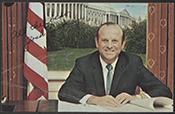
United States · United States Congress · 25 March 1976
Authorizes the head of each Federal agency to employ interpreting assistants for deaf employees. Renders applicable to the United States Postal Service provisions relating to employment by Federal agencies of reading assistants and interpreters for blind and deaf employees. Directs each agency to increase the number of positions classified to authorize the employment of such reading assistants and interpreters.
United States · United States Congress · 23 March 1976
Stipulates that no rule or regulation which is issued pursuant to the Food Stamp Act of 1964 and which is to become effective after February 13, 1976, shall become effective until the enactment of legislation after the date of enactment of this Act with respect to the eligibility and purchase requirements of persons receiving benefits under the Food Stamp Act of 1964.
United States · United States Congress · 22 March 1976
Declares that the purpose of this Act is to encourage colleges and universities to develop programs that give their students an opportunity to gain an appreciation of international problems and ideas by providing financial assistance for students participating in such programs. Directs the Secretary of State to provide funds to institutions of higher education for stipends to students participating in international internships for travel expenses and additional stipends for such students for living expenses if such student demonstrates financial need. Directs that an institution may grant any such stipend to a student who: (1) is pursuing a course of full-time study at the junior or senior level of undergraduate school, or is a graduate student; (2) possesses academic excellence and knowledge of a foreign language; (3) has been placed in an international internship relevant to the student's course of study; (4) has agreed to participate in such internship for not less than three months and not more than one year; and (5) has been fully insured by the institution against expenses incurred by illness or accident during such internship. Sets forth the basis on which sums appropriated for such grants shall be allotted to the States. Authorizes security investigations of students receiving stipends under this Act where such investigation is a precondition to service with the international organization supervising such student. Requires the Secretary to submit annual reports to Congress of the activities carried out and expenditures made in furtherance of the purposes of this Act.
United States · United States Congress · 18 March 1976
Directs the President to express the request of the United States Government that the Government of the Union of Soviet Socialist Republics provide Valentyn Moroz with the opportunity to accept the invitation of Harvard University to join the Harvard Ukrainian Research Institute for the 1976-77 academic year.
United States · United States Congress · 16 March 1976
Radiation Health and Safety Act - Amends the Public Health Service Act to direct the Secretary of Health, Education, and Welfare to develop and issue to the States criteria and minimum standards for the accreditation of educational institutions conducting programs for the training of radiologic technologists and minimum criteria for educational institutions conducting programs for the training of medical and dental practitioners. Directs the Secretary to develop and issue to the States criteria and minimum standards for licensure of radiologic technologists. Directs that State and local governments be encouraged to minimize exposure of the public to ionizing from all sources, and establishes procedures for the adoption of appropriate standards. Allows the Secretary to make grants to States in an amount up to two-thirds of the first year and one-third of the second year costs of planning, developing, or establishing programs to carry out the provisions of this Act. Prohibits conducting activities contrary to this Act and subjects violators to a civil penalty of not more than $1,000. Requires the Secretary to submit to Congress an annual report evaluating the implementation of this Act and making recommendations for legislation.
United States · United States Congress · 11 March 1976
Congressional General Election Campaign Financing Reform Act - Adds a new chapter 97 to the Internal Revenue Code entitled "Congressional General Election Campaign Fund Act". Establishes, within the Internal Revenue Code, procedures by which candidates for nomination for election, or for election to either House of Congress may receive payments of public funds in amounts matching contributions made to the candidates' nomination or election campaign funds. Defines terms used in the Act. Directs the Secretary of the Treasury to maintain in the Presidential Election Campaign Fund a separate amount to be known as the Congressional General Election Payment Account. Directs the Secretary to deposit into the Congressional General Election Payment Account that portion of the annual amounts designated by taxpayers on their income tax returns that equals the excess above 30 percent of the total amount made available in the last Presidential election. Limits to $100 the amount of a contribution which an individual may make to one candidate's primary election campaign or to that candidate's general election campaign. Authorizes the Federal Election Commission to examine and audit the qualified campaign expenses of every candidate and to require the candidate to repay to the Secretary the amount of any excess payments made by the Secretary. Requires the Commission to report to Congress at the end of each Federal general election year on the qualified campaign expenses of each candidate, the amount paid to each candidate, and the amount of repayments required from candidates. Authorizes the Commission to bring action in any United States district court to recover any amounts deemed payable to the Secretary as the result of an audit. Establishes a criminal penalty consisting of a fine of up to $25,000, or one year in prison or both for violation of the limitations on expenditures. Increases fines for violations of the limitations set for contributions and expenditures in Presidential and Congressional campaigns.
United States · United States Congress · 11 March 1976
Opportunities Industrialization Centers Job Creation and Training Act - States that the purpose of this Act is to provide special authority for the Opportunities Industrialization Centers in order to create and provide job opportunities for specific unemployed persons who were particularly hard hit by the recent economic recession, and to provide opportunities for industry to create additional jobs for the unemployed in rural and urban communities. Authorizes the Secretary of Labor to enter into a contract with Opportunities Industrialization Centers, Incorporated (OIC) in order to provide comprehensive employment services and jobs for unemployed persons. Requires each such contract to contain provisions assuring that specific requirements are complied with, including requirements that (1) special consideration in providing jobs will be given to unemployed persons who are most severely disadvantaged in terms of the length of time they have been unemployed; (2) due consideration will be given to persons who have participated in manpower training programs for whom unemployment opportunities would be otherwise available, and (3) the program will to the maximum extent feasible contribute to the elimination of artificial barriers to employment and occupational advancement. Sets forth special conditions to be met prior to providing financial assistance pursuant to a contract entered into under this Act. Requires the programs to contribute, to the maximum extent feasible, to the occupational development or upward mobility of individual participants. Prohibits the Secretary from providing financial assistance unless he determines that: (1) periodic reports will be submitted to him to measure the effectiveness of the program; (2) there will be no discrimination on the basis of race, creed, color, national origin, sex, political affiliation, or beliefs within the program; and (3) the participants in the program will not be employed in the construction, operation, or maintenance of sectarian religious facilities. Authorizes appropriations to carry out the provisions of this Act of $150,000,000 for fiscal year 1977, $200,000,000 for fiscal year 1978, $300,000,000 for fiscal year 1979, and $350,000,000 for fiscal year 1980.
United States · United States Congress · 9 March 1976
Amends the Education Amendments of 1972 to exempt Boys State, Boys Nation, Girls State, and Girls Nation conferences, from the sex discrimination provisions of such Act.
United States · United States Congress · 4 March 1976
Community- Based Day Treatment and In-Home Services for Children and Families Act - Provides, under title IV of the Social Security Act, for the establishment of day treatment and in-home arrangements for services to children and families in trouble. Makes funds appropriated under the Social Security Act for child welfare services available to cooperating State agencies in the provision of day treatment and in-home services to children and families. Authorizes the appropriation of an additional $50,000,000 for each of the fiscal years following the enactment of this Act. Provides for the distribution of such funds to the appropriate State agencies. Defines the terms "day treatment services," and "in-home services. States that the term "day treatment services" includes psychiatric, psychological, social casework, educational, vocational, recreational, health, and child care services, and any other services which are furnished a child or family in the home or through community-based services with the intent of preventing the child's institutionalization or other placement outside the family, except where such institutionalization or placement is in the child's best interest. States that the term "in-home" specifically includes homemaking, housekeeping, and counseling services, and any other services which are furnished in the home and are aimed primarily at the family structure intact or reuniting a separated family. Requires States, as a condition to receiving Federal payments for child welfare services, to limit the placement of children outside the home for treatment to those cases in which all feasible alternatives have been exhausted, or such placement has been ordered by a court of competent jurisdiction. Requires State plans for aid and services to needy families with children to provide that the State agency supervising the administration of the plan will: (1) exhaust all feasible alternatives to placement of a child in a foster home, institution, or other residential facility before placing or approving the placement of such child in such a home, institution, or facility, and (2) submit to the Secretary periodic reports indicating the steps being taken to explore such alternatives (and the various types of alternative arrangements being considered) in connection with the placement of children in such homes, institutions, and facilities.
United States · United States Congress · 3 March 1976
Authorizes payment under the supplementary medical insurance program of title XVIII (Medicare) of the Social Security Act for hearing aids and dentures.
United States · United States Congress · 2 March 1976
Extends from ten to 15 years the period in which eligible veterans may receive veterans' educational assistance. Makes such extension effective on the date of the enactment of this Act. (Amends 38 U.S.C. 1662)
United States · United States Congress · 2 March 1976
Foreign Paramilitary Intervention Act - Declares any person employed by, under contract to, or under the direction of, any United States department or agency who is (1) engaged in hostilities abroad, or (2) advising military forces engaged in hostilities abroad, to be a member of the Armed Forces for purposes of the War Powers Resolution.
United States · United States Congress · 1 March 1976
Extends from one to three years the period that a member of the uniformed services has following his retirement to select his home for purposes of travel and transportation allowances. (Amends 37 U.S.C. 404(c) and 406(g)).
United States · United States Congress · 25 February 1976
Authorizes the Administrator of Veterans' Affairs to implement a pilot program to make scholarship grants to individuals attending medical schools on the condition that such individuals will serve in a Veterans' Administration facility for a period of time upon completion of professional training. Limits the amount of any scholarship grant to an individual for an academic year to $5,000. Authorizes appropriations to carry out such program of $2,500,000; $3,000,000; and $3,500,000 in fiscal years 1976-1978, respectively. Authorizes necessary appropriations for fiscal year 1979 and succeeding fiscal years.
United States · United States Congress · 25 February 1976
Amends the Interstate Commerce Act to prohibit a pipeline company engaged in the transportation of oil from transporting any oil through its pipelines if that company has an interest in such oil.
United States · United States Congress · 24 February 1976
Opportunities for Adoption Act - Provides for adoption assistance programs under the provisions of the Public Health Service Act. Makes it the purpose of this Act, in order to promote the public health and welfare, to facilitate the elimination of obstacles to adoption, and to locate children in need of adoption and facilitate the placement in permanent adoptive homes of such children, particularly children with special needs, by: (1) promoting the establishment of uniform adoption regulations in the States and territories of the United States in order to eliminate jurisdictional and legal obstacles to adoption; (2) providing Federal financial assistance to States for the purpose of assisting public and private nonprofit agencies and adoptive and prospective adoptive parents in meeting costs of adoption in order to remove or alleviate the financial obstacles which present serious barriers to adoption by qualified persons; and (3) providing for the establishment of a National Office of Adoption Information and Services in the Department of Health, Education, and Welfare to (A) insure quality standards for adoption services (including pre-placement and post-placement and post-adoption counseling and standards to protect the rights of children in need of adoption) and (B) provide for a national adoption information exchange system. Directs the Secretary of Health, Education, and Welfare to appoint a Committee on Uniform Adoption Regulations to be composed of representatives of National, State, and local child welfare organizations and representatives of other groups interested in facilitating the objectives of adoption agencies, and the Chief of the Children's Bureau in the Office of Child Development, Department of Health, Education, and Welfare, or his designee. Directs such Committee to: (1) review current conditions, practices, and laws relating to adoption, with special reference to their effect on facilitating or impeding the finding of suitable adoptive homes for children and the completion of suitable adoptions; (2) propose to the Secretary uniform adoption regulations which would facilitate adoption; and (3) report its proposals to the Congress and the President not later than eighteen months after the date of enactment of this Act. Provides that following receipt of the Committee's proposals, but not later than 24 months after the date of enactment of this Act, the Secretary shall publish the proposed uniform adoption regulations in the Federal Register for comment and, after soliciting and giving due consideration to the comments of interested individuals, groups, and organizations and consulting further with the Committee, he shall issue and publish final uniform adoption regulations which shall apply in the administration of the grant program. Directs the Secretary, in accordance with regulations which he shall prescribe, to make matching grants to States for allocation by State agencies principally responsible for services to families and children, to public and private nonprofit adoption agencies which meet standards of quality prescribed pursuant to this Act for the purpose of assisting: (1) such agencies in meeting the cost involved in the adoptive placement of children with special needs (including locating suitable homes and providing pre-placement and post-placement and post-adoptive counseling to children in need of adoption and to prospective and actual adoptive parents); (2) such agencies in meeting the cost of providing prenatal and postpartum services to mothers, voluntarily planning to place their children for adoption, who are unable to assume such costs, in order to protect the health and welfare of both the mother and child; but only to the extent that assistance under other Federal or State programs in the community in question is not readily available to provide adequately for such services; (3) such agencies in meeting the cost of providing for professional counseling and other social services to children in need of adoption, and to prospective and actual adoptive parents and foster parents to assist them in providing a supportive and healthful family environment; (4) adoptive parents in locating and, where appropriate, defraying the cost of post-placement and post-adoption special services to children requiring such services as a result of conditions which existed prior to their placement, up to an amount not exceeding the amount which similar services would cost the State in question were it to provide or secure such services as the guardian of such children; and (5) prospective adoptive parents, who would consider adoption but for their financial inability to meet a child's needs, in defraying the post-placement and post-adoption cost of supporting children with special needs, in amounts of assistance determined by the Secretary to be adequate to enable such adoptive parents to assume responsibility for raising such children. Provides for the establishment of a system in the States under which, with respect to a child who has been in foster care in a State for at least six months after such child is considered legally available for adoptive placement, the foster parents providing care to such child will be notified of the possibility of the financial assistance for adoptive placement authorized by this Act. Directs the Secretary to take such steps as he deems necessary to encourage and facilitate the consideration of comprehensive adoption assistance legislation by those States which have not enacted such legislation. Establishes within the Children's Bureau of the Office of Child Development of the Department of Health, Education, and Welfare a National Office of Adoption Information and Services which shall be headed by a Director appointed by the Secretary upon the joint recommendation of the Director of the Office of Child Development and the Chief of the Children's Bureau. Provides that the Office shall be the principal agency for carrying out the provisions of this Act. Directs the Director, in accordance with regulations which he shall prescribe, to; (1) conduct a continuous educational program on adoption and to prepare, publish, and disseminate to all interested parties, private and public agencies and organizations, and governmental bodies educational materials regarding adoption and adoption assistance programs; (2) measure and evaluate the impact of the programs authorized by this Act and, not later than ninety days after June 30 of each year, prepare and submit to the Secretary for transmittal to the President and the Congress a report on such evaluation, which shall include, but not be limited to (A) the number of children placed in adoptive homes under adoption assistance agreements during the year preceding the annual report and the major characteristics of such children; and (B) the number of children currently in foster care for six months or more, and the legal status of such children; (3) insure that adoption agencies receiving assistance authorized under this Act subscribe to standards of quality, which he shall prescribe, for adoption services (including pre- placement and post-placement and post-adoption counseling and standards to protect the rights of children in need of adoption) and comply with the requirements of title VI of the Civil Rights Act of 1964; and (4) notwithstanding any other provision of law, provide for the operation of a national adoption information system, utilizing computers and modern data processing methods, to assist in the location of children in need of adoption and in the placement in adoptive homes of children awaiting adoption, and for the promotion of cooperative efforts with any similar programs operated by or within any State or foreign country. Authorizes necessary appropriations for the fiscal years 1976 and 1977.
United States · United States Congress · 23 February 1976
National Diabetes Advisory Board Act - Directs the Secretary of Health, Education, and Welfare to establish a National Diabetes Advisory Board to insure the implementation of the long-range plan formulated by the National Commission on Diabetes to combat diabetes. Specifies seven Federal health officers as members of the Board, in addition to seven health professionals and five members of the general public to be appointed by the Secretary. Makes provision for staffing and compensation. Authorizes the Board to enter into contracts or other arrangements, or to take such other action as may be necessary to carry out its functions. Authorizes the Board to engage in and sponsor activities, collect data, and provide technical assistance as it deems necessary and advisable in the performance of its functions. Requires the Board to submit simultaneously to the President and Congress an Annual Diabetes Report describing Board activities in the prior year and progress made in diabetes research, treatment, and education with specific reference to the long-range plan to combat diabetes mellitus and suggesting recommended future expenditures and legislation. Authorizes the appropriation of $500,000 for fiscal year 1976 and such sums as are necessary for each of the four fiscal years thereafter. Authorizes the Secretary to make distinguished scientist awards to individual scientists who have shown continuous and outstanding productivity in diabetes research for the purpose of continuing such research. Limits the amount of each grant to no more than $35,000 per year. Authorizes the appropriation of specified amounts for the purpose of making such grants in fiscal years 1976-1980. Authorizes, under the Public Health Service Act, the appropriation of specified sums in fiscal years 1977-1981 for the purpose of making grants to centers for research and training in diabetes mellitus and related endocrine and metabolic disorders.
United States · United States Congress · 19 February 1976
Adds to the Elementary and Secondary Education Act of 1965 "Title X-Emergency Education Revenue Act". Authorizes the appropriation of such sums as may be necessary to carry out this Act in fiscal years 1976 and 1977. Authorizes the Secretary of Health, Education, and Welfare to make grants to a local education agency which demonstrates that: (1) for bona fide budgetary reasons it has been forced to reduce the expenditure of funds for essential elementary and secondary education services, making it impossible to maintain such services at a quality level; and (2) that it or the local government unit responsible for providing its revenues has made bona fide efforts to raise the revenue necessary to support essential elementary and secondary educational services and maintain quality education. Makes financial assistance under this Act available for essential elementary and secondary educational services, programs, and projects of the local education agency which had been funded by such agency previously and which the Secretary determines are essential for providing quality elementary and secondary educational services. Requires any local education agency desiring to receive assistance under this Act to submit to the Secretary an application in such form and containing such information as the Secretary shall require by regulation. Permits the Secretary to approve such application only if assurances are given that the State shall not reduce the amount of State aid with respect to the provision of free public education in any school district of any local education agency because of assistance given under this Act.
United States · United States Congress · 19 February 1976
Internal Revenue Administration Act - Establishes the Internal Revenue Administration in the executive branch of the Federal Government for the purpose of administering and enforcing the Internal Revenue Code. Prescribes the terms and conditions of office for the Administrator of the Internal Revenue Administration. Transfers all present functions, instructions, rules, or regulations which were promulgated or administered by the Secretary of the Treasury of his delegate with respect to the enforcement of the Internal Revenue Code, to the Internal Revenue Administration.
United States · United States Congress · 19 February 1976
Authorizes and requests the President to issue a proclamation designating the week beginning on the first Saturday after the first Tuesday in January of every year as "National Ski Week."
United States · United States Congress · 17 February 1976
Sets forth the findings of Congress that marine fires are a major hazard to port populations and property and have resulted in substantial economic harm. States that the purposes of this Act are to: (1) provide for the adequate training of United States merchant seamen in marine fire prevention and onboard firefighting; (2) provide for the establishment of marine firefighting units which utilize the manpower and resources of local fire departments and are specially trained in shipboard firefighting techniques for purposes of training local fire departments and ship crews and providing on-the-scene emergency assistance for fighting marine fires; and (3) utilize the United States Coast Guard to coordinate and control marine firefighting activity by firefighting units established pursuant to this Act. Directs the Secretary of Commerce, under the Merchant Marine Act of 1936, to establish within the United States such number of marine firefighting regions as he deems necessary to carry out the purposes of this Act. Provides for the selection and establishment of regional and satellite firefighting units from each region. States that each unit shall, upon order by the Secretary of the department in which the Coast Guard is operating, provide firefighting services at any marine fire in any region, and provide education and training in marine firefighting techniques to local fire departments and the crews of merchant vessels. Directs the Secretary to establish marine fire protection and firefighting training programs for members of regional and satellite units and for United States marine seamen. Permits the Secretary to enter into cooperative agreements with concerned States and local governmental agencies which set forth the responsibilities and functions which each party agrees to undertake in carrying out the purposes of this Act. Sets forth additional duties of the Secretary, including the responsibility for developing plans for each region relating to the utilization and pooling of marine firefighting resources. Stipulates that all seagoing vessels operating in the foreign or domestic commerce of the United States shall have on board a prefire plan for the vessel. States that such prefire plan must be prepared by, or prepared under the supervision of, a regional or satellite unit, or approved by the Secretary if prepared by an entity other than a regional or satellite unit. Authorizes appropriations of up to $500,000 as a contingency fund to meet the expenses incurred by regional units, satellite units, and other assisting firefighting organizations which have not been reimbursed by vessels owners or operators receiving their services. Authorizes appropriations of sums necessary to carry out the purposes of this Act.
United States · United States Congress · 10 February 1976
Amends the Omnibus Crime Control and Safe Streets Act of 1968 to require that comprehensive State plans under such Act include provisions for the prevention of crimes against the elderly.
United States · United States Congress · 10 February 1976
Expresses the solidarity of the American people in efforts to enlarge human freedom by the participants in the second Brussels conference, February 17 to 19, 1976.
United States · United States Congress · 9 February 1976
Amends the Federal Election Campaign Act of 1971 to provide that members of the Federal Election Commission shall be appointed by the President, by and with the advice and consent of the Senate.
United States · United States Congress · 9 February 1976
Amends the Internal Revenue Code to allow a deduction for donations of blood to charitable organizations in an amount equal to $25 for each pint donated. Limits the aggregate amount of donations which shall be deductible to $125 in any taxable year.
United States · United States Congress · 29 January 1976
Requires, where a defendent is found guilty of or pleads guilty to an explosive related offense for which one of the possible sentences is death, that the judge who presided at the trial or before whom the guilty plea was entered conduct a separate hearing to determine the existence of mitigating and aggravating factors. Dismisses such requirement where the Government stipulates that none of the aggravating factors exists or that one or more of the mitigating factors exists. Requires that the hearing be conducted before a jury or, if the defendent so moves, before the court alone, if the court and the Government approve. Requires the court to disclose to the defendant or his counsel all material contained in any presentence report, if one has been prepared, except such material as the court determines is required to be withheld for the protection of human life or for the protection of national security. Removes from consideration any such presentence information withheld from the defendant. Sets forth trial procedures and directs the jury, or the court to return a special verdict setting forth its findings as to the existence or nonexistence of each aggravating and mitigating factor. Permits the imposition of the death penalty only where the jury or, where there is no jury, the court finds by a preponderance of the information that one or more of the aggravating factors exists and that none of the mitigating factors exists. Enumerates the mitigating and aggravating factors. (Amends 18 U.S.C. 844)
United States · United States Congress · 28 January 1976
Establishes a Select Commission on Territorial Immigration Policy to conduct a study and analysis of special treatment which should be given to residents of U.S. territories and possessions under the immigration and naturalization laws. Requires the Commission to report to Congress within a two-year period following its establishment. Authorizes appropriation of sums necessary to carry out this Act.
United States · United States Congress · 28 January 1976
Toxic Substances Control Act - Declares that it is the policy of the United States that: (1) hazardous and potentially hazardous chemical substances and mixtures should be adequately tested with respect to their effect on health and the environment and that such testing should be the responsibility of those who manufacture and those who process such chemical substances and mixtures; (2) adequate authority should exist to regulate chemical substances and mixtures which cause or contribute to an unreasonable risk to health or the environment, and to take action with respect to chemical substances and mixtures which are imminent hazards; and (3) authority over chemical substances and mixtures should be exercised in such a manner as not unduly to impede, or to create unnecessary economic barriers to, technological innovation while fulfilling the primary purpose of this Act to assure that such innovation and commerce in such chemical substances and mixtures do not cause or contribute to an unreasonable risk to health or the environment. Directs the Administrator of the Environmental Protection Agency to require that testing be conducted on a substance or mixture to develop data with respect to the health and environmental effects for which there is an insufficiency of data and experience and which are relevant to a determination that the manufacture, distribution in commerce, processing, use, or disposal of such substance or mixture does or does not cause or contribute to an unreasonable risk to health or the environment when he makes findings enumerated in this Act. Directs the Administrator to consider all relevant factors in promulgating rules under this Act, including the effect on the competitive position of the person required to provide reimbursement in relation to the persons to be reimbursed and the share of the market for such substance or mixture of the person required to provide reimbursement in relation to the share of such market of the persons to be reimbursed. Establishes a committee to make recommendations to the Administrator respecting the chemical substances and mixtures to which the Administrator should give priority consideration for the promulgation of a rule under this Act. Requires that in making such a determination with respect to any chemical substance or mixture, the committee shall consider all relevant factors, including: (1) the quantities in which the substance or mixture is or will be manufactured; (2) the quantities in which the substance or mixture enters the environment; (3) the number of persons who will be exposed to the substance or mixture in their places of employment and the duration of such exposure; (4) the extent of human exposure to the substance or mixture; (5) the extent to which the substance or mixture is closely related to a chemical substance or mixture which is known to cause or contribute to an unreasonable risk to health or the environment; and (6) the existence of data concerning the effects of the substance or mixture on health or the environment. Directs the Administrator to promulgate rules under which: (1) each person who manufactures or processes or proposes to manufacture or process a chemical substance shall maintain such records, and shall submit to the Administrator such reports, as the Administrator may reasonably require, and (2) each person who manufactures or processes or proposes to manufacture or process a mixture, or a chemical substance in small quantities (as defined by the Administrator by rule) solely for scientific experimentation or analysis or for chemical research or analysis, including such research or analysis for the development of a product, shall maintain records and submit to the Administrator reports but only to the extent the Administrator determines the maintenance of records or submission of reports, or both, is necessary for the effective enforcement of the Act. Requires the Administrator, in consultation and cooperation with the Secretary of Health, Education, and Welfare and with other heads of appropriate agencies, to conduct such research and monitoring as is necessary to carry out the purposes of this Act. Requires the Administrator, in consultation with the Secretary of Health, Education, and Welfare and other heads of appropriate agencies, to design, establish, and coordinate an efficient and effective system for the retrieval of toxicological and other scientific data which could be useful to the Administrator in carrying out the purposes of this Act. Requires systematized retrieval to be developed for use by all Federal and other agencies with responsibilities in the area of regulation or study of chemical substances and mixtures and their effect on health or the environment. Limits the disclosure of data gathered under provisions of this Act. Provides for the designation of confidential information. Prohibits any discrimination against an employee for compliance with requirements of this Act. States that no employer may discharge any employee or otherwise discriminate against any employee with respect to the employee's compensation, terms, conditions, or privileges of employment because the employee (or any person acting pursuant to the request of the employee) has: (1) commenced, caused to be commenced, or is about to commence or cause to be commenced a proceeding under this Act; (2) testified or is about to testify in any such proceeding; or (3) assisted or participated or is about to assist or participate in any manner in such a proceeding or in any other action to carry out the purposes of this Act. Provides that any employee who believes that the employee has been discharged or otherwise discriminated against by any person in violation of such provisions may, within thirty days after such alleged violation occurs, file (or have any person file on the employee's behalf) a complaint with the Secretary of Labor. Provides that upon receipt of such a complaint, the Secretary shall conduct an investigation of the violation alleged in the complaint. Sets forth criminal and civil penalties for violations of provisions of this Act. Requires the Council on Environmental Quality, in consultation with the Administrator, the Secretary of Health, Education, and Welfare, the Secretary of Commerce, and the heads of other appropriate Federal departments or agencies, to coordinate a study of the feasibility of establishing (1) a standard classification system for chemical substances and related substances, and (2) a standard means for storing and for obtaining rapid access to information respecting such substances. Requires a report on such study to be completed and submitted to Congress not later than eighteen months after the date of the enactment of this Act. Authorizes appropriations to carry out this Act.
United States · United States Congress · 27 January 1976
Expresses the sense of the House of Representatives that the people of Angola should be allowed to determine their own political future without foreign interference. Expresses support for efforts by the Organization of African Unity to achieve a settlement of the conflict in Angola. Calls upon all countries to terminate military assistance to any group in Angola. States that the President should do his utmost to seek an agreement among the various parties involved in hostilities or in the support of such hostilities in Angola to terminate such hostilities. Directs the President to refrain from providing assistance of any kind, for military activities in Angola, until specifically approved by Congress.
United States · United States Congress · 26 January 1976
Emergency Financial Assistance Corporation Act - Creates a body corporate to be known as the Emergency Financial Assistance Corporation to make and guarantee long-term loans at reasonable interest rates: (1) to State and local governments for public works and facilities; (2) to individuals and corporations to establish new businesses and industries and to expand or otherwise improve existing businesses and industries; and (3) to public agencies and private nonprofit and limited dividend corporations for the construction of low-and-moderate income housing, in order that vital public services may be provided, the health and welfare of our people will be safeguarded, and a full employment economy will be achieved. Provides that the Corporation shall have a capital stock of $1,000,000,000 subscribed by the United States, payment for which shall be subject to call in whole or in part by the Board of Directors. Authorizes the Corporation to issue rates, debentures, bonds, and other evidences of indebtedness up to an aggregate amount of 20 times the paid-in-capital stock of the Corporation at that time. Authorizes the Corporation to make direct loans and guarantees to State and local governments, direct loans for the benefit of business and industry, and loans for low-and-moderate income housing projects. Exempts the Corporation from the taxing authority of the United States or any State or local government. Authorizes to be appropriated to the Secretary of the Treasury $1,000,000,000 to finance the purchase of Corporation stock.
United States · United States Congress · 22 January 1976
Title I: Foreign Boycotts - Foreign Boycotts Act - Makes it the policy of the United States to oppose, under the provisions of the Export Administration Act, restrictive trade practices or boycotts imposed by foreign countries against any domestic concern of the United States. Provides for the promulgation of rules by the Secretary of Commerce to require that any domestic concern which receives a request for the furnishing of information on the signing of agreements which have the effect of furthering or supporting restrictive trade practices or boycotts by foreign countries to transmit to the Secretary a report stating specified information. Authorizes the Secretary to impose a civil penalty of up to $10,000 for violations of the requirements of this Act. Title II: Disclosure - Domestic and Foreign Investment Improved Disclosure Act - Requires notification, under the Securities Exchange Act of 1934, by any investor of a proposed acquisition of more than five percent of the equity securities of any United States companys, within ten days after such acquisition, to the issuer of the security, the exchange where it is traded, and the Securities and Exchange Commission. Sets forth requirements for the statement to be filed with the Commission including: (1) the background, identity, residence, and nationality of such owner and any other person on whose behalf the purchases are to be effected; (2) the source and amount of the funds or other consideration used in making the purchase; (3) the purpose of the acquisition; and (4) the number of shares which are beneficially owned. Grants the Commission authority to seek injunctive relief as it deems necessary and appropriate to secure compliance with this Act.
United States · United States Congress · 21 January 1976
Amends the Tariff Schedules of the United States to repeal the duty imposed on (1) articles assembled abroad with components produced in the United States, and (2) specified metal articles manufactured in the United States and exported for further processing.
United States · United States Congress · 21 January 1976
Department of Education Act - Establishes an executive department to be known as the Department of Education, to be headed by a Secretary of Education appointed by the President. States that it shall be the principal function of the Department to improve the quality of education throughout the United States. Authorizes the Secretary to: (1) advise the President with respect to the progress of education; (2) develop and recommend to the President appropriate policies and programs to foster the orderly growth and development of the Nation's educational facilities and resources especially in the light of long-range requirements; (3) exercise leadership at the direction of the President in coordinating Federal activities affecting education; (4) conduct continuing comprehensive surveys and collect, analyze, and disseminate relevant information concerning education in the United States; (5) provide information and such other assistance as may be authorized by the Congress to aid in the maintenance of efficient school, college, and university systems; and (6) encourage comprehensive long-range planning by State and local governments, especially with respect to coordinating Federal, State, and community educational activities at the local level. Transfers the education functions of the Department of Health, Education, and Welfare to the Department of Education. Transfers various education functions of other executive departments to the Department of Education. Establishes a Federal Interagency Committee on Education to study and recommend such actions as may be necessary to assure effective coordination of Federal programs affecting education. Establishes a National Advisory Commission on Education of specified membership and qualification to review and make recommendations with respect to the administration, regulation, and operation of Federal education programs. Authorizes the appropriation of such sums as are necessary to enable the Department to carry out the provisions of this Act.
United States · United States Congress · 20 January 1976
Senior Citizen Higher Education Opportunity Act - Amends the Higher Education Act of 1965 to require that higher education institutions receiving Federal aid submit to the Commissioner of Education a senior citizen access plan providing for tuition-free registration of qualified senior citizens in scheduled classes and programs on a space available basis. Directs that such plan be implemented to the satisfaction of the Commissioner. Defines "qualified senior citizen" as an individual sixty years of age or older who has completed all course requirements mandated by the institution of higher learning for enrollment in the scheduled class or program. Deems that a class or program has space available if it is not fully subscribed by students other than nonpaying senior citizens. Enjoins the payment of funds or the approval of supplemental or special grants under such Act unless the institution seeking aid has established and fully implemented a senior citizen plan.
United States · United States Congress · 18 December 1975
Requires the President to transmit to Congress copies of each Presidential proclamation and Executive order no later than two days after the issuance of such proclamation or order.
United States · United States Congress · 18 December 1975
Establishes a 25-member Virgin Islands Immigration Commission, one member to be the Attorney General or his designee, who shall serve as Chairman. Includes 19 members representing the United States Government, the Governor of the Virgin Islands or his designee, and five members from the general Virgin Islands public, to be balanced in terms of political party affiliation. Directs the Chairman to call an organizational meeting as soon as possible after a majority (constituting a quorum) of Commission members have been appointed. Provides that Commission members who are not officials or employees of the U.S. Government shall be paid $100 per diem and actual travel and reasonable subsistence expenses while engaged in Commission business. Authorizes the Commission to appoint and fix the compensation of whatever personnel are necessary to carry out this Act. Directs the Commission to call upon any Federal department or agency to furnish necessary information and assistance. Provides that, upon application, the Commission shall review on a case-by-case basis the status, circumstances, and character of aliens residing in the Virgin Islands who were admitted as non-immigrant aliens on or before May 12, 1970, under the Immigration and Nationality Act. Instructs the Commission to recommend to the Attorney General that the status of such aliens, their spouses, and their minor children be adjusted to that of aliens lawfully admitted for permanent residence. Requires such recommendations within two years of the first organizational meeting and sets forth the following criteria to determine whether individuals qualify for an adjustment of their status: (1) the extent to which the alien has relatives abroad or relatives who are U.S. citizens; (2) the length of residence in the Virgin Islands; (3) economic and political conditions in the country of nationality; (4) the alien's business, occupational, financial, and marital status; (5) his age and health; (6) his employment record; (7) his contribution to and position in the community; and (8) the extent to which deportation would result in unusual hardship. Provides that aliens receiving favorable recommendations have their status adjusted except under specified circumstances. Terminates the Commission two years and three months after the first organizational meeting. Authorizes the appropriation of such sums as are necessary to carry out this Act.
United States · United States Congress · 17 December 1975
Emergency Tenants' Loan Act - Authorizes the Secretary of Housing and Urban Development to make repayable emergency rent payments on behalf of tenants who are, or will be, subject to eviction proceedings as a result of being unable to make their rental payments by reason of their unemployment or underemployment. States that such payments may not be approved unless: (1) the tenant will be unable to make his rental payments; (2) the tenant has incurred a substantial reduction in income due to adverse economic conditions; (3) there is a reasonable prospect that the tenant will be able to repay the loan made by the Secretary; and (4) the rental property is the tenant's principal place of residence. Allows rental assistance for part or all of the tenant's rent up to $250 per month for a maximum of two years. Provides for interest to be charged according to the tenant's ability to pay but not more than eight percent per annum. Requires that the payments be deferred until the tenant is able to repay the loan. Permits the Secretary to require security for the repayment of the loan, but provides that the Secretary may not refuse a loan for lack of security. Authorizes to be appropriated not more than $500,000,000 to carry out the purposes of this Act. Provides that no payments may be authorized after September 30, 1977. Provides for penalties for any person obtaining any benefits under this Act through the giving of false information. Requires the Secretary to report to the Congress every 60 days concerning delinquent repayments and actions taken to carry out the purposes of this Act.
United States · United States Congress · 17 December 1975
Sets forth the finding of the Congress that many member states of the United Nations are now financially capable of contributing a larger share of the total assessment of the United Nations than that which they are presently obligated to pay. Makes it the purpose of this Act to reduce the payments made by the United States to the United Nations. Directs the attention of the United Nations to the recently acquired wealth of the oil-producing nations in its determination of assessment shares. Limits to one-sixth of the total United Nations assessment for each year the amount paid by the United States. Exempts from such limitation the payments made to the International Atomic Energy Agency and the joint financing program of the International Civil Aviation Organization.
United States · United States Congress · 17 December 1975
Establishes a Commission on Security and Cooperation in Europe. States that the Commission shall be composed of four Members of the House of Representatives, four Senators, and one member each of the Department of State, Defense, and Commerce, as appointed by the President. Authorizes and directs the Commission to monitor the acts of the signatories to the Final Act of the Conference on Security and Cooperation in Europe with respect to their compliance with the articles of such Act, particularly with regard to the provisions relating to Cooperation in Humanitarian Fields.
United States · United States Congress · 15 December 1975
Excludes, under the Immigration and Nationality Act, from the provisions for status adjustment of nonimmigrants to that of persons admitted for permanent residence: (1) alien crewmen; (2) aliens who hereafter continue in or accept unauthorized employment (excepting specified relatives); (3) specified aliens admitted in transit without visa; and (4) specified "special immigrants" as defined by such Act. Revises the provisions regarding the granting of visas to specified non-immigrant aliens who seek to enter the United States temporarily to render services to an employer or affiliate thereof by which the alien was continuously employed for at least one year prior to such publication. States that the number of such visas approved for any one petitioner shall not exceed five percent of the number of managerial or executive personnel employed by the petitioner at any given time.
United States · United States Congress · 15 December 1975
Department of Education Act - Establishes an executive department to be known as the Department of Education to be headed by a Secretary of Education appointed by the President. States that it shall be the principal function of the Department to improve the quality of education throughout the United States. Authorizes the Secretary to: (1) advise the President with respect to the progress of education; (2) develop and recommend to the President appropriate policies and programs to foster the orderly growth and development of the Nation's educational facilities and resources especially in the light of long-range requirements; (3) exercise leadership at the direction of the President in coordinating Federal activities affecting education; (4) conduct continuing comprehensive surveys, collect, analyze, and disseminate relevant information concerning education in the United States; (5) provide information and such other assistance as may be authorized by the Congress to aid in the maintenance of efficient school, college, and university systems; and (6) encourage comprehensive long-range planning by State and local governments, especially with respect to coordinating Federal, State, and community educational activities at the local level. Transfers the education functions of the Department of Health, Education, and Welfare to the Department of Education. Transfers various specified education functions of other executive departments to the Department of Education. Establishes a Federal Interagency Committee on Education to study and recommend such actions as may be necessary to assure effective coordination of Federal programs affecting education. Establishes a National Advisory Commission on Education of specified membership and qualification to review and make recommendations with respect to the administration, regulation, and operation of Federal education programs. Authorizes to be appropriated such sums as are necessary to enable the Department to carry out the provisions of this Act.
United States · United States Congress · 11 December 1975
Corporate Management Interlocks Act - Prohibits, unless specific approval has been granted by the Attorney General, corporate management interlocking relationships. States that this Act shall apply (1) if any one of the persons involved in an interlocking relationship shall have capital, surplus, and undivided profits aggregating more than $1,000,000, and (2) if any one of the persons involved in an interlocking relationship is engaged in commerce. States that this Act shall not prohibit any interlocking relationship when one of the persons involved directly or indirectly lawfully owns more than 50 percent of the voting stock of the other company, or where 50 percent or more of the voting stock of each of the persons involved in an interlocking relationship is directly or indirectly lawfully owned by the same person. Sets a fine of not more than $50,000 and/or imprisonment not exceeding one year upon conviction of a willful violation of this Act.
United States · United States Congress · 8 December 1975
Senior Citizen Higher Education Opportunity Act - Requires recipients of Federal aid to higher education, under the Higher Education Act, to provide senior citizens 60 years of age or older with access, on a space-available basis, to already scheduled courses and programs as a condition of eligibility to continue receiving Federal funds.
United States · United States Congress · 1 December 1975
Provides that the total contribution of the United States to the United Nations for any calendar year after 1975 shall not exceed an amount which bears the same ratio to the United Nations budget as the total population of the United States bears to the total population of the United Nations member states.
United States · United States Congress · 1 December 1975
Authorizes a deduction, under the Internal Revenue Code, to individuals with permanently handicapped children for amounts contributed to a trust fund which is to be used for the care and support of such child. Limits such deduction to the lesser of 10 percent of the adjusted gross income of the taxpayer, or $5000 in the case of a joint return. Specifies the type of trust which may meet the conditions of this Act. Defines terms used in this Act.