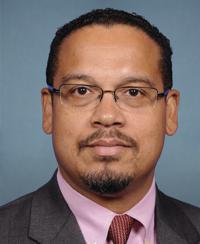
United States · United States Congress · 31 January 2017
Equal Access to Abortion Coverage in Health Insurance (EACH Woman) Act of 2017 This bill requires the federal government: (1) to ensure coverage for abortion care in public health insurance programs including Medicaid, Medicare, and the Children's Health Insurance Program (CHIP); (2) as an employer or health plan sponsor, to ensure coverage for abortion care for participants and beneficiaries; and (3) as a provider of health services, to ensure that abortion care is made available to individuals who are eligible to receive services. The federal government may not prohibit, restrict, or otherwise inhibit insurance coverage of abortion care by state or local governments or by private health plans. State and local governments may not prohibit, restrict, or otherwise inhibit insurance coverage of abortion care by private health plans.
United States · United States Congress · 31 January 2017
Ability to Repay Verification Enabling Act This bill prohibits the Department of Labor from enforcing any requirement that a third-party consumer-reporting agency that serves only as a secure conduit for data from a state unemployment compensation agency must obtain and maintain informed consent from an individual before obtaining confidential unemployment compensation information about the individual.
United States · United States Congress · 31 January 2017
This joint resolution eliminates the time limit for ratification of the equal rights amendment (prohibits discrimination on account of sex) proposed to the states in House Joint Resolution 208 of the 92nd Congress, as agreed to in the Senate on March 22, 1972. The amendment shall be part of the Constitution whenever ratified by the legislatures of three-fourths of the states.
United States · United States Congress · 31 January 2017
Federal Adjustment of Income Rates Act or the FAIR Act This bill increases the rates of basic pay for federal employees under the statutory pay systems (relating to the General Schedule, the U.S. Foreign Service, and the Veterans Health Administration) and for prevailing rate employees by 2% for calendar year 2018 and FY2018, respectively. The percentage adjustment for locality-based comparability payments for calendar year 2018 shall be an increase of 1.2%.
United States · United States Congress · 31 January 2017
Declares that Donald J. Trump won the 2016 presidential election with the assistance and interference of the Russian government. Calls for Congress to investigate thoroughly the nature and extent of such interference, and whether, and to what extent, there was collusion between persons associated with the Russian government and persons associated with the Trump presidential campaign to influence the outcome of the election. Such investigation shall also examine whether, and to what extent, persons associated with the Trump campaign: were aware of Russian interference in the election; were given information by persons associated with the Russian government concerning cyber attacks on U.S. citizens, including persons affiliated with the Democratic Party or the presidential campaign of Hillary Clinton; encouraged cyberattacks or other forms of espionage against persons affiliated with the Democratic Party or the Clinton campaign; and assisted persons associated with the Russian government in the proliferation of misinformation intended to influence the election.
United States · United States Congress · 30 January 2017
Safeguarding Sanctuary Cities Act of 2017 This bill prohibits reducing or withholding federal financial assistance that a state or local government would otherwise receive because such state or local government has in place any policy that limits or restricts compliance with a detainer. A "detainer" is defined as any order or request by the Department of Homeland Security (DHS) for a state or local official to: temporarily hold a person until such person may be taken into federal custody, transport such a person for transfer to federal custody, or notify DHS prior to releasing such person.
United States · United States Congress · 30 January 2017
Statue of Liberty Values Act of 2017 or the SOLVE Act of 2017 This bill states that: (1) beginning on January 27, 2017, Executive Order 13769, entitled "Protecting the Nation from Foreign Terrorist Entry into the United States," is null and void, shall have no force and effect, and may not be implemented or enforced; and (2) no federal funds may be used to implement or enforce any of the policy changes set forth in such order. Among the order's major provisions are restrictions on the entry of immigrants and nonimmigrants from seven countries (Iran, Iraq, Libya, Somalia, Sudan, Syria, and Yemen) and additional limitations on refugee admissions to the United States.
United States · United States Congress · 30 January 2017
This Land Is Our Land Act This bill prohibits the Department of Homeland Security (DHS) from constructing, or obligating or expending any funds for the construction of, any new border barriers, including walls or fences, on federal lands under the jurisdiction of the Department of the Interior or the Department of Agriculture within 100 miles of the international land borders of the United States.
United States · United States Congress · 30 January 2017
Ensuring Access to Quality Complex Rehabilitation Technology Act of 2017 This bill amends title XVIII (Medicare) of the Social Security Act to establish a separate Medicare benefit category for complex rehabilitation technology (CRT) items that: (1) are designed or configured to meet an individual's unique needs and capacities; (2) are primarily used to serve a medical or functional purpose; and (3) require certain services to ensure appropriate design, configuration, and use. The Centers for Medicare & Medicaid Services (CMS) shall designate CRT items and establish eligibility criteria with respect to such items, in accordance with specified exclusions and other requirements. The CMS must also establish: (1) a payment system applicable to CRT items, subject to clinical conditions and other specified requirements; (2) quality standards for suppliers of CRT items; and (3) a formal process for the submission of certain CRT code-set modification requests by stakeholder groups. If specified requirements are met, Medicare payment must be made for the replacement of a CRT item (or item part), without regard to certain continuous-use or useful-lifetime restrictions applicable to items of durable medical equipment. In addition, Medicare payment may be made for the temporary rental of a CRT item if such an item owned by a qualified enrollee is undergoing necessary repairs.
United States · United States Congress · 30 January 2017
Constitutional Amendment This joint resolution proposes a constitutional amendment providing that: (1) the rights protected by the Constitution are the rights of natural persons only; (2) artificial entities (such as corporations, limited liability companies, and other entities established by the laws of any state, the United States, or any foreign state) shall have no rights under the Constitution and are subject to regulation by the people, through federal, state, or local law; and (3) the privileges of such artificial entities shall not be construed to be inherent or inalienable. The amendment requires federal, state, and local government to: (1) regulate, limit, or prohibit contributions and expenditures, including a candidate's own contributions and expenditures, to ensure that all citizens, regardless of their economic status, have access to the political process and that no person gains, as a result of that person's money, substantially more access or ability to influence the election of any candidate for public office or any ballot measure; and (2) require that any permissible contributions and expenditures be publicly disclosed. The judiciary is prohibited from construing the spending of money to influence elections to be speech under the First Amendment.
United States · United States Congress · 27 January 2017
Small Business and Community Investments Expansion Act of 2017 This bill amends the Federal Home Loan Bank Act to authorize a Federal Home Loan Bank to make a long-term secured advance for the purpose of providing funds to a community development financial institution. Additionally, the bill expands eligible collateral, in the case of a community development financial institution, to include secured loans or securities representing a whole interest in secured loans.
United States · United States Congress · 24 January 2017
Expanded & Improved Medicare for All Act This bill establishes the Medicare for All Program to provide all individuals residing in the United States and U.S. territories with free health care that includes all medically necessary care, such as primary care and prevention, dietary and nutritional therapies, prescription drugs, emergency care, long-term care, mental health services, dental services, and vision care. Only public or nonprofit institutions may participate. Nonprofit health maintenance organizations (HMOs) that deliver care in their own facilities may participate. Patients may choose from participating physicians and institutions. Health insurers may not sell health insurance that duplicates the benefits provided under this bill. Insurers may sell benefits that are not medically necessary, such as cosmetic surgery benefits. The bill sets forth methods to pay institutional providers and health professionals for services. Financial incentives between HMOs and physicians based on utilization are prohibited. The program is funded: (1) from existing sources of government revenues for health care, (2) by increasing personal income taxes on the top 5% of income earners, (3) by instituting a progressive excise tax on payroll and self-employment income, (4) by instituting a tax on unearned income, and (5) by instituting a tax on stock and bond transactions. Amounts that would have been appropriated for federal public health care programs, including Medicare, Medicaid, and the Children's Health Insurance Program (CHIP), are transferred and appropriated to carry out this bill. The program must give employment transition benefits and first priority in retraining and job placement to individuals whose jobs are eliminated due to reduced clerical and administrative work under this bill. The Department of Health and Human Services must create a confidential electronic patient record system. The bill establishes a National Board of Universal Quality and Access to provide advice on quality, access, and affordability. The Indian Health Service must be integrated into the program after five years. Congress must evaluate the continued independence of Department of Veterans Affairs health programs.
United States · United States Congress · 24 January 2017
Constitutional Amendment This joint resolution proposes a constitutional amendment declaring that women shall have equal rights in the United States and every place subject to its jurisdiction. The amendment prohibits the United States or any state from denying or abridging equal rights under the law on account of sex.
United States · United States Congress · 24 January 2017
Mark Takai Atomic Veterans Healthcare Parity Act This bill includes veterans who participated in the cleanup of Enewetak Atoll in the Marshall Islands between January 1, 1977, and December 31, 1980, as radiation exposed veterans for purposes of the Department of Veterans Affairs presumption of service-connection for specified cancers.
United States · United States Congress · 24 January 2017
Global Health, Empowerment, and Rights Act or the HER Act This bill states that foreign nongovernmental organizations shall not be ineligible for U.S. international development assistance under the Foreign Assistance Act of 1961 solely on the basis of health or medical services provided by such organizations with non-U.S. government funds if such services do not violate the laws of the country in which they are being provided and would not violate U.S. federal law if provided in the United States. Such organizations also shall not be subject to requirements relating to the use of non-U.S. government funds for advocacy and lobbying activities other than those that apply to U.S. nongovernmental organizations receiving such assistance under such Act.
United States · United States Congress · 24 January 2017
Restricting First Use of Nuclear Weapons Act of 2017 This bill prohibits the President from using the Armed Forces to conduct a first-use nuclear strike unless such strike is conducted pursuant to a congressional declaration of war expressly authorizing such strike. "First-use nuclear strike" means a nuclear weapons attack against an enemy that is conducted without the President determining that the enemy has first launched a nuclear strike against the United States or a U.S. ally.
United States · United States Congress · 24 January 2017
Protect Democracy From Criminal Corporations Act This bill amends the Federal Election Campaign Act of 1971 to prohibit a corporation from making a disbursement of funds in connection with a campaign for election for federal, state, or local office for six years after the corporation: (1) is finally convicted of conspiracy to commit an offense against, or to defraud, the United States or any other felony involving dishonesty or a breach of trust; or (2) enters into an agreement with the Department of Justice to resolve a charge regarding such an offense if the agreement includes a requirement that the corporation make a payment equal to or greater than $1 million.
United States · United States Congress · 24 January 2017
Transition-to-Success Mentoring Act This bill amends the Elementary and Secondary Education Act of 1965 to reauthorize educational programs that assist at-risk middle school students. The bill establishes a transition-to-success mentoring program requiring the Department of Education to award grants to local educational agencies or certain community-based nonprofit organizations to provide school-based mentoring programs and assist at-risk students in transitioning from middle to high school. Grantees must assign each at-risk student in his or her middle school a success coach who creates a plan of success for the student and serves as the student's advocate between the student's parents and teachers.
United States · United States Congress · 24 January 2017
Fairness in Taxation Act of 201 7 This bill amends the Internal Revenue Code to: (1) increase individual income tax rates for taxpayers whose taxable income exceeds $1 million, and (2) provide for an adjustment in the capital gains tax of taxpayers whose taxable income is subject to the 45% tax bracket.
United States · United States Congress · 24 January 2017
Consumer Health Options and Insurance Competition Enhancement Act or the CHOICE Act This bill amends the Public Health Service Act to require the Department of Health and Human Services (HHS) to offer, throughout the United States, a public health insurance option that provides value, choice, competition, and the stability of affordable, high-quality coverage. Plans under the public health insurance option must be qualified health plans and must include plans with bronze, silver, and gold tier benefits. (Qualified health plans are sold on health insurance exchanges, are the only plans eligible for premium subsidies, and fulfill an individual's requirement to maintain minimum essential coverage.) HHS must establish an office of the ombudsman for the public health insurance option. States may establish advisory councils to provide recommendations to HHS on the operations and policies of the public health insurance option. HHS must collect data to establish rates for premiums and health care provider reimbursement and for other purposes. Premium rates for public health insurance option plans must: (1) fully finance administrative costs and provided health benefits, and (2) include a contingency margin. HHS must negotiate rates for health care providers and prescription drugs under the public health insurance option. If HHS is unable to reach a negotiated agreement on rates, HHS must use Medicare rates. States may not tax federal receipts or disbursements attributable to the operation of the public health insurance option. HHS must establish conditions for participation by health care providers in the public health insurance option. A provider participating in Medicare or Medicaid is a participant in the public health insurance option unless the provider opts out.
United States · United States Congress · 24 January 2017
Expresses support for: (1) the goals and ideals of a Juan Pablo Duarte Day, and (2) the establishment of a national day of recognition for Juan Pablo Duarte to honor the founding father of the Dominican Republic.
United States · United States Congress · 24 January 2017
Declares that Congress should not impose any new performance fee, tax, royalty, or other charge relating to the public performance of sound recordings on a local radio station for broadcasting sound recordings over the air, or on any business for such public performance of sound recordings.
United States · United States Congress · 24 January 2017
Government By the People Act of 2017 This bill amends the Internal Revenue Code and the Federal Election Campaign Act of 1971 (FECA) to establish a program for small individual donations to campaigns for public office and make other changes to campaign finance law. The bill amends the Internal Revenue Code to allow: (1) individual taxpayers a refundable tax credit of 50% of qualified congressional House campaign contributions (i.e., cash contributions by an individual to a candidate for the House of Representatives or a political committee established and maintained by a national political party, to be known as "My Voice Federal" contributions); and (2) individual taxpayers to designate a portion of any overpayment of tax as a contribution to the Freedom From Influence Fund. The Government by the People Oversight Commission, established by this bill, shall establish a voucher pilot program to provide voters with a $50 "My Voice Voucher" for making campaign contributions. The bill amends the FECA to establish a 6-1 matching program for small dollar contributions (up to $150) to a candidate for public office and sets forth eligibility, certification, and expenditure requirements for candidates. The bill permits unlimited coordinated party expenditures from small donor sources on behalf of publicly financed House candidates. The bill requires disclosure by all bundlers of bundled contributions (i.e., the practice of combining several small campaign contributions into one large contribution to avoid exceeding the limit on contributions), not just registered lobbyists. The bill amends the Communications Act of 1934 to expand the access of candidates for public office to broadcasting.
United States · United States Congress · 23 January 2017
Voter Access Protection Act of 2017 This bill amends the Help America Vote Act of 2002 to prohibit a state or local election official from requiring an individual to: (1) present a photo identification (or a copy if voting by mail) as a condition for receiving or casting a ballot in any election for federal office, or (2) cast a provisional ballot solely on the grounds that the individual does not present a photo identification at the polling place. A state or local election election official is prohibited from requiring an individual to provide a photo identification (or a copy if registering by mail) as a condition of registering to vote in an election for federal office.
United States · United States Congress · 20 January 2017
Airplane Impacts Mitigation Act of 2017 or the AIM Act of 2017 This bill requires the Federal Aviation Administration (FAA) to enter into an agreement with an eligible institution of higher education to conduct a study of the health impacts of airplane flights on residents exposed to a range of noise and air pollution levels from such flights. The study shall: focus on residents in Boston, Chicago, New York, the northern California metroplex, Phoenix, and not more than three additional metropolitan areas that each contain at least one international airport; consider the health impacts on residents living partly or wholly within the land area underneath the flight paths most frequently used by aircraft flying below 10,000 feet; and consider only those health impacts that manifest during the physical implementation of the NextGen RNAV program on flights departing from or arriving at an international airport located in one of such metropolitan areas. An institution of higher education is eligible to conduct the study if it: has a school of public health that has participated in the FAA Center of Excellence for Aircraft Noise and Aviation Emissions Mitigation, has a Center for Environmental Health that receives funding from the National Institute of Environmental Health Sciences, is located in one of the areas within the scope of the study, applies to the FAA in a timely fashion, demonstrates that it is qualified to conduct such a study, and agrees to submit its findings to the FAA within two years after entering into such an agreement.
United States · United States Congress · 17 January 2017
Investor Choice Act of 2017 This bill amends the Securities Exchange Act of 1934 and the Investment Advisers Act of 1940 to prohibit a broker, dealer, funding portal, municipal-securities dealer, or investment adviser from entering into, modifying, or extending an agreement with a customer or client if that agreement: (1) mandates arbitration with respect to a future dispute between the parties; (2) restricts or limits the ability of the customer or client to select a forum for the resolution of such a dispute; or (3) restricts or limits the ability of the customer or client to pursue, in an individual capacity or on a class-action basis, a claim relating to such a dispute.
United States · United States Congress · 13 January 2017
U.S. Wants to Compete for a World Expo Act This bill expresses the sense of Congress that the United States should rejoin the Bureau of International Expositions (BIE) to promote public diplomacy, global branding, and tourism to the United States. The Department of State shall take necessary action within 90 days for the United States to rejoin the BIE.
United States · United States Congress · 13 January 2017
DREAMer Information Protection Act This bill: (1) prohibits information provided by an applicant for deferred action under the Department of Homeland Security's Deferred Action for Childhood Arrivals program from being used for the purpose of immigration enforcement proceedings, and (2) shall take effect as if enacted on January 19, 2017.
United States · United States Congress · 13 January 2017
Safeguard our Elections and Combat Unlawful Interference in Our Democracy Act or the SECURE Our Democracy Act This bill directs the Department of State to submit within 120 days a list of each foreign person that: (1) was at any time since January 1, 2015, involved in actions to unlawfully access, disrupt, misappropriate, influence, or alter information related to U.S. political parties, federal election candidates, or the administration of federal elections; or (2) worked or acted as an agent or instrumentality of, or on behalf of, or that was otherwise associated with, such foreign person. The unclassified portion of such list shall be made available to the public and published in the Federal Register. A listed alien shall be ineligible to receive a U.S. entry visa, and any current visa shall be revoked. Such prohibitions shall also apply to an alien who is an official of, an agent or instrumentality of, or working or acting on behalf of, a listed foreign entity or government if such alien knowingly authorized, conspired to commit, was responsible for, engaged in, or otherwise assisted or facilitated such prohibited actions. The President, through the Department of the Treasury, shall: (1) freeze and prohibit a listed foreign person's transactions in property and property interests that are in the United States or controlled a U.S. person, and (2) require each financial institution that is a U.S. person and has within its possession or control such property or property interests to certify that it has frozen all such assets.
United States · United States Congress · 13 January 2017
Expresses the sense of Congress that the tax exemption of fraternal benefit societies continues to generate significant returns to society and that the work of such societies should continue to be promoted.
United States · United States Congress · 13 January 2017
National Infrastructure Development Bank Act of 2017 This bill establishes the National Infrastructure Development Bank as a wholly owned government corporation. The bank's board of directors shall be responsible for monitoring and overseeing energy, environmental, telecommunications, and transportation infrastructure projects. The board is authorized to: (1) make loans and loan guarantees to assist in the financing an infrastructure project, (2) issue public benefit bonds and provide financing to infrastructure projects, and (3) pay an interest subsidy to the issuer of American Infrastructure Bonds. The bank shall establish a risk management committee, which shall: (1) create financial, credit, and operational risk management guidelines; (2) set guidelines to ensure diversification of lending activities by geographic region and infrastructure project type; (3) create conforming standards for financial assistance; (4) monitor financial, credit, and operational exposure; (5) provide financial recommendations to the board; and (6) ensure that the aggregate amount of interest subsidies provided for such bonds in a given calendar year does not exceed 28% of interest payable under all such bonds. The board shall approve criteria established by the bank's executive committee for determining project eligibility for financial assistance. The bill sets forth criteria to be considered by the board for each type of infrastructure project. The executive committee shall conduct an analysis that considers the economic, environmental, and social benefits and costs of each project under consideration, prioritizing projects that contribute to economic growth, lead to job creation, and are of regional or national significance. Financial assistance for an infrastructure project: (1) shall be repayable from dedicated revenue sources that also secure the infrastructure project obligations, and (2) shall not exceed 50% of reasonably anticipated project costs. Bank bonds shall be exempt from state or local government taxation. Assisted projects must comply with wage rate, domestic content, and buy American statutes. The board shall establish an American Infrastructure Bond program. The bill establishes the National Infrastructure Development Bank Trust Fund into which an amount equal to the tax receipts attributable to interest payable under such bonds is to be appropriated.
United States · United States Congress · 13 January 2017
Relatives in Government Getting Employment Dishonorably Act or the RIGGED Act This bill amends federal civil service law to revise the restrictions on the employment of relatives to: (1) make such restrictions applicable to the White House Office and the Executive Office of the President; and (2) include as a civilian position whose appointment, employment, promotion, or advancement is prohibited one acting in a professional or official capacity as a consultant or advisor, regardless of whether the position is voluntary, gratuitous, or authorized by law to be compensated. An individual appointed, employed, promoted, or advanced in violation of such restrictions shall be removed immediately. The bill makes provisions concerning prohibited personnel practices applicable to the White House Office.
United States · United States Congress · 13 January 2017
Presidential Tax Disclosure Act of 201 7 This bill requires any individual holding the office of President to submit federal tax returns to the Office of Government Ethics (OGE). The individual must submit: (1) each return filed with the Internal Revenue Service (IRS) for any year ending while the individual is President, and (2) each return filed with the IRS for the three years before the individual assumed office. After receiving the returns, the OGE must: (1) make the returns publicly available on the Internet, and (2) submit the returns to specified congressional committees. No information may be redacted from the disclosed returns except for: (1) Social Security, tax identification, and account identification numbers; and (2) the names of any dependent of the taxpayer. The bill establishes civil and criminal penalties to enforce the disclosure requirements. It also amends the Internal Revenue Code to permit the IRS to disclose to the OGE any federal tax return that is required to be disclosed by this bill, but has not been submitted to the OGE within a specified deadline.
United States · United States Congress · 13 January 2017
Cuba Agricultural Exports Act This bill amends the Trade Sanctions Reform and Export Enhancement Act of 2000 to exempt from prohibitions against U.S. assistance to Cuba: (1) any exports under the market access program, the export credit guarantee program, and the foreign market development cooperator program; or (2) any obligation or expenditure of funds to promote trade with Cuba by federal commodity promotion programs established in accordance with a commodity promotion law. This exemption shall not apply if the U.S. assistance recipient would be an entity controlled by the Cuban government, including the armed forces, the Ministry of the Interior, or any subdivision of either governmental entity. A person subject to U.S. jurisdiction may invest in the development of an agricultural business in Cuba if the Department of State and the Department of Agriculture jointly determine that the agricultural business: is not controlled by the government of Cuba, including the armed forces, the Ministry of the Interior, or any subdivision of either governmental entity; and does not traffic in property of persons subject to U.S. jurisdiction that was confiscated by Cuba on or after January 1, 1959. Certain language limiting financing of agricultural sales to Cuba is repealed.
United States · United States Congress · 13 January 2017
Ensure Fair Prices in Title Insurance Act of 2017 This bill amends the Real Estate Settlement Procedures Act of 1974 to exempt affiliated business arrangements from the prohibitions against kickbacks and unearned fees so long as no fee, kickback, or thing of value (including any return on ownership based on referrals paid for or received from an affiliated business arrangement) is paid or received pursuant to any agreement or understanding for referrals of business incident to or a part of a real estate settlement service involving a federally related mortgage loan. Persons who violate such Act shall be jointly and severally liable, upon a finding from a court of competent jurisdiction that such a violation occurred, to any party providing services substantially similar to settlement services in the same state where the violation occurred, and in an amount equal to attorneys' fees and court costs incurred in initiating an action. A court may grant, in addition to the principal remedies, either injunctive relief, restitution, or other appropriate equitable relief. The statute of limitations is extended from one year to three years for violation of the prohibitions against: (1) kickbacks and unearned fees, and (2) any requirement by a property seller involving a purchase assisted by a federally related mortgage loan that the buyer also purchase title insurance from any particular title company.
United States · United States Congress · 13 January 2017
Tax Benefit for Homeownership Clarification Act This bill amends the Internal Revenue Code to reduce the limitation on the mortgage interest deduction for the acquisition indebtedness of certain taxpayers. (Acquisition indebtedness is indebtedness that: (1) is incurred in acquiring, constructing, or substantially improving any qualified residence of the taxpayer; and (2) is secured by such residence. It also includes refinancing of the debt in certain situations.)
United States · United States Congress · 13 January 2017
Energy Efficient Manufactured Home Act of 2017 This bill authorizes the Department of Housing and Urban Development to carry out a program to provide grants and loans to assist low-income owners of manufactured homes constructed before December 31, 1994, in decommissioning their dated homes and replacing them with Energy Star-qualified manufactured or modular homes. Grants or loans may be made only to a low-income owner of a dated manufactured home who has used that home as a primary residence on a year-round basis for at least the preceding 24 months. Each household may only receive one grant or loan under the program. The bill sets forth requirements with respect to: (1) ownership of the land on which the new manufactured or modular home is to be sited, and (2) the decommissioning of a dated home.
United States · United States Congress · 13 January 2017
Expresses the sense of Congress that a National Voting Rights Act Mobilization Day should be designated to: (1) remind all Americans of the critical role that the Voting Rights Act of 1965 continues to play in protecting the right to vote, and (2) be an occasion for them to voice their support for this landmark civil rights law.
United States · United States Congress · 12 January 2017
This bill amends the Land and Water Conservation Fund Act of 1965 to make permanent the authorization for the Land and Water Conservation Fund. No less than 1.5% of the annual authorized funding amount or $10 million, whichever is greater, shall be used for projects that secure recreational public access to existing federal public land for hunting, fishing, and other recreational purposes.
United States · United States Congress · 12 January 2017
No Religious Registry Act of 2017 This bill prohibits U.S. government officers or employees from collecting information or utilizing a registry or database to classify or surveil on the basis of religious affiliation: (1) U.S. nationals, (2) aliens lawfully present in the United States, or (3) aliens who apply for a visa or seek admission to the United States or on whose behalf a petition under the immigration laws is submitted. The bill also prohibits studies related to the collection of such information or the establishment or utilization of such a registry or database. Nothing in such prohibition may be construed to prohibit the collection of information that is provided voluntarily, and from which personally identifiable information is removed, to be used strictly for statistical purposes that do not violate this bill. Federal entities are prohibited from: (1) awarding a contract to an entity to collect information or establish a registry that would violate this bill, or (2) purchasing information on religious affiliation from a nonfederal entity for such purposes.
United States · United States Congress · 12 January 2017
Fair Franchise Act of 2017 This bill prohibits any franchise seller, in connection with any disclosure document, notice, or report required by any federal, state, or local law, from making an untrue statement of material fact or failing to state a material fact or any other fact that would render any required statement or disclosure either untrue or misleading. A franchise seller is also prohibited from failing to furnish any prospective franchisee with: all information required to be disclosed by law; a written statement on whether the franchise agreement involved contains a right to renew it; and certain historical financial performance data in the disclosure document. Nor may a franchise seller make any oral or written claim or representation to a prospective franchisee that is inconsistent with, or that contradicts, the disclosure document. A franchisor or subfranchisor, in connection with the performance, enforcement, renewal, or termination of any franchise agreement, must not: engage in any act or pattern of conduct that operates as a fraud upon any person; hinder, prohibit, or penalize the free association of franchisees for any lawful purpose; discriminate against a franchisee by imposing requirements not imposed on other similarly situated franchisees or otherwise retaliate against any franchisee for membership or participation in a franchisee association; charge excessive and unreasonable renewal fees; enforce a provision in a franchise agreement requiring the parties to submit to arbitration unless certain conditions are met; terminate, cancel, or fail to renew a franchise for failure or refusal of the franchisee because it failed or refused to perform specified activities; restrict a franchisee from associating with other franchisees or from joining, leading, or otherwise participating in a trade or other association; require or prohibit any change in management of any franchise except for good cause; or impose on a franchisee a standard of conduct or performance unless the franchisor sustains the burden of proving the standard to be reasonable, necessary, and uniformly enforced. This bill specifies requirements concerning minimum standards of conduct (good faith and due care) for each party to a franchise agreement. The bill also prohibits: requiring inclusion in a franchise agreement of a term or condition which violates this bill or relieves a person from a duty or liability under it, or any waiver of compliance with this bill. A franchisee may assign a franchise interest to a transferee, provided the transferee satisfies reasonable qualifications applied by the franchisor in the offer and sale of franchises. The bill also: requires specified renewal, termination, and transfer protection for franchisees; specifies requirements concerning legal actions brought by franchisees injured or damaged by violations of this bill; and authorizes legal actions by state attorneys general on behalf of state residents for alleged violation of it.
United States · United States Congress · 12 January 2017
Cameras in the Courtroom Act This bill requires the Supreme Court to permit television coverage of all open sessions of the Court unless it decides by majority vote that allowing such coverage in a particular case would violate the due process rights of any of the parties involved.
United States · United States Congress · 12 January 2017
Small Business Administration Franchise Loan Transparency Act of 2017 This bill requires a franchisor, except one with a franchise in the lodging industry, to disclose in the required Federal Trade Commission disclosure document: the average first-year revenue for all franchise locations for each of the preceding five years of operation; the number of franchise locations that went out of business or were sold by the franchisee during the first year of operation for each such period; and the average revenues for all locations of the franchise for each such period, aggregated to show the top 25%, middle 50%, and the bottom 25% of revenue. Any financial information relating to the performance of any franchise's location provided by the franchisor, or its representatives, to the lender for the purpose of qualifying the loan, must be disclosed to the prospective franchisee borrower.
United States · United States Congress · 12 January 2017
Subsidy Reserve Act of 2017 This bill amends the Dodd-Frank Wall Street Reform and Consumer Protection Act to require each nonbank financial company supervised by the Federal Reserve Board (FRB) and each bank holding company with total consolidated assets of at least $500 billion to establish and maintain a capital account called a "subsidy reserve." The amount in a company's subsidy reserve shall be based, according to a formula established by the FRB, on the financial benefit received by the company as a result of the expectation of shareholders, creditors, and counterparties that the federal government will shield them from losses in the event of the company's failure. The amount in a company's subsidy reserve may be taken into account for purposes of determining a company's compliance with regulatory capital requirements.
United States · United States Congress · 12 January 2017
Military Spouse Job Continuity Act of 201 7 This bill amends the Internal Revenue Code to allow the spouse of a member of the Armed Forces (military spouse) who moves with such member to another state under a permanent change of station order a tax credit for up to $500 of qualified relicensing costs incurred by such spouse. The bill defines "qualified relicensing costs" as costs for a state license or certification to engage in the profession that such military spouse engaged in while residing in the former state.
United States · United States Congress · 12 January 2017
Ensuring Diverse Leadership Act of 2017 This bill amends the Federal Reserve Act to require that in making the appointment of a president, a Federal Reserve Bank must interview at least one individual reflective of gender diversity and one reflective of racial or ethnic diversity. The bill amends numerous banking-, finance-, and trade-related Acts to make references to officials (including those to the Chairman of the Board of Governors of the Federal Reserve System) gender-neutral.
United States · United States Congress · 11 January 2017
Credit Access and Inclusion Act of 2017 This bill amends the Fair Credit Reporting Act to allow the reporting of certain positive consumer-credit information to consumer reporting agencies. Specifically, a person or the Department of Housing and Urban Development may report information related to a consumer's performance in making payments either under a lease agreement for a dwelling or pursuant to a contract for a utility or telecommunications service. However, information about a consumer's usage of any utility or telecommunications service may be reported only to the extent that the information relates to payment by the consumer for such service or other terms of the provision of that service. Furthermore, an energy-utility firm may not report a consumer's outstanding balance as late if the firm and the consumer have entered into a payment plan and the consumer is meeting the obligations of that plan. Specified provisions of the Consumer Credit Protection Act that establish civil liability with respect to furnishers of information to consumer reporting agencies shall not apply to any violation of the bill.
United States · United States Congress · 11 January 2017
Cuba Trade Act of 2017 This bill repeals or amends current laws restricting trade with Cuba. The prohibition on assistance to Cuba, and the President's authority for the embargo on Cuba, under the Foreign Assistance Act of 1961 are eliminated. The Cuban Democracy Act of 1992 is amended to eliminate: presidential authority to impose sanctions against Cuban trading partners, restrictions on transactions between U.S.-owned or controlled firms and Cuba, limitations on direct shipping between Cuban and U.S. ports, and restrictions on remittances. The Cuban Liberty and Democratic Solidarity (LIBERTAD) Act of 1996 is amended to eliminate: the enforcement of an economic embargo of Cuban provisions, and the prohibition on indirect financing of Cuba. The Trade Sanctions Reform and Export Enhancement Act of 2000 is amended to: remove Cuba from the list of state sponsors of terrorism subject to agricultural and medical export restrictions; eliminate the prohibition on U.S. assistance, including foreign assistance, export assistance, and any credit or guarantees being made available for exports to Cuba; eliminate the prohibition against a U.S. person's providing payment or financing terms for sales of agricultural commodities or products to Cuba; prohibit the United States from providing any foreign assistance to Cuba or any financial assistance, loans, loan guarantees, extension of credit, or other financing for exports to Cuba; and eliminate the prohibition on the U.S. entry of merchandise that is of Cuban origin, is or has been located in or transported from or through Cuba, or is made or derived in whole or in part of any article which is the growth, produce, or manufacture of Cuba. The federal government may not obligate or expend any funds to promote trade with or develop markets in Cuba, except through certain commodity promotion programs.
United States · United States Congress · 10 January 2017
Fairness for High-Skilled Immigrants Act of 2017 This bill amends the Immigration and Nationality Act to: (1) eliminate the per-country numerical limitation for employment-based immigrants, and (2) increase the per-country numerical limitation for family-based immigrants from 7% to 15% of the total number of family-sponsored visas. The Chinese Student Protection Act of 1992 is amended to eliminate the provision requiring the reduction of annual Chinese immigrant visas to offset status adjustments under such Act. The bill establishes a transition period during which a percentage of employment-based second and third preference (EB-2 and EB-3) immigrant visas are reserved as follows: for FY2017, 15% of such visas are allotted to natives of countries other than the two countries with the largest aggregate numbers of natives obtaining such visas in FY2011; for FY2018, 10% of such visas are allotted in each category to natives of countries other than the two with the largest aggregate numbers of natives obtaining such visas in FY2012; and for FY2019, 10% of such visas are allotted in each category to natives of countries other than the two with the largest aggregate numbers of natives obtaining such visas in FY2015. During the transition period, not more than 25% of the total number of the reserved EB-2 and EB-3 visas shall be allotted to natives of a single country. For FY2015-FY2017, not more than 85% of the unreserved EB-2 and EB-3 visas shall be allotted to natives of a single country. Amendments made by this bill shall apply beginning in FY2017.
United States · United States Congress · 10 January 2017
No Congressional Consent for President Donald J. Trump To Accept Foreign Emoluments of Any Kind Whatsoever This joint resolution declares that: the President, as holder of a federal office, is subject to the strict scrutiny of the Emoluments Clause of the Constitution; as a holder of office of profit or trust, the President shall not accept any present, emolument, office, or title of any kind whatever from any king, prince, or foreign state, without the consent of Congress; historic meaning and precedent provides that what qualifies as an emolument is given broad construction, further broadened by the inclusion "of any kind whatever," leaving Congress with the power to consent or deny consent to a full spectrum of transactions; and emoluments reach not only foreign states, but also their agents and instrumentalities, and precedent has determined that corporations owned or controlled by a foreign government are presumptively foreign states. The joint resolution: (1) declares that the Emoluments Clause denies congressional consent to allow President Trump to accept any present, emolument, office, or title of any kind whatever from any king, prince, or foreign state; and (2) requires President Trump to report to Congress on matters relevant to this resolution, including a detailed account of actions taken to ensure compliance with the Emoluments Clause.