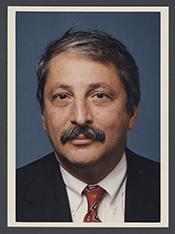
United States · United States Congress · 15 April 1999
Traffic Stops Statistics Study Act of 1999 - Directs the Attorney General to conduct a nationwide study for traffic violations by law enforcement officers. Requires the Attorney General to: (1) perform an initial analysis of existing data, including complaints alleging and other information concerning traffic stops motivated by race and other bias; (2) gather specified data on traffic stops from a nationwide sample of jurisdictions; and (3) report the results to Congress and make such report available to the public. (Sec. 3) Authorizes the Attorney General to provide grants to law enforcement agencies to collect and submit the data to the appropriate agency as designated by the Attorney General. (Sec. 4) Prohibits information released pursuant to this Act from revealing the identity of any individual who is stopped or any law enforcement officer involved in a traffic stop. (Sec. 6) Authorizes appropriations.
United States · United States Congress · 15 April 1999
Veterans Nursing Home Care Act of 1999 - Directs (current law authorizes) the Secretary of Veterans Affairs to provide nursing home care to veterans with a service-connected disability rated at 50 percent or more.
United States · United States Congress · 15 April 1999
Residential Solar Energy Tax Credit Act - Amends the Internal Revenue Code to allow a limited tax credit for residential solar energy property equal to the sum of: (1) 15 percent of the taxpayer's qualified photovoltaic property expenditures during the taxable year; and (2) 15 percent of the taxpayer's qualified solar water heating property expenditures during the same year.
United States · United States Congress · 14 April 1999
Directs the Secretary of Agriculture to implement the Class I milk price structure known as Option A as part of the final rule to consolidate Federal milk marketing orders.
United States · United States Congress · 13 April 1999
Medicare Cancer Clinical Trial Coverage Act of 1999 - Directs the Secretary of Health and Human Services to establish a demonstration project which provides for payment under title XVIII (Medicare) of the Social Security Act of routine patient care costs for Medicare beneficiaries with cancer who are enrolled in an approved clinical trial program, while still applying the beneficiary cost sharing provisions of such program to project participants. Directs the Secretary to study and report to Congress on the impact on Medicare of covering such costs as well as the cost of extending routine patient care coverage to Medicare beneficiaries with a diagnosis other than cancer.
United States · United States Congress · 13 April 1999
Higher Education Reporting Relief Act - Amends the Internal Revenue Code to repeal the requirement that educational institutions and certain other trades and businesses file returns reporting information about recipients of Hope Scholarship and Lifetime Learning Credits. Requires taxpayers taking such credits to include on their returns the name, address, and taxpayer identification number of the eligible educational institution concerned.
United States · United States Congress · 12 April 1999
Prohibits the Secretary of the Interior from expending any funds for the preparation or conduct of preleasing and leasing activities with respect to an oil and gas lease sale on any lands of the Outer Continental Shelf between the seaward boundary between the States of Connecticut and Rhode Island and the seaward boundary between the States of North and South Carolina.
United States · United States Congress · 12 April 1999
Authorizes the use of the U.S. Capitol rotunda on April 23, 1999, for a ceremony honoring the 50th Anniversary of the North Atlantic Treaty Organization (NATO) and welcoming into NATO the three newest members: the Republic of Poland; the Republic of Hungary; and the Czech Republic.
United States · United States Congress · 12 April 1999
Urges the U.S. Government to: (1) commend the three U.S. soldiers abducted from Macedonian territory by Serb forces on March 31, 1999, for their exemplary service, bravery, duty to their country, and part in helping to ensure a peaceful multiethnic democratic Kosovo on the basis of the Rambouillet Accords; (2) continue to forcefully press the Government of the Federal Republic of Yugoslavia and President Milosevic for their unconditional release; (3) condemn any move on the part of such Government to put them on trial; (4) hold such Government and President Milosevic personally responsible for their welfare; (5) continue to condemn the atrocities committed by the Yugoslav army or paramilitary forces against civilians in Kosovo, particularly crimes associated with "ethnic cleansing"; and (6) support the prosecution under the Geneva Convention of all commanders of such army or forces taking part in acts of ethnic cleansing against civilians.
United States · United States Congress · 25 March 1999
Freedom of Choice for Women in the Uniformed Services Act - Repeals a provision of the National Defense Authorization Act for Fiscal Year 1996 which prohibits any medical treatment facility of the Department of Defense from being used to perform an abortion except where the life of the mother would be endangered if the fetus were carried to full term or in the case of rape or incest.
United States · United States Congress · 25 March 1999
Patient Freedom from Restraint Act of 1999 - Amends part D (Peer Review) of title XI of the Social Security Act (SSA) to specify Medicare and Medicaid (SSA titles XVIII and XIX) program beneficiaries' rights to freedom from restraint and other abuse while in a psychiatric hospital or other care facility or treatment center. Requires a covered facility to report sentinel events (when a program beneficiary under psychiatric or other specified care dies unexpectedly or suffers injury unrelated to his or her illness or underlying condition) to the appropriate protection and advocacy agency. Allows the imposition of restraints only: (1) to ensure physical safety of the individual or others in the provider's care; and (2) upon the written order of a physician specifying the duration (but no more than two hours) and circumstances under which restraints and seclusion are to be used (except in emergency circumstances specified by the Secretary of Health and Human Services until such an order could reasonably be obtained). Prohibits their simultaneous use. Requires the covered facility to provide for annual staff training on the proper use of restraints and seclusion, to make available to each resident or patient (or guardian) a statement of their rights with regard to such mechanisms along with identifying information on the appropriate protection and advocacy agencies, such information to be posted in the facility where the patients or residents can see and read it. Imposes certain recordkeeping and other reporting requirements with regard to uses of restraints and seclusion, including making available applicable medical record information to the appropriate protection and advocacy agencies for inspection and periodic reporting to the Secretary on the overall use of restraints and seclusion. Requires the Secretary to compile and publish annually a comprehensive summary of the reports on sentinel events. Mandates sanctions for failure to report, which includes a civil money penalty for failure to file sentinel reports, and other specified violations, including those involving staff training.
United States · United States Congress · 25 March 1999
First-time Homebuyer Affordability Act of 1999 - Amends the Internal Revenue Code to make the tax on prohibited transactions inapplicable to a qualified home equity participation arrangement (one in which up to $10,000 in an individual retirement plan is used to acquire an ownership interest in a dwelling unit that is to be used as the principal residence for a first-time homebuyer). Requires such ownership interest to be a fee interest requiring full repayment. Defines "first-time homebuyer" as an individual on whose behalf an individual retirement plan is established (eligible participant) or a family member (child, parent, or grandparent) who had no present ownership interest in a principal residence during the 36-month period before the date of the arrangement. Allows the use of amounts in an individual retirement plan to make loans of up to $10,000 to purchase a home for a first-time homebuyer on behalf of an eligible participant or a family member. Prohibits a related interest deduction. Requires repayment within 15 years.
United States · United States Congress · 25 March 1999
Declares that the House of Representatives recognizes the social significance of mental illness issues and fully supports the White House Conference on Mental Health.
United States · United States Congress · 24 March 1999
Amends the Animal Welfare Act to eliminate the provision permitting interstate movement of live fighting birds if the fighting venture is to take place in a State allowing such fights.
United States · United States Congress · 24 March 1999
Federal Oil and Gas Reform Act of 1999 - Amends provisions of the Federal Oil and Gas Royalty Management Act of 1982 concerning civil penalties for violation of Federal oil or gas lease (lease) requirements to include under such violations: (1) the filing of false information relating to royalty payments; (2) lease administration violations (recordkeeping, required notifications, inspections); and (3) theft of oil or gas. Makes a repeat offender under any of such violations liable for three times the amount of the otherwise applicable civil penalty and subject to certain other discretionary penalties, such as ceasing oil or gas production or not being permitted to acquire any other lease. Requires administrative appeal of a violation decision within 15 days. Revises penalty amounts for other violations. Provides that any determination that a person has violated lease requirements shall toll any applicable statute of limitations for leases held or operated by such person. Treats amounts received from underpayments of lease royalties owed to the United States as royalties paid to the United States for purposes of the Federal mineral and leasing laws and the Land and Water Conservation Fund Act of 1965. Includes trebled royalty amounts collected for certain lease violations under a provision requiring 50 percent of amounts collected resulting from activities by a State or Indian tribe pursuant to a cooperative agreement to be payable to such State or tribe.
United States · United States Congress · 24 March 1999
TABLE OF CONTENTS: Title I: Continuing the Commitment of the Violence Against Women Act Subtitle A: Law Enforcement and Prosecution Grants to Combat Violence Against Women Subtitle B: National Domestic Violence Hotline Subtitle C: Battered Women's Shelters and Services Subtitle D: Community Initiatives Subtitle E: Education and Training for Judges and Court Personnel Subtitle F: Grants to Encourage Arrest Policies Subtitle G: Rural Domestic Violence and Child Abuse Enforcement Subtitle H. National Stalker and Domestic Violence Reduction Subtitle I: Federal Victims' Counselors Subtitle J: Education and Prevention Grants to Reduce Sexual Abuse of Runaway, Homeless, and Street Youth Subtitle K: Victims of Child Abuse Programs Title II: Sexual Assault Prevention Violence Against Women Act of 1999 - Title I: Continuing the Commitment of the Violence Against Women Act - Subtitle A: Law Enforcement and Prosecution Grants to Combat Violence Against Women - Amends the Omnibus Crime Control and Safe Streets Act of 1968 (the Act) to authorize appropriations for grants to combat violent crimes against women. (Sec. 102) Revises grant allocation guidelines governing prosecution grants, victims' services and State court systems,. Expands grant purposes to include training that addresses sexual assault, domestic violence, and stalking for State, local, and tribal judicial personnel, as well as training of sexual assault forensic nurse examiners, and supporting the development of sexual assault response teams. Directs the Attorney General to deny State grant applications that fail to provide documentation of collaborative efforts with other agencies or organizations. Redefines "victims' services" to include advocacy and assistance for victims seeking legal, social, and health care services. Includes as a prerequisite for Federal reimbursement of forensic medical exams of victims of sexual assault that the participating governmental entity notify all victims that such reimbursement is neither contingent upon the victim's report to law enforcement officials, nor upon the victim's cooperation in the prosecution of the assault. (Sec. 103) Directs the Attorney General to make grants to State domestic violence and sexual assault coalitions for purposes of coordinating with: (1) victim services activities; and (2) Federal, State, and local entities engaged in violence-against-women activities. Subtitle B: National Domestic Violence Hotline - Amends the Family Violence Prevention and Services Act (FVPSA) to authorize increased appropriations for the national domestic violence hotline grant. Requires grantees to submit a grant evaluation report to the Secretary of Health and Human Services (the HHS Secretary) for publication and public comment as a prerequisite to a grant award or renewal. Subtitle C: Battered Women's Shelters and Services - Battered Women's Shelters and Services Act - Amends the FVPSA to authorize appropriations for State grants. Modifies guidelines governing: (1) allotment of appropriations; (2) grants for information and technical assistance centers; and (3) authorization of appropriations. (Sec. 123) Instructs the HHS Secretary to award grants for: (1) State domestic violence coalitions and local domestic violence programs providing shelter or related assistance, in order to develop model strategies to address domestic violence in underserved populations; (2) each State domestic violence coalition for an emergency assistance fund for domestic violence victims; (3) technical assistance and training for State and local domestic violence programs; and (4) private, nonprofit, tribal domestic violence coalitions with representatives from a majority of the programs for victims of domestic violence operating within Indian reservations, and programs whose primary focus is the populations of such Indian country. Subtitle D: Community Initiatives - Authorizes appropriations for demonstration grants for community initiatives. Subtitle E: Education and Training for Judges and Court Personnel - Amends the Equal Justice for Women in the Courts Act of 1994 to permit training grants for judges and court personnel to include: (1) child custody, visitation, and safety issues raised by domestic violence and child sexual assault; and (2) the extent to which addressing domestic violence and victim safety contributes to the efficient administration of justice. Authorizes appropriations. Subtitle F: Grants to Encourage Arrest Policies - Amends the Act to reauthorize appropriations to implement the functions of the Bureau of Justice Statistics. (Sec. 153) Mandates that at least five percent of appropriated funds be used for grants to Indian tribal governments to treat domestic violence as a serious violation of criminal law. Subtitle G: Rural Domestic Violence and Child Abuse Enforcement - Amends the Safe Homes for Women Act of 1994 to authorize appropriations for rural domestic violence and child abuse enforcement. Mandates that five percent of such funds be used for grants to Indian tribal governments. Subtitle H: National Stalker and Domestic Violence Reduction - Amends the Safe Homes for Women Act of 1994 to authorize appropriations for grants to enter stalking and domestic violence data into crime information databases. Subtitle I: Federal Victims' Counselors - Amends the Safe Streets for Women Act of 1994 to authorize appropriations for the United States Attorneys to appoint Victim-Witness counselors for the prosecution of domestic violence and sexual assault crimes. Subtitle J: Education and Prevention Grants to Reduce Sexual Abuse of Runaway, Homeless, and Street Youth - Amends the Runaway and Homeless Youth Act to authorize appropriations for street-based outreach and education to prevent sexual abuse and exploitation. Subtitle K: Victims of Child Abuse Programs - Amends the Victims of Child Abuse Act of 1990 to authorize appropriations for: (1) the court-appointed special advocate program; and (2) child abuse training programs for judicial personnel and practitioners. (Sec. 195) Amends the Act to authorize appropriations for grants for closed-circuit televising of testimony of child abuse victims. Title II: Sexual Assault Prevention - Amends the Public Health Service Act to require the use of certain State funds exclusively for rape prevention and education programs conducted by rape crisis centers and private nonprofit nongovernmental State and tribal sexual assault coalitions for specified programs. (Sec. 201) Instructs the HHS Secretary to establish a National Resource Center on Sexual Assault when appropriations reach a specified minimum level. Mandates that State grantors ensure that at least 25 percent of the funds are devoted to educational programs targeted for middle school, junior high, and high school aged students. Authorizes appropriations.
United States · United States Congress · 24 March 1999
Constitutional Amendment - Declares that equality of rights under the law shall not be denied or abridged by the United States or any State on account of sex.
United States · United States Congress · 24 March 1999
Expresses the sense of Congress that: (1) a commemorative postage stamp should be issued by the Postal Service to honor the members of the armed forces who have been awarded the Purple Heart; and (2) the Citizens' Stamp Advisory Committee should recommend to the Postmaster General that such a stamp be issued in 1999, the year marking the 200th anniversary of the death of George Washington.
United States · United States Congress · 23 March 1999
Federal Procurement and Assistance Integrity Act - States that the purpose of this Act is to improve the efficiency and effectiveness and protect the integrity of the Federal procurement and assistance systems by ensuring that the Federal Government does business with responsible contractors and participants. Authorizes the Secretary of Labor to debar or suspend a person from procurement or nonprocurement activities upon a finding, in accordance with procedures developed under this Act, that the person violated any of the following: (1) the National Labor Relations Act; (2) the Fair Labor Standards Act; (3) the Occupational Safety and Health Act; or (4) Federal requirements for employment emphasis under Federal contracts to be given to special disabled veterans and veterans of the Vietnam era. Directs the Secretary and the National Labor Relations Board to jointly develop procedures to determine whether a violation of a law listed above is serious enough to warrant debarment or suspension. Mandates a report by the Secretary and the National Labor Relations Board to the Congress on the implementation of this Act.
United States · United States Congress · 23 March 1999
Morris K. Udall Wilderness Act of 1997(sic) - Designates specified lands in Alaska as wilderness and components of the National Wilderness Preservation System.
United States · United States Congress · 23 March 1999
Amends the Clean Water Act to require grants made under the National Estuary Program to be used for assisting activities necessary for the development and implementation of conservation and management plans (currently, for research and other technical work necessary for the development of such plans). Reauthorizes appropriations for the Program for FY 2000 through 2004.
United States · United States Congress · 23 March 1999
Department of Veterans Affairs Nurses Appreciation Act of 1999 - Amends Federal provisions relating to the pay of health care personnel within the Veterans Health Administration (VHA) of the Department of Veterans Affairs to provide that, effective October 1, 1999, pay adjustments for registered nurses and certain other positions within the VHA shall be made in the same manner as those generally applicable to Federal employees. Provides that, effective October 1, 2002, whenever the Secretary of Veterans Affairs determines that such rates of pay are inadequate to recruit or retain high-quality health care personnel at such a facility, the Secretary shall adjust such pay to achieve consistency with the rate of compensation for corresponding health-care professionals in the Bureau of Labor Statistics labor market area of that facility.
United States · United States Congress · 23 March 1999
Amends Federal civil service provisions relating to the Civil Service Retirement System and the Federal Employees Retirement System to expand the definition of "law enforcement officer" to include (and thus extend the applicability of such provisions to): (1) a revenue officer of the Internal Revenue Service; (2) a customs inspector of the U.S. Customs Service; (3) a customs canine enforcement officer of the U.S. Customs Service; (4) an Immigration and Naturalization Service inspector; (5) a Department of Defense police officer; (6) a Department of Defense Command Investigations Division detective; (7) a Bureau of Engraving and Printing officer; (8) a postal police officer; (9) a Secret Service special officer; (10) a Drug Enforcement Administration diversion investigator; (11) a U.S. Customs Operation Enforcement Officer; and (12) a U.S. Customs Detection System Specialist Airborne and Flight Engineer. Prohibits applying the amendments made by this Act with respect to any period of service preceding this Act's enactment unless the employee involved (or, if applicable, an appropriate survivor) pays into the Civil Service Retirement and Disability Fund an amount equal to the total additional amounts which should have been deducted and withheld from pay (in excess of amounts actually deducted and not refunded) if such amendments had then been if effect, with interest. Requires the appropriate agency, no later than 90 days after the date on which such payment is made by an individual, to pay into the Fund any additional amounts which should have been paid by that agency into such Fund, with interest, as if this Act's amendments had been in effect during the prior periods of service involved.
United States · United States Congress · 23 March 1999
Poison Control Center Enhancement and Awareness Act - Directs the Secretary of Health and Human Services to provide coordination and assistance to regional poison control centers for the establishment of a nationwide toll-free phone number to be used to access such centers. Authorizes appropriations. Mandates a national media campaign to educate the public about poison prevention and the availability of local poison control resources and to conduct advertising campaigns concerning the nationwide toll-free number. Authorizes appropriations. Mandates grants for certified regional poison control centers to achieve financial stability and to prevent, and provide treatment recommendations for, poisoning. Mandates other grant uses. Sets forth center certification requirements. Authorizes appropriations.
United States · United States Congress · 23 March 1999
Veterans Expedited Military Medals Act - Directs the Secretary of Defense to establish and carry out a plan to make available to specified defense organizations the funds and other resources necessary to ensure the elimination of the backlog in satisfying requests of former military personnel for the issuance or replacement of military decorations. Requires a report from the Secretary to Congress on the plan and backlog status.
United States · United States Congress · 23 March 1999
Amends title II (Old Age, Survivors and Disability Insurance) (OASDI) of the Social Security Act to modify the formula for determining the amount of reduced monthly OASDI benefits payable to a spouse, surviving spouse, or parent receiving monthly payments from a Federal or State pension plan. Declares that such benefit reductions shall be equal to the lesser of: (1) the amount by which the total amount of the combined monthly benefit (before reduction) and monthly pension exceeds $1,200, adjusted for inflation; or (2) an amount equal to two-thirds of the amount of any such monthly pension plan payment.
United States · United States Congress · 23 March 1999
Volunteer Firefighter Equipment Enhancement Act of 1999 - Amends the Internal Revenue Code to permit tax-exempt bond financing for the purchase of an ambulance or other emergency response vehicle by a volunteer emergency medical services organization or by a volunteer fire department.
United States · United States Congress · 23 March 1999
Expresses the sense of the Congress that: (1) a free news media is vital to the development and consolidation of democracy and the development of a civil society in Russia; (2) freedom of the news media and freedom of expression must be safeguarded; (3) Russian Government leaders should fully support freedom of the news media and the right of free expression in Russia; (4) the United States should actively support freedom of expression and freedom of the news media through U.S. assistance to Russia; (5) when considering requests by the Russian Government for loans or other economic assistance from the International Monetary Fund and other international financial institutions, the U.S. Government should take into account the extent to which Russian Government authorities support such freedoms; and (6) the President and Secretary of State should convey to appropriate Russian Government officials this expression of congressional views.
United States · United States Congress · 18 March 1999
TABLE OF CONTENTS: Title I: Expanded Availability of Health Care Services Title II: Ticket to Work and Self-Sufficiency and Related Provisions Subtitle A: Ticket to Work and Self-Sufficiency Subtitle B: Elimination of Work Disincentives Subtitle C: Work Incentives, Planning, Assistance, and Outreach Title III: Demonstration Projects and Studies Title IV: Technical Amendments Work Incentives Improvement Act of 1999 - Title I: Expanded Availability of Health Care Services - Amends title XIX (Medicaid) of the Social Security Act (SSA) to provide for expanding State options under Medicaid for workers with disabilities, namely by creating State options to eliminate income, assets, and resource limitations for workers with disabilities who buy into Medicaid and to provide opportunity for employed individuals with a medically improved disability to make such a buy. Provides that Federal funds paid to a State for medical assistance provided to such individuals may not generally be used to supplant the level of State funds expended for a fiscal year for programs to enable working disabled individuals to work. (Sec. 102) Provides for certain continuation of Medicare coverage for working individuals with disabilities. (Sec. 103) Directs the Secretary of Health and Human Services to: (1) award grants to eligible States to support establishment of State infrastructures to support the working disabled as well as to enable State outreach campaigns on infrastructure existence; and (2) submit a recommendation to specified congressional committees on whether such grant program should be continued after FY 2010. Authorizes appropriations. (Sec. 104) Authorizes State demonstration projects for certain Medicaid coverage of up to a specified maximum number of workers with a potentially severe disability, coverage equal to that afforded under the State option provided for above for eliminating income, assets, and resource limitations for disabled workers buying into Medicaid. Makes necessary appropriations. Title II: Ticket to Work and Self-Sufficiency and Related Provisions - Subtitle A: Ticket to Work and Self-Sufficiency - Amends part A (General Provisions) of SSA title XI to direct the Commissioner to establish a Ticket to Work and Self-Sufficiency Program (TWSSP) under which a disabled beneficiary may use a TWSSP ticket issued by the Commissioner under a described system, designed to ensure quality assurance, to obtain employment, vocational rehabilitation services, or other support services, pursuant to an appropriate individual beneficiary work plan that meets specified requirements, at the Commission's expense, from a participating employment network, public or private, which: (1) meets specified qualifications and is under an agreement with the Commissioner who must select a program manager to assist in administering TWSSP; (2) is chosen by the beneficiary, and (3) is willing to accept assignment of the beneficiary's TWSSP ticket. Allows State agencies administering or supervising the administration of the State plan under title I of the Rehabilitation Act of 1973 to elect to participate as an employment network. Sets forth special requirements applicable to cross-referral to certain State agencies and requirements relating to provision of services. Describes employment network payment systems. Provides that during any period for which an individual is using a TWSSP ticket, the Commissioner and any applicable State agency may not initiate a continuing disability or similar review with regards to whether the individual is or is not disabled. Requires payments to employment networks to be made out of the social security trust funds in the case of ticketed SSA title II (Old Age, Survivors and Disability Insurance) (OASDI) disability beneficiaries who return to work, or from the appropriation made available for making Supplemental Security Income (SSI) payments under SSA title XVI, in the case of SSI disability beneficiaries who return to work. Provides for allocation of other costs. (Sec. 202) Establishes within the Social Security Administration the Work Incentives Advisory Panel to advise the Commissioner with respect to TWSSP, and other Federal officials on related issues. Provides that the costs for carrying out this paragraph shall be paid from amounts available for the administration of SSA titles II and XVI, and shall be allocated among those amounts as appropriate. Subtitle B: Elimination of Work Disincentives - Amends SSA titles II and XVI to set forth a number of measures designed to eliminate work disincentives, namely prohibiting work activity as a basis for review of an individual's disability status and providing for expedited reinstatement of entitlement, or in the case of SSI, eligibility, to, respectively, OASDI and SSI disability benefits. Subtitle C: Work Incentives Planning, Assistance, and Outreach - Amends SSA title XI part A (General Provisions) to direct the Commissioner to establish a community-based work incentives outreach program for disabled beneficiaries that includes the provision of technical assistance to organizations and entities that are designed to encourage disabled beneficiaries to return to work. Provides that the costs of carrying out this subtitle shall be paid from amounts made available for administration of SSA titles II and XVI, and shall be allocated among such amounts as appropriate. (Sec. 222) Amends SSA title XI to authorize the Commissioner to make certain minimum payments in each State to the protection and advocacy system established under the Developmental Disabilities Assistance and Bill of Rights Act for the purpose of providing services to disabled beneficiaries, services which may include advocacy or other services that such a beneficiary may need to secure or regain gainful employment. Provides for funding similar to that in the paragraph above, although subject to certain limitation. Title III: Demonstration Projects and Studies - Amends SSA title II to provide for a permanent extension of disability insurance program demonstration project authority. Directs the Commissioner to develop and carry out experiments and demonstration projects, subject to specified guidelines which include the authority to waive compliance with benefits requirements, with regard to various alternative methods of treating the work activity of individuals entitled to OASDI disability benefits, altering other limitations and conditions applicable to such individuals, and implementing sliding scale benefit offsets. Authorizes the Commissioner to expand the scope of any such experiment or demonstration project to include any group of OASDI benefit applicants with impairments that reasonably may be presumed to be disabling for purposes of such demonstration project, and may limit any such demonstration project to any such group of applicants, subject to the terms of such demonstration project which shall define the extent of any such presumption. (Sec. 302) Directs the Commissioner to conduct certain demonstration projects designed to provide for specified reductions in disability insurance benefits based on earnings. Requires expenditures for such demonstration projects to come out of the social security and Medicare trust funds to the extent provided in advance in appropriation acts. (Sec. 303) Directs the Comptroller General to conduct and report to the Congress on various described studies and other specified related matters, but chiefly studies concerning existing disability-related employment incentives and coordination of the OASDI disability insurance program and the SSI program as they relate to individuals entering or leaving concurrent entitlement under such programs, as well as on a study concerning the impact of the substantial gainful activity limit on return to work. Title IV: Technical Amendments - Amends the Contract with America Advancement Act of 1996 with respect to: (1) final adjudication of denied claims by drug addicts and alcoholics for SSA title II disability benefits; and (2) the effective dates of certain requirements concerning representative payees and treatment referrals for such individuals. (Sec. 402) Amends SSA title II to: (1) provide for payments to State and local prisons for monthly reports on the identities of inmates whose OASDI benefits are determined by the Commissioner not to be payable as a result of such reports; (2) provide for a 50 percent reduction in such payments under SSA titles II and XVI in cases involving a comparable payment under the other title with respect to the same prisoner; (3) transfer from the OASDI trust funds any sums necessary to enable the Commissioner to make such payments; (4) eliminate the requirement that confinement stem only from a crime punishable by imprisonment for more than one year (thus denying OASDI benefits to individuals confined for any criminal offense); and (5) provide for continued denial of benefits to sex offenders remaining confined to public institutions upon completion of prison term. (Sec. 403) Provides for a two-year open season for members of the clergy who wish to revoke their exemption from social security coverage. (Sec. 404) Amends SSA title XI to make a miscellaneous technical amendment relating to cooperative research or development projects under SSA titles II and XVI. (Sec. 405) Amends SSA title XI to make miscellaneous technical amendments to provisions concerning the requirements of State income and eligibility verification systems, among other changes allowing a State to permit certain employers that make returns with respect to domestic service employment taxes on a calendar year basis to instead make such reports on an annual basis.
United States · United States Congress · 18 March 1999
Requires the Department of State to raise the matter of Zachary Baumel (a U.S. citizen), Yehuda Katz, and Zvi Feldman with the appropriate government officials of Syria, Lebanon, the Palestinian Authority, and with other governments in the region and elsewhere which in the Department's view may be helpful in locating and securing the return of these soldiers. Urges decisions with regard to U.S. economic and other forms of assistance to such countries and U.S. policy towards these governments and authorities to take into consideration their willingness to assist in locating and securing the return of such soldiers. Requires the Department to report to specified congressional committees on its consultations with the appropriate governments and any affected U.S. policies.
United States · United States Congress · 18 March 1999
Medicare Medical Nutrition Therapy Act of 1999 - Amends title XVIII (Medicare) of the Social Security Act to provide for Medicare coverage of medical nutrition therapy services of registered dietitians and nutrition professionals.
United States · United States Congress · 18 March 1999
Newborn and Infant Hearing Screening and Intervention Act of 1999 - Mandates grants or cooperative agreements to: (1) develop statewide newborn and infant hearing screening, evaluation and intervention programs and systems; and (2) provide technical assistance to State agencies to complement an intramural program and to conduct applied research related to newborn and infant hearing screening, evaluation, and intervention programs and systems. Requires the National Institutes of Health to continue a program of research and development on the efficacy of new screening techniques and technology. Mandates Federal coordination and collaboration with State and local agencies, consumer groups, national medical, health, and education specialty organizations, deaf or hard-of-hearing individuals and their families, qualified professional personnel, and related commercial industries. Authorizes appropriations.
United States · United States Congress · 18 March 1999
Captive Exotic Animal Protection Act of 1999- Amends the Federal criminal code to prohibit and set penalties for knowingly transferring, transporting, or possessing a confined exotic animal for purposes of allowing the killing or injuring of that animal for entertainment or the collection of a trophy.
United States · United States Congress · 18 March 1999
Prohibits any drilling activity (including any slant or directional drilling) to extract oil or gas from submerged lands in any of the Great Lakes. Authorizes the Attorney General to enforce such prohibition.
United States · United States Congress · 18 March 1999
Amends the Internal Revenue Code to provide that the exclusion of State or local government foster care payments from the gross income of foster care providers shall also apply to payments by qualifying placement agencies.
United States · United States Congress · 18 March 1999
Expresses the sense of Congress that the Citizens' Stamp Advisory Committee should recommend and the U.S. Postal Service should issue a series of commemorative postage stamps in 1999 honoring the legacy and the continuing contributions of veterans service organizations to America.
United States · United States Congress · 17 March 1999
Microenterprise for Self-Reliance Act of 1999 - Amends the Foreign Assistance Act of 1961 to set forth congressional findings and policy, including that: (1) the development of microenterprise (including micro- and small enterprises) is a vital factor in the growth of developing countries and in the development of free, open, and equitable international economic systems; (2) it is in the best interest of the United States to assist the development of microenterprises and of enterprises of the poor in developing countries; and (3) the support of microenterprise can be served by programs that provide credit, savings, training, and technical assistance. (Sec. 4) Authorizes the President to provide grant and other assistance for programs to increase the availability of credit and other services to microenterprises (including small enterprises) lacking full access to capital, credit, and training through: (1) grants to microfinance institutions; (2) loans and guarantees to credit institutions; (3) training, technical assistance, and other support (including training programs for lenders and microentrepreneurs); and (3) policy and regulatory programs at the country level. Sets forth certain grant requirements and micro- and small enterprise assistance eligibility criteria. (Sec. 6) Directs the Administrator of the U.S. Agency for International Development (AID) to establish: (1) a monitoring system that provides, among other things, for performance goals for microenterprise development grant assistance; (2) eligibility criteria for determining which entities shall carry out activities receiving credit assistance; and (3) a U.S. Microfinance Loan Facility to prevent the bankruptcy of microfinance institutions caused by natural disasters, war or civil conflict, national financial crisis, or other short-term financial movements that threaten the long-term development of such institutions. Authorizes appropriations. (Sec. 7) Directs the President to report to the appropriate congressional committees on the most cost-effective methods for increasing the access of poor people to credit, other financial services, and related training. (Sec. 8) Expresses the sense of Congress that: (1) the Administrator of AID and the Secretary of State should seek to support and strengthen the effectiveness of microfinance activities in United Nations (UN) agencies, such as the International Fund for Agricultural development (IFAD) and the UN Development Program (UNDP), which have provided key leadership in developing the microenterprise sector; and (2) the Secretary of the Treasury should instruct each U.S. Executive Director of the Multilateral Development Banks (MDBs) to advocate the development of a coherent and coordinated strategy to support the microenterprise sector, including an increase of multilateral resource flows for building microenterprise retail and wholesale intermediaries.
United States · United States Congress · 17 March 1999
Firefighter Investment and Response Enhancement (FIRE) Act - Authorizes the Director of the Federal Emergency Management Agency (FEMA) to make grants on a competitive basis to a variety of fire departments for any of a number of specified purposes, including: (1) hiring additional firefighting personnel; (2) training them; (3) funding creation of rapid intervention teams to protect firefighting personnel at the scenes of fires and other emergencies; (4) certifying fire inspectors; (5) establishing wellness and fitness programs for firefighting personnel; (6) funding emergency medical services; (7) acquiring additional firefighting vehicles and equipment, including personal protective equipment required by the Occupational Safety and Health Administration; (8) modifying fire stations, fire training facilities, and other facilities; (9) enforcing fire codes; (10) funding fire prevention programs; and (11) educating the public about arson prevention and detection. Requires the FEMA Director to establish an office to set specific criteria for the selection of grant recipients and administer the grants. Authorizes appropriations.
United States · United States Congress · 17 March 1999
Historic Homeownership Assistance Act - Amends the Internal Revenue Code to allow a tax credit for 20 percent of the qualified rehabilitation expenditures made by a taxpayer with respect to a qualified historic home which has been substantially rehabilitated and which is owned by the taxpayer and used as his or her principal residence. Allows the credit for such expenditures to be taken by a purchaser of the rehabilitated home. Permits, in lieu of the credit, a historic rehabilitation mortgage credit certificate, which may be transferred to a lender in exchange for a reduction in the rate of interest on the loan secured by the building.
United States · United States Congress · 17 March 1999
Expresses the sense of Congress that: (1) the United States should reaffirm its commitment to the Taiwan Relations Act and the specific guarantees for the provision of legitimate defense articles to Taiwan contained therein; and (2) Congress has grave concerns over China's military modernization and weapons procurement program, especially ballistic missile capability and deployment that seem particularly directed toward threatening Taiwan. Calls on the President to: (1) direct all appropriate officials to raise these concerns with officials from the People's Republic of China; (2) seek from Chinese leaders a public renunciation of any use of (or threat to use) force against Taiwan; and (3) provide an annual report detailing the military balance on both sides of the Taiwan Strait. Calls for: (1) the executive branch to inform the appropriate congressional committees when officials from Taiwan seek to purchase defense articles for self-defense; (2) the U.S. Government to encourage a regional high-level dialogue on the best means of ensuring stability, peace, and freedom of the seas in East Asia; and (3) the President to encourage further dialogue between Taiwan and China. Declares that it should be U.S. policy to publicly support Taiwan's admission to the World Trade Organization as soon as possible and to encourage others to adopt similar policies.
United States · United States Congress · 16 March 1999
TABLE OF CONTENTS: Title I: Funding for Child Care Title II: Dependent Care Tax Credit Reform Title III: Grants to Business Consortia Subtitle A: Grant Program Subtitle B: General Provisions Title IV: After School Program Subtitle A: 21st Century Community Learning Centers Subtitle B: After School Snacks Title V: Model States Early Learning Program Title VI: Child Care Worker Incentives Title VII: Research and Demonstration Program Title VIII: Miscellaneous Subtitle A: Child and Adult Food Program Subtitle B: Mortgage Insurance for Child Care and Development Facilities Subtitle C: Sense of the Congress Affordable Child Care, Education, Security, and Safety Act - Title I: Funding for Child Care - Amends the Social Security Act (SSA) to make appropriations for FY 2000 through 2004 for child care subsidy funding under the title IV part A program of Block Grants to States for Temporary Assistance for Needy Families (TANF). (Sec. 101) Reserves specified portions of such funds for payments to Indian tribes and for quality assurance and quality improvement activities relating to programs under the Child Care and Development Block Grant Act of 1990 (CCDBGA). Provides for allotment of funds among the States and territories according to a specified formula, or for matching payments based on certain portions of their expenditures for specified purposes authorized under CCDBGA. Requires targeting of at least 70 percent of such subsidy for child care assistance funds to working non-welfare families, who are not TANF recipients under a State or territory program. Title II: Dependent Care Tax Credit Reform - Amends the Internal Revenue Code to increase the dependent care tax credit and to provide an equivalent benefit where one parent stays at home to provide child care for child under age one. (Sec. 202) Allows a business-related tax credit for employer expenses for employer-provided child care assistance. (Sec. 203) Allows the dependent care credit against the alternative minimum tax. Title III: Grants to Business Consortia - Subtitle A: Grant Program - Directs the Secretary of Health and Human Services (HHS) to make grants to States to provide grants to eligible entities to improve access to affordable, local, quality child care services. (Sec. 301) Makes eligible for such a grant a consortium that: (1) has not received a grant under this title; and (2) consists of representatives from at least five businesses (or a nonprofit organization that represents at least five businesses), each of which, to the maximum extent practicable, is located in the same geographic region. Requires States to give priority, in providing such grants, to eligible entities that consist of a majority of representatives from small businesses. Sets a maximum limit on the amount of any such grant provided to an eligible entity for any fiscal year. (Sec. 302) Sets forth requirements for grant applications, use of funds, and matching funds. Subtitle B: General Provisions - Authorizes appropriations for such child care services grants to business consortia. Title IV: After School Program - Subtitle A: 21st Century Community Learning Centers - Amends the 21st Century Community Learning Centers Act to require that discretionary grants be awarded to local educational agencies (LEAs) for supporting certain programs of public elementary schools or secondary schools, including middle schools, that serve communities with substantial needs for expanded learning opportunities for children and youth. (Sec. 401) Increases the maximum duration of such a grant from three to five years. (Sec. 402) Requires the LEA to demonstrate that it will provide specified portions of the annual costs of project activities from sources other than such grant funds. (Sec. 403) Requires the use of grant funds to establish or expand community learning centers that provide activities that offer expanded learning opportunities for children and youth in the community (such as activities conducted before or after school), and which may include any of the currently authorized activities. (Sec. 405) Extends through FY 2004 the authorization of appropriations for such Act. Authorizes continuation awards of FY 1998 grants. Subtitle B: After School Snacks - Amends the National School Lunch Act to provide for participation by certain additional institutions under the child and adult care food program. Allows such institutions to claim reimbursements for meal supplements which they serve without charge to children in afterschool care. (Sec. 411) Revises eligibility requirements for meal supplements for children in afterschool care. Title V: Model States Early Learning Program - Amends SSA title IV part A (TANF) to make appropriations for FY 2000 through 2004 for model States early learning programs. Provides for allotment of funds among the States, territories, and Indian tribes according to a specified formula, or for matching payments based on portions of their expenditures for an early learning program under CCDBGA. (Sec. 501) Amends CCDBGA to establish the Model States Early Learning Program. Sets forth program requirements for State participation and plans, allowable activities, and annual reports. Title VI: Child Care Worker Incentives - Child Care Worker Incentive Act of 1999 - Amends CCDBGA to establish a national child care provider scholarship program. (Sec. 602) Sets forth eligibility criteria for scholarship applicants, including: (1) demonstrated commitment to a child care career; (2) cost sharing by the applicant and employer; and (3) the employer's agreement to provide increased financial incentives to the employee upon completion of the education or training. Includes such program under requirements for State plans, allotments, payments, and annual reports. Authorizes appropriations. Title VII: Research and Demonstration Program - Amends CCDBGA to authorize the Secretary of Health and Human Services (HHS), directly or through grants, contracts, or other arrangements, to carry out research, demonstration projects, and other activities relating to child care, including activities designed to improve the quality and increase the availability of child care. (Sec. 701) Includes among allowable activities under such research and demonstrations program: (1) research on child care needs of low-income families, on good policies and practices, and on retention of child care provider staff; (2) demonstrations of technology-based education and training; (3) demonstration projects for new methods; (4) a National Center on Child Care Statistics; and (5) a hotline to locate local child care resources, and child care consumer education activities. Authorizes appropriations. Title VIII: Miscellaneous - Subtitle A: Child and Adult Food Program - Amends the National School Lunch Act to increase reimbursement rates for family or group day care homes under the child and adult care food program. Subtitle B: Mortgage Insurance for Child Care and Development Facilities - Children's Development Commission Act - Amends the National Housing Act to authorize the Secretary of Housing and Urban Development to insure mortgages for: (1) new or rehabilitated child care and development facilities, including mortgage insurance for fire safety equipment loans; and (2) purchase or refinance of existing child care and development facilities. (Sec. 855) Establishes the Children's Development Commission which shall: (1) issue facility standards and compliance certifications; and (2) make loans not in excess of $50,000 for facility rehabilitation or renovation. Directs the Commission to report to the Congress on: (1) a plan for establishing an independent foundation to support research on child care and development facilities, fund pilot programs to test innovative methods for improving child care, and assist persons interested in mortgage insurance and other Commission assistance; and (2) a study of capital needs of center-based child care in low-income communities. Authorizes appropriations. (Sec. 856) Directs the Secretary of the Treasury to study the availability of child care facility secondary mortgage markets. Subtitle C: Sense of the Congress - Expresses the sense of the Congress that funds should be appropriated under the amendments made by this Act to the maximum extent authorized and consistently with achieving a balanced Federal budget.
United States · United States Congress · 16 March 1999
Amends the Departments of Labor, Health and Human Services, and Education, and Related Agencies Appropriations Act, 1997, specified Federal law relating to Department of Defense funds, and the National Defense Authorization Act for Fiscal Year 1995 to exclude grants for student financial assistance from the prohibition on certain Federal departments and agencies making grants to institutions of higher education that prevent ROTC access to campus or military recruiting on campus.
United States · United States Congress · 16 March 1999
Immunosuppressive Drug Coverage Extension Act of 1999 - Amends title XVIII (Medicare) of the Social Security Act to eliminate the time limitation on Medicare benefits for immunosuppressive drugs.
United States · United States Congress · 16 March 1999
Federal Civilian and Uniformed Services Long-Term Care Insurance Act of 1999 - Amends Federal civil service provisions to establish a program to provide for long-term care insurance for certain Federal employees and annuitants, current and retired members of the uniformed services, and qualified relatives of such individuals. Authorizes the Office of Personnel Management (OPM), without regard to statutes requiring competitive bidding, to contract with up to three qualified carriers to provide group long-term care insurance under this Act. Sets forth contract terms, including a requirement that coverage may not be canceled, except for nonpayment of charges. Provides for five-year, automatically renewable insurance contracts. Describes conditions under which coverage may be terminated. Sets forth required elements of contracts, including portability of benefits. Requires OPM to ensure that at least one of the benefits plans is a Governmentwide plan. Makes insured individuals responsible for 100 percent of the charges of coverage and allows sponsoring individuals to have amounts withheld from pay for coverage for qualified relatives. Provides for an open enrollment period at least annually.
United States · United States Congress · 16 March 1999
Calls for the Citizens' Stamp Advisory Committee to recommend and the U.S. Postal Service to issue a postage stamp commemorating the 100th anniversary of the Veterans of Foreign Wars of the United States.
United States · United States Congress · 11 March 1999
Hate Crimes Prevention Act of 1999 - Amends the Federal criminal code to set penalties for persons who, whether or not acting under color of law, willfully cause bodily injury to any person or, through the use of fire, a firearm, or an explosive device, attempt to cause such injury, because of the actual or perceived: (1) race, color, religion, or national origin of any person; or (2) religion, gender, sexual orientation, or disability of any person, where in connection with the offense, the defendant or the victim travels in interstate or foreign commerce, uses a facility or instrumentality of interstate or foreign commerce, or engages in any activity affecting interstate or foreign commerce, or where the offense is in or affects interstate or foreign commerce. (Sec. 5) Directs the United States Sentencing Commission to study the issue of, and, if appropriate, amend the Federal sentencing guidelines to provide sentencing enhancements for, adult defendants who recruit juveniles to assist in the commission of hate crimes. (Sec. 6) Requires the Office of Justice Programs of the Department of Justice (DOJ) to make grants to State and local programs designed to combat hate crimes committed by juveniles. Authorizes appropriations, including programs to train local law enforcement officers in investigating, prosecuting, and preventing hate crimes. (Sec. 7) Authorizes appropriations to the Department of the Treasury and to DOJ to increase the number of personnel to prevent and respond to alleged violations of provisions regarding interference with specified federally protected activities, such as voting.
United States · United States Congress · 11 March 1999
Amends title XIX (Medicaid) of the Social Security Act to give States the option of making medical assistance for breast and cervical cancer-related treatment services available during a presumptive eligibility period to certain low-income women without creditable coverage who have already been screened for such cancers under the Centers for Disease Control and Prevention breast and cervical cancer early detection program and need treatment. Provides for an enhanced match with regard to such Medicaid treatment services.
United States · United States Congress · 11 March 1999
Public Safety Employer-Employee Cooperation Act of 1999 - Provides collective bargaining rights for public safety officers employed by States or local governments. Directs the Federal Labor Relations Authority (FLRA) to determine whether State law provides specified rights and responsibilities for public safety officers, including: (1) granting public safety employees the right to form and join a labor organization which excludes management and supervisory employees, and which is, or seeks to be, recognized as the exclusive bargaining agent for such employees; and (2) requiring public safety employers to recognize and agree to bargain with the employees' labor organization. (Sec. 5) Requires the FLRA to issue regulations establishing collective bargaining procedures for public safety employers and employees in States that do not substantially provide for such public safety employee rights and responsibilities. Directs the FLRA, in such cases, to: (1) determine the appropriateness of units for labor organization representation; (2) supervise or conduct elections to determine whether a labor organization has been selected as an exclusive representative by a majority of the employees in an appropriate unit; (3) resolve issues relating to the duty to bargain in good faith; (4) conduct hearings and resolve complaints of unfair labor practices; and (5) resolve exceptions to arbitrator's awards. Grants a public safety employer, employee, or labor organization the right to seek enforcement of such FLRA regulations and authority through appropriate State courts. (Sec. 6) Prohibits public safety employers, employees, and labor organizations from engaging in lockouts or strikes. (Sec. 7) Provides that existing collective bargaining units and agreements shall not be invalidated by this Act. (Sec. 9) Authorizes appropriations.
United States · United States Congress · 11 March 1999
Debt Relief for Poverty Reduction Act of 1999 - Amends the Foreign Assistance Act of 1961 to direct the President, subject to authorization of appropriations, to cancel or reduce all amounts owed to the United States by heavily indebted poor countries (HIPCs) as a result of concessional and nonconcessional loans made, guarantees issued, or credits extended prior to January 1, 1996, under any provision of law. Sets forth eligibility requirements for cancellation or reduction of debt for HIPCs. Directs the President, in canceling or reducing debt, to give priority to HIPCs that have demonstrated a sustained commitment to poverty alleviation or have recently suffered a major natural disaster. (Sec. 2) Provides that cancellation or reduction of debt shall not be considered to be assistance for purposes of any law limiting assistance to a country. Authorizes appropriations. Sets forth certain procedures for the making of new loans, extending new credits, or issuing new guarantees to the governments of developing countries. (Sec. 3) Amends the International Financial Institutions Act to urge the President, in order to accelerate multilateral debt relief and promote economic and human development and poverty alleviation in HIPCs, to commence diplomatic efforts within the Paris Club of Official Creditors, as well as the International Bank for Reconstruction and Development (World Bank), the International Monetary Fund (IMF), and other appropriate multilateral development institutions to make certain modifications in the Heavily Indebted Poor Countries (HIPC) Initiative, including: (1) the placing of a limit on maximum waiting period before a country receives debt relief; (2) the incorporation of poverty reduction and environmental protection as conditions for HIPC debt relief; (3) the revision of country eligibility requirements under the HIPC Initiative; (4) the adoption of a human development action plan and fund by HIPCs; (5) limits on the amount of debt reduction; (6) transparency and participation by HIPCs in HIPC decision making; and (7) the provision of HIPC review. Authorizes appropriations for the HIPC Trust Fund. Declares the sense of Congress that the amounts that would otherwise be provided by the United States for development aid or other debt relief should not be reduced on account of any such appropriations. Directs the President to work with the member countries of international financial institutions to ensure transparency and public participation in decisions to make new loans (including terms and conditions of such loans) to developing countries.